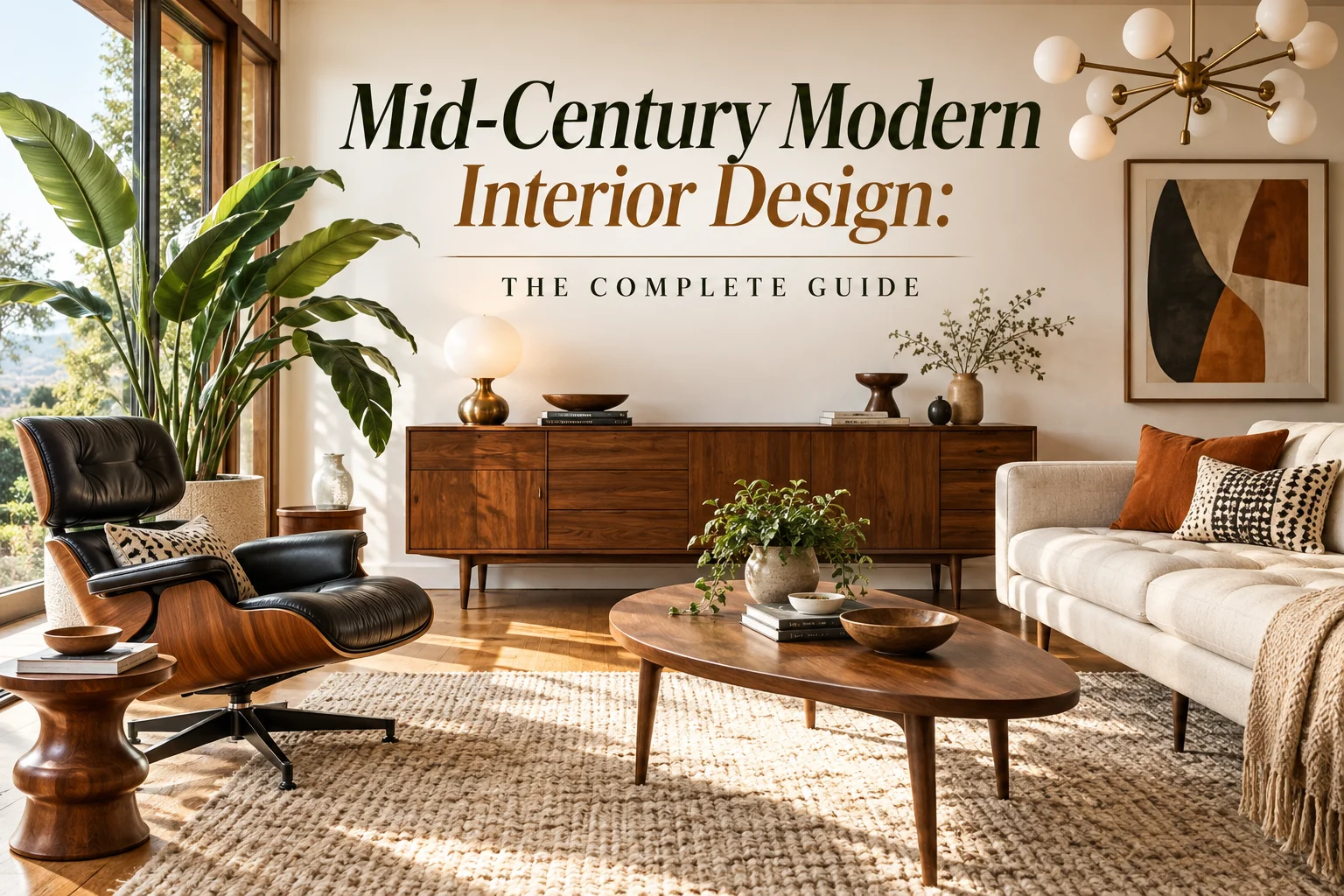
Mid-Century Modern interior design has remained influential for decades because it offers something surprisingly difficult to achieve: rooms that feel visually distinctive without becoming overly decorated. Clean lines, warm timber, sculptural furniture, practical layouts and a close relationship with nature give the style its recognizable character, while its simplicity allows it to adapt easily to contemporary homes.
Although the term often brings to mind teak sideboards, tapered legs and furniture inspired by the 1950s and 1960s, authentic Mid-Century Modern design is much broader than a collection of vintage-looking objects. At its core, the style is about combining function, thoughtful construction, simple forms and natural materials in an environment designed for comfortable everyday living.
This complete guide explores the defining characteristics of Mid-Century Modern interiors, including their history, furniture, colors, materials, lighting, patterns and decorative details. You will also learn how to bring the style into different rooms, how to combine it with other design aesthetics and how to keep a Mid-Century Modern home feeling current rather than themed.
What Is Mid-Century Modern Interior Design?
Mid-Century Modern interior design is a design style characterized by clean lines, functional furniture, organic forms, warm wood, simple construction and an emphasis on connecting indoor spaces with nature.
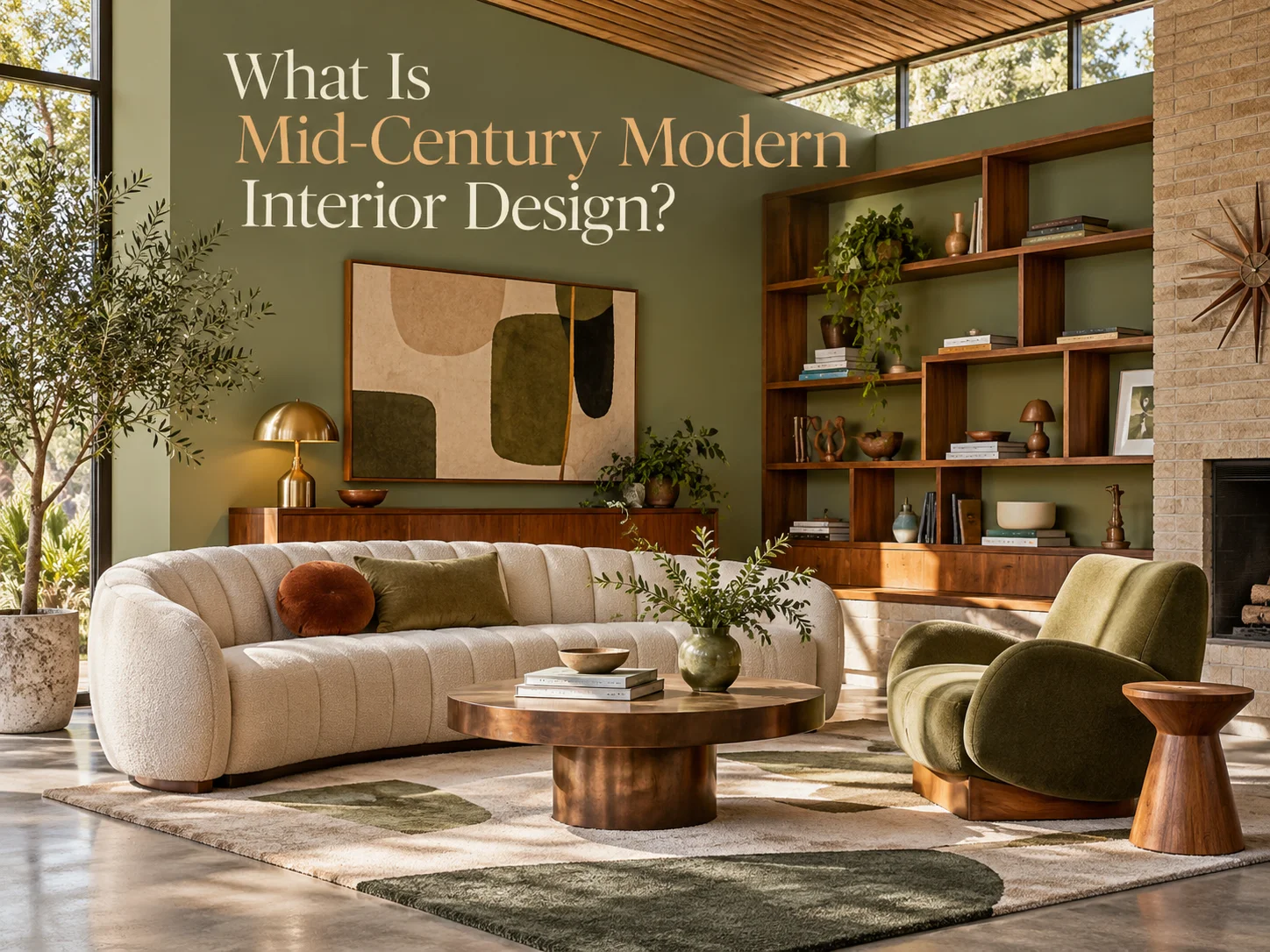
The aesthetic developed alongside the broader modernist movement during the middle decades of the twentieth century. Designers increasingly rejected excessive ornamentation in favor of furniture and architecture that responded directly to function, manufacturing possibilities and changing lifestyles.
As a result, Mid-Century Modern rooms tend to feel open, practical and deliberately composed. Furniture often has relatively simple silhouettes, but subtle curves, distinctive joinery, sculptural forms and contrasting materials prevent the space from feeling plain.
The best contemporary interpretation is rarely a perfect recreation of a 1950s interior. Instead, modern homes borrow the most enduring principles of the period and combine them with present-day comfort, technology and personal style.
A Brief History of Mid-Century Modern Design
The style most commonly associated with Mid-Century Modern design emerged during the decades surrounding the middle of the twentieth century, particularly from the 1940s through the 1960s.
Modernist designers were interested in creating objects and buildings that suited changing ways of life. Open-plan architecture, larger windows, technological advances and new manufacturing techniques encouraged experimentation with materials and construction.
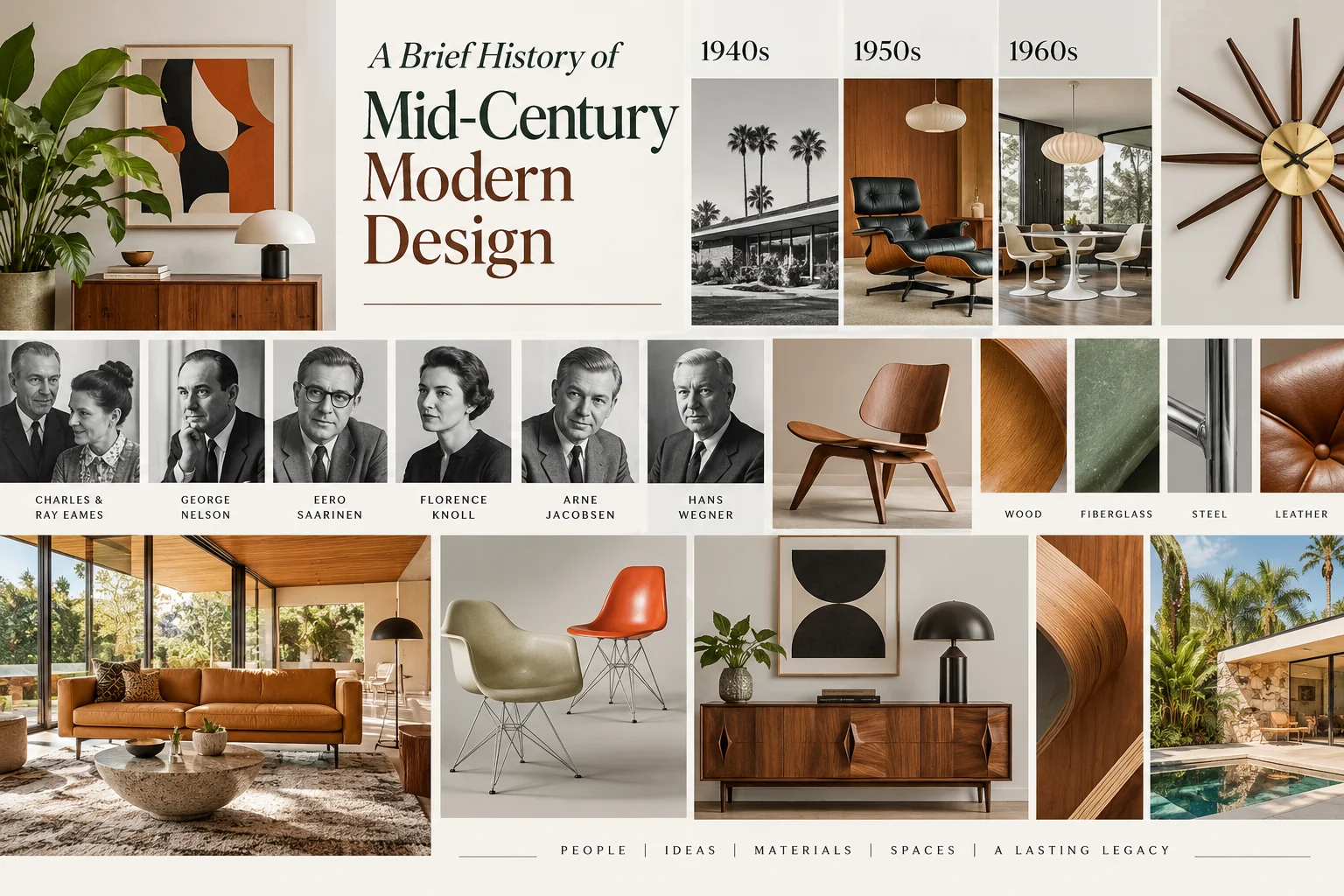
Designers worked with molded plywood, fiberglass, steel, glass and plastics alongside traditional materials such as walnut, teak and leather. Furniture could therefore become lighter, more sculptural and easier to manufacture while still retaining a strong visual identity.
Names frequently associated with the movement include Charles and Ray Eames, George Nelson, Eero Saarinen, Florence Knoll, Arne Jacobsen and Hans Wegner. American modernism also intersected with Scandinavian design, which helps explain the shared appreciation for craftsmanship, wood, functionality and uncluttered forms.
The result was not one narrowly defined appearance. Some interiors were restrained and architectural, while others embraced saturated upholstery, graphic patterns and playful shapes. That diversity is one reason Mid-Century Modern design remains so adaptable today.
The Essential Mid-Century Modern Design Principles
You do not need authentic vintage furniture to create the style successfully. Understanding the principles behind it is considerably more useful than copying a particular decade.
1. Function Comes First
Mid-Century Modern furniture may be attractive, but its visual form usually has a practical purpose. Chairs are designed around the body, storage furniture accommodates everyday belongings and tables generally avoid unnecessary ornament.
Before decorating, decide how the room needs to work. Establish circulation routes, conversation areas, lighting requirements and storage first, then select pieces that support those needs.
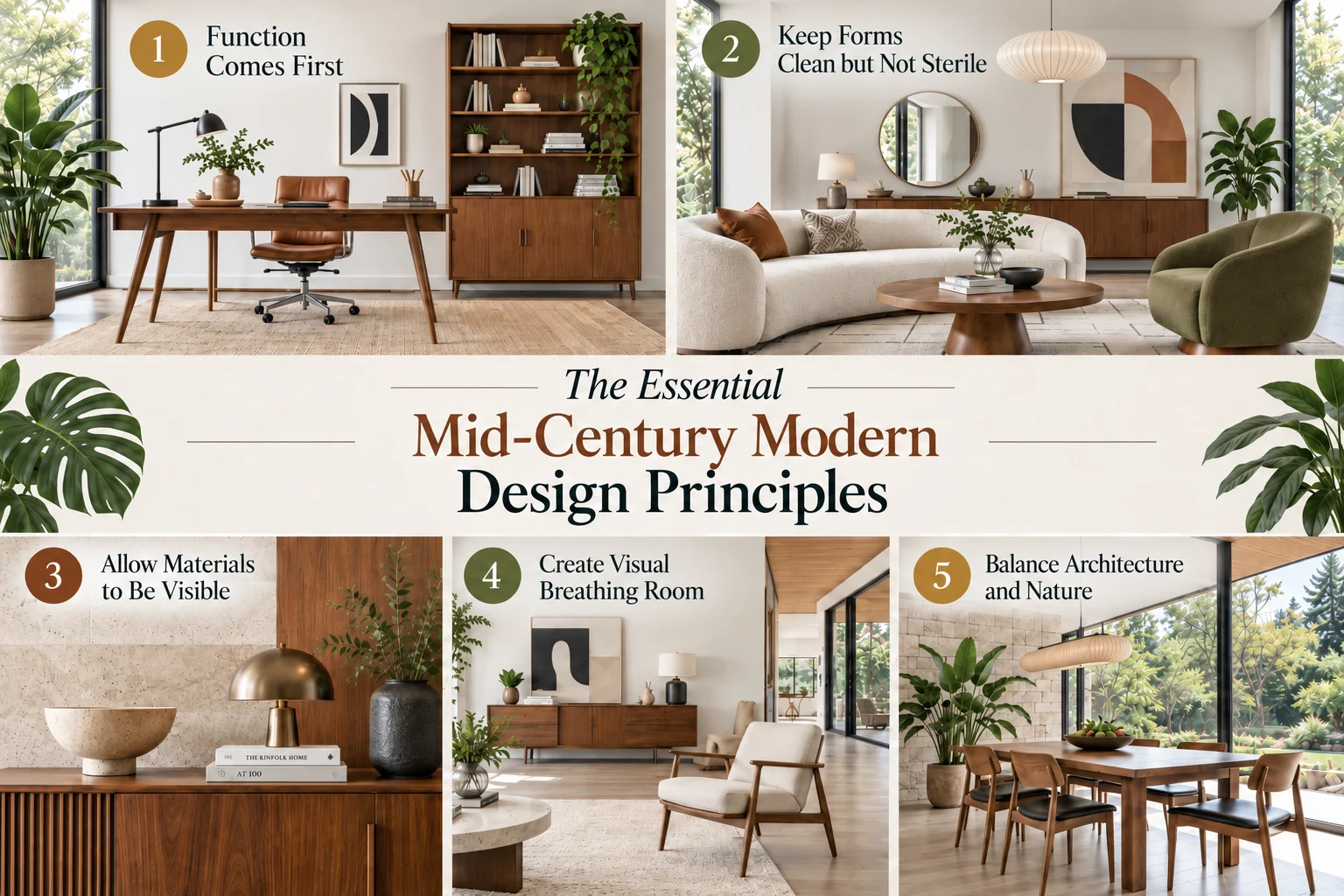
2. Keep Forms Clean but Not Sterile
Straight lines appear frequently in cabinets, shelving and architecture, while curves soften upholstery, seating and decorative objects. Combining both creates the characteristic tension between structure and organic form.
A rectangular walnut credenza might sit beneath a circular mirror, while a straight sofa could be balanced by a rounded lounge chair or globe pendant.
3. Allow Materials to Be Visible
Rather than covering every surface with decorative finishes, Mid-Century Modern interiors often celebrate the inherent appearance of timber, stone, leather and metal.
Visible wood grain is particularly important. Walnut, teak and oak introduce natural pattern while adding warmth to otherwise streamlined furniture.
4. Create Visual Breathing Room
Many classic pieces have raised legs and relatively slim profiles, allowing more floor to remain visible. This contributes to the lightness associated with the style.
A room does not need to be minimal, but furniture should have enough surrounding space for its silhouette to be appreciated.
5. Balance Architecture and Nature
Mid-century architecture frequently sought stronger relationships between indoor and outdoor environments. Large windows, natural materials and open layouts reinforced that connection.
In contemporary interiors, greenery, daylight, timber, stone and views toward outdoor spaces can provide a similar effect even when the architecture itself is not mid-century.
For a deeper breakdown of these ideas, explore our guide to Mid-Century Modern design principles.
The Mid-Century Modern Color Palette
There is no single required Mid-Century Modern color scheme. In fact, interiors from the period ranged from quiet neutrals to surprisingly bold combinations.
For modern homes, it usually helps to begin with a grounded base and introduce stronger colors selectively.
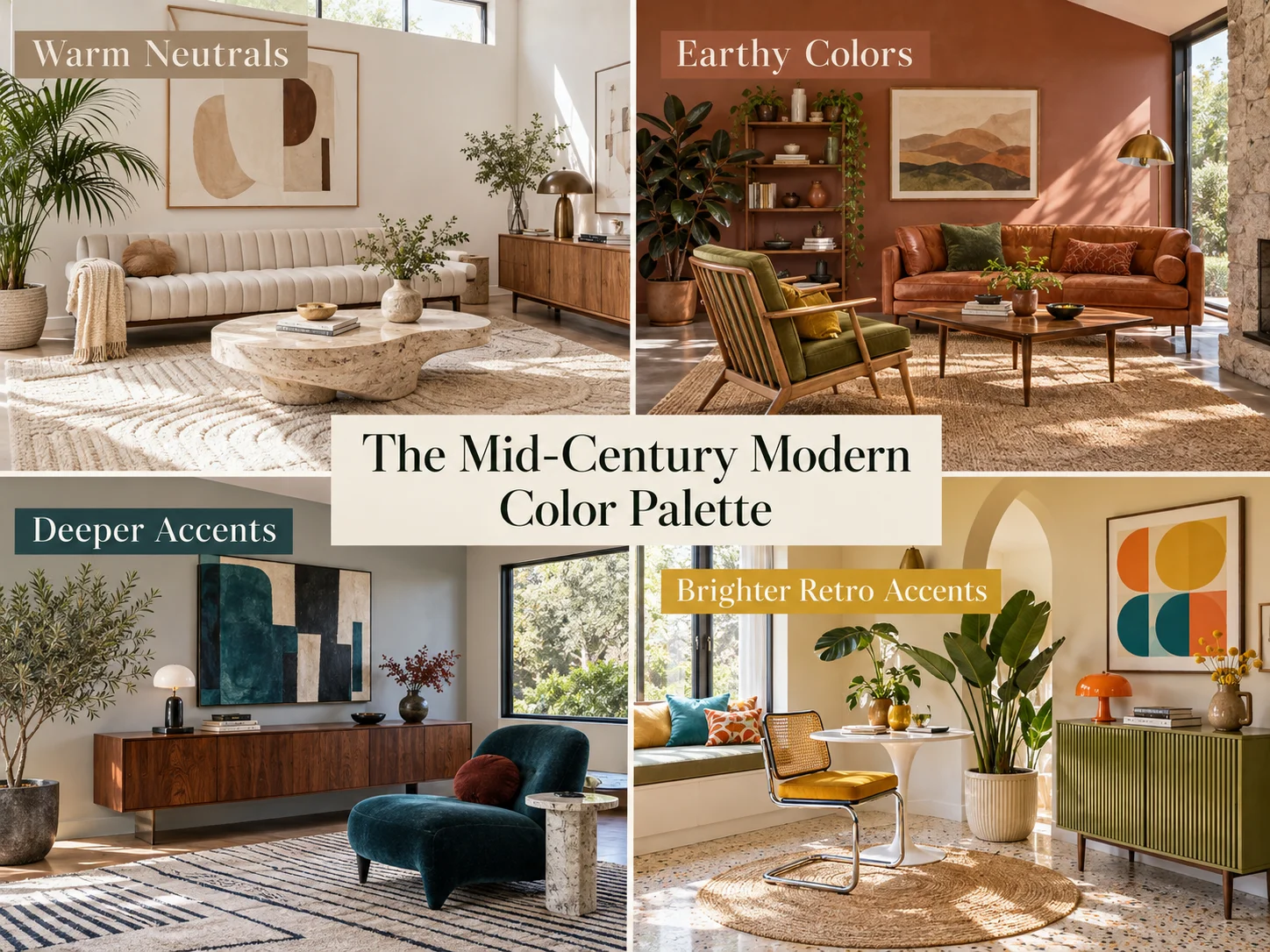
Warm Neutrals
Warm white, ivory, cream, beige, camel and light tan create an adaptable backdrop for timber furniture. These tones help contemporary Mid-Century Modern spaces feel airy and relaxed.
Earthy Colors
Olive green, moss, mustard, ochre, burnt orange, rust, terracotta and brown are strongly associated with the aesthetic because they complement warm wood particularly well.
Deeper Accents
Deep teal, navy, forest green, burgundy and charcoal can introduce sophistication without overwhelming the interior.
Brighter Retro Accents
Turquoise, avocado, orange and sunny yellow can reference historical mid-century interiors more directly. Use these carefully if you want your room to feel contemporary rather than deliberately retro.
A reliable modern formula is to combine a warm neutral foundation, one dominant wood tone, one earthy accent color and smaller amounts of a darker shade for contrast.
See our complete Mid-Century Modern color palette guide for room-by-room combinations and color ideas.
Materials That Define Mid-Century Modern Interiors
Material variety is one of the easiest ways to make a simple Mid-Century Modern room feel layered.
Wood
Timber is arguably the most recognizable material in the style. Walnut is especially effective because its rich brown tone adds warmth and contrast, while teak has a strong historical association with twentieth-century furniture.
Oak and other lighter woods can also work beautifully, particularly when Mid-Century Modern is blended with Scandinavian or contemporary design.
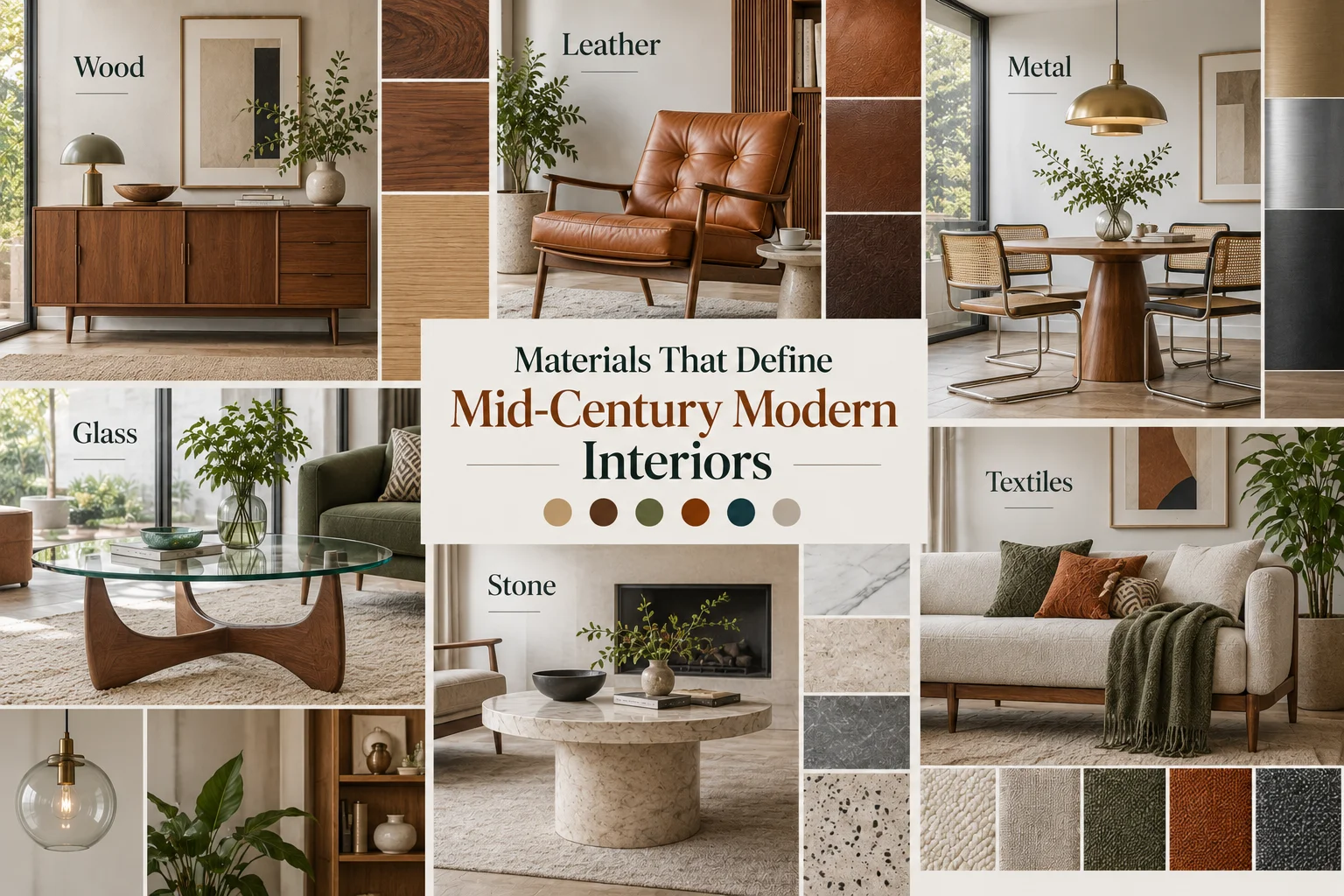
Leather
Cognac, tan and dark brown leather complement timber exceptionally well. Leather can appear on lounge chairs, sofas, stools and smaller accents.
Metal
Blackened steel, chrome, brass and other metals provide a visual counterpoint to natural wood. Thin metal legs and lamp structures can also make furniture feel lighter.
Glass
Glass-topped tables help retain an open visual field, while glass lighting and decorative objects introduce additional reflectivity.
Stone
Marble and natural stone provide contrast to wood while maintaining a sophisticated, material-focused aesthetic.
Textiles
Wool, linen, cotton, boucle and textured upholstery soften the furniture’s structured forms. Natural-feeling textiles are especially useful when adapting the style for a comfortable contemporary home.
The goal is not to use every material at once. Choose a few and repeat them throughout the room so the overall composition feels intentional.
Mid-Century Modern Furniture
Furniture usually carries more of the visual identity in a Mid-Century Modern room than decorative accessories. Selecting the right shapes therefore has a significant effect on the overall result.
Common Furniture Characteristics
- tapered or angled legs;
- raised furniture profiles;
- low horizontal proportions;
- clean cabinet fronts;
- visible wood grain;
- gently curved seating;
- sculptural chairs;
- minimal ornamentation; and
- a clear relationship between form and function.
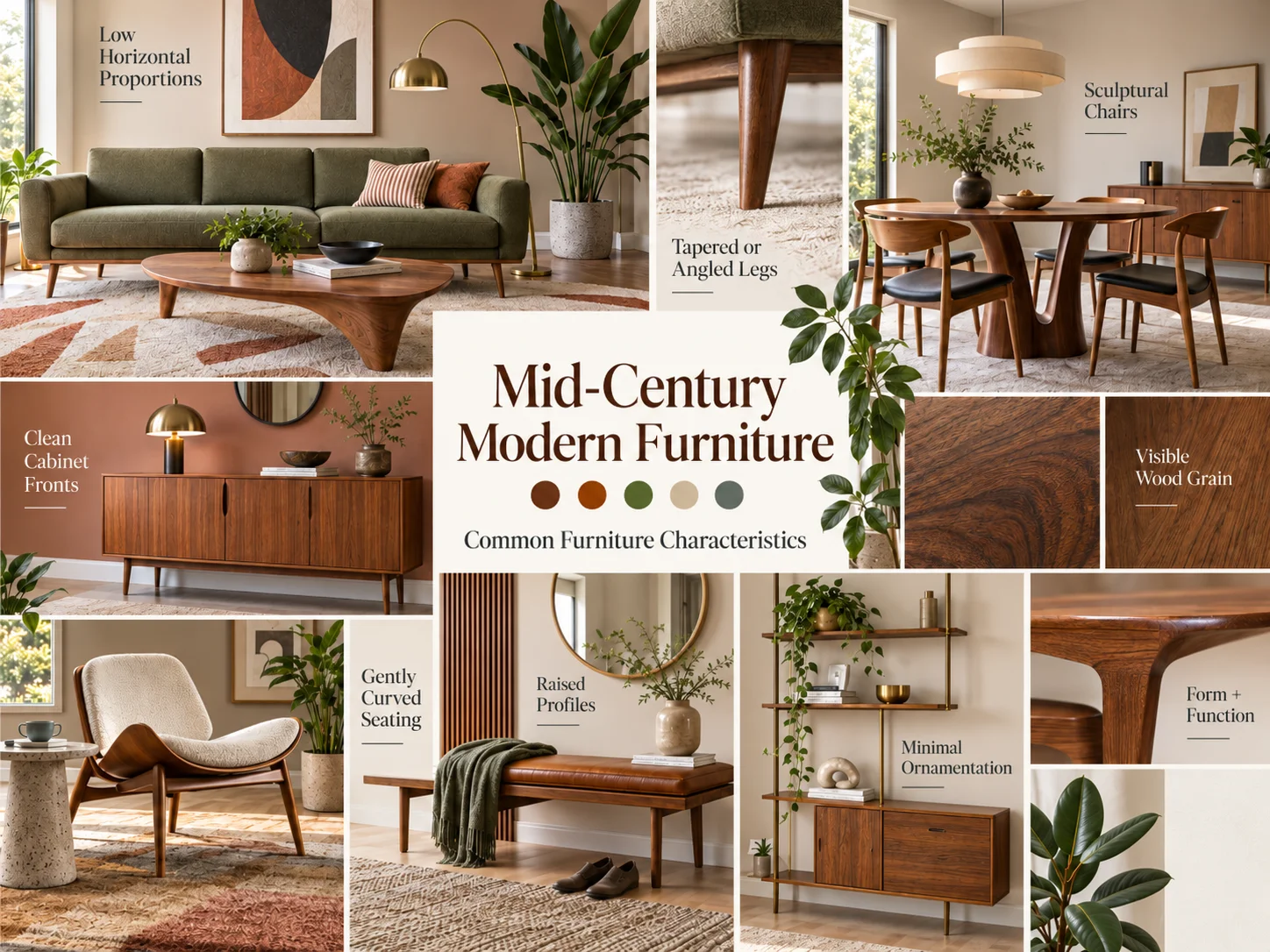
Instead of buying an entire coordinated furniture collection, allow individual pieces to have their own personality.
For example, pair a simple upholstered sofa with a timber-framed lounge chair, walnut credenza and round coffee table rather than purchasing matching pieces from the same range.
This variation makes the room appear collected rather than staged.
Vintage vs New Furniture
Authentic vintage pieces can introduce craftsmanship and character, but they are not essential. Well-designed reproductions and contemporary furniture influenced by mid-century proportions can work equally well.
When buying vintage, pay attention to structural stability, upholstery condition, veneer damage, hardware and previous repairs. When buying new, prioritize construction and proportion rather than choosing something merely because it has tapered legs.
Our Mid-Century Modern furniture guide explores the key furniture forms in greater detail.
Mid-Century Modern Lighting
Lighting offers an opportunity to introduce sculptural forms without adding unnecessary decoration.
Typical options include globe lights, multi-arm chandeliers, arc floor lamps, cone-shaped shades, tripod lamps and simple table lamps with ceramic or glass bases.
Rather than relying on one ceiling fixture, use multiple light sources at different heights.
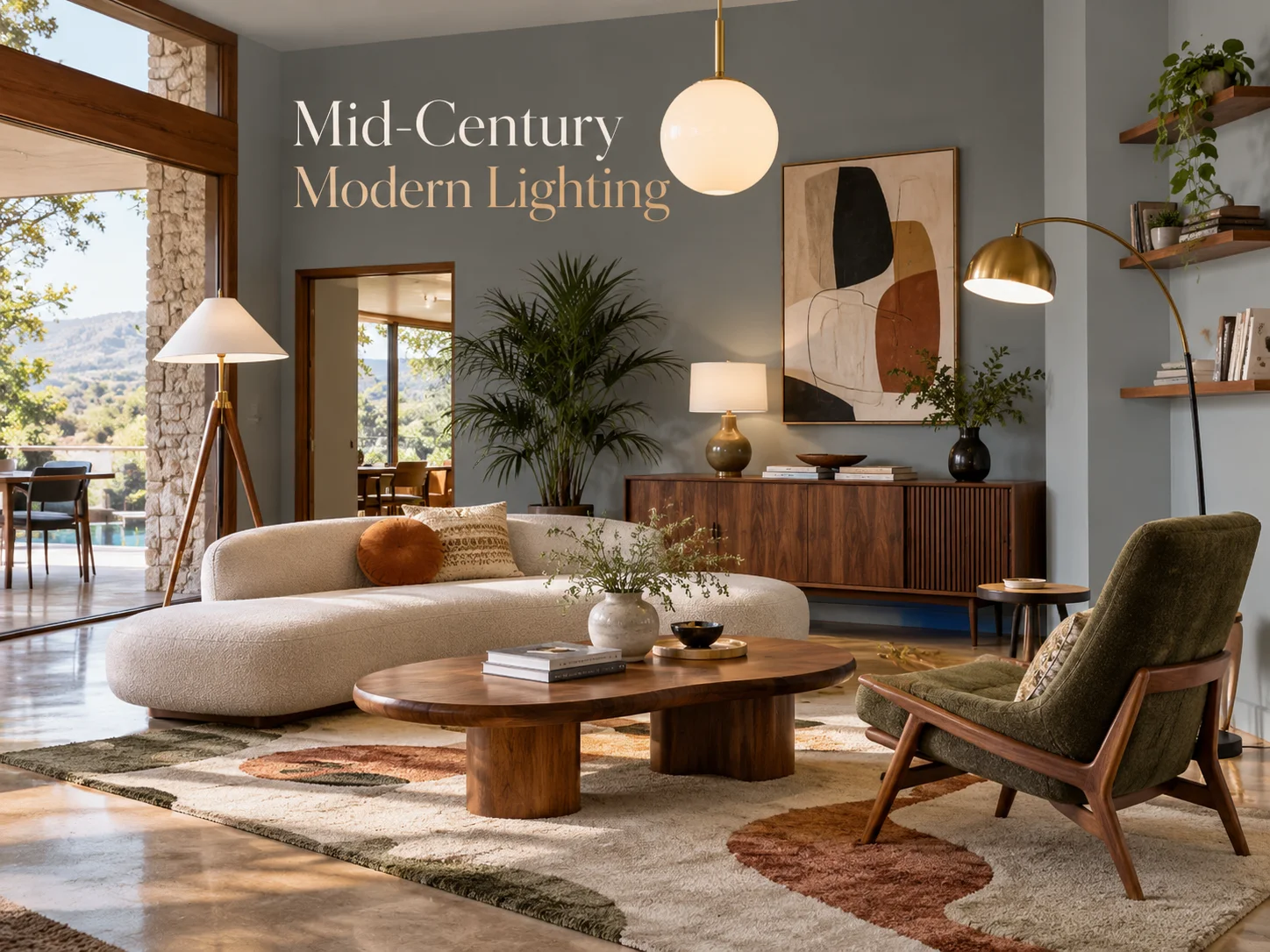
A living room, for example, might combine a ceiling pendant with a floor lamp beside a reading chair and a small table lamp on a credenza.
This layered approach improves both atmosphere and functionality.
Brass, black metal, opal glass and warm metallic finishes can all work well, but the fixture should relate to the proportions of the room rather than appearing decorative for its own sake.
Learn more in our Mid-Century Modern lighting guide.
Patterns and Texture
Because Mid-Century Modern furniture often uses relatively simple lines, pattern and texture can keep the interior from becoming flat.
Geometric motifs, abstract compositions and simplified botanical forms work naturally with the aesthetic. However, contemporary rooms generally benefit from using these patterns more selectively than an intentionally retro interior would.
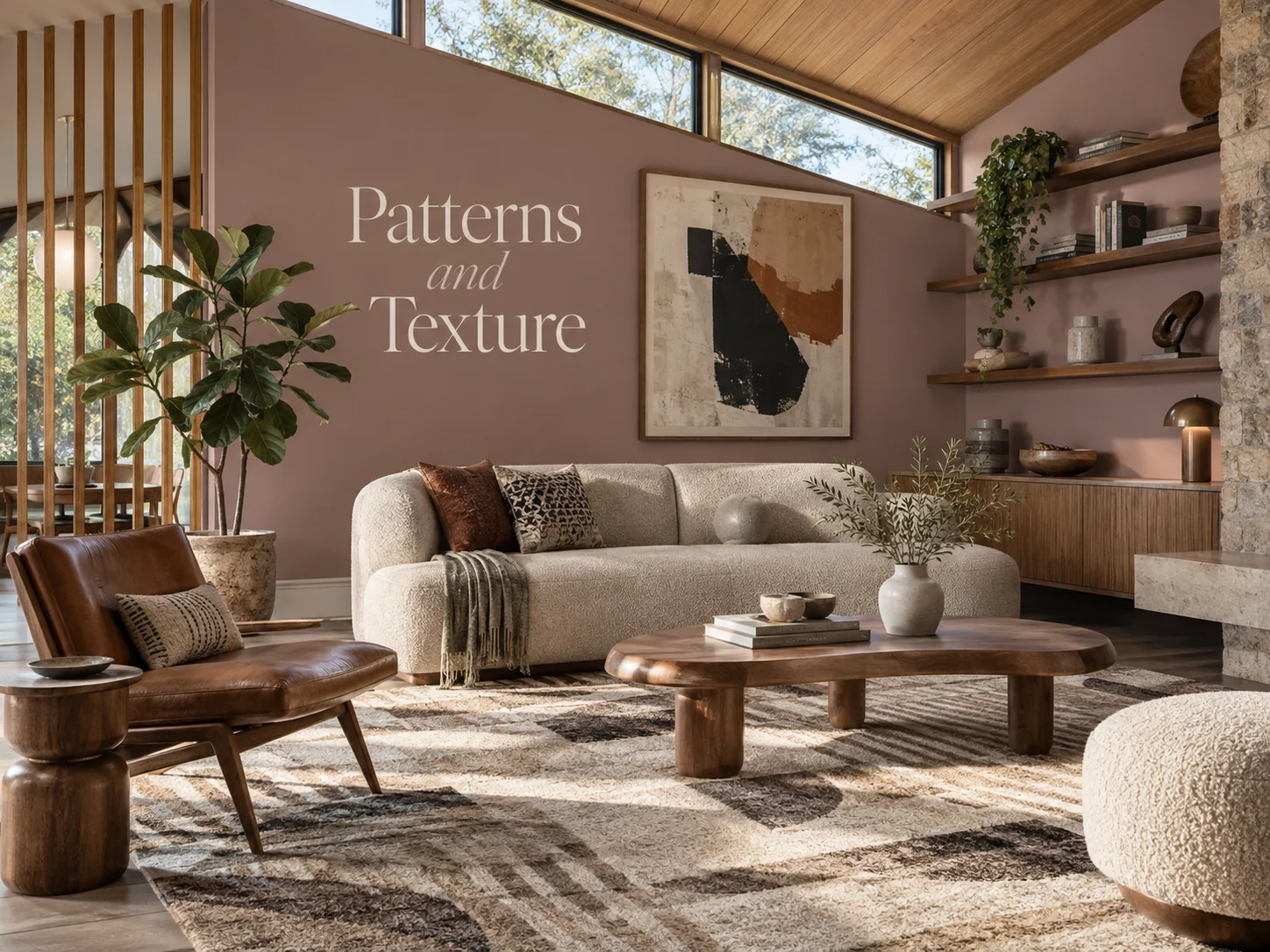
Try introducing pattern through one rug, artwork, cushions or a statement chair rather than several competing surfaces.
Texture can be layered through wool rugs, nubby upholstery, linen curtains, leather, timber grain, ceramics and woven materials.
If your palette is restrained, texture becomes especially important because it provides visual variation without requiring additional color.
Mid-Century Modern Walls and Artwork
Walls in contemporary Mid-Century Modern rooms are often simple so the furniture and artwork can take greater visual priority.
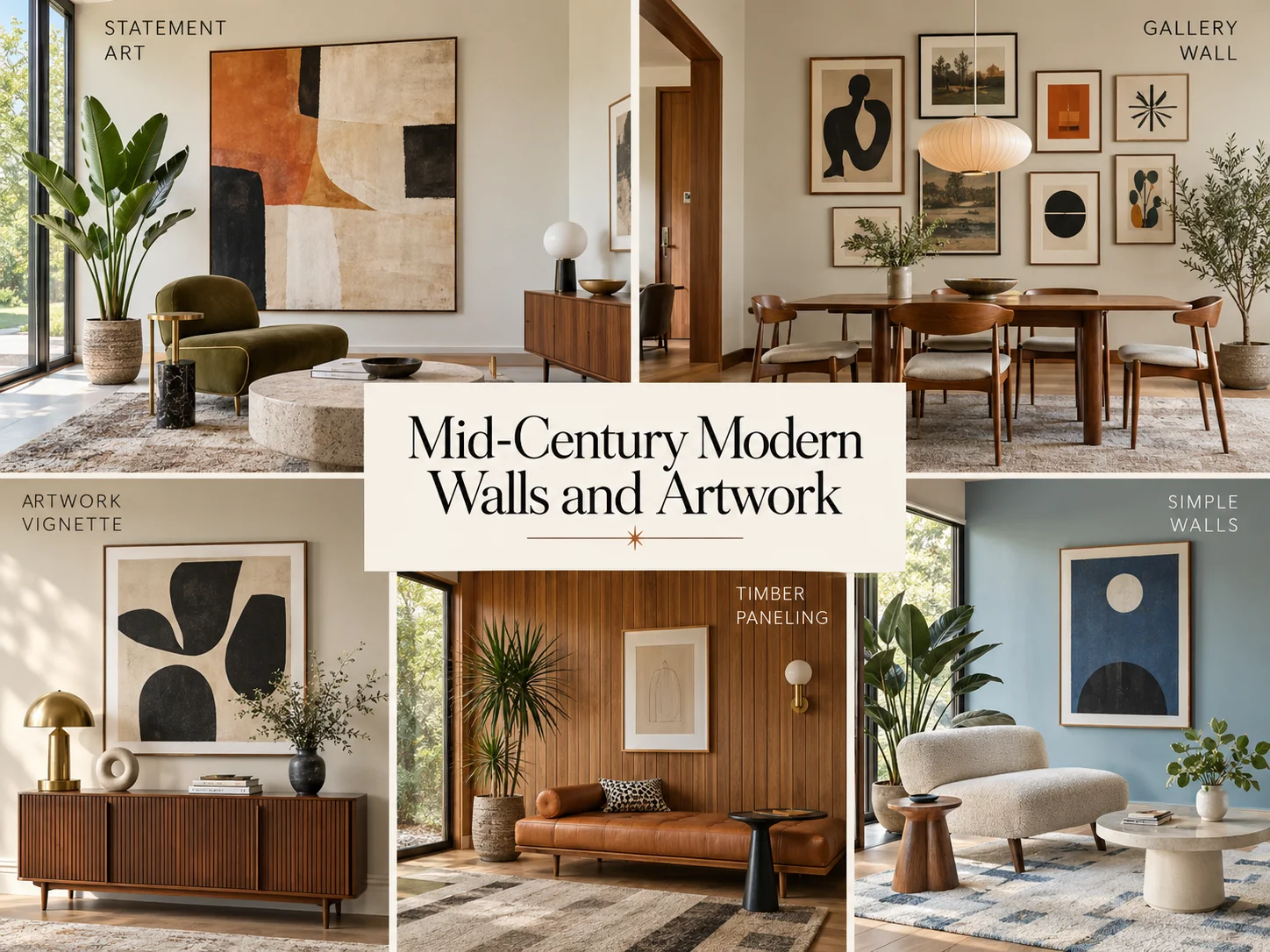
Warm white, pale beige, muted green and other subtle tones provide versatile backdrops. Timber wall treatments or strategically used paneling can create stronger architectural character.
Artwork is an excellent place to introduce color. Abstract paintings, geometric compositions, graphic prints and expressive modernist-inspired works all complement the style.
One substantial artwork frequently has more impact than numerous small decorative pieces. A gallery wall can also work, provided the frames and spacing remain cohesive.
Decorating with Mid-Century Modern Accessories
Accessories should support the room rather than compete with the furniture.
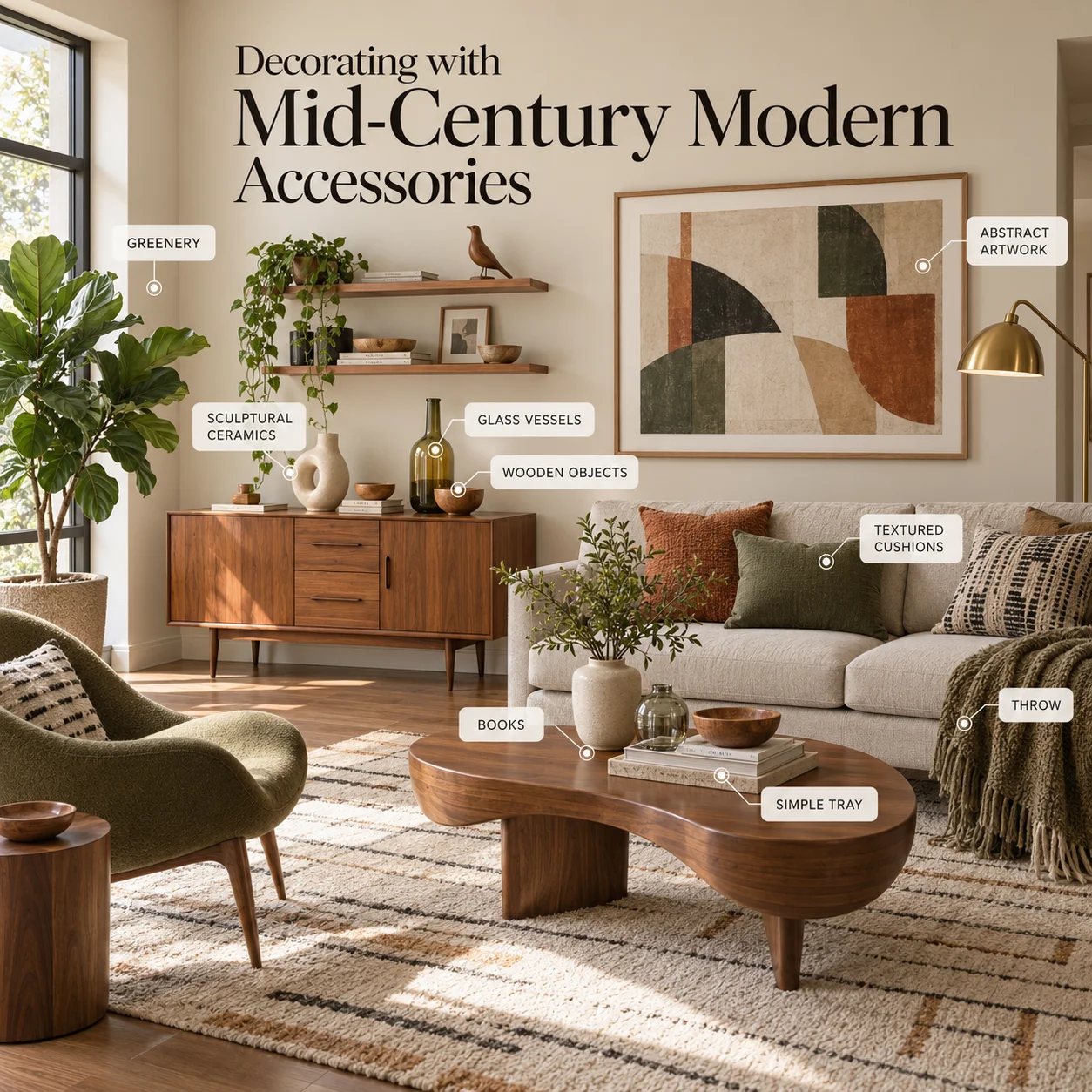
Useful options include:
- handmade or sculptural ceramics;
- glass vessels;
- wooden bowls and objects;
- books;
- simple trays;
- abstract artwork;
- textured cushions and throws; and
- greenery.
Instead of filling every shelf, create smaller compositions with visible empty space around them.
A credenza might contain one lamp, a short stack of books, a ceramic object and artwork above it. Leaving part of the surface empty allows each object to feel deliberate.
Plants in Mid-Century Modern Interiors
Greenery reinforces the connection with nature that runs through much mid-century architecture and design.
Large, architectural plants are particularly effective because their organic shapes contrast beautifully with straight furniture lines.
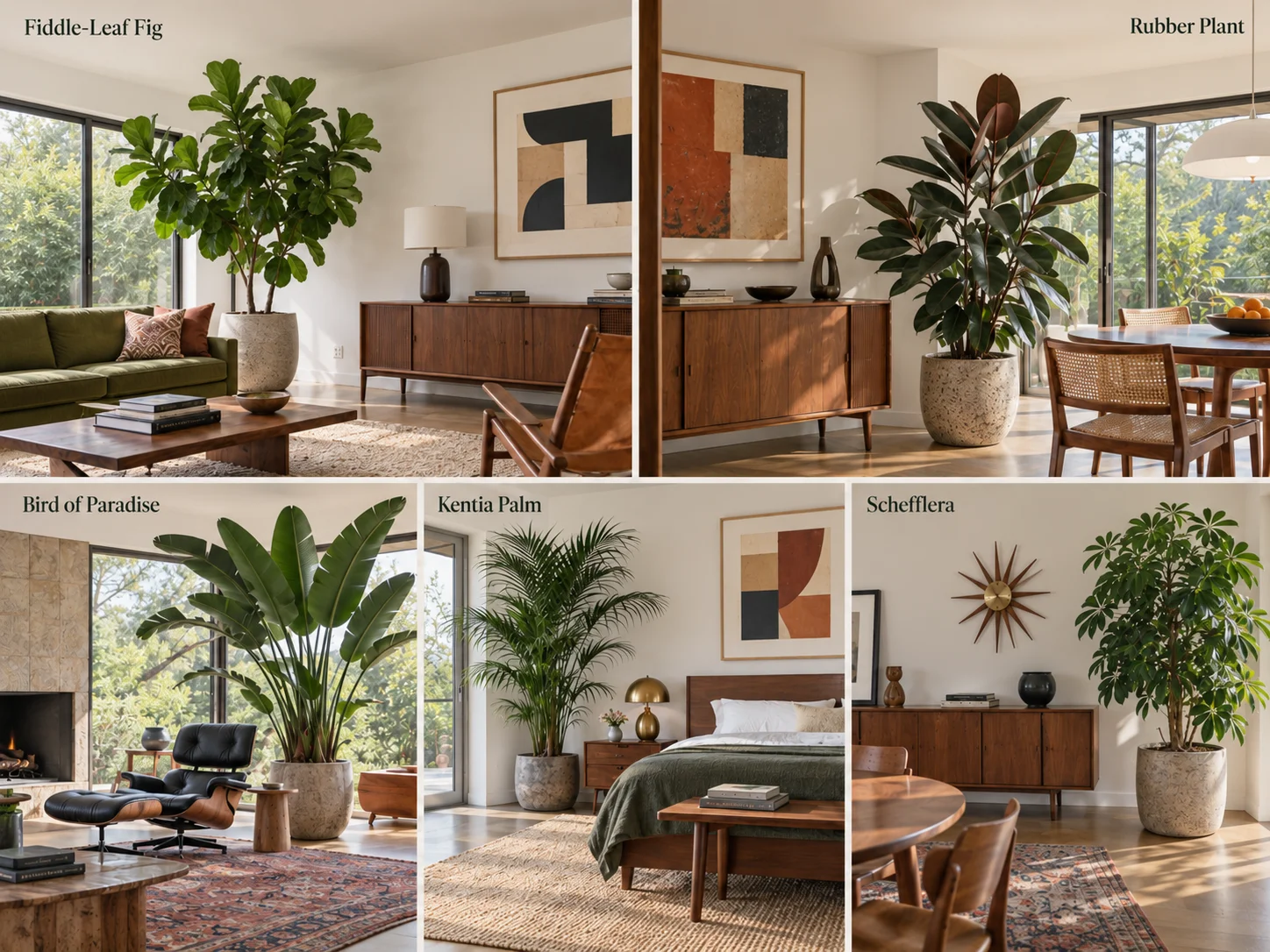
Fiddle-leaf figs, rubber plants, bird of paradise, Kentia palms, Schefflera and similar plants can provide vertical height and soften timber cabinetry.
Avoid treating plants as generic fillers. One appropriately scaled specimen usually contributes more than numerous tiny pots scattered throughout the room.
How to Create a Mid-Century Modern Living Room
The living room is one of the easiest places to introduce the style because seating, tables and lighting naturally provide opportunities for distinctive furniture.
Begin with a comfortable sofa in a relatively simple silhouette. Neutral upholstery provides flexibility, although olive, rust, ochre or deep blue can make the sofa a stronger focal point.
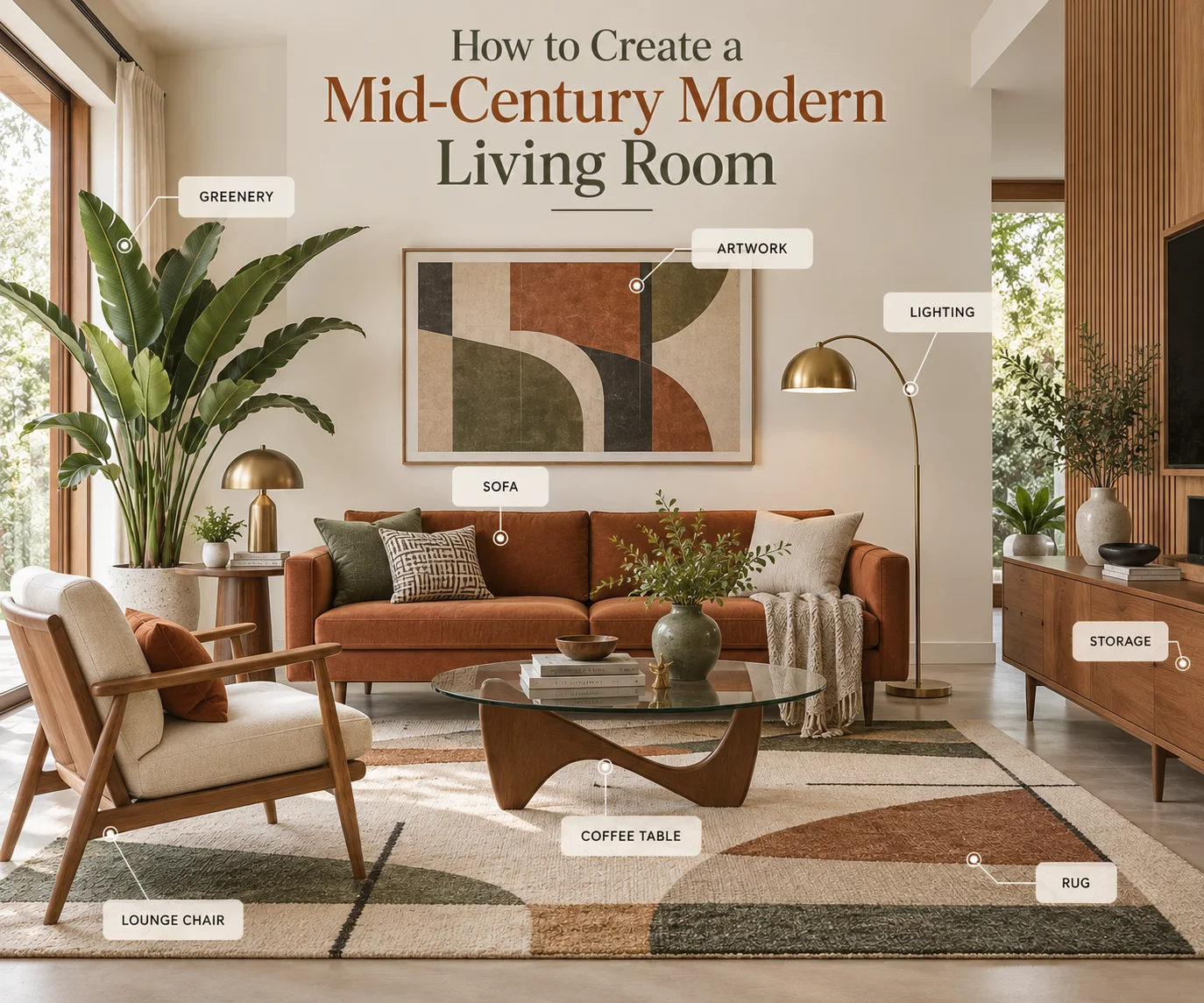
Add one lounge chair with a contrasting material or shape. A timber frame, molded form or sculptural curved seat can immediately establish the style.
Anchor the arrangement with a large rug and introduce a low coffee table in wood, glass or stone. A credenza or media unit adds practical closed storage while reinforcing the horizontal proportions associated with the aesthetic.
Complete the room with layered lighting, large-scale artwork and a limited number of decorative objects.
See the full Mid-Century Modern living room style guide or follow our step-by-step guide to create a Mid-Century Modern living room.
Mid-Century Modern Dining Rooms
In a dining room, the table and chairs naturally become the focal point.
A simple timber dining table can be paired with chairs that feature curved backs, tapered legs, woven seats or upholstered details. The chairs do not need to match the table exactly; a subtle difference in tone often feels more authentic and relaxed.
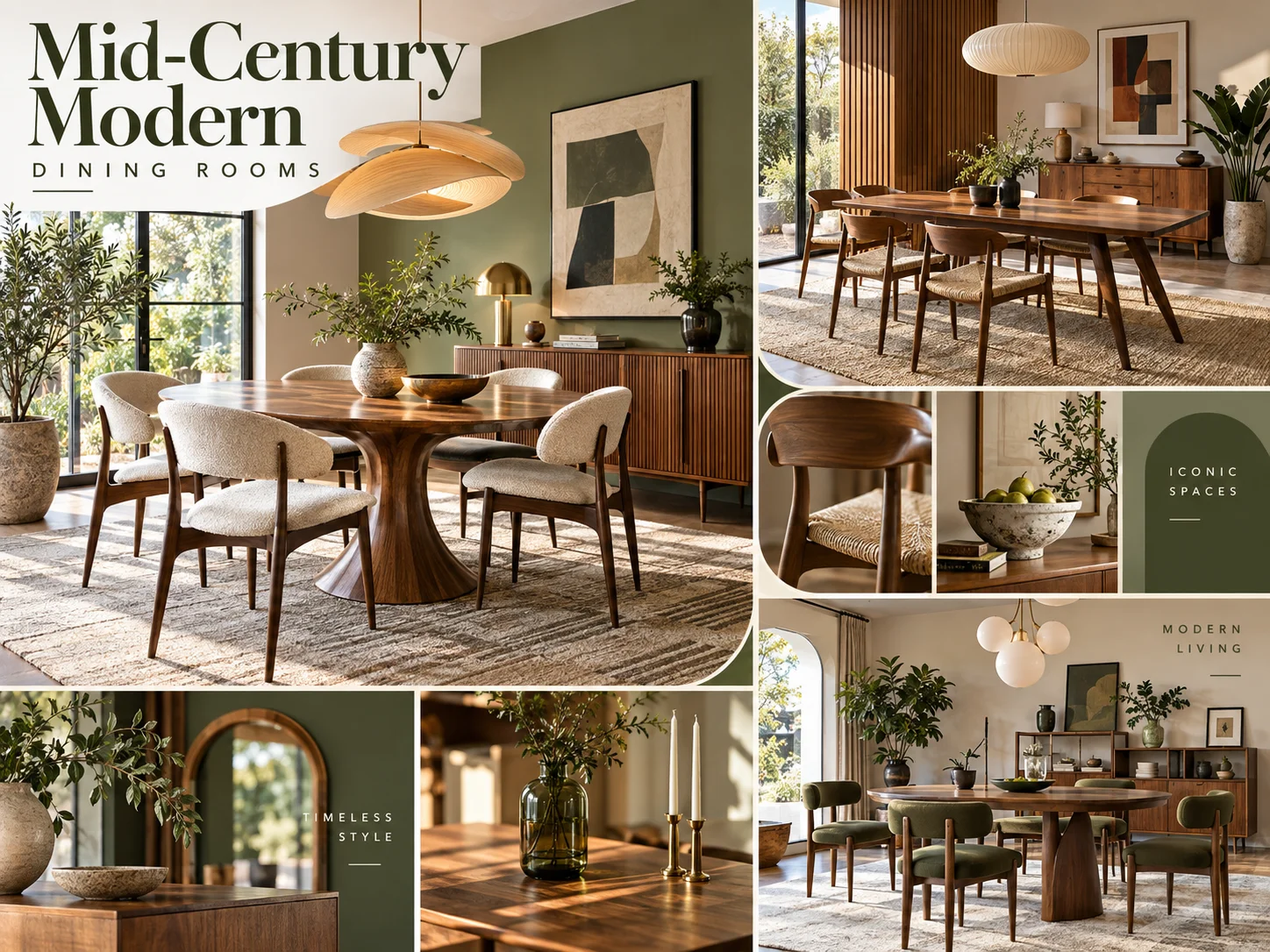
Hang a sculptural pendant above the table at an appropriate scale, then keep nearby surfaces relatively restrained.
A long timber sideboard provides storage for dining essentials while giving you a surface for artwork, a lamp and a few decorative objects.
Mid-Century Modern Bedrooms
Bedrooms generally benefit from the quieter side of Mid-Century Modern design.
A timber bed or upholstered bed with clean lines can provide the foundation. Pair it with simple bedside tables, warm lamps and natural bedding.
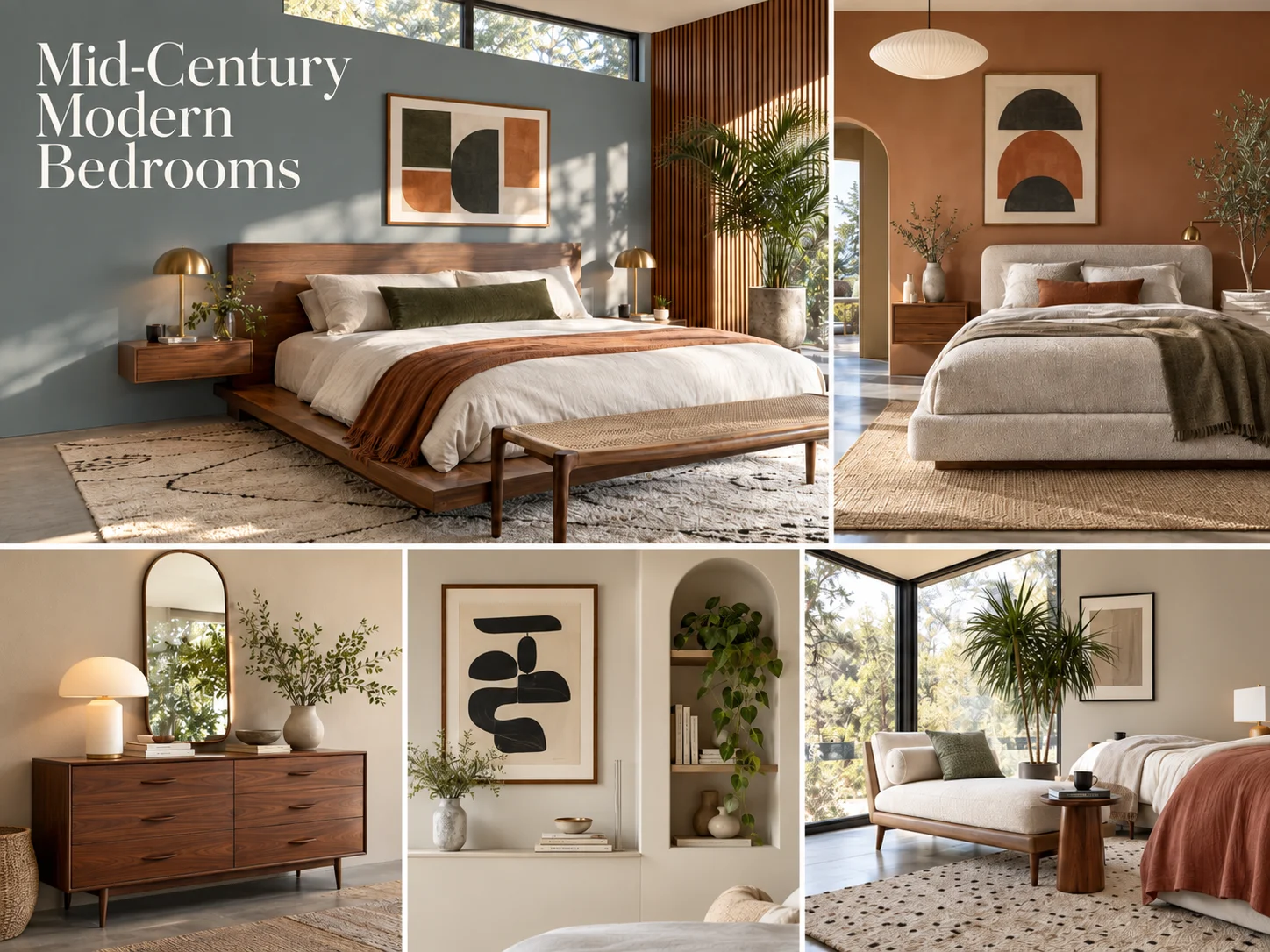
Introduce character through one or two stronger elements, such as a walnut dresser, sculptural bedside lighting or graphic artwork.
Because bedrooms should feel restful, you do not need to reproduce every recognizable feature of the style. Warm wood, balanced proportions and thoughtful lighting may be enough.
Mid-Century Modern Kitchens
Mid-Century Modern kitchens often look strongest when cabinetry provides the primary design statement.
Flat-front wood cabinets, simple hardware, clean countertops and geometric forms can establish the aesthetic without resorting to novelty retro details.
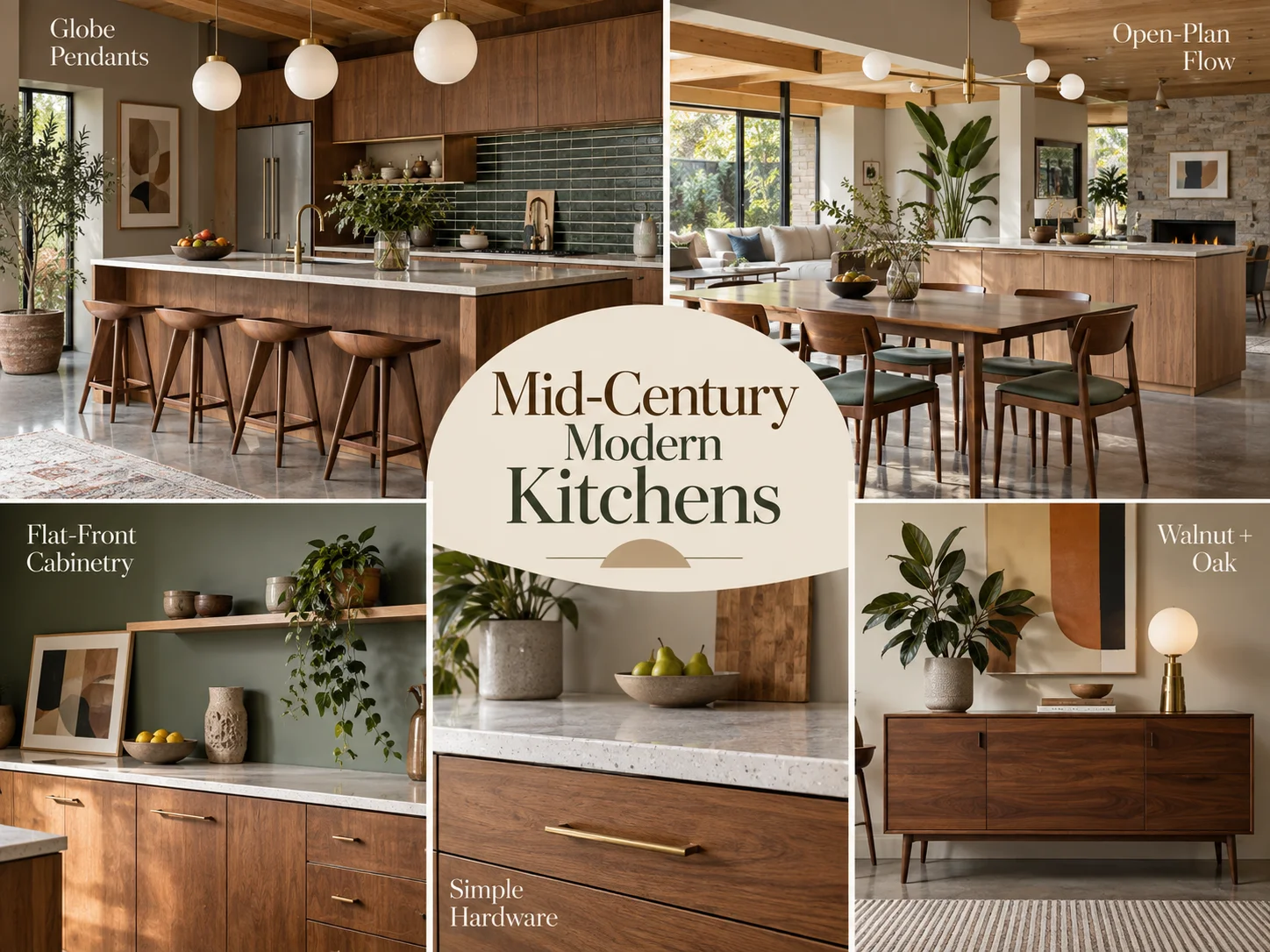
Walnut or oak cabinetry works particularly well when balanced with light countertops and restrained walls. Globe pendants, simple stools and small areas of color can reinforce the style.
If your kitchen is open to the living or dining area, repeat one or two materials across the spaces for visual continuity.
Mid-Century Modern Bathrooms
Bathrooms can incorporate the style through a timber vanity, simple geometric tile, globe lighting and streamlined hardware.
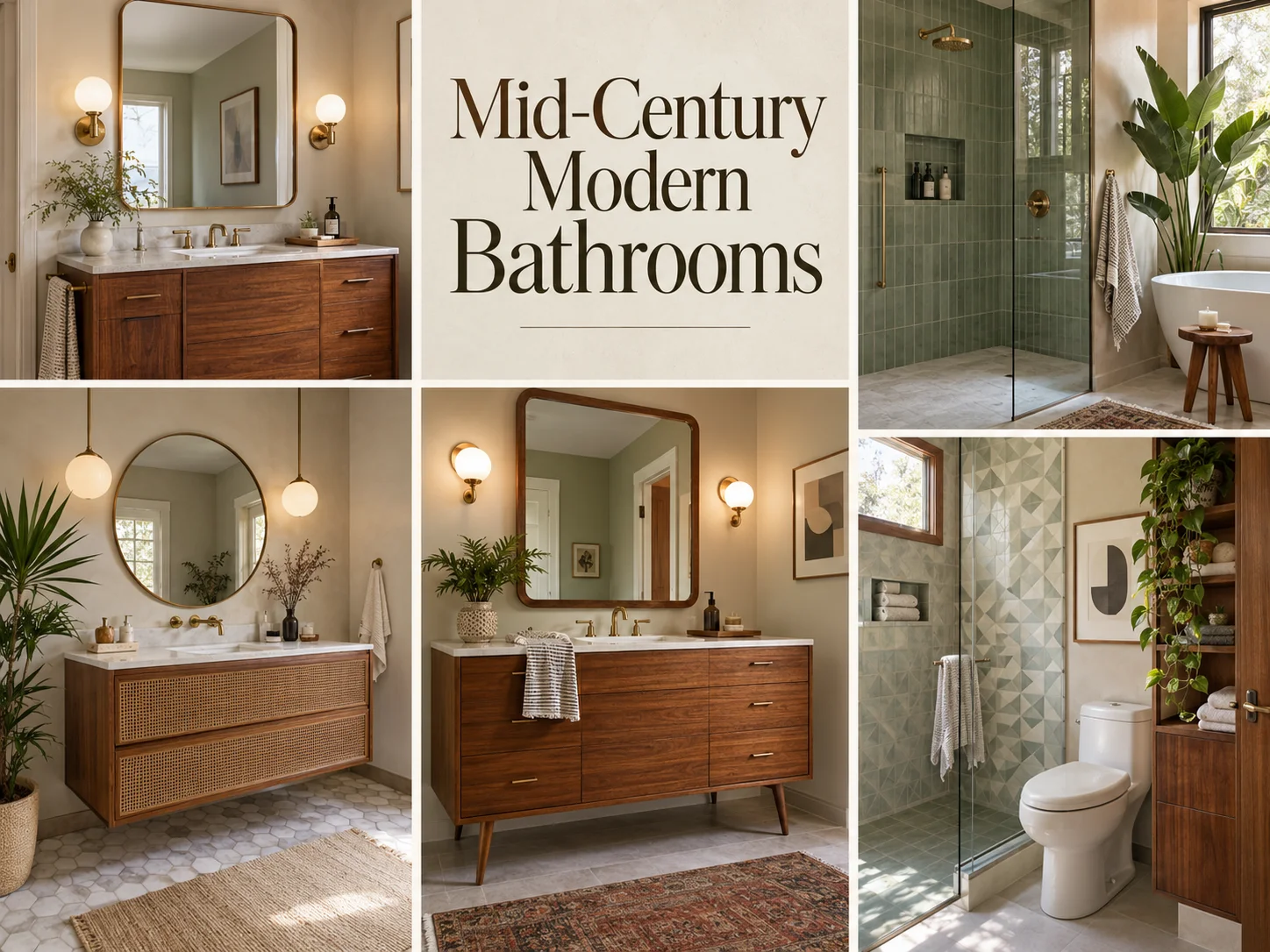
Because moisture and maintenance requirements matter, select materials appropriate for bathrooms rather than choosing something solely for historical authenticity.
A floating or raised-leg vanity can create the lightness associated with Mid-Century Modern furniture while maintaining practical storage.
How to Make Mid-Century Modern Design Feel Current
The greatest risk when decorating in this style is making a home feel like a recreated period set.
The solution is to use mid-century principles rather than attempting to reproduce every historical detail.
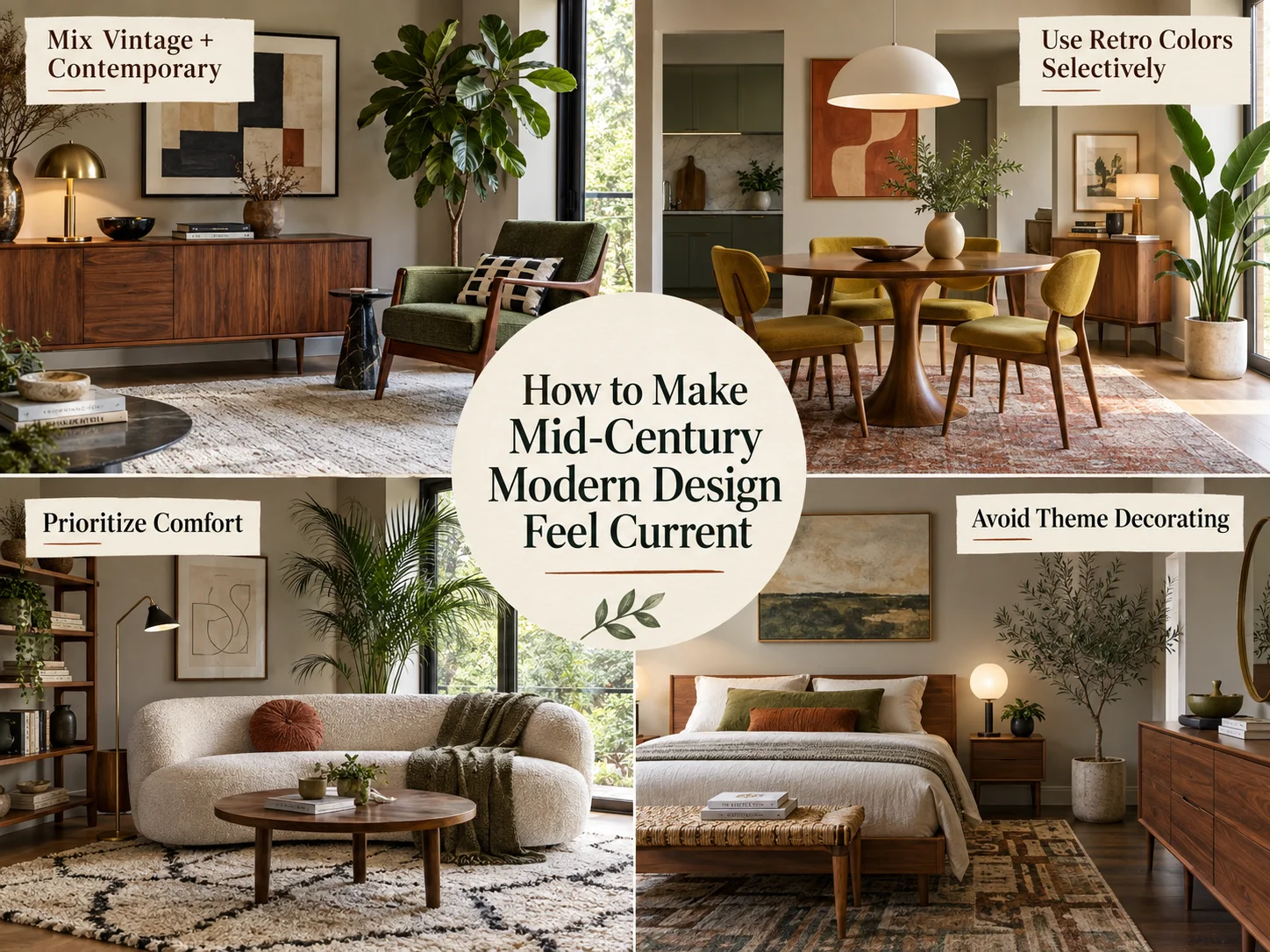
Mix Vintage and Contemporary Furniture
One vintage credenza or lounge chair can give a room authenticity without requiring every piece to come from the same era.
Use Retro Colors Selectively
Instead of combining avocado, mustard, burnt orange and brown in every room, choose one or two and surround them with contemporary neutrals.
Prioritize Comfort
Some historically accurate furniture may not suit modern expectations for lounging or everyday use. Choose pieces that work for your lifestyle first.
Avoid Theme Decorating
Record players, starburst clocks and other recognizable period references can be attractive, but using too many at once can turn the room into a theme.
The architecture, materials, furniture proportions and overall composition should communicate the style before decorative symbols do.
Common Mid-Century Modern Decorating Mistakes
Buying Everything with Tapered Legs
Tapered legs alone do not define Mid-Century Modern design. When every object uses the same detail, the room can become repetitive.
Using Too Much Wood
Warm timber is important, but a room dominated by matching brown finishes can feel heavy. Introduce upholstery, stone, metal, glass, painted surfaces and textiles for contrast.
Choosing Furniture That Is Too Small
Many mid-century-inspired products have slim silhouettes, but several undersized pieces can make a large room feel fragmented. Scale furniture to the architecture.
Overusing Retro Accessories
A few historical references create personality. Too many make the room feel staged.
Ignoring Texture
Smooth furniture and simple architecture need textural contrast. Rugs, upholstery, curtains, leather, wood grain and ceramics help create warmth.
Forgetting Everyday Function
A beautiful lounge chair is not useful if nobody enjoys sitting in it. Storage, circulation, lighting and comfort should guide the design.
Our complete guide to Mid-Century Modern decorating mistakes explains the most common problems and how to correct them.
How to Mix Mid-Century Modern with Other Design Styles
One reason Mid-Century Modern remains so popular is its flexibility. Its clean forms and natural materials allow it to combine with numerous contemporary aesthetics.
Mid-Century Modern + Scandinavian
Use lighter oak, pale walls, simple furniture, cozy textiles and restrained styling. The result feels brighter and softer than traditional walnut-heavy Mid-Century Modern.
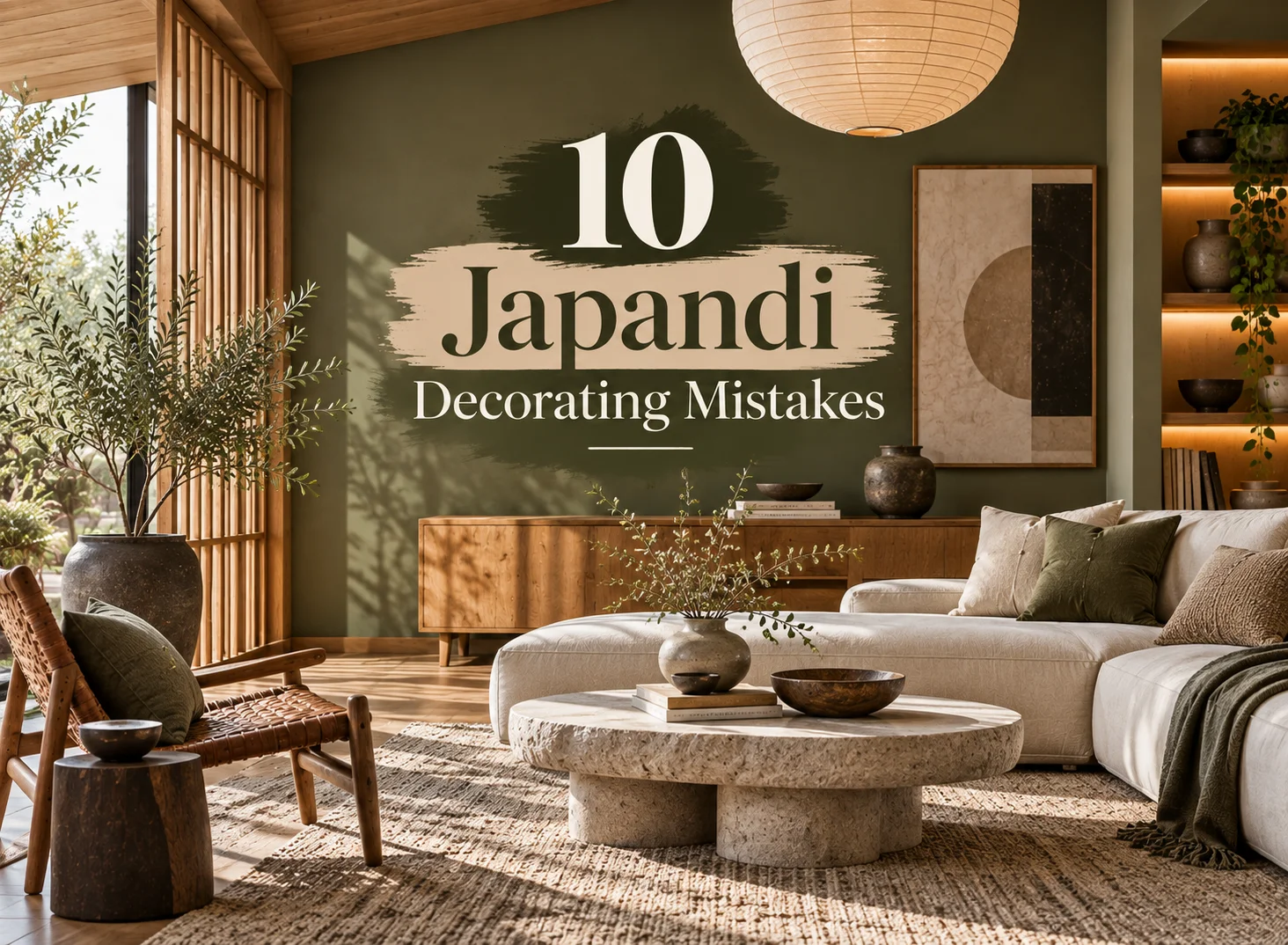
Mid-Century Modern + Japandi
Reduce decorative objects, use earthy neutrals and introduce handmade ceramics, linen and organic materials. Darker timber accents can provide contrast against the calmer Japandi foundation.
Mid-Century Modern + Organic Modern
Combine timber furniture with travertine, warm neutral upholstery, sculptural lighting, textured textiles and oversized greenery. This creates a softer, nature-focused interpretation.
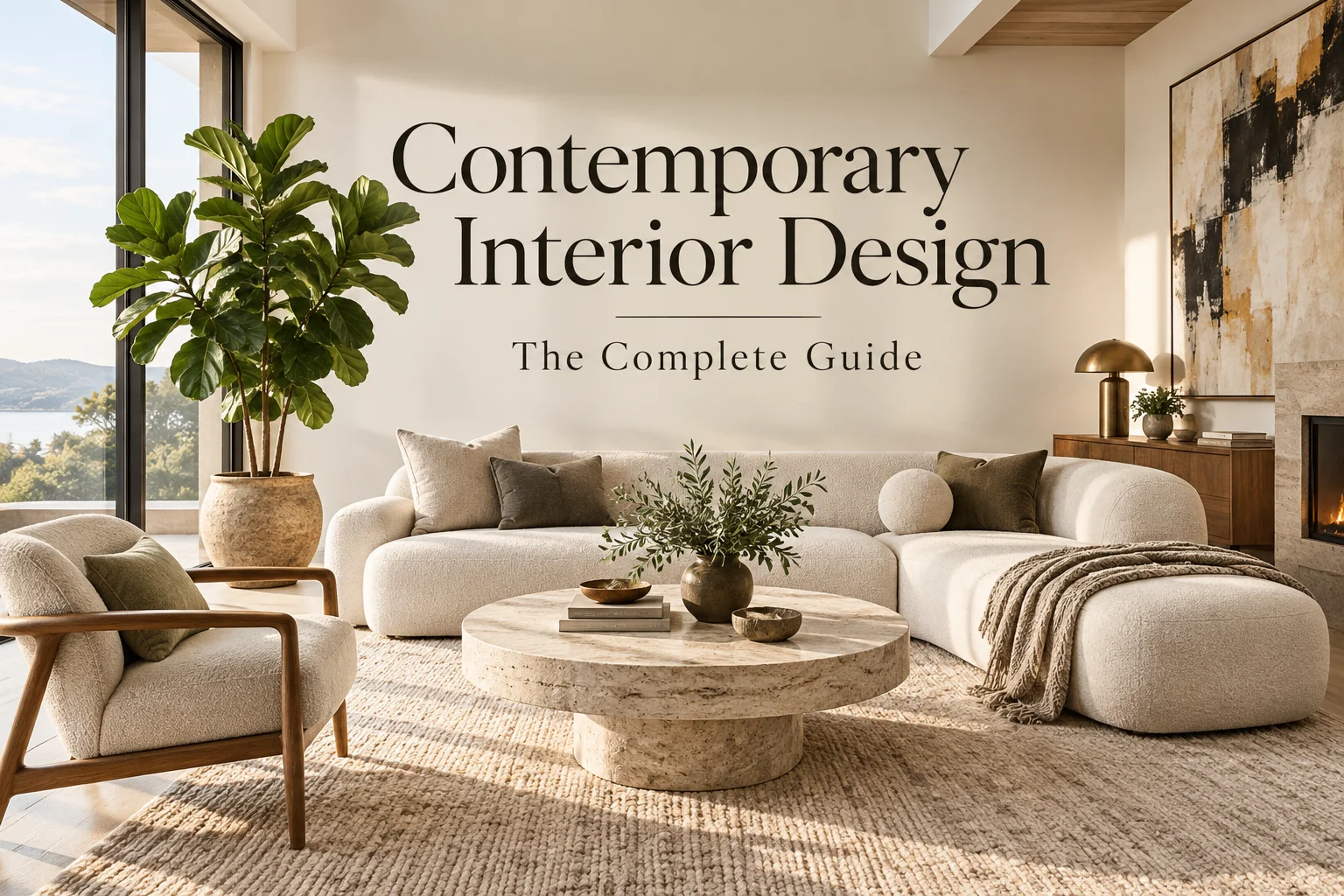
Mid-Century Modern + Contemporary
Use classic furniture shapes alongside larger contemporary artwork, curved upholstery, simple architectural finishes and a restrained palette.
Mid-Century Modern + Bohemian
Layer vintage timber furniture with woven materials, rugs, plants, art and collected objects. Keep the larger furniture pieces relatively streamlined so the room does not become visually crowded.
Explore more combinations in our guide to mixing Mid-Century Modern with other design styles.
Mid-Century Modern vs Scandinavian Design
Mid-Century Modern and Scandinavian interiors overlap significantly, particularly in their emphasis on functionality, simple construction and natural materials.
The most noticeable difference is often atmosphere.
Scandinavian interiors commonly emphasize light woods, pale colors, softness and brightness. Mid-Century Modern interiors often use richer timber such as walnut and teak, stronger color contrasts and more overtly sculptural furniture.
The two styles combine extremely well precisely because their underlying principles are compatible.
Mid-Century Modern vs Contemporary Design
Mid-Century Modern refers to a recognizable design movement and aesthetic associated with the middle decades of the twentieth century. Contemporary design, by contrast, describes design of the present and therefore continues to evolve.
Contemporary rooms may borrow Mid-Century Modern furniture without adopting the complete aesthetic. For example, a walnut credenza and sculptural lounge chair may appear in an otherwise contemporary room with modern artwork, oversized upholstery and minimalist architecture.
A Simple Mid-Century Modern Decorating Formula
If you want an easy starting point, use the following formula rather than trying to redesign the entire room at once:
- Walls: choose a warm white or muted neutral.
- Main furniture: begin with one simple, comfortable upholstered piece.
- Wood: introduce walnut, teak or oak through one or two substantial pieces.
- Statement chair: add a chair with a distinctive silhouette.
- Rug: use a generously scaled rug to anchor the furniture.
- Lighting: introduce at least two or three light sources at different heights.
- Color: select one earthy or saturated accent.
- Artwork: choose one substantial abstract or graphic composition.
- Texture: include wool, linen, leather, boucle or another tactile material.
- Greenery: add one appropriately scaled plant.
- Accessories: finish with a limited collection of ceramics, books or sculptural objects.
This approach communicates Mid-Century Modern character without requiring a room full of period-specific furniture.
Is Mid-Century Modern Design Still in Style?
Mid-Century Modern continues to work in contemporary homes because many of its defining ideas are practical rather than trend dependent.
Functional layouts, comfortable furniture, natural materials, craftsmanship, simple forms and indoor-outdoor connections remain relevant regardless of short-term decorating trends.
What changes is the way the style is interpreted.
Current interiors often combine mid-century furniture with softer neutral palettes, larger contemporary upholstery, organic materials, layered textiles and more restrained references to retro colors and patterns.
That evolution allows the aesthetic to remain recognizable without being frozen in one historical moment.
Frequently Asked Questions
What defines Mid-Century Modern interior design?
Mid-Century Modern interior design is defined by functional layouts, clean lines, organic forms, warm wood, sculptural furniture, simple construction and a strong relationship with natural materials and the outdoors.
What colors are used in Mid-Century Modern design?
Common colors include warm white, beige, walnut brown, olive, mustard, ochre, rust, burnt orange, teal and forest green. Contemporary interpretations often combine neutral backgrounds with only one or two stronger accent colors.
What wood is most associated with Mid-Century Modern furniture?
Walnut and teak are especially recognizable, although oak and other woods can also work successfully. The overall furniture form and craftsmanship matter more than using one mandatory species.
Can you mix Mid-Century Modern with modern furniture?
Yes. Mixing mid-century-influenced pieces with contemporary furniture is one of the easiest ways to keep the style feeling current. Maintain some consistency through material, proportion, color or shape rather than trying to match every piece.
Does all Mid-Century Modern furniture need tapered legs?
No. Tapered and angled legs are common, but the style also includes pedestal bases, molded shells, metal structures and numerous sculptural forms. Using tapered legs on every piece can actually make a room feel overly coordinated.
Can Mid-Century Modern design work in a small home?
Yes. Raised furniture, slim profiles, functional storage and visually open layouts can work particularly well in compact spaces. Choose fewer appropriately scaled pieces instead of filling the room with small furniture.
Is Mid-Century Modern the same as retro design?
No. Retro decorating frequently recreates or references the visual appearance of a previous era, while Mid-Century Modern is a specific design movement rooted in functional modernism. A Mid-Century Modern room can feel entirely contemporary without obvious retro decoration.
Final Thoughts
Mid-Century Modern interior design works best when you look beyond its most recognizable furniture details and focus on the ideas behind them.
Start with function. Choose furniture with strong proportions and useful forms. Let timber and other authentic materials provide natural character. Balance straight architectural lines with organic curves, introduce color intentionally and leave enough visual space for individual pieces to stand out.
Most importantly, avoid treating the style as a historical formula that must be reproduced exactly.
A successful contemporary Mid-Century Modern home can combine vintage and new furniture, light and dark woods, classic and contemporary artwork, subtle neutrals and stronger colors. What keeps the interior cohesive is not perfect historical accuracy but a consistent appreciation for functionality, craftsmanship, material honesty and thoughtful simplicity.
Use those principles as the foundation and Mid-Century Modern becomes considerably more than a recognizable look—it becomes a flexible design language that can evolve naturally with your home.