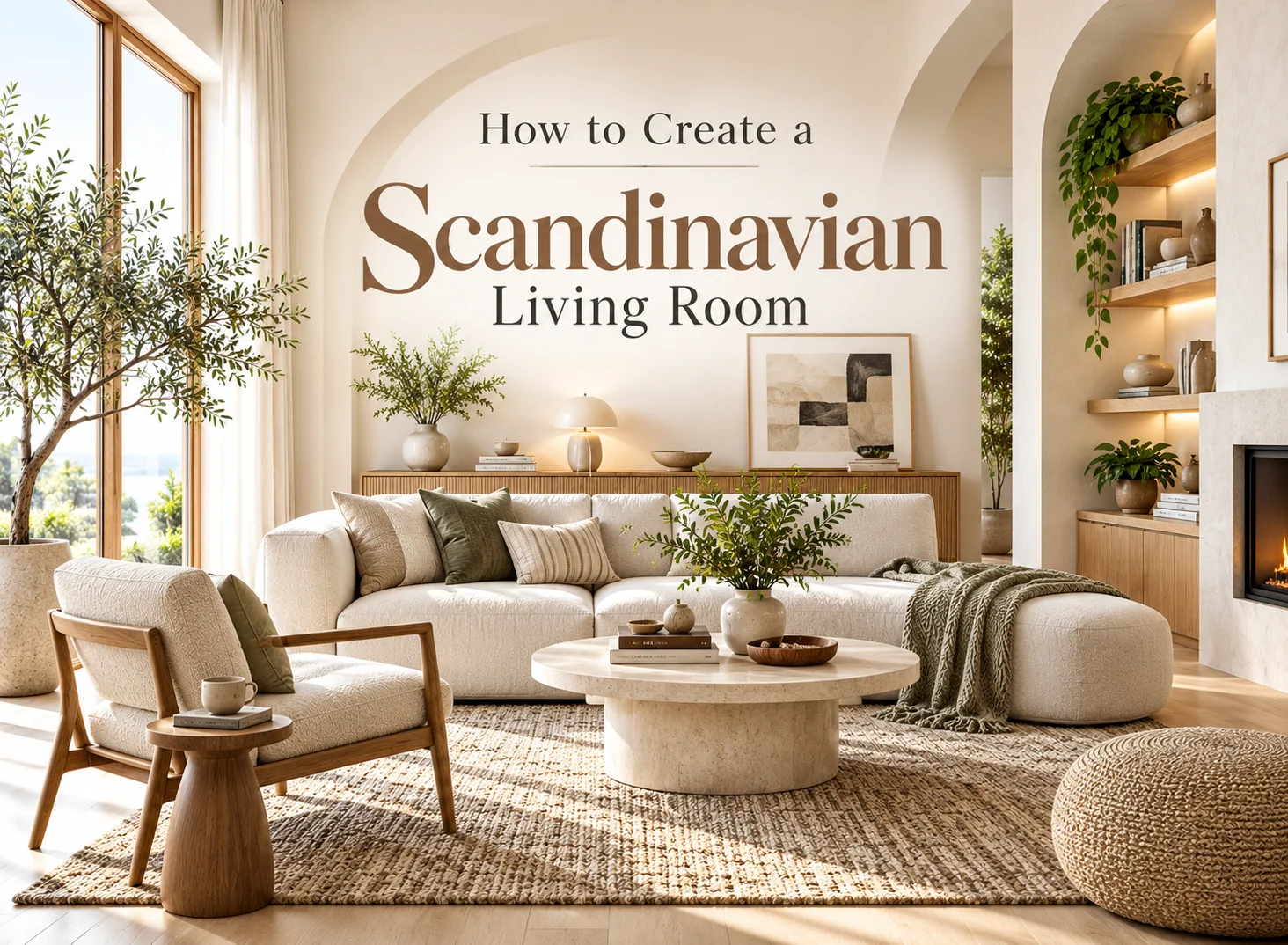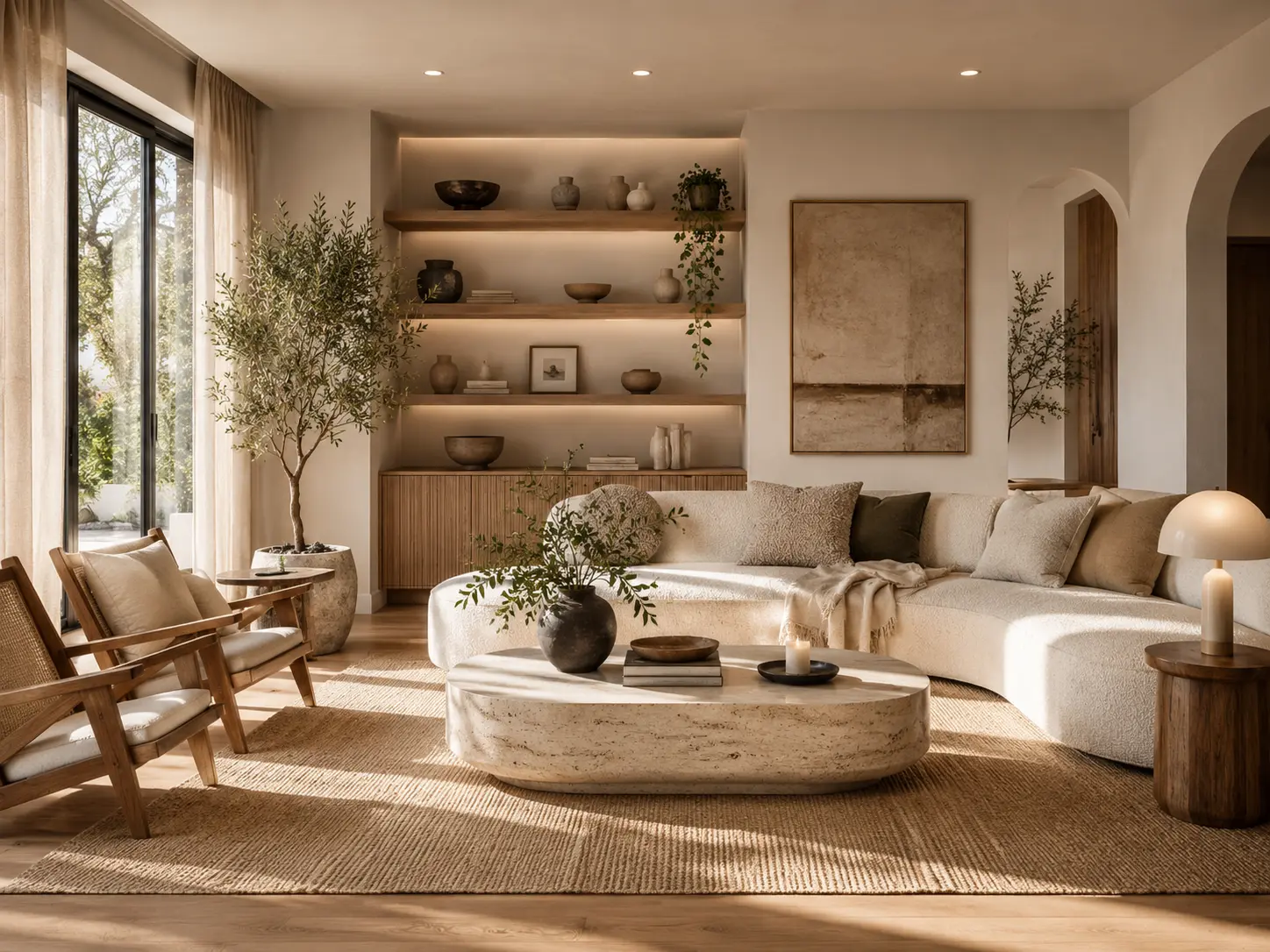
An organic modern living room combines the clean simplicity of contemporary design with the warmth, texture and imperfect beauty of nature. The style feels sophisticated without becoming formal, minimalist without appearing empty and luxurious without relying on excessive decoration.
Instead of sharp contrasts, glossy finishes and highly polished surfaces, organic modern interiors use warm neutral colors, tactile fabrics, natural wood, stone, handmade ceramics and softly curved furniture. These elements create a living room that feels calm, grounded and welcoming while still maintaining a refined modern appearance.
The appeal of organic modern design lies in its balance. A streamlined sofa may be paired with an irregular stone coffee table, while simple architectural lines are softened by linen curtains, a textured wool rug and sculptural greenery. Each element is carefully selected, but the finished room never feels overly styled.
In this complete guide, you will learn what defines organic modern interior design, how it differs from similar styles, which colors and materials work best and how to build a cohesive organic modern living room that feels timeless rather than trend-driven.
If you are still comparing different decorating styles, explore our Modern Living Room Styles Explained guide to discover how organic modern design relates to minimalist, Scandinavian, Japandi and contemporary interiors.
What Is Organic Modern Interior Design?
Organic modern interior design is a decorating style that blends modern simplicity with natural materials, warm earthy colors, organic forms and layered textures. It retains the uncluttered layouts and clean furniture lines associated with modern design while introducing softer, more tactile elements inspired by nature.
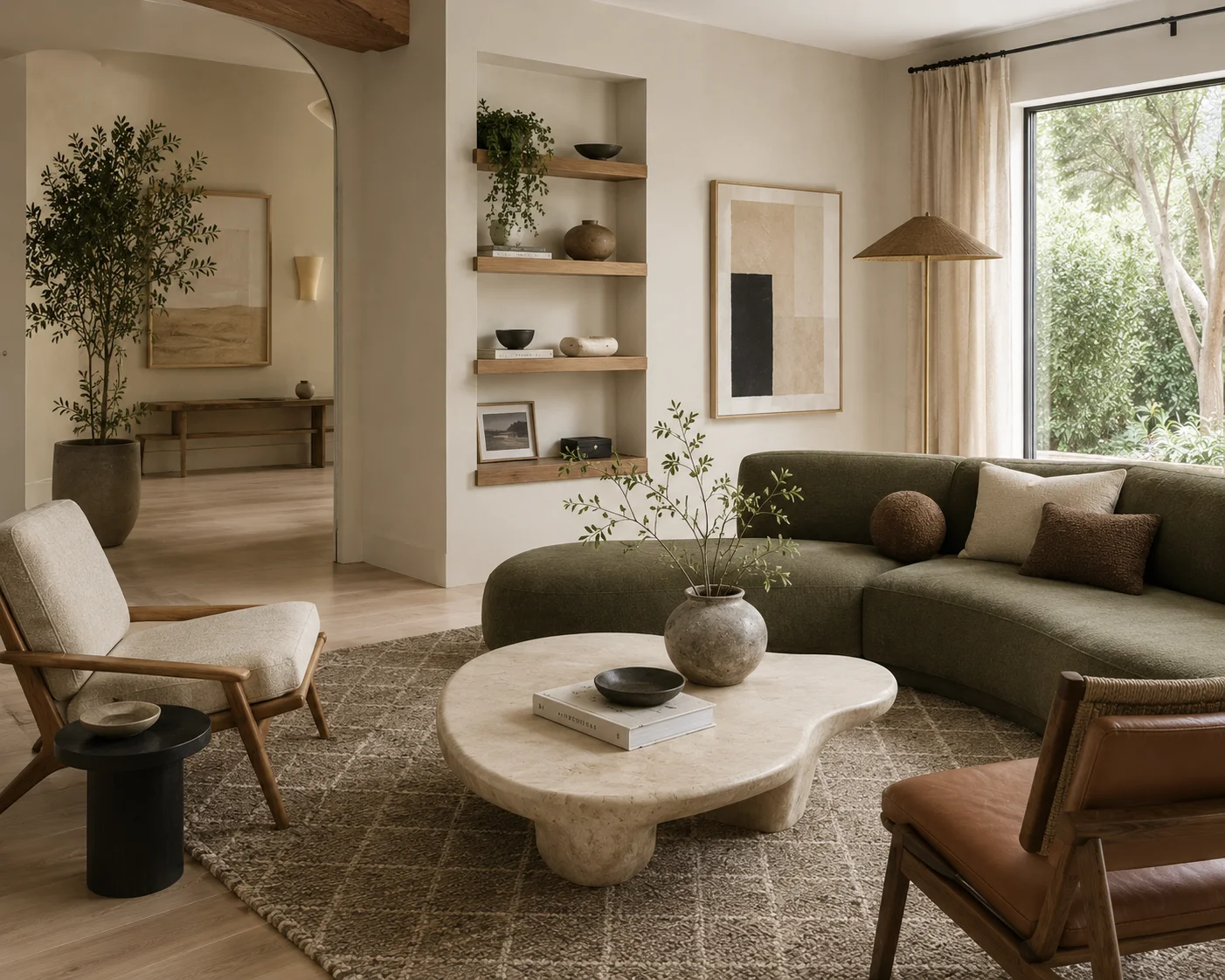
The style is often described as a warmer and more relaxed interpretation of minimalism. A traditional minimalist room may emphasize reduction, smooth surfaces and visual restraint, whereas an organic modern room places equal importance on comfort, texture and material character.
Natural variation is an essential part of the look. Visible wood grain, stone veining, hand-finished plaster, woven fibers and slightly irregular ceramics prevent the space from feeling overly manufactured. These imperfections add depth and allow the room to feel lived-in while remaining visually calm.
Organic modern design also draws inspiration from biophilic design, Scandinavian interiors, Japandi style and the Japanese philosophy of wabi-sabi. Each of these influences celebrates simplicity, craftsmanship, natural beauty and a thoughtful connection between indoor spaces and the natural environment.
Organic Modern Style at a Glance
Organic modern style combines clean modern lines, natural materials, warm neutral colors, curved forms and restrained decoration. The overall result is a calm, elegant and comfortable interior that feels connected to nature.
Why Is Organic Modern Style So Popular?
Organic modern design has become popular because it responds to the desire for homes that feel both visually refined and emotionally comfortable. Many homeowners appreciate modern interiors but find that stark minimalism, cool gray palettes and hard finishes can sometimes feel impersonal.
Organic modern style solves this problem by maintaining a clean and uncluttered foundation while adding warmth through wood, linen, wool, stone and handcrafted decor. The room still feels modern, but it also feels inviting enough for everyday living.
The style is also highly adaptable. It can work in large open-plan homes, small apartments, traditional properties and newly built spaces. Because the look is based on timeless materials rather than temporary decorative trends, it can evolve gradually as furniture and accessories are updated.
Another reason for its popularity is its connection to wellness-focused and nature-inspired interiors. Soft colors, natural light, tactile materials and greenery can help create a restful atmosphere that feels removed from the visual noise of everyday life.
Key Characteristics of an Organic Modern Living Room
A successful organic modern living room feels spacious, tactile and carefully considered. Although individual rooms may vary, most examples share several defining design characteristics.
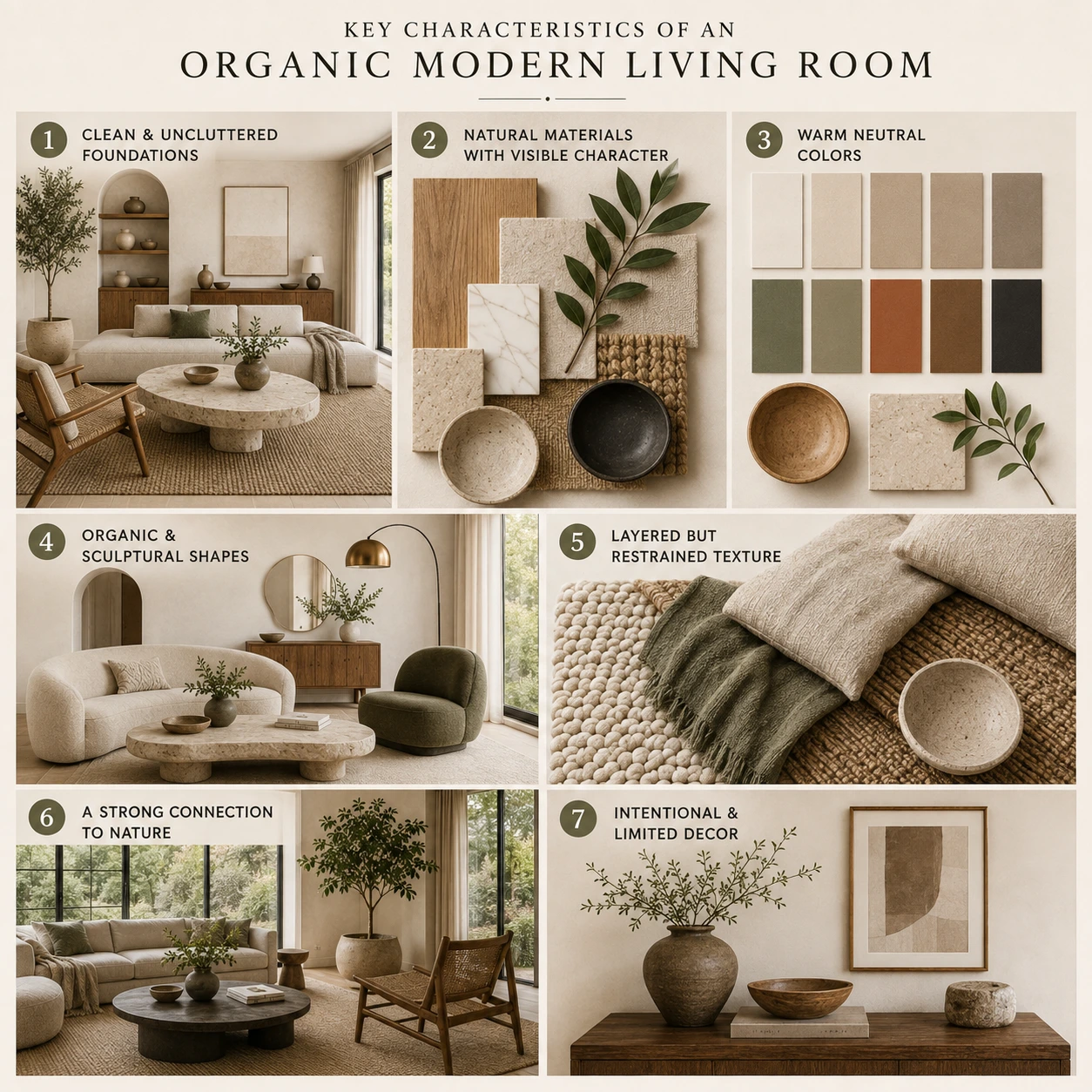
1. Clean and Uncluttered Foundations
The foundation of an organic modern room is simple and visually calm. Furniture is arranged with enough space between pieces, architectural lines remain visible and surfaces are not crowded with unnecessary accessories.
This does not mean the living room should feel empty. Instead, each visible item should serve a functional or aesthetic purpose. A large ceramic vessel, one sculptural object or a carefully arranged stack of design books can create more impact than several small decorative pieces.
Built-in cabinetry, closed storage and furniture with clean silhouettes help conceal everyday clutter. This allows the natural materials and statement furniture pieces to receive more visual attention.
2. Natural Materials with Visible Character
Natural materials are central to organic modern design. Common choices include white oak, walnut, travertine, limestone, marble, clay, linen, wool, jute, rattan and woven fibers.
The most effective materials retain some of their original character. Wood should show visible grain, stone should include subtle veining and ceramics may feature slight variations in shape or finish. These details introduce quiet visual interest without adding decorative clutter.
Natural materials also age more gracefully than many synthetic alternatives. Small variations, changes in tone and a developing patina can add character over time rather than making the furniture appear worn.
3. Warm Neutral Colors
Organic modern interiors are usually built around warm neutrals rather than cool whites and blue-based grays. Cream, ivory, oatmeal, beige, mushroom, taupe and soft brown create a calm foundation that complements wood and stone.
Muted greens, clay tones, dusty terracotta and charcoal may be introduced as secondary colors. These shades should feel inspired by nature and slightly softened rather than bright or highly saturated.
4. Organic and Sculptural Shapes
Curved and irregular forms soften the straight lines of walls, windows and built-in furniture. Rounded sofas, oval coffee tables, curved accent chairs, arched floor lamps and free-form decorative objects bring movement into the room.
Not every item needs to have a curved silhouette. The most balanced spaces combine rounded pieces with simple rectangular furniture. For example, a structured sofa may be paired with an irregular stone coffee table, while a linear console can be softened by a round mirror or sculptural table lamp.
5. Layered but Restrained Texture
Texture replaces excessive decoration in an organic modern living room. A neutral room becomes visually interesting when it combines smooth stone, grainy wood, nubby wool, washed linen, woven cane and matte ceramics.
The key is restraint. Too many unrelated textures can make the room feel busy, so select a limited material palette and repeat it throughout the space. Linen curtains may echo the texture of the sofa, while an oak coffee table may connect visually with a timber picture frame or accent chair.
6. A Strong Connection to Nature
Organic modern rooms often include large windows, natural daylight, indoor plants and views of the outdoors. Even when a room does not have strong architectural connections to nature, similar effects can be created through earthy colors, botanical forms and natural materials.
Plants should be selected for their sculptural shape and scale rather than added simply to fill empty corners. One substantial plant often suits the style better than several small plants scattered throughout the room.
7. Intentional and Limited Decoration
Organic modern decor is edited rather than abundant. Accessories usually include handmade ceramics, natural stone objects, abstract artwork, textured books, wooden bowls and a small number of sculptural pieces.
Every object should relate to the room through color, shape or material. Decorative items do not need to match exactly, but they should feel connected to the overall palette and mood.
Organic Modern vs. Minimalist, Japandi and Scandinavian Style
Organic modern design shares several characteristics with minimalist, Japandi and Scandinavian interiors. However, each style has a slightly different focus and visual identity.
| Design Style | Main Focus | Common Materials | Overall Feeling |
|---|---|---|---|
| Organic Modern | Modern simplicity softened by nature | Wood, stone, linen, wool and clay | Warm, refined and grounded |
| Minimalist | Reduction, function and visual clarity | Smooth wood, glass, metal and plain textiles | Quiet, clean and highly restrained |
| Japandi | Japanese simplicity combined with Scandinavian comfort | Light and dark wood, linen, paper and ceramics | Serene, balanced and crafted |
| Scandinavian | Practicality, light and everyday comfort | Pale timber, wool, cotton and simple ceramics | Bright, cozy and approachable |
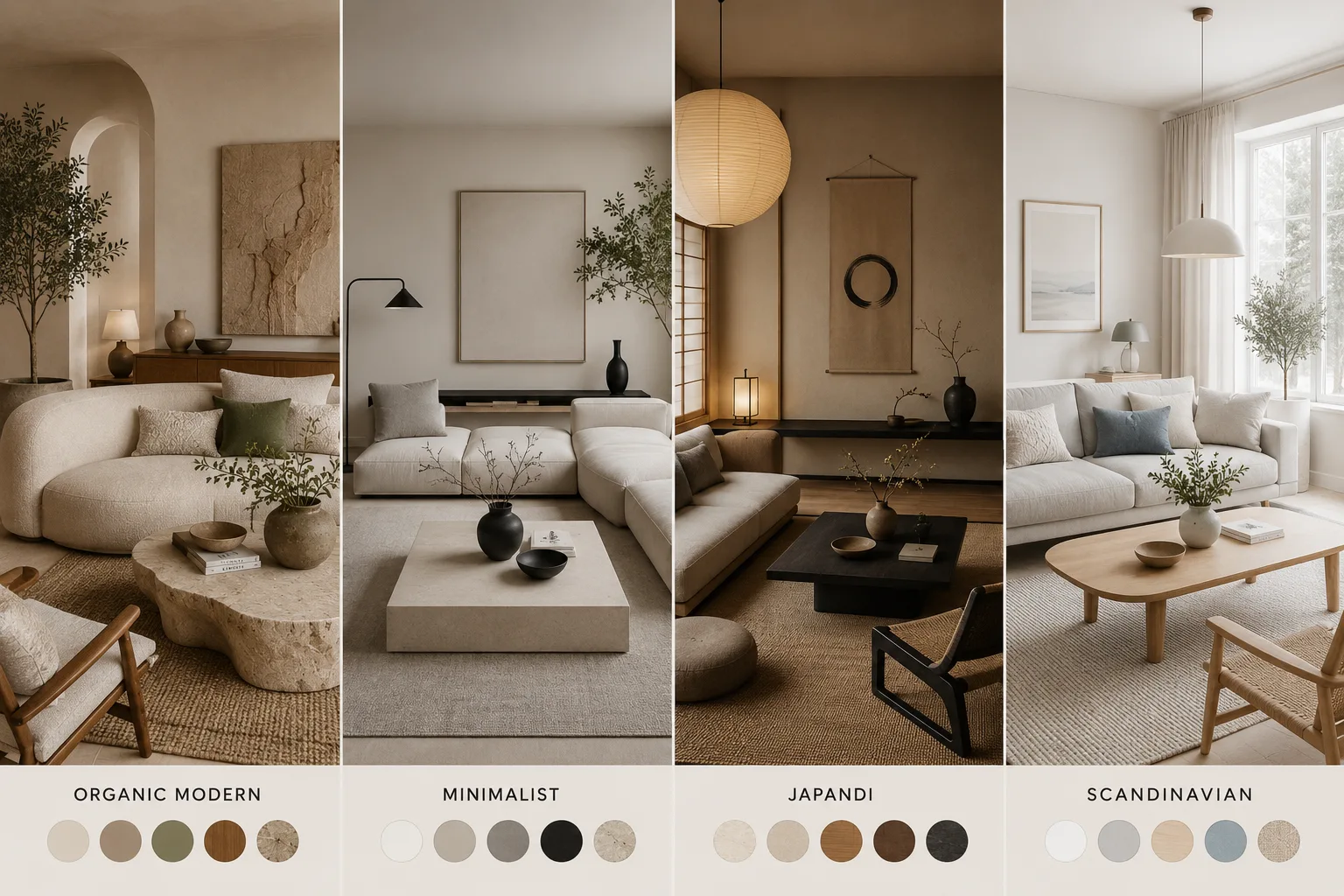
Organic Modern vs. Minimalist
Both styles prioritize uncluttered layouts and purposeful furniture. However, organic modern rooms are usually warmer, more tactile and more layered. Minimalist interiors may rely on smooth finishes and limited decoration, while organic modern spaces use natural imperfections and contrasting textures to add depth.
Learn more about creating a pared-back interior in our Minimalist Living Room Style Guide.
Organic Modern vs. Japandi
Japandi and organic modern interiors both value craftsmanship, neutral colors and natural materials. Japandi design generally places greater emphasis on low-profile furniture, Japanese simplicity and a stronger contrast between pale and dark wood.
Organic modern design is often softer and more sculptural, with plush upholstery, rounded forms and substantial stone furniture. Explore the differences further in our Japandi Living Room Style Guide.
Organic Modern vs. Scandinavian
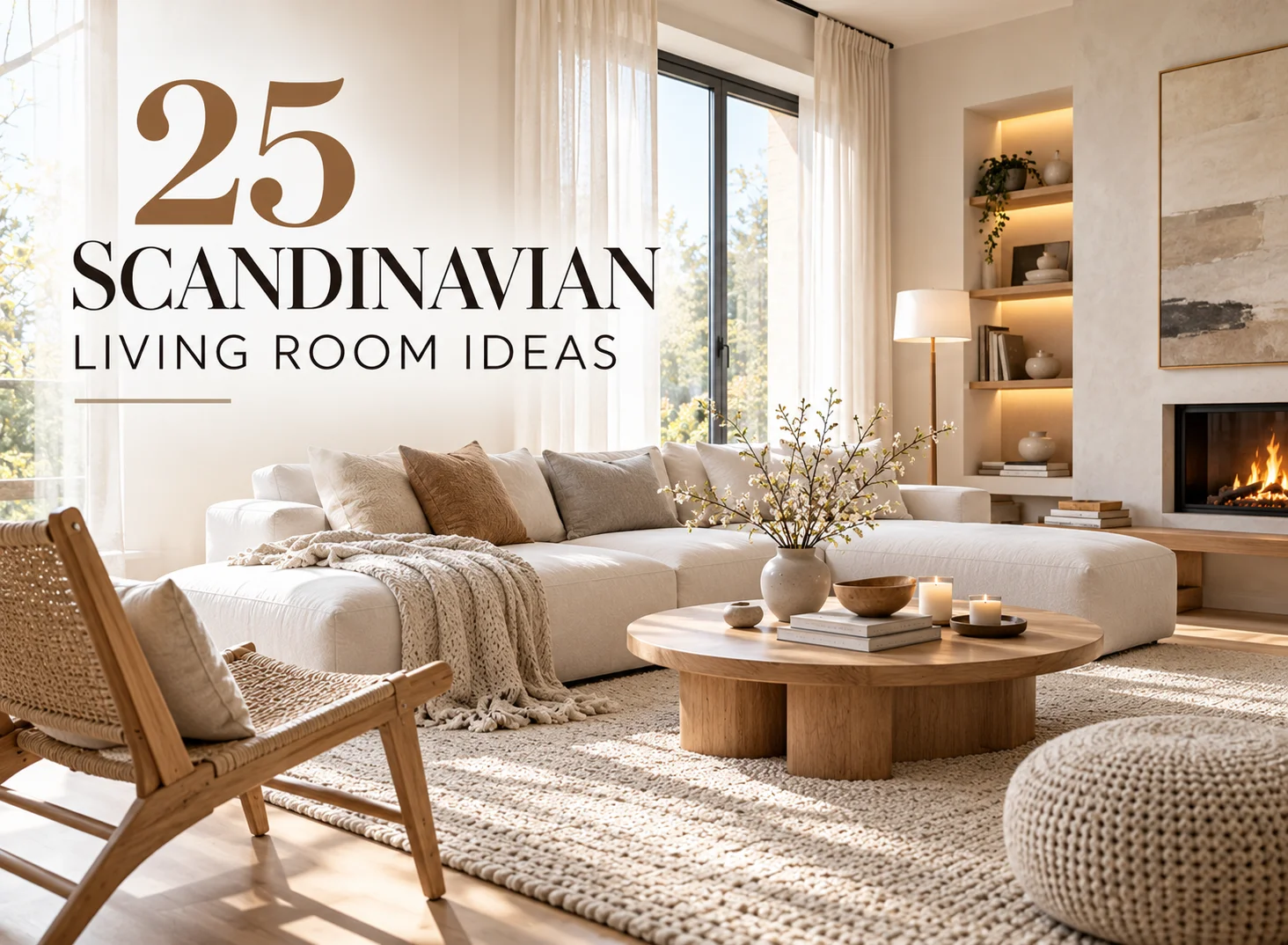
Scandinavian living rooms are typically brighter, lighter and more casual. Pale timber, white walls, practical furniture and cozy textiles create an approachable Nordic atmosphere.
Organic modern rooms often feel more luxurious and grounded because they use heavier stone, richer wood tones, oversized furniture and sculptural decor. See our Scandinavian Living Room Style Guide for a detailed breakdown of Nordic design.
Color Palette
The organic modern color palette is inspired by sand, stone, soil, wood, bark and foliage. Most rooms begin with a light neutral foundation and gradually introduce medium and darker tones through furniture, textiles and decorative details.
The goal is not to make every surface beige. A successful palette includes enough tonal variation to create depth while maintaining a calm and cohesive atmosphere.
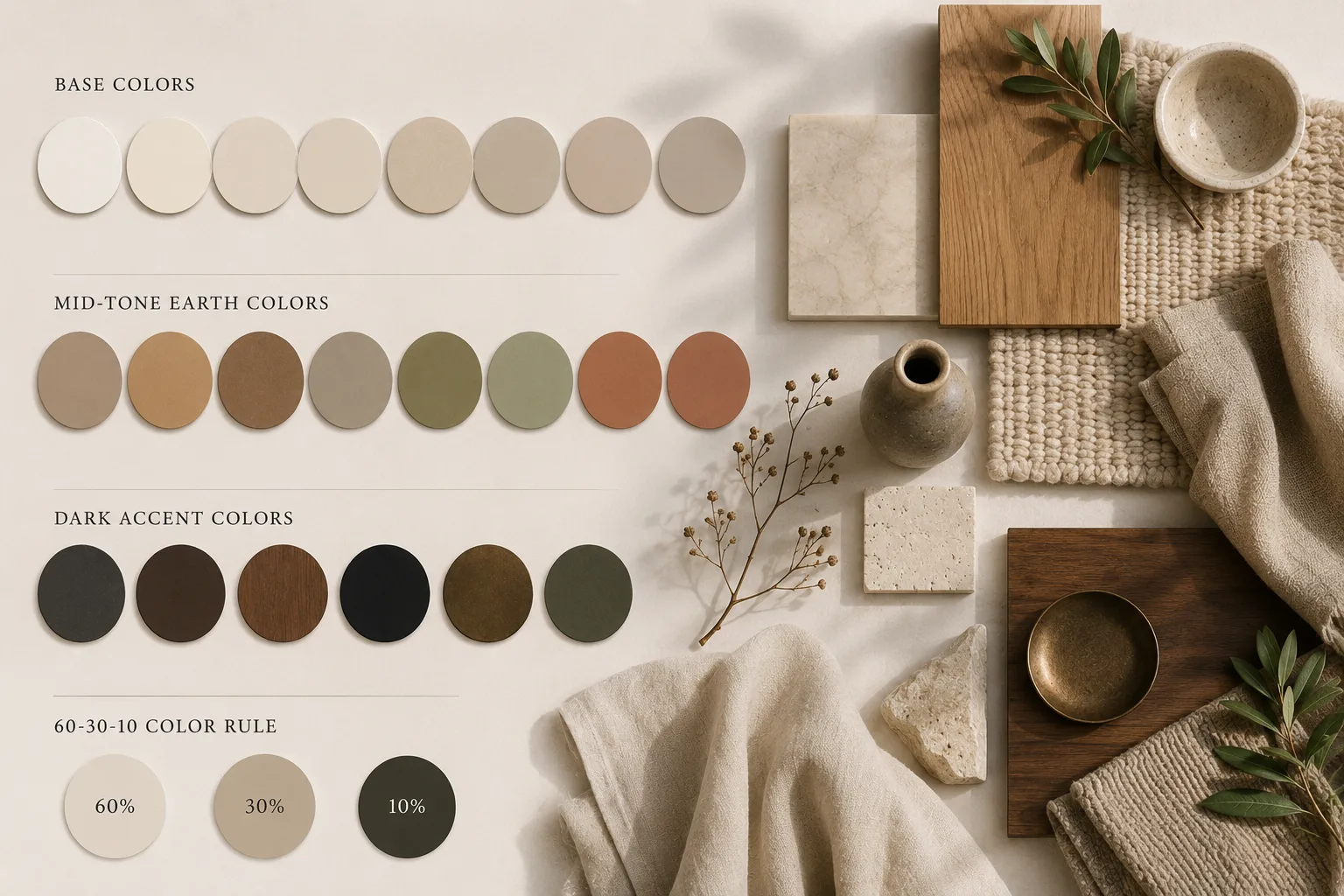
Best Base Colors
Base colors should cover the largest surfaces in the living room, including walls, ceilings, rugs and major upholstery pieces.
- Warm white
- Soft ivory
- Natural linen
- Pale oatmeal
- Light beige
- Soft greige
- Sand
- Pale mushroom
Choose paint colors with warm or balanced undertones rather than icy blue or cool gray undertones. Warm white walls reflect natural light while allowing timber, stone and textured fabrics to stand out.
Mid-Tone Earth Colors
Mid-tone colors add dimension and prevent a neutral living room from appearing flat. Introduce them through wood furniture, accent chairs, cushions, throws, artwork and decorative accessories.
- Taupe
- Camel
- Mocha
- Warm gray
- Muted olive
- Sage green
- Clay
- Dusty terracotta
These colors should feel softened and slightly desaturated. Bright green, vivid orange or strong primary colors can interrupt the understated mood of an organic modern living room.
Dark Accent Colors
Darker shades provide structure and definition within a pale neutral room. They are most effective when used in small amounts on lighting, window frames, furniture legs, artwork or selected accessories.
- Charcoal
- Espresso brown
- Deep walnut
- Matte black
- Dark bronze
- Smoky olive
A small amount of contrast is usually enough. A dark bronze floor lamp, a walnut side table or a black-framed artwork can anchor the room without making it feel heavy.
Using the 60-30-10 Color Rule
The traditional 60-30-10 decorating rule offers a practical starting point for building a balanced organic modern palette:
- 60% light foundation: Warm white walls, cream upholstery and a pale rug.
- 30% natural mid-tones: Oak furniture, taupe textiles, woven fibers and stone.
- 10% deeper contrast: Walnut, charcoal, black metal, bronze or muted green.
This formula can be adjusted according to the room size and available natural light. Smaller living rooms may benefit from a higher proportion of pale colors, while large, sunlit spaces can comfortably support darker woods and richer stone finishes.
Creating a Monochromatic Organic Modern Palette
A monochromatic organic modern living room can feel sophisticated when several related shades and material finishes are layered together. Instead of applying one exact beige throughout the room, combine ivory, oatmeal, sand, camel, taupe and walnut.
Texture becomes especially important in a monochromatic space. Pair matte painted walls with linen curtains, brushed timber, woven upholstery, soft wool and honed stone. These surface variations create depth even when the colors remain closely related.
Designer Tip for Choosing Warm Neutrals
Always test paint colors beside the flooring, sofa fabric and main furniture finishes. Warm neutrals can appear yellow, pink, green or gray depending on the direction of natural light and the surrounding materials.
Apply large paint samples to more than one wall and observe them during the morning, afternoon and evening before making a final decision.
Furniture Essentials
Furniture establishes the structure, comfort and visual rhythm of an organic modern living room. The best pieces combine simple modern silhouettes with tactile upholstery, natural materials and softly rounded forms.
Instead of filling the room with matching furniture from one collection, select a small number of pieces that complement one another through proportion, tone and texture. This approach creates a layered, collected interior while preserving the calm simplicity associated with organic modern design.
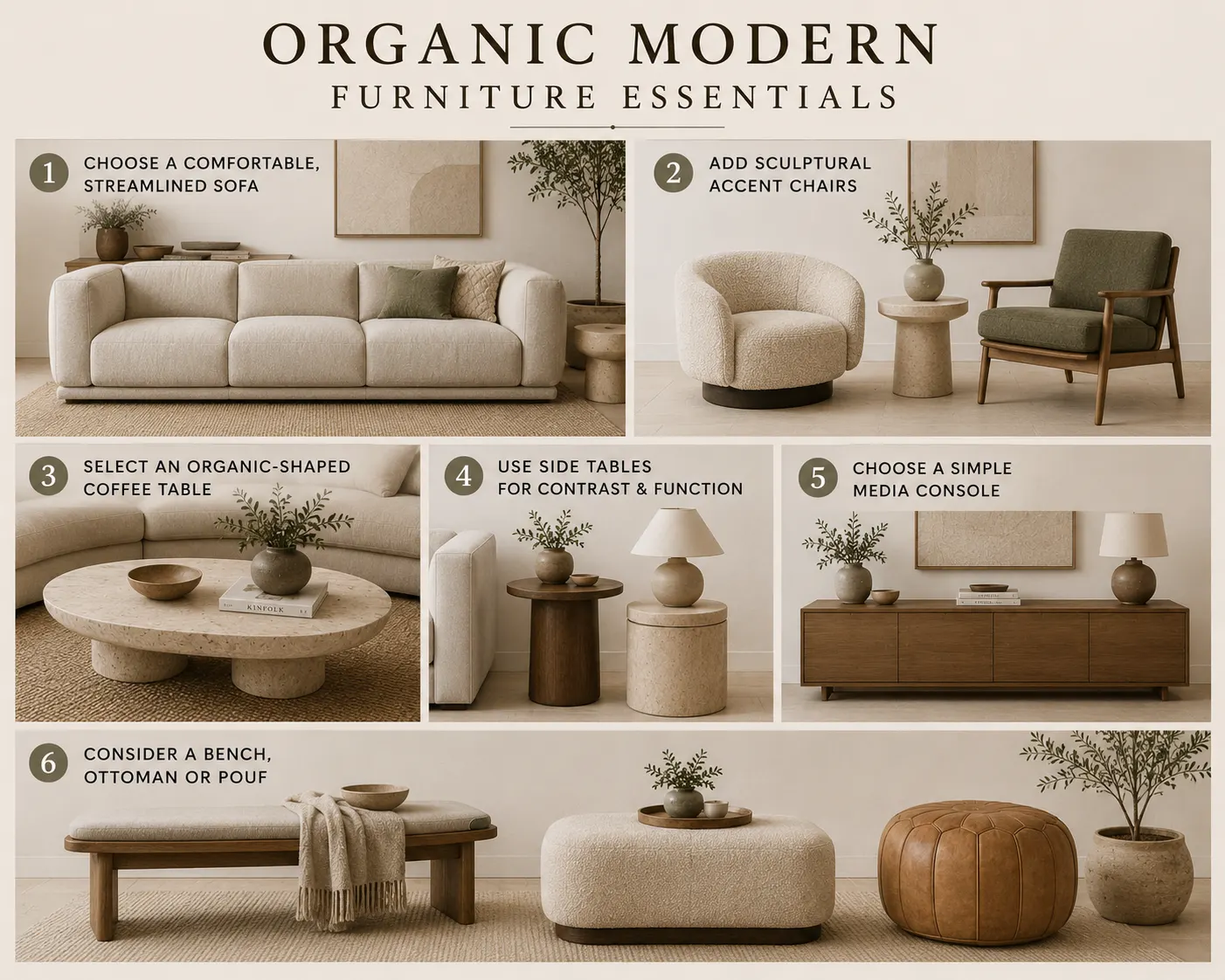
Choose a Comfortable, Streamlined Sofa
The sofa is usually the largest visual element in the living room, so it should feel substantial without appearing bulky. Look for a low-profile or medium-height design with a clean silhouette, generous cushions and soft upholstery.
Suitable sofa fabrics include linen blends, brushed cotton, textured chenille, wool blends and performance fabrics with a natural woven appearance. Cream, oatmeal, warm beige, mushroom and soft taupe are versatile choices that support the organic modern palette.
A curved or gently rounded sofa can add softness to a rectangular room. However, a straight-lined sofa can work equally well when paired with an oval coffee table, rounded armchair or sculptural side table.
Avoid sofas with overly decorative tufting, ornate rolled arms or highly polished metal details. The shape should feel contemporary, comfortable and visually quiet.
Add Sculptural Accent Chairs
Accent chairs provide an opportunity to introduce a stronger shape, richer texture or contrasting material. Suitable options include bouclé chairs, woven lounge chairs, upholstered barrel chairs, timber-framed armchairs and low-profile leather chairs.
Choose chairs that relate to the scale of the sofa. An oversized sofa requires substantial accent seating, while a compact apartment living room benefits from lighter chairs with exposed legs or open timber frames.
For a cohesive arrangement, repeat one element from the sofa in the accent chair. This could be a similar upholstery tone, curved shape or wood finish. The pieces should coordinate without appearing identical.
Select an Organic-Shaped Coffee Table
A coffee table can become the sculptural focal point of an organic modern living room. Oval, round, pebble-shaped and irregular forms soften the room and provide contrast against linear sofas and architectural features.
Natural stone coffee tables made from travertine, limestone or marble introduce visual weight and subtle variation. Solid oak or walnut tables create warmth, while plaster, concrete and microcement designs offer a more contemporary appearance.
Proportion is important. The coffee table should generally measure approximately two-thirds the length of the sofa and sit close enough to reach comfortably without restricting circulation.
In a smaller room, consider nesting tables or two compact tables instead of one large solid piece. This creates flexibility and keeps the arrangement visually lighter.
Use Side Tables for Contrast and Function
Side tables should support the seating arrangement without creating unnecessary clutter. One or two well-positioned tables are usually sufficient for drinks, books and lighting.
Use side tables to introduce material contrast. A stone coffee table may be paired with a timber side table, while a wooden coffee table can be complemented by a ceramic, metal or plaster design.
Avoid using too many different finishes. Limit the room to two or three primary furniture materials and repeat them in different locations for a more cohesive result.
Choose a Simple Media Console
An organic modern media console should provide concealed storage while maintaining a clean architectural appearance. Floating consoles, low timber cabinets and handle-free designs work particularly well.
White oak, walnut and warm-toned timber finishes add natural warmth. Fluted or reeded detailing can introduce texture, but it should remain subtle rather than highly decorative.
Keep the surface styling minimal. A ceramic vessel, a small stack of books and one sculptural object are often enough. Conceal cables and electronic equipment wherever possible to preserve the room’s uncluttered appearance.
Consider a Bench, Ottoman or Pouf
A bench, ottoman or upholstered pouf can provide additional seating without visually dominating the room. These pieces are especially useful in open-plan spaces or living rooms designed for entertaining.
Choose upholstery in wool, linen, leather or a textured woven fabric. Rounded or irregular designs reinforce the organic character of the room, while a simple timber bench can introduce warmth and architectural definition.
For greater functionality, select an ottoman that can also serve as a footrest or occasional coffee table when topped with a sturdy tray.
How to Plan an Organic Modern Furniture Layout
An organic modern layout should feel open, balanced and easy to navigate. Furniture needs enough breathing space to highlight its shape and material, but the arrangement must still feel intimate and comfortable.
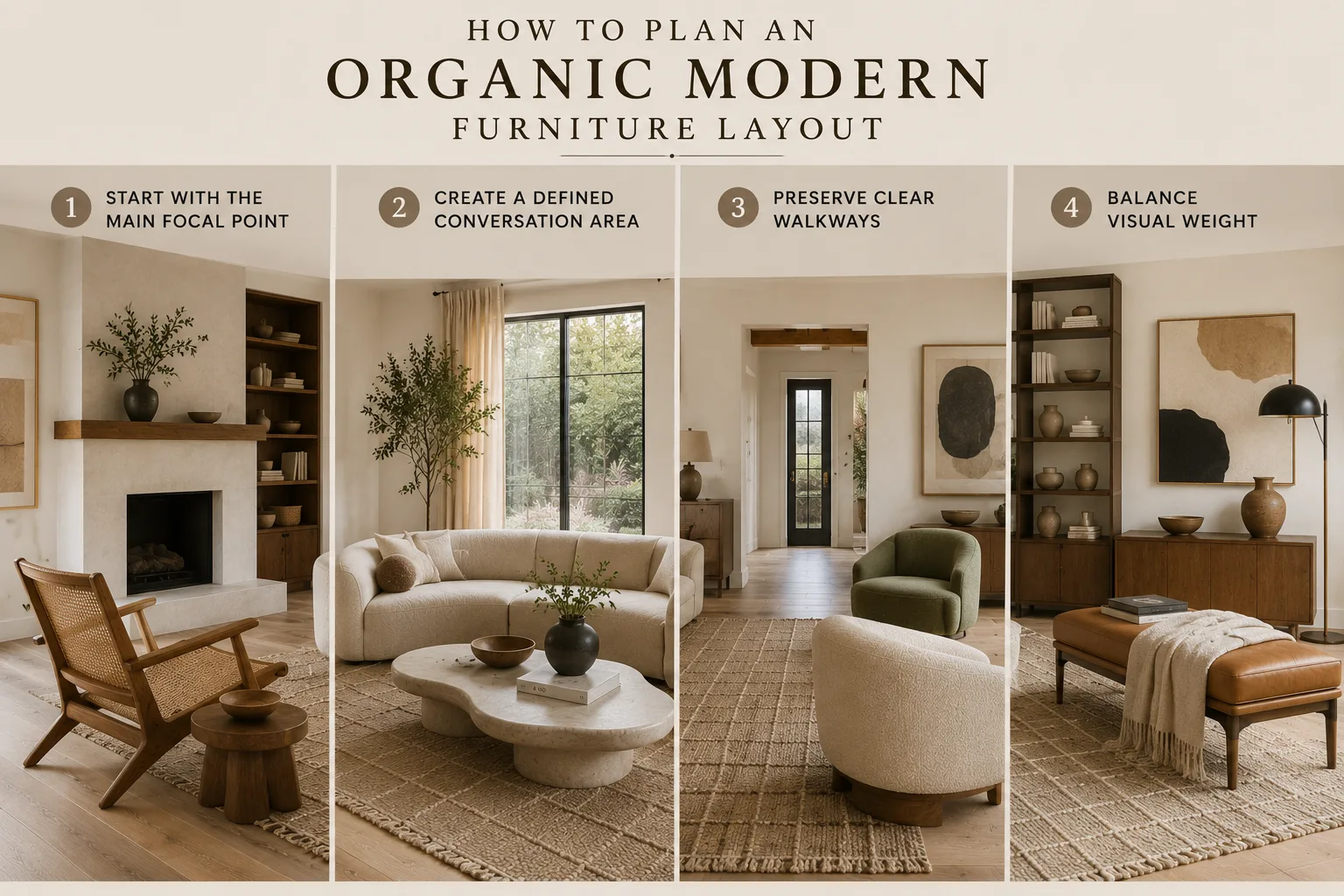
Start with the Main Focal Point
Identify the primary focal point before arranging the furniture. This may be a fireplace, large window, architectural wall, artwork or media unit.
Position the main sofa so it relates clearly to the focal point without blocking natural light or important circulation routes. Accent chairs can then be angled toward the sofa to encourage conversation.
Create a Defined Conversation Area
Arrange seating close enough for comfortable conversation. Furniture placed too far apart can make the room feel formal and disconnected, while pieces positioned too closely may restrict movement.
Use a large area rug to define the seating zone. Ideally, the front legs of the sofa and chairs should rest on the rug. In a spacious room, all furniture legs may sit fully within the rug boundary.
Preserve Clear Walkways
Maintain clear walking paths between entrances, seating and adjacent rooms. Avoid placing furniture where people must move around sharp corners or squeeze through narrow gaps.
In compact rooms, furniture with raised legs, open frames or rounded edges can improve visual flow and make the space feel less crowded.
Balance Visual Weight
Distribute large and substantial pieces throughout the room rather than grouping them on one side. A heavy stone coffee table may be balanced by a substantial sofa, a large floor lamp or an oversized artwork on the opposite wall.
Visual balance does not require perfect symmetry. Organic modern rooms often look more natural when the arrangement is slightly asymmetrical but still carefully proportioned.
Best Natural Materials
Natural materials give an organic modern living room its warmth, depth and sense of authenticity. The goal is to use materials that feel tactile and visually rich without making the room appear rustic or overly traditional.
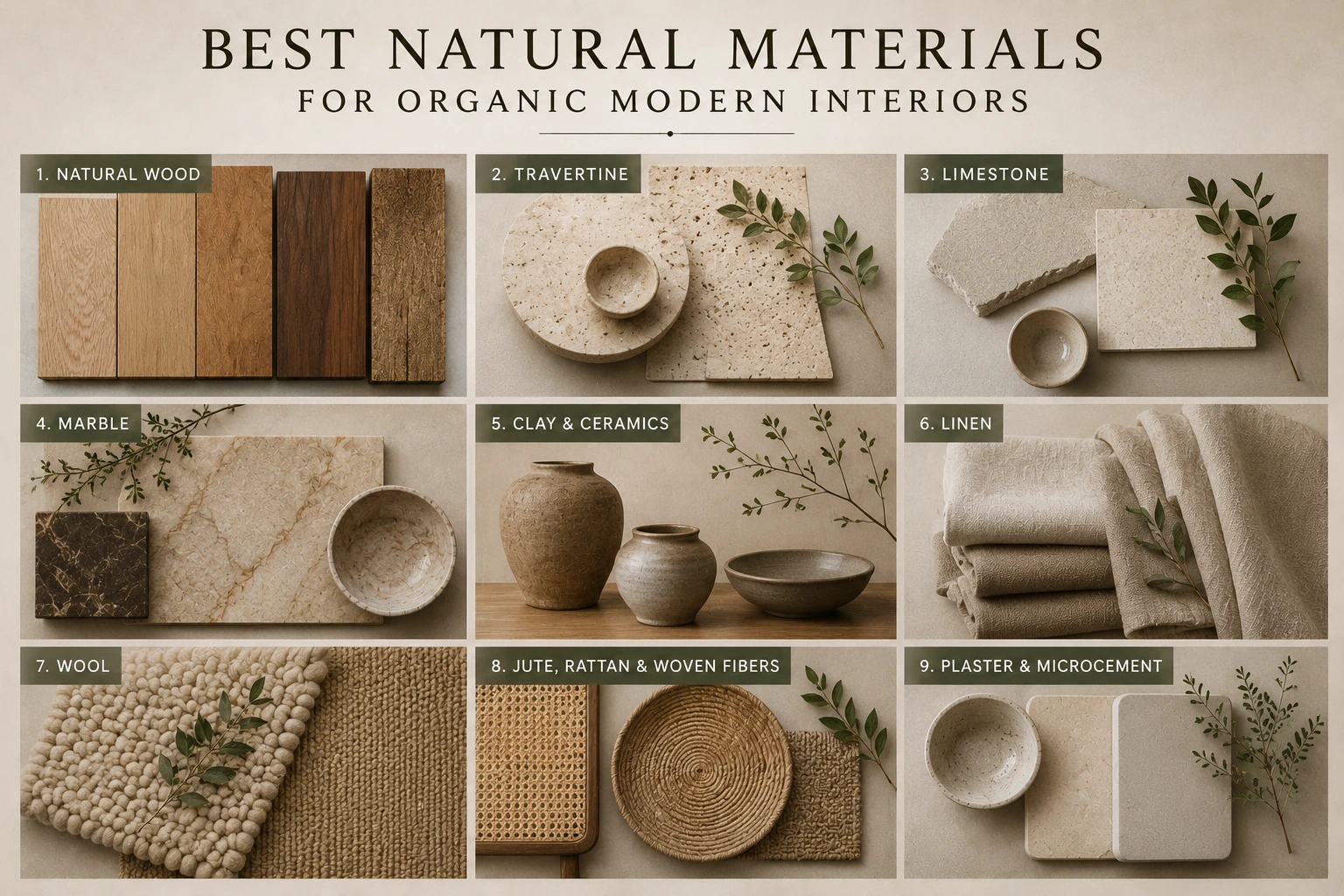
Natural Wood
Wood is one of the most important materials in organic modern design. It introduces warmth, grain and tonal variation while balancing the cooler appearance of stone, plaster and metal.
Popular wood options include:
- White oak: Light, warm and versatile with a subtle grain.
- Walnut: Rich and sophisticated with deeper brown tones.
- Ash: Pale and contemporary with a noticeable linear grain.
- Teak: Warm and durable with a slightly mid-century character.
- Reclaimed wood: Textured and characterful when used sparingly.
Choose matte, oiled or lightly brushed finishes rather than glossy varnish. Natural-looking finishes preserve the tactile quality of the wood and complement the understated mood of the room.
For more information on combining clean furniture lines with warm natural finishes, see our Contemporary Living Room Style Guide.
Travertine
Travertine is strongly associated with organic modern interiors because of its warm beige color, natural pores and subtle tonal variation. It is commonly used for coffee tables, side tables, fireplace surrounds and decorative objects.
Honed travertine has a softer, more understated appearance than polished stone. Its matte surface works especially well with linen, wool and natural timber.
Because travertine is porous, it should be sealed properly and protected from spills. Use coasters and clean liquids quickly to reduce the risk of staining.
Limestone
Limestone offers a refined but earthy appearance. Its soft texture and subtle color variation make it suitable for coffee tables, flooring, fireplace surrounds and architectural details.
Warm beige, cream and pale gray limestone can support a neutral palette without looking flat. Like travertine, limestone requires sealing and careful maintenance because it is naturally porous.
Marble
Marble can add understated luxury to an organic modern living room when selected in warm, softly veined varieties. Cream, beige, brown and muted green marble often feel more natural than highly contrasted black-and-white designs.
Use marble selectively so that it complements rather than dominates the material palette. A marble side table, lamp base or decorative tray may be enough to introduce elegance.
Clay and Handmade Ceramics
Clay vessels and handmade ceramics add texture, craftsmanship and subtle imperfection. Matte, unglazed and lightly textured finishes are particularly suitable for the style.
Choose a limited number of substantial pieces rather than many small accessories. Oversized floor vessels, low bowls and sculptural pots can create visual impact while keeping surfaces uncluttered.
Linen
Linen is one of the most effective fabrics for organic modern interiors. Its relaxed texture softens clean furniture lines and filters natural light beautifully when used for curtains.
Linen upholstery, cushions and throws work well in warm white, flax, beige and taupe. Natural creasing is part of the fabric’s character and contributes to the casual elegance of the room.
Wool
Wool adds softness, insulation and tactile depth. It is an excellent choice for area rugs, throws, cushions and upholstered seating.
Look for looped, flatwoven, bouclé or hand-knotted textures in neutral colors. A thick wool rug can soften hard flooring and make a minimalist seating arrangement feel more comfortable.
Jute, Rattan and Woven Fibers
Woven materials add natural texture and a relaxed quality. They may appear in baskets, chair frames, cabinet doors, lampshades and decorative accessories.
Use these materials sparingly to avoid pushing the room toward a coastal, bohemian or rustic look. One woven chair, a pair of baskets or a natural-fiber lampshade is often sufficient.
Plaster and Microcement
Plaster and microcement introduce a soft architectural texture that feels contemporary and organic. They can be used on walls, fireplace surrounds, built-in shelving and custom furniture.
Limewash and mineral-based finishes create subtle movement and tonal variation, helping plain walls feel more tactile without requiring patterned wallpaper or decorative molding.
How to Mix Materials Without Creating Visual Clutter
Organic modern rooms rely on material contrast, but too many competing finishes can weaken the calm aesthetic. A restrained material strategy creates a more intentional result.
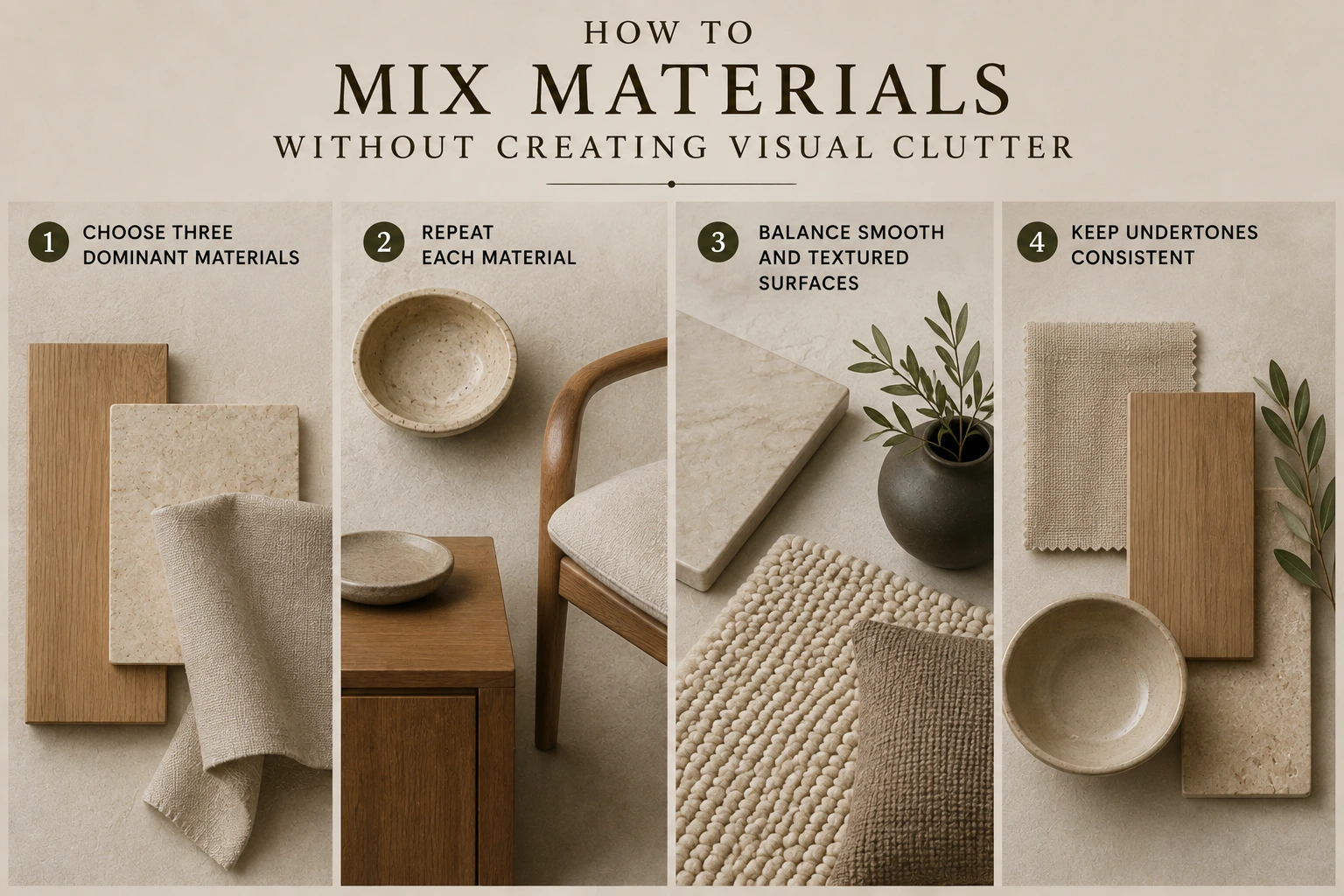
Choose Three Dominant Materials
Begin with three primary materials, such as oak, limestone and linen. These should appear across the largest furniture pieces and surfaces in the room.
Additional materials can be introduced through smaller accents, but the dominant trio should remain visually clear.
Repeat Each Material
Repeat important materials at least twice to create continuity. An oak console may connect with an oak chair frame, while a stone coffee table may be echoed by a stone decorative bowl.
Repetition helps the room feel cohesive even when individual furniture pieces come from different sources.
Balance Smooth and Textured Surfaces
Pair smooth materials with tactile ones. A sleek stone table looks warmer beside a wool rug, while smooth timber cabinetry benefits from linen curtains or textured upholstery.
This contrast prevents the room from feeling either too polished or excessively rustic.
Keep Undertones Consistent
Natural materials do not need to match exactly, but their undertones should relate. Warm oak, cream limestone and oatmeal linen usually work well together because they share yellow, beige or brown undertones.
Mixing very cool gray stone with strongly orange timber can create visual tension unless another element deliberately connects the two.
Organic Modern Living Room Lighting
Lighting plays a major role in shaping the atmosphere of an organic modern living room. The ideal scheme combines natural daylight with several soft artificial light sources placed at different heights.
A single bright ceiling fixture rarely provides enough warmth or flexibility. Layer ambient, task and accent lighting to create a comfortable room throughout the day.
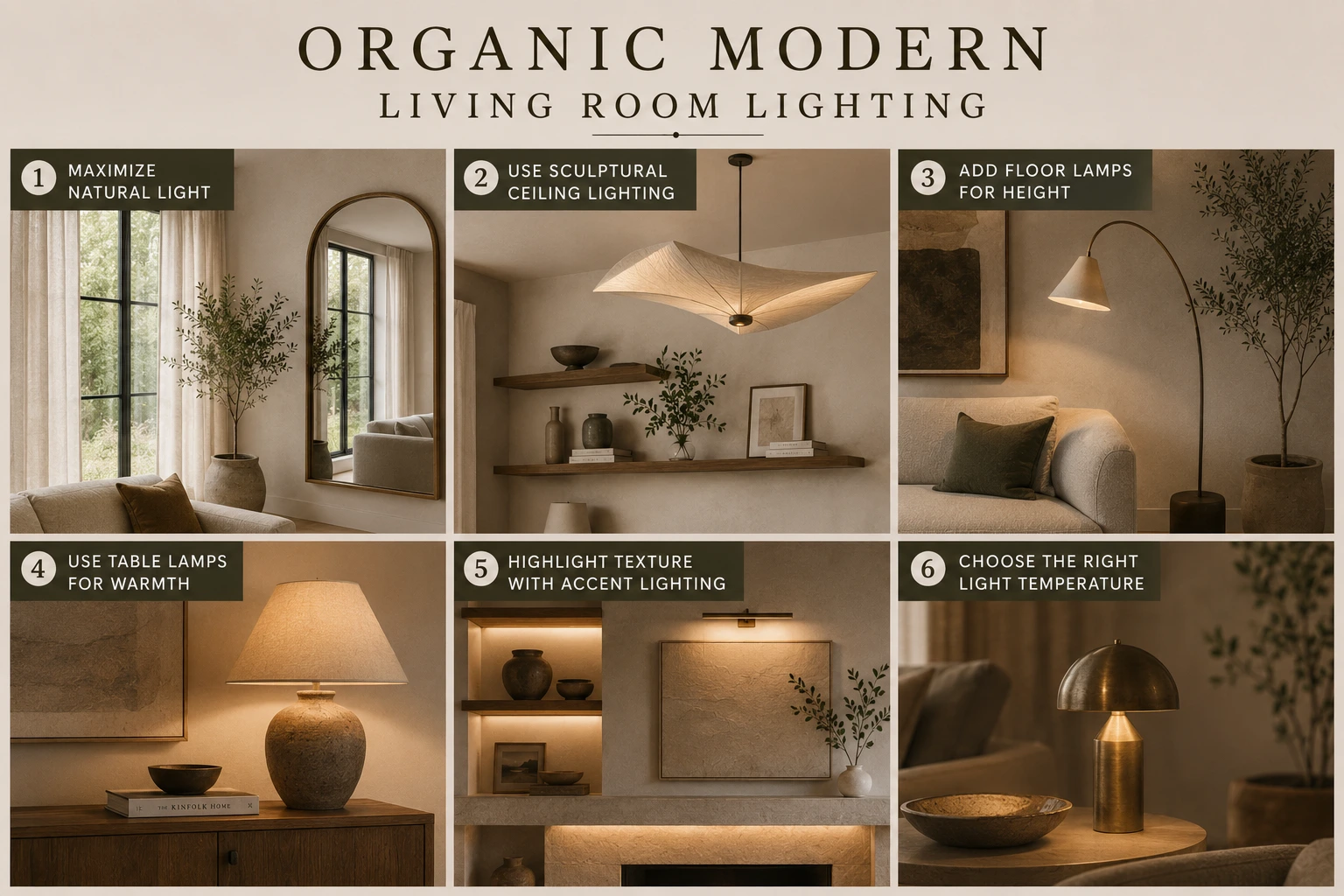
Maximize Natural Light
Keep windows visually open and avoid heavy treatments that block daylight. Floor-to-ceiling linen curtains, sheer panels and simple woven shades filter light while preserving privacy.
Position mirrors carefully to reflect daylight into darker areas, but avoid highly decorative or ornate frames. Rounded timber, bronze or slim black frames are more consistent with the organic modern aesthetic.
Use Sculptural Ceiling Lighting
A pendant or chandelier can act as a functional sculpture. Look for designs made from plaster, paper, fabric, ceramic, wood, aged brass or dark bronze.
Softly curved, asymmetrical or oversized forms are particularly effective in rooms with high ceilings. The fixture should create visual interest without feeling overly glamorous or ornate.
Add Floor Lamps for Height
Floor lamps introduce vertical balance and provide focused light beside sofas and reading chairs. Arched, tripod and sculptural plaster lamps work well in organic modern interiors.
Choose shades in linen, paper or woven fabric to diffuse the light. Warm-toned metals such as bronze or aged brass can add subtle contrast without appearing overly polished.
Use Table Lamps for Warmth
Table lamps create intimate pools of light and help soften large surfaces such as consoles and sideboards. Ceramic, stone, plaster and timber bases reinforce the natural material palette.
One substantial lamp often has more impact than several small lamps. Select a design with enough scale to balance the furniture beneath it.
Highlight Texture with Accent Lighting
Wall washers, picture lights and concealed LED strips can emphasize limewashed walls, stone fireplaces, artwork and open shelving.
Use accent lighting selectively. Too many illuminated features can make the room feel commercial rather than restful.
Choose the Right Light Temperature
Warm white lighting generally suits organic modern interiors better than cool white lighting. Bulbs in the approximate range of 2700K to 3000K create a soft, comfortable atmosphere and complement warm wood and stone finishes.
Use dimmers where possible so the brightness can be adjusted for reading, entertaining and evening relaxation.
Best Flooring for an Organic Modern Living Room
Flooring forms the visual foundation of the room and should complement the natural palette without demanding too much attention. Timber and stone are the most characteristic options, although several practical alternatives can achieve a similar appearance.
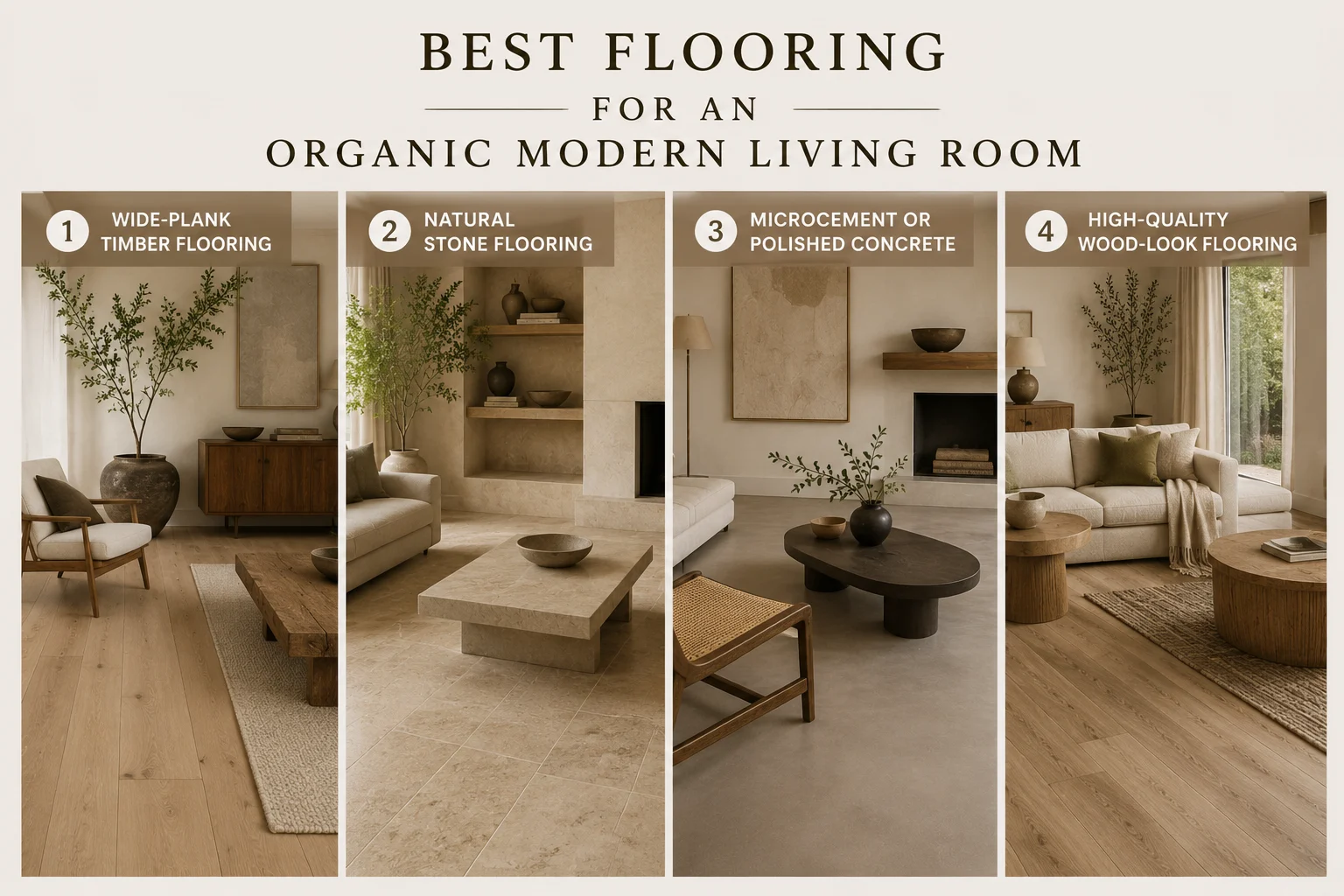
Wide-Plank Timber Flooring
Wide-plank oak flooring is one of the most versatile choices for an organic modern living room. It creates warmth, displays natural grain and provides a calm foundation for neutral furniture.
Choose matte, brushed or low-sheen finishes instead of glossy coatings. Light and medium wood tones generally feel contemporary, while richer walnut shades create a more dramatic and intimate atmosphere.
Natural Stone Flooring
Limestone, travertine and softly toned marble can create a seamless, architectural look. Stone flooring works especially well in warm climates and open-plan homes with abundant natural light.
Because stone can feel visually and physically cool, soften it with a large wool rug, upholstered furniture and full-length curtains.
Microcement or Polished Concrete
Microcement and polished concrete offer a modern, continuous surface. Warm beige, greige and soft taupe finishes feel more compatible with organic modern design than blue-based industrial gray.
Pair these hard surfaces with warm timber, soft textiles and substantial rugs to prevent the room from feeling austere.
High-Quality Wood-Look Flooring
Engineered timber, luxury vinyl and laminate can provide a practical alternative to solid wood. Choose designs with realistic grain variation, matte finishes and natural color movement.
Avoid overly uniform patterns or highly glossy surfaces, as they can make the floor appear artificial.
Choosing an Organic Modern Area Rug
An area rug defines the seating arrangement, adds softness and helps absorb sound. It should be large enough to connect the main furniture pieces rather than floating beneath the coffee table.
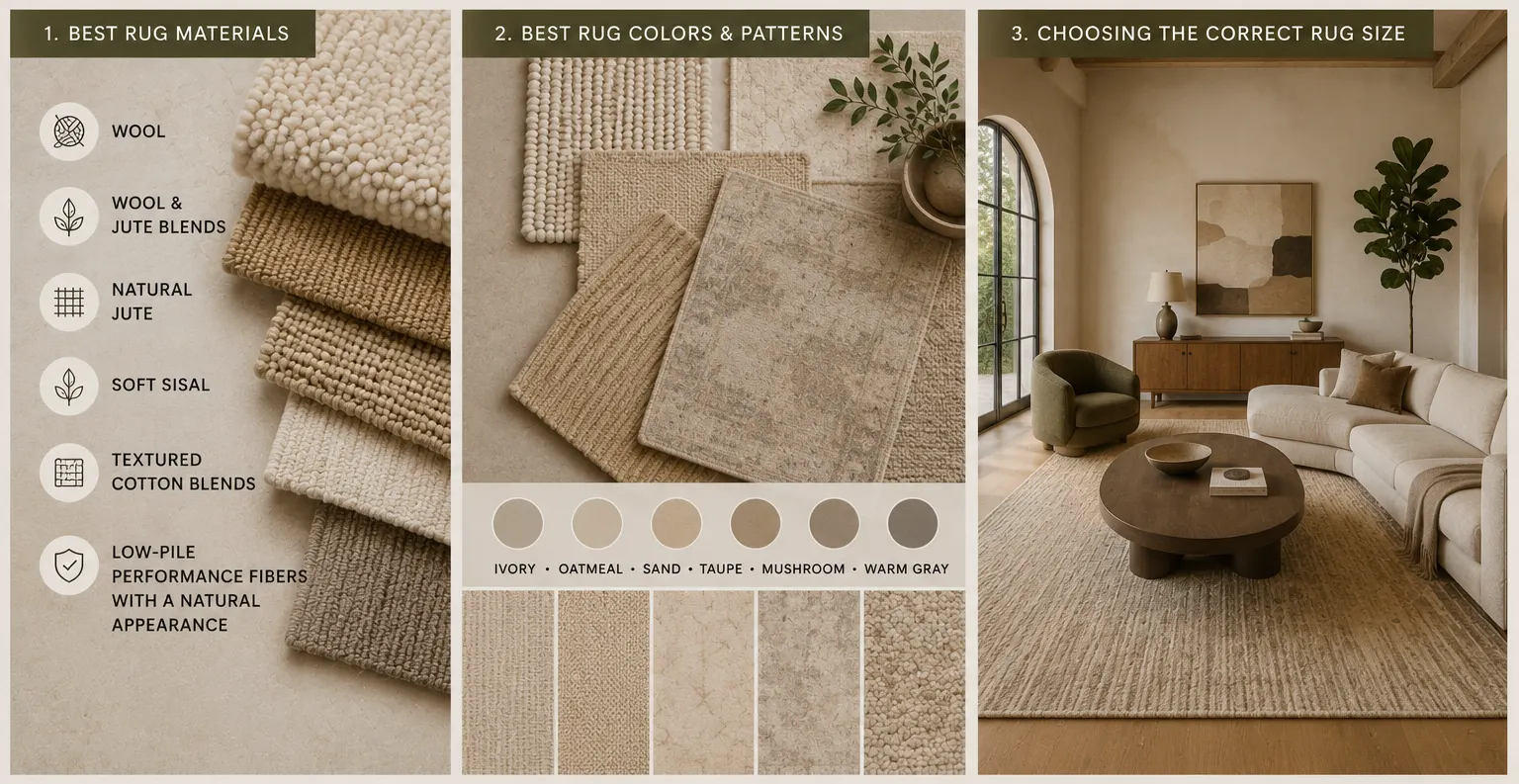
Best Rug Materials
- Wool
- Wool and jute blends
- Natural jute
- Soft sisal
- Textured cotton blends
- Low-pile performance fibers with a natural appearance
Best Rug Colors and Patterns
Choose ivory, oatmeal, sand, taupe, mushroom or warm gray. Subtle tonal patterns, abstract lines and lightly distressed textures can add depth without competing with the furniture.
Strong geometric prints and high-contrast patterns may feel too energetic for the organic modern aesthetic. The rug should support the room rather than become its most dominant feature.
Choosing the Correct Rug Size
In most living rooms, the rug should extend beneath at least the front legs of the sofa and accent chairs. A larger rug can make the room feel more generous and cohesive, while a rug that is too small can visually separate the furniture.
Leave a consistent border of visible flooring around the rug whenever possible.
Organic Modern Wall Treatments
Walls in an organic modern living room are generally simple, but they do not need to be flat or characterless. Subtle texture can add depth while preserving the room’s calm appearance.
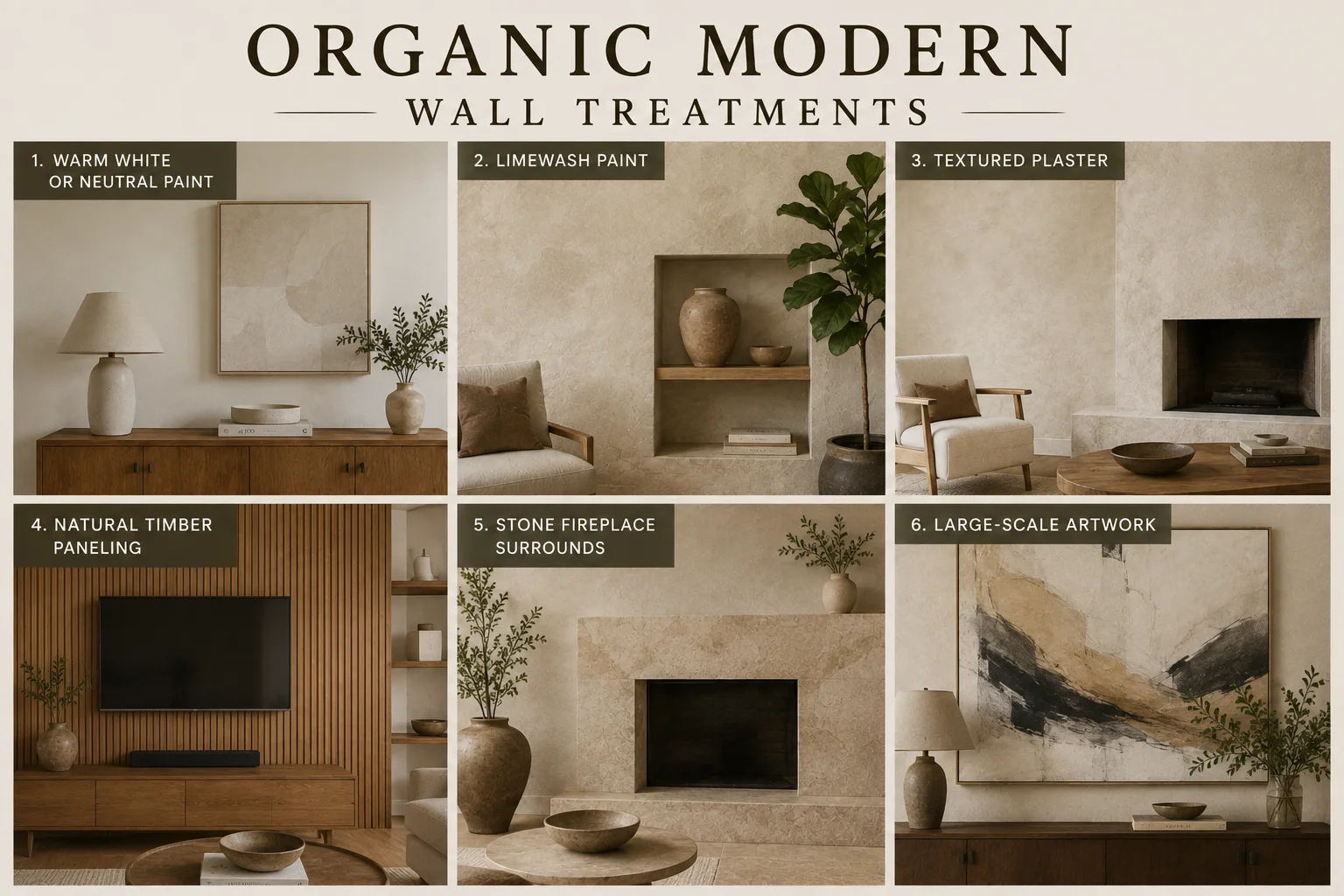
Warm White or Neutral Paint
Warm white, ivory, pale beige and soft greige are dependable choices. Matte and low-sheen finishes support the natural aesthetic and reduce unwanted glare.
Choose a wall color that relates to the flooring and major upholstery rather than selecting paint in isolation.
Limewash Paint
Limewash creates subtle movement and tonal variation that changes with the light. Its soft, chalky finish adds architectural interest without introducing a strong pattern.
Warm white, sand, mushroom and pale clay limewash tones work particularly well in organic modern rooms.
Textured Plaster
Venetian plaster, clay plaster and mineral finishes can transform a plain wall into a quiet feature. Use them on a fireplace wall, architectural niche or selected focal surface rather than applying multiple competing textures throughout the room.
Natural Timber Paneling
Timber paneling can add warmth and vertical rhythm. Slim oak slats, wide veneer panels and simple tongue-and-groove treatments work best when the detailing remains understated.
Limit timber paneling to one wall or architectural section so the room does not feel overly enclosed.
Stone Fireplace Surrounds
A limestone, travertine or plaster fireplace can become a strong organic modern focal point. Simple monolithic forms generally suit the style better than ornate mantels or highly decorative stonework.
Keep surrounding accessories minimal so the natural material remains the main visual feature.
Large-Scale Artwork
Oversized artwork is often more effective than a gallery wall in an organic modern living room. Abstract landscapes, textural paintings, muted botanical forms and minimalist compositions complement the style.
Select artwork that introduces subtle movement and tonal variation without relying on overly bright colors. Natural timber, bronze or slim black frames can provide a clean finish.
Textiles and Fabrics
Textiles are essential for softening the clean lines, hard flooring and natural stone surfaces commonly found in an organic modern living room. They add warmth, comfort and visual depth while helping the room feel relaxed rather than overly polished.
The best textiles have a natural, tactile appearance. Linen, wool, cotton, bouclé, leather and woven fibers work particularly well because they introduce subtle texture without relying on bold patterns or bright colors.
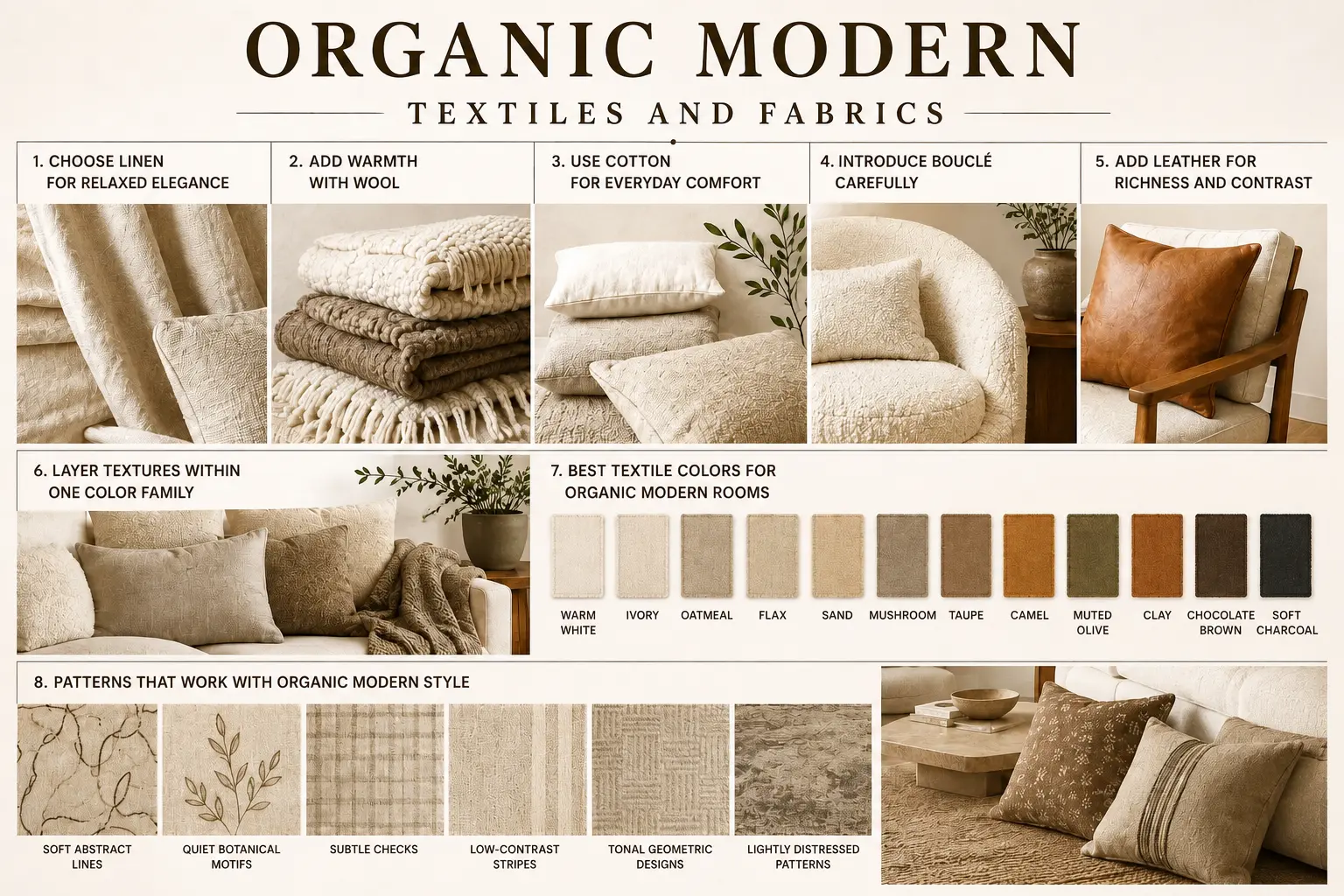
Choose Linen for Relaxed Elegance
Linen is one of the most recognizable fabrics in organic modern design. Its visible weave, natural creasing and lightweight appearance create a casual sense of luxury.
Use linen for curtains, cushions, sofa upholstery and lightweight throws. Warm white, flax, oatmeal, mushroom and soft taupe are versatile choices that blend easily with wood and stone.
Pure linen has a beautiful natural texture but may wrinkle easily. Linen blends can offer a similar appearance with greater durability and easier maintenance, making them practical for busy living rooms.
Add Warmth with Wool
Wool introduces softness and insulation, making it especially useful in rooms with timber, concrete or stone flooring. It can be used for rugs, blankets, cushions and upholstered furniture.
Look for bouclé, looped, brushed, felted or handwoven wool textures. These finishes create visual interest while staying within a restrained neutral palette.
A thick wool rug or substantial wool throw can make a streamlined room feel more comfortable without adding unnecessary decorative objects.
Use Cotton for Everyday Comfort
Cotton is practical, breathable and easy to layer. It works well for cushion covers, lightweight throws and casual upholstery, particularly in family living rooms.
Choose cotton with visible texture, such as slub, canvas, brushed cotton or woven finishes. Very smooth or glossy cotton may feel less connected to the tactile character of organic modern design.
Introduce Bouclé Carefully
Bouclé remains a popular choice for organic modern accent chairs, ottomans and cushions because of its soft, nubby surface. It adds texture even when the room uses only one or two colors.
Use bouclé selectively. A single accent chair or upholstered bench is usually enough to create impact. Too many bouclé pieces can make the room feel visually repetitive or overly trend-focused.
Add Leather for Richness and Contrast
Leather can introduce warmth, age and tonal depth. Cognac, camel, tobacco and deep brown leather work especially well with cream upholstery, pale timber and warm stone.
Choose matte or lightly worn finishes instead of highly polished leather. Natural variation and gentle patina help the material feel relaxed and authentic.
A timber-framed leather chair, leather cushion or small ottoman can provide enough contrast without shifting the room toward an industrial or traditional style.
Layer Textures Within One Color Family
A neutral living room becomes more interesting when several textures are layered within a similar color family. For example, combine an ivory linen sofa with a cream bouclé chair, an oatmeal wool rug and a flax cotton throw.
Because the colors are related, the room remains calm. The variation in weave, softness and surface finish creates depth without visual clutter.
Best Textile Colors for Organic Modern Rooms
- Warm white
- Ivory
- Oatmeal
- Flax
- Sand
- Mushroom
- Taupe
- Camel
- Muted olive
- Clay
- Chocolate brown
- Soft charcoal
Patterns That Work with Organic Modern Style
Organic modern interiors generally favor solid colors and tonal variation, but subtle patterns can be included in small amounts.
Suitable options include:
- Soft abstract lines
- Irregular hand-drawn shapes
- Quiet botanical motifs
- Subtle checks
- Low-contrast stripes
- Tonal geometric designs
- Lightly distressed patterns
Avoid combining several bold patterns in the same room. One patterned cushion, a tonal rug or a textured throw is often enough to introduce movement.
Organic Modern Window Treatments
Window treatments should soften the architecture, filter daylight and support the room’s calm atmosphere. Heavy decorative drapery, ornate valances and highly formal fabrics are generally less suitable for this style.
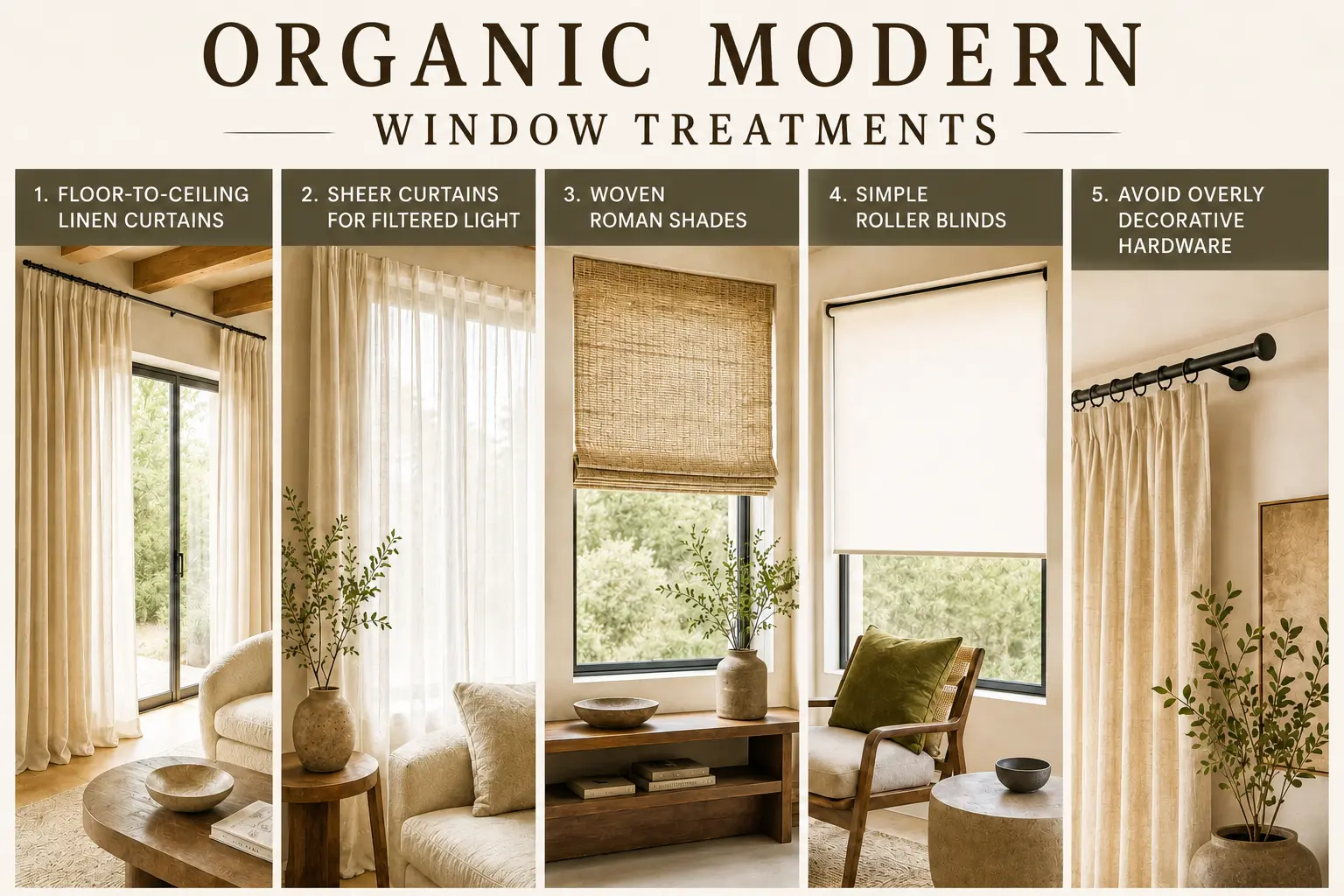
Floor-to-Ceiling Linen Curtains
Full-length linen curtains are one of the best choices for an organic modern living room. They create softness, make ceilings appear higher and frame windows without overpowering them.
Mount the curtain rod close to the ceiling and extend it beyond the window frame where possible. This allows more daylight into the room when the curtains are open and gives the window a more generous appearance.
Choose warm white, flax, natural beige, oatmeal or soft greige. Curtains should coordinate with the wall color without matching it exactly.
Sheer Curtains for Filtered Light
Sheer curtains diffuse harsh sunlight and create a soft, luminous atmosphere. They work particularly well in bright rooms or homes where privacy is needed during the day.
For greater flexibility, layer sheer curtains with lined linen panels. The sheer layer can remain closed during the day, while the heavier panels provide privacy and insulation in the evening.
Woven Roman Shades
Woven Roman shades add natural texture and are useful for smaller windows, apartments and rooms where full-length curtains are not practical.
Choose shades made from bamboo, grasscloth, linen or natural-look woven fibers. Keep the color close to the surrounding timber or wall palette for a cohesive result.
Simple Roller Blinds
Minimal roller blinds can provide privacy without adding visual weight. Select matte fabrics in warm white, beige or light taupe rather than cool gray or bright white.
Roller blinds can also be concealed behind curtains, combining clean functionality with a softer decorative finish.
Avoid Overly Decorative Hardware
Curtain rods and tracks should be simple and understated. Matte black, dark bronze, aged brass and natural timber can all work, depending on the other finishes in the room.
Thin profiles and concealed tracks are generally more appropriate than ornate finials or highly polished metal hardware.
Plants and Greenery
Plants strengthen the connection between the living room and nature. Their irregular forms soften furniture lines, add fresh color and introduce movement without requiring patterned decor.
The organic modern approach favors fewer, more sculptural plants rather than many small pots placed throughout the room. One well-chosen floor plant can create greater impact and preserve a calmer visual composition.
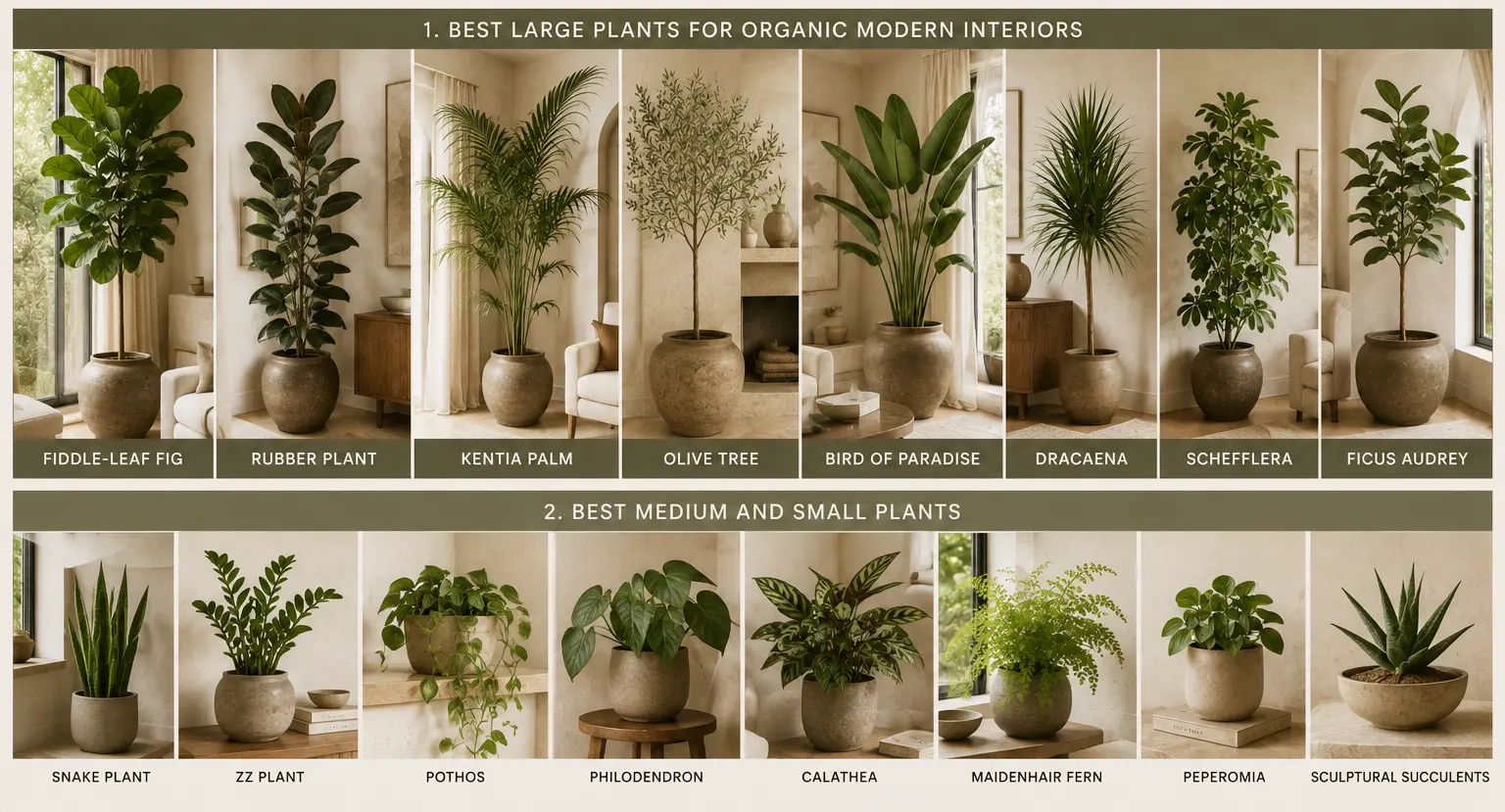
Best Large Plants for Organic Modern Interiors
- Fiddle-leaf fig: Broad leaves and a strong architectural shape.
- Rubber plant: Deep green foliage with a clean, sculptural appearance.
- Kentia palm: Graceful fronds that add softness and height.
- Olive tree: Airy foliage and a Mediterranean natural quality.
- Bird of paradise: Large upright leaves suited to bright rooms.
- Dracaena: Slim, vertical form for smaller corners.
- Schefflera: Layered foliage with a relaxed organic shape.
- Ficus Audrey: Soft green leaves and a refined tree-like form.
Best Medium and Small Plants
- Snake plant
- ZZ plant
- Pothos
- Philodendron
- Calathea
- Maidenhair fern
- Peperomia
- Small sculptural succulents
Choose Planters That Support the Material Palette
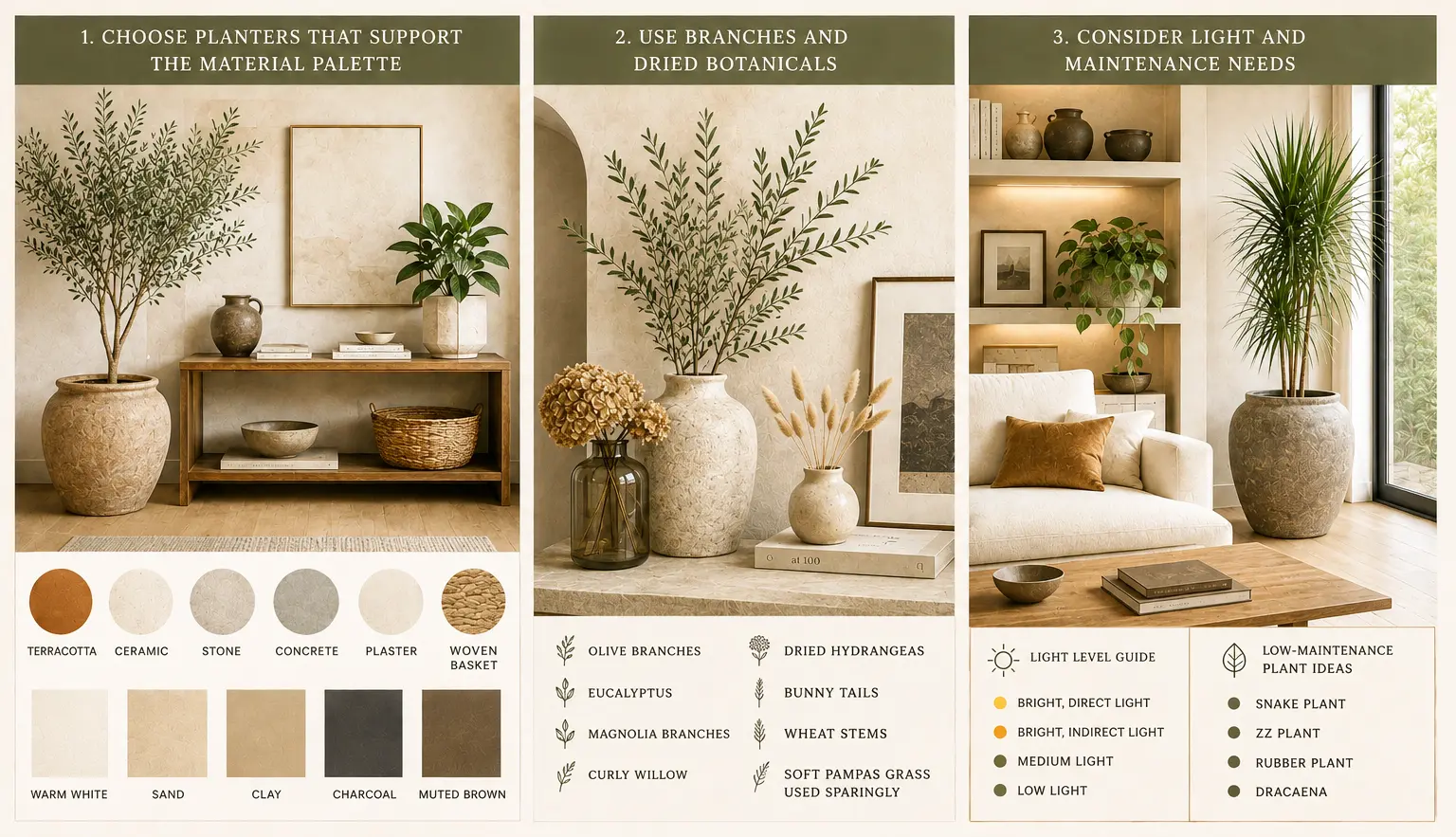
Planters should feel substantial and connected to the room’s natural finishes. Suitable materials include terracotta, matte ceramic, stone, concrete, plaster and woven baskets.
Warm white, sand, clay, charcoal and muted brown are versatile planter colors. Avoid highly glossy finishes, bright colors and overly decorative patterns.
The planter should be proportionate to the plant and surrounding furniture. A large floor plant requires a substantial container, while a small ceramic planter is better suited to a shelf or side table.
Use Branches and Dried Botanicals
Branches, dried grasses and preserved stems can provide organic form without requiring ongoing plant care. They work well in large ceramic or glass vessels placed on consoles, dining tables and low cabinets.
Suitable options include:
- Olive branches
- Eucalyptus
- Magnolia branches
- Curly willow
- Dried hydrangeas
- Bunny tails
- Wheat stems
- Soft pampas grass used sparingly
Keep arrangements loose and asymmetrical. Avoid filling every surface with botanical decor, as too many branches and plants can make the room feel repetitive.
Consider Light and Maintenance Needs
Select plants according to the room’s actual light conditions rather than appearance alone. A plant that requires strong sunlight may struggle in a darker corner, while a low-light species may perform well away from windows.
Also consider maintenance. Homes with limited time for plant care may benefit from hardy varieties such as snake plants, ZZ plants, rubber plants and dracaena.
Decorative Accessories
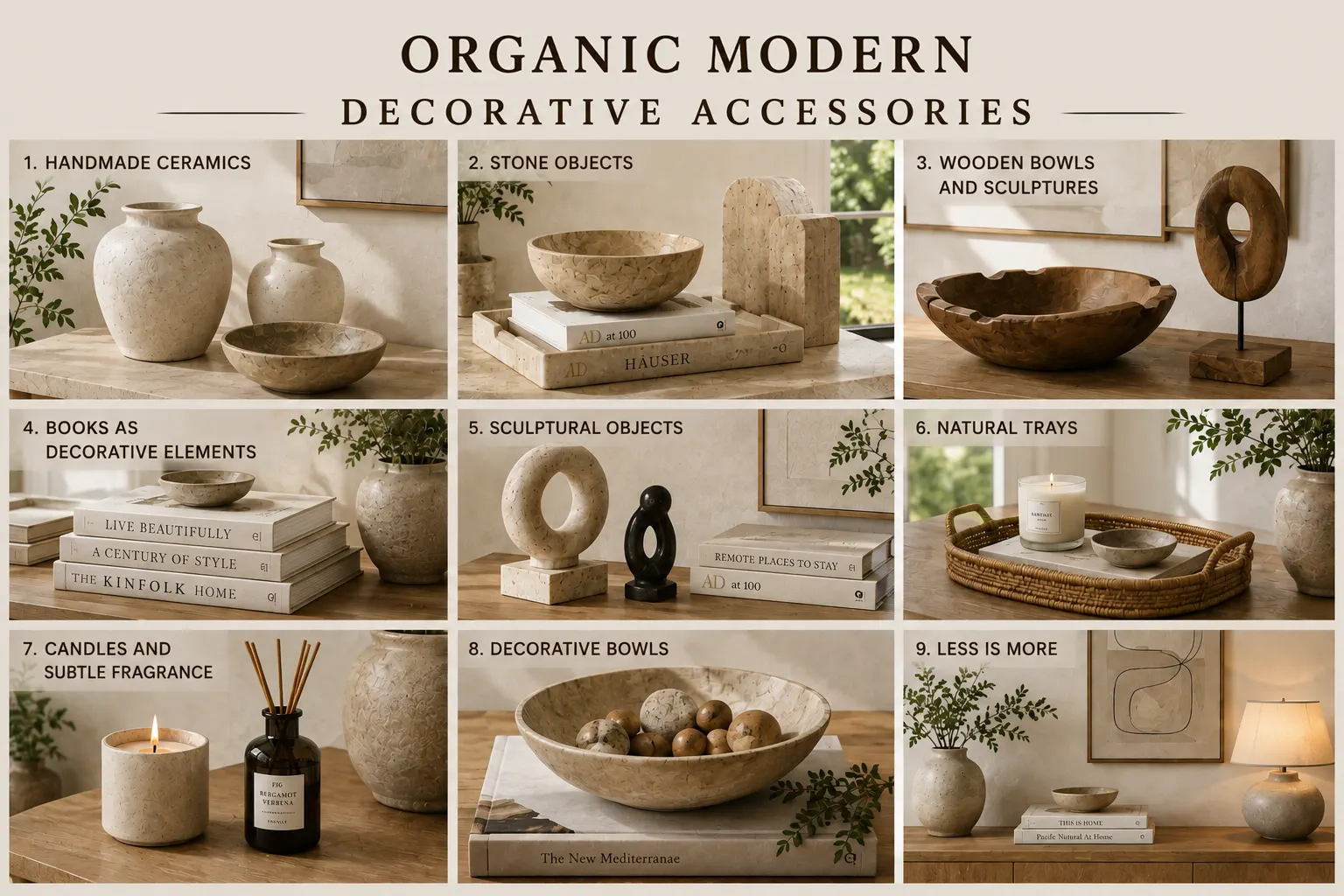
Decorative accessories add personality, but they should not interrupt the room’s sense of calm. The most effective approach is to use fewer objects with stronger shape, texture and craftsmanship.
Handmade Ceramics
Hand-thrown bowls, vases and sculptural vessels add subtle imperfection. Look for matte glazes, rough clay surfaces, uneven edges and natural color variation.
Display one substantial ceramic piece alone or arrange two to three objects with different heights. Avoid placing many small ceramics across every shelf and tabletop.
Stone Objects
Travertine trays, marble bowls, limestone bookends and sculptural stone objects reinforce the room’s material palette. Their visual weight can help anchor consoles, coffee tables and open shelves.
Use stone accents selectively, especially when the room already includes a large stone coffee table or fireplace.
Wooden Bowls and Sculptures
Wooden bowls, carved objects and small sculptures introduce warmth and craftsmanship. Choose simple forms that allow the wood grain to remain visible.
Avoid overly rustic finishes unless the room includes other deliberately aged materials. Organic modern interiors usually combine natural character with a refined silhouette.
Books as Decorative Elements
Design, architecture, art and photography books can add color, scale and personality. Arrange them in small horizontal stacks on coffee tables, consoles and shelves.
Use books with covers that complement the palette, but avoid selecting them only by color. The subject matter should still reflect the interests of the people living in the home.
Sculptural Objects
Abstract sculptures, carved forms and irregular decorative pieces can create visual interest. Materials such as plaster, bronze, timber, clay and stone are particularly suitable.
Place sculptural objects where they have enough surrounding space to be appreciated. A single strong form is often more effective than a cluster of unrelated accessories.
Natural Trays
A tray can organize small items and make coffee table styling feel more intentional. Choose timber, stone, leather or woven designs with simple shapes.
Use the tray to group a few practical and decorative items, such as a candle, small bowl and book. Do not overfill it.
Candles and Subtle Fragrance
Candles can support the relaxing atmosphere of an organic modern living room. Select simple ceramic, stone or smoked-glass vessels rather than highly decorative packaging.
Natural fragrances such as cedar, sandalwood, fig, vetiver, bergamot and soft herbal blends complement the grounded character of the style.
Decorative Bowls
A low decorative bowl can provide a simple focal point on a coffee table or console. Leave it empty for a sculptural look or fill it with a restrained natural arrangement.
Suitable contents include smooth stones, wooden beads or a small number of seasonal natural elements. Avoid brightly colored fillers or artificial decorative objects.
Wall Decor and Artwork
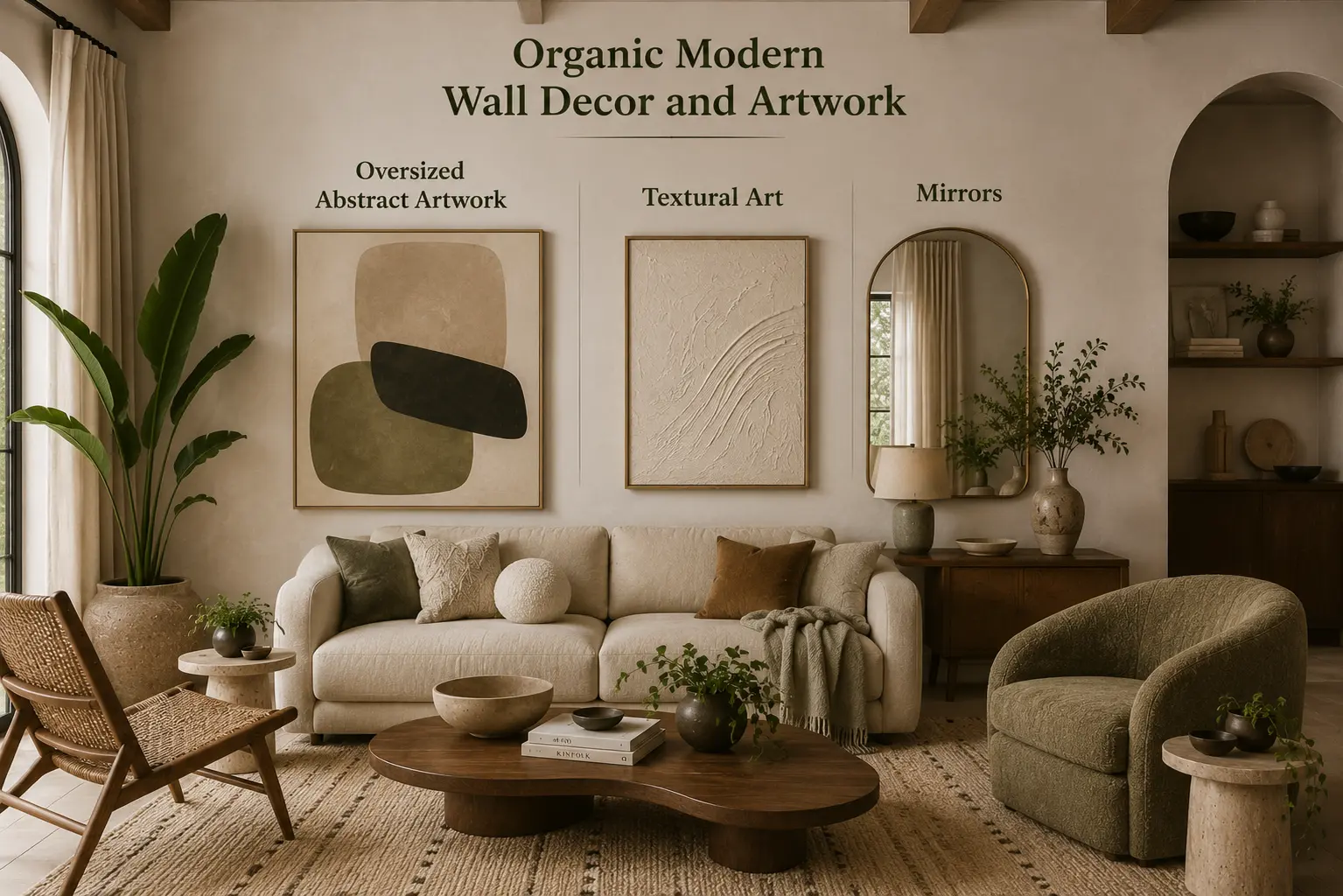
Wall decor should support the architecture and color palette without making the room feel visually busy. Larger, more intentional pieces generally suit the style better than many small items.
Oversized Abstract Artwork
Large abstract artwork can introduce movement, tone and personality while keeping the wall composition simple. Look for pieces with earthy colors, layered texture and soft organic forms.
Suitable palettes include warm white, sand, taupe, olive, charcoal, clay and muted brown. Avoid artwork that is too similar to the sofa and wall color, as some contrast is necessary for visual definition.
Textural Art
Plaster artwork, fiber art, carved timber panels and handmade paper pieces add dimensional texture. These work particularly well in monochromatic rooms where surface variation is more important than strong color.
Use textural art as a focal point and avoid placing other decorative objects too close to it.
Minimalist Photography
Nature photography, architectural details and quiet landscapes can complement organic modern interiors. Choose images with restrained compositions and soft tonal ranges.
Black-and-white photography can add contrast, while warm sepia and muted natural photography create a softer effect.
Mirrors
Mirrors reflect light and can make a small living room feel more spacious. Rounded, arched and irregular mirrors reinforce the organic character of the room.
Suitable frames include natural timber, dark bronze, aged brass, plaster and slim matte black metal. Avoid heavily carved or ornate frames.
Avoid Overcrowded Gallery Walls
A gallery wall can work if it is highly restrained, but one or two larger artworks are usually more consistent with the organic modern aesthetic.
When using multiple pieces, keep the frames, color palette and spacing cohesive. Leave enough negative space around the arrangement so the wall does not feel crowded.
How to Style Organic Modern Shelves
Open shelving can provide useful storage and display space, but it requires careful editing. The objective is to create rhythm and balance rather than filling every available area.
Start with Larger Objects
Place the largest items first, such as ceramic vessels, framed artwork, baskets or substantial books. These pieces establish the visual structure of the shelf arrangement.
Vary Height and Shape
Combine tall, medium and low objects to create movement. Pair angular books with rounded bowls, irregular ceramics and sculptural forms.
Avoid placing objects of the same height in a straight line, as this can make the display feel rigid.
Use Negative Space
Leave some shelves partly empty. Negative space allows individual objects to stand out and prevents the display from becoming cluttered.
There is no need to decorate every shelf equally. Some areas can hold one object, while others may feature a small grouping.
Repeat Materials and Colors
Repeat selected materials across the shelving. A stone object on one shelf can connect with a ceramic bowl in a similar tone on another, while timber frames can relate to nearby furniture.
Keep Practical Items Concealed
Use closed cabinets, boxes or baskets to store remote controls, cables, paperwork and other everyday objects. Open shelves should display items that contribute to the room’s overall composition.
How to Style an Organic Modern Coffee Table
Coffee table styling should feel simple, functional and slightly asymmetrical. The arrangement should leave enough clear surface for everyday use.
Use a Three-Part Arrangement
A practical formula is to combine three categories:
- One grounding element: A tray, large book or low bowl.
- One vertical element: A vase, candle or sculptural object.
- One smaller accent: A decorative object, beads or small vessel.
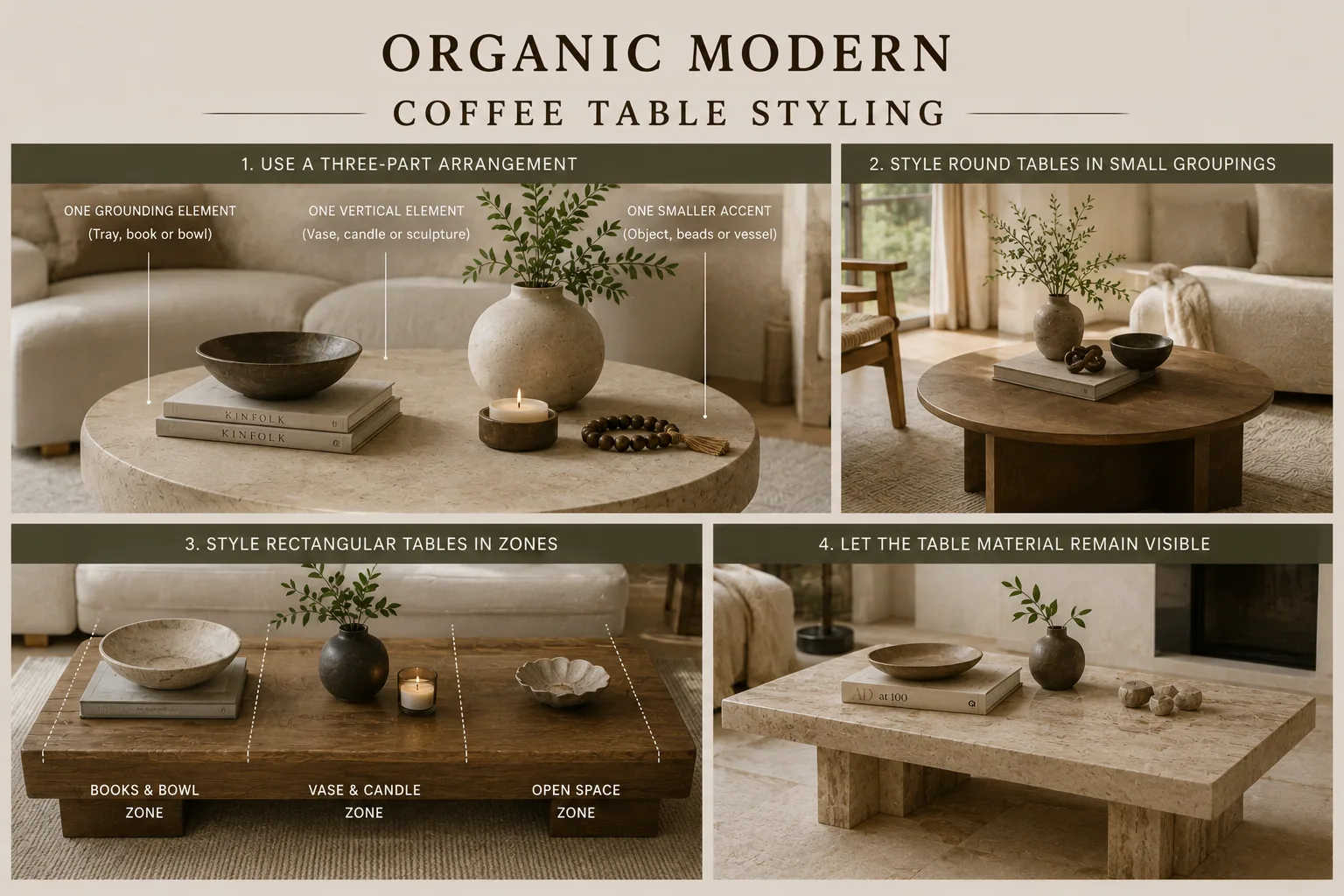
These elements can be adjusted according to the coffee table’s shape and size.
Style Round Tables in Small Groupings
Round tables often look best with one central grouping. Use a low tray or stack of books as the base, then add a vase and small object with varied heights.
Style Rectangular Tables in Zones
A rectangular table can be divided visually into two or three zones. For example, place books and a bowl on one side, then leave the remaining surface clear or add a small vase at the opposite end.
Let the Table Material Remain Visible
Stone and solid timber coffee tables already provide strong texture. Do not cover the entire surface with accessories. Allow enough exposed material to remain part of the visual composition.
How to Style an Organic Modern Living Room
Creating an organic modern living room is less about purchasing a complete matching furniture set and more about building the room in thoughtful layers. The most successful spaces begin with a calm foundation, add natural materials and then introduce a limited number of sculptural details.
The following step-by-step process can help you create a balanced room without making it feel overly styled or visually repetitive.
Step 1: Define the Mood of the Room
Begin by deciding how you want the living room to feel. Organic modern interiors can range from light and airy to warm and moody, but the overall atmosphere should remain calm, tactile and connected to nature.
Collect a small group of reference images and identify the common elements you are drawn to. Look beyond individual products and focus on the wider visual language, including:
- The balance of light and dark tones
- The amount of visible wood
- The use of stone and plaster
- The softness of the upholstery
- The scale of the furniture
- The level of decorative detail
Choose three to five descriptive words for the finished room, such as calm, warm, sculptural, natural and refined. Use these words as a filter when making later design decisions.
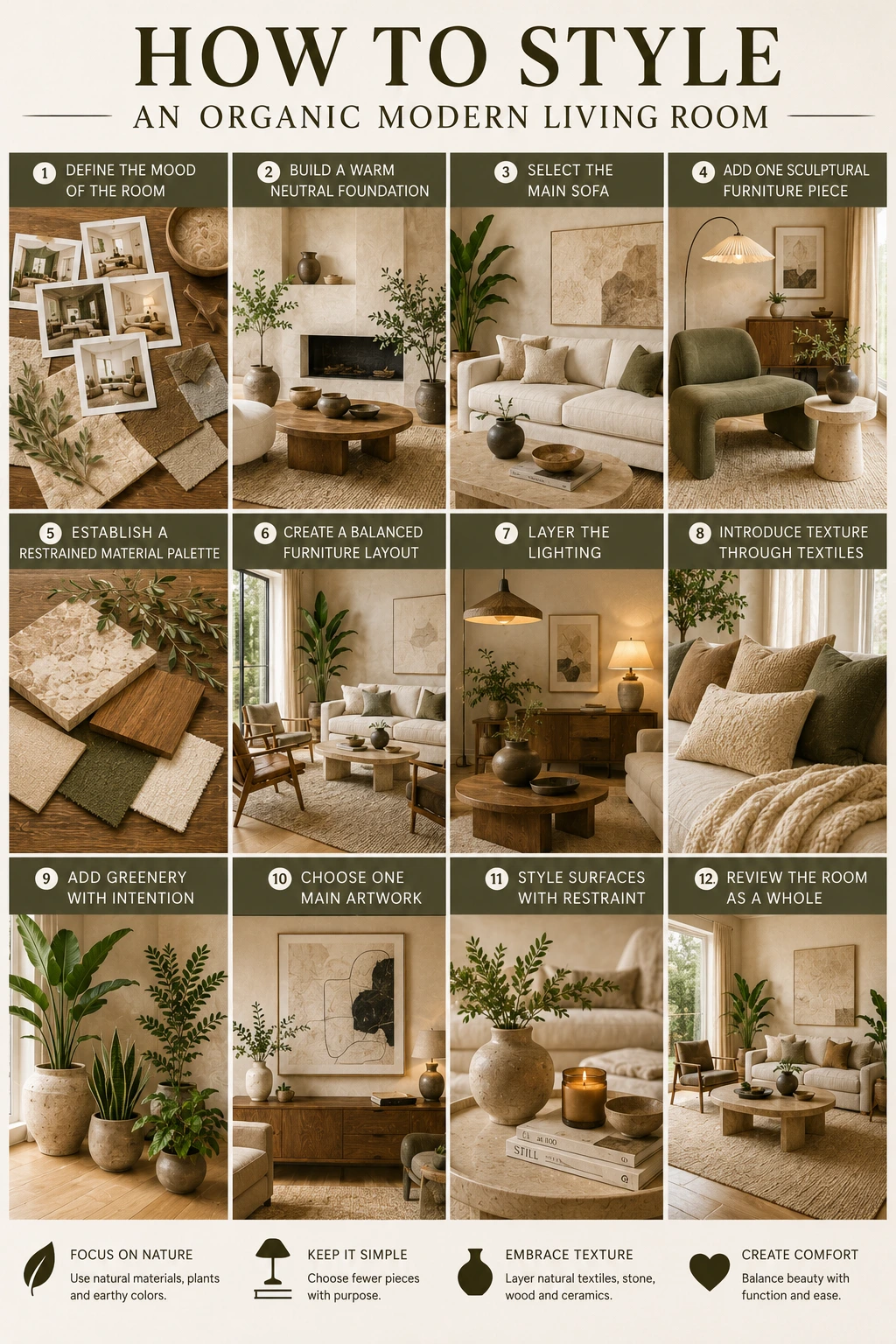
Step 2: Build a Warm Neutral Foundation
Start with the largest surfaces in the room, including the walls, flooring, main rug and sofa. These elements should establish a soft neutral foundation that can support natural materials and darker accents.
Warm white, ivory, sand, oatmeal, mushroom and pale taupe are dependable base colors. Avoid selecting every item in the same exact shade. Slight tonal variation helps the room feel layered rather than flat.
If the existing flooring has a strong warm or cool undertone, use it to guide the rest of the palette. A warm oak floor pairs naturally with cream, camel and olive, while pale gray stone may work better with soft greige, mushroom and charcoal.
Step 3: Select the Main Sofa
Choose the sofa before purchasing smaller furniture because it will determine the scale, layout and dominant upholstery color of the room.
Look for a comfortable sofa with a simple silhouette, generous proportions and softly structured cushions. Linen blends, textured performance fabrics, cotton and wool blends are suitable choices.
A straight sofa provides a clean architectural anchor, while a gently curved sofa can soften a room with many rectangular features. In smaller spaces, select a compact sofa with low arms and visible floor area beneath it.
Step 4: Add One Sculptural Furniture Piece
Introduce one piece with a distinctive organic shape. This may be a curved accent chair, irregular stone coffee table, rounded ottoman, arched floor lamp or free-form side table.
One strong sculptural element can define the room without making the overall design feel theatrical. Avoid combining too many statement shapes, as they may compete for attention.
Step 5: Establish a Restrained Material Palette
Select two or three dominant natural materials and repeat them throughout the living room. A practical combination may include:
- White oak for warmth
- Travertine or limestone for visual weight
- Linen and wool for softness
Secondary materials such as bronze, clay, leather or woven fibers can then be introduced in smaller amounts.
Keeping the material palette limited helps furniture from different sources feel visually connected.
Step 6: Create a Balanced Furniture Layout
Arrange the seating around the room’s main focal point while preserving clear walkways. The sofa and chairs should form a comfortable conversation area rather than sitting against separate walls.
Use the area rug to visually connect the furniture. At minimum, the front legs of the main seating pieces should rest on the rug.
Do not push every item against the wall. Floating the sofa or accent chairs slightly inward can make the room feel more intentional and intimate.
Step 7: Layer the Lighting
Combine ceiling lighting, floor lamps and table lamps to create a flexible lighting scheme. Each source should serve a clear function while contributing to the room’s visual composition.
Use a sculptural pendant or chandelier for ambient light, a floor lamp beside a reading chair and a table lamp on a console or side table. Warm bulbs and dimmers will help maintain a restful atmosphere during the evening.
Step 8: Introduce Texture Through Textiles
Layer linen, wool, cotton and bouclé to soften the furniture and hard surfaces. Focus on differences in weave and finish rather than adding many contrasting colors.
A simple combination might include:
- A cream linen sofa
- An oatmeal wool rug
- A bouclé accent chair
- A flax-colored curtain
- A camel or muted olive throw
Use cushions sparingly. A carefully selected mix of two to four cushions is often more suitable than covering the sofa with many decorative pillows.
Step 9: Add Greenery with Intention
Select one large plant or a small number of carefully positioned plants. Consider leaf shape, height and overall silhouette as part of the room’s composition.
A tall plant can balance a floor lamp or artwork, while a smaller plant can soften a console or shelf. Keep the planters connected to the main material palette through stone, ceramic, plaster or woven finishes.
Step 10: Choose One Main Artwork
Use artwork to add personality and subtle contrast. One oversized painting, textural artwork or nature photograph is usually more effective than several unrelated smaller pieces.
The artwork should relate to the room without disappearing into it. Choose a composition that includes one or two colors from the existing palette as well as enough contrast to remain visible.
Step 11: Style Surfaces with Restraint
Decorate the coffee table, media console and shelves using a small number of objects with strong material and shape.
Suitable accessories include:
- Handmade ceramic vessels
- Stone bowls
- Wooden sculptures
- Design books
- Natural trays
- Simple candles
- Branches or dried botanicals
Leave clear areas around each arrangement. Negative space is an essential part of organic modern styling.
Step 12: Review the Room as a Whole
Once the main elements are in place, step back and assess the balance of color, texture, scale and visual weight.
Ask the following questions:
- Does one side of the room feel heavier than the other?
- Are too many furniture pieces the same shape?
- Is there enough contrast between the walls, upholstery and artwork?
- Have natural materials been repeated throughout the room?
- Are surfaces calm or overcrowded?
- Does the room feel comfortable as well as attractive?
Remove any item that does not contribute to function, comfort or the overall mood. Organic modern rooms often improve through editing rather than additional decoration.
How to Create an Organic Modern Living Room on a Budget
Organic modern style can appear luxurious, but it does not require every item to be expensive. The strongest results come from careful material selection, simple styling and a focus on a few high-impact elements.
Invest in the Most Visible Furniture
Prioritize the sofa, area rug and coffee table because these pieces influence the room’s comfort and overall appearance. Smaller items such as side tables, lamps and accessories can be sourced more affordably.
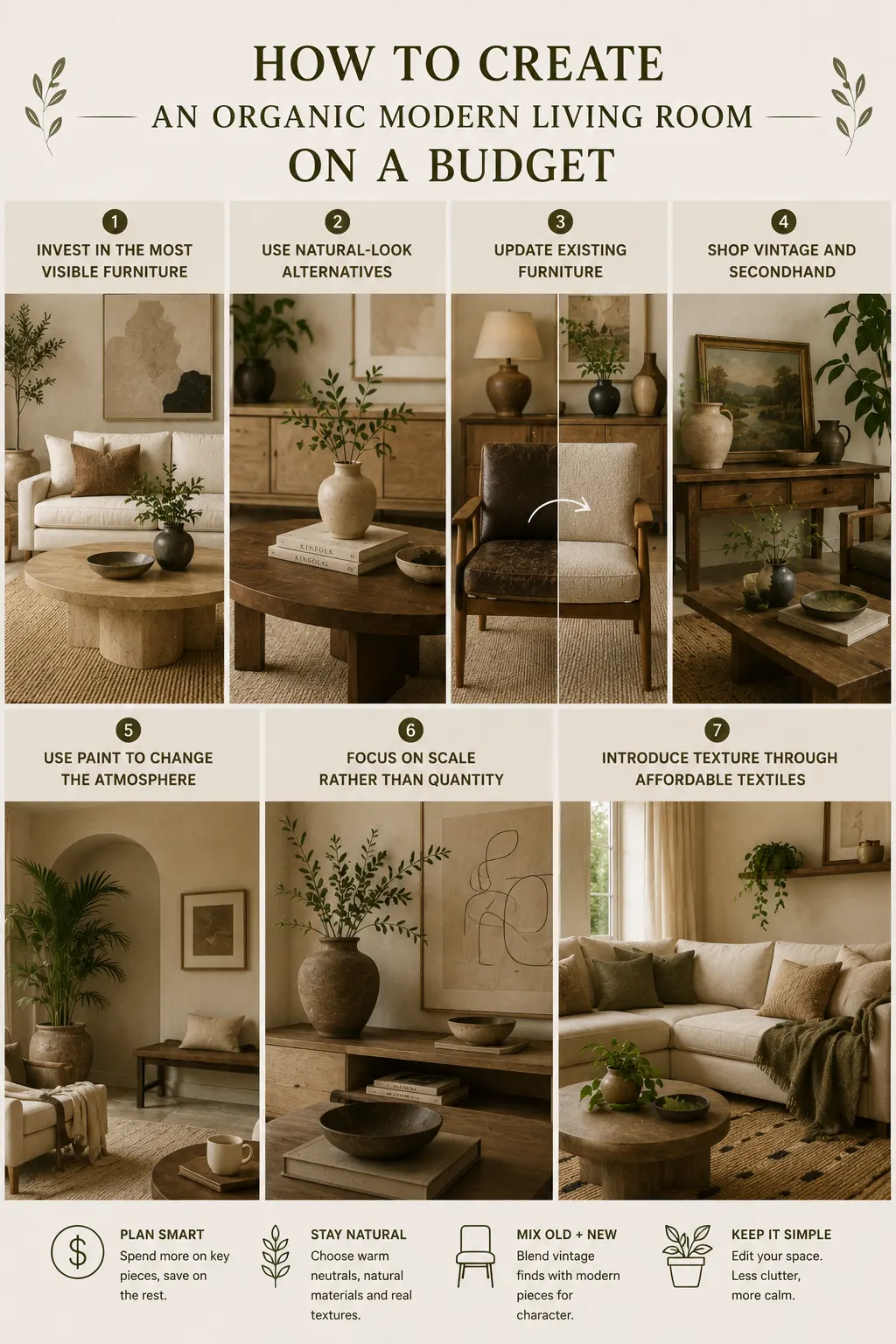
Use Natural-Look Alternatives
Real stone and solid timber can be expensive. Consider high-quality veneer furniture, engineered wood, stone-look ceramic, plaster finishes and realistic composite materials.
Choose matte finishes and subtle variation to avoid an artificial appearance.
Update Existing Furniture
Refinish a wood table, replace glossy hardware or reupholster an existing chair in a textured neutral fabric. Simple changes can help older furniture fit the organic modern palette.
Shop Vintage and Secondhand
Vintage timber furniture, ceramic vessels, leather chairs and stone accessories can introduce character at a lower cost. Search for simple silhouettes and natural finishes rather than highly ornate pieces.
Use Paint to Change the Atmosphere
A warm neutral wall color can transform a room without requiring major construction. Limewash-effect paint or a softly textured feature wall can add depth on a limited budget.
Focus on Scale Rather Than Quantity
One large ceramic vase or oversized artwork often looks more refined than several inexpensive small decorations. Purchase fewer items and select pieces with enough scale to suit the furniture.
Introduce Texture Through Affordable Textiles
Linen-look curtains, woven cushions and textured throws can soften the room at a relatively low cost. Select a limited color palette so affordable pieces appear more cohesive.
Ideas for Small Living Rooms
Organic modern style is well suited to compact spaces because it favors simple layouts, limited decoration and a cohesive color palette.
Use a Light Base Palette
Warm white, ivory and pale beige can help reflect natural light and make a small living room feel more open. Add depth through texture and medium wood tones rather than painting large surfaces in very dark colors.
Choose Furniture with Rounded Edges
Rounded coffee tables, curved chairs and oval side tables improve circulation and reduce the number of sharp corners in a compact room.
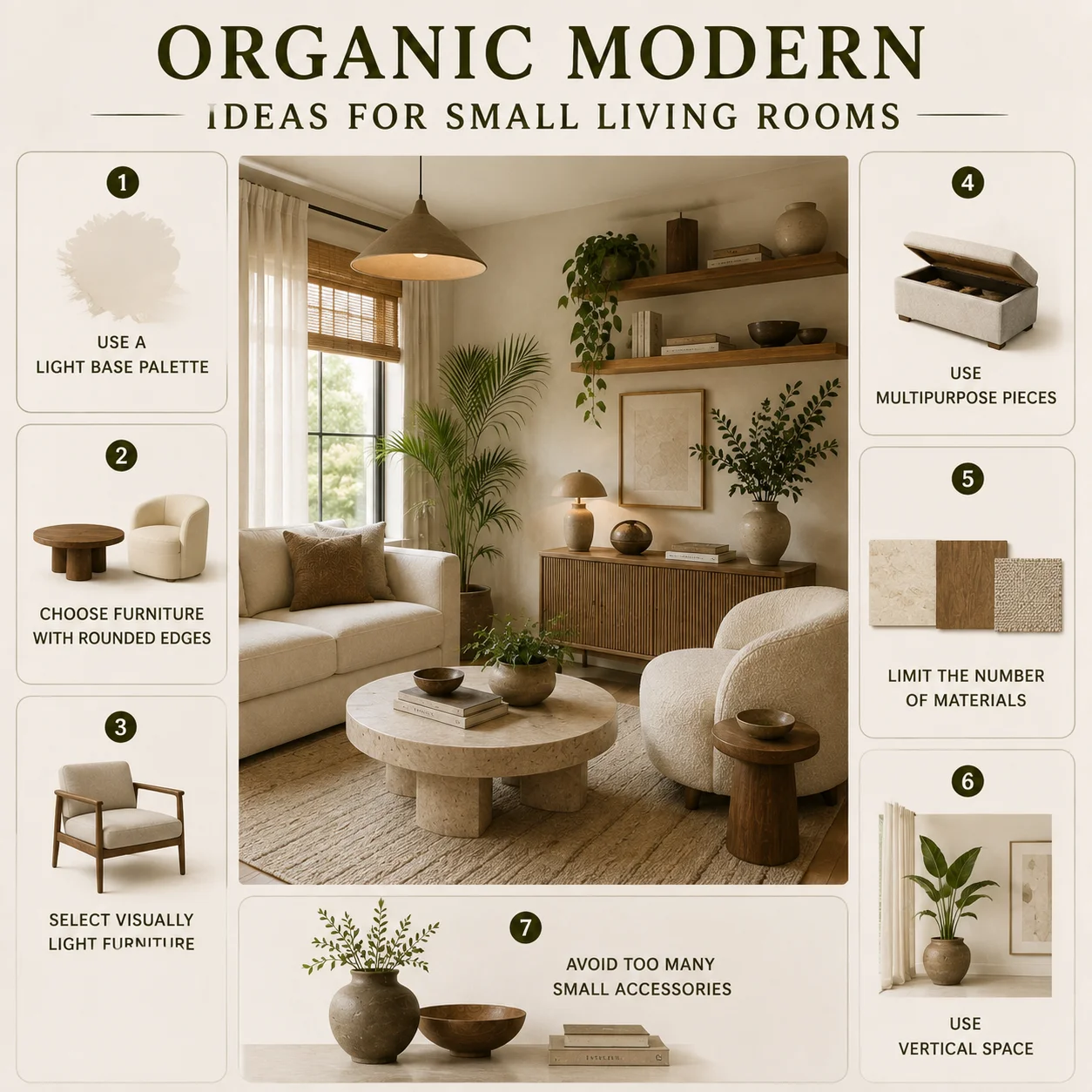
Select Visually Light Furniture
Furniture with raised legs, open timber frames and slim profiles allows more of the floor to remain visible, helping the room feel less crowded.
Use Multipurpose Pieces
Choose an ottoman with storage, nesting tables or a bench that can serve as both seating and a display surface.
Limit the Number of Materials
A smaller room can quickly feel busy when it includes too many wood tones, metals and textiles. Select one main wood, one stone or plaster finish and two or three textile colors.
Use Vertical Space
Floor-to-ceiling curtains, tall plants and large vertical artwork can draw the eye upward and make the ceiling feel higher.
Avoid Too Many Small Accessories
Several small items can make a compact room appear cluttered. Use fewer, larger accessories and leave visible space around them.
Common Decorating Mistakes to Avoid
Organic modern design may appear simple, but achieving the right balance requires careful attention to tone, scale, texture and restraint. The following mistakes can prevent the room from feeling cohesive.
Mistake 1: Using Too Much Beige
A room filled with similar beige surfaces can appear flat and unfinished. Warm neutrals need contrast from wood grain, stone, darker accents and varied textures.
How to fix it: Add medium wood, muted olive, charcoal, chocolate brown or dark bronze in small amounts. Layer different shades of cream, sand and taupe instead of using one exact color throughout.
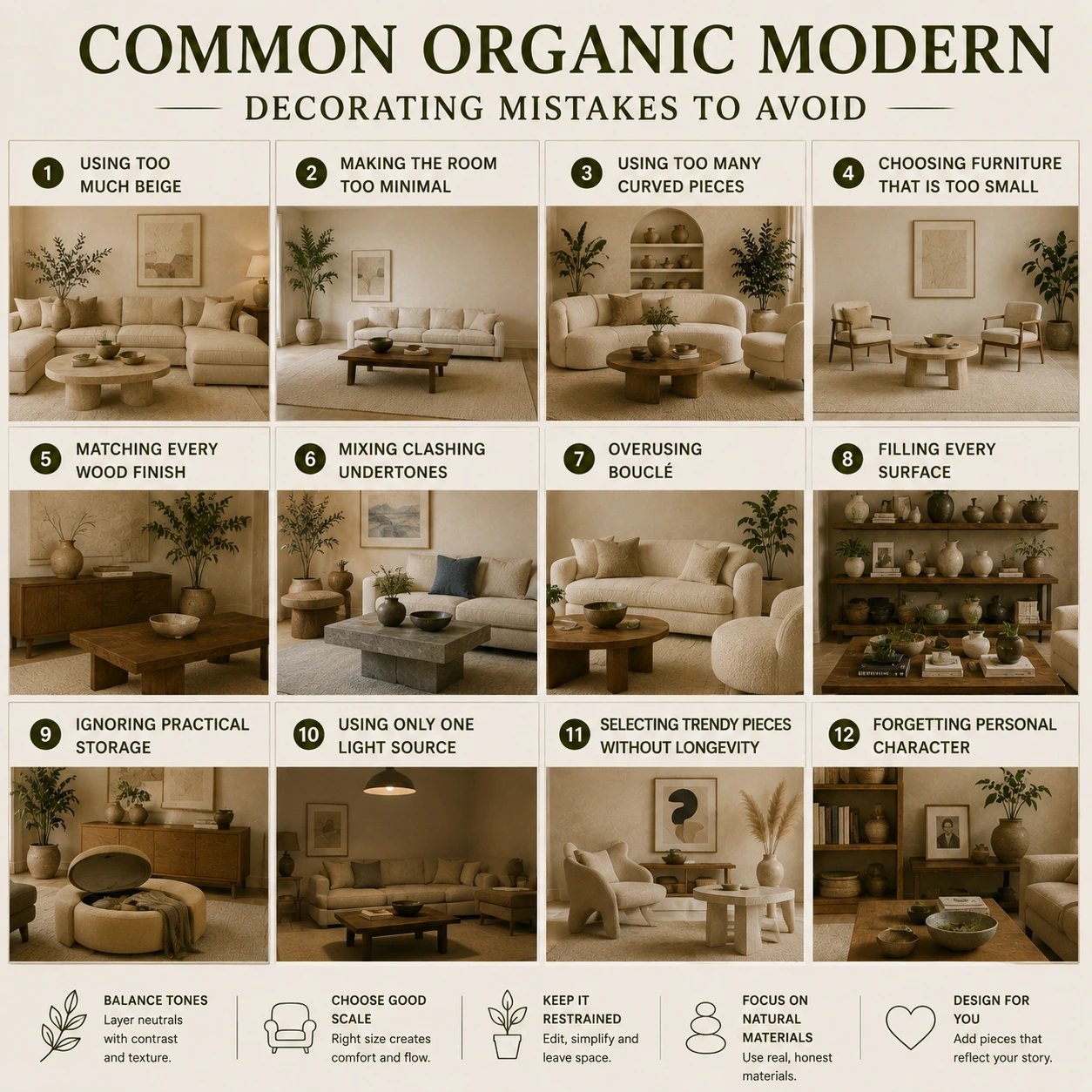
Mistake 2: Making the Room Too Minimal
Removing too much furniture and decoration can make the living room feel empty or impersonal. Organic modern style should remain warm and comfortable.
How to fix it: Introduce a large rug, full-length curtains, tactile cushions, artwork and one sculptural plant. Focus on meaningful layers rather than decorative clutter.
Mistake 3: Using Too Many Curved Pieces
Curves are an important part of the style, but a room filled entirely with rounded furniture can feel repetitive and overly trend-driven.
How to fix it: Balance curved pieces with clean rectangular forms. Pair a rounded sofa with a linear console or combine an oval coffee table with structured armchairs.
Mistake 4: Choosing Furniture That Is Too Small
Small furniture can make a large room feel fragmented and visually weak. Organic modern interiors often benefit from fewer, more substantial pieces.
How to fix it: Select furniture according to the scale of the room. Use a larger rug, a generously sized sofa and artwork with enough presence to balance the architecture.
Mistake 5: Matching Every Wood Finish
Using the same wood tone for every piece can make the room resemble a furniture showroom.
How to fix it: Combine two related wood tones, such as light oak and medium walnut. Repeat each tone at least twice so the variation feels intentional.
Mistake 6: Mixing Clashing Undertones
Warm beige upholstery, cool blue-gray stone and orange-toned timber may compete visually.
How to fix it: Compare material samples together before purchasing. Choose finishes that share warm, neutral or earthy undertones.
Mistake 7: Overusing Bouclé
Bouclé adds texture, but using it on the sofa, chairs, ottomans and cushions can make the room feel repetitive.
How to fix it: Limit bouclé to one or two pieces and combine it with linen, wool, leather and smooth timber.
Mistake 8: Filling Every Surface
Crowded coffee tables, consoles and shelves conflict with the calm character of organic modern design.
How to fix it: Remove approximately one-third of the accessories and group the remaining items into simple arrangements. Leave some surfaces partly empty.
Mistake 9: Ignoring Practical Storage
A room may look calm immediately after styling but become cluttered if there is nowhere to store everyday objects.
How to fix it: Include closed cabinets, baskets, storage ottomans and drawers for remote controls, cables, toys and paperwork.
Mistake 10: Using Only One Light Source
A single overhead fixture can make the room feel flat and harsh, particularly in the evening.
How to fix it: Add a floor lamp, table lamp and accent lighting. Use warm bulbs and dimmers to create multiple lighting levels.
Mistake 11: Selecting Trendy Pieces Without Considering Longevity
A room built entirely around current social media trends may date quickly.
How to fix it: Invest in simple, well-proportioned furniture and natural materials. Use trends through smaller accessories that can be changed easily.
Mistake 12: Forgetting Personal Character
A highly coordinated room can feel generic when it contains no books, artwork or objects connected to the people who live there.
How to fix it: Include personal photography, collected ceramics, meaningful books or handcrafted pieces while maintaining the room’s restrained palette.
Organic Modern Living Room Decorating Checklist
- Choose a warm neutral foundation.
- Select a comfortable sofa with clean lines.
- Add one sculptural furniture piece.
- Use two or three dominant natural materials.
- Anchor the seating arrangement with a large rug.
- Layer linen, wool, cotton and other tactile fabrics.
- Combine ceiling, floor and table lighting.
- Add one substantial plant or botanical arrangement.
- Choose artwork with organic forms and restrained colors.
- Style surfaces with a limited number of meaningful objects.
- Provide concealed storage for everyday clutter.
- Review the balance of scale, texture and contrast.
Organic Modern Living Room Ideas
Organic modern style can be adapted to suit different room sizes, architectural settings and personal preferences. The key is to preserve the style’s essential balance of clean lines, natural materials, warm colors and restrained decoration.
1. Light and Airy Organic Modern Living Room
Create a bright and relaxed room with warm white walls, a cream linen sofa, pale oak furniture and a large ivory wool rug. Add a travertine coffee table, sheer linen curtains and one sculptural floor plant.
Keep the contrast soft by using muted taupe, sand and pale olive accents. This version works especially well in apartments, compact homes and rooms with limited natural light.
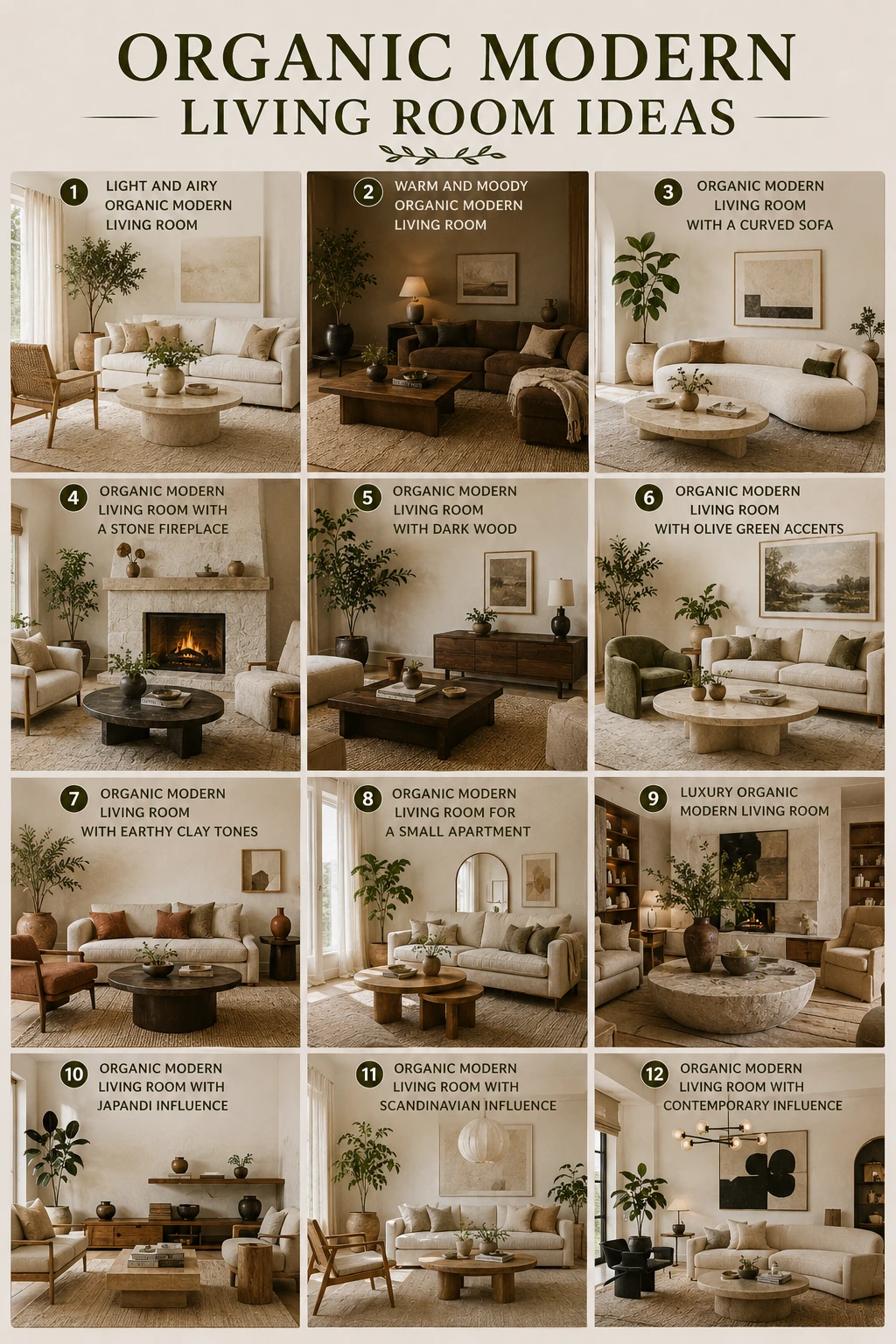
2. Warm and Moody Organic Modern Living Room
Use mushroom, clay or soft brown walls to create a more intimate atmosphere. Combine these colors with walnut furniture, chocolate-brown upholstery, warm stone and dark bronze lighting.
Balance the deeper palette with cream textiles, pale artwork and warm ambient lighting so the room remains calm rather than heavy.
3. Organic Modern Living Room with a Curved Sofa
A curved sofa can become the room’s main sculptural element. Pair it with a simple round or irregular coffee table and keep the remaining furniture more linear.
Choose a large rug that follows the softness of the seating arrangement and use one substantial artwork rather than several competing wall features.
4. Organic Modern Living Room with a Stone Fireplace
A limestone, travertine or plaster fireplace creates a strong architectural focal point. Keep the fireplace surround simple and avoid highly ornate detailing.
Balance the cool visual weight of stone with warm timber furniture, a thick wool rug, linen upholstery and soft lighting.
5. Organic Modern Living Room with Dark Wood
Walnut, smoked oak and deep brown timber can give the room a sophisticated and grounded character. Use dark wood on a media console, coffee table, accent chair or built-in cabinetry.
Prevent the room from feeling too dark by pairing the timber with warm white walls, cream upholstery and light natural textiles.
6. Organic Modern Living Room with Olive Green Accents
Muted olive green connects naturally with wood, clay and stone. Introduce it through an accent chair, cushions, artwork, a throw or botanical decor.
Use olive as a supporting color rather than the dominant shade. A limited amount can make a neutral room feel richer without disrupting its calm appearance.
7. Organic Modern Living Room with Earthy Clay Tones
Clay, terracotta and muted rust add warmth and depth. These shades work well in cushions, ceramics, artwork and small upholstered pieces.
Choose softened, dusty versions of these colors rather than bright orange tones. Pair them with cream, taupe, pale oak and natural linen.
8. Organic Modern Living Room for a Small Apartment
Use a compact sofa, rounded nesting tables and one lightweight accent chair. Select furniture with visible legs and avoid oversized solid pieces that block sightlines.
Floor-to-ceiling curtains, a large mirror and a pale rug can make the room feel more spacious. Limit accessories to a few larger objects rather than many small decorations.
9. Luxury Organic Modern Living Room
Create a more luxurious interpretation through scale, craftsmanship and material quality rather than excessive ornamentation. Consider a custom curved sofa, a substantial stone coffee table, handcrafted lighting and oversized artwork.
Layer linen, wool, leather and natural timber while maintaining a restrained palette. The room should feel refined, but still comfortable and approachable.
10. Organic Modern Living Room with Japandi Influence
Combine organic modern warmth with Japandi simplicity by using low-profile furniture, pale timber, dark accents and a limited number of handcrafted objects.
Keep the layout uncluttered and introduce contrast through blackened wood, charcoal ceramics or a dark floor lamp. For more inspiration, visit our Japandi Living Room Style Guide.
11. Organic Modern Living Room with Scandinavian Influence
Use pale oak, soft white walls, practical furniture and cozy wool textiles to create a lighter interpretation of the style.
Add sculptural stone, curved furniture and earthy accessories to distinguish the room from a traditional Nordic interior. Explore related ideas in our Scandinavian Living Room Style Guide.
12. Organic Modern Living Room with Contemporary Influence
Emphasize architectural lines, large-scale furniture and sculptural lighting for a more polished contemporary effect. Use smooth plaster, statement stone and a stronger contrast between light and dark elements.
Keep the palette warm and add natural fabrics so the space remains inviting. See our Contemporary Living Room Style Guide for additional inspiration.
Shop the Look
You do not need to purchase every item at once to create an organic modern living room. Begin with the most important furniture pieces, then add natural materials, lighting and decor gradually.
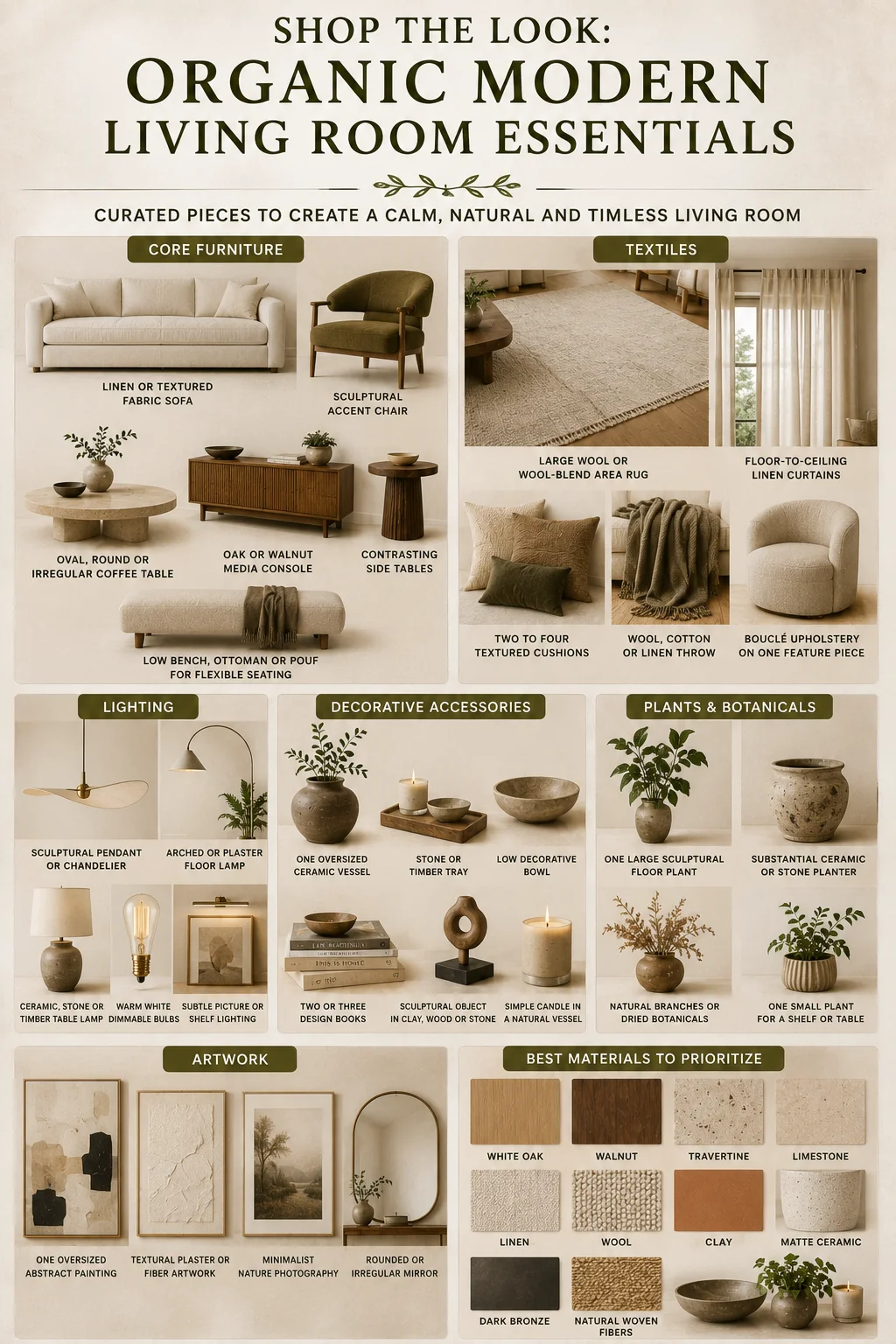
Core Furniture
- A streamlined linen or textured-fabric sofa
- One sculptural accent chair
- An oval, round or irregular coffee table
- A simple oak or walnut media console
- One or two contrasting side tables
- A low bench, ottoman or pouf for flexible seating
Textiles
- A large wool or wool-blend area rug
- Floor-to-ceiling linen curtains
- Two to four textured cushions
- A wool, cotton or linen throw
- Bouclé upholstery used on one feature piece
Lighting
- A sculptural pendant or chandelier
- An arched or plaster floor lamp
- A ceramic, stone or timber table lamp
- Warm white dimmable bulbs
- Subtle picture or shelf lighting where needed
Decorative Accessories
- One oversized ceramic vessel
- A stone or timber tray
- A low decorative bowl
- Two or three design books
- A sculptural object in clay, wood or stone
- A simple candle in a natural vessel
Plants and Botanicals
- One large sculptural floor plant
- A substantial ceramic or stone planter
- Natural branches or dried botanicals used sparingly
- One small plant for a shelf or side table, if needed
Artwork
- One oversized abstract painting
- Textural plaster or fiber artwork
- Minimalist nature photography
- A rounded or irregular mirror
Best Materials to Prioritize
- White oak
- Walnut
- Travertine
- Limestone
- Linen
- Wool
- Clay
- Matte ceramic
- Dark bronze
- Natural woven fibers
Where to Save and Where to Invest
| Category | Save | Invest |
|---|---|---|
| Sofa | Simple neutral cushions and removable covers | Comfortable frame, durable upholstery and correct proportions |
| Coffee Table | Plaster-look or stone-look alternatives | Natural stone or solid timber statement piece |
| Rug | Textured synthetic or wool-blend options | Large size, quality construction and natural appearance |
| Curtains | Linen-look panels | Full-length sizing, quality lining and professional installation |
| Lighting | Simple table lamps and affordable shades | Main sculptural pendant or floor lamp |
| Decor | Vintage books, secondhand ceramics and natural branches | One or two handcrafted statement objects |
| Artwork | Prints, photography and DIY textural art | Original artwork or a professionally framed focal piece |
Organic Modern Style Variations
Organic modern design is flexible enough to blend with several related aesthetics. These variations allow you to personalize the look while maintaining its natural, calm foundation.
Organic Modern Minimalist
This variation uses fewer furniture pieces, limited decoration and a mostly monochromatic palette. The emphasis is on open space, clean silhouettes and carefully selected natural materials.
Use warm white walls, pale oak, smooth stone and one or two tactile fabrics. Keep shelves and tables largely clear.
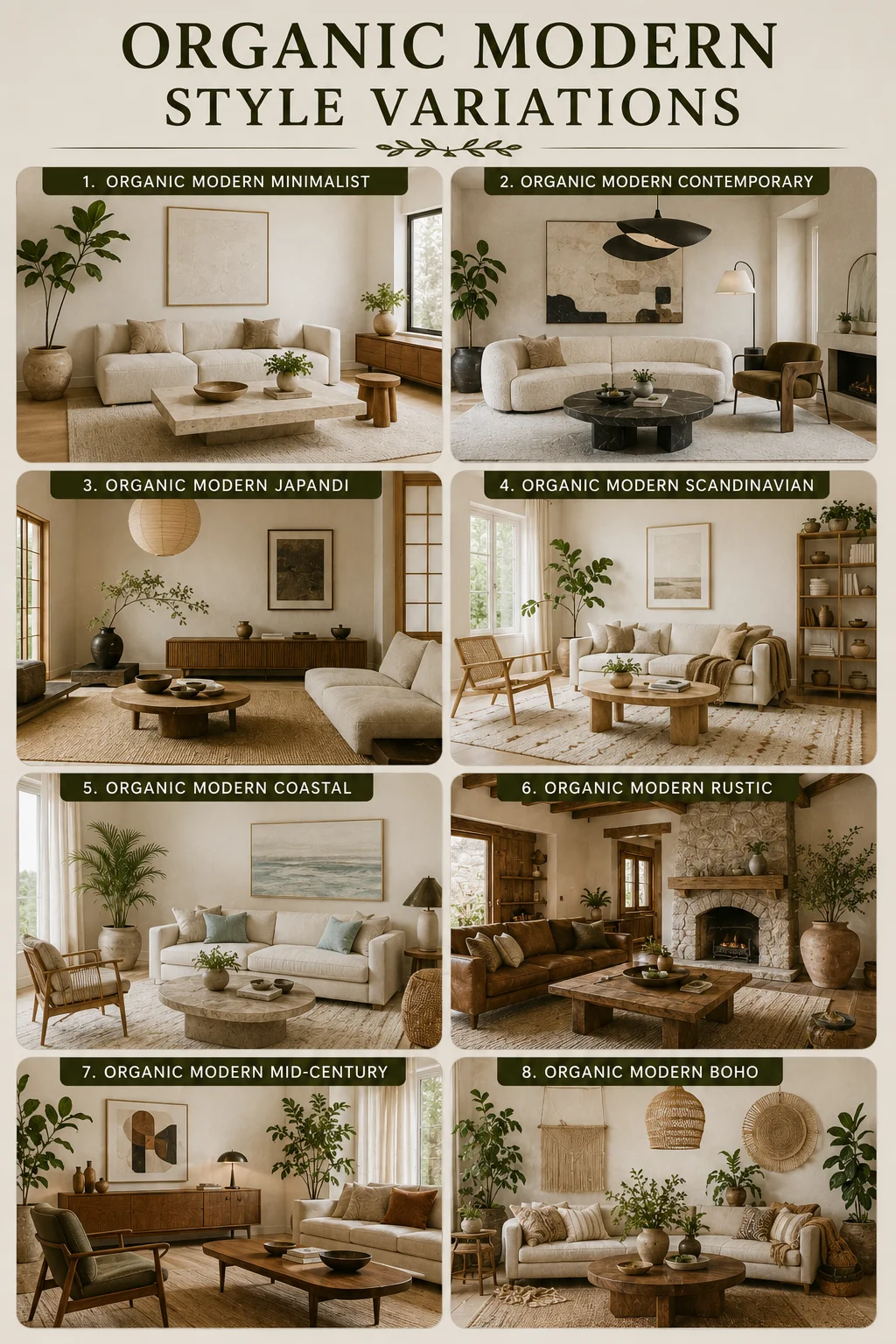
Organic Modern Contemporary
A contemporary variation includes stronger architectural lines, sculptural lighting, large-scale artwork and more dramatic furniture proportions.
Combine cream upholstery with statement stone, dark bronze details and a stronger contrast between pale and deep tones.
Organic Modern Japandi
This version introduces low-profile furniture, Japanese-inspired simplicity, dark wood accents and handcrafted ceramics.
Keep the palette quiet and focus on craftsmanship, balance and negative space.
Organic Modern Scandinavian
A Scandinavian interpretation feels brighter and more casual. Use pale timber, warm white walls, simple furniture and practical woven textiles.
Add stone, curved furniture and sculptural decor to retain the organic modern identity.
Organic Modern Coastal
Combine organic modern design with subtle coastal influences through pale oak, linen, woven accents and soft blue-gray or sea-glass green details.
Avoid literal nautical decor. Keep the look sophisticated by using shoreline-inspired colors and natural textures. For related ideas, explore our Coastal Living Room Style Guide.
Organic Modern Rustic
This variation introduces reclaimed timber, aged leather, handmade pottery and more visible material imperfections.
Keep furniture silhouettes simple and avoid excessive farmhouse detailing so the room retains a modern foundation.
Organic Modern Mid-Century
Pair organic materials with tapered-leg furniture, walnut finishes and low-profile seating. Add one sculptural vintage-inspired lamp or accent chair.
Use mid-century influences selectively so the room does not become themed. Visit our Mid-Century Modern Living Room Style Guide for more furniture and color ideas.
Organic Modern Boho
A boho variation includes additional woven materials, handcrafted objects and relaxed textile layering.
Maintain a restrained color palette and limit decorative accessories so the room remains calm rather than eclectic. See our Boho Living Room Style Guide for further inspiration.
Is Organic Modern Style Right for You?
Organic modern style may suit you if you prefer interiors that feel calm, warm, uncluttered and connected to nature. It is particularly appealing to people who appreciate modern furniture but want more texture and comfort than traditional minimalism provides.
This style may be a good fit if you:
- Prefer warm neutrals and earthy colors
- Value natural materials and visible craftsmanship
- Like clean furniture lines without a stark appearance
- Want a calm home with limited visual clutter
- Enjoy mixing contemporary design with natural textures
- Prefer fewer, more substantial decorative objects
- Want a style that can evolve gradually over time
Organic modern design may be less suitable if you prefer bold color, ornate furniture, maximalist pattern mixing or highly formal interiors. However, individual elements such as natural wood, warm lighting and textured textiles can still be incorporated into other styles.
Frequently Asked Questions
What is an organic modern living room?
An organic modern living room combines clean modern furniture, uncluttered layouts and simple architectural lines with natural materials, warm neutral colors, tactile textiles and organic shapes. The result is a calm, refined and comfortable room that feels connected to nature.
What colors are best for an organic modern living room?
The best colors include warm white, ivory, oatmeal, sand, beige, mushroom, taupe, camel and soft brown. Muted olive, sage, clay, terracotta, charcoal and dark bronze can be added as accents.
What materials define organic modern style?
Common materials include white oak, walnut, travertine, limestone, marble, linen, wool, clay, plaster, rattan and handmade ceramics. Matte and lightly textured finishes usually suit the style better than glossy surfaces.
What furniture works in an organic modern living room?
Choose a streamlined sofa, one sculptural accent chair, an oval or irregular coffee table, a simple timber media console and a limited number of functional side tables. Furniture should combine clean lines with soft upholstery and natural finishes.
Is organic modern the same as minimalist style?
No. Both styles value simplicity and uncluttered spaces, but organic modern design is generally warmer, softer and more textural. It uses natural imperfections, layered fabrics and sculptural forms to prevent the room from feeling stark.
What is the difference between organic modern and Japandi?
Japandi combines Japanese simplicity with Scandinavian functionality and often uses lower furniture, stronger light-and-dark wood contrast and highly restrained styling. Organic modern interiors are usually softer, more substantial and more sculptural.
Can organic modern style work in a small living room?
Yes. Use a light neutral palette, compact furniture, rounded edges and a limited material selection. Choose multipurpose pieces, large-scale rather than numerous small accessories and floor-to-ceiling curtains to increase the sense of space.
How do I keep an organic modern living room from looking too beige?
Layer several neutral tones and introduce contrast through medium wood, walnut, muted olive, clay, charcoal or dark bronze. Use different textures such as linen, wool, stone, plaster and ceramics to create depth.
What type of rug suits an organic modern living room?
Choose a large wool, wool-blend, jute or natural-look textured rug in ivory, oatmeal, sand, taupe or warm gray. Subtle tonal patterns work well, but bold high-contrast designs may disrupt the calm aesthetic.
What plants suit organic modern interiors?
Sculptural plants such as rubber plants, Kentia palms, fiddle-leaf figs, Ficus Audrey, bird of paradise, dracaena and olive trees suit the style. Select plants according to the room’s natural light and maintenance requirements.
Is bouclé essential for organic modern style?
No. Bouclé is a useful texture, but it is not essential. Linen, wool, cotton, leather and chenille can create an equally effective organic modern interior. Use bouclé on one feature piece rather than throughout the entire room.
Is organic modern style still popular?
Organic modern design has lasting appeal because it is based on natural materials, practical layouts and warm neutral colors rather than one short-term decorative trend. Individual furniture shapes may change over time, but the core principles remain adaptable and timeless.
How can I make organic modern style feel personal?
Add meaningful artwork, collected ceramics, favorite books, personal photography and handcrafted objects. Keep the quantity restrained and choose pieces that connect with the room’s materials, colors or natural theme.
Can I mix different wood tones in an organic modern living room?
Yes. Combine two or three related wood tones, such as pale oak and medium walnut. Repeat each finish in more than one location and keep their undertones compatible so the variation feels intentional.
How do I create organic modern style on a budget?
Invest in the sofa and rug, then use affordable linen-look curtains, secondhand timber furniture, vintage ceramics, stone-look tables and simple textured accessories. Focus on scale, color consistency and material appearance rather than purchasing many decorative items.
Final Thoughts
An organic modern living room succeeds when clean modern structure is balanced with warmth, texture and natural character. The style does not require a perfectly matched furniture collection or a room filled with expensive materials. It depends more on thoughtful proportion, restrained color, tactile surfaces and careful editing.
Begin with a warm neutral foundation, choose comfortable furniture with simple lines and introduce a limited palette of wood, stone and natural textiles. Add one or two sculptural elements, layered lighting and a small number of meaningful accessories.
The finished room should feel elegant but not formal, minimal but not empty and contemporary without becoming cold. By focusing on timeless materials and intentional design decisions, you can create an organic modern living room that remains comfortable, adaptable and visually appealing for years.
Continue exploring related aesthetics in our Modern Living Room Styles Explained guide, or compare this look with our Minimalist, Japandi, Scandinavian and Contemporary Living Room style guides.