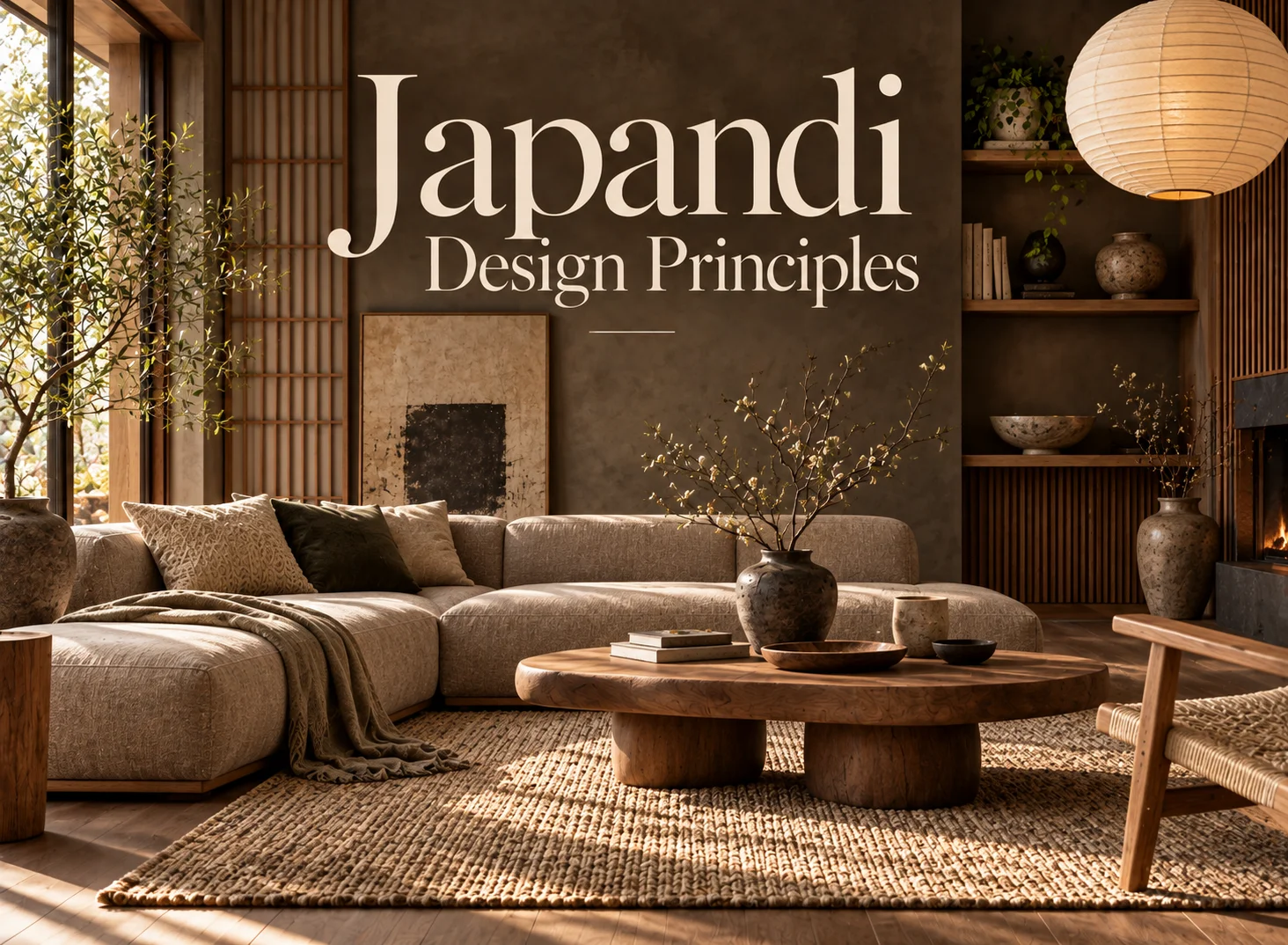
Japandi interiors often appear effortless: quiet colors, beautifully made furniture, natural materials and only a small number of carefully chosen objects. Yet the simplicity is intentional. Behind the visual calm is a set of design principles that determine what belongs in the room, how furniture is arranged and how materials, texture, light and decoration work together.
Understanding these Japandi design principles is more useful than copying individual rooms. Once you understand the thinking behind the style, you can adapt Japandi to different homes, budgets and architectural settings without making every interior look identical.
At its core, Japandi combines the functionality and warmth associated with Scandinavian interior design with Japanese ideas of simplicity, craftsmanship, natural beauty and purposeful living. The result is an interior style that feels minimal without becoming cold, organic without becoming rustic and refined without relying on excessive decoration.
If you are new to the aesthetic, begin with our complete guide to Japandi interior design for a broader introduction to the style. In this guide, we will focus specifically on the principles that make a Japandi interior feel balanced and authentic.
What Are the Main Principles of Japandi Design?
The main principles of Japandi design are simplicity, functionality, natural materials, craftsmanship, restraint, warm neutral colors, tactile texture, connection to nature and appreciation for imperfection.
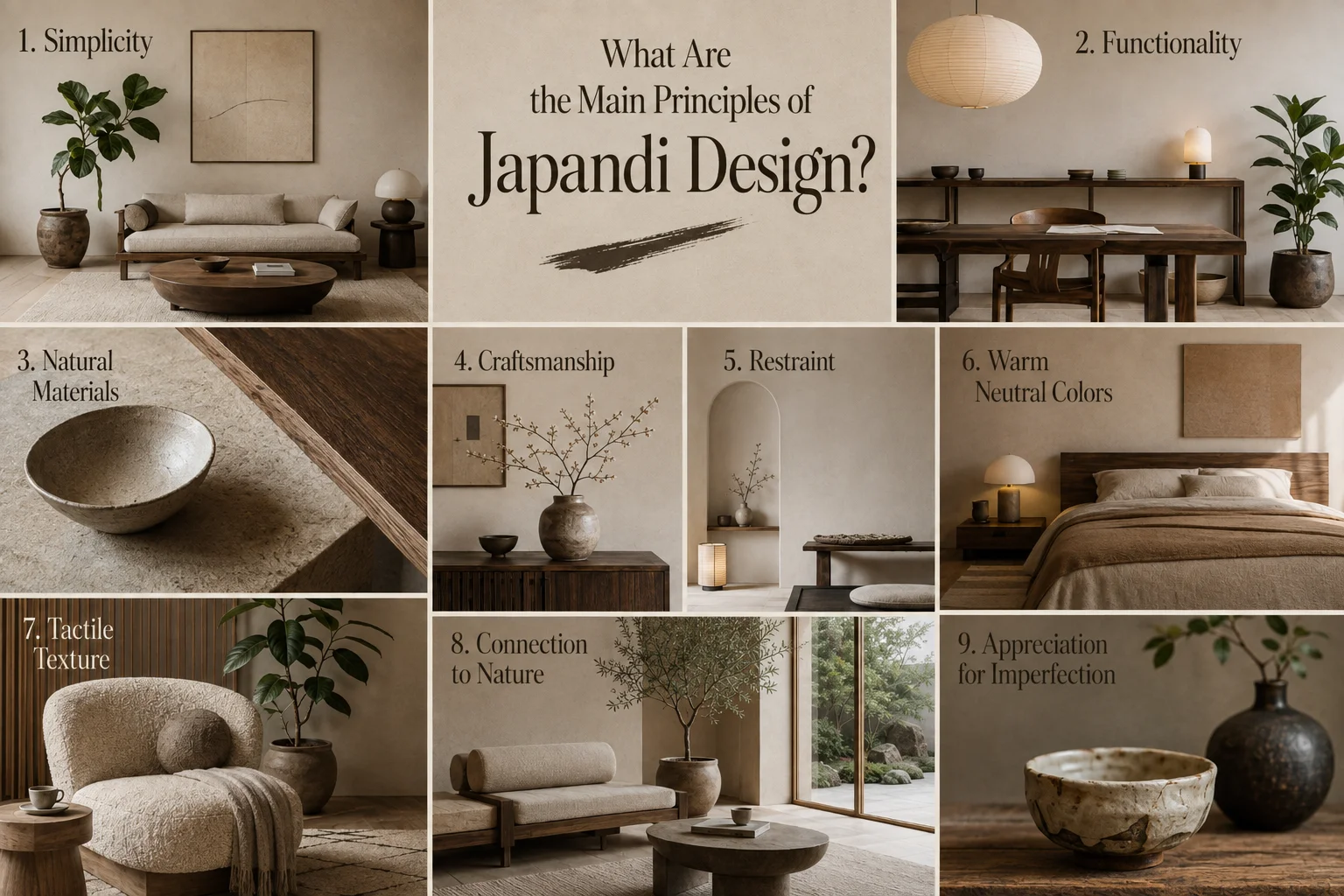
These ideas work together rather than independently. A room containing oak furniture and beige walls is not automatically Japandi. The character of the style comes from how carefully each element is selected, positioned and balanced.
Japandi therefore emphasizes intentional design rather than decorative styling. Furniture should solve a practical need. Materials should contribute texture and warmth. Decorative objects should deserve the visual space they occupy.
Principle #1. Practice Intentional Simplicity
Simplicity is one of the most recognizable Japandi principles, but it should not be confused with simply owning fewer things.
Instead, Japandi interiors reduce unnecessary visual information so that architecture, furniture, materials and craftsmanship receive greater attention.
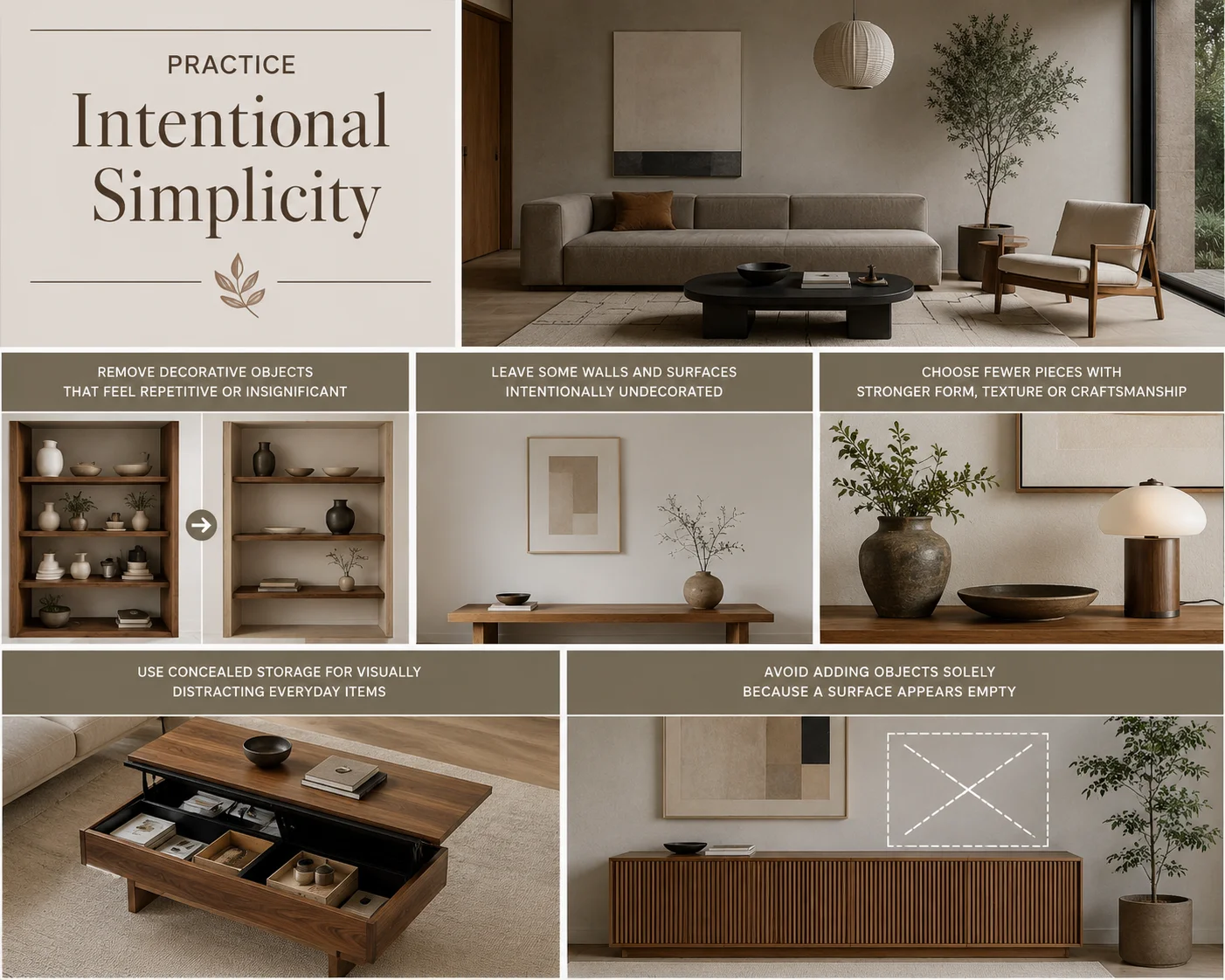
This means removing objects that do not contribute function, meaning or beauty while preserving enough texture and personality to prevent the room from feeling sterile.
A well-designed Japandi living room might include a sofa, two occasional chairs, a coffee table, a large rug, several lighting sources and a few carefully selected decorative objects. The room is not empty; every element simply has enough visual space to be appreciated.
Apply the principle
- Remove decorative objects that feel repetitive or insignificant.
- Leave some walls and surfaces intentionally undecorated.
- Choose fewer pieces with stronger form, texture or craftsmanship.
- Use concealed storage for visually distracting everyday items.
- Avoid adding objects solely because a surface appears empty.
The goal is visual clarity rather than extreme minimalism.
Principle #2. Let Function Guide the Design
Japandi interiors are beautiful because they work well, not despite their practical requirements.
Before selecting decorative objects, consider how the room needs to function. Furniture placement should support movement, conversation, relaxation, dining, storage or whatever activity the space is intended to accommodate.

This principle reflects both Scandinavian functionalism and the Japanese appreciation for purposeful objects.
For example, rather than selecting a sculptural chair simply because it looks attractive, consider whether its dimensions, comfort and position make sense within the room. Storage should similarly be chosen according to what actually needs to be stored.
If you are planning a room from the beginning, our guide to interior design basics explains how function, scale and layout should be established before decorative details.
A useful Japandi rule
Every major object should answer two questions: What does it contribute, and why is it here?
An object can contribute practicality, comfort, texture, character or emotional meaning. It does not necessarily need to be purely utilitarian, but its presence should feel deliberate.
Principle #3. Prioritize Natural Materials
Natural materials provide much of the warmth and sensory richness that prevents Japandi interiors from becoming visually flat.
Wood is particularly important. Oak, ash, beech and other pale timbers can reference Scandinavian interiors, while walnut, stained oak and darker timber finishes can introduce a stronger Japanese influence.
However, Japandi design extends beyond wood.
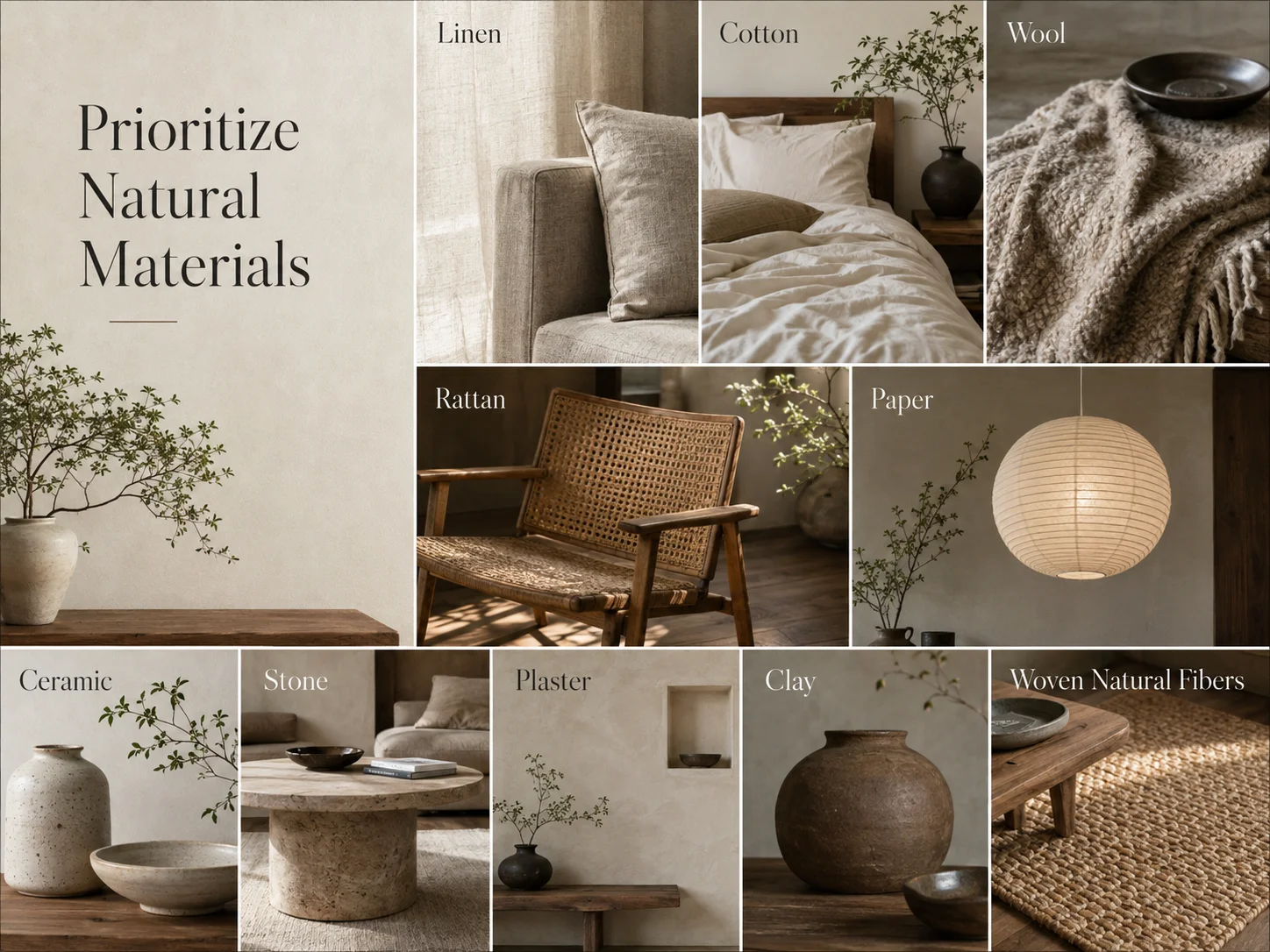
Common materials include:
- linen;
- cotton;
- wool;
- rattan;
- paper;
- ceramic;
- stone;
- plaster;
- clay; and
- woven natural fibers.
Using several natural materials creates subtle variation even when the overall palette remains restrained.
A neutral room might combine an oak table, linen upholstery, a wool rug, ceramic vessels and a stone side table. Their colors may be similar, but their surfaces reflect light differently and prevent the interior from appearing monotonous.
Principle #4. Value Craftsmanship Over Quantity
Japandi favors fewer, better-considered objects rather than large collections of inexpensive decorative pieces.
This does not mean every item needs to be handmade or expensive. The principle is about selecting objects that feel durable, useful and visually considered.

Look for details such as visible timber grain, carefully shaped joinery, tactile ceramic glazes, woven textiles and furniture with strong proportions.
Because Japandi rooms contain relatively few decorative distractions, craftsmanship becomes more noticeable.
A beautifully proportioned chair or handmade ceramic bowl can become a focal point without needing dramatic color or ornamentation.
Think quality before quantity
Instead of filling a console table with numerous small accessories, consider displaying one substantial ceramic vessel, a small stack of books and a sculptural lamp.
The composition becomes quieter while allowing each object to contribute more.
Principle #5. Embrace Natural Imperfection
Japandi design is closely associated with the Japanese concept of wabi-sabi—an appreciation for imperfection, impermanence and the beauty found in natural materials and handmade objects.
In interiors, this can appear through timber with visible grain, irregular ceramics, softened linen, textured plaster or stone containing natural variation.
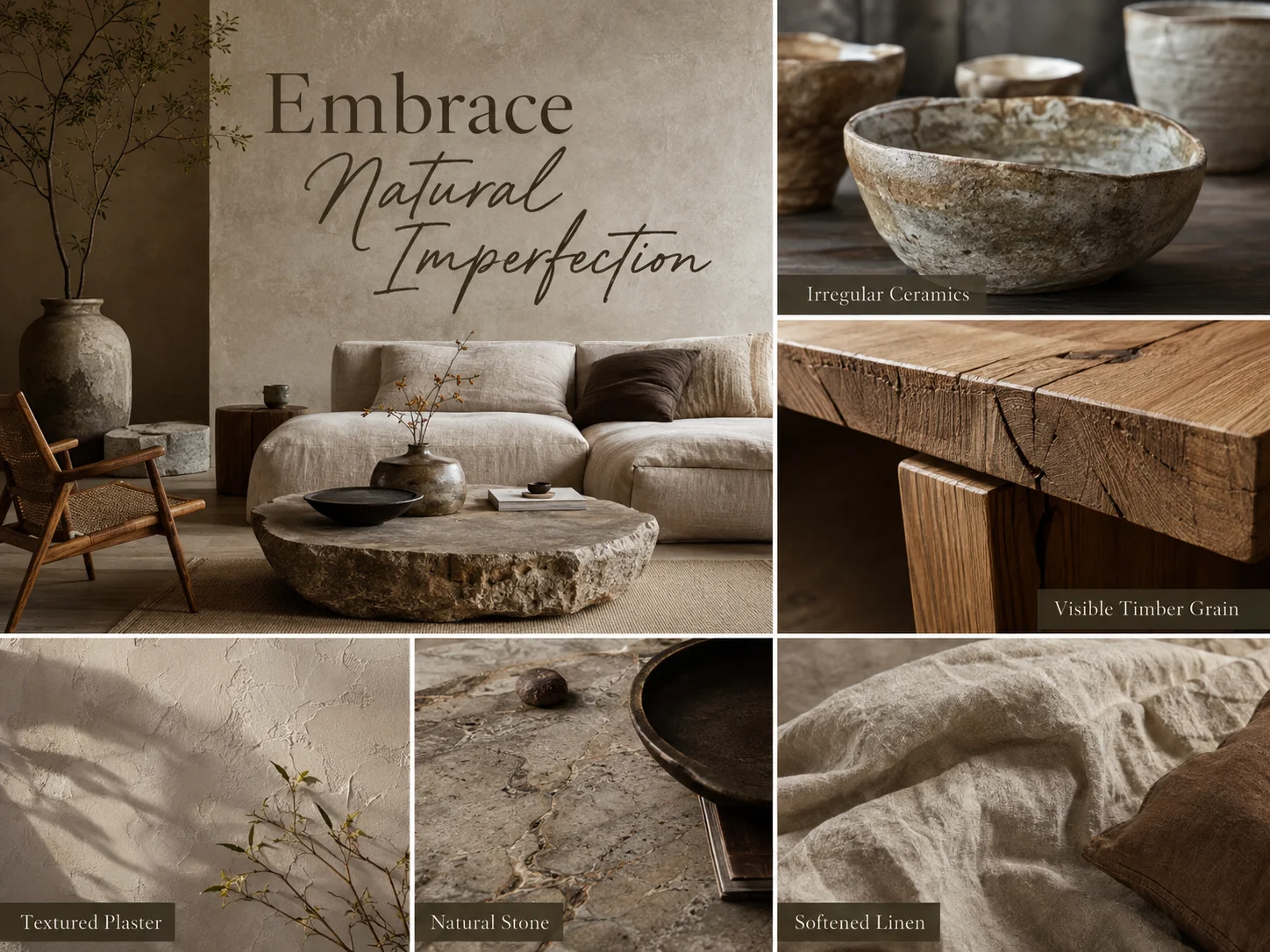
Instead of demanding that every surface appear perfectly manufactured, Japandi allows materials to reveal how they were made and how they change over time.
This principle gives the style emotional warmth.
A perfectly coordinated room composed entirely of smooth factory-produced surfaces can technically use the correct Japandi colors while still missing the character that makes the style compelling.
Principle #6. Build a Warm, Restrained Color Palette
Japandi color palettes are usually restrained, but they are rarely limited to pure white and beige.
The strongest palettes include subtle tonal variation and enough contrast to create visual structure.
A typical scheme might contain:
- one dominant warm neutral;
- one secondary neutral;
- one or two natural wood tones;
- a deeper grounding color; and
- an optional muted accent.
Warm white, oatmeal, stone, taupe, mushroom, greige and soft beige work well as foundations.
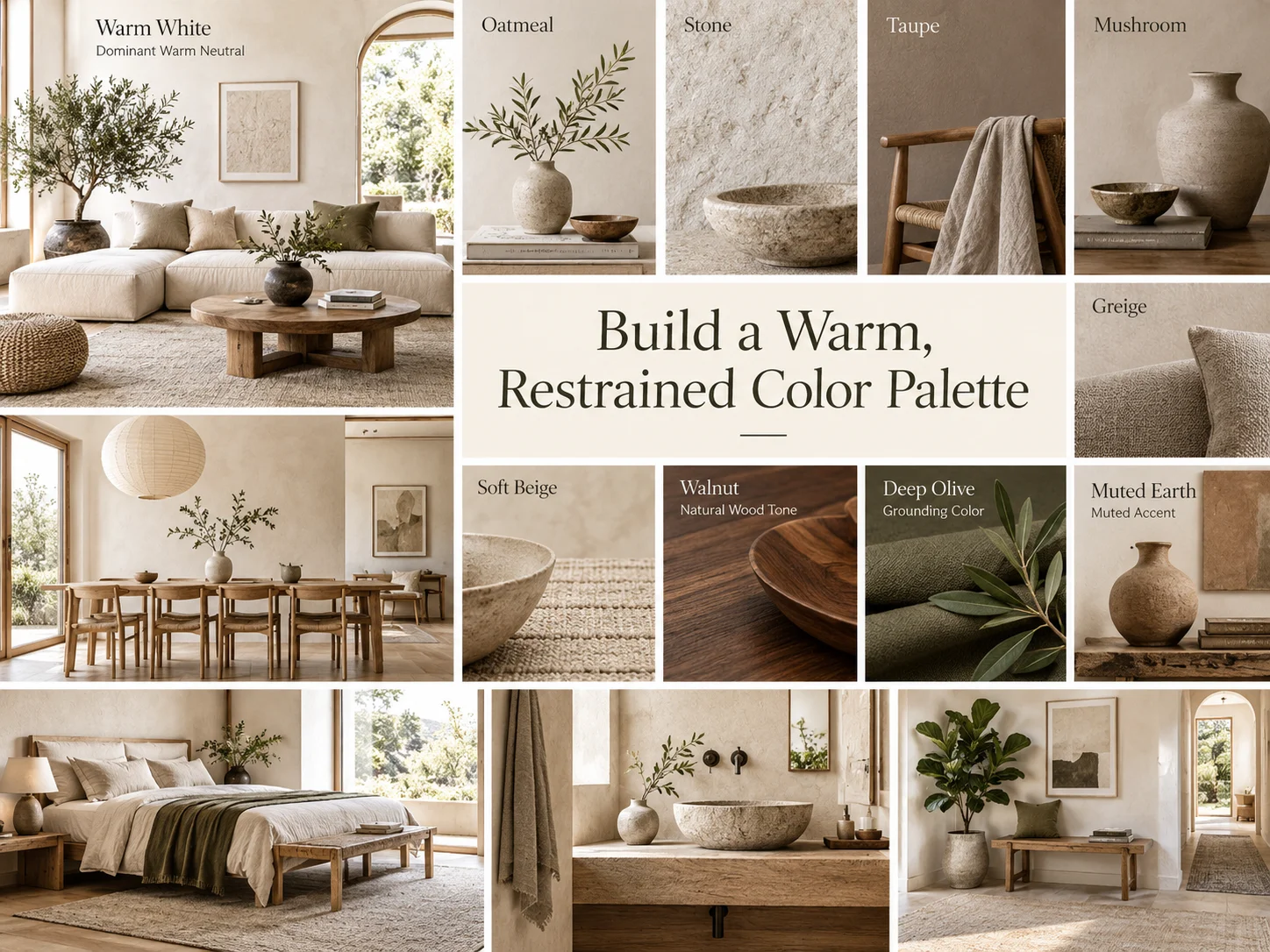
Darker accents might include charcoal, blackened brown, walnut, deep olive or muted earth tones.
The objective is not to eliminate color completely. Instead, colors should feel connected to materials found in nature and should support rather than dominate the composition.
Avoid the all-beige problem
A room where the walls, sofa, rug, cushions and accessories are almost exactly the same beige can look flat rather than calming.
Introduce contrast through dark timber, black details, greenery, stone, textured textiles or subtly different neutral tones.
Principle #7. Create Depth Through Texture Before Adding More Color
Texture is one of the most important tools in Japandi interiors.
Because the color palette is intentionally controlled, texture carries much of the visual interest that pattern or saturated color might provide in another style.

Layer smooth and irregular surfaces together. For example:
- smooth oak beside rough stone;
- soft linen against plaster walls;
- wool beside glazed ceramic;
- woven fibers with polished timber; or
- matte surfaces beside subtly reflective finishes.
These combinations allow neutral interiors to remain visually complex without appearing busy.
When a Japandi room feels unfinished, consider adding texture before adding another color.
Principle #8. Use Negative Space Deliberately
Empty space is an active part of Japandi design.
Leaving visible space around furniture allows individual pieces to appear more intentional and helps the eye move comfortably through the room.
This principle is particularly important around statement furniture, artwork and decorative objects.
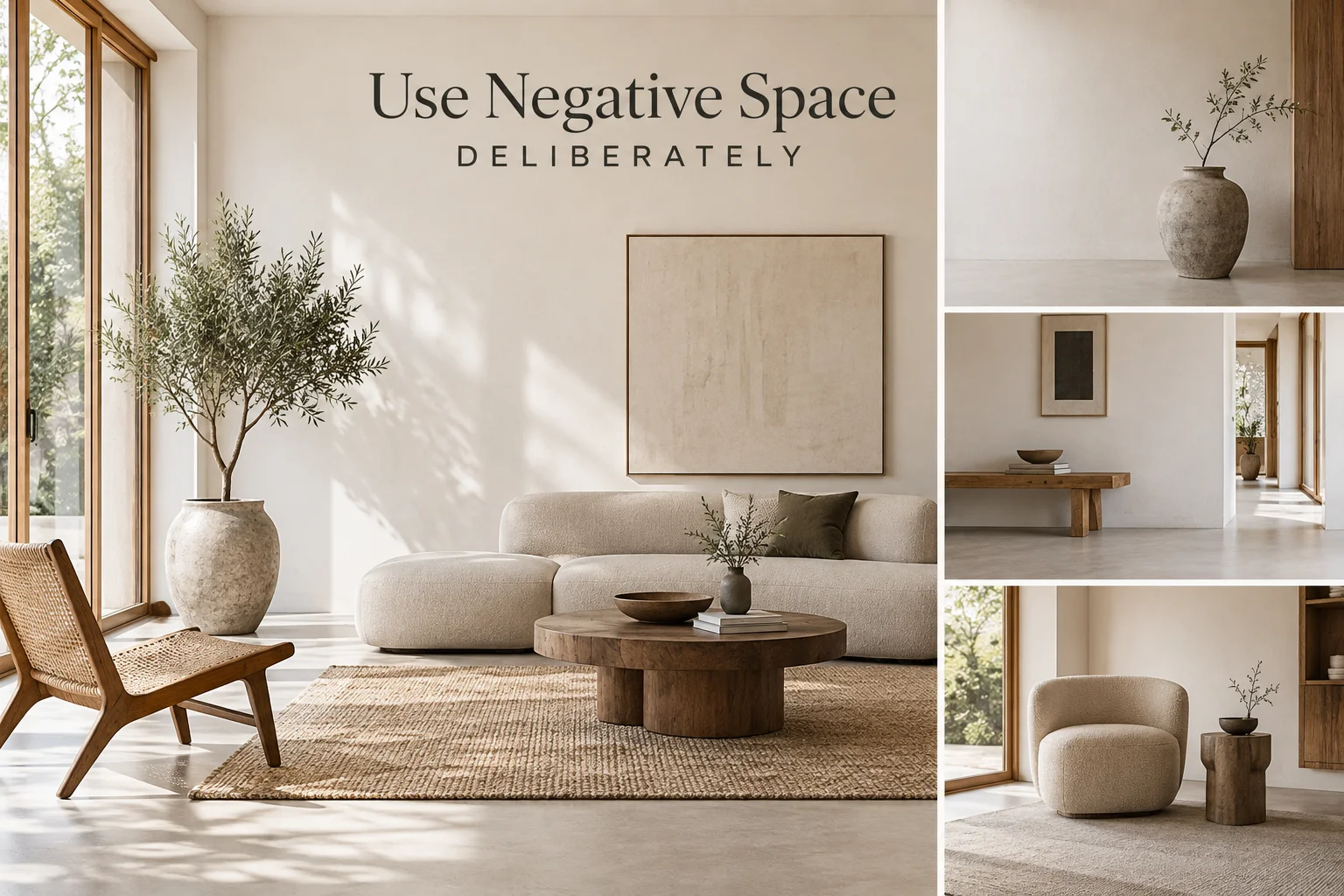
A large ceramic vessel displayed alone may have more visual impact than the same vessel surrounded by five smaller accessories.
Negative space also improves circulation. Furniture should not occupy every available section of floor simply because the room can accommodate it.
When designing a living room, review your living room layout and protect comfortable pathways between doors, seating areas and adjoining spaces.
Principle #9. Choose Simple, Well-Proportioned Furniture
Japandi furniture usually emphasizes clean silhouettes, balanced proportions and visible materials rather than excessive ornamentation.
Common characteristics include:
- low or visually grounded profiles;
- simple timber frames;
- softly rounded edges;
- slender or understated legs;
- natural upholstery; and
- subtle handcrafted details.
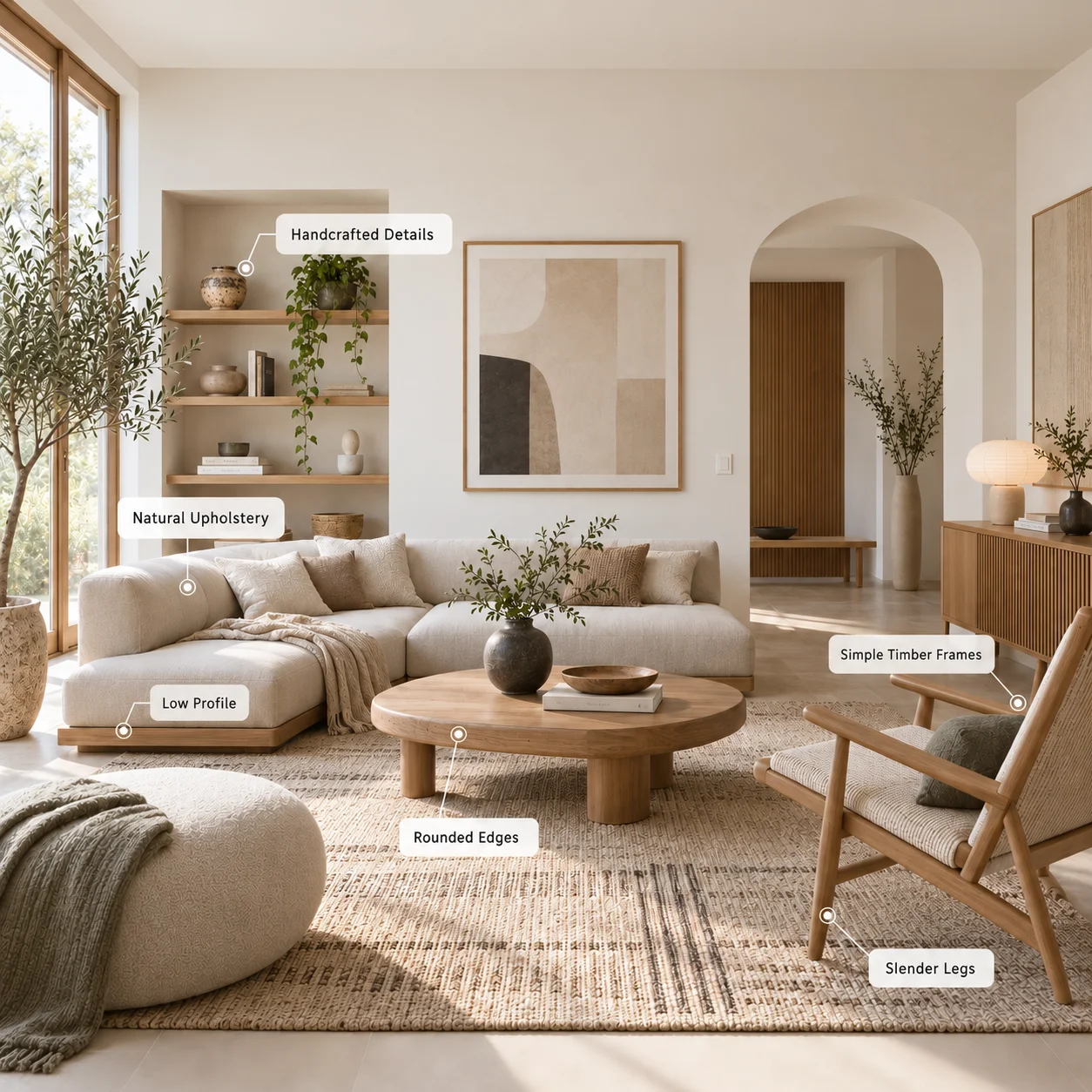
Japanese influence often appears through lower furniture and stronger horizontal lines, while Scandinavian furniture can introduce lighter timber, relaxed upholstery and gently sculptural curves.
You do not need every item to come from the same furniture collection. In fact, a carefully mixed room generally feels more authentic than one where every finish and silhouette matches perfectly.
Pay attention to scale
A small minimalist sofa will not automatically work in a large room. Similarly, an oversized sectional can overwhelm a compact Japandi interior.
Choose furniture according to the proportions of the architecture first and the desired aesthetic second.
Principle #10. Balance Scandinavian and Japanese Influences
Successful Japandi interiors do not need to divide their influences evenly.
Some rooms lean lighter and softer, incorporating pale oak, wool, warm white walls and comfortable Scandinavian-inspired seating.
Others lean toward a Japanese interpretation through lower furniture, darker timber, paper lighting, handcrafted ceramics and greater visual restraint.
Both can still feel distinctly Japandi.
The key is creating a coherent relationship between the two influences rather than placing obviously Scandinavian objects beside obviously Japanese objects and expecting them to automatically form a unified interior.
If you are interested in the Nordic side of the combination, explore our Scandinavian interior design guide.
Principle #11. Strengthen the Connection to Nature
Nature influences Japandi design through materials, colors, daylight, texture and greenery.
Plants can provide organic contrast against simple architectural lines, but they should remain proportionate to the space.
One beautifully shaped indoor tree can often contribute more than numerous small plants scattered across every surface.
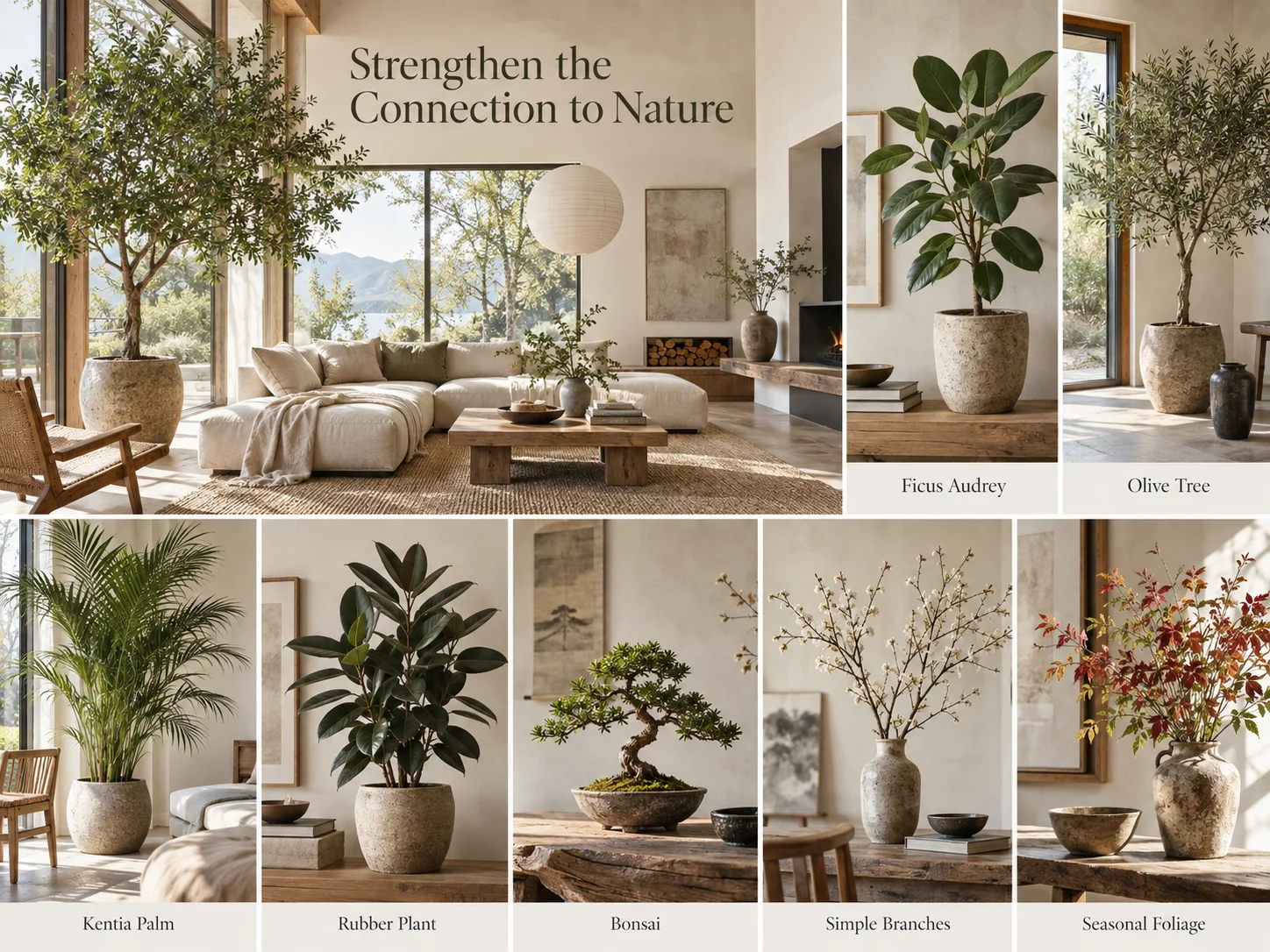
Depending on the room, consider:
- Ficus Audrey;
- olive tree;
- Kentia palm;
- rubber plant;
- bonsai;
- simple branches; or
- seasonal foliage.
The principle is broader than adding houseplants. Whenever possible, emphasize views, natural daylight and materials that retain visible organic characteristics.
Principle #12. Use Soft, Layered Lighting
Lighting dramatically influences whether a Japandi interior feels calming or clinical.
One bright ceiling fixture rarely produces the layered atmosphere associated with the style.
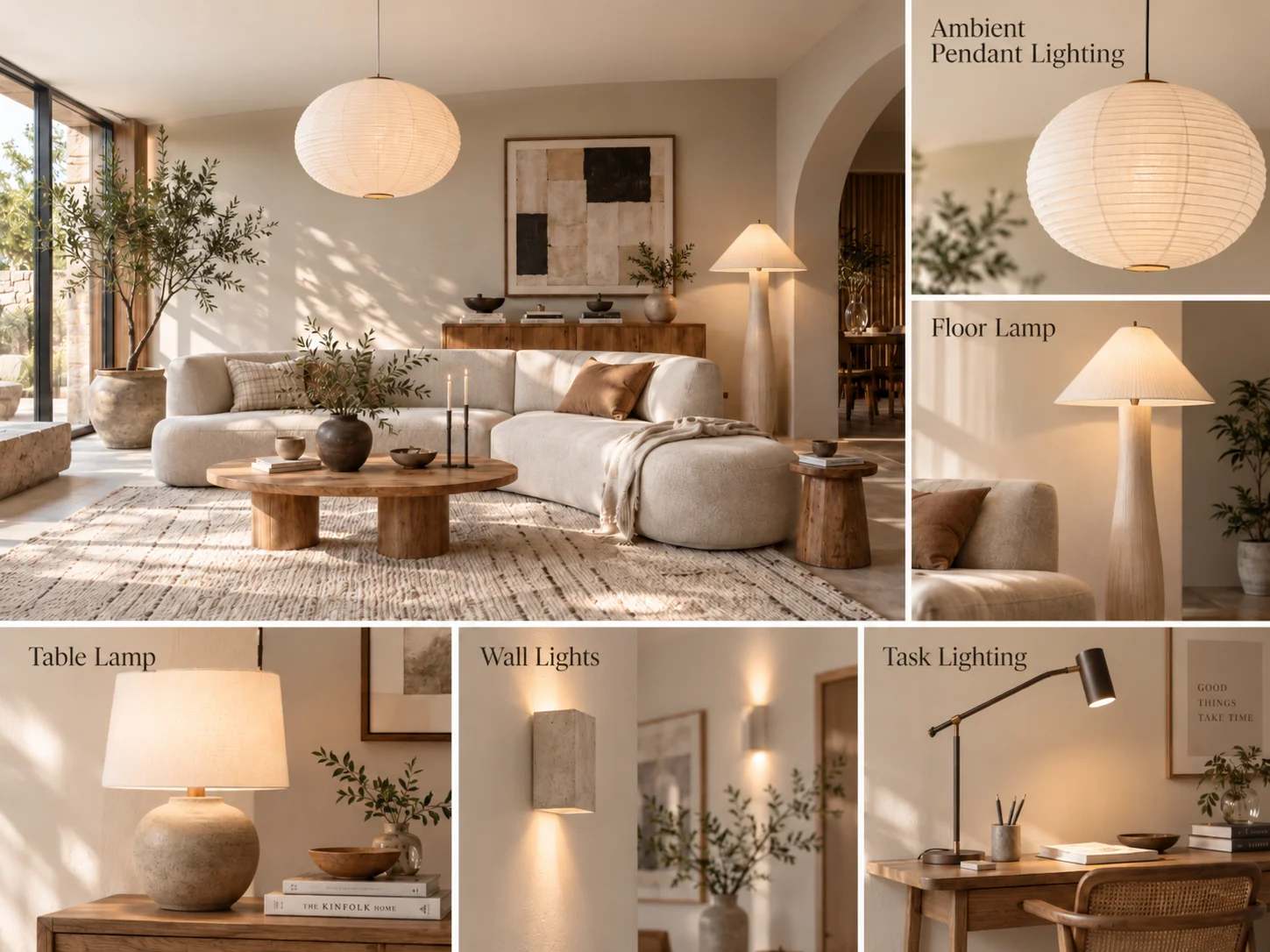
Instead, combine several lighting sources:
- ambient ceiling or pendant lighting;
- floor lamps;
- table lamps;
- wall lights; and
- focused task lighting where needed.
Paper, linen, ceramic, timber, frosted glass and other tactile materials work particularly well for decorative lighting.
Choose fixtures that contribute sculptural form even when switched off.
During the daytime, allow natural light to remain an important part of the interior. Linen curtains, woven blinds and simple window treatments can soften daylight without unnecessarily blocking it.
Principle #13. Decorate with Restraint
Japandi accessories should support the composition rather than compete with it.
Suitable decorative elements include ceramics, books, artwork, timber objects, woven baskets, branches, textiles and sculptural vessels.
However, restraint matters more than the specific accessory category.
Rather than decorating every surface, create a few purposeful arrangements.
For example, a coffee table might contain only a substantial book and handmade bowl. A console could feature a lamp and one ceramic object. A wall might contain one large artwork rather than a gallery of many unrelated pieces.
Use scale instead of quantity
One of the easiest ways to make restrained decoration feel intentional is to increase the scale of individual objects while reducing their number.
A large artwork, substantial ceramic vessel or sculptural branch arrangement can create stronger visual impact than numerous small accessories.
Principle #14. Create Visual Continuity Throughout the Room
Japandi interiors feel cohesive because materials, colors and forms reappear throughout the space.
This does not mean everything should match.
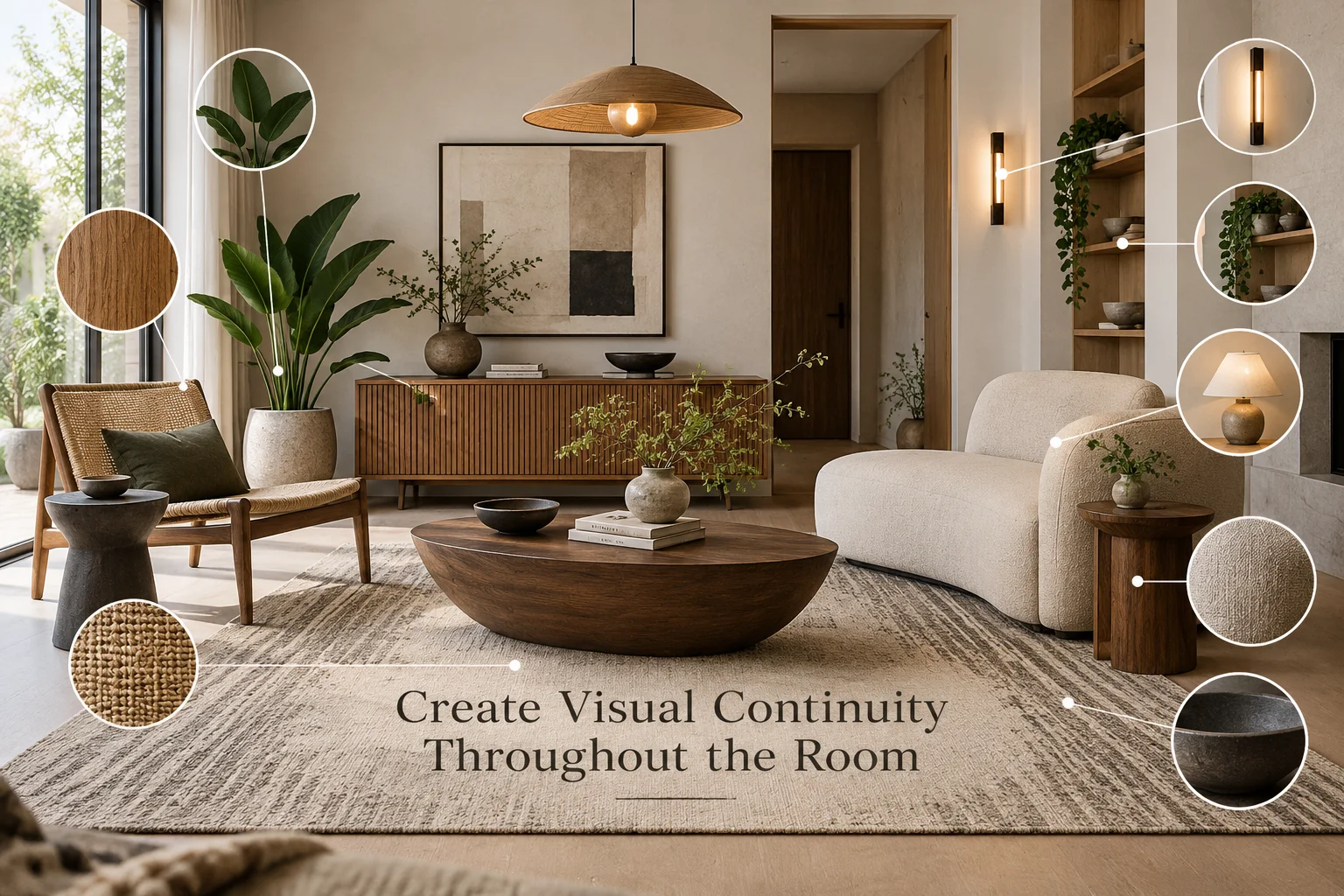
Instead, repeat selected visual cues.
If your coffee table is oak, the same general timber family might reappear in shelving or a chair frame. A dark pendant can connect visually with a black side table or artwork frame. Linen upholstery might relate to linen curtains.
Repetition creates rhythm while variation prevents the room from appearing overly coordinated.
This is particularly useful when mixing different furniture periods or brands.
How the Japandi Principles Work Together
The strongest Japandi interiors rarely rely on one principle alone.
Consider a simple living room with warm plaster walls, an oak coffee table, linen sofa, wool rug and ceramic lamp.
The room works because several ideas overlap:
- the palette is restrained;
- materials are natural;
- texture provides depth;
- furniture has practical purpose;
- decorative objects are limited;
- negative space gives each element room to breathe; and
- craftsmanship becomes more noticeable because visual clutter has been reduced.
This interconnected approach is more important than following a rigid checklist.
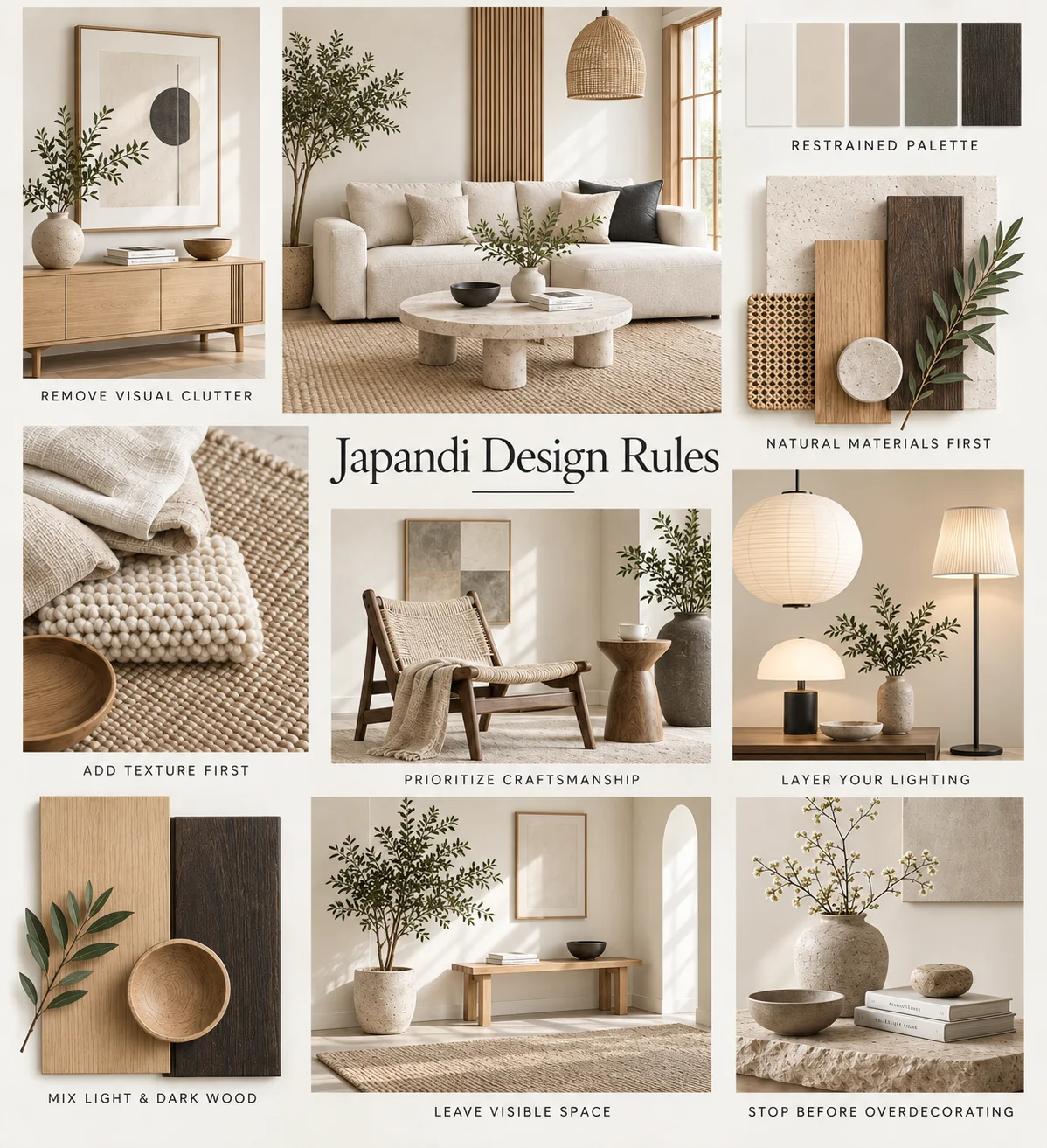
Japandi Design Rules You Can Use in Any Room
If you want a simpler way to apply the philosophy, use these practical styling rules:
- Start with function. Decide what the room needs to accomplish before decorating it.
- Remove unnecessary visual clutter. Keep useful or meaningful items and store the rest.
- Choose natural materials first. Let timber, stone, linen, wool and ceramic establish the character.
- Keep the palette restrained. Use tonal variation instead of introducing numerous competing colors.
- Add texture before additional decoration.
- Mix light and dark wood intentionally. You do not need every timber finish to match.
- Leave visible space around important furniture and objects.
- Prioritize craftsmanship. Fewer distinctive pieces usually work better than numerous generic accessories.
- Layer your lighting. Avoid relying entirely on one overhead fixture.
- Stop decorating slightly earlier than you normally would. Japandi interiors benefit from visual breathing room.
What Japandi Design Is Not
Understanding what the style avoids can make its principles clearer.
Japandi is not an empty beige room. Texture, craftsmanship, contrast and natural variation provide visual richness.
Japandi is not strict minimalism. Books, artwork, plants, ceramics and personal objects can all belong in the room when they are thoughtfully selected.
Japandi is not a furniture theme. You do not need to buy an entire collection labeled “Japandi.” The philosophy is more important than the marketing category.
Japandi is not perfectly coordinated. Slight variation in wood, ceramic and textile finishes often gives the room greater character.
Japandi is not exclusively light and airy. Darker, moodier interpretations can work beautifully when natural materials and visual balance remain present.
Many unsuccessful rooms come from copying the visible ingredients of the style without understanding these underlying principles. Our upcoming guide to Japandi decorating mistakes explores these issues in greater detail.
Shop the Look: Japandi Essentials
You do not need to replace everything in your home to introduce Japandi style. Concentrate first on foundational pieces that provide function, material quality and visual structure.
- Low-profile linen sofa — choose simple proportions and textured neutral upholstery.
- Solid wood coffee table — oak, ash or walnut can establish natural warmth.
- Sculptural lounge chair — look for timber frames, woven elements or soft organic curves.
- Large wool or natural-fiber rug — use subtle texture rather than a visually dominant pattern.
- Paper or linen pendant light — provides diffused light and gentle sculptural form.
- Handmade ceramic vessels — irregular glazes and tactile surfaces suit the wabi-sabi influence.
- Linen curtains — soften natural light while maintaining a relaxed appearance.
- Simple timber storage — closed cabinetry helps preserve visual calm.
- Oversized greenery or branches — introduce nature without crowding the room with numerous plants.
Prioritize pieces that can remain useful even if your decorating style evolves. Japandi works particularly well when furniture is collected gradually rather than purchased as a complete matching set.
Japandi Style Variations
Once the fundamental principles are established, Japandi can move in several stylistic directions without losing its identity.
Light Japandi
Use warm white walls, pale oak, oatmeal textiles, woven natural fibers and soft daylight for an airy interpretation with stronger Scandinavian influence.
Dark Japandi
Combine walnut or smoked timber with charcoal, deep brown, textured plaster and restrained black accents for a more grounded and dramatic interior.
Organic Japandi
Introduce curved furniture, natural stone, limewash or plaster finishes, irregular ceramics and sculptural greenery while maintaining a controlled palette.
Minimal Japandi
Reduce furniture and accessories further, emphasizing negative space, architectural lines and a small number of highly considered objects.
Contemporary Japandi
Add modern sculptural lighting, larger artwork and cleaner architectural details while keeping the foundation natural, functional and restrained.
These variations can become useful starting points for adapting Japandi to different homes rather than treating the style as one fixed visual formula.
How to Start Applying Japandi Principles at Home
You do not need to redesign an entire room immediately.
Begin by removing unnecessary clutter and evaluating the furniture you already own. Keep pieces that are functional, comfortable and visually compatible with the direction you want to create.
Next, establish a limited palette and identify two or three natural materials that can repeat throughout the space.
Then improve the room gradually:
- correct the furniture layout;
- introduce practical storage;
- replace visually distracting pieces as necessary;
- layer natural materials and texture;
- improve lighting;
- add artwork and greenery; and
- finish with a small number of meaningful accessories.
For a room-specific approach, our future guide on how to create a Japandi living room will translate these principles into a complete decorating process.
Frequently Asked Questions About Japandi Design
What are the main principles of Japandi interior design?
The main Japandi design principles include intentional simplicity, functionality, natural materials, quality craftsmanship, warm neutral colors, tactile texture, negative space, connection to nature and appreciation for natural imperfection. Together, these principles create interiors that feel calm, practical and visually balanced.
What is the most important Japandi principle?
Intentionality is arguably the most important principle because it influences every other decision. Furniture, materials and decorative objects should have a clear practical, visual or emotional purpose rather than being added simply to fill space.
Does Japandi have to be beige?
No. Japandi commonly uses warm neutrals, but the palette can also include charcoal, brown, olive, muted green, clay and other subdued natural colors. Contrast and tonal variation usually produce a more sophisticated interior than using one beige tone throughout the room.
Can you mix different wood tones in Japandi design?
Yes. Mixing wood tones can make a Japandi interior feel more natural and layered. Pale oak can be paired with walnut, stained timber or darker accents as long as the finishes are repeated deliberately and the overall composition remains balanced.
Is Japandi the same as minimalism?
No. Both styles value simplicity and reduced clutter, but Japandi places greater emphasis on natural materials, craftsmanship, tactile warmth and imperfect handmade elements. A Japandi room can contain textiles, books, ceramics, plants and personal objects while still remaining visually restrained.
What materials are best for Japandi interiors?
Wood, linen, wool, cotton, stone, ceramic, clay, paper, plaster, rattan and woven natural fibers are particularly suitable. Materials with visible grain, texture and slight irregularity reinforce the connection to nature and craftsmanship.
How do you make a Japandi room feel warm instead of empty?
Layer natural materials and contrasting textures, use warm lighting, introduce timber, add a substantial rug and include a small number of personal or handcrafted objects. The goal is to reduce clutter without removing comfort or character.
Final Thoughts
Japandi design is most successful when it is treated as a way of making decisions rather than a collection of specific products.
Choose furniture because it functions well. Select materials because they feel natural and enduring. Leave enough space for important objects to be appreciated. Use texture to create richness, craftsmanship to create character and restraint to maintain visual clarity.
Most importantly, allow the room to develop gradually.
A convincing Japandi interior does not need to look perfectly styled or completely finished. Natural variation, meaningful objects and subtle signs of everyday life can make the restrained aesthetic feel more comfortable and authentic.
Once these principles are understood, Japandi becomes remarkably adaptable—capable of feeling light or dark, traditional or contemporary, highly minimal or comfortably layered while retaining the quiet balance that defines the style.