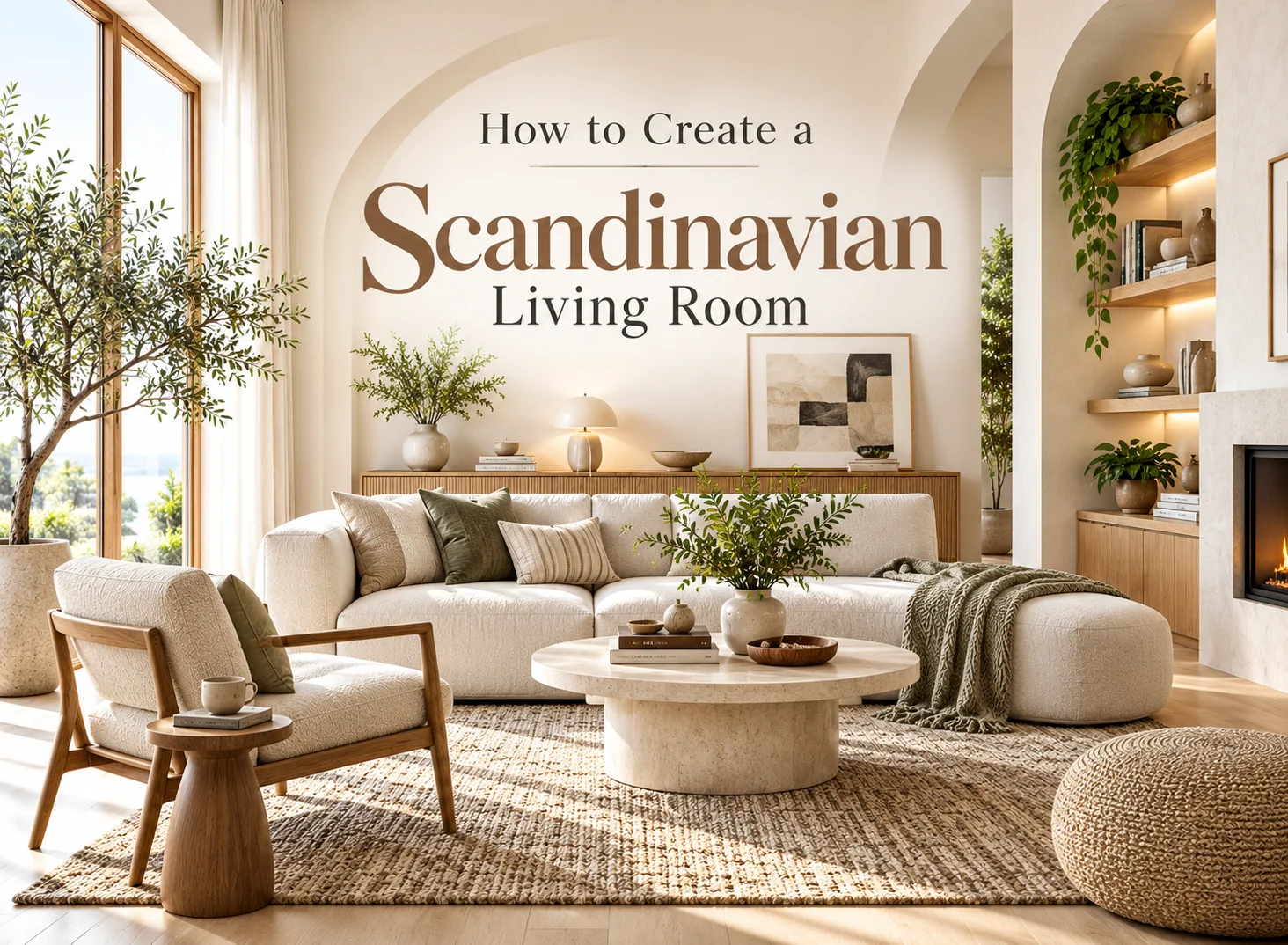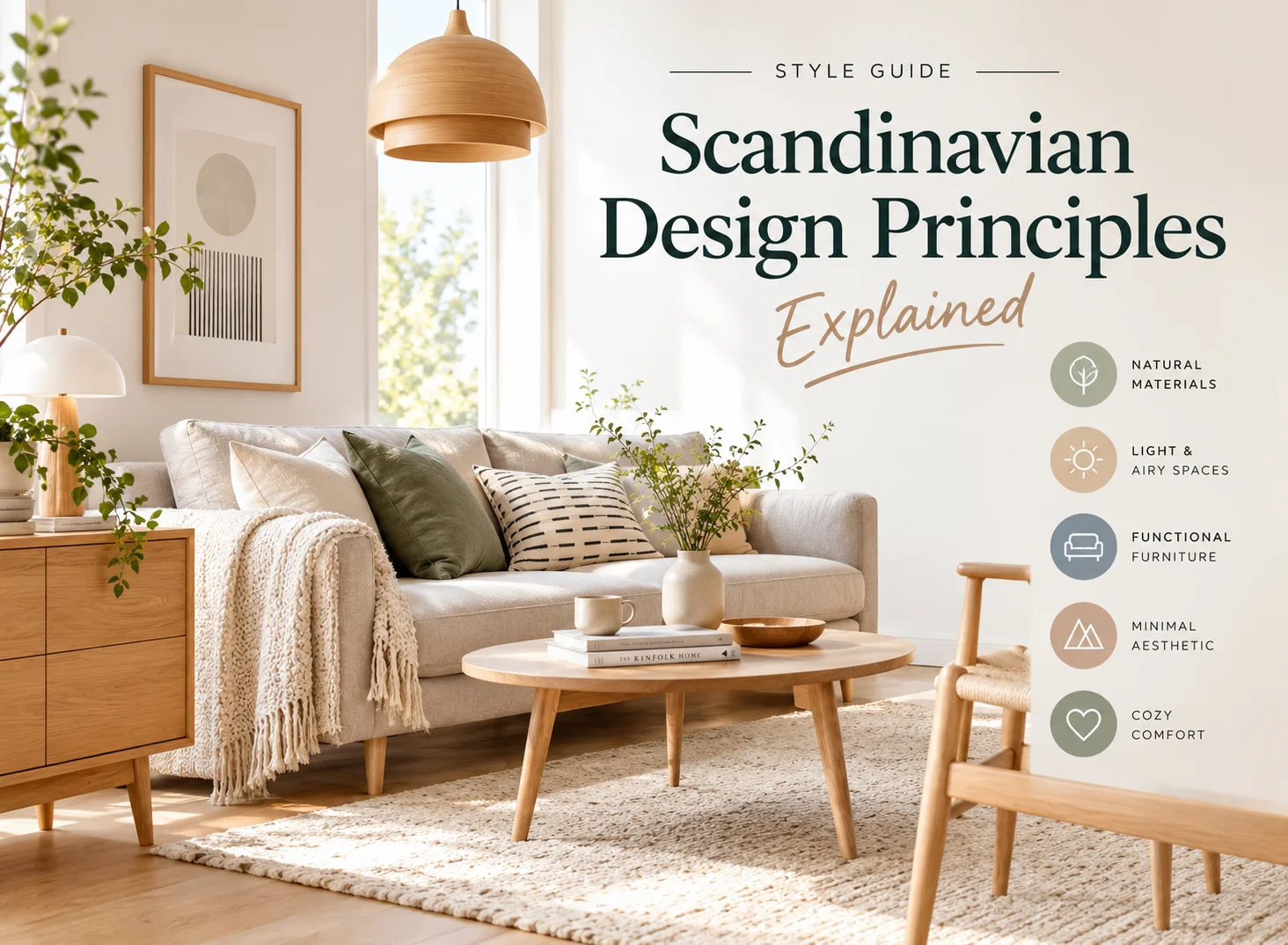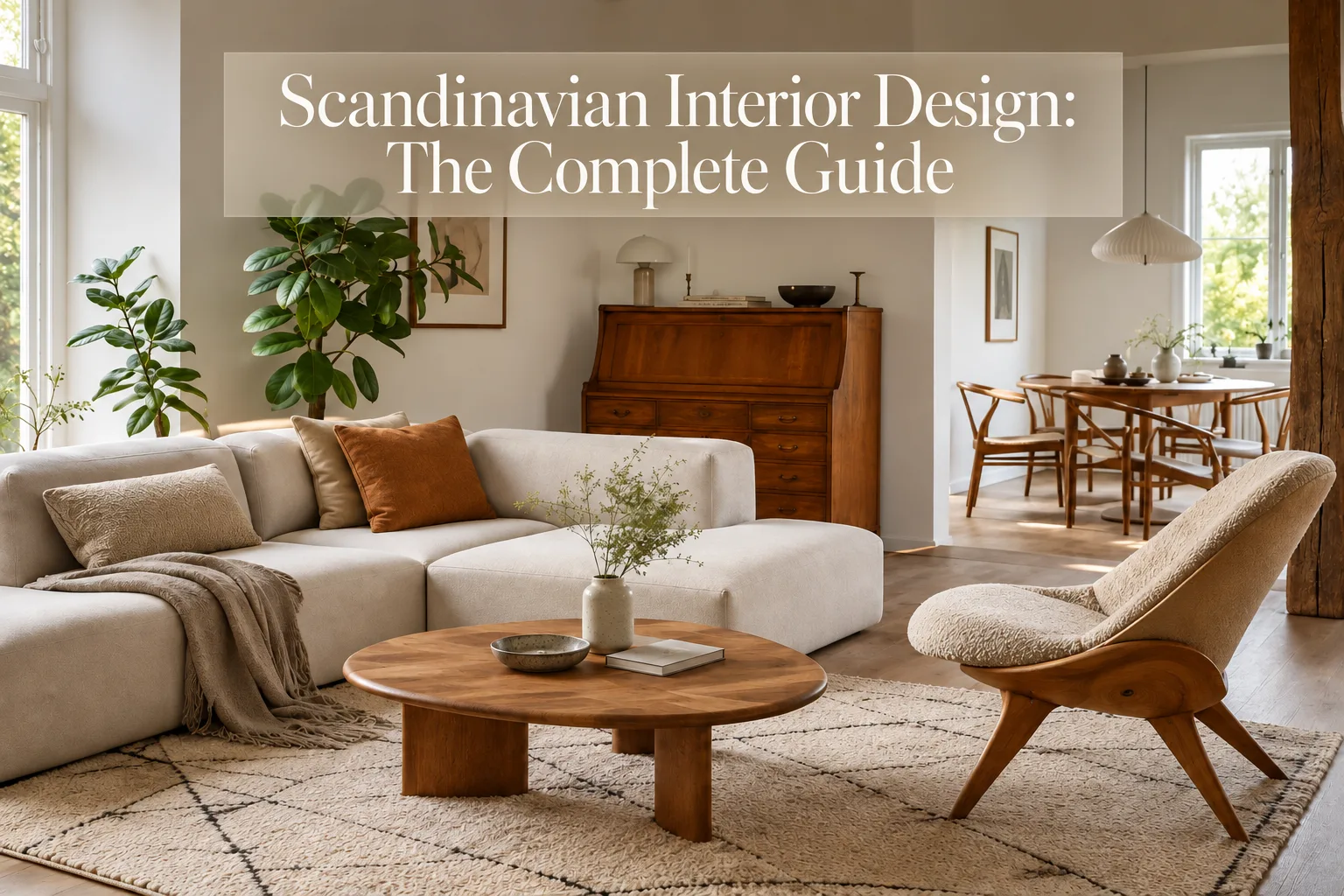
Scandinavian interior design is admired for its light-filled spaces, practical furniture, natural materials and quietly comfortable atmosphere. Although the style often appears simple, successful Scandinavian interiors depend on much more than white walls and minimalist furniture.
The best Scandinavian rooms balance beauty with everyday usefulness. Furniture is selected for comfort as well as form, natural materials bring warmth, lighting is layered carefully and decorative objects are chosen with restraint. The result feels uncluttered without becoming empty and polished without losing its sense of home.
This complete guide explains the defining principles of Scandinavian interior design, its color palettes, furniture, materials, lighting, textiles, decor and room-by-room applications, along with practical steps for introducing the style into your own home.
What Is Scandinavian Interior Design?
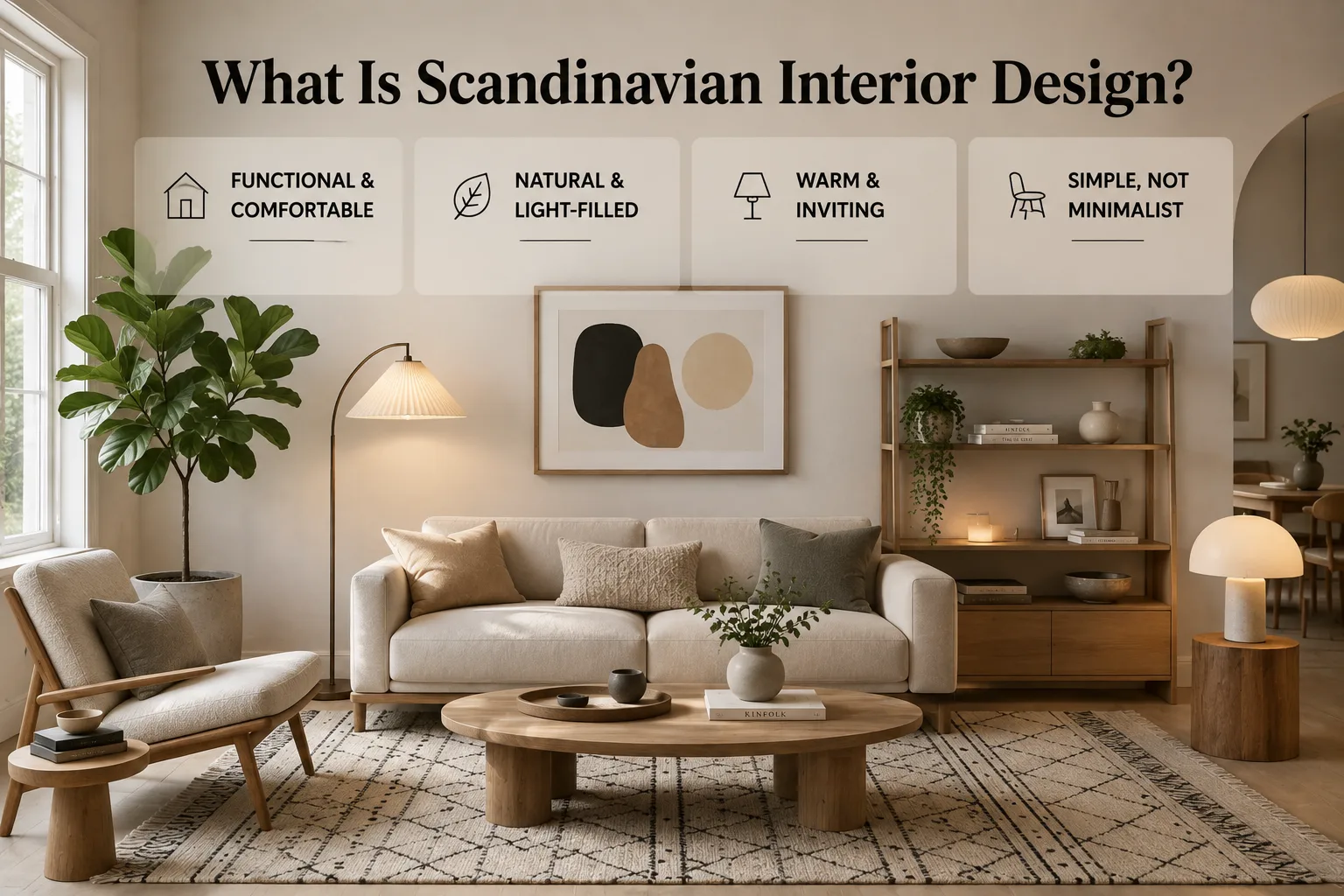
Scandinavian interior design is a functional, comfortable and visually restrained decorating style characterized by light colors, natural materials, simple furniture, practical layouts, warm textures and an emphasis on everyday wellbeing.
The style developed from the design traditions of Nordic countries including Denmark, Sweden, Norway, Finland and Iceland. Although each country has its own architectural and cultural influences, Scandinavian interiors are commonly associated with craftsmanship, functionality, simplicity and a close relationship with nature.
Limited daylight during long northern winters also influenced the way Scandinavian homes developed. Interiors frequently make maximum use of available natural light while incorporating multiple artificial light sources to create warmth after sunset.
Scandinavian design therefore should not be interpreted as extreme minimalism. It is usually restrained, but comfort remains essential. Soft textiles, warm timber, familiar objects, books, ceramics and atmospheric lighting often prevent these spaces from feeling sterile.
The Origins of Scandinavian Design
Scandinavian design became internationally influential during the twentieth century, particularly as Nordic designers explored ways to combine modern manufacturing with traditional craftsmanship and practical everyday living.
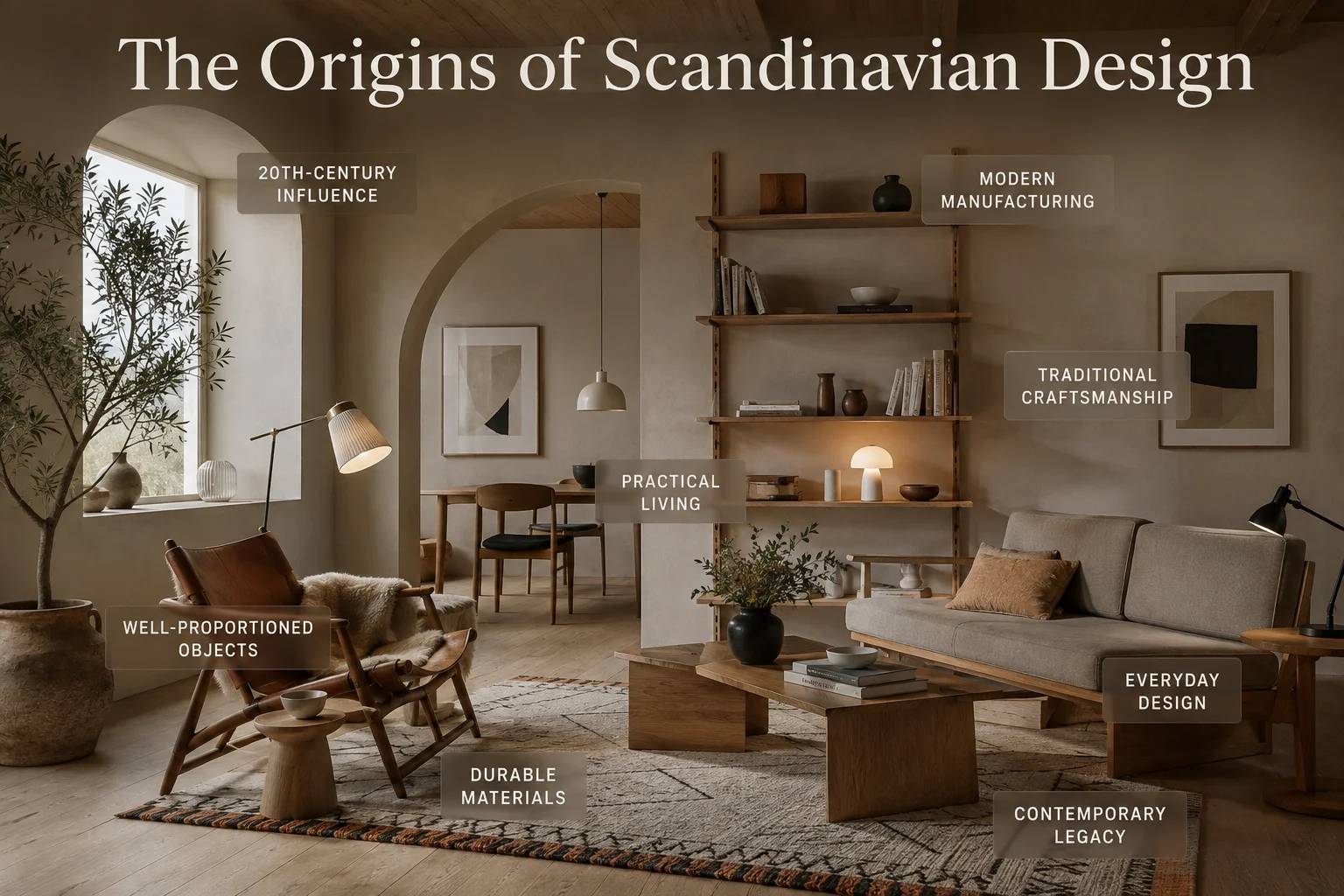
Rather than emphasizing ornament for its own sake, designers focused on well-proportioned objects, efficient construction, durable materials and forms suited to ordinary homes. Furniture, lighting and household objects became important parts of a broader philosophy in which good design could improve everyday life.
This legacy remains visible in contemporary Scandinavian interiors. A dining chair may have a remarkably simple silhouette, but its proportions, joinery and comfort are carefully considered. A room may contain relatively few decorative elements, yet the materials, textures and lighting create substantial visual depth.
Key Characteristics of Scandinavian Interior Design
Scandinavian interiors can vary from bright and minimal to rustic, contemporary or increasingly colorful, but several principles appear consistently.
1. Functional Design
Practicality comes first. Furniture should support the way the room is actually used, storage should reduce unnecessary clutter and circulation should remain comfortable.
Beautiful objects are welcome, but design rarely exists only for display. Many successful Scandinavian pieces combine an attractive form with a clear practical purpose.
2. Visual Simplicity
Scandinavian rooms generally avoid excessive ornament, complicated furniture silhouettes and unnecessary decoration. Shapes tend to be clean and visually understandable.
Simplicity does not mean every surface must be bare. Instead, the room is edited so that individual materials and objects have space to be appreciated.
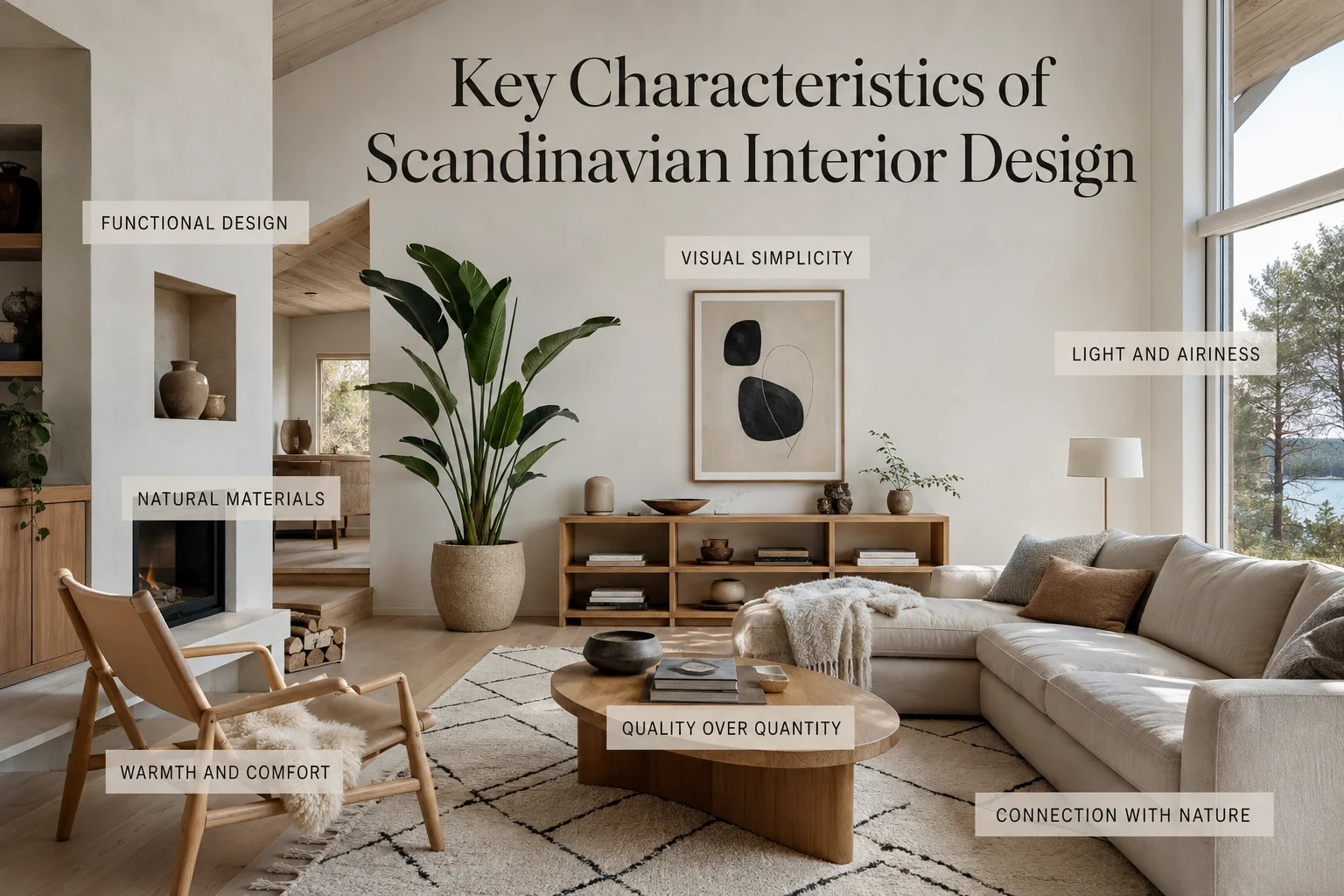
3. Natural Materials
Wood is particularly important, especially lighter species and finishes that preserve visible grain. Wool, linen, leather, stone, ceramic, rattan and other tactile materials can provide additional warmth and variety.
4. Light and Airiness
Windows are usually treated in ways that allow generous daylight into the room. Pale wall colors, open layouts and visually lightweight furniture can further increase the sense of brightness.
5. Warmth and Comfort
A Scandinavian interior should feel pleasant to live in. Rugs, cushions, throws, upholstered furniture and warm lighting soften clean architectural lines and create a more welcoming atmosphere.
6. Quality Over Quantity
Rather than filling a room with numerous inexpensive decorative pieces, Scandinavian styling typically favors fewer items with attractive materials, useful functions or personal meaning.
7. Connection with Nature
Natural textures, organic colors, wood finishes, plants and views of the outdoors help create a visual connection between interior spaces and the natural environment.
The Scandinavian Interior Design Color Palette
The familiar Scandinavian palette begins with light neutrals, but contemporary Scandinavian interiors are not limited to white and gray.
Warm Whites and Soft Neutrals
Warm white, ivory, cream, oatmeal, pale beige and subtle greige make effective foundation colors because they reflect light without producing the clinical feeling that can sometimes result from stark cool white.
These shades work particularly well across walls, large rugs, curtains and substantial upholstered pieces.
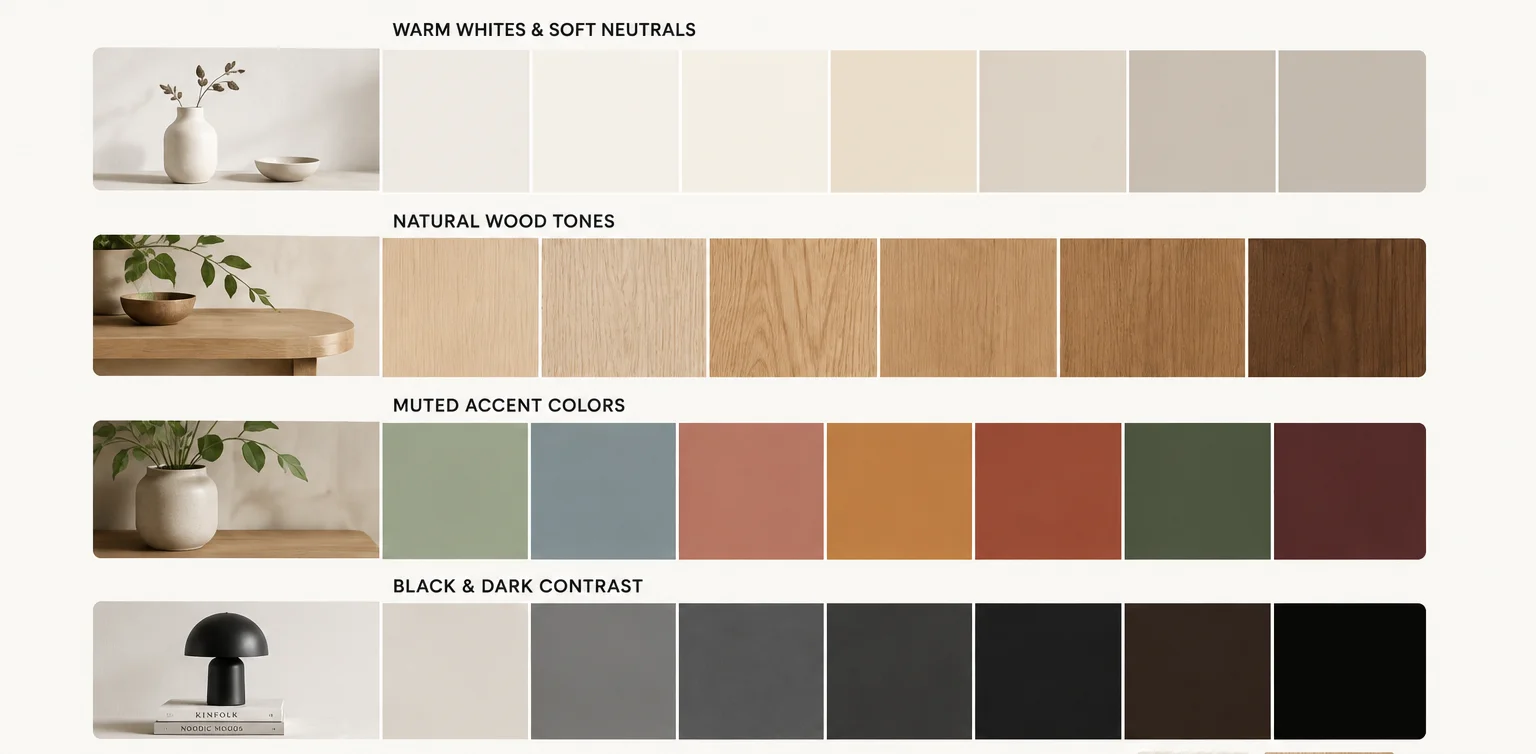
Natural Wood Tones
Oak, ash, beech and similar wood tones introduce warmth while maintaining the light visual character associated with Scandinavian interiors.
Timber does not need to match perfectly throughout a room. Slight variations often make the interior feel more natural and collected.
Muted Accent Colors
Soft sage, dusty blue, muted terracotta, ochre, rust, clay, forest green and restrained burgundy can all work within Scandinavian interiors when used thoughtfully.
Accent colors are often introduced through cushions, artwork, ceramics, furniture or textiles rather than covering every available surface.
Black and Dark Contrast
Small amounts of black, charcoal or deep brown can provide definition through lighting fixtures, furniture frames, artwork or hardware.
The objective is usually controlled contrast rather than creating a predominantly dark room.
Designer Tip: Before choosing a completely white Scandinavian palette, compare your wall color against the room’s natural daylight and flooring. Slightly warmer whites often harmonize better with timber and natural textiles.
Materials and Textures
Texture is one of the elements that prevents Scandinavian rooms from feeling flat. A restrained palette becomes far more interesting when several natural surfaces are combined.
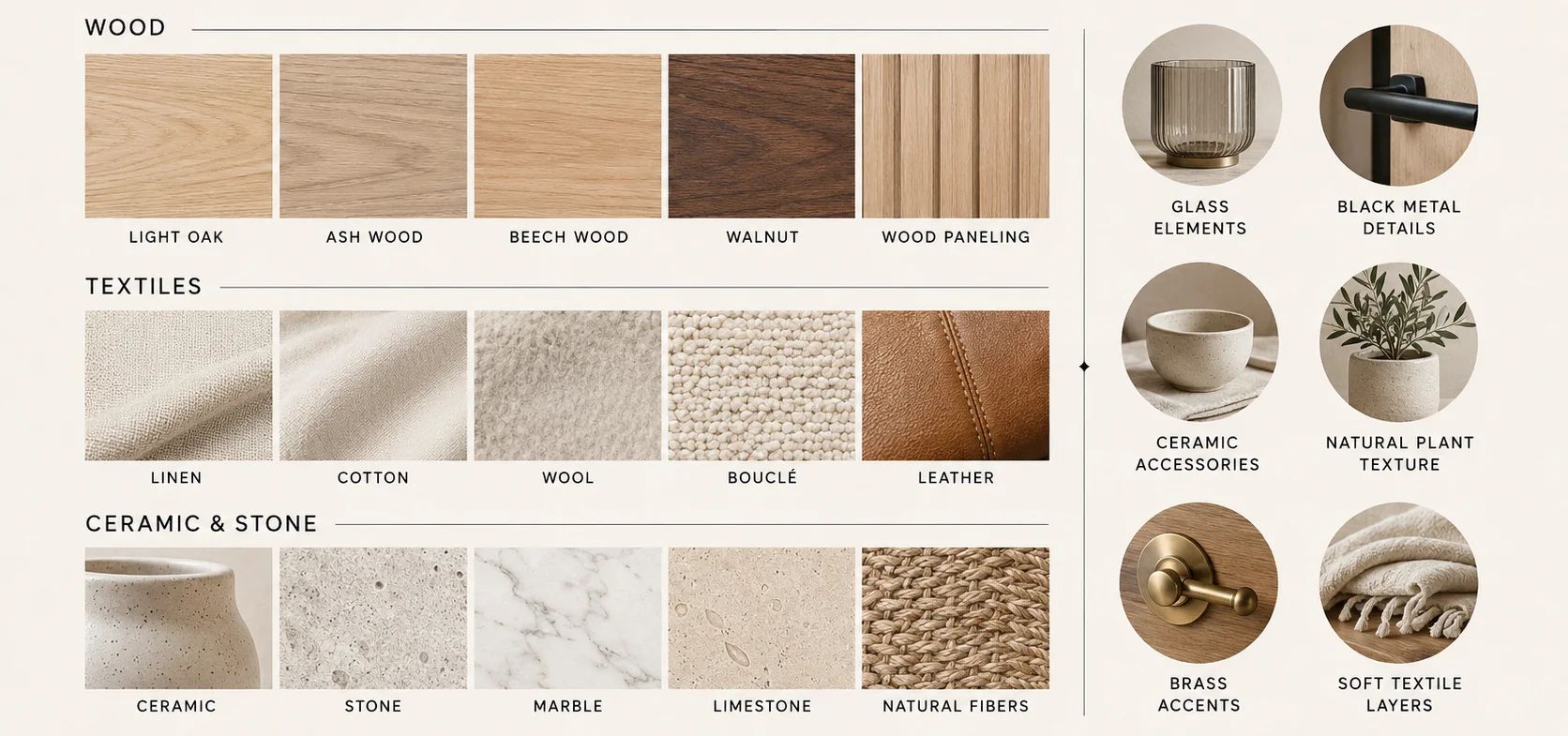
Wood
Wood can appear in flooring, furniture, cabinetry, wall paneling and decorative objects. Light oak is especially familiar, although medium and darker woods can be incorporated successfully when the overall balance remains light.
Wool
Wool rugs, cushions and blankets add warmth and tactile contrast. A substantial wool rug can also visually connect furniture within a living room while improving comfort underfoot.
Linen and Cotton
Natural-looking fabrics work particularly well for curtains, upholstery and bedding. Linen introduces subtle irregularities that complement the relaxed character of Scandinavian rooms.
Leather
Leather can add richness through lounge chairs, dining chairs or small accents. Warm tan and cognac tones work especially well beside light timber.
Ceramic and Stone
Handmade ceramics, stoneware, marble, limestone and other mineral surfaces create contrast against softer materials while reinforcing the emphasis on craftsmanship.
A well-balanced room might combine oak, wool, linen, ceramic and brushed metal while repeating selected materials across different areas to maintain cohesion.
Scandinavian Furniture
Furniture plays a major role in establishing Scandinavian style. Look beyond labels and evaluate the actual proportions, materials and functions of each piece.
Simple Silhouettes
Many Scandinavian furniture designs use clean lines, tapered legs, gentle curves and relatively uncomplicated profiles. This gives larger furniture a lighter visual presence.
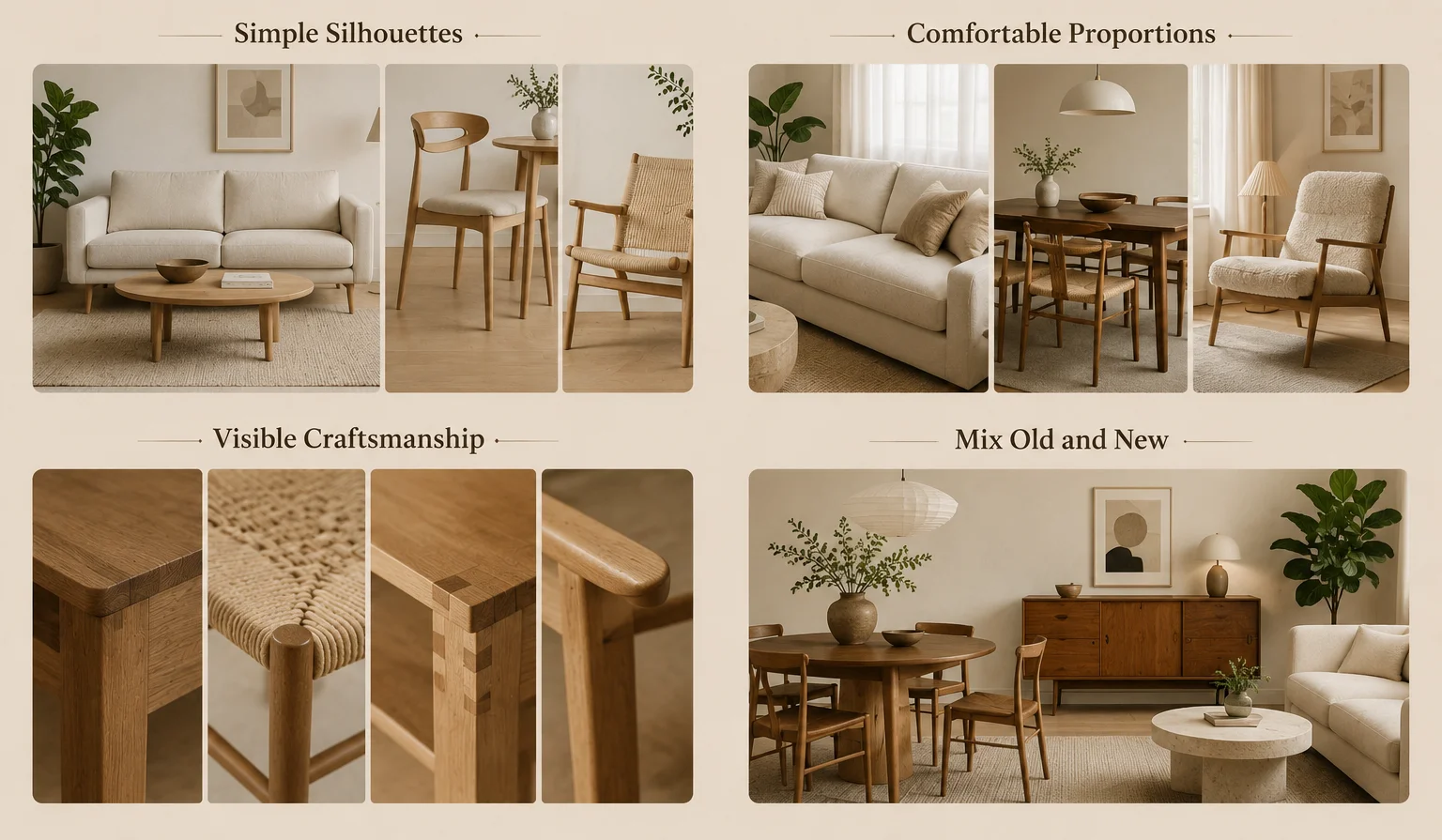
Comfortable Proportions
Minimal appearance should not come at the expense of comfort. Sofas should have usable seat depths, dining chairs should support extended meals and lounge chairs should feel inviting rather than purely sculptural.
Visible Craftsmanship
Wood grain, joinery, woven elements and carefully shaped edges can provide subtle decoration without requiring additional ornament.
Mix Old and New
A Scandinavian room does not need to look like every piece came from the same furniture collection. Pairing contemporary furniture with vintage timber pieces can produce a more authentic and layered interior.
For a deeper room-specific approach, explore our Scandinavian living room style guide.
Scandinavian Lighting
Lighting is one of the most important—and frequently underestimated—parts of Scandinavian interior design.
Rather than depending entirely on a central ceiling fixture, use several layers of light at different heights.
Ambient Lighting
Pendant lights, ceiling fixtures and discreet architectural lighting provide general illumination.
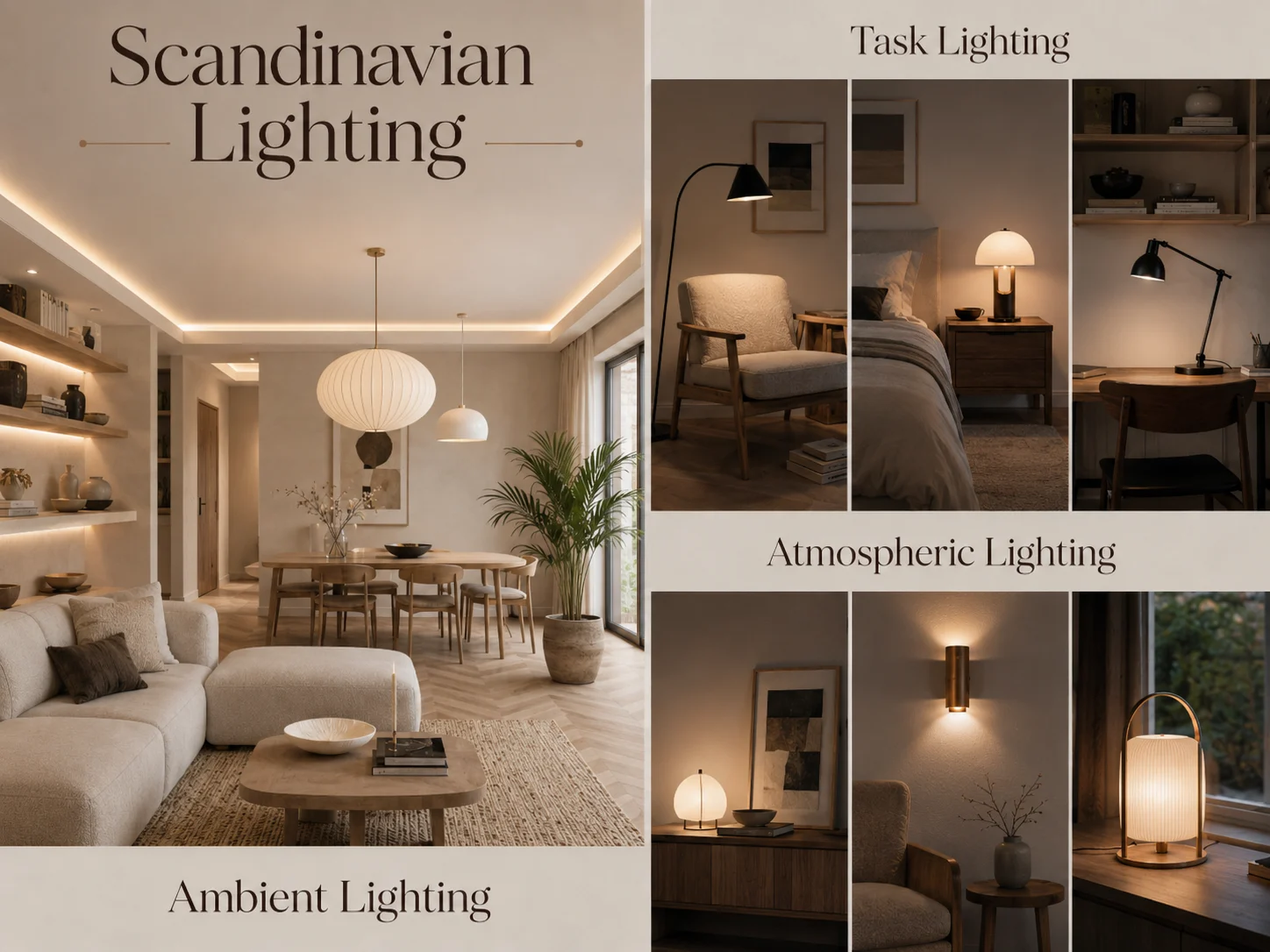
Task Lighting
Floor lamps beside reading chairs, table lamps near sofas and focused kitchen or desk lighting improve functionality.
Atmospheric Lighting
Small lamps, wall sconces and portable lamps can create a softer evening atmosphere.
Select warm, comfortable light temperatures for living spaces rather than overly cool illumination. The fixture itself can also act as a decorative object; Scandinavian interiors frequently use sculptural pendants and beautifully proportioned lamps as visual focal points.
Designer Tip: Instead of asking whether a room has enough light, consider whether the light is available where people actually sit, read, eat and relax.
Scandinavian Rugs and Textiles
Textiles soften hard surfaces and help create the inviting quality that distinguishes comfortable Scandinavian interiors from purely minimalist spaces.
Consider:
- wool or flatwoven rugs;
- linen curtains;
- cotton cushions;
- wool throws;
- bouclé or textured upholstery;
- subtle striped or geometric patterns;
- natural bedding.
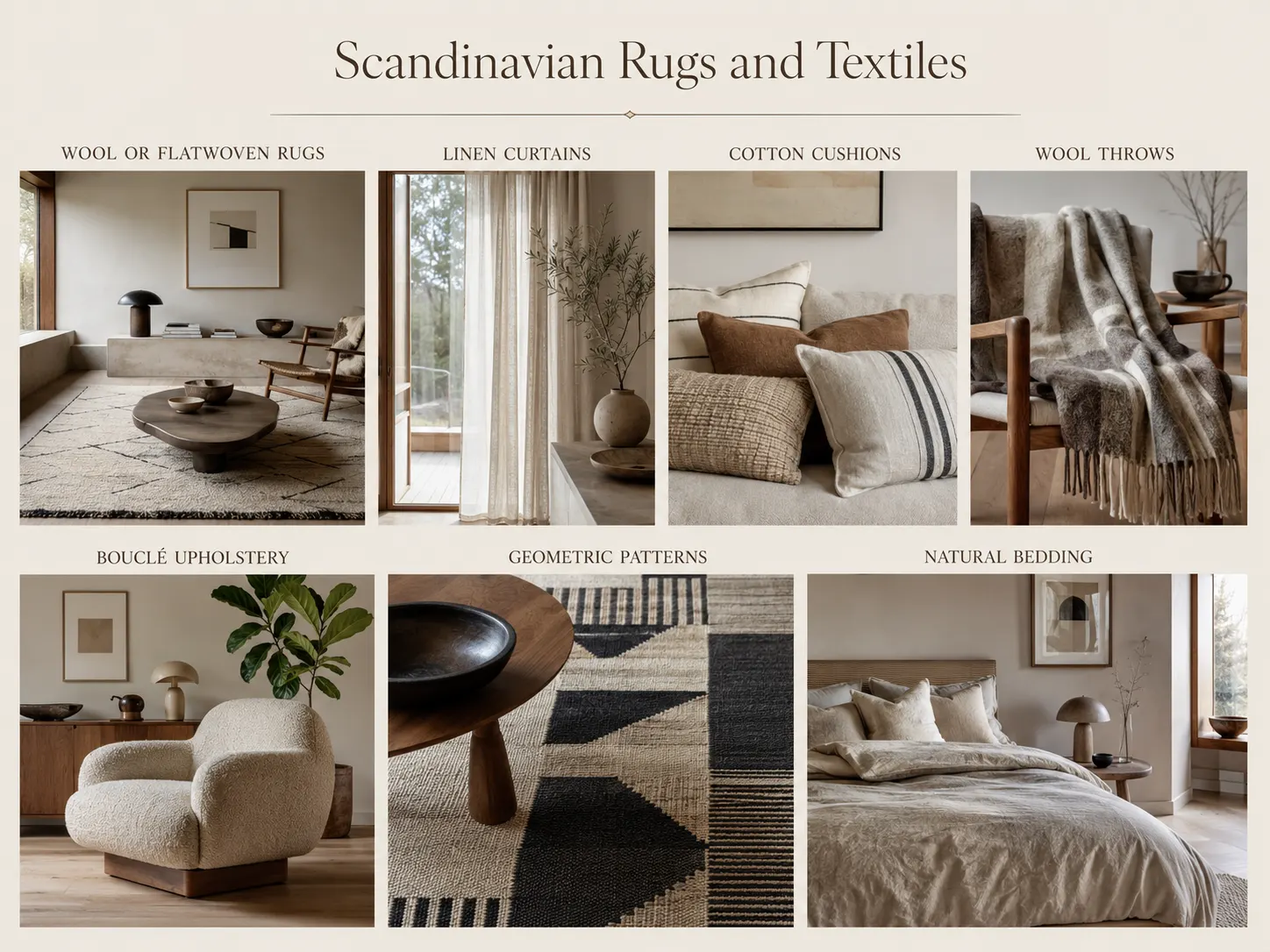
Layering should remain controlled. Several textures can coexist within the same neutral palette without making the room visually busy.
Rug size is especially important. In a living room, a rug that is too small can visually separate the furniture instead of connecting it. Whenever possible, choose a rug large enough for at least the front legs of the primary seating to rest on it.
Walls, Artwork and Scandinavian Decor
Scandinavian decorating is restrained but rarely devoid of personality.
Artwork
Abstract prints, photography, graphic compositions, landscapes and original art can all work successfully. Larger pieces often create greater visual calm than many unrelated small objects.
Ceramics
Stoneware bowls, handmade vases and sculptural vessels introduce texture and craftsmanship.
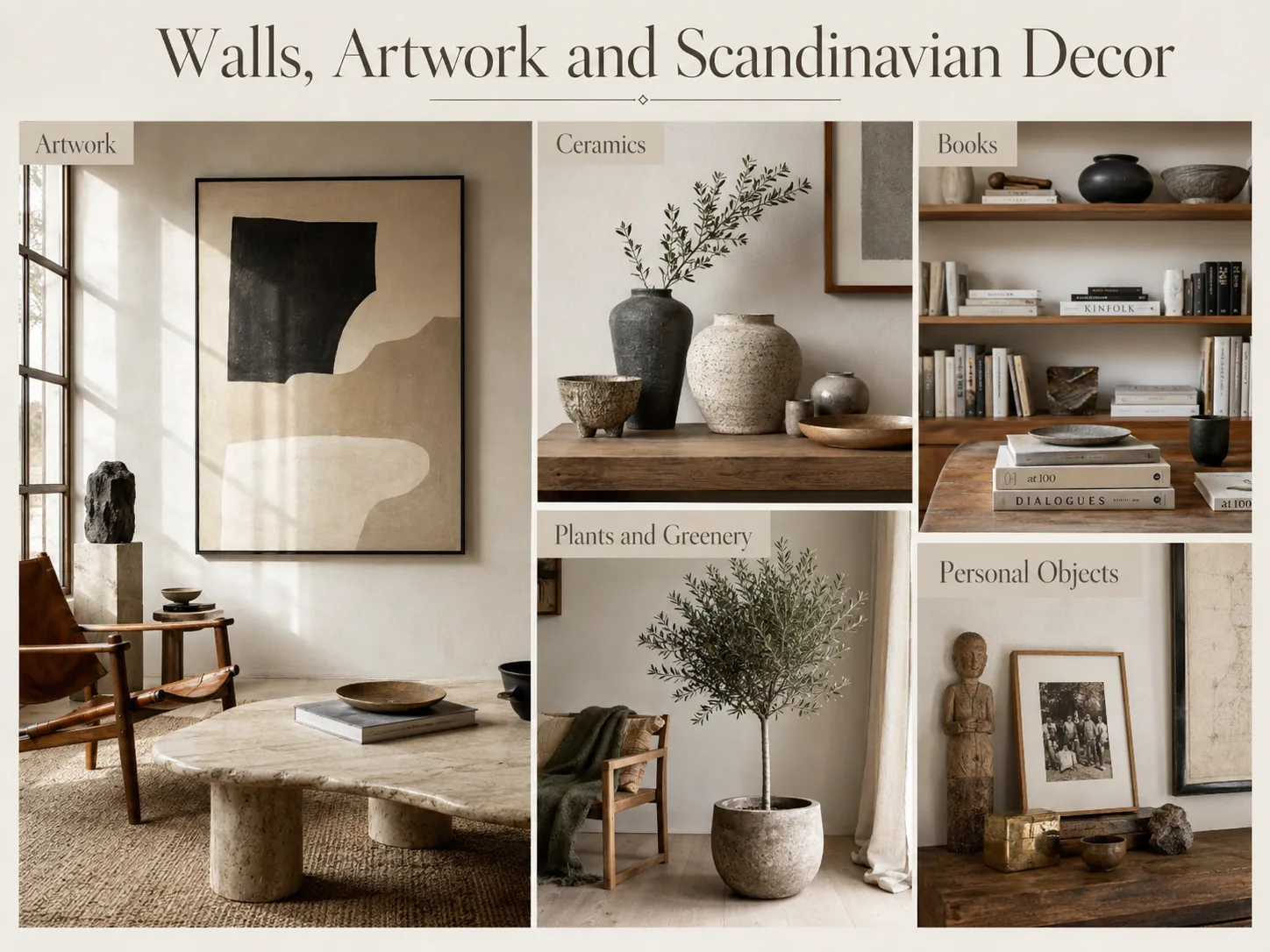
Books
Books bring natural color and make shelves and coffee tables feel connected to the people who live in the home.
Plants and Greenery
Plants can provide organic shape and freshness, particularly against pale walls and wood furniture. One substantial plant often creates more impact than numerous small pots scattered across every surface.
Personal Objects
Travel finds, inherited pieces and meaningful objects help prevent a Scandinavian-inspired home from looking like a furniture showroom.
The goal is not to eliminate possessions but to display them selectively.
How to Make Scandinavian Interiors Feel Cozy
One common misconception is that Scandinavian interiors are naturally cold because they use pale colors and simple furniture. In reality, warmth is usually an essential part of the style.
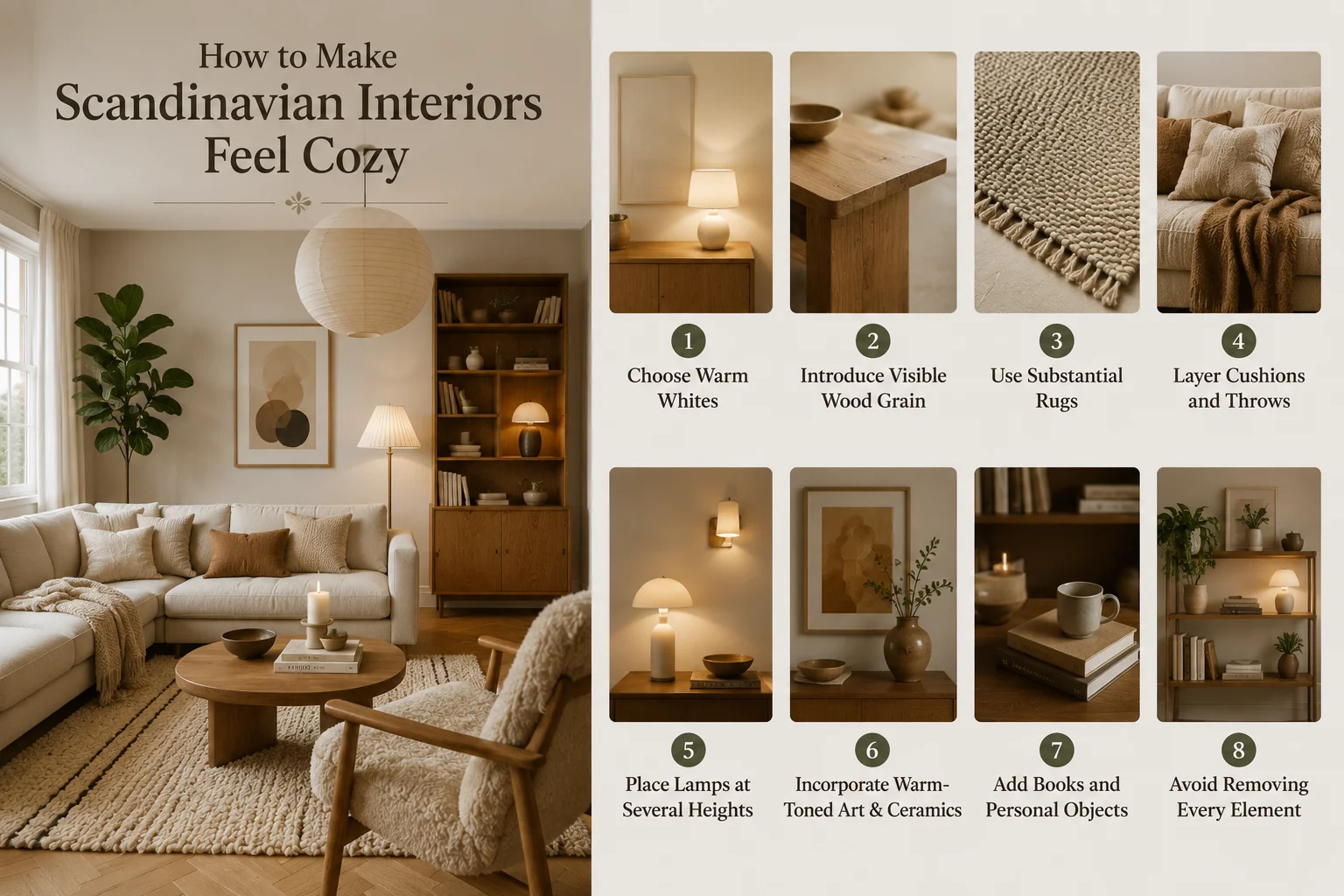
To create a cozier Scandinavian interior:
- choose warm whites instead of stark blue-white walls;
- introduce visible wood grain;
- use substantial rugs;
- layer cushions and throws selectively;
- place lamps at several heights;
- incorporate warm-toned artwork and ceramics;
- add books and personal objects;
- avoid removing every decorative element.
Comfort should be experienced physically as well as visually. A beautiful lounge chair that no one wants to sit in does not support the practical principles of Scandinavian design.
Scandinavian Interior Design Room by Room
Scandinavian Living Room
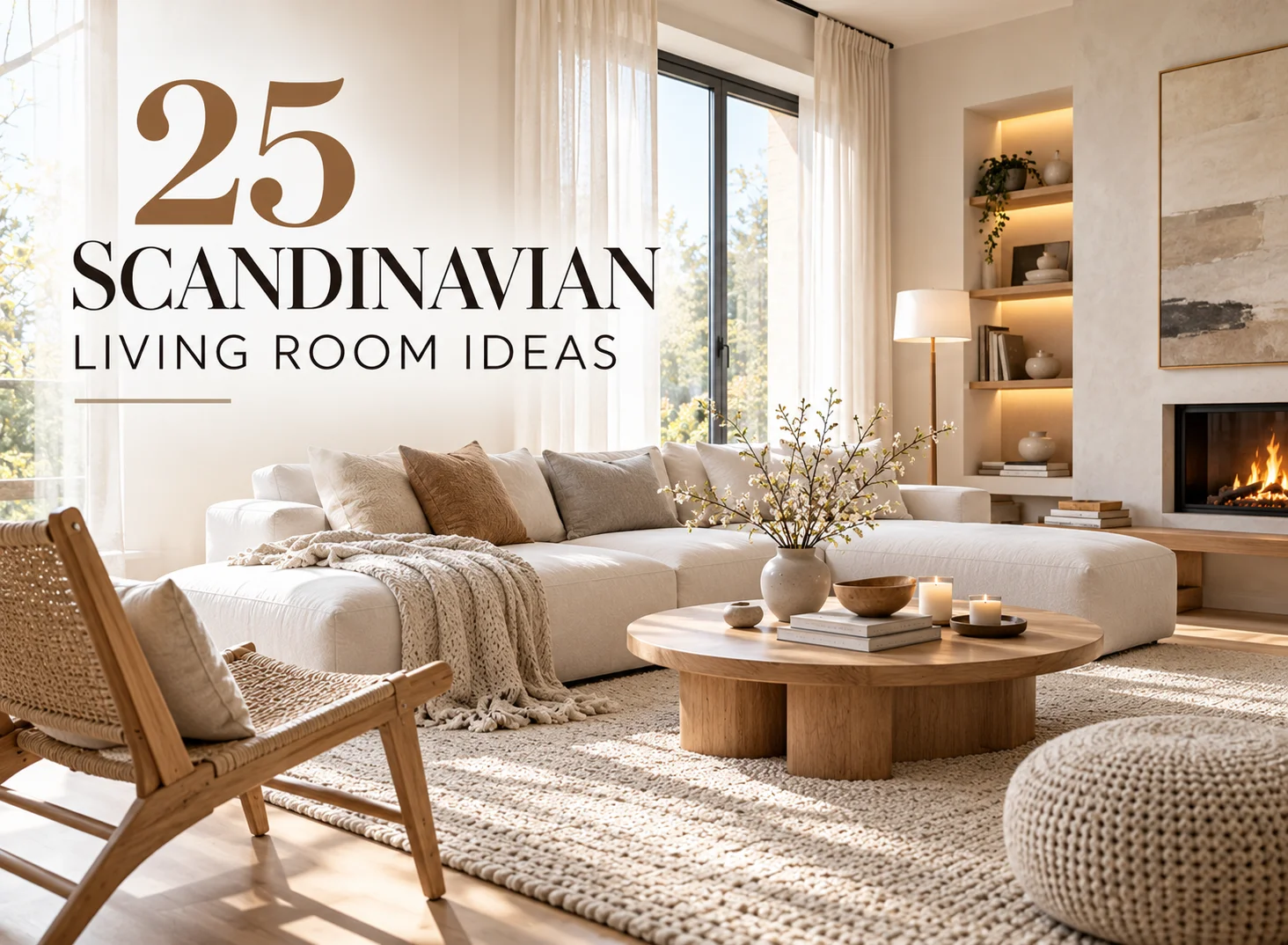
Start with comfortable seating, an adequately sized rug and a functional conversation layout. Add a coffee table with natural materials, layered lighting and a limited number of decorative pieces.
Use the sofa and rug to establish the foundation before choosing smaller accessories. Our Scandinavian living room style guide explores this room in greater depth.
Scandinavian Bedroom
Prioritize calm colors, comfortable bedding and simple furniture. A timber bed, natural linen, wool rug and warm bedside lighting provide sufficient visual interest without excessive decoration.
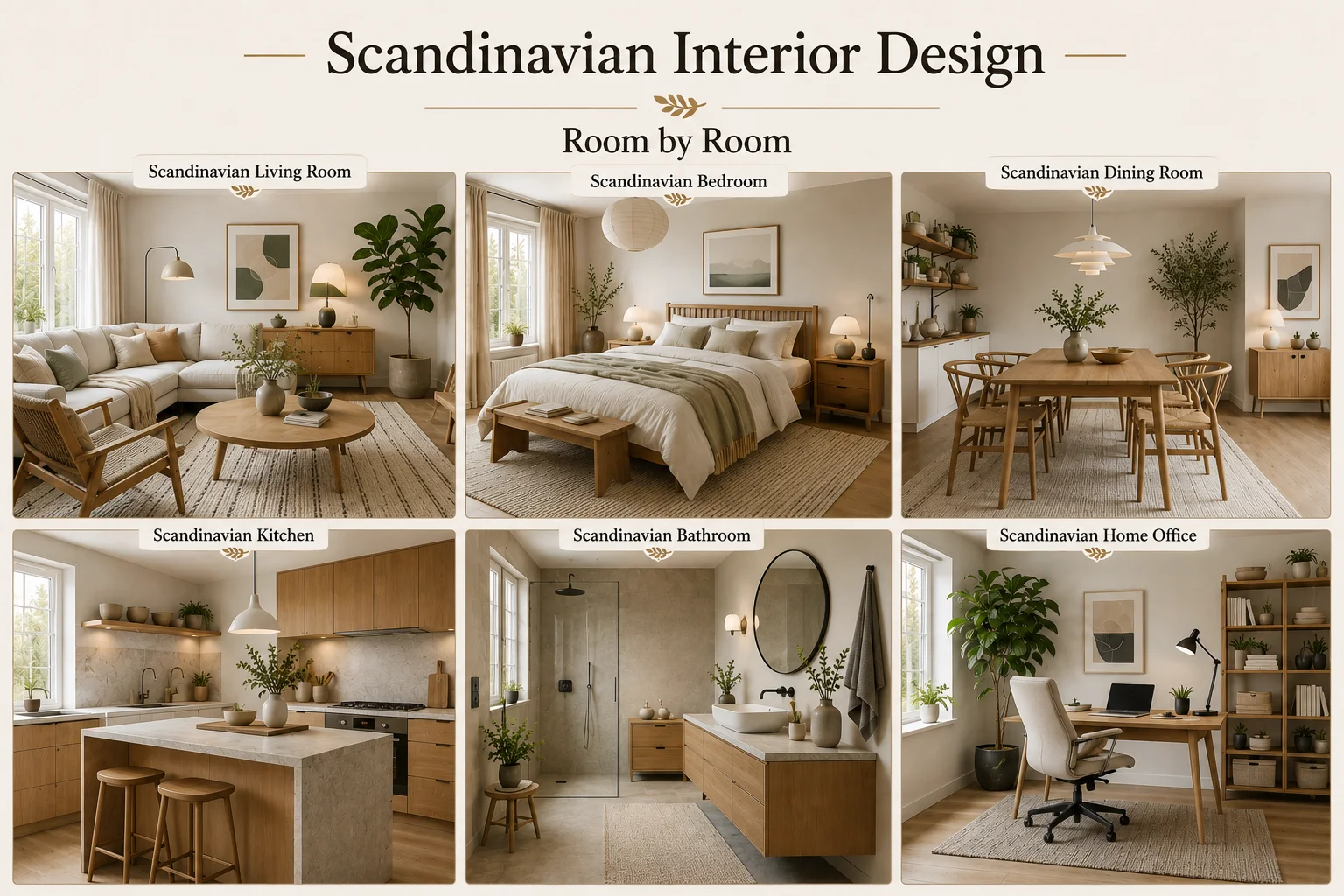
Scandinavian Dining Room
A well-proportioned timber dining table often forms the center of the room. Combine it with comfortable dining chairs and a pendant light positioned low enough to visually connect with the table without blocking sight lines.
Scandinavian Kitchen
Focus on functional storage, durable surfaces and simple cabinetry. Light timber, warm white, stone and subtle metal accents can produce a practical kitchen without making it visually heavy.
Scandinavian Bathroom
Use clean architectural lines together with tactile materials. Timber vanity details, stone surfaces, simple mirrors, soft towels and warm lighting can make even a compact bathroom feel inviting.
Scandinavian Home Office
Choose an uncluttered desk, comfortable ergonomic chair, useful storage and dedicated task lighting. Keep decorative pieces limited to items that make the workspace pleasant without reducing functionality.
How to Create a Scandinavian Interior Step by Step
Step 1: Start With Function
Identify what happens in the room before choosing furniture. Determine required seating, storage, work surfaces and circulation paths.
Step 2: Measure the Space
Record wall dimensions, window positions, door swings and major architectural features. Furniture scale has a greater effect on the success of a room than decorative accessories.
Step 3: Establish a Light, Warm Foundation
Select a primary wall color and major neutral surfaces. Warm white, soft beige or restrained greige can provide a flexible background.
Step 4: Introduce Natural Materials
Add timber furniture, natural fabrics and tactile surfaces rather than relying entirely on smooth painted finishes.
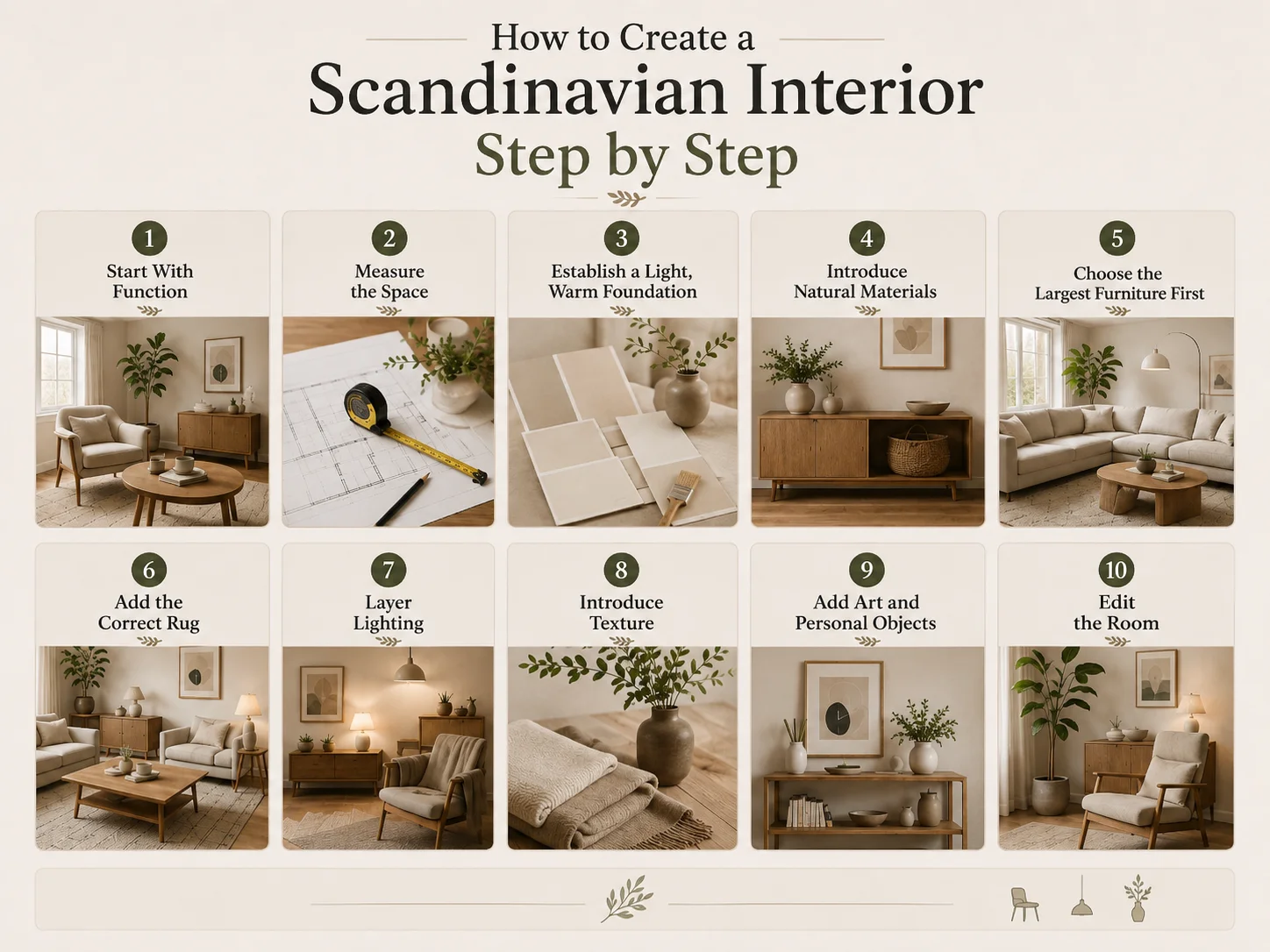
Step 5: Choose the Largest Furniture First
Buy or position the sofa, bed, dining table or other dominant piece before selecting small accessories. These items determine the room’s scale and layout.
Step 6: Add the Correct Rug
Select a rug based on the furniture arrangement rather than choosing it purely for pattern or color.
Step 7: Layer Lighting
Combine overhead, task and atmospheric sources. Ensure lighting supports both daytime function and evening comfort.
Step 8: Introduce Texture
Add wool, linen, cotton, leather, ceramics and other tactile materials to create depth.
Step 9: Add Art and Personal Objects
Introduce meaningful decorative elements gradually. Allow empty space around significant pieces rather than filling every shelf.
Step 10: Edit the Room
Stand back and assess the entire composition. Remove objects that feel unnecessary, but do not continue editing until the room loses its warmth or personality.
Common Scandinavian Decorating Mistakes
Using Too Much White
White walls, white furniture, pale flooring and white accessories can make the room feel flat. Add timber, warm neutrals, textiles and subtle color variation.
Confusing Scandinavian Design With Extreme Minimalism
A Scandinavian home can contain books, artwork, plants, collections and comfortable textiles. The important distinction is thoughtful arrangement rather than complete absence of decoration.
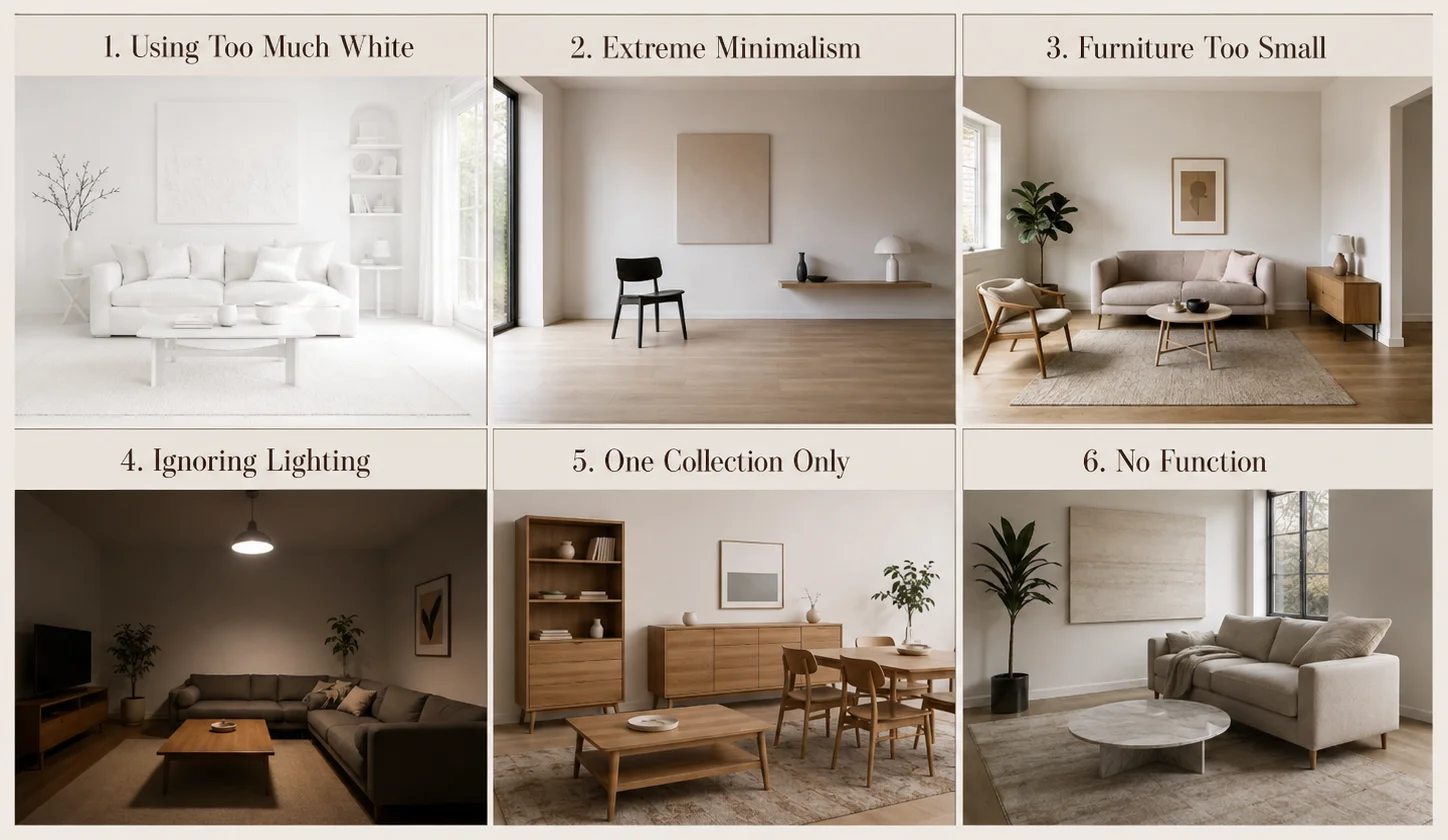
Choosing Furniture That Is Too Small
Small furniture does not automatically make a room appear larger. Multiple undersized pieces can actually make the composition feel fragmented.
Ignoring Lighting
A beautifully furnished room can still feel uncomfortable when it depends on a single harsh ceiling fixture.
Buying Everything From One Collection
Perfectly coordinated furniture can remove personality. Combine compatible pieces with different forms, finishes or ages.
Following the Look Without the Function
A room may appear Scandinavian but fail at the style’s most important principle if it is uncomfortable or inconvenient to use.
For a more detailed breakdown, see our guide to Scandinavian decorating mistakes once published.
Scandinavian Interior Design vs Minimalism
Scandinavian design and minimalism overlap, but they are not identical.
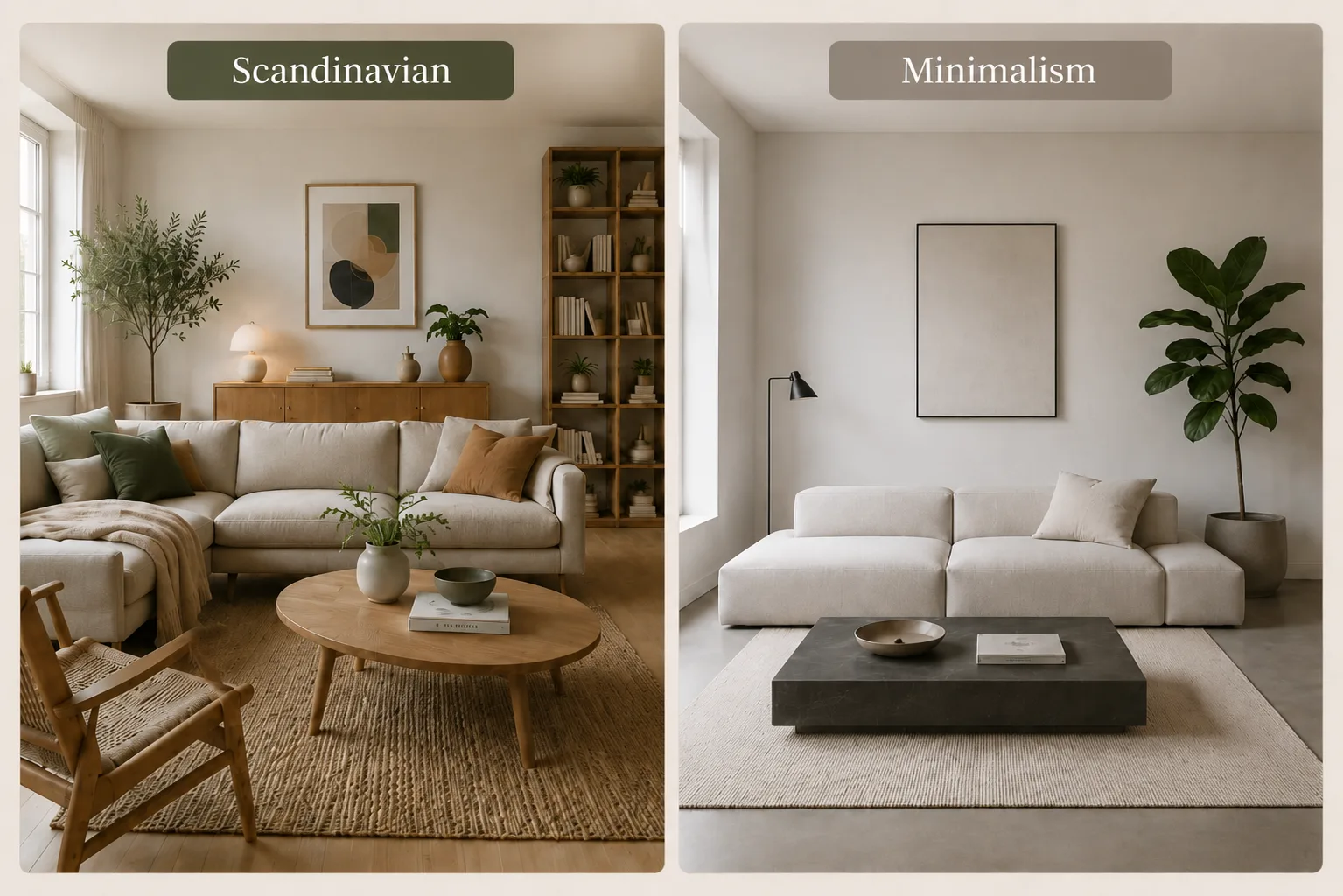
Both approaches value simplicity, functional furniture and controlled decoration. However, Scandinavian interiors generally place greater emphasis on warmth, natural materials, craftsmanship and domestic comfort.
A minimalist room may deliberately emphasize visual reduction, while a Scandinavian room can comfortably include layered textiles, timber furniture, books, ceramics and familiar objects as long as the composition remains balanced.
Scandinavian Interior Design vs Japandi
Japandi combines Scandinavian design influences with principles associated with Japanese interiors.
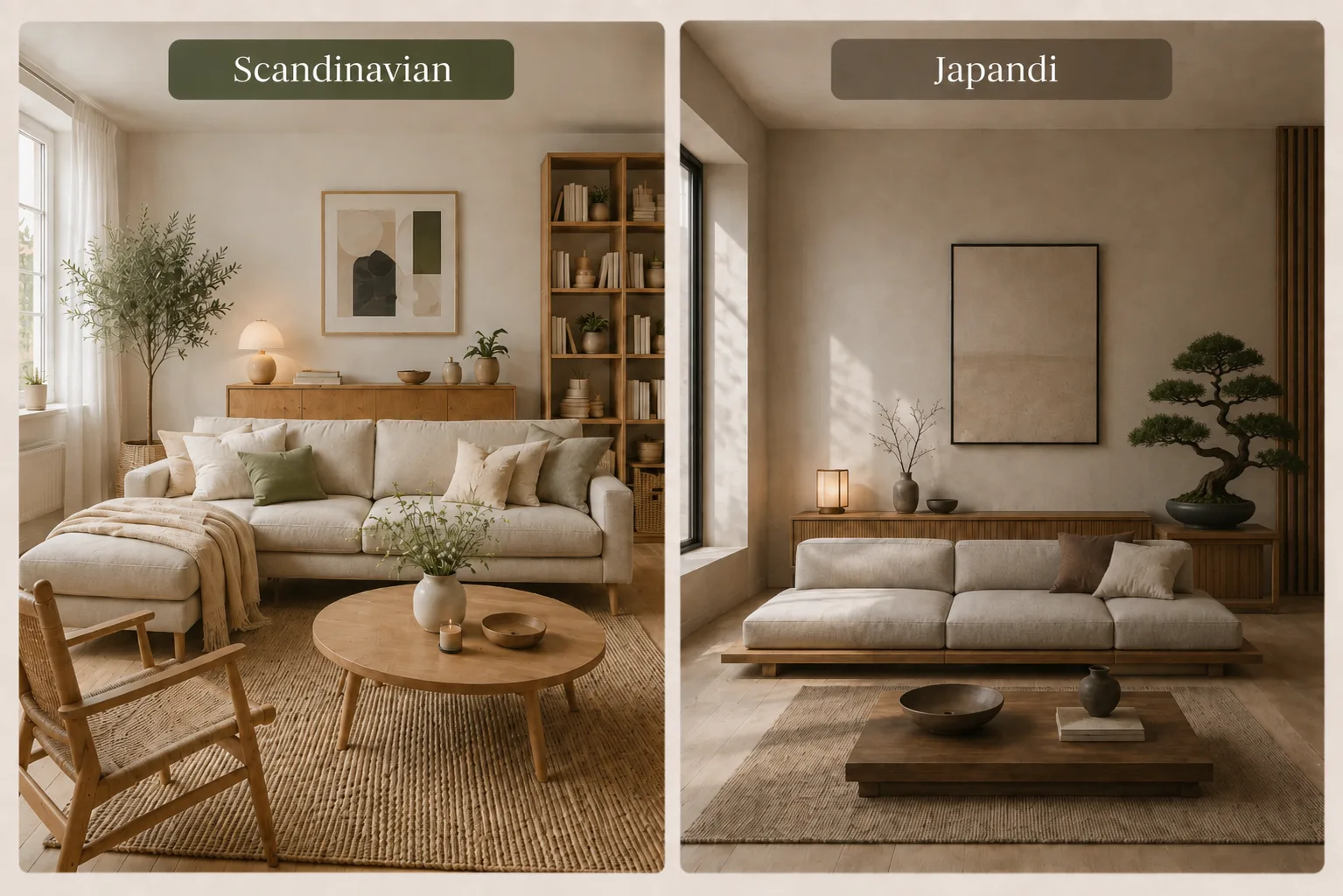
Both styles appreciate craftsmanship, natural materials, functional objects and visual restraint. Japandi interiors, however, often use lower furniture, darker earthy colors, stronger asymmetry and a more pronounced emphasis on imperfect handmade surfaces.
Scandinavian interiors are frequently lighter and may feel somewhat softer or more casual.
If you enjoy both aesthetics, explore our Japandi interior design guide for a more detailed look at the differences and similarities.
Shop the Look: Scandinavian Interior Design
You do not need to purchase every item at once. Build the room gradually, beginning with pieces that influence comfort, scale and functionality most.
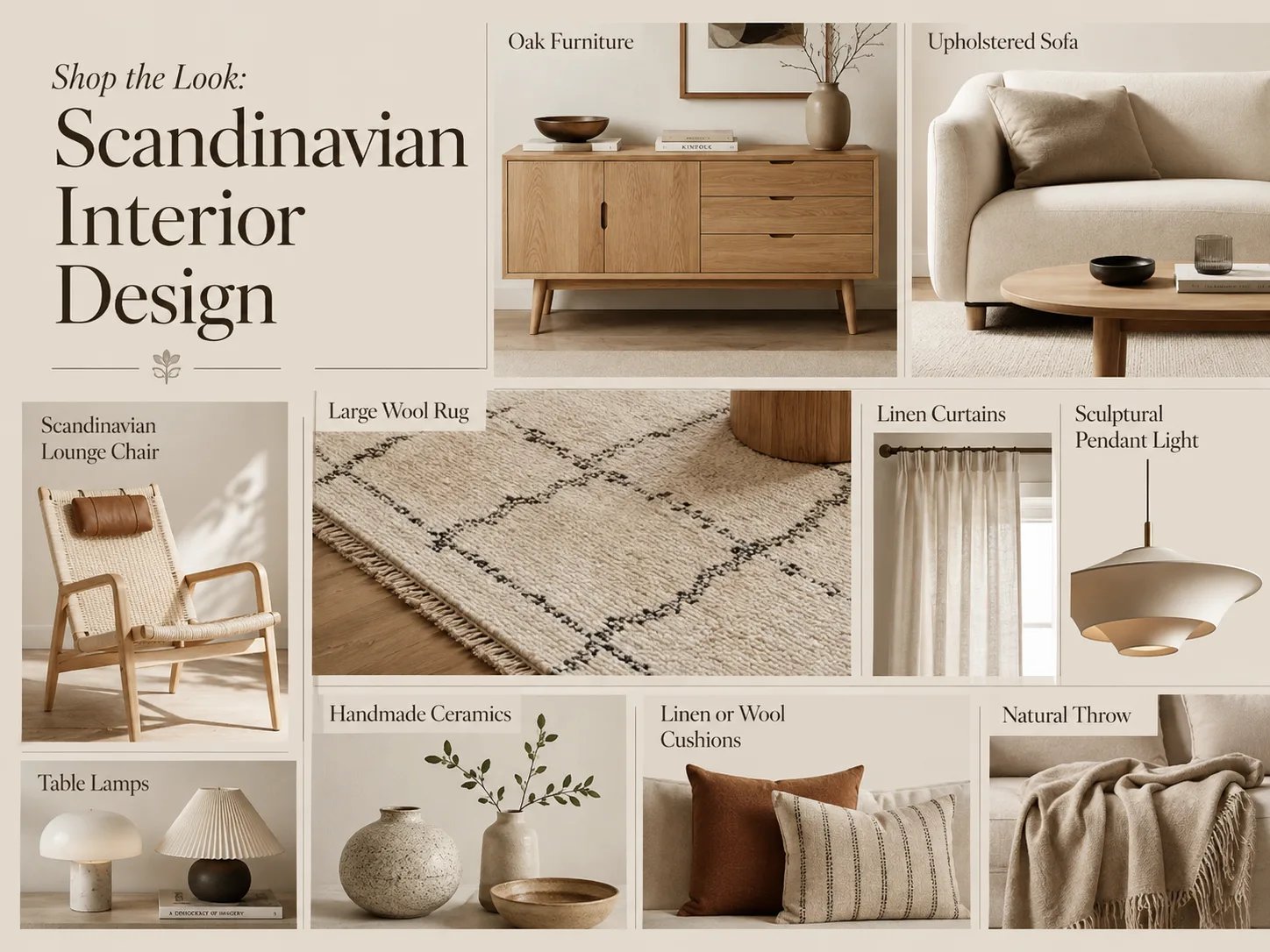
- Light or medium oak furniture: dining tables, coffee tables, sideboards and bedside tables.
- Simple upholstered sofa: choose comfortable proportions and tactile neutral fabric.
- Scandinavian-style lounge chair: timber, leather, woven or softly upholstered designs work well.
- Large wool rug: use it to connect furniture and introduce texture.
- Linen curtains: select lightweight fabrics that soften windows without unnecessarily reducing daylight.
- Sculptural pendant light: particularly effective above dining tables or seating areas.
- Portable or table lamps: use these for warm evening illumination.
- Handmade ceramics: bowls, vases and vessels provide subtle variation.
- Wool or linen cushions: introduce texture rather than excessive pattern.
- Natural throw: useful for both comfort and visual softness.
Shopping principle: prioritize material quality, proportions and usefulness over purchasing items simply because they are marketed as “Scandinavian.”
Style Variations of Scandinavian Interior Design
Scandinavian design provides a flexible foundation that can move in several directions without losing its core principles.
Modern Scandinavian
Combine clean contemporary furniture, restrained colors, architectural lighting and carefully selected decorative pieces.
Warm Scandinavian
Use cream, beige, camel, warm oak, textured wool and gentle earthy accents to create a softer interpretation.
Rustic Scandinavian
Introduce more visible timber grain, vintage furniture, woven pieces, handmade ceramics and slightly imperfect natural surfaces.
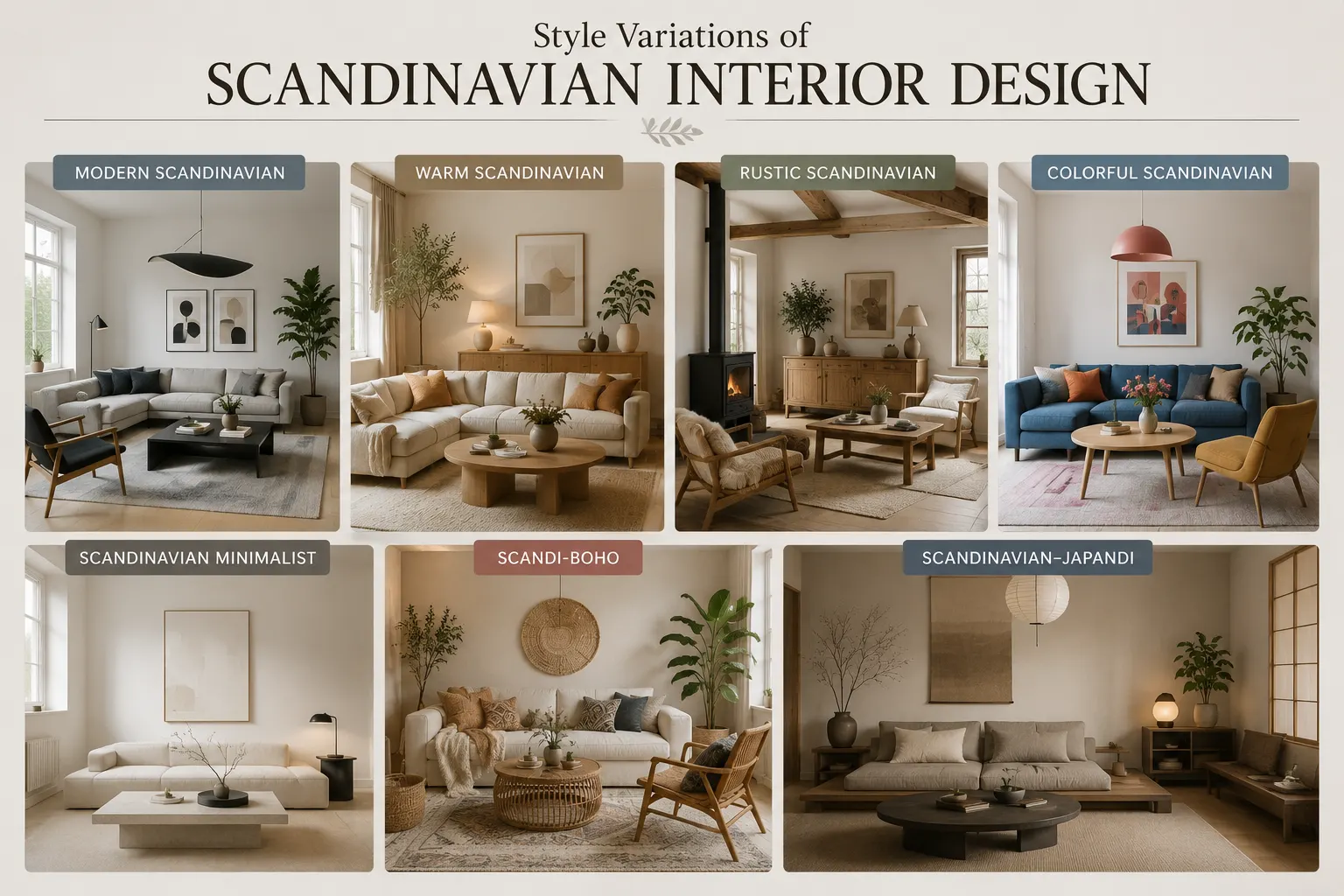
Colorful Scandinavian
Maintain simple forms while introducing muted blue, green, ochre, burgundy or terracotta through furniture, artwork and textiles.
Scandinavian Minimalist
Reduce the number of objects further while retaining natural materials, good lighting and comfortable furniture.
Scandi-Boho
Combine the light Scandinavian foundation with more relaxed textiles, woven materials, plants and selectively layered decorative pieces.
Scandinavian-Japandi
Introduce lower silhouettes, earthy colors, handcrafted objects and stronger visual restraint while preserving Scandinavian warmth and practicality.
How to Keep Scandinavian Design Timeless
Scandinavian interiors have remained influential because their strongest principles do not depend heavily on short-term decorating trends.
For a more timeless result:
- choose furniture based on proportion and comfort rather than novelty;
- invest in natural materials where practical;
- use major neutral surfaces as a flexible foundation;
- introduce trend-driven colors through smaller items;
- buy fewer decorative objects but choose them carefully;
- mix contemporary furniture with personal or vintage pieces;
- allow the room to evolve gradually.
A timeless Scandinavian home does not need to remain visually unchanged. Rugs, cushions, artwork, lamps and accessories can evolve while the functional foundation remains useful for years.
Frequently Asked Questions About Scandinavian Interior Design
What defines Scandinavian interior design?
Scandinavian interior design is defined by functionality, simple forms, natural materials, light or restrained color palettes, comfortable furniture, layered lighting and thoughtful decoration. The overall effect is typically calm, practical and welcoming.
What colors are used in Scandinavian interiors?
Common colors include warm white, cream, beige, greige, pale gray and natural wood tones. Muted greens, blues, terracotta, ochre and other earthy shades can be introduced as accents.
Is Scandinavian interior design always white?
No. White is commonly used because it reflects light, but Scandinavian homes can include beige, gray, blue, green, rust, burgundy and darker colors. Contemporary Scandinavian interiors are often more colorful than the stereotypical all-white version of the style.
What type of wood is used in Scandinavian design?
Light woods such as oak, ash, beech and pine are common, although medium and darker timbers can also work. Natural grain and simple finishes are generally more important than using one specific wood species.
Is Scandinavian design the same as minimalism?
No. The styles share an appreciation for simplicity and functionality, but Scandinavian interiors typically emphasize comfort, natural materials, craftsmanship and warmth more strongly than strict minimalism.
How can I make a Scandinavian room feel warmer?
Use warm whites, natural timber, wool rugs, linen curtains, textured cushions, ceramics and multiple warm light sources. Personal artwork, books and meaningful objects can also prevent the room from feeling overly sparse.
Can Scandinavian interiors use color?
Yes. Muted blue, green, terracotta, ochre, dusty pink, burgundy and other restrained colors can work beautifully. Keep the overall palette cohesive rather than assuming the style requires only white and gray.
Can Scandinavian design work in a small home?
Yes. Functional layouts, appropriately scaled furniture, practical storage and restrained decoration make Scandinavian principles particularly useful in smaller homes. The objective should be efficient use of space rather than simply choosing miniature furniture.
The Most Important Scandinavian Design Lesson
The most successful Scandinavian interiors are not created simply by combining white walls, pale timber and minimalist furniture.
The deeper principle is thoughtful everyday design.
A chair should be comfortable as well as attractive. A lamp should improve the atmosphere as well as decorate the room. Storage should make daily life easier. Materials should bring warmth and age gracefully. Decorative objects should contribute personality rather than fill empty space automatically.
Start with function, establish appropriate proportions and build a warm material palette. Choose the important furniture first, layer the lighting carefully and introduce accessories gradually.
Your home does not need to reproduce a Scandinavian showroom or follow every design rule perfectly. A successful Scandinavian-inspired interior should feel practical, cohesive, comfortable and personal enough to belong to the people who actually live there.