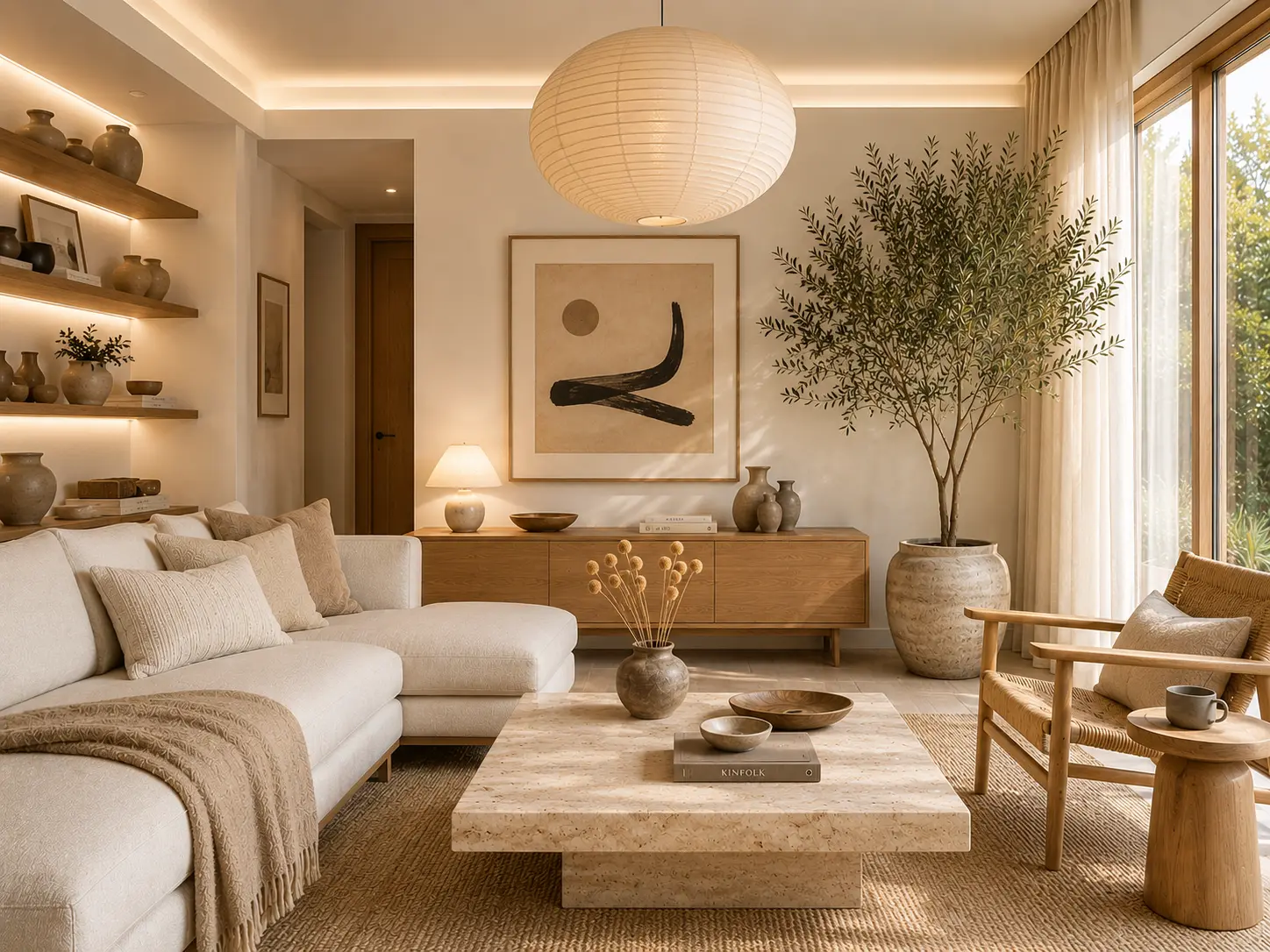
A Japandi living room combines the warmth and comfort associated with Scandinavian interiors with the simplicity, craftsmanship and appreciation of imperfection found in Japanese design. The result is a calm, functional living space defined by natural materials, warm neutral colors, low-profile furniture and carefully considered decor.
What Is Japandi Interior Design?
Japandi is an interior style that blends influences from Japanese and Scandinavian design. Although the two traditions developed independently, they share an appreciation for simplicity, functionality, natural materials and thoughtful craftsmanship.
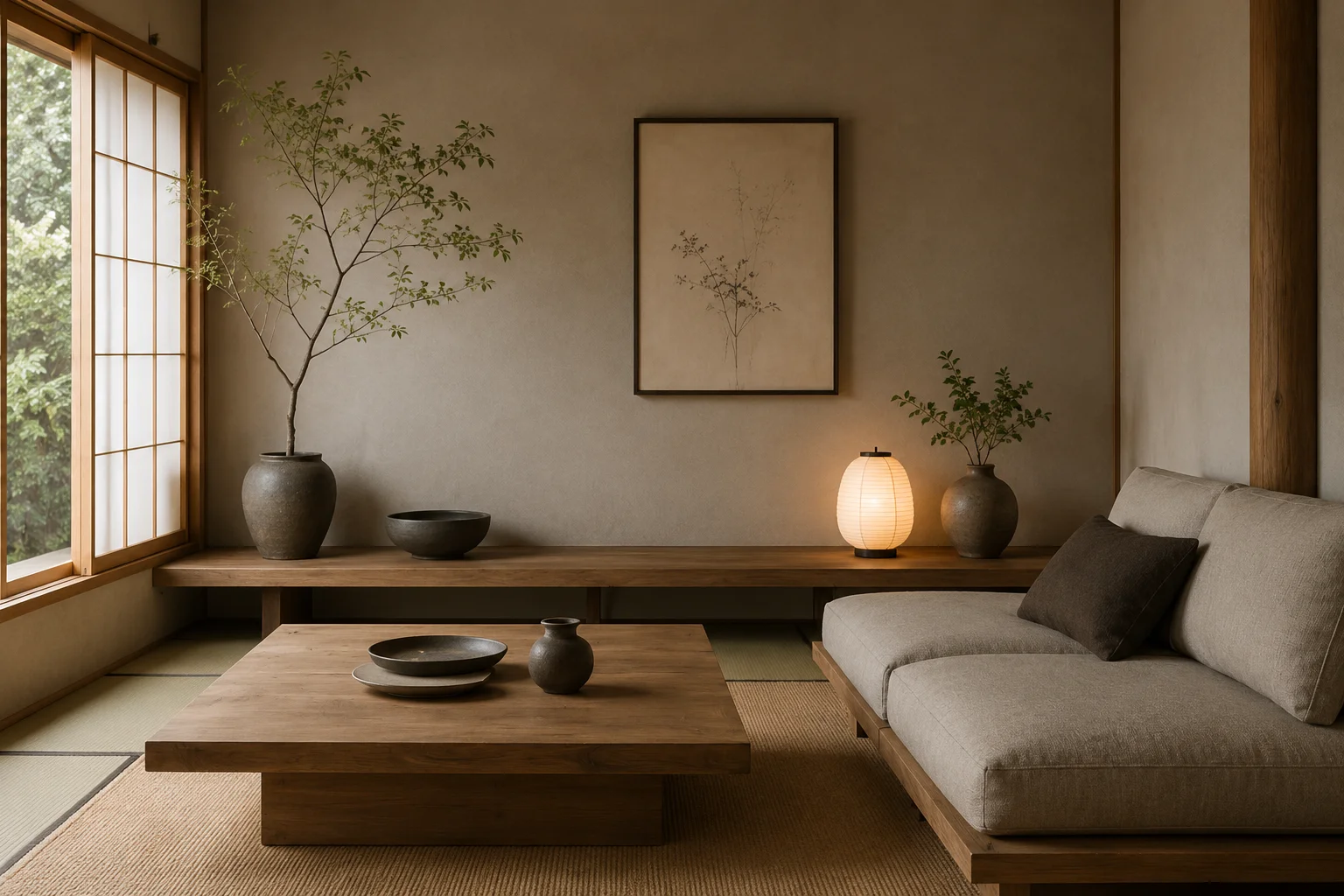
Scandinavian interiors bring warmth, comfort and practicality to the combination, while Japanese design contributes restraint, balance, natural beauty and an emphasis on intentional living. Together, these influences create rooms that feel minimalist without becoming stark.
In a Japandi living room, you will typically find low-profile furniture, warm wood, natural textiles, handmade ceramics, subtle organic forms and plenty of negative space. Decoration is limited, but the room should never feel unfinished. Every element has a visual or practical purpose.
Unlike minimalism that can sometimes emphasize reduction above everything else, Japandi focuses on creating a sense of calm through quality, craftsmanship and connection with natural materials.
Key Characteristics
A Japandi living room is defined by more than minimalist furniture and a neutral color palette. The style brings together Japanese simplicity and appreciation of natural beauty with Scandinavian comfort and functionality. The result is a space that feels calm, warm, practical and intentionally composed.
Although every Japandi interior can look different, the following characteristics create the foundation of the style.
1. Neutral and Earthy Color Palette
Japandi living rooms typically begin with a restrained palette of warm white, ivory, beige, oatmeal, greige, taupe and soft stone. These quiet base colors are often complemented by earthy shades such as olive, clay, warm brown, charcoal and muted green.
Rather than creating dramatic color contrast, the palette relies on subtle tonal variation to establish a peaceful and cohesive atmosphere.
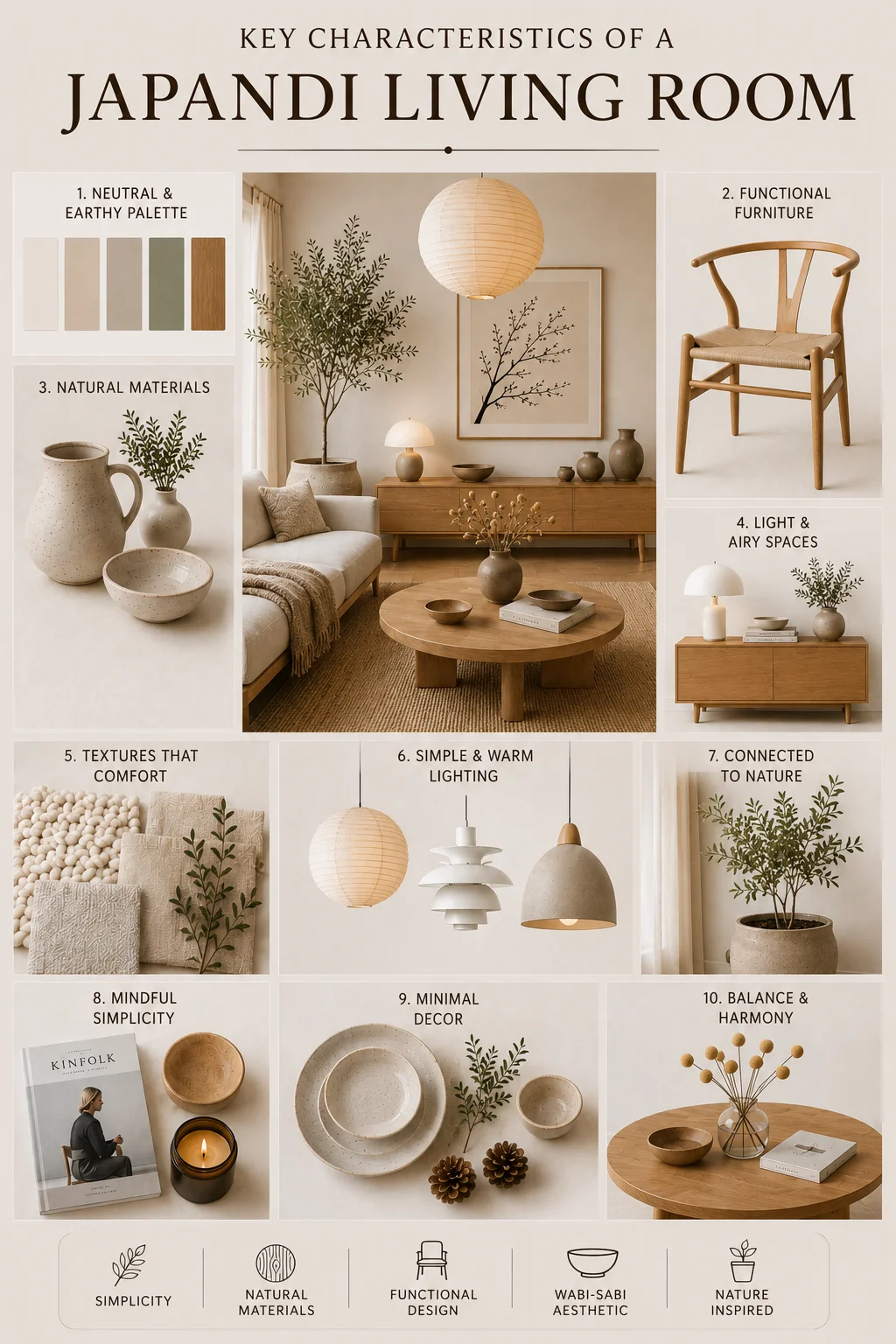
2. Functional, Well-Designed Furniture
Furniture should earn its place in a Japandi living room. Choose pieces that combine practical function with clean proportions and thoughtful craftsmanship.
Low-profile sofas, simple timber coffee tables, streamlined storage and wood-frame lounge chairs work particularly well. Furniture generally avoids excessive ornamentation, bulky silhouettes and unnecessary detailing.
3. Natural Materials
Natural materials are central to the Japandi aesthetic. Oak, ash, walnut and other woods bring warmth and visible grain, while stone, linen, wool, cotton, rattan and handmade ceramics introduce tactile variation.
Matte, honed and subtly imperfect finishes usually feel more appropriate than highly polished surfaces. Allowing the natural character of each material to remain visible gives the room depth without requiring excessive decoration.
4. Light and Airy Spaces
Japandi rooms feel open and breathable even when they are not particularly large. Natural light, uncluttered surfaces, restrained furniture arrangements and clear circulation paths help create this sense of spaciousness.
Use lightweight linen curtains or simple woven shades to soften windows without unnecessarily blocking daylight. Leaving intentional space between furniture and decorative objects also prevents the room from feeling crowded.
5. Textures That Add Comfort
Minimalism should not make a Japandi living room feel cold. Tactile materials introduce the warmth and comfort associated with Scandinavian interiors while preserving the restrained Japanese influence.
Layer woven wool rugs, washed linen, cotton, natural jute and softly textured cushions alongside harder materials such as timber, stone and ceramics. The contrast between soft and solid surfaces creates visual richness without relying on busy patterns.
6. Simple and Warm Lighting
Lighting in a Japandi living room should feel soft rather than harsh. Paper pendants, ceramic table lamps, timber lamp bases and understated floor lamps can provide illumination while contributing to the room’s natural material palette.
Combine ambient, task and accent lighting instead of relying entirely on one bright overhead fixture. Warm light also helps emphasize wood grain, textured walls and earthy colors after daylight fades.
7. A Strong Connection to Nature
Japandi interiors maintain a close visual relationship with the natural world. Wood, stone, plant fibers and organic textures establish much of this connection, while carefully selected greenery can bring life and movement into the room.
One substantial indoor plant, a sculptural tree or a restrained arrangement of natural branches is often more effective than filling the room with numerous small plants.
8. Mindful Simplicity
Japandi simplicity is intentional rather than empty. Instead of decorating every available surface, choose furniture and objects because they are functional, meaningful or beautifully made.
This approach encourages fewer possessions to remain visible and gives individual pieces enough space to be appreciated. Closed storage can help keep everyday necessities accessible without allowing visual clutter to dominate the room.
9. Minimal, Purposeful Decor
Decorative objects are used selectively. A handmade ceramic vessel, wooden bowl, carefully chosen book, sculptural candleholder or single piece of artwork can provide character without overwhelming the space.
Rather than creating many small decorative arrangements, use a few considered compositions and preserve negative space around them. This allows craftsmanship, texture and form to become the decoration.
10. Balance and Harmony
Ultimately, a successful Japandi living room should feel visually balanced. Warm and cool neutrals, light and dark wood, soft textiles and solid materials should complement rather than compete with one another.
Balance also applies to the amount of furniture and decor in the room. There should be enough to make the space comfortable and personal, but enough negative space for the interior to remain calm.
When these characteristics work together, Japandi feels neither stark nor overly decorated. It creates a living room where simplicity, natural materials, functional design, wabi-sabi-inspired imperfection and connection to nature contribute to an atmosphere that is understated, comfortable and enduring.
Color Palette
A successful Japandi color palette is typically warm, earthy and subdued. Rather than relying exclusively on bright white, use layered neutrals inspired by wood, stone, clay and natural fibers.
Best Base Colors
- Warm white
- Ivory
- Oatmeal
- Soft beige
- Greige
- Mushroom
- Light taupe
- Warm stone
These shades create a calm foundation while allowing natural materials to become more prominent.
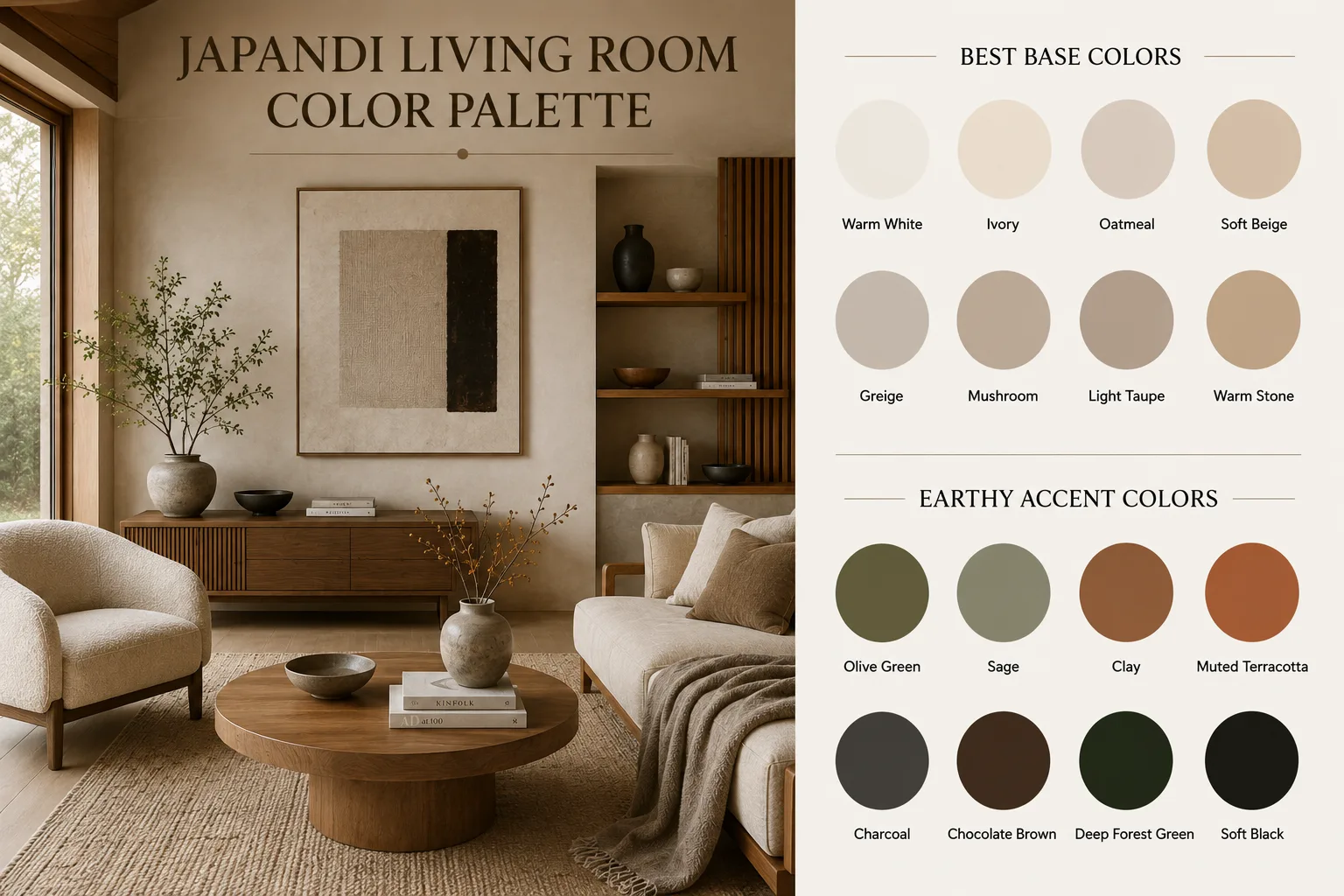
Earthy Accent Colors
Japandi does not have to be completely beige. Muted natural colors can introduce depth without disturbing the peaceful atmosphere.
- Olive green
- Sage
- Clay
- Muted terracotta
- Charcoal
- Chocolate brown
- Deep forest green
- Soft black
Use darker shades selectively through an accent chair, lamp, ceramic object, artwork or occasional furniture. This creates contrast while preserving the understated character of the room.
How to Layer a Japandi Palette
Start with warm neutral walls, introduce one or two wood tones, then layer upholstery and textiles in neighboring neutral shades. Finally, add small amounts of darker contrast.
For example, warm off-white walls can be paired with a light oak coffee table, oatmeal linen sofa, taupe wool rug and one dark timber or charcoal accent.
The goal is subtle variation rather than dramatic color blocking.
Best Materials
Materials provide much of the visual interest in Japandi interiors. Because patterns and decorative accessories are limited, texture and natural variation become especially important.
Natural Wood
Wood should usually be visible rather than hidden beneath glossy paint. Light oak works beautifully for a Scandinavian-influenced interpretation, while walnut and darker stained woods introduce stronger Japanese character.
You can also combine light and dark wood when the undertones complement one another. A pale oak floor, for example, can work with a darker walnut accent chair or side table.

Stone
Travertine, limestone, marble and other softly textured stones can provide contrast against timber furniture. Matte and honed finishes generally feel more appropriate than highly polished surfaces.
Natural Textiles
Linen, wool, cotton and other tactile fabrics soften the clean architectural lines of a Japandi living room.
Look for visible weaves and slightly irregular textures rather than overly smooth synthetic-looking finishes.
Ceramics and Handcrafted Materials
Handmade pottery, stoneware and sculptural vessels add character without requiring excessive decoration. Pieces with subtle irregularities work particularly well because they reinforce the handcrafted quality of the style.
How to Choose Japandi Living Room Furniture
Japandi furniture tends to be simple, functional and visually grounded. Look for clean silhouettes, natural materials and craftsmanship rather than elaborate ornamentation.
Japandi Sofa
Choose a low- to medium-profile sofa with simple lines and comfortable proportions. Linen, cotton blends and softly textured upholstery work especially well.
Warm beige, oatmeal, cream, taupe and muted gray are versatile choices.
Avoid sofas with excessively bulky arms, shiny fabrics or elaborate detailing that competes with the quiet nature of the room.
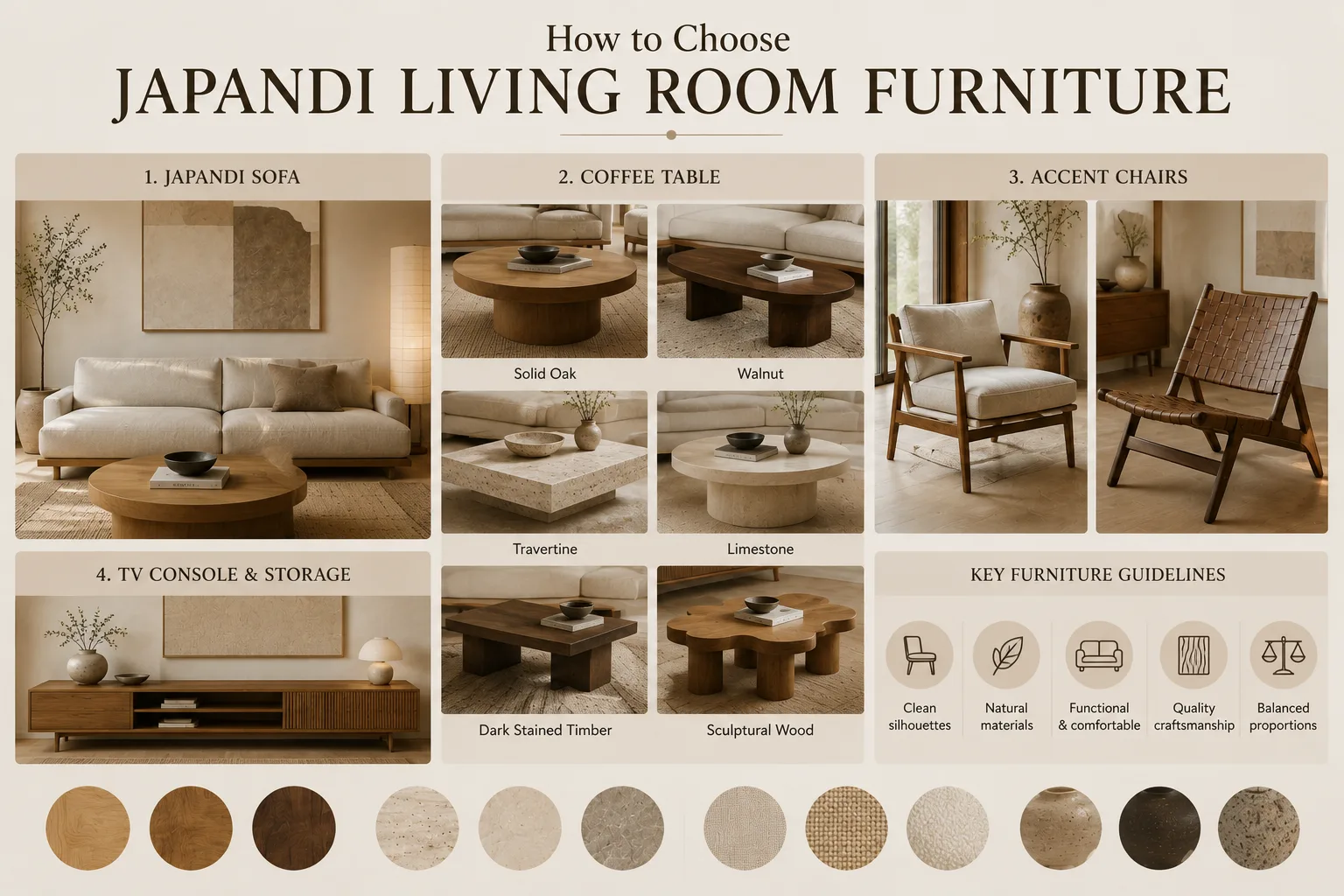
Coffee Table
The coffee table is an opportunity to introduce craftsmanship and natural texture.
Consider:
- Solid oak
- Walnut
- Travertine
- Limestone
- Dark stained timber
- Sculptural wood
Simple rectangular, oval, round and softly irregular forms can all work. The most important consideration is maintaining visual balance with the sofa and surrounding furniture.
Accent Chairs
Wood-frame chairs are particularly suited to Japandi interiors because they introduce visible craftsmanship without adding visual bulk.
Look for oak or walnut frames paired with linen, woven fabric, leather or natural cord.
TV Console and Storage
Storage should help maintain the uncluttered appearance of the room. Low timber cabinets with simple doors and concealed storage work particularly well.
Avoid overcrowding the console with decorative accessories. One ceramic vessel, a small stack of books or a sculptural object may be enough.
Japandi Living Room Layout
A Japandi layout should feel open but intentional. Rather than pushing every piece of furniture against the walls, create a defined conversation area with enough breathing room around individual pieces.
Anchor the main seating arrangement with a generously sized rug. Position the sofa as the primary piece, then add one or two visually lighter chairs where space allows.
A low coffee table reinforces the grounded proportions associated with Japanese interiors.
Keep Visual Pathways Clear
Avoid placing unnecessary furniture in circulation areas. Clear pathways make the room easier to use and contribute to its peaceful appearance.
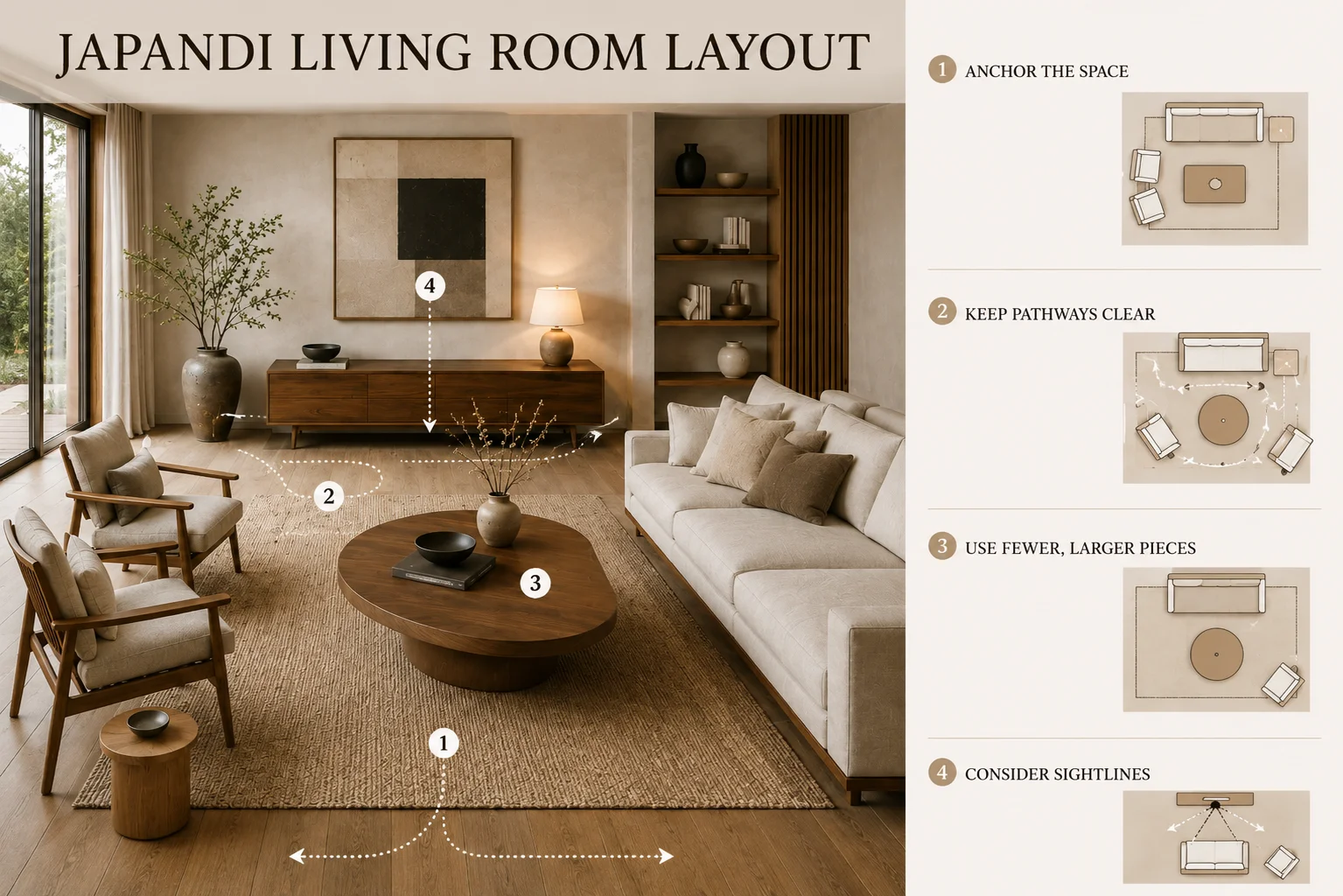
Use Fewer, Larger Pieces
Several small furniture pieces can make a room feel fragmented. A substantial coffee table, well-proportioned sofa and one distinctive chair often create a stronger composition than numerous small tables and seats.
Consider Sightlines
From the entrance to the room, the eye should move naturally toward one or two focal elements rather than encountering competing objects.
This might be a beautiful timber coffee table, textured plaster fireplace, sculptural chair or carefully selected artwork.
Layer Texture to Keep Japandi Warm
One of the biggest misconceptions about Japandi design is that minimalism requires rooms to look empty or cold. Texture is what prevents this from happening.
Layer a softly woven rug beneath the seating area, linen curtains around the windows and tactile cushions across the sofa. Combine these soft surfaces with wood grain, stone and handmade ceramics.
The contrast between rough and smooth, soft and solid, creates subtle visual richness without relying on bright colors or busy patterns.
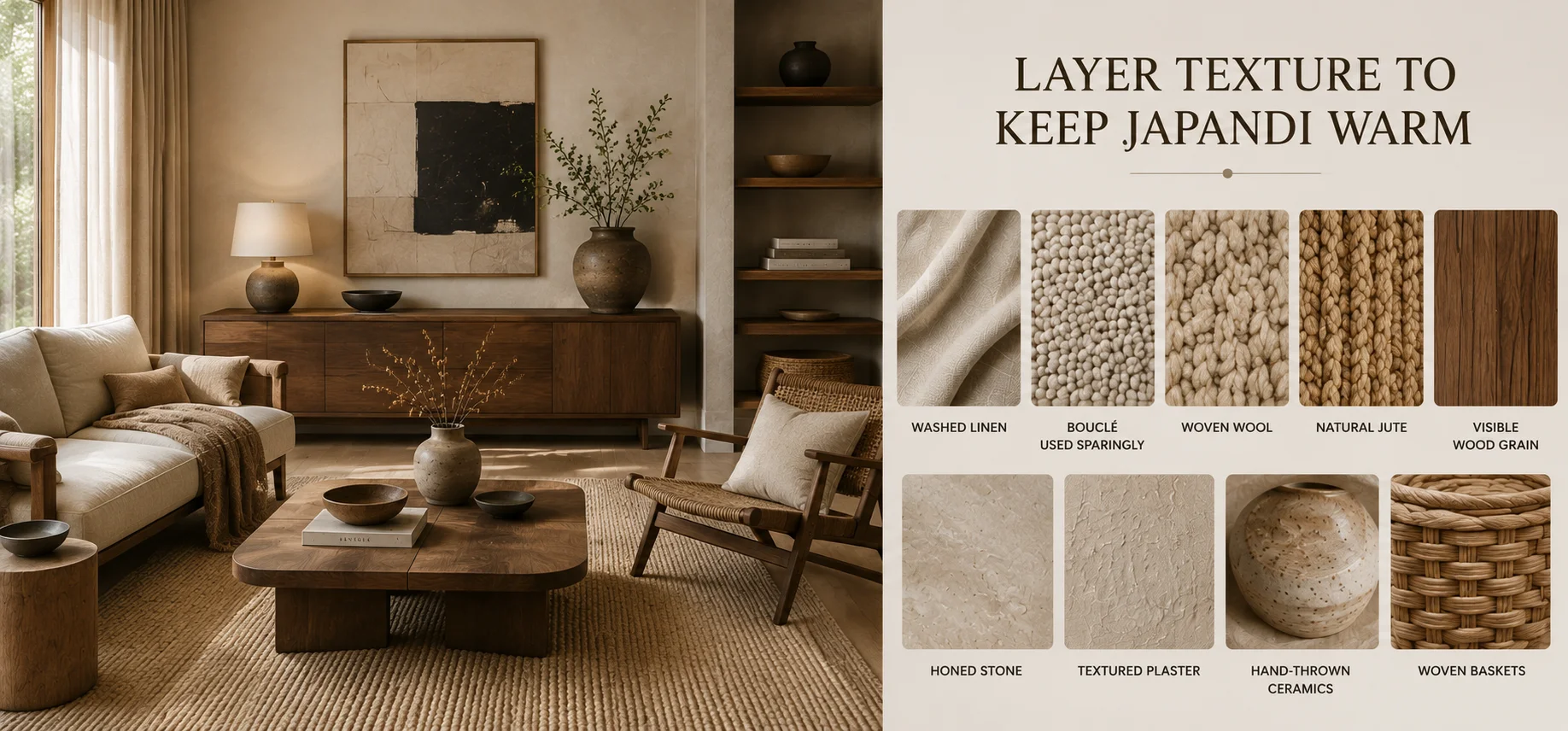
Best Textures for Japandi Interiors
- Washed linen
- Bouclé used sparingly
- Woven wool
- Natural jute
- Visible wood grain
- Honed stone
- Textured plaster
- Hand-thrown ceramics
- Woven baskets
Japandi Living Room Lighting
Lighting should reinforce the soft, relaxing character of a Japandi living room. Instead of relying on one bright ceiling fixture, combine several sources of warm light.
Layer Your Lighting
A balanced lighting plan might include a simple pendant or ceiling fixture, a sculptural floor lamp and one smaller table lamp.
Paper lantern-style pendants, timber lamps, ceramic bases and simple metal fixtures can complement Japandi interiors without becoming overly decorative.
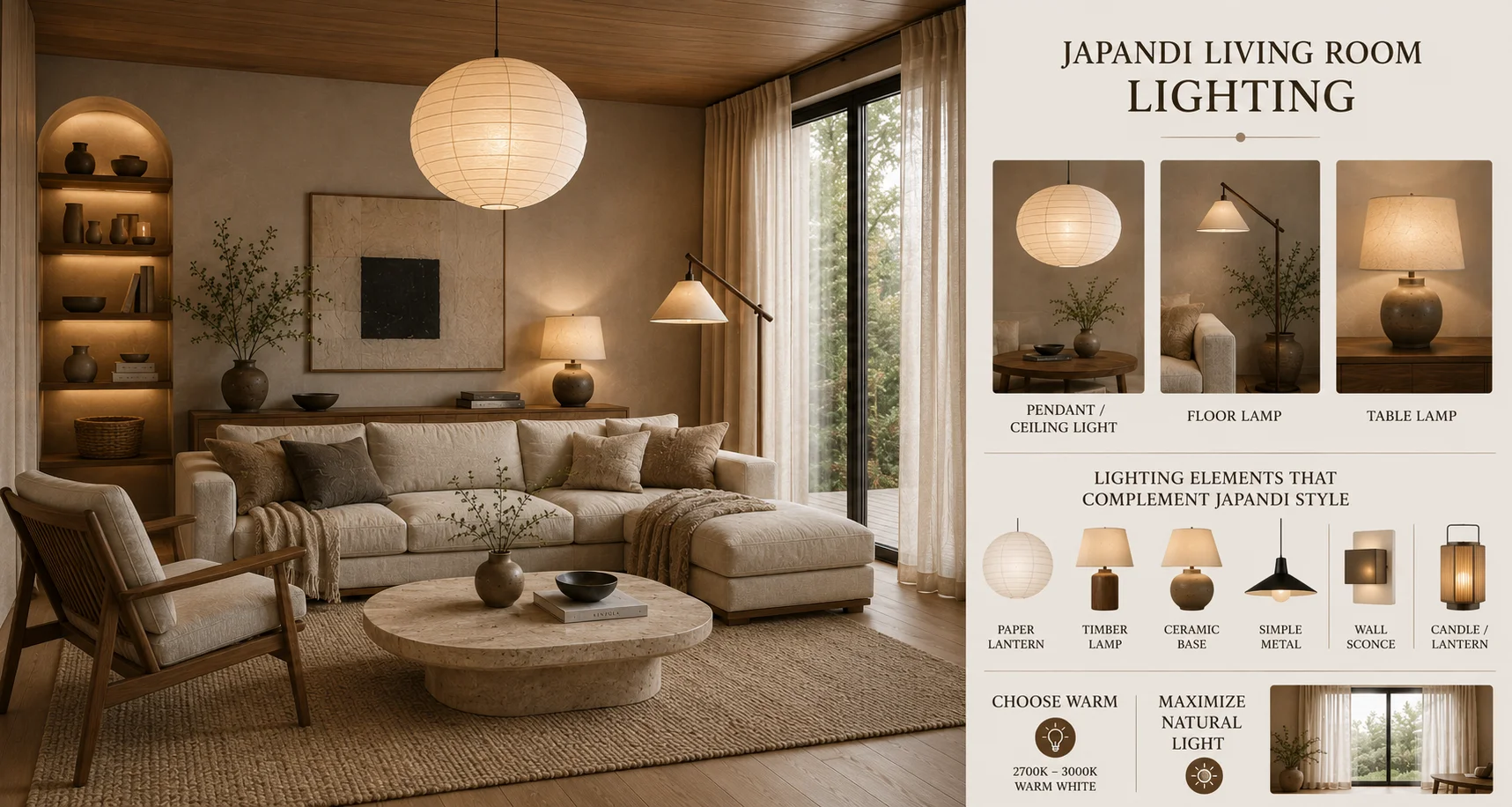
Choose warm light rather than harsh cool-white illumination. Soft illumination enhances wood tones, natural textiles and earthy wall colors while making the room more inviting in the evening.
Maximize Natural Light
During the day, keep windows relatively unobstructed. Lightweight linen curtains or simple woven shades can provide privacy while maintaining a connection with natural light.
How to Decorate a Japandi Living Room
Decor is where restraint becomes particularly important. Rather than treating every empty surface as an opportunity for decoration, choose a limited number of pieces with strong material, shape or craftsmanship.
Artwork
Choose one substantial artwork rather than creating an overly busy gallery wall. Abstract landscapes, minimalist compositions, textile art, ink-inspired artwork and pieces in muted earthy colors work particularly well.
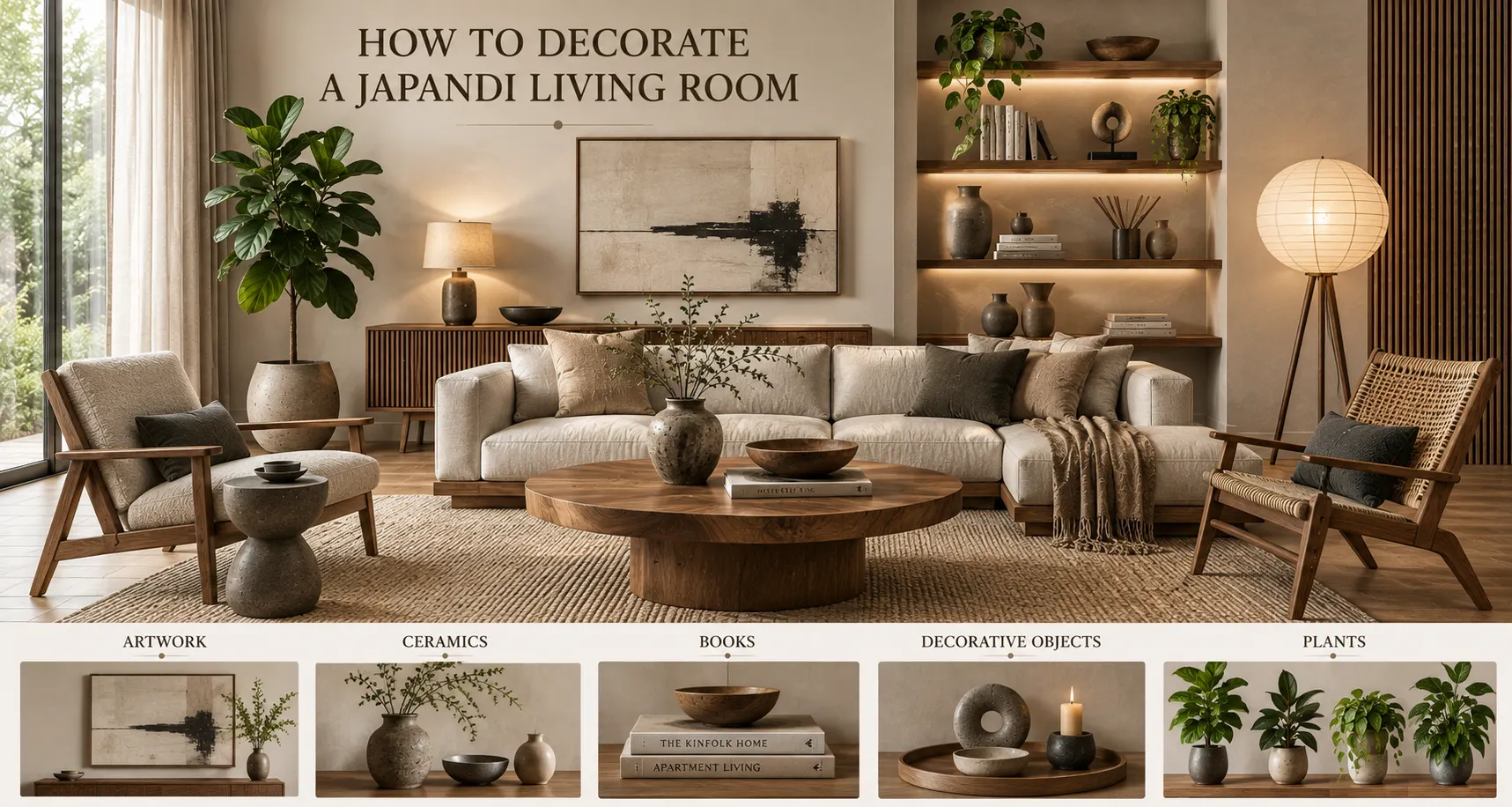
Ceramics
Handmade ceramic bowls, vases and vessels introduce organic form and subtle imperfection. Matte, textured and earthy finishes generally complement the aesthetic better than highly glossy decorative objects.
Books
A small collection of design, architecture or art books can provide a lived-in quality. Keep stacks intentional rather than filling every shelf.
Decorative Objects
Wooden bowls, stone objects, sculptural candleholders and handcrafted pieces can add interest. Try grouping objects in small compositions while leaving generous empty space around them.
Plants in a Japandi Living Room
Plants reinforce Japandi design’s connection to nature, but you do not need to turn the living room into an indoor jungle.
One architectural plant can have greater impact than numerous small pots.
Depending on your room and available light, consider a Ficus, olive tree, rubber plant, snake plant or another sculptural indoor plant with a relatively simple silhouette.
Place plants in understated ceramic, stone or textured planters that complement the room’s material palette.
Dried branches or restrained botanical arrangements can also create height and movement without introducing too much visual complexity.
How to Style a Small Japandi Living Room
Japandi works particularly well in smaller spaces because its emphasis on functionality and visual simplicity discourages unnecessary furniture.
Start with a compact sofa rather than an oversized sectional. Choose furniture with exposed legs where appropriate to maintain visible floor area, and use one functional coffee table instead of several occasional tables.
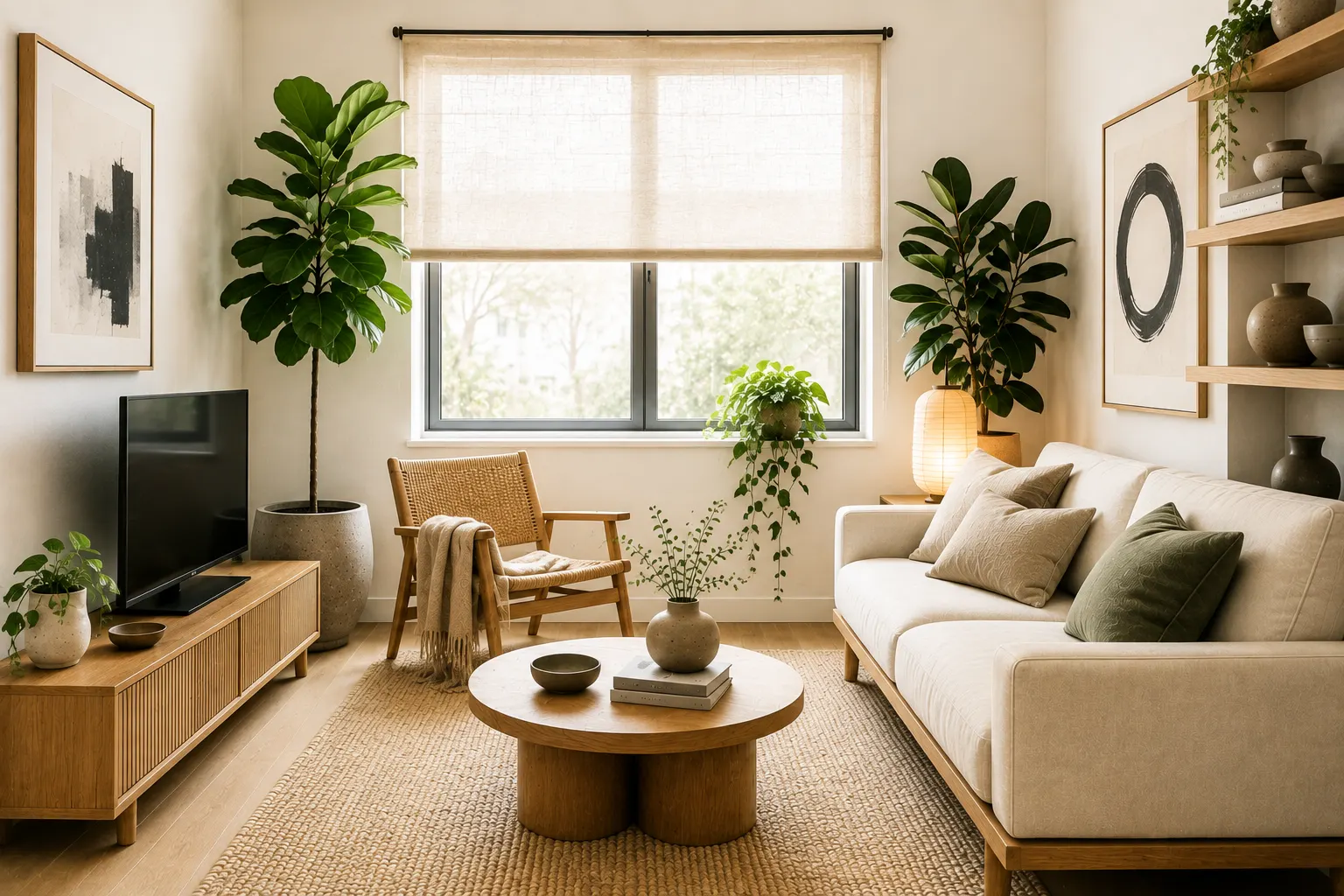
Closed storage is valuable in a small Japandi living room because everyday objects can quickly create visual clutter. A streamlined media console or built-in cabinet can conceal electronics, cables and miscellaneous items.
Keep the palette relatively consistent across walls, furniture and textiles. Subtle tonal variation creates depth without visually breaking the room into smaller sections.
Finally, resist the temptation to use miniature decor everywhere. A few appropriately scaled objects usually make a small room feel calmer and more sophisticated.
Japandi Style Variations
Japandi provides a strong design foundation rather than a rigid formula. Adjusting the balance of Japanese, Scandinavian and contemporary influences allows you to create a version that feels appropriate for your home.
Warm Japandi
Warm Japandi emphasizes beige, oatmeal, caramel and medium-toned wood. Layer linen upholstery with wool rugs, warm timber and softly textured ceramics.
This variation is ideal when you appreciate Japandi simplicity but want a particularly cozy and inviting atmosphere.
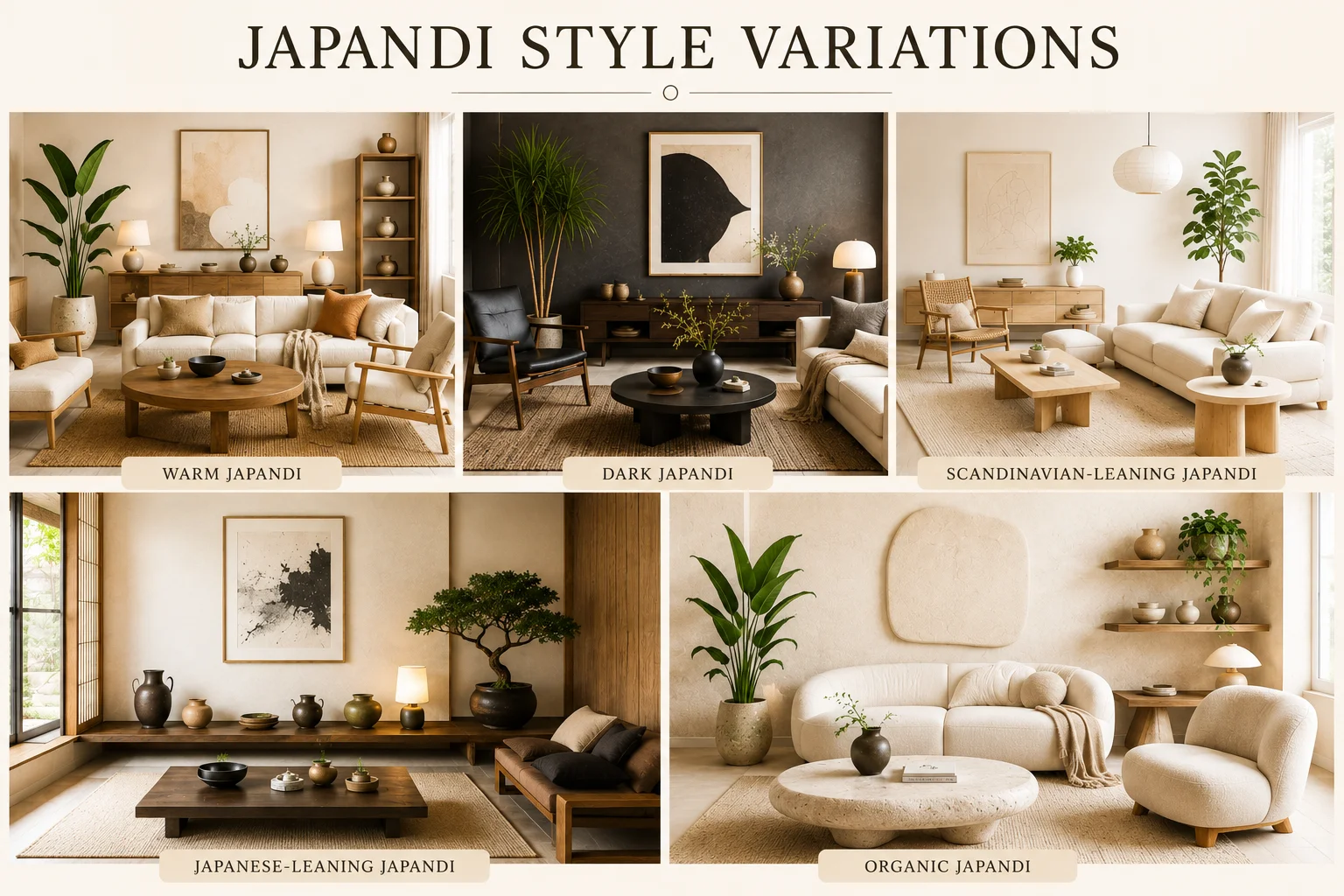
Dark Japandi
Dark Japandi introduces walnut, charcoal, deep brown and black accents against a warm neutral foundation.
Use darker elements strategically through an accent chair, coffee table, cabinet or architectural detail rather than making every surface dark.
Scandinavian-Leaning Japandi
This interpretation uses lighter oak, pale neutral walls and softer textiles while maintaining the uncluttered principles of Japanese design.
It is an excellent direction for rooms with limited natural light or homeowners who prefer a brighter aesthetic.
Japanese-Leaning Japandi
Use lower furniture, darker timber, restrained decoration, handcrafted ceramics and stronger contrast. Focus particularly on negative space and natural craftsmanship.
Organic Japandi
Organic Japandi softens clean lines with curved furniture, irregular stone, textured plaster and sculptural natural materials.
This variation has some similarities to organic modern design but retains Japandi’s emphasis on restraint, functionality and craftsmanship.
Japandi vs. Scandinavian Living Rooms
Japandi and Scandinavian interiors share several characteristics, including functional furniture, natural materials and uncluttered spaces. The difference is primarily found in mood, color, contrast and styling.
Traditional Scandinavian rooms are often brighter and lighter, frequently using pale wood, white walls and cozy textiles. Japandi interiors tend to introduce warmer earth tones, darker wood options, stronger contrast and greater emphasis on negative space.
If you prefer bright, relaxed and cozy rooms, explore our Scandinavian living room style guide. If you prefer a quieter, more restrained environment with Japanese-inspired craftsmanship, Japandi may be the better fit.
Common Japandi Decorating Mistakes
Japandi may look simple, but achieving the right balance requires more than removing decorative objects. These common mistakes can make the room feel cold, generic or disconnected from the philosophy behind the style.
Using Too Much Bright White
Instead: Choose warmer whites, beige, stone, mushroom and other earthy neutrals. Japandi should feel soft and natural rather than clinical.
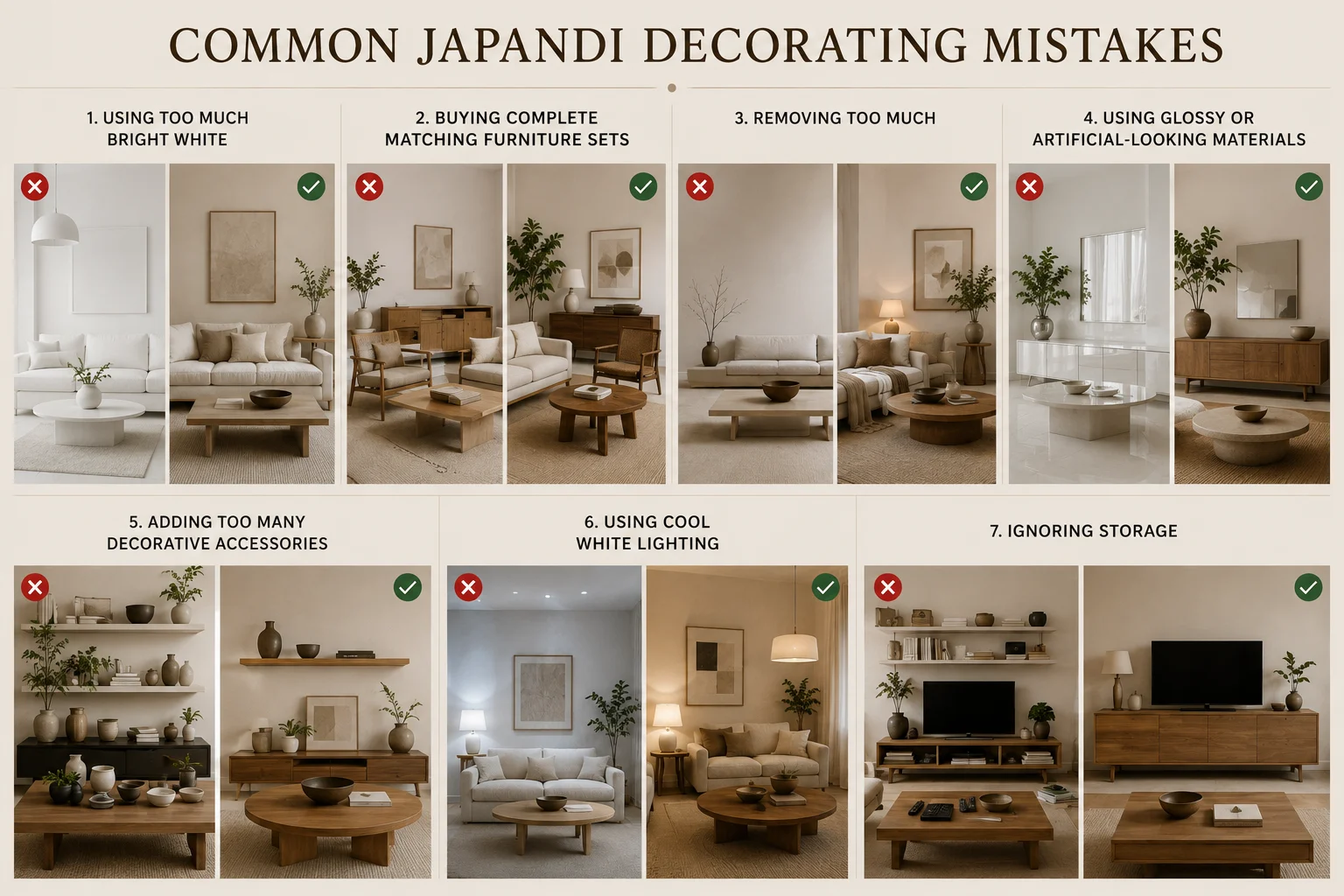
Buying Complete Matching Furniture Sets
Instead: Combine complementary pieces with similar undertones. A linen sofa, oak table and walnut accent chair can feel more collected and authentic than an identical furniture suite.
Removing Too Much
Instead: Minimalism should create intention, not emptiness. Add enough textiles, lighting, artwork and handcrafted objects to make the room comfortable.
Using Glossy or Artificial-Looking Materials
Instead: Prioritize matte finishes, natural wood grain, stone, linen, wool and ceramics.
Adding Too Many Decorative Accessories
Instead: Select fewer objects with stronger shape, material or craftsmanship and give them space to breathe.
Using Cool White Lighting
Instead: Layer warmer illumination through floor lamps, table lamps and understated ceiling fixtures.
Ignoring Storage
Instead: Incorporate closed storage so everyday items can be kept accessible without creating visual clutter.
Shop the Look: Japandi Living Room Essentials
If you are building a Japandi living room from scratch, invest in foundational furniture first and add decorative pieces gradually. Prioritize natural materials, craftsmanship and versatility rather than buying everything at once.
| Category | Recommended Japandi Style |
|---|---|
| Sofa | Low-profile linen sofa in oatmeal, beige or warm ivory |
| Coffee Table | Solid oak, walnut, travertine or sculptural timber table |
| Accent Chair | Wood-frame chair with linen, woven or natural upholstery |
| TV Console | Minimal timber cabinet with concealed storage |
| Area Rug | Textured wool, wool-jute or understated natural-fiber rug |
| Curtains | Full-length linen or linen-look panels |
| Lighting | Paper, ceramic, wood or understated sculptural lighting |
| Artwork | Large minimalist, abstract or nature-inspired artwork |
| Accessories | Handmade ceramics, wooden trays, books and sculptural objects |
| Plants | One or two architectural plants or restrained botanical arrangements |
Think of this list as a framework rather than a shopping checklist. A convincing Japandi interior develops through careful selection and editing rather than purchasing a complete coordinated collection.
A Simple Japandi Living Room Styling Formula
If you are unsure where to begin, build the room in layers.
- Establish the foundation: Choose warm neutral walls and natural flooring.
- Select the sofa: Use a comfortable, clean-lined design in linen or another tactile neutral fabric.
- Add natural wood: Introduce visible grain through the coffee table, console or accent chair.
- Anchor the room: Add a generously sized textured rug.
- Create contrast: Introduce one or two darker wood, charcoal or black elements.
- Layer lighting: Combine ambient, floor and table lighting.
- Add nature: Introduce one sculptural plant or understated botanical arrangement.
- Add craftsmanship: Finish with a few handmade ceramics, artwork or tactile objects.
- Edit: Remove anything that feels unnecessary or visually distracting.
The final editing stage is particularly important. Japandi is as much about what you choose not to display as what you add.
FAQs About Japandi Living Rooms
What is Japandi interior design?
Japandi is an interior style that combines Japanese design principles with Scandinavian functionality and comfort. It typically features natural materials, warm neutral colors, clean-lined furniture, craftsmanship and intentionally uncluttered spaces.
What colors are best for a Japandi living room?
Warm white, beige, oatmeal, greige, taupe and earthy stone tones make excellent foundation colors. Muted olive, clay, charcoal, dark brown and black can be introduced as restrained accents.
What is the difference between Japandi and Scandinavian style?
Scandinavian interiors often emphasize pale wood, bright rooms and cozy textiles. Japandi combines these functional qualities with Japanese-inspired restraint, lower furniture, earthy colors, craftsmanship, stronger contrast and greater use of intentional negative space.
What wood is used in Japandi interiors?
Oak, ash, beech, walnut and other natural wood finishes can all work in Japandi interiors. Lighter woods create a stronger Scandinavian influence, while medium and darker woods can give the room a more Japanese-inspired character.
Can a Japandi living room have color?
Yes. Japandi is not limited to beige. Muted natural colors such as sage, olive, clay, terracotta, forest green and charcoal can add depth while maintaining the calm atmosphere of the style.
How do you make a Japandi living room feel cozy?
Layer tactile materials such as linen, wool and natural wood, use warm lighting, add a generously sized rug and introduce a few handcrafted decorative pieces. These elements add warmth without creating clutter.
Is Japandi style expensive?
Japandi does not have to be expensive, although its emphasis on quality can encourage investment in durable pieces. Start with essential furniture and gradually add well-made items rather than purchasing an entire room at once.
What should you avoid in a Japandi living room?
Avoid excessive decoration, overly glossy materials, harsh cool lighting, unnecessary furniture, matching furniture sets and too many competing colors. The room should feel considered and comfortable rather than empty or overly styled.
Final Thoughts
The best Japandi living rooms are not simply minimalist spaces filled with beige furniture. They balance simplicity with warmth, functionality with craftsmanship and clean lines with natural imperfection.
Begin with a calm neutral foundation and introduce wood, stone and tactile textiles. Choose furniture for quality and function, maintain enough negative space for the room to breathe, and use lighting, plants, artwork and handcrafted objects to give the space personality.
Most importantly, build the room gradually. Japandi design rewards thoughtful choices. A smaller collection of furniture and objects that you genuinely appreciate will usually create a more authentic result than following every design trend at once.
When these principles come together, the result is a living room that feels calm and uncluttered while remaining warm, comfortable and deeply connected to natural materials.