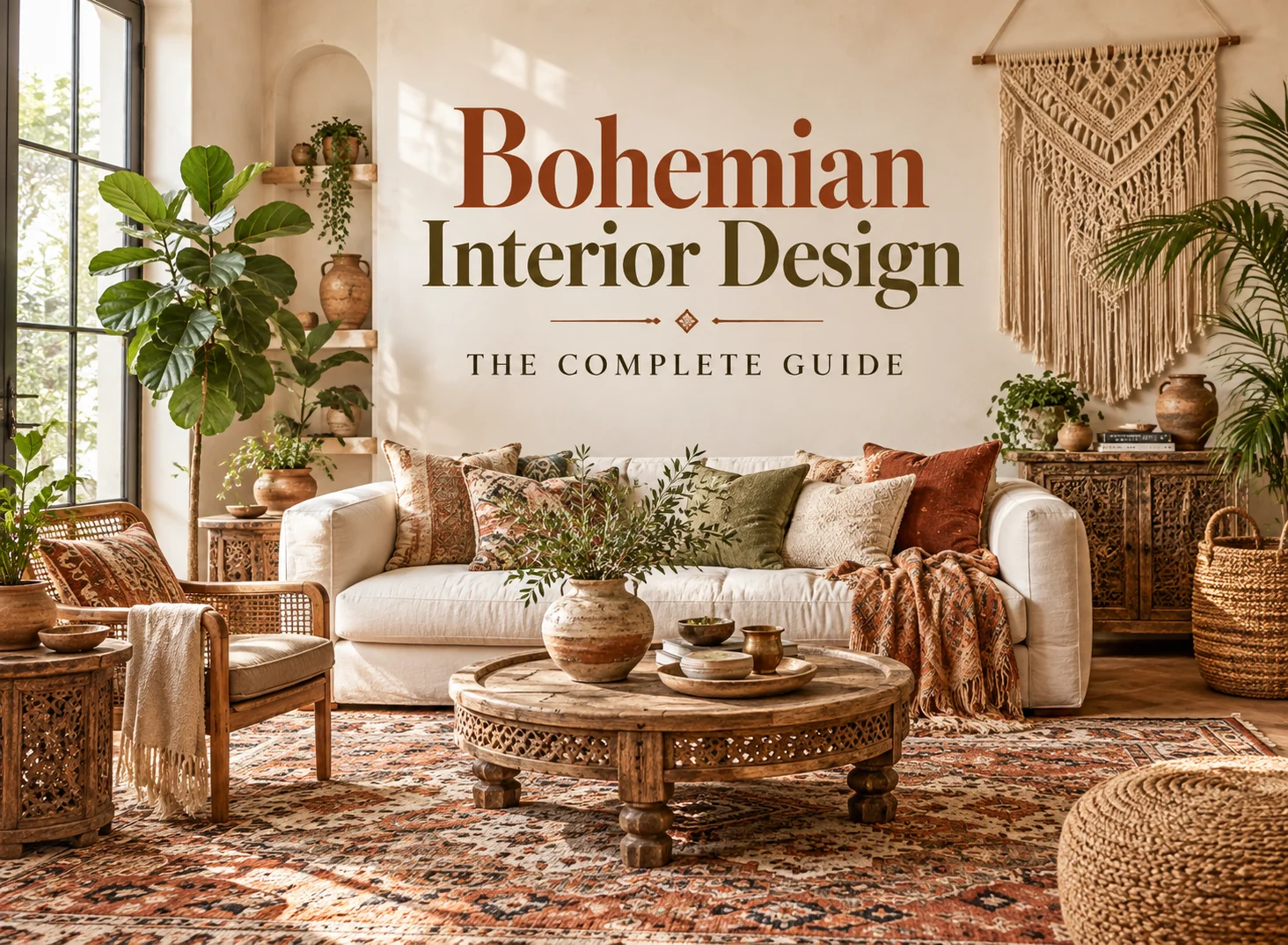
Bohemian interior design is a relaxed, expressive decorating style built around layered textiles, natural materials, collected objects, global influences and an intentionally informal approach to arranging a home.
Often shortened to boho style, it is recognizable for its combination of color, pattern, texture, vintage furniture, plants, handmade pieces and personal objects. Yet a successful bohemian interior is not simply a room filled with more things. The most inviting spaces balance abundance with intention, allowing individual pieces to contribute to a comfortable and visually connected whole.
Bohemian interiors can be colorful and maximalist, soft and earthy, modern and restrained, or influenced by vintage and contemporary design. What connects these variations is a preference for personality over perfection and for homes that appear to have developed naturally over time.
This guide explains the foundations of bohemian interior design, including its origins, colors, materials, furniture, patterns, lighting, wall decor and accessories. It also explores how to create the look without making a room feel cluttered, overly themed or dependent on temporary decorating trends.
What Is Bohemian Interior Design?
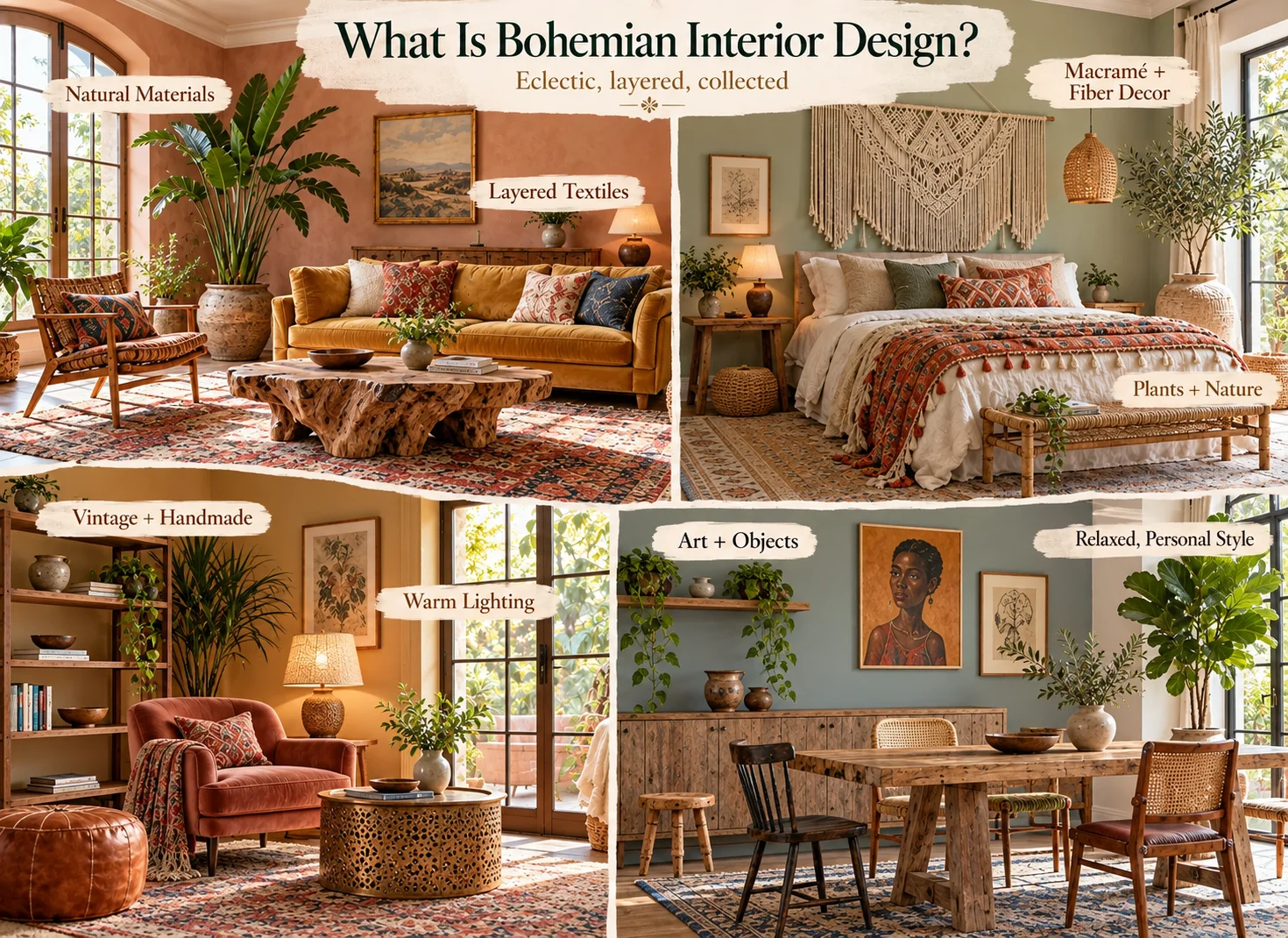
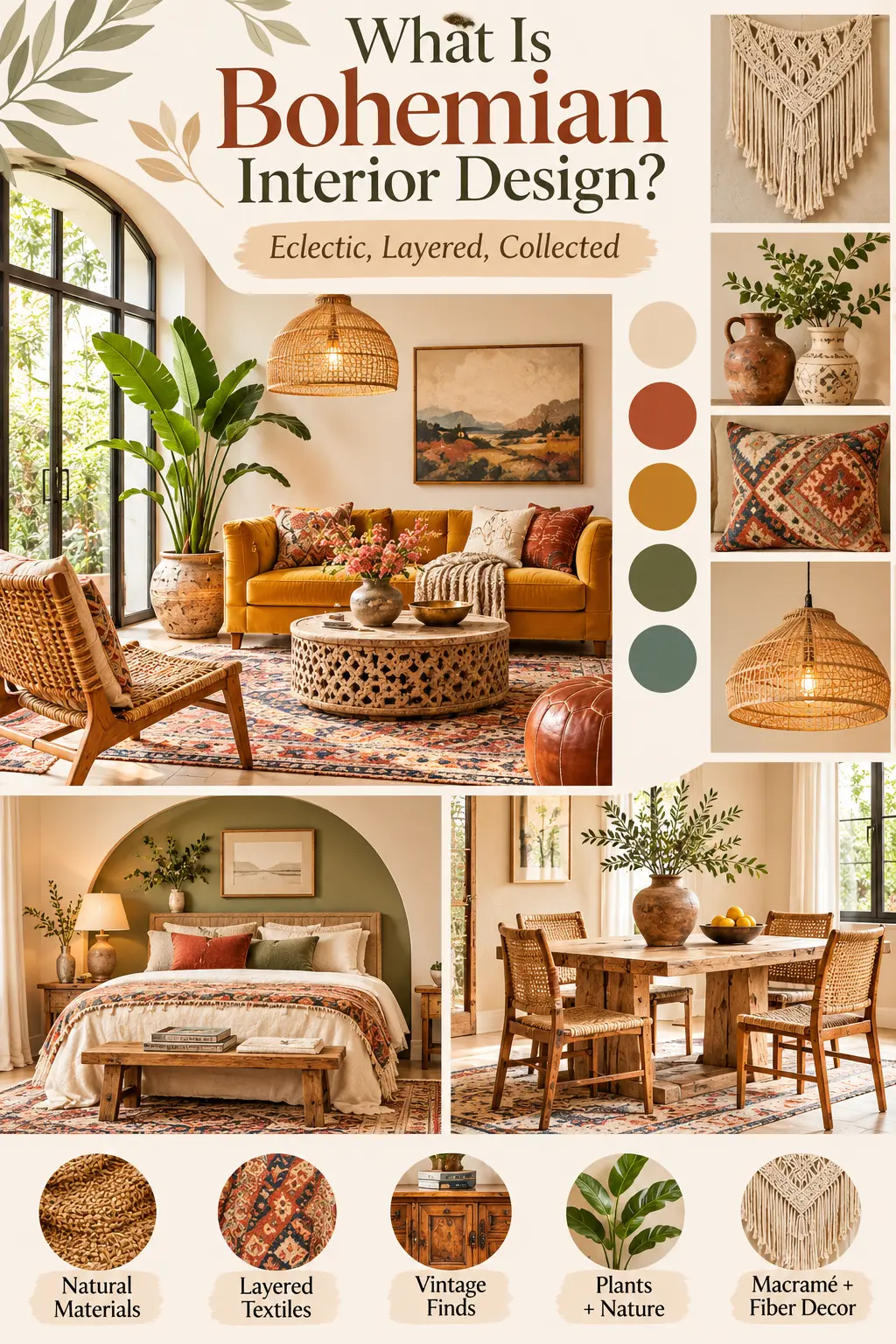
Bohemian interior design is an eclectic decorating approach that combines natural materials, layered textiles, varied patterns, vintage and handmade furnishings, plants, art and objects collected over time.
Unlike styles built around strict visual rules, bohemian design encourages individuality. Two bohemian homes may therefore look very different. One might feature terracotta walls, carved timber furniture and richly patterned rugs, while another uses warm white walls, pale linen, woven baskets and only a few muted textiles.
The defining quality is less about a particular color or furniture shape and more about how the room is assembled. Bohemian interiors usually feel personal, tactile, relaxed and collected rather than perfectly coordinated.
A well-designed boho space often includes:
- layered natural and woven materials;
- a mixture of vintage, handmade and contemporary furniture;
- patterned or textured textiles;
- artwork and meaningful decorative objects;
- macramé, woven or other fiber-based wall decor;
- plants and other references to nature;
- warm, atmospheric lighting;
- a relaxed approach to matching furniture; and
- visible evidence of the people who live there.
The style can accommodate significant visual richness, but successful rooms still use repetition, proportion and negative space to prevent the interior from becoming chaotic.
Where Does Bohemian Interior Design Come From?
The modern idea of bohemian style is connected to the broader cultural meaning of the word bohemian, which became associated with artists, writers, performers and unconventional lifestyles in nineteenth-century Europe.
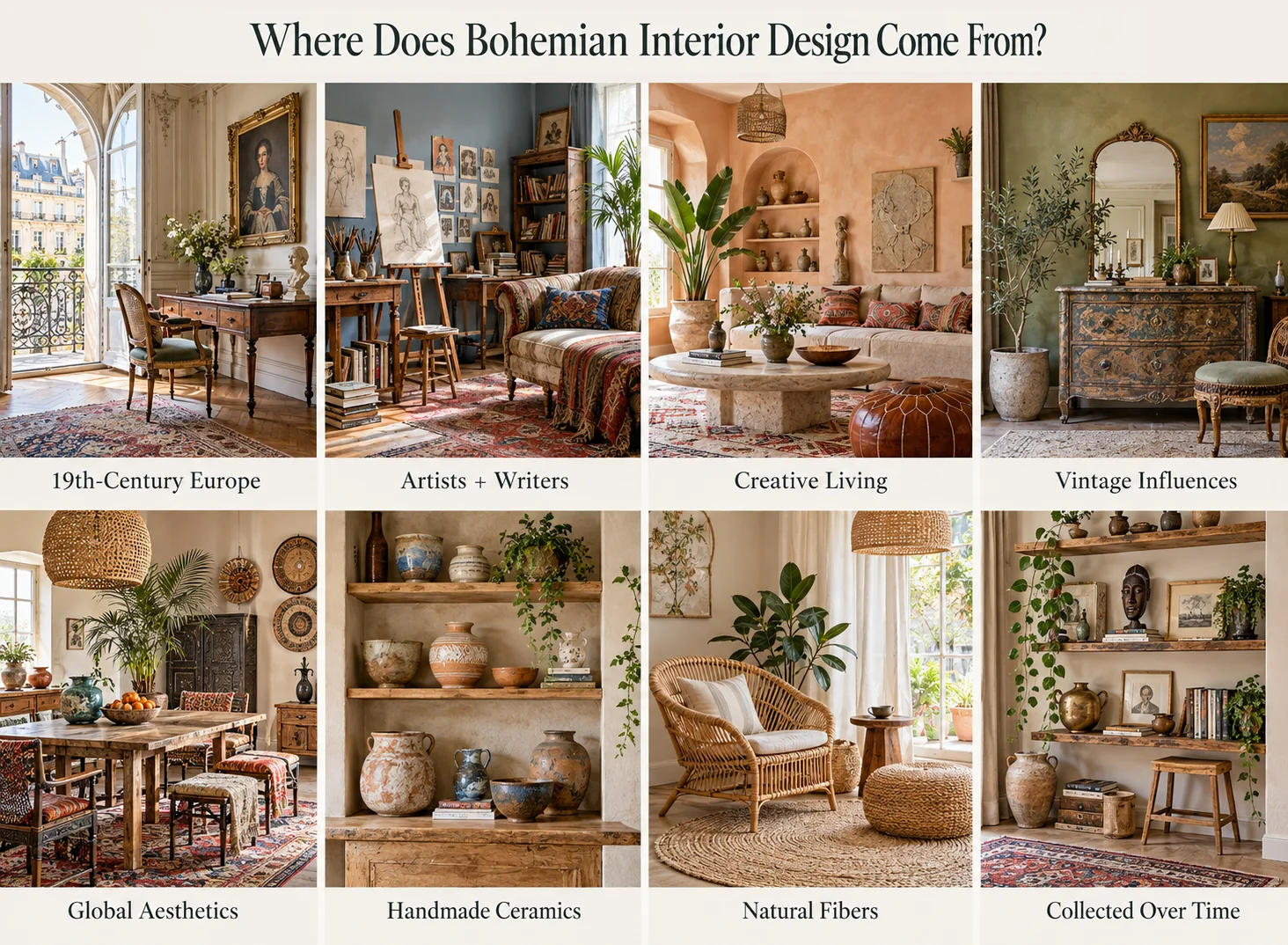
Rather than describing one historical decorative tradition, contemporary bohemian interior design has developed from a mixture of artistic, vintage and globally influenced aesthetics. Over time, the term came to describe homes that appeared creative, unconventional and less constrained by formal decorating rules.
Modern boho interiors often combine objects and influences from different periods and places. Vintage European furniture may sit beside woven textiles, handmade ceramics, contemporary artwork and natural fibers.
Because many decorative traditions contribute to the visual language commonly associated with boho design, it is helpful to distinguish thoughtful inspiration from indiscriminate imitation. Materials, crafts and objects with identifiable cultural origins deserve context and respect rather than being treated simply as generic decorative motifs.
Today, bohemian interior design is best understood as an evolving, personal style rather than a historically fixed formula.
Key Characteristics of Bohemian Interior Design
Bohemian interiors vary widely, but several recurring principles give the style its recognizable character.
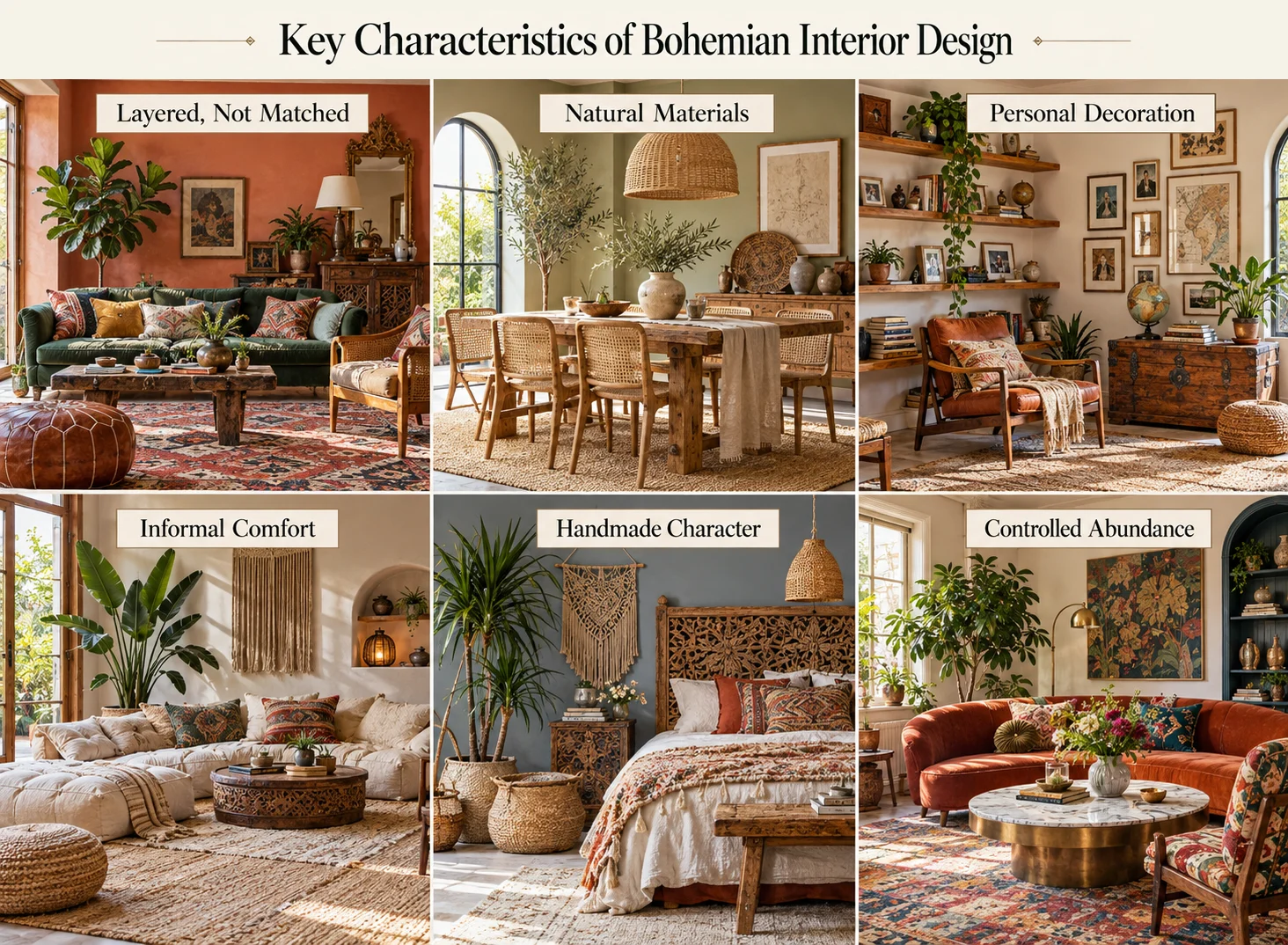
Layered Rather Than Perfectly Matched
Bohemian rooms rarely look as though every piece was purchased as part of the same collection. Different woods, textile patterns, furniture periods and decorative objects can coexist comfortably.
The goal is not random contrast. Repeated colors, materials or shapes help visually connect the layers.
Natural and Tactile Materials
Timber, rattan, cane, linen, cotton, wool, jute, leather, clay and ceramic bring physical texture to bohemian interiors. Natural variation and visible craftsmanship often make these materials particularly suitable for the style.
Personal Decoration
Books, travel objects, artwork, photographs, handmade ceramics, textiles and inherited pieces can all become part of the room.
This emphasis on meaningful objects is one reason an authentic bohemian interior often feels difficult to reproduce instantly. The strongest examples usually develop gradually.
Informal Comfort
Deep seating, floor cushions, throws, layered rugs and accessible side tables support the casual atmosphere associated with boho interiors.
Furniture does not need to be low to the floor, but the room should feel comfortable enough to use rather than arranged primarily for display.
Handmade Character
Handcrafted details contribute strongly to bohemian interiors. Macramé, woven baskets, pottery, carved timber, handmade textiles and fiber art introduce the irregularities that make a room feel less mass-produced.
These pieces can also provide visual interest without relying on glossy finishes or elaborate furniture.
Controlled Abundance
Bohemian design allows more pattern, texture and decoration than many restrained styles, but abundance works best when there is still somewhere for the eye to rest.
Leaving part of a wall undecorated, keeping a tabletop partly clear or limiting the number of dominant colors can make the richer elements more effective.
Bohemian Interior Design Color Palettes
There is no single bohemian color palette. The style can range from saturated jewel tones to quiet earth colors and warm neutrals.
Traditional interpretations often use combinations such as:
- terracotta and rust;
- ochre and mustard;
- olive and moss green;
- burgundy and deep red;
- indigo and muted blue;
- plum and aubergine;
- warm brown; and
- creamy off-white.
These colors can appear on walls, rugs, cushions, upholstery, artwork, ceramics or smaller decorative pieces.

Earthy Bohemian Palettes
For a calmer interpretation, begin with warm white, clay, sand, caramel, muted green and natural timber. Add variation through texture instead of relying on many strong colors.
This approach is particularly effective in smaller rooms where an extremely saturated palette could feel visually heavy.
Colorful Bohemian Palettes
If you prefer richer color, establish two or three dominant tones and repeat them throughout the room. A patterned rug might contain rust, navy and olive, with those colors appearing again in cushions, artwork or ceramics.
Repetition prevents multiple colors from feeling unrelated.
Neutral Boho
Neutral bohemian rooms usually rely on cream, warm white, tan, pale timber and brown. Because the colors are restrained, texture becomes especially important.
Linen, boucle, woven fibers, aged wood, irregular ceramics, macramé and chunky textiles can keep a neutral room from appearing flat.
Materials and Textures in Bohemian Interiors
Texture is one of the most important elements of bohemian interior design.
Even a room with a limited color palette can feel richly layered when it includes several contrasting surfaces.

Useful materials include:
- solid and reclaimed timber;
- rattan and cane;
- bamboo;
- jute and sisal;
- linen and cotton;
- wool;
- velvet;
- leather;
- rope and knotted fibers;
- clay and terracotta;
- handmade ceramic;
- stone; and
- woven natural fibers.
A smooth timber table might be combined with a thick wool rug, linen upholstery, a woven pendant, a macramé wall hanging and rough ceramic vessels. Each material contributes something different without requiring numerous decorative accessories.
This is particularly useful when trying to create a more sophisticated or contemporary version of bohemian style. Instead of adding another object whenever a room feels unfinished, introduce a new material or tactile surface.
Patterns and Layering
Pattern gives many bohemian interiors their energy, but layering patterns successfully requires some visual organization.
Rather than trying to match every textile, look for a common thread between them.
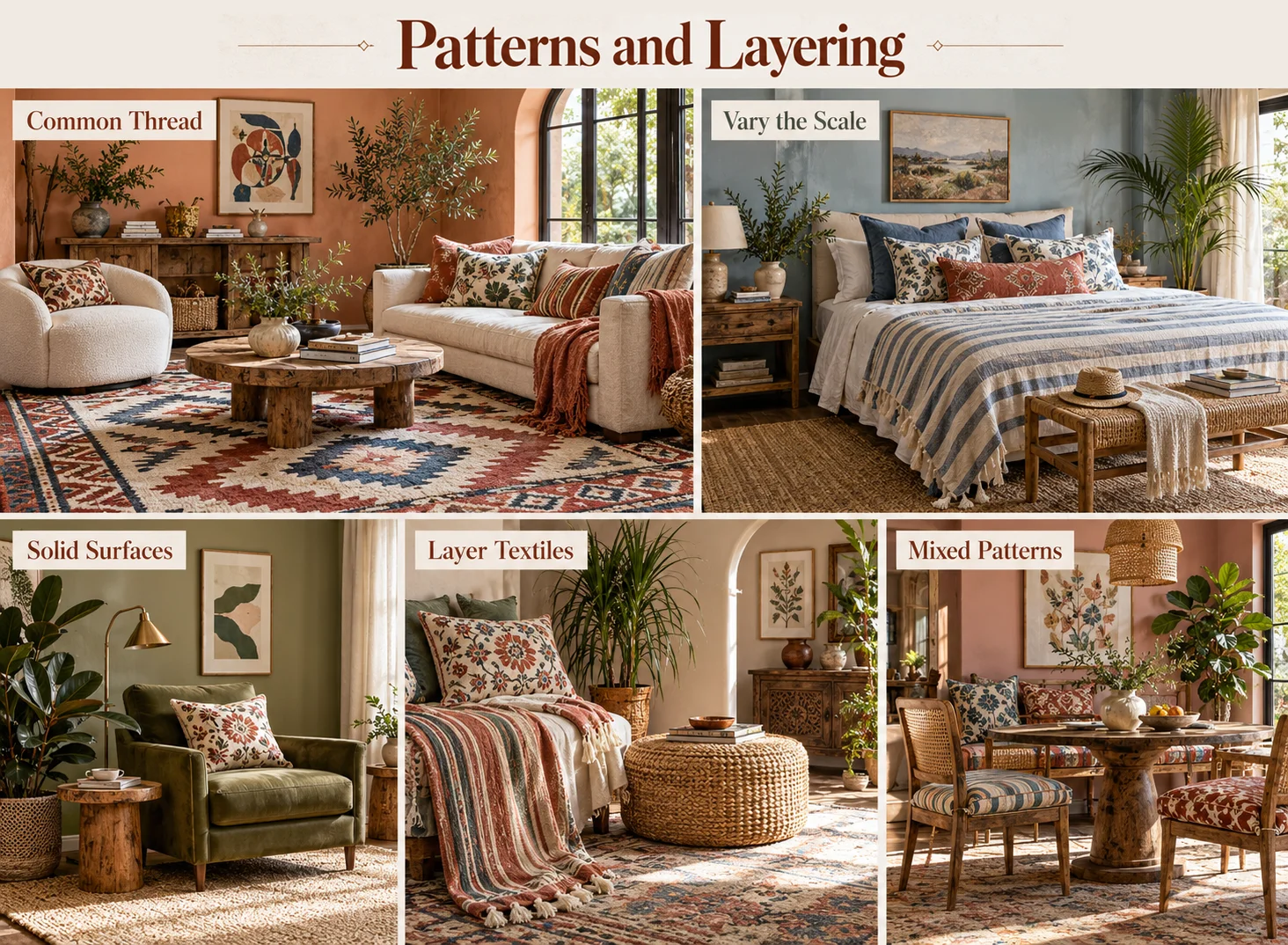
You might combine:
- a large geometric rug;
- smaller botanical cushions;
- a striped throw; and
- an embroidered accent pillow.
The patterns differ, but repeating two or three colors helps them relate to one another.
Vary the Scale
Combining one large pattern with several smaller patterns usually feels calmer than using multiple prints of identical scale.
If the rug contains a bold oversized motif, choose cushions with finer patterns or solid colors.
Include Solid Surfaces
A patterned rug, patterned upholstery, patterned curtains, patterned cushions and a gallery wall can compete for attention when used together.
Solid-color upholstery, simple walls or plain curtains provide necessary visual pauses.
Layer Textiles Physically
Bohemian layering is not limited to pattern. Throws over sofas, cushions in different materials and even overlapping rugs can increase softness and dimension.
The result should still appear practical. A sofa buried beneath decorative cushions is less inviting than one with enough room to sit comfortably.
Bohemian Furniture
Bohemian furniture is generally characterized by variety rather than a single recognizable silhouette.
Vintage timber pieces, rattan chairs, upholstered sofas, carved tables and contemporary furniture can all work within the same home.
Mix Furniture Periods
A vintage sideboard does not need a matching dining table. An old leather chair can sit comfortably beside a contemporary sofa, while a clean-lined coffee table can help balance more ornate pieces.
This approach has some overlap with mid-century modern interior design, particularly when vintage wooden furniture and iconic twentieth-century shapes are incorporated into a bohemian room.

Prioritize Character
Furniture with visible grain, patina, unusual joinery, carved details or handmade qualities can add depth without requiring excessive decoration.
Secondhand and vintage furniture can be particularly effective because minor signs of age often complement the informal character of bohemian design.
Combine Wood, Cane and Upholstery
Using different furniture materials helps prevent a boho room from looking like a matching set. A timber cabinet, cane chair and upholstered sofa can work together when their proportions and colors relate to the room.
Comfort Still Matters
Bohemian interiors sometimes feature floor seating, poufs and low furniture, but these elements should supplement rather than replace practical seating where comfort is important.
A home should work for the people using it.
Bohemian Lighting
Bohemian interiors benefit from layered, warm lighting rather than one harsh central fixture.

Combine several types of light:
- ambient lighting for general illumination;
- task lighting beside seating, beds or work areas; and
- accent lighting for artwork, shelving or atmosphere.
Woven pendants, ceramic lamps, sculptural floor lamps, vintage-inspired fixtures and simple linen shades can all suit the style.
Rattan, bamboo and woven-fiber pendants can introduce texture overhead, but they do not need to appear in every bohemian room. Metal, glass or plaster lighting can provide useful contrast.
Warm pools of light are especially effective in the evening because they emphasize texture and help a layered room feel intimate rather than busy.
Bohemian Wall Decor, Artwork and Displays
Wall decor plays an important role in bohemian interior design because it provides an opportunity to introduce personality, texture, craftsmanship and color without occupying additional floor space.
Artwork does not need to follow one format. Paintings, photography, woven pieces, mirrors, macramé and personal collections can all contribute to a layered boho interior.
Macramé Wall Hangings
Macramé is one of the wall-decor elements most strongly associated with contemporary bohemian style. Its knotted fibers introduce softness, handmade texture and visual interest, making it particularly effective against plain walls or above simple timber furniture.
Large macramé wall hangings can function as a focal point above a bed, sofa, console or sideboard. Smaller pieces can be incorporated into a gallery-style arrangement alongside framed art, mirrors or woven objects.
Natural cotton and cream-colored macramé are common, but dyed fibers can also introduce muted terracotta, olive, rust or other colors that connect with the wider room palette.
For a more current interpretation of bohemian design, use macramé selectively rather than combining several macramé pieces with every other recognizable boho motif. One substantial handmade wall hanging often creates more impact than multiple smaller decorative pieces.

Gallery Walls
Mixing paintings, prints, photography and smaller objects can create an informal gallery wall. Frames do not have to match exactly, although repeating one material, finish or color can help the collection feel intentional.
A bohemian gallery wall can also combine conventional framed artwork with woven or dimensional pieces, creating variation in both texture and depth.
Large-Scale Artwork
Bohemian decorating does not require multiple small pieces. One oversized artwork can provide a stronger focal point, particularly in a modern or more restrained boho room.
Large artwork can also balance rooms containing patterned rugs, textured furniture or numerous smaller decorative elements by giving the eye one clear place to focus.
Woven and Textile Wall Art
Beyond macramé, woven wall hangings, fiber art and other textile pieces can introduce softness and dimensional texture, especially where a room already contains many hard architectural surfaces.
Natural fibers can visually connect wall decor with rattan furniture, woven baskets, jute rugs and linen textiles elsewhere in the room.
Mirrors
Vintage mirrors, carved timber frames, woven surrounds, metal finishes and organically shaped designs can reflect light while adding decorative character.
A statement mirror can also provide a useful alternative to artwork in smaller or darker spaces where reflecting natural light is particularly valuable.
Personal and Collected Displays
Bohemian wall decor can include objects with personal significance as well as conventional artwork. Small sculptural pieces, handmade crafts, photographs or carefully displayed collections can make a room feel individual rather than commercially styled.
As with accessories throughout the rest of the interior, avoid automatically filling every available section of wall. Leaving areas of negative space allows macramé, artwork and collected pieces to stand out rather than competing with one another.
Plants in Bohemian Interiors
Plants are strongly associated with contemporary bohemian interiors because they introduce color, organic shapes and movement while reinforcing the style’s connection with natural materials.

Large plants can also perform an architectural role. A tall indoor tree or palm can soften an empty corner more effectively than several small decorative items.
Depending on the room’s light conditions, popular interior plants include rubber plants, Kentia palms, olive trees, fiddle-leaf figs, dracaena and bird of paradise.
However, a room does not require dozens of plants to look bohemian.
Choose greenery according to the amount of natural light available and your willingness to maintain it. A few healthy, appropriately scaled plants usually look better than many struggling ones.
Planters also contribute to the design. Terracotta, handmade ceramic, woven baskets and simple stone-effect containers can introduce another layer of texture.
Using Bohemian Style in Different Rooms
Bohemian Living Room
The living room is particularly well suited to bohemian design because it offers several opportunities for layering.
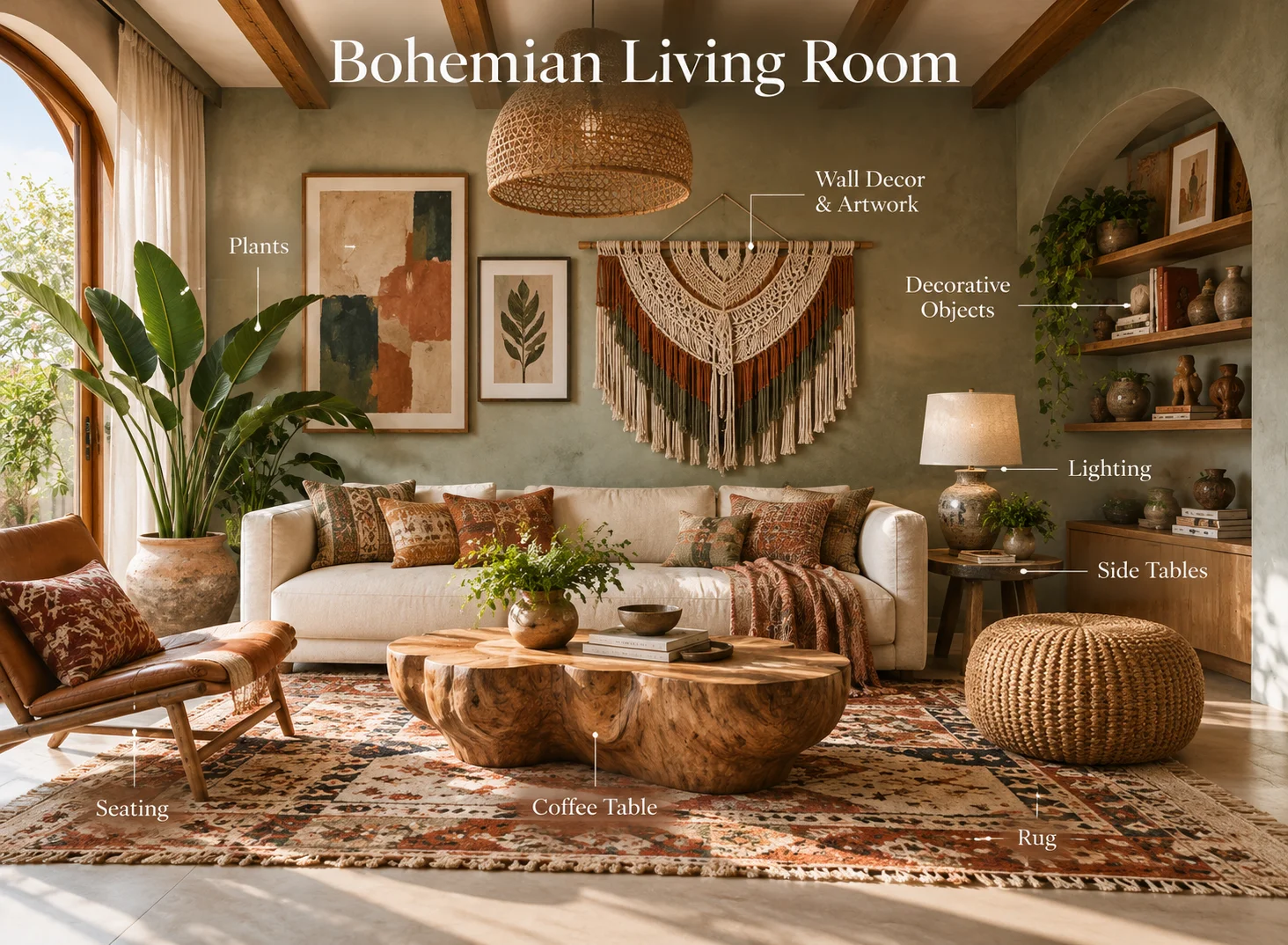
Begin with comfortable seating and a generously sized rug, then add a coffee table, side tables, lighting and textiles. Artwork, macramé, plants and selected decorative objects can be introduced afterward.
One of the easiest ways to avoid clutter is to make the major furniture pieces relatively simple and allow smaller elements to carry more pattern and detail.
A plain wall behind the sofa can support one large fiber hanging, oversized artwork or an edited gallery wall rather than numerous unrelated decorations.
Bohemian Bedroom
Bedrooms can take a softer interpretation of bohemian style.
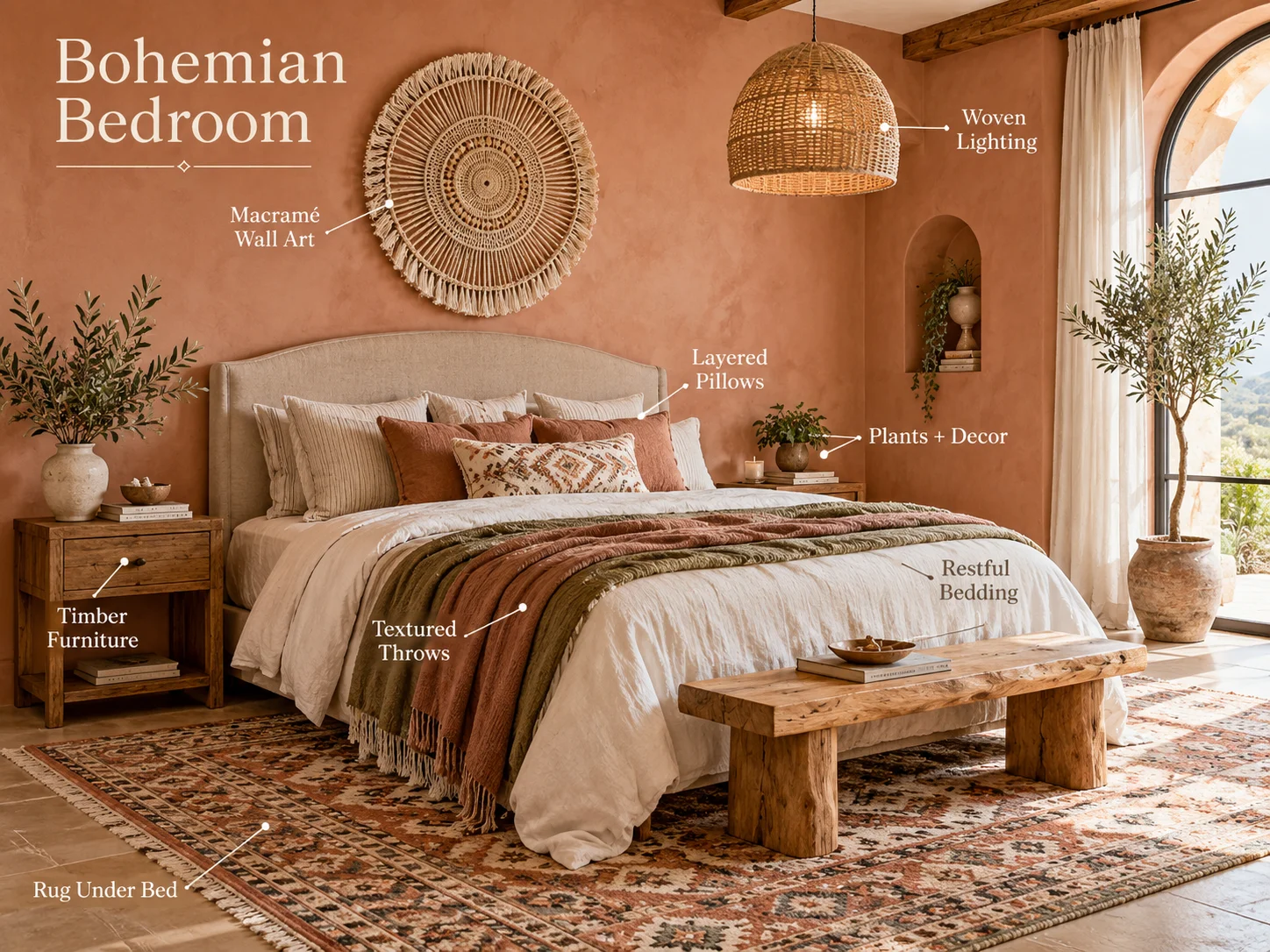
Layer linen or cotton bedding, textured throws and several pillows while maintaining enough restraint for the room to remain restful. Timber furniture, woven lighting and a rug under the bed can provide warmth without requiring numerous accessories.
An upholstered or timber headboard can serve as the primary focal point. Alternatively, a large macramé hanging above the bed can create softness and texture where a conventional headboard is absent.
Bohemian Dining Room
A substantial timber dining table provides a useful foundation. Dining chairs may match, but mixing complementary chair styles can produce a more collected appearance.
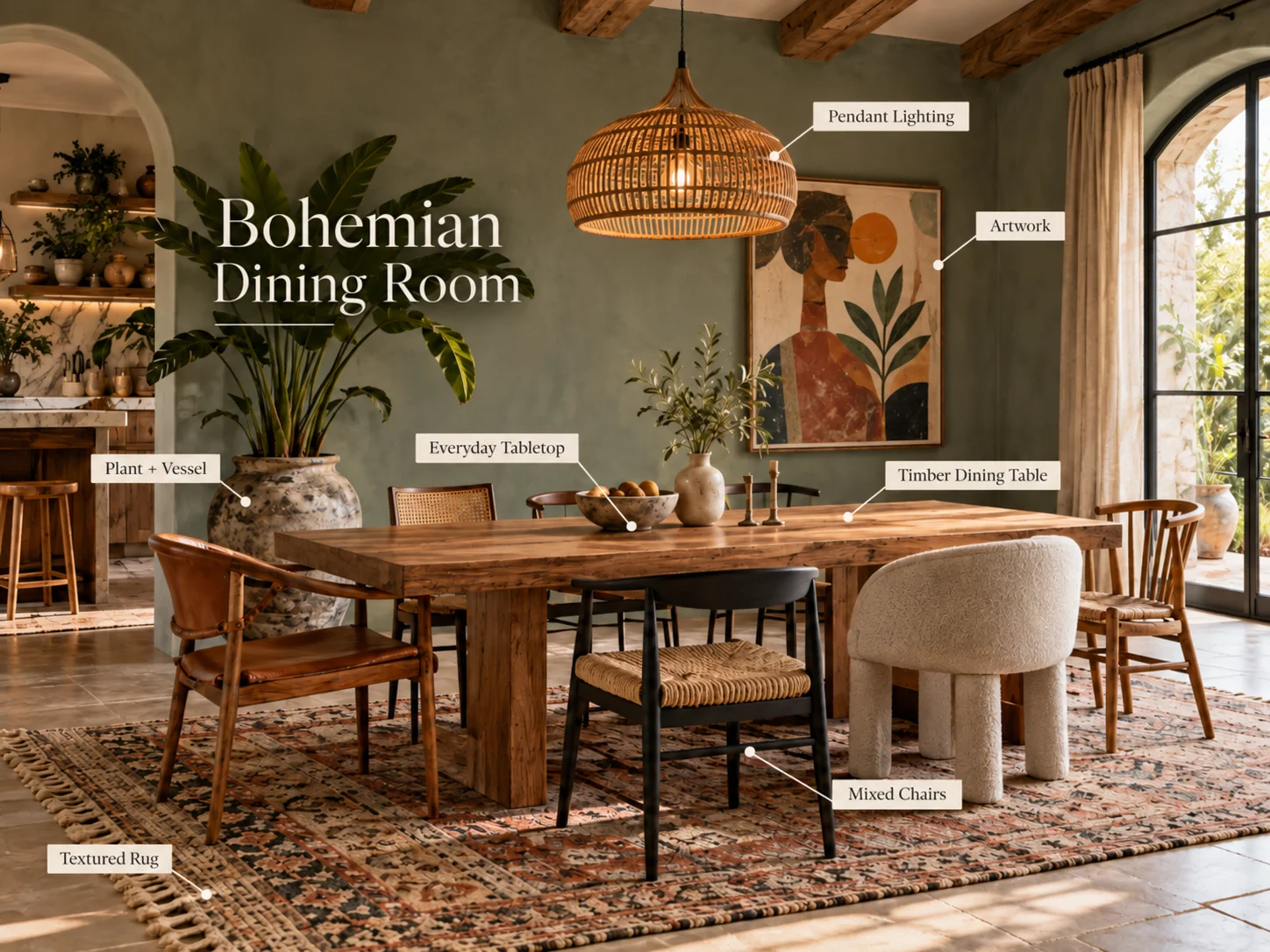
Add a pendant light, artwork, a large vessel or plant and a textured rug where practical.
The table itself does not need to remain permanently styled with numerous decorative objects. Everyday usability should come first.
Bohemian Home Office
In a work area, use bohemian elements more selectively so the space remains functional.
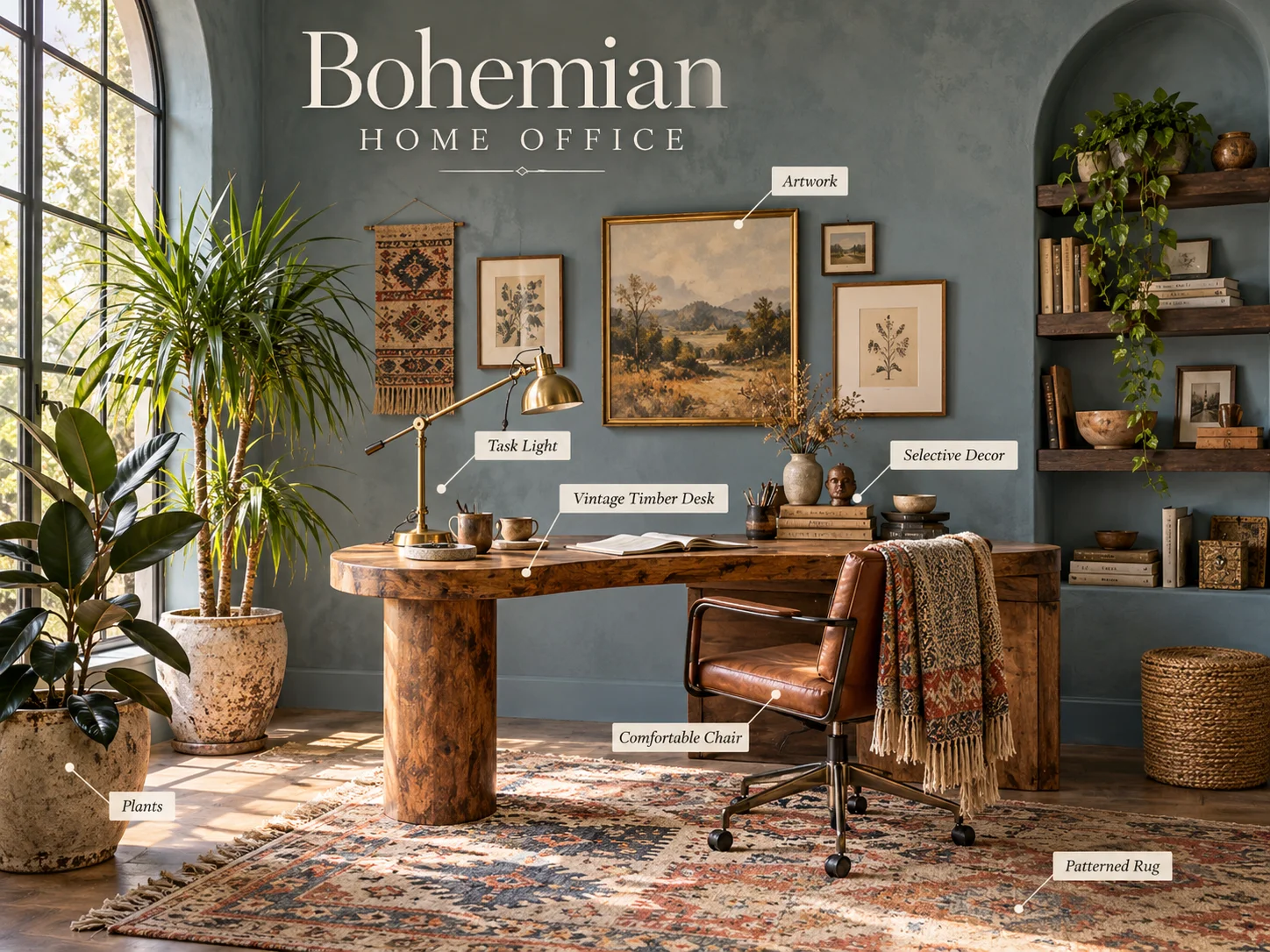
A vintage timber desk, patterned rug, comfortable chair, task light and a small collection of artwork can establish the style without creating visual distraction.
Small Bohemian Spaces
Small rooms benefit from the same principles but usually need tighter editing.
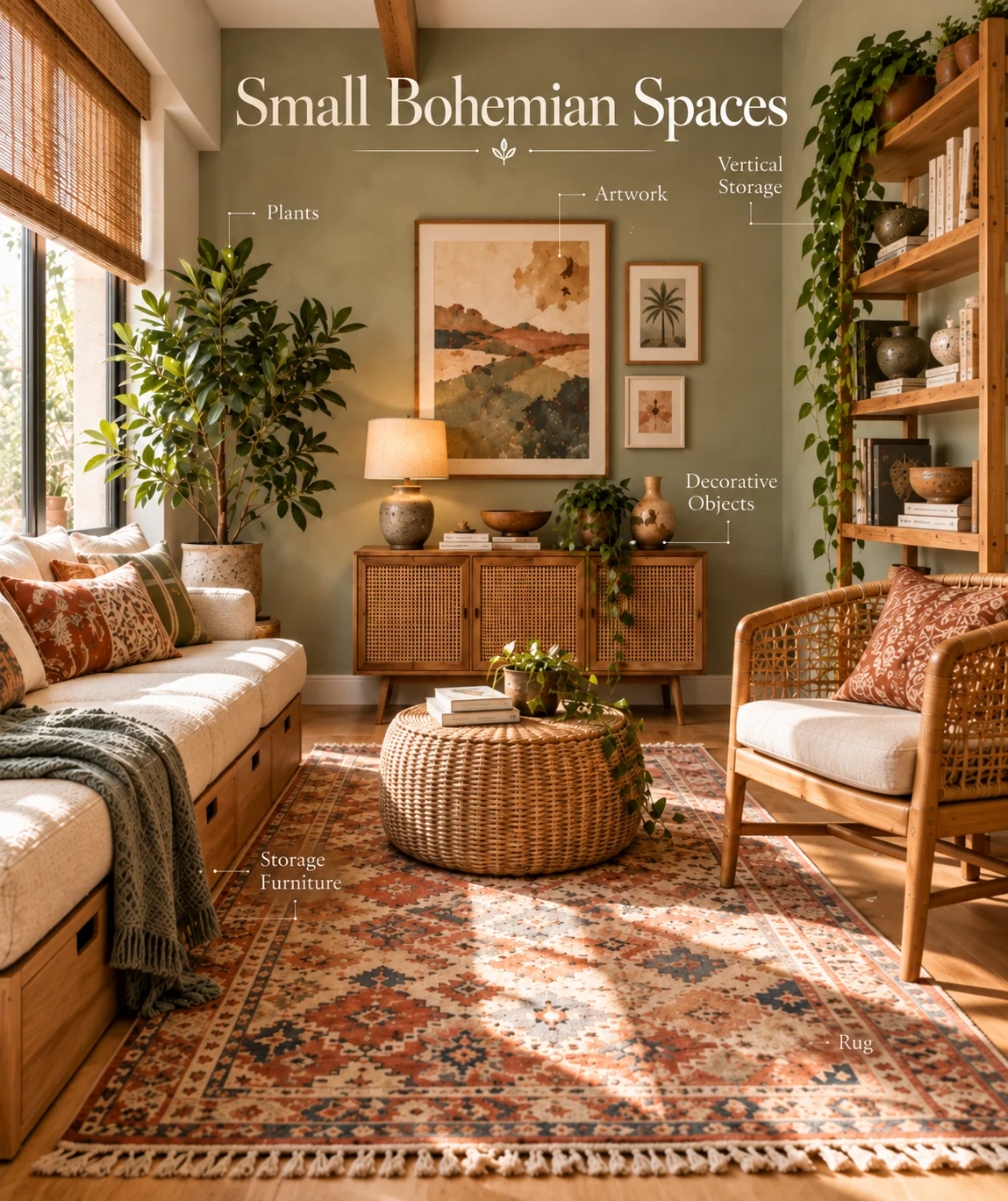
Choose one strong rug, artwork or wall hanging instead of many competing focal points. Use vertical storage, baskets and furniture with useful storage capacity so everyday clutter does not become part of the decorative scheme.
Modern Bohemian Interior Design
Modern bohemian interior design combines the warmth and individuality of traditional boho decorating with cleaner lines, greater negative space and more contemporary furniture.
Instead of filling the room with pattern, modern boho interiors may use:
- one large patterned rug;
- simple contemporary seating;
- natural timber;
- sculptural lighting;
- linen or cotton upholstery;
- a single large macramé or fiber-art piece;
- a few substantial plants; and
- carefully chosen vintage or handmade objects.
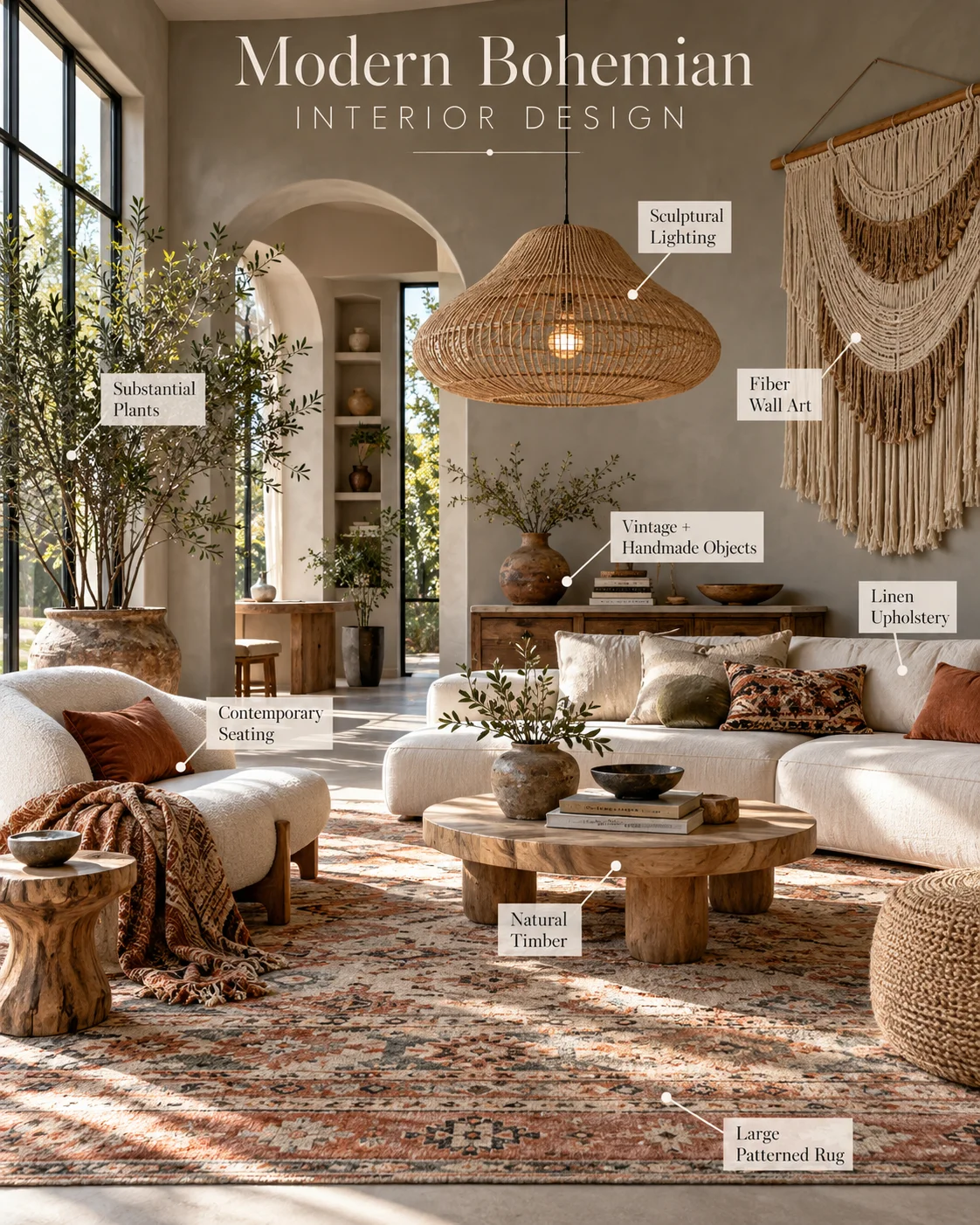
The result is typically less visually dense but still tactile and personal.
This approach can overlap with contemporary interior design, although bohemian rooms generally contain more visible texture, vintage influence and decorative layering.
Modern boho is particularly useful if you appreciate bohemian warmth but dislike heavily decorated rooms.
Bohemian Style Variations
Bohemian design is flexible enough to support several distinct interpretations.
Classic Bohemian
Classic boho interiors use abundant textiles, vintage furniture, saturated colors, patterned rugs, artwork, fiber decor, plants and objects collected over time.
This is generally the most layered interpretation of the style.
Modern Bohemian
Modern boho combines clean contemporary furniture with natural materials, restrained layering and selected vintage or handmade accents.
It usually leaves more visible negative space than classic bohemian design.
Neutral Bohemian
Neutral boho replaces strong color with warm white, cream, tan, brown and natural timber.
Texture becomes the main source of variation through woven fibers, linen, wool, rattan, ceramics and macramé.

Earthy Bohemian
Earthy bohemian interiors emphasize terracotta, olive, ochre, warm timber, stone and natural fibers.
The palette often takes inspiration from landscape rather than bright decorative colors.
Vintage Bohemian
This variation relies more heavily on secondhand and antique furniture, aged rugs, vintage artwork, older lighting and objects with visible patina.
Contemporary pieces can keep the room from feeling like a historical recreation.
Minimal Boho
Minimal boho combines a restrained number of possessions with the natural textures and informal warmth of bohemian interiors.
It can be a useful middle ground for people attracted to both boho and minimalist interior design.
The difference is that minimal boho generally accepts more visible texture, decorative variation and handmade imperfection than conventional minimalism.
Bohemian vs Other Interior Design Styles
Bohemian design overlaps with several popular styles, but the underlying approach is different.
Bohemian vs Eclectic
Bohemian interiors are inherently eclectic because they mix periods, materials and influences. Eclectic design, however, is a broader category.
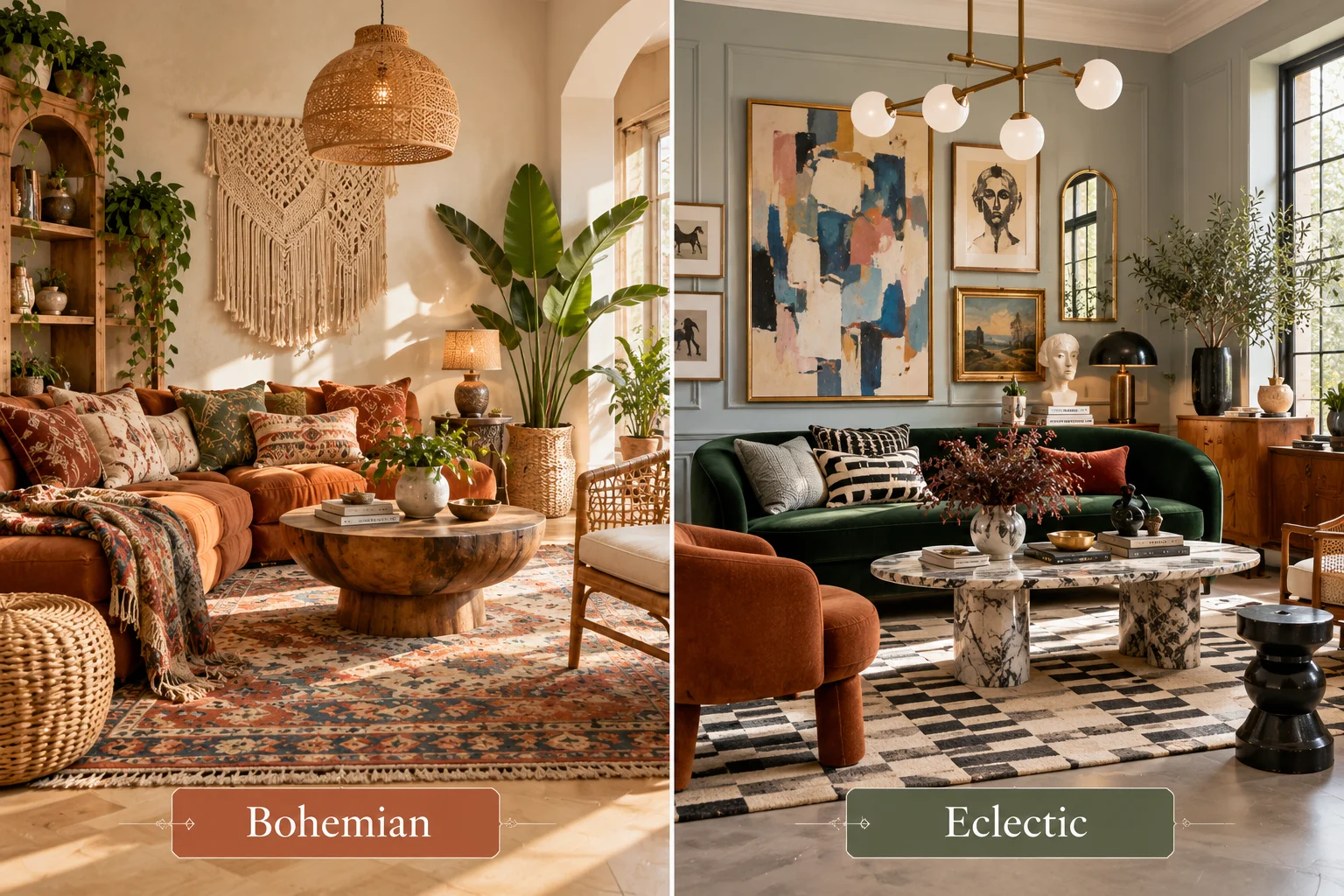
An eclectic room might combine Art Deco furniture, contemporary sculpture and traditional architecture without including any of the natural materials, relaxed textiles or informal qualities commonly associated with bohemian style.
Bohemian is therefore better understood as one possible form of eclectic decorating rather than a synonym for eclectic design.
Bohemian vs Minimalist
Minimalism typically emphasizes reduction, restrained decoration and substantial negative space. Bohemian design allows greater visual layering, pattern and visible collections.

Both can nevertheless value natural materials and intentional purchasing. Minimal boho interiors bring some of these ideas together.
Bohemian vs Scandinavian
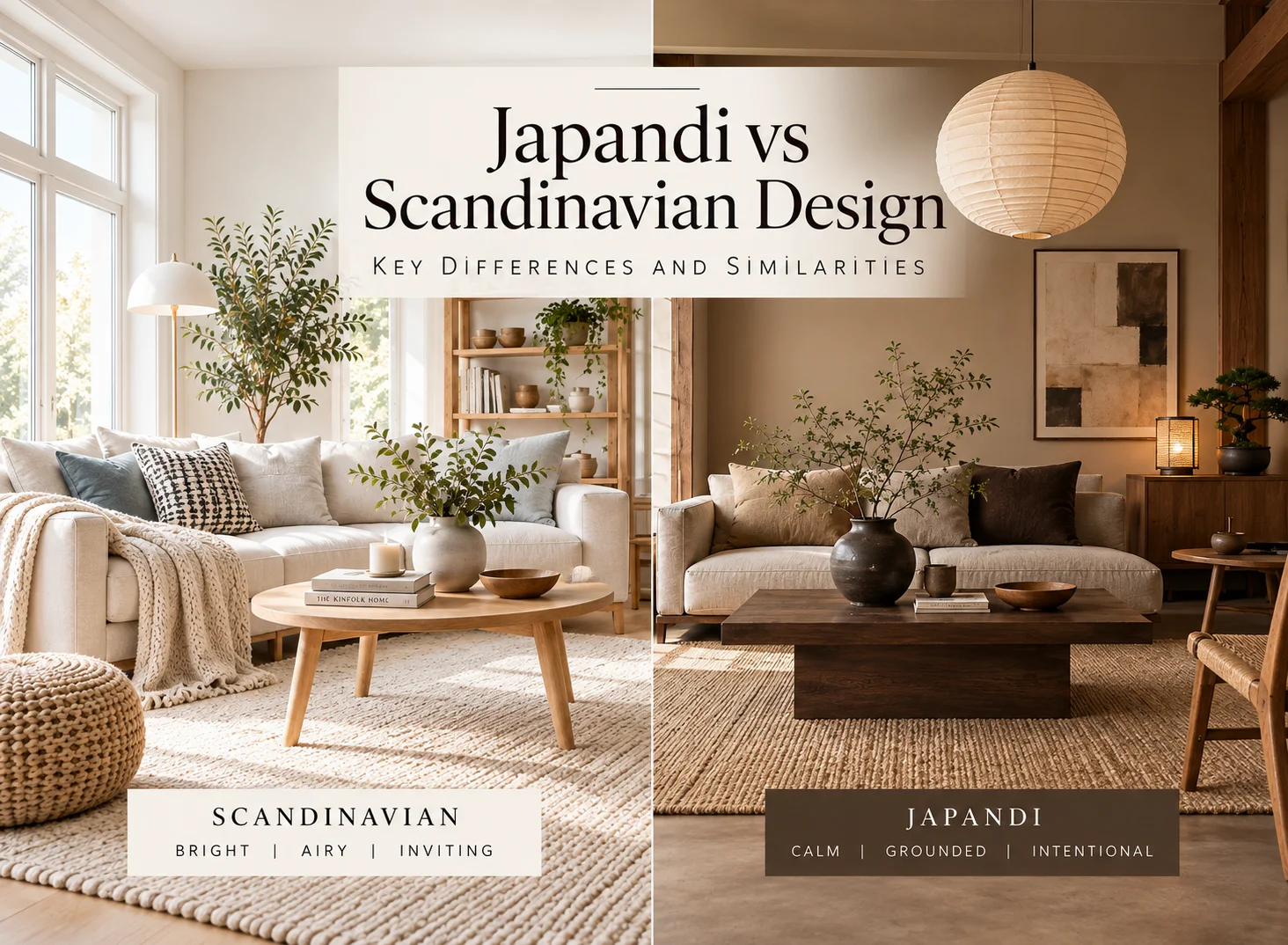
Both styles frequently use natural timber, comfortable textiles and practical furniture.

Scandinavian interiors generally use more visual restraint, lighter palettes and simpler compositions, while bohemian interiors allow more pattern, collected decoration and varied decorative influences.
Bohemian vs Japandi
Japandi interior design emphasizes restraint, craftsmanship, natural materials and carefully controlled decoration.
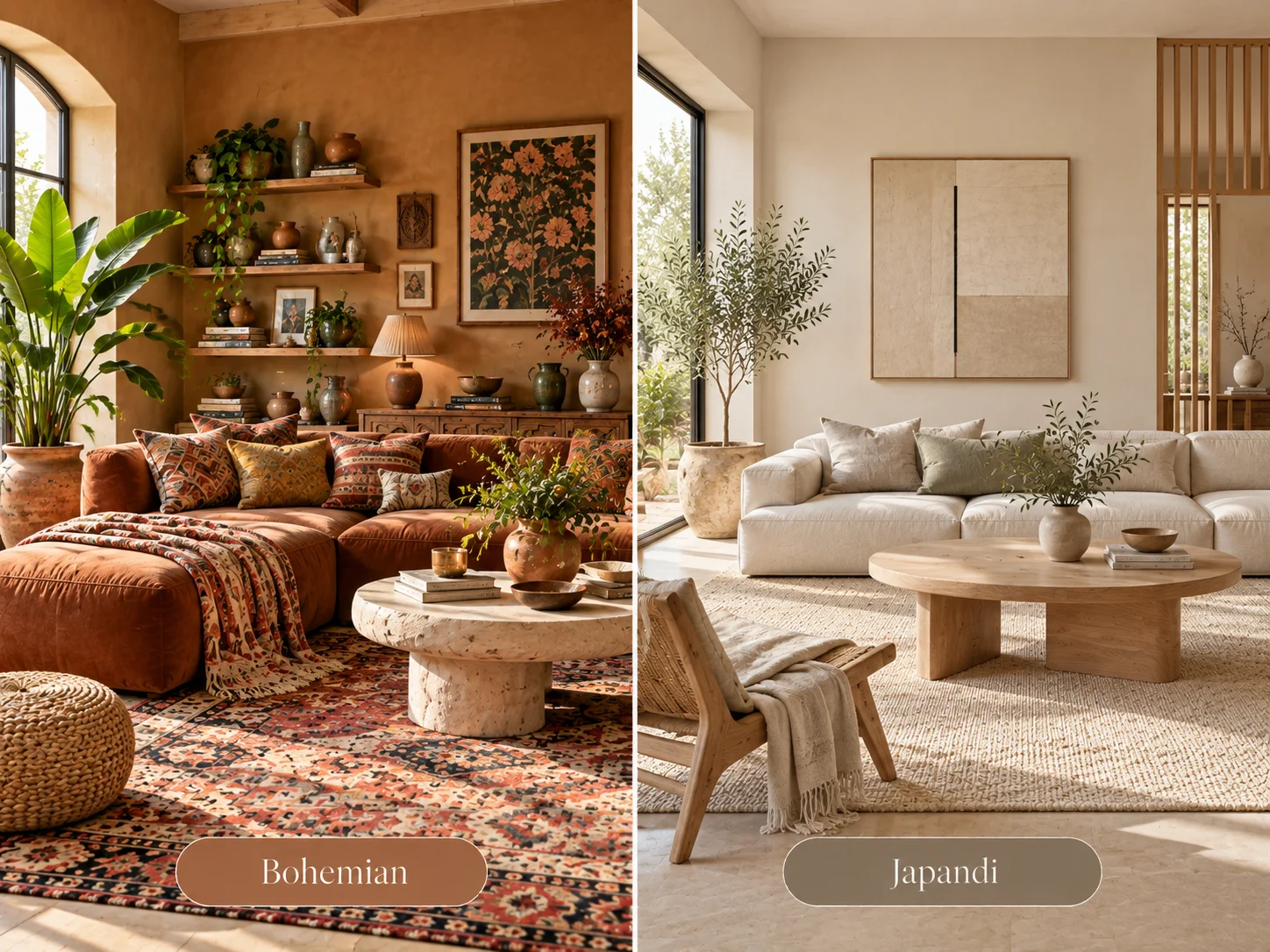
Bohemian style can share the appreciation for craftsmanship and organic materials but normally uses more objects, color, textiles and visual layering.
Bohemian vs Mid-Century Modern
Mid-century modern design is associated with a specific historical design movement and recognizable furniture forms.

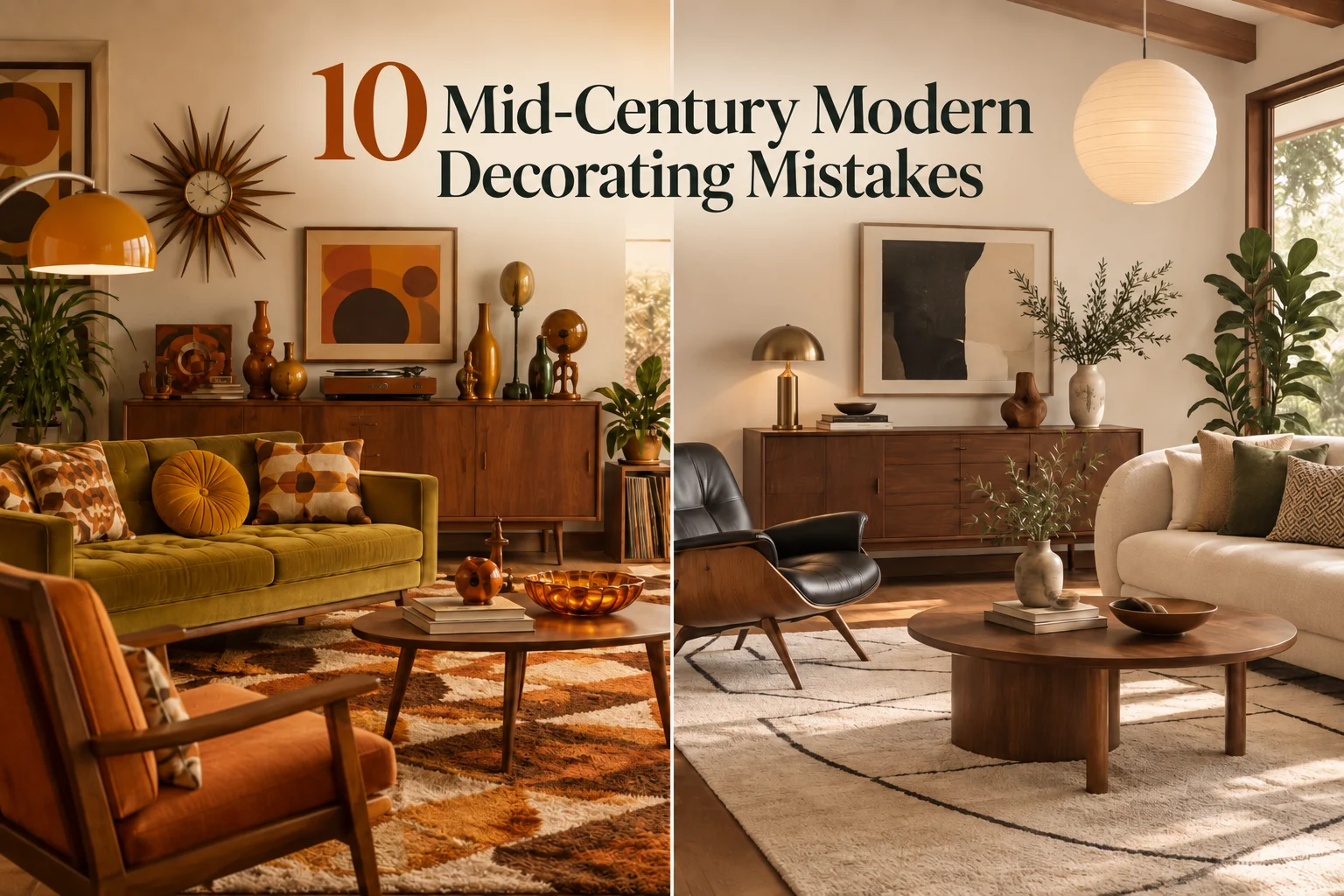
Bohemian design is less tied to one period. However, mid-century chairs, credenzas, tables and lighting frequently appear in boho homes because their timber finishes and relatively simple silhouettes combine well with patterned textiles, handmade objects and woven decor.
Common Bohemian Decorating Mistakes
Because bohemian interiors encourage layering, it is easy to confuse visual richness with simply adding more.
Adding Too Many Small Accessories
Numerous small objects can make surfaces difficult to read and harder to maintain.
The fix: Group related objects together and leave some surrounding space. Use fewer, larger pieces where possible.
Using Pattern Everywhere
When every textile and surface carries a strong pattern, the room can lose hierarchy.
The fix: Combine patterned pieces with plain upholstery, quieter walls or simple curtains.
Overusing Recognizable Boho Motifs
Macramé, rattan, tasseled cushions, fringed throws, woven baskets, pampas grass and hanging plants are all associated with boho interiors. Using all of them repeatedly in the same room can make the design feel themed rather than personal.
The fix: Select only the elements that genuinely improve the room. One substantial macramé wall hanging or woven light fixture can be more effective than repeating the same motif throughout the space.
Buying an Entire Boho Look at Once
Matching furniture and decorative packages can undermine the collected character that makes the style appealing.
The fix: Build the room gradually and mix new furniture with vintage, handmade or personal pieces.
Ignoring Storage
Everyday clutter and intentional decorative layering are not the same thing.
The fix: Use cabinets, baskets, drawers and concealed storage so practical items have somewhere to go.
Using Too Many Decorative Plants
Plants should enhance the room rather than become obligatory boho props.
The fix: Choose a smaller number of healthy plants suited to the available light.
Sacrificing Comfort for Appearance
Floor cushions, small stools and sculptural seating can look appealing but may not provide sufficient everyday comfort.
The fix: Begin with genuinely comfortable foundational furniture and use informal seating as a supplement.
Copying Cultural Objects Without Context
Bohemian interiors often draw inspiration from global craft traditions, but reducing culturally specific designs to generic decorative motifs can strip them of meaning.
The fix: Learn about the origin of handmade objects, buy from responsible sources where possible and treat cultural craftsmanship as more than a passing visual trend.
How to Create a Bohemian Interior
You do not need to redesign an entire home at once. A bohemian room can develop gradually as materials, textiles, art and furniture are layered over time.
- Define how the room needs to function. Decide what activities happen there before choosing decorative elements.
- Choose a flexible base palette. Warm neutrals, earthy colors or selected saturated tones can all work.
- Start with comfortable foundational furniture. Select a sofa, bed, dining table or other major piece according to scale and everyday use.
- Add natural materials. Introduce timber, rattan, linen, wool, jute, ceramic or stone.
- Use one substantial textile layer. A large rug or curtains can transform the atmosphere more effectively than several small accessories.
- Introduce pattern gradually. Repeat a few colors so different patterns feel connected.
- Mix furniture rather than matching everything. Combine complementary pieces from different periods or sources.
- Add artwork and wall texture. Use paintings, photography, mirrors, macramé or woven art to develop personality.
- Layer the lighting. Combine ceiling, floor, table and task lighting where appropriate.
- Include plants selectively. Choose varieties suited to the room rather than filling every corner.
- Create practical storage. Hide everyday visual clutter while leaving meaningful objects visible.
- Edit the room. Remove anything that competes unnecessarily with stronger pieces.
The final step is important. Bohemian decorating is associated with abundance, but editing allows that abundance to remain legible.
How to Make Bohemian Style Look Sophisticated
To create a more refined bohemian interior, focus on scale, material quality and visual hierarchy rather than increasing the amount of decor.

Start with a limited palette. Introduce variation primarily through natural materials and textiles. Choose fewer pieces of artwork at a larger scale and allow furniture to have enough surrounding space.
A substantial rug, well-proportioned sofa, sculptural light, one handcrafted wall hanging and one vintage cabinet can create more impact than numerous small decorative purchases.
It can also help to include a few contemporary elements. Clean-lined seating, simple architectural lighting or restrained window treatments provide contrast against handmade, aged and patterned surfaces.
The goal is not to make bohemian design formal. It is to make the layering appear considered.
How to Make Bohemian Style Feel Current
Bohemian design can feel dated when every familiar boho motif appears in the same room.
Instead of relying on macramé, rattan, patterned cushions, pampas grass, hanging plants and fringed textiles simultaneously, choose only the elements that genuinely suit the space.

Current bohemian interiors often feel more architectural and selective.
You might combine:
- a contemporary sofa with a vintage rug;
- a sculptural table with handmade ceramics;
- simple curtains with an antique cabinet;
- oversized contemporary artwork with aged timber furniture;
- a single handcrafted macramé wall hanging against a simple wall; or
- a restrained room with one unusually patterned textile.
This gives the interior enough contrast to prevent it from looking like a reproduction of one particular decorating era.
Shop the Look: Building a Bohemian Room
If you are furnishing a bohemian interior from scratch, prioritize pieces that establish the room before buying small accessories.
A useful shopping order is:
- Large rug: choose a size that properly anchors the main furniture rather than a small decorative rug floating in the center of the room.
- Comfortable seating: look for linen, cotton, leather, velvet or other tactile upholstery.
- Timber furniture: introduce warmth through a coffee table, sideboard, console or dining table.
- Accent chair: vintage timber, cane, leather or an upholstered statement chair can add individuality.
- Lighting: combine a pendant or ceiling fixture with a table or floor lamp.
- Textiles: add cushions and throws in a controlled mixture of solids and patterns.
- Wall decor: consider oversized artwork, a mirror, macramé or a handcrafted woven wall piece.
- Ceramics and objects: add smaller decorative pieces only after the major elements are established.
- Plants: select greenery according to light conditions and available floor space.
Buying in this order reduces the risk of accumulating decorative objects before the room has a functional foundation.
Can Bohemian Interior Design Work in a Modern Home?
Yes. Bohemian design does not require ornate architecture, an older property or a large amount of decorative detail.

In a modern home, use clean architectural lines as a calm background and introduce bohemian character through natural timber, textured rugs, vintage furniture, artwork, macramé, plants and handmade objects.
Contemporary architecture can actually make these elements more noticeable because there is less visual competition from the building itself.
If your home already has a strong modern aesthetic, introduce bohemian elements incrementally rather than replacing the entire design language.
Can Bohemian Interior Design Be Minimal?
Yes. Minimal boho keeps the tactile, natural and personal qualities of bohemian design while reducing the number of objects, patterns and colors.
A minimal boho living room might contain a neutral sofa, timber coffee table, textured rug, one large plant, linen curtains, sculptural lighting and a single handmade wall hanging.
The room would still feel warmer and more layered than a highly reduced minimalist interior, but it would avoid the abundant decoration often associated with classic boho style.
This makes minimal boho particularly suitable for people who want an expressive home without extensive visual clutter.
Is Bohemian Interior Design Timeless or Trendy?
Individual boho products and motifs move in and out of fashion, but the broader principles behind the style are more enduring.
Natural materials, handmade objects, vintage furniture, personal collections, comfortable textiles and art have been used in homes far longer than the contemporary boho trend.
Macramé, for example, can feel timeless when treated as handcrafted fiber art, but a room filled with repetitive trend-led versions may become visually dated more quickly.
A room becomes more vulnerable to looking dated when it relies heavily on whatever items are currently marketed as “boho decor.”
Building the interior around genuine materials and objects you actually value gives the style greater longevity.
Frequently Asked Questions About Bohemian Interior Design
What defines bohemian interior design?
Bohemian interior design is defined by a relaxed mixture of natural materials, textiles, pattern, vintage and handmade furniture, plants, artwork, handcrafted wall decor and meaningful objects. It prioritizes individuality and layering rather than strict matching.
What colors are used in bohemian interior design?
Bohemian interiors can use earthy colors such as terracotta, olive, ochre and brown; saturated shades such as indigo, burgundy and plum; or softer combinations of warm white, tan and natural timber. There is no required bohemian color palette.
Does bohemian style have to be colorful?
No. Neutral bohemian interiors use texture, natural materials and varied finishes instead of strong color. Cream, tan, timber, rattan, linen, woven fibers and warm brown can create a distinctly boho interior without a brightly colored palette.
What materials are common in bohemian interiors?
Common materials include timber, rattan, cane, linen, cotton, wool, jute, leather, ceramic, terracotta, rope and natural fibers. Mixing smooth, rough, woven and soft surfaces gives the room depth.
Is macramé part of bohemian interior design?
Yes. Macramé wall hangings and other knotted fiber pieces are strongly associated with contemporary bohemian decor because they introduce handmade texture, softness and natural materials. However, macramé is not essential to creating a boho interior and usually works best when used selectively.
Where should you hang macramé in a bohemian room?
Large macramé pieces can work above a sofa, bed, console or sideboard, while smaller wall hangings can form part of a gallery arrangement. Choose a size that relates to the furniture below it rather than allowing a very small piece to float on a large empty wall.
What furniture works with bohemian style?
Bohemian interiors can include vintage timber furniture, rattan chairs, upholstered sofas, carved tables, leather seating and contemporary pieces. Furniture does not need to match as long as the room has enough visual connection through color, material or proportion.
Is bohemian style the same as eclectic style?
No. Bohemian interiors are usually eclectic, but eclectic design is a broader concept that can combine almost any periods and styles. Bohemian design more specifically emphasizes relaxed layering, natural materials, textiles, handmade objects and personal collections.
How do you make bohemian decor look less cluttered?
Use fewer small accessories, leave some walls and surfaces partially empty, establish concealed storage and repeat a limited number of colors throughout the room. Larger rugs, artwork and wall hangings can create impact without requiring numerous decorative objects.
Can bohemian and minimalist styles work together?
Yes. Minimal boho combines natural textures, warm materials and selected personal objects with the visual restraint and negative space associated with minimalism.
How do you create bohemian style on a budget?
Begin with what you already own. Rearrange furniture, use books and personal objects as decoration, search secondhand sources for timber furniture and frames, and add one high-impact element such as a large rug, curtains or handmade wall hanging before purchasing many small accessories.
Are plants necessary for bohemian interior design?
No. Plants are common in contemporary boho interiors, but they are not essential. Natural materials, textiles, artwork, ceramics, macramé and timber can create the same relaxed character when plants are impractical.
Can bohemian design work in a small apartment?
Yes. Use fewer but larger decorative elements, choose furniture with storage, take advantage of vertical wall space and keep the main palette relatively controlled. This preserves bohemian character without overwhelming the room.
What is modern bohemian interior design?
Modern bohemian design combines boho textures, vintage influences and natural materials with contemporary furniture, cleaner lines and more negative space. It usually contains fewer patterns and decorative objects than traditional bohemian interiors.
Final Thoughts
Bohemian interior design works best when it reflects a life rather than a decorating formula.
Natural materials, layered textiles, vintage pieces, artwork, plants, macramé, woven details and handmade objects provide the visual vocabulary, but the individuality of the people using the space is what prevents a boho interior from feeling generic.
You can embrace saturated color and abundant pattern or create a quiet room dominated by timber, linen and warm neutrals. You can mix antique furniture with contemporary lighting, use handcrafted fiber art as a focal point or keep the architecture minimal and introduce character through rugs and artwork.
The most successful approach is to begin with comfort and function, add texture and personality gradually, and edit whenever the room begins to feel visually crowded.
Rather than trying to purchase an instant bohemian aesthetic, allow the interior to evolve. A home filled with useful furniture, meaningful objects and materials that become more beautiful with age will usually feel more authentic than one built entirely around temporary trends.