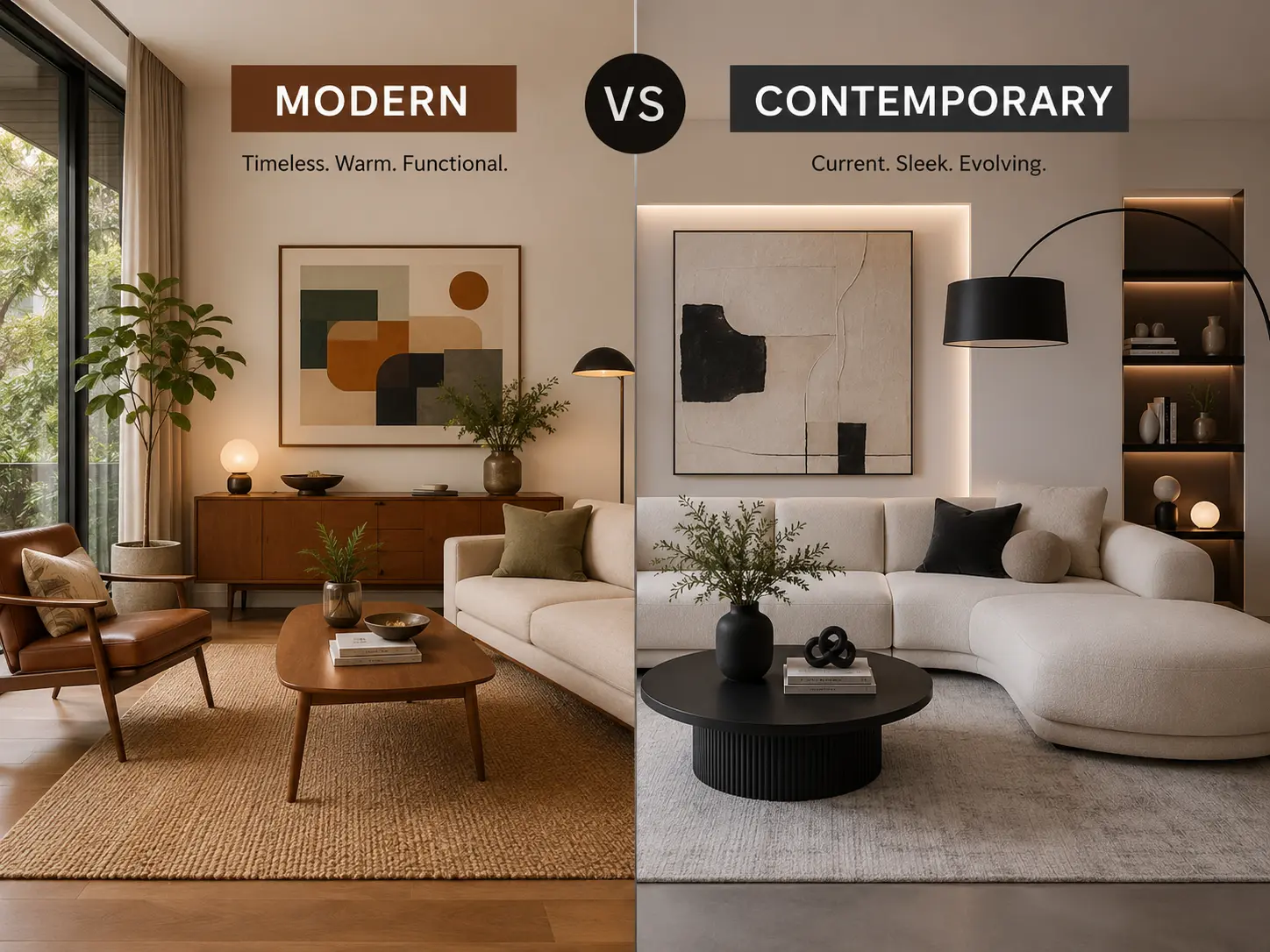
Modern and contemporary living room styles are often confused, but they are not the same. Modern design refers to a specific design movement that emerged during the early twentieth century and emphasizes timeless simplicity, clean lines, and functional living. Contemporary design, on the other hand, reflects what is popular right now. It continuously evolves with current design trends, making it more flexible and trend-driven than modern interiors.
One of the most common misconceptions in interior design is that modern and contemporary are interchangeable terms. Walk into a furniture showroom or browse social media, and you’ll often see both labels used to describe the same living room. While these styles share several similarities, they are built on completely different design philosophies.
Understanding the difference is important because it influences every decorating decision—from the furniture you buy and the colors you choose to how frequently you’ll want to update your living room in the future.
In this comprehensive comparison guide, you’ll discover how these two popular styles differ in their history, color palettes, furniture, layouts, lighting, materials, décor, maintenance, budget, and overall lifestyle appeal so you can confidently choose the one that fits your home.
What Is Modern Living Room Style?
At a Glance
- Origin: Early 20th century
- Inspired By: Bauhaus and Mid-Century Modern movements
- Best Known For: Simplicity, function and timelessness
- Overall Feel: Calm, uncluttered and balanced
Modern living room design originated from one of the most influential architectural and interior design movements in history. It rejects excessive ornamentation in favor of clean geometry, thoughtful layouts and practical living.
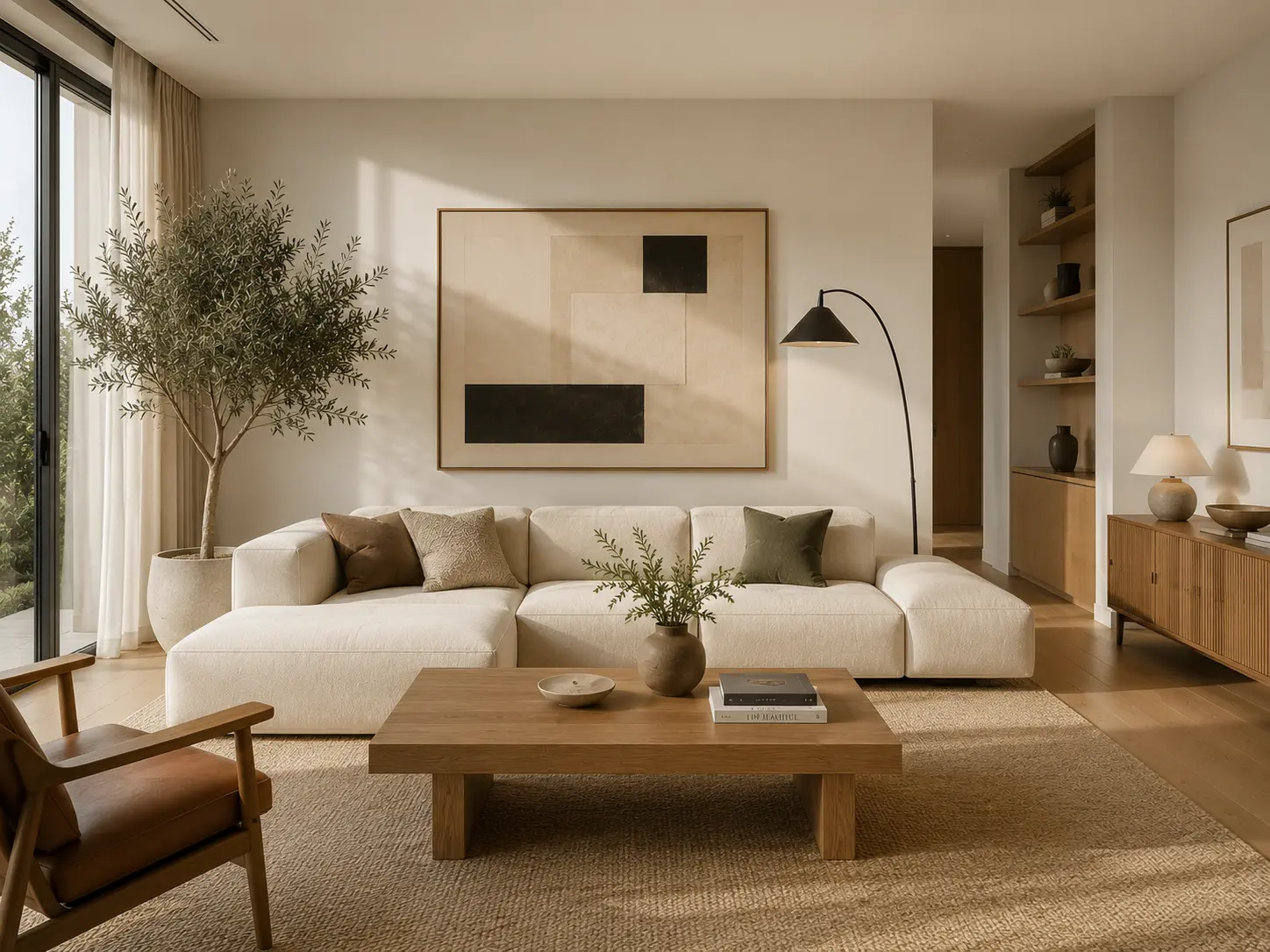
Rather than following yearly decorating trends, modern interiors focus on principles that remain beautiful regardless of changing fashions. Neutral color palettes, natural materials and functional furniture create spaces that feel elegant today and will continue to look stylish for decades.
Typical characteristics of a modern living room include:
- Clean architectural lines
- Neutral color palettes
- Natural wood finishes
- Minimal decorative accessories
- Functional furniture
- Open layouts
- Layered natural textures
Good to Know
Although many modern interiors feature iconic Mid-Century Modern furniture, the two styles are not identical. Mid-Century Modern is a subset within the broader modern design movement.
What Is Contemporary Living Room Style?
At a Glance
- Origin: Present Day
- Inspired By: Current Interior Trends
- Best Known For: Flexibility and innovation
- Overall Feel: Sophisticated and constantly evolving
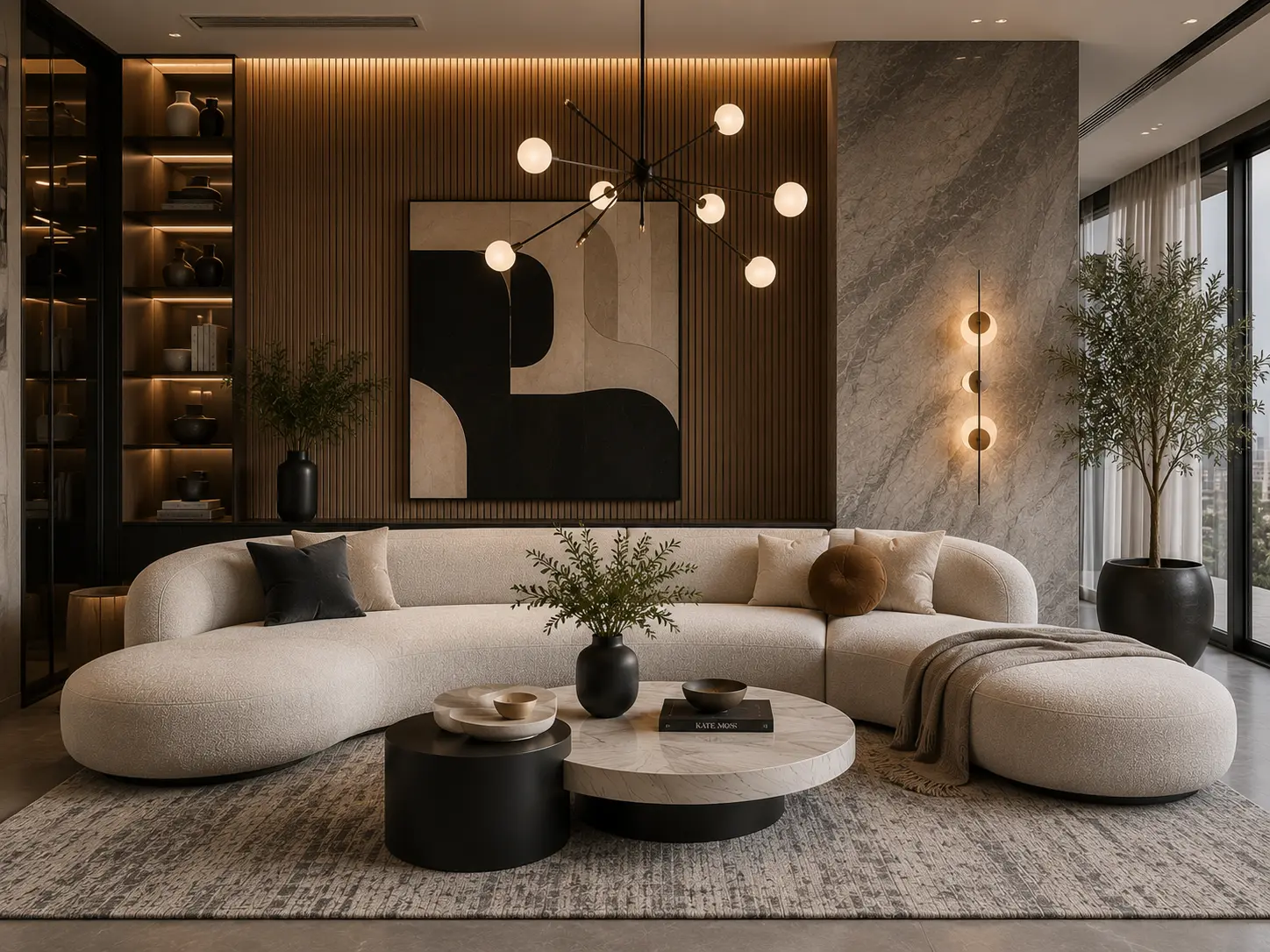
Unlike modern design, contemporary living room style does not belong to a specific historical period. Instead, it represents whatever is considered current in interior design at a particular moment.
Because of this, contemporary interiors frequently borrow ideas from modern, Scandinavian, Japandi, industrial and even luxury interior styles. As trends evolve, contemporary living rooms evolve alongside them.
Today’s contemporary living rooms commonly feature:
- Curved furniture
- Organic shapes
- Statement lighting
- Mixed materials
- Large-scale artwork
- Textural contrast
- Trend-forward color palettes
Designer Tip
Contemporary design offers more creative freedom than modern design because there are fewer fixed rules. However, maintaining a consistent color palette and balanced proportions is essential to avoid creating a room that feels visually chaotic.
History & Evolution
| Modern | Contemporary |
|---|---|
| Developed between the 1920s and 1960s. | Changes continuously with current design trends. |
| Inspired by Bauhaus and Mid-Century Modern. | Draws inspiration from multiple design styles. |
| Timeless design philosophy. | Trend-responsive philosophy. |
| Rarely changes. | Changes every few years. |
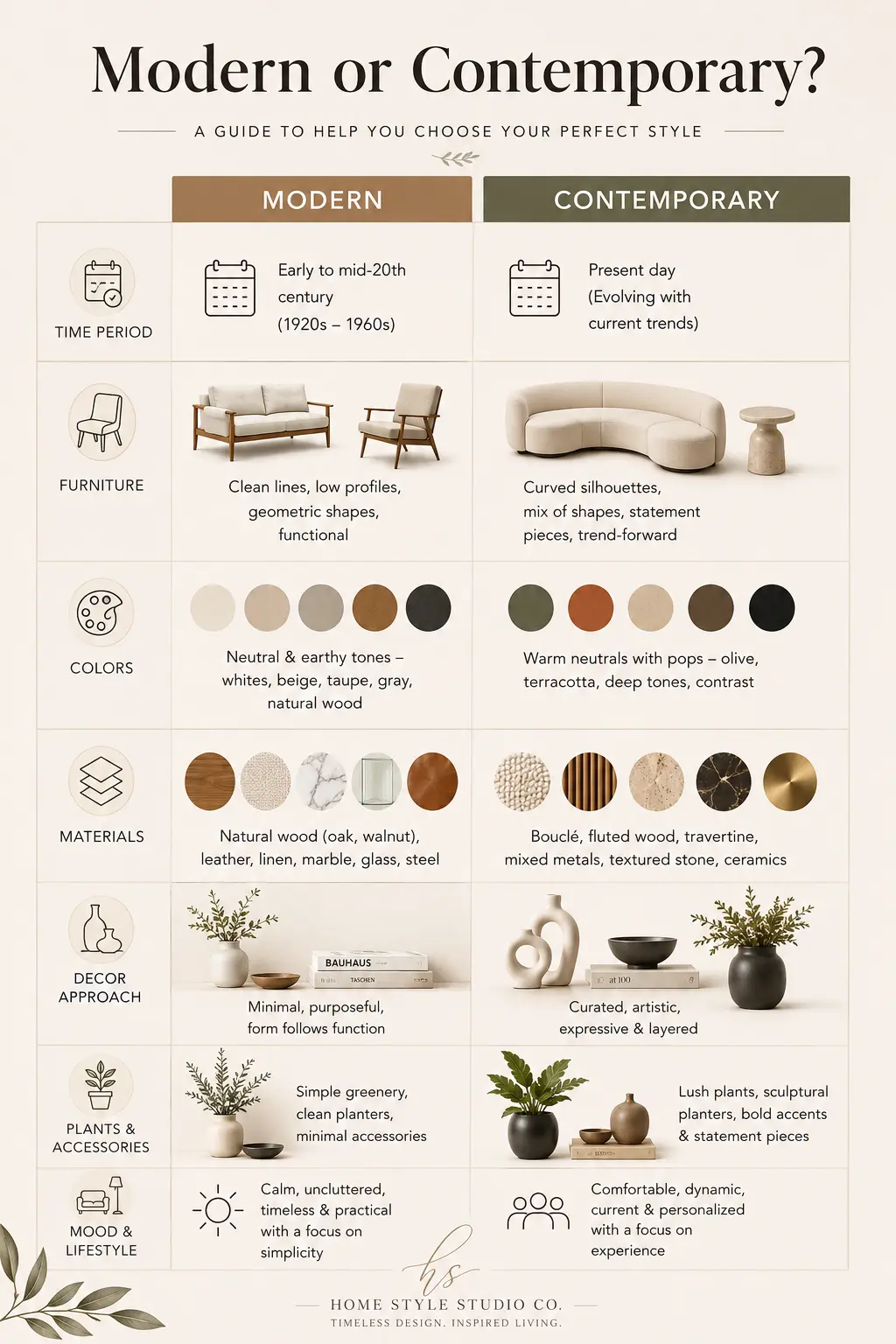
The biggest difference between these two styles lies in their origins. Modern design belongs to a specific period in design history, whereas contemporary design has no fixed timeline. Contemporary interiors simply reflect what designers and homeowners currently consider fashionable.
This explains why a contemporary living room in 2015 looks very different from one designed in 2026. By contrast, a modern living room designed twenty years ago still feels relevant today because its guiding principles remain unchanged.
Why It Matters
If you enjoy redecorating every few years, contemporary style offers greater flexibility. If you prefer investing once in timeless furniture that won’t quickly feel outdated, modern design is usually the smarter long-term choice.
Modern vs Contemporary: Key Differences
Although these styles share clean aesthetics and uncluttered spaces, their individual design elements differ in meaningful ways. The following comparisons will help you recognize each style more easily.
1. Color Palette
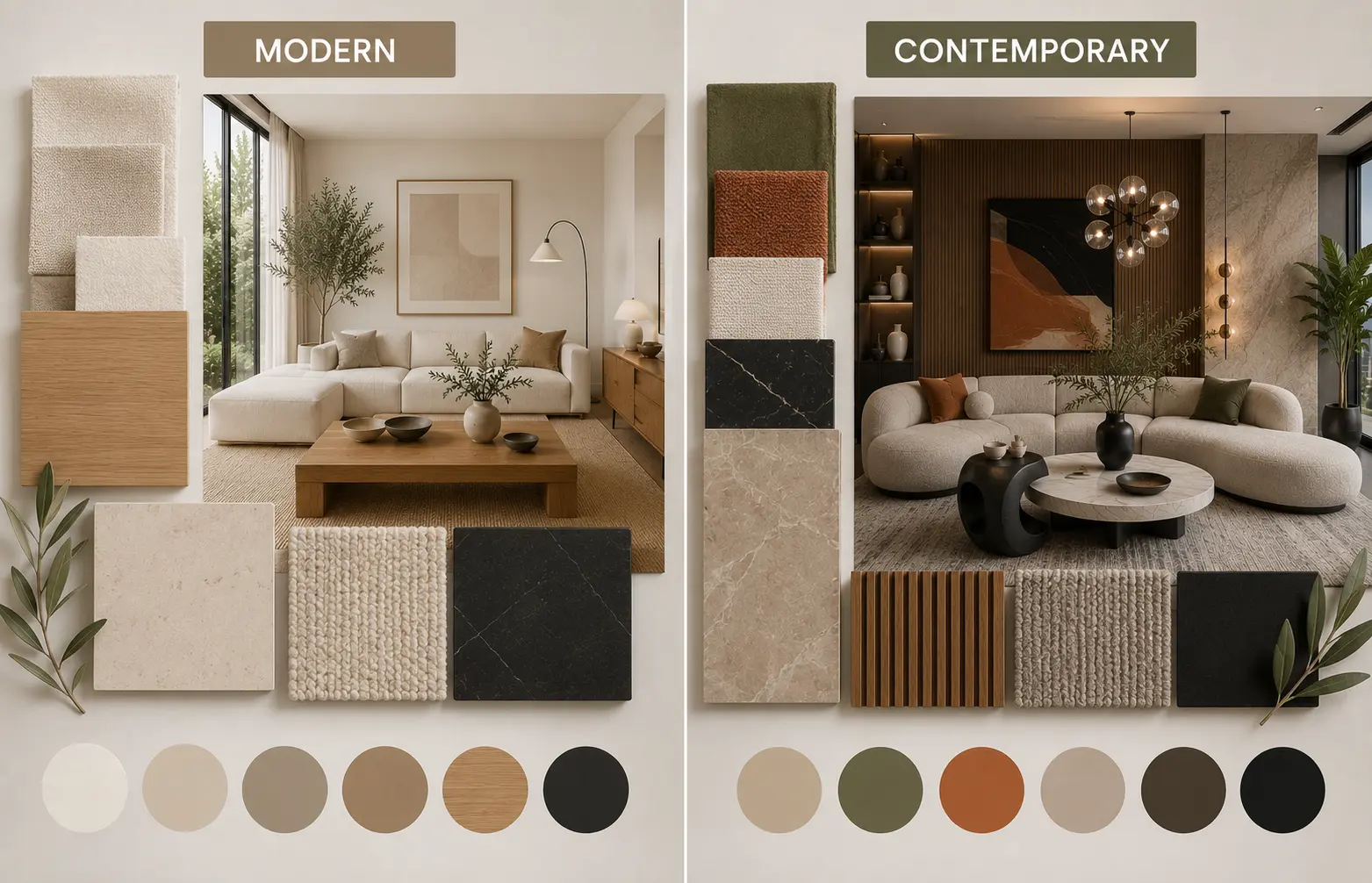
| Modern | Contemporary |
|---|---|
| – Warm white – Greige – Taupe – Earthy beige – Natural wood tones | – Trending neutrals – Bold accent colors – Deep greens – Terracotta Black contrasts |
Modern interiors maintain consistent neutral palettes that age gracefully, while contemporary spaces frequently incorporate fashionable accent colors that reflect current trends.
Designer Tip
If you’re unsure which direction to take, begin with a modern neutral foundation. You can always introduce contemporary colors through cushions, artwork and decorative accessories without replacing expensive furniture.
2. Furniture Style
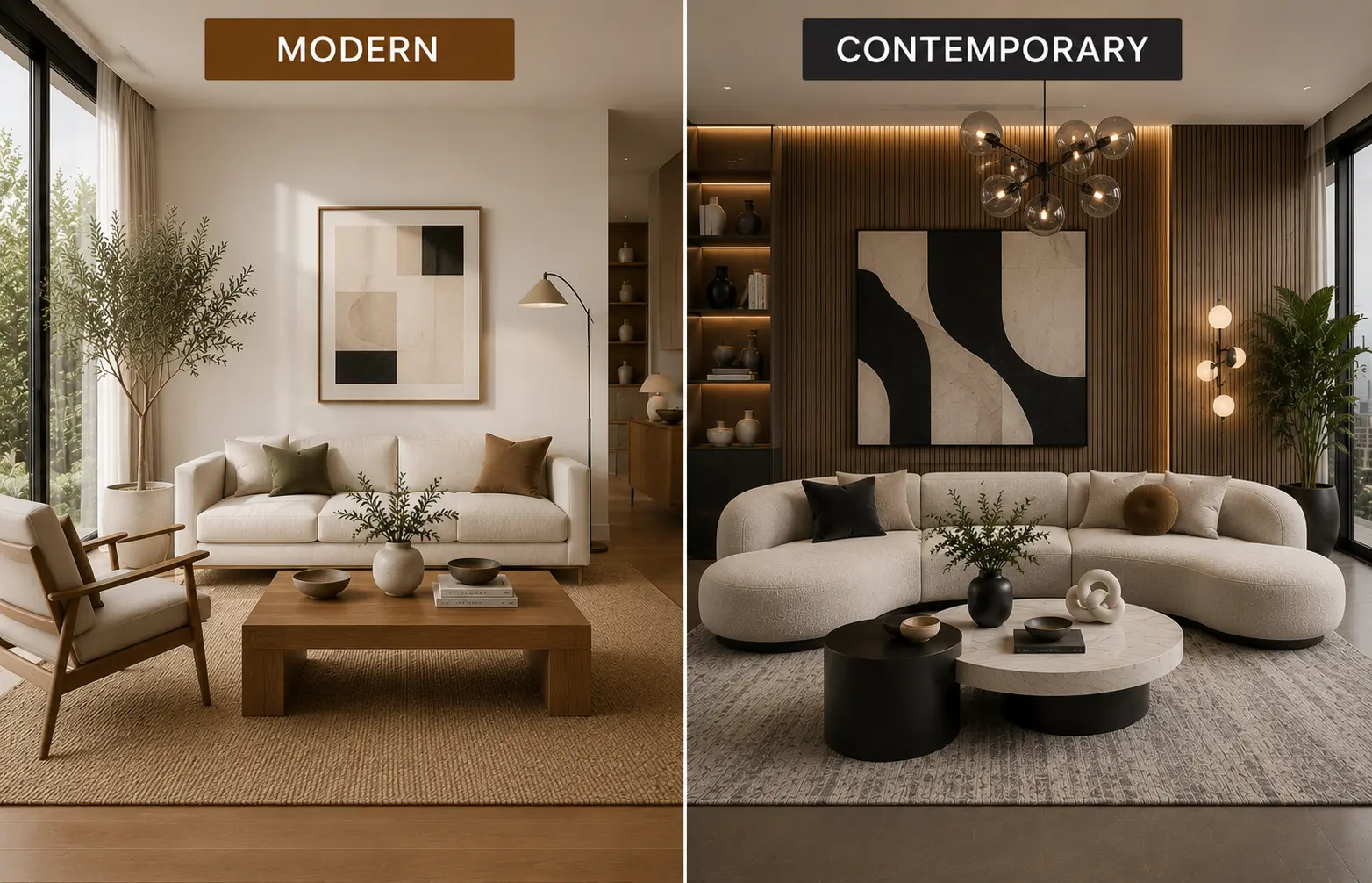
| Modern | Contemporary |
|---|---|
| – Clean straight lines – Timeless silhouettes – Tapered legs – Simple geometry – Minimal detailing | – Curved forms – Sculptural furniture – Mixed materials – Statement pieces – Latest furniture trends |
Modern furniture emphasizes practicality and longevity, whereas contemporary furniture often showcases the newest forms, finishes and manufacturing techniques.
Good to Know
Many furniture brands describe curved sofas as “modern.” In reality, many of today’s rounded silhouettes are better classified as contemporary because they reflect current design trends rather than historical modernism.
3. Materials
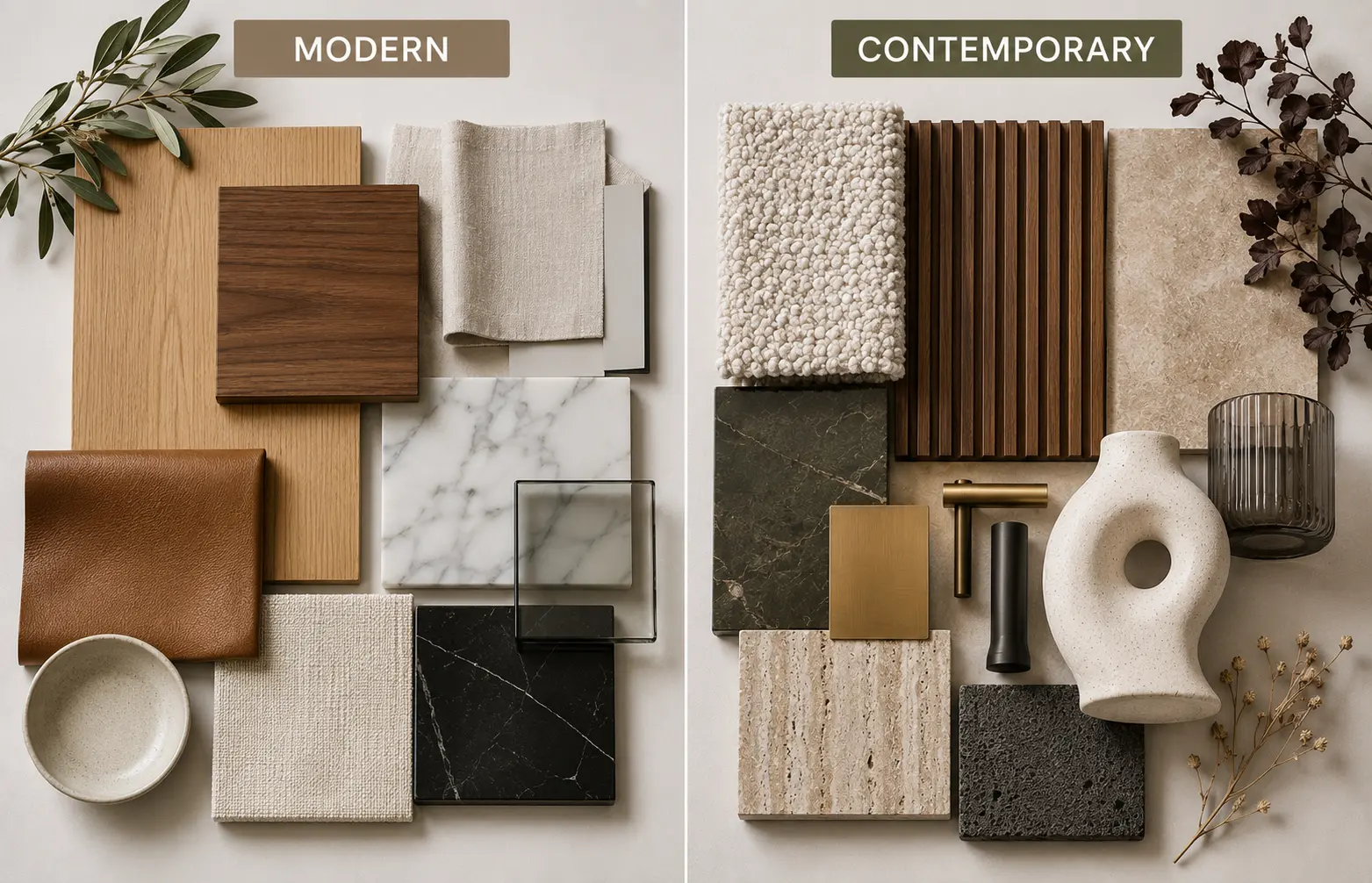
| Modern | Contemporary |
|---|---|
| – Oak – Walnut – Leather – Linen – Glass Steel | – Bouclé – Travertine – Fluted wood – Mixed metals – Textured stone – Recycled materials |
Modern interiors typically use authentic natural materials consistently throughout the room. Contemporary interiors are more experimental and often combine traditional materials with newer finishes and sustainable products.
4. Room Layout
| Modern | Contemporary |
|---|---|
| – Highly functional – Balanced furniture placement – Open circulation – Purpose-driven layout | – Flexible arrangements – Conversation-focused seating – Statement focal points – Lifestyle-oriented planning |
Both styles value openness, but contemporary interiors often adapt more quickly to changing lifestyles such as hybrid working, multifunctional furniture and entertainment-focused living.
Why It Matters
Your furniture layout affects how your living room feels every day. Modern layouts prioritize efficiency, while contemporary layouts often prioritize flexibility and visual impact.
5. Lighting
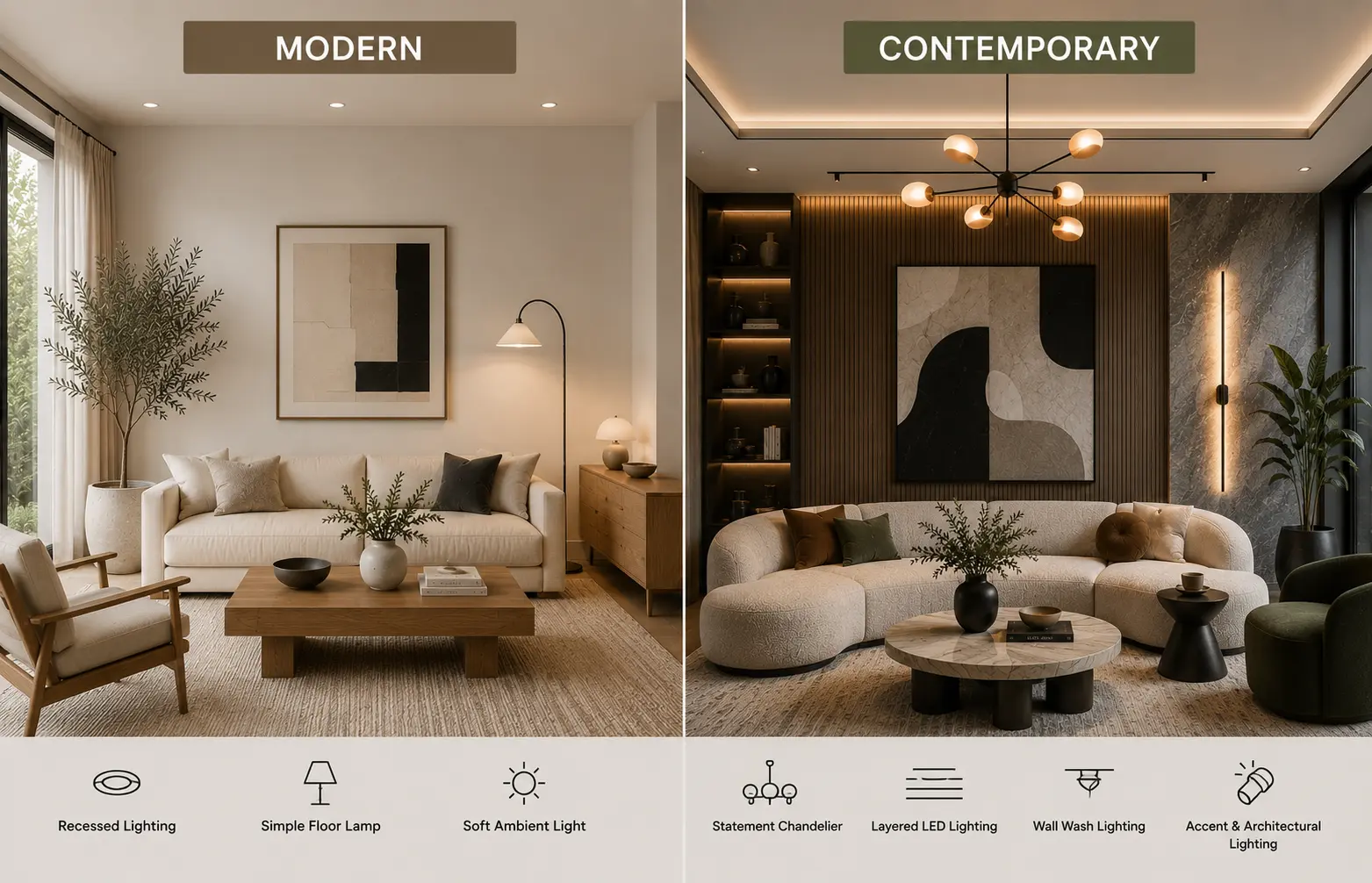
| Modern | Contemporary |
|---|---|
| – Simple floor lamps – Minimal pendants – Natural daylight – Functional lighting | – Sculptural chandeliers – LED lighting – Layered lighting -Architectural fixtures |
Lighting in modern interiors is understated and practical, while contemporary interiors frequently use lighting itself as an artistic statement.
6. Décor & Accessories
| Modern | Contemporary |
|---|---|
| – Minimal accessories – Few statement pieces – Classic artwork – Natural greenery | – Bold sculptures – Trend-driven décor – Oversized artwork – Layered accessories |
Modern interiors intentionally use fewer decorative items, allowing architecture and furniture to take center stage. Contemporary interiors often embrace artistic expression through changing accessories and bold focal points.
Designer Tip
Regardless of which style you choose, resist filling every shelf and tabletop. Empty space is just as important as decorative objects in creating a sophisticated living room.
Modern vs Contemporary: Pros & Cons
Neither style is objectively better than the other. The right choice depends on your lifestyle, decorating preferences, budget and how often you enjoy refreshing your home.
| Modern Living Room | Contemporary Living Room |
|---|---|
| Advantages Timeless appearance that rarely goes out of style. Excellent long-term investment. Easy to maintain visual consistency. Works well in almost every home. Furniture remains relevant for many years. | Advantages Reflects current interior trends. Allows greater creativity. Easy to personalize. Flexible enough to evolve over time. Works beautifully with new materials and technology. |
| Challenges Can feel too minimal if texture is ignored. Requires discipline to avoid clutter. Less opportunity to experiment with trends. | Challenges May feel outdated as trends change. Frequent updates can become expensive. Trend mixing can create visual clutter. |
Why It Matters
If you’re furnishing a home you plan to live in for many years, modern interiors generally provide better long-term value. Contemporary interiors are ideal for homeowners who enjoy updating their space as trends evolve.
Who Should Choose a Modern Living Room?
Modern Style Is Perfect If You…
- Prefer timeless interiors over seasonal trends.
- Want furniture that lasts for many years.
- Love clean, uncluttered spaces.
- Enjoy neutral color palettes.
- Value functionality as much as aesthetics.
- Are decorating your forever home.
Modern May Not Be Ideal If You…
- Enjoy redecorating frequently.
- Prefer bold colors throughout the home.
- Love highly decorative interiors.
- Like experimenting with new trends every season.
Designer Tip
Modern interiors don’t have to feel plain. Layering natural wood, textured fabrics, warm lighting and carefully selected artwork creates warmth without sacrificing simplicity.
Who Should Choose a Contemporary Living Room?
Contemporary Style Is Perfect If You…
- Enjoy following current design trends.
- Like changing your décor every few years.
- Appreciate bold furniture and statement lighting.
- Want greater freedom to mix design influences.
- Love experimenting with color and texture.
Contemporary May Not Be Ideal If You…
- Prefer classic timeless interiors.
- Want furniture that rarely needs updating.
- Dislike changing trends.
- Have a limited decorating budget.
Which Style Is Right for You?
| If You Want… | Choose… |
|---|---|
| Timeless elegance | Modern |
| Current design trends | Contemporary |
| Long-term furniture investment | Modern |
| Creative decorating freedom | Contemporary |
| Simple neutral interiors | Modern |
| Bold statement pieces | Contemporary |
| Minimal maintenance | Modern |
| Frequently refreshed décor | Contemporary |
Designer Verdict
If you’re decorating your primary residence and want a living room that still looks beautiful ten years from now, modern design is usually the better investment. Its timeless furniture, neutral palette and functional layout make it one of the safest long-term design choices.
However, if you enjoy experimenting with trends, introducing new materials and updating your home regularly, contemporary design offers greater creative freedom.
Modern vs Contemporary: Comparison Snapshot
| Feature | Modern | Contemporary |
|---|---|---|
| Time Period | Early–Mid 20th Century | Current Day |
| Design Philosophy | Timeless | Trend-Driven |
| Changes Over Time | Very Little | Constantly Evolves |
| Overall Feel | Warm, Calm & Functional | Fresh, Bold & Dynamic |
| Best For | Long-Term Homes | People Who Love Trends |
Designer Tip
If you only remember one thing from this article, remember this: Modern is a fixed design style. Contemporary is whatever is current today. This simple distinction will help you make better decorating decisions and avoid common design confusion.
Common Mistakes When Choosing Between These Styles
1. Thinking Modern Means “New”
Modern refers to a historical design movement—not simply something that looks new.
2. Copying Social Media Trends Without a Plan
Many viral living rooms combine elements from multiple styles. Without understanding the differences, the finished room can feel inconsistent.
3. Buying Everything From One Furniture Collection
Whether you’re decorating a modern or contemporary living room, mixing complementary pieces creates a more refined and professionally designed space.
4. Prioritizing Trends Over Lifestyle
Your living room should support the way you live—not just the latest trend on social media.
5. Ignoring Lighting
Lighting has a significant impact on how both modern and contemporary interiors feel. Layering natural, ambient and task lighting creates a more comfortable and visually balanced room.
Good to Know
The most successful interiors rarely follow one style perfectly. Professional designers often use modern principles as a timeless foundation while introducing carefully selected contemporary accents to keep the room feeling fresh.
Shop the Look
Whether you choose a modern or contemporary living room, investing in timeless foundation pieces while accessorizing thoughtfully will help you create a beautiful and functional space.
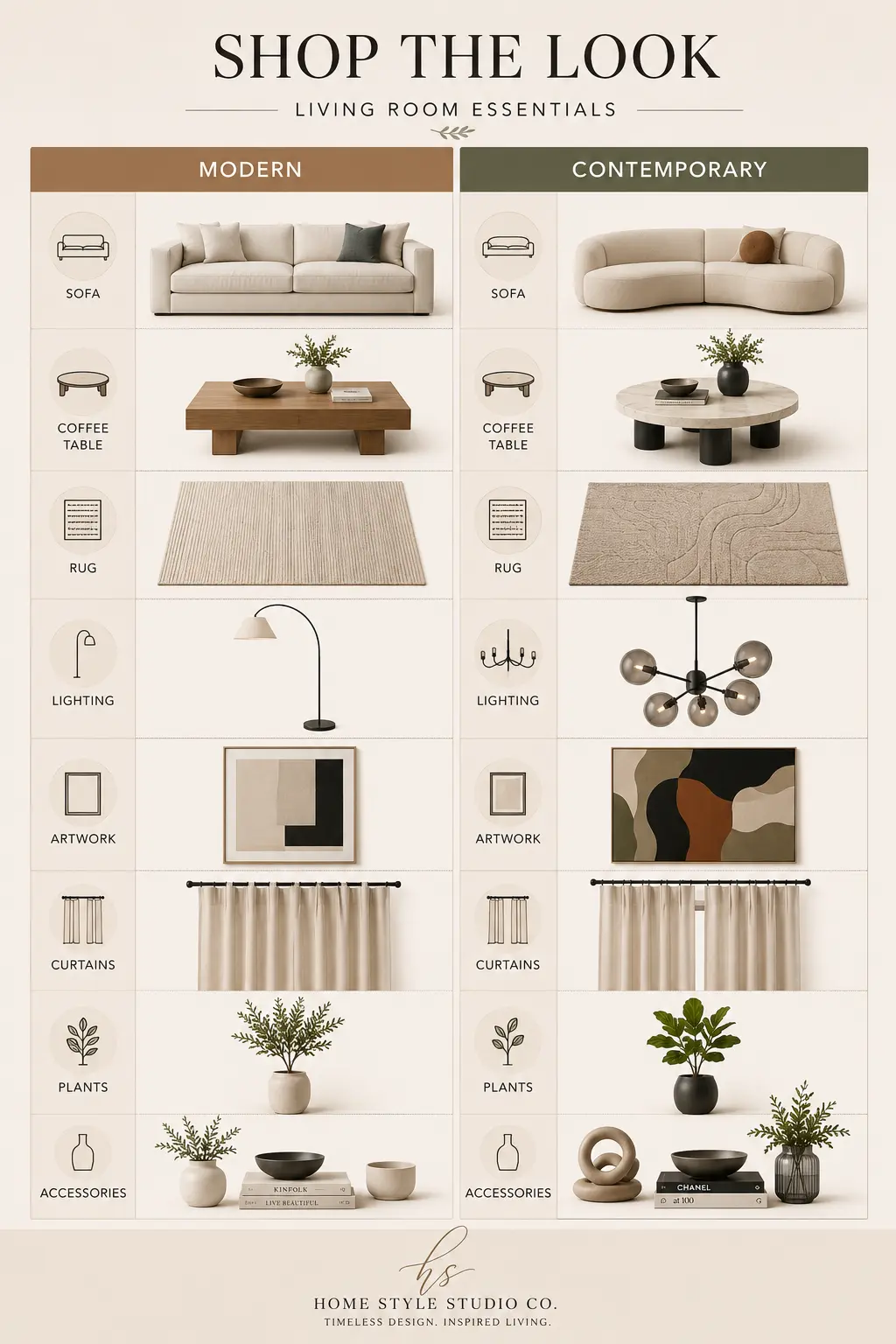
Modern Living Room Shopping List
- Neutral upholstered sofa
- Solid oak or walnut coffee table
- Minimal media console
- Wool area rug
- Linen curtains
- Matte black floor lamp
- Ceramic decorative accessories
- Large abstract artwork
- Indoor plants
- Leather or bouclé accent chair
Contemporary Living Room Shopping List
- Curved sofa
- Sculptural coffee table
- Statement chandelier
- Textured area rug
- Mixed-material side tables
- Oversized artwork
- Fluted wood cabinet
- Decorative lighting
- Trend-forward accessories
- Organic-shaped mirrors
Designer Tip
If your budget is limited, spend the majority of it on your sofa, area rug and lighting. These three elements have the greatest influence on the overall appearance of your living room.
Style Variations You May Also Love
Modern and contemporary living rooms are only two of many beautiful interior design styles. If you’re still exploring your options, these related styles are excellent next reads.
- Organic Modern — Modern simplicity combined with warm earthy textures and natural materials.
- Scandinavian — Bright, functional interiors with cozy textures and light wood finishes.
- Japandi — A calming fusion of Japanese minimalism and Scandinavian comfort.
- Mid-Century Modern — Iconic furniture, tapered legs and timeless retro-inspired design.
- Industrial — Raw materials, exposed architectural elements and urban loft aesthetics.
- Minimalist — Extreme simplicity focused on intentional living and clutter-free spaces.
Save vs Splurge
| Splurge On | Save On |
|---|---|
| High-quality sofa | Decorative cushions |
| Area rug | Coffee table styling |
| Statement lighting | Small decorative accessories |
| Accent chair | Seasonal décor |
| Window treatments | Throw blankets |
Investing in foundational furniture creates a living room that remains stylish for years, while affordable accessories can easily be updated as trends change.
Frequently Asked Questions
Is modern the same as contemporary?
No. Modern is a historical design movement with fixed design principles, while contemporary reflects the latest interior design trends and changes over time
Which style is more timeless?
Modern design is generally more timeless because it follows established design principles rather than current decorating trends
Which style is easier to decorate?
Modern interiors are usually easier to maintain because their neutral palette and simple furniture create a consistent design language. Contemporary interiors require more attention as trends evolve.
Can I combine modern and contemporary design?
Absolutely. Many professionally designed homes use modern furniture as a timeless foundation while incorporating contemporary lighting, artwork and decorative accessories for a fresh, updated appearance.
Which style is better for small living rooms?
Both work well in smaller spaces. Modern interiors maximize openness through simplicity, while contemporary interiors often introduce multifunctional furniture that adapts to changing lifestyles.
Will contemporary design go out of style?
Because contemporary design reflects current trends, certain elements may eventually feel dated. Fortunately, updating accessories, lighting and artwork is usually enough to keep the room feeling current.
Article Summary
| Modern | Contemporary |
|---|---|
| Timeless design movement | Current design trends |
| Function-first philosophy | Trend-first flexibility |
| Natural materials | Mixed materials |
| Long-term investment | Frequently updated look |
| Calm and balanced interiors | Bold and evolving interiors |
Final Thoughts
Modern and contemporary living room styles may appear similar at first glance, but they are built on very different design philosophies. Modern design celebrates timeless principles that have remained relevant for decades, while contemporary design embraces the creativity and flexibility of today’s trends.
Neither style is inherently better. The right choice depends on how you live, how often you like to refresh your home and whether you value long-term consistency or evolving personal expression.
If you’re looking for a living room that will remain elegant for many years, modern design is an outstanding investment. If you enjoy experimenting with new ideas and creating a space that reflects current design movements, contemporary interiors offer endless opportunities for creativity.
Whichever direction you choose, remember that the most successful living rooms are those that balance beauty, comfort and functionality while reflecting your own lifestyle and personality.