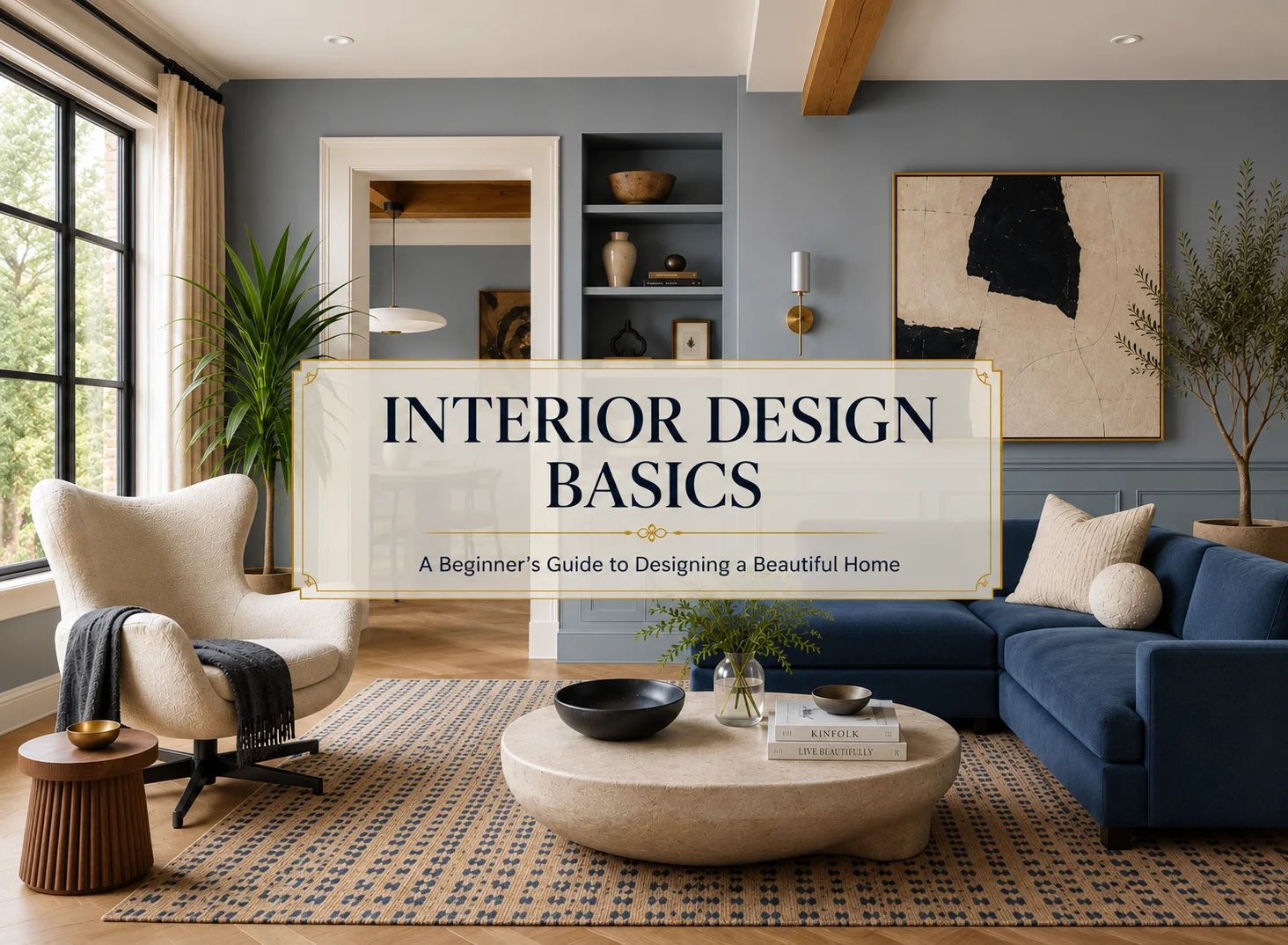
Designing a beautiful home can feel surprisingly complicated when you are starting from scratch. You may know which rooms you like on Pinterest or Instagram, yet translating those images into a home that feels balanced, comfortable and personal is another challenge entirely.
The good news is that successful interiors are rarely created by simply buying more furniture or following every new decorating trend. Most well-designed homes rely on a relatively small set of principles: thoughtful space planning, appropriate scale, a cohesive color palette, layered lighting, complementary materials and careful editing.
Once you understand these interior design basics, decorating becomes far easier. Instead of choosing individual pieces in isolation, you begin to understand how furniture, color, lighting, architecture and accessories work together.
This beginner’s guide explains the fundamentals of interior design and gives you a practical framework you can use whether you are furnishing an entire home, redesigning one room or simply trying to make your existing space feel more polished.
What Are the Basics of Interior Design?
Interior design is the process of shaping an interior so that it works functionally while also creating a particular visual and emotional experience.
Although decorating choices such as cushions, artwork and accessories are part of the process, good interior design begins much earlier with decisions about layout, proportion, circulation, lighting and how the room will actually be used.
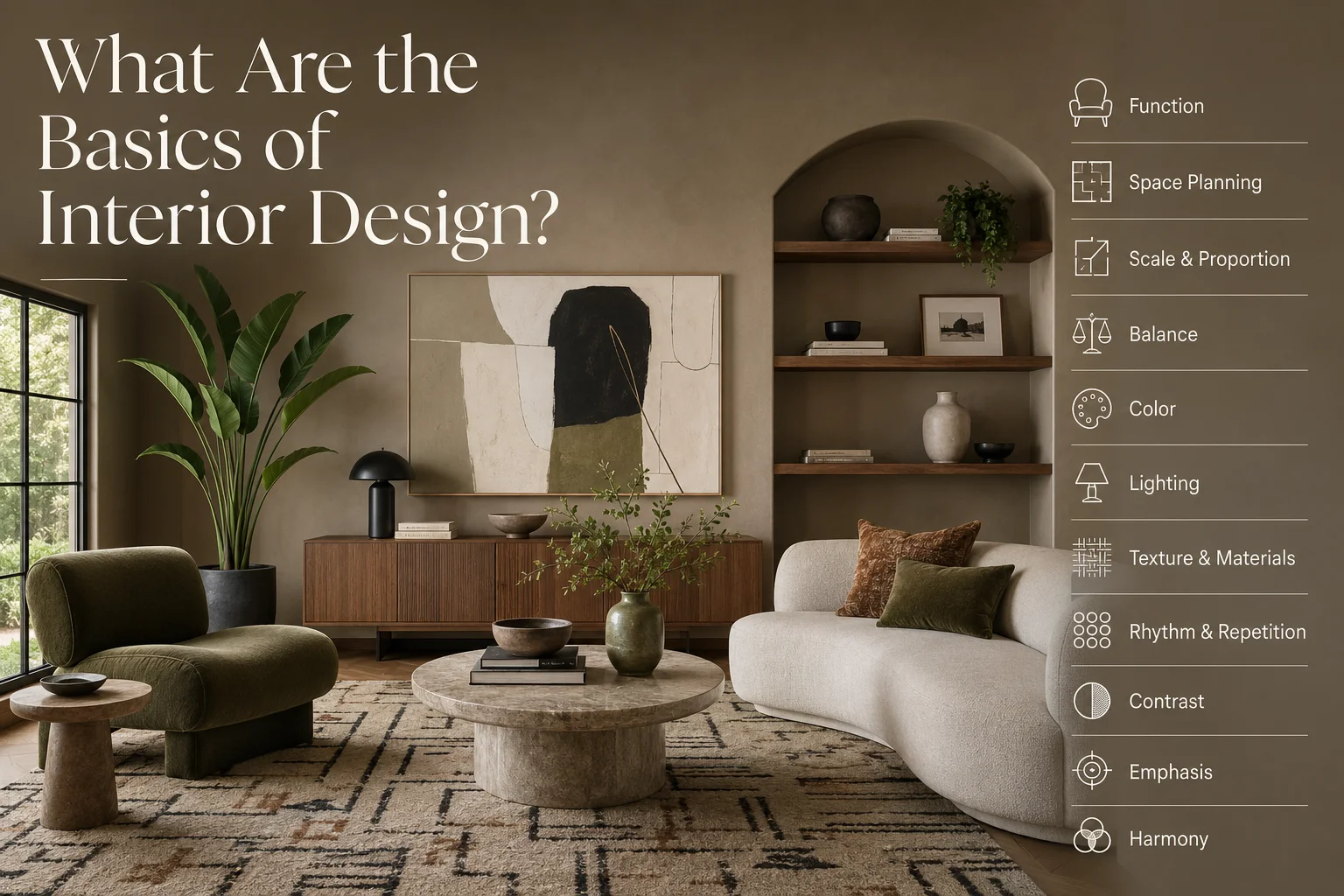
The most important interior design fundamentals include:
- Function: understanding how the room needs to work.
- Space planning: arranging furniture and circulation logically.
- Scale and proportion: choosing pieces that relate well to the room and one another.
- Balance: distributing visual weight throughout the room.
- Color: developing a coordinated palette.
- Lighting: combining natural, ambient, task and accent light.
- Texture and materials: creating depth and tactile interest.
- Rhythm and repetition: repeating selected elements to create continuity.
- Contrast: combining differences in tone, shape, material or scale to create interest.
- Emphasis: creating one or more focal points.
- Harmony: making individual elements feel intentionally connected.
You do not need to apply every principle according to a rigid formula. Think of them instead as tools that help you understand why some rooms feel comfortable and cohesive while others feel awkward, cluttered or unfinished.
Start With How the Room Needs to Function
One of the most common beginner mistakes is starting with a paint color, sofa or decorative style before thinking about how the room needs to function.
A beautiful room that does not support everyday life will eventually become frustrating.
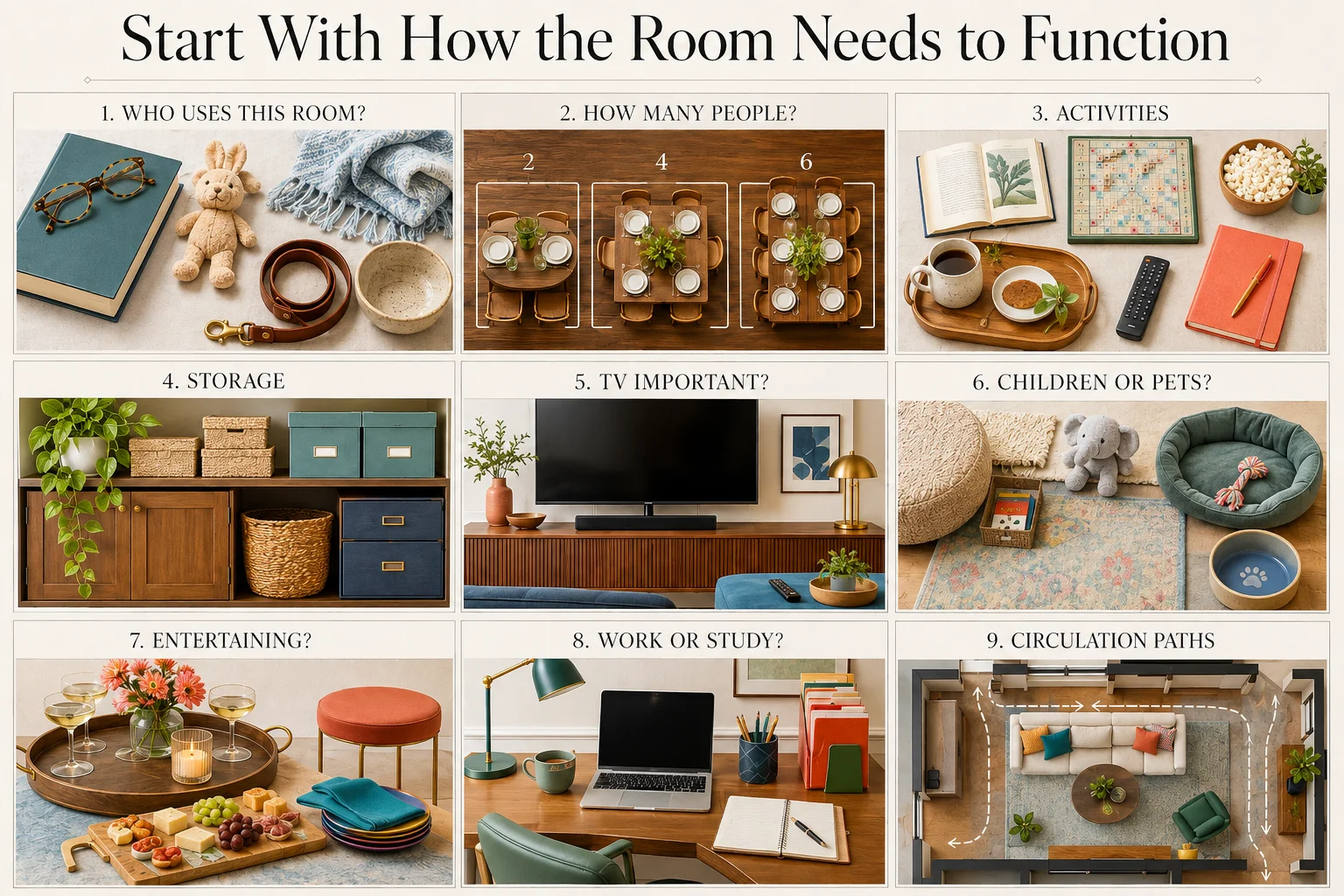
Before choosing furniture, ask:
- Who uses this room?
- How many people normally use it at once?
- What activities take place here?
- Does the room need storage?
- Is a television important?
- Will children or pets use the space?
- Do you entertain frequently?
- Does the room need to support working or studying?
- Which circulation paths must remain clear?
For example, a formal living room used primarily for entertaining can be arranged differently from a family living room where people watch television every evening.
Function should guide the design rather than being treated as an afterthought.Beginner Tip: Write down the three most important functions of a room before buying anything for it. These priorities will make later decisions much easier.
Define Your Design Direction
You do not need to identify with one exact interior design style, but having a general visual direction prevents the room from becoming a collection of unrelated purchases.
Start by collecting approximately 10 to 20 interiors you genuinely like. Look beyond individual products and study what the rooms have in common.
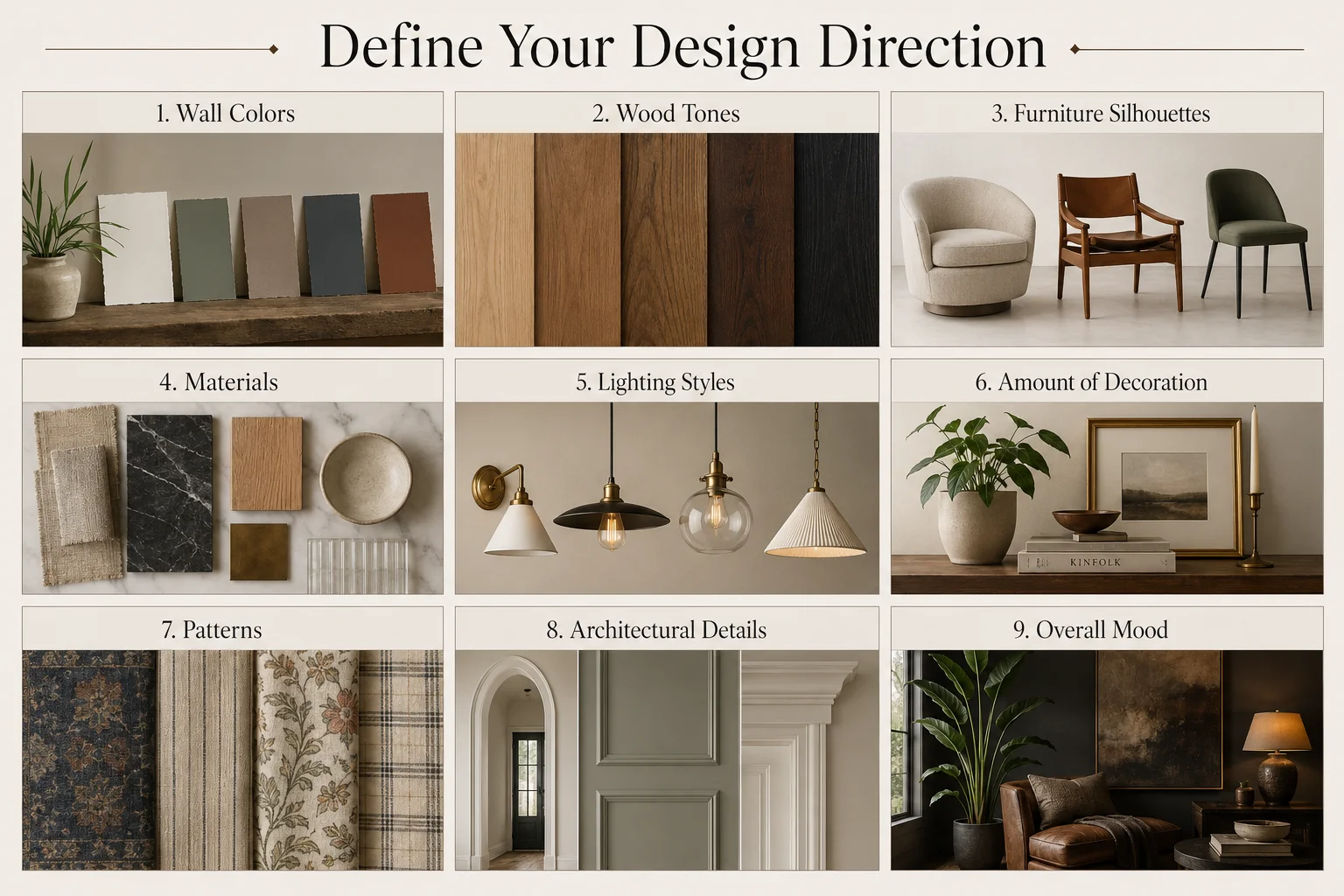
Pay attention to:
- wall colors
- wood tones
- furniture silhouettes
- materials
- lighting styles
- amount of decoration
- patterns
- architectural details
- overall mood
You may discover, for example, that you consistently prefer warm neutral rooms with natural wood, rounded furniture, simple artwork and organic materials. That information is more useful than trying to decide whether your style fits perfectly into one label.
Popular Design Directions
Some of the most commonly used styles include Scandinavian, Japandi, Organic Modern, Contemporary, Minimalist, Mid-Century Modern, Traditional and Bohemian interiors.
Many successful homes combine influences from several styles. The important part is maintaining enough consistency in color, form and materials for the mix to feel deliberate.
Plan the Space Before You Decorate
Space planning determines where furniture sits, how people move through the room and how different functions relate to one another.
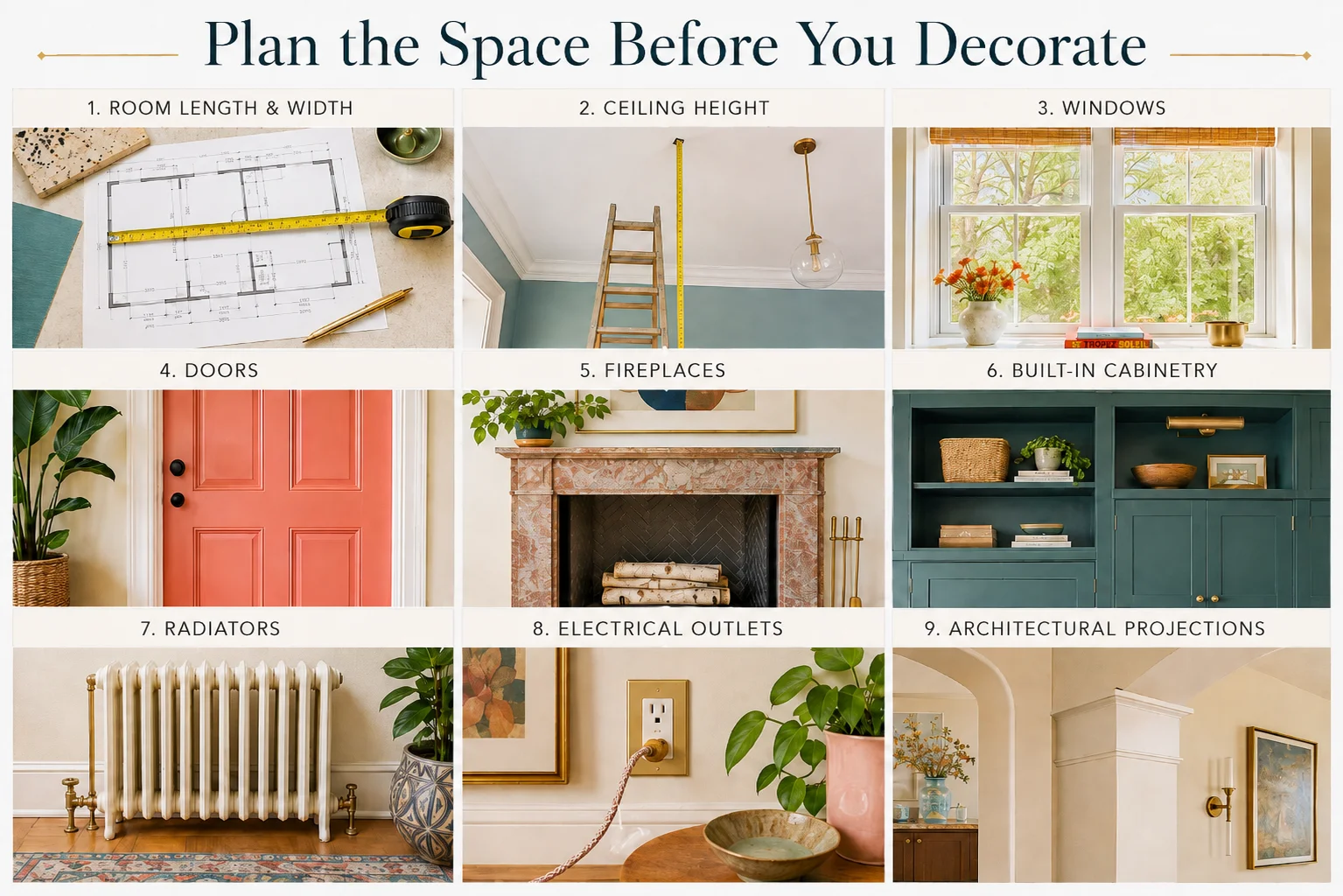
Before ordering large furniture, measure:
- room length and width
- ceiling height
- windows
- doors
- fireplaces
- built-in cabinetry
- radiators
- electrical outlets
- architectural projections
Create a simple floor plan and test several furniture arrangements before deciding which layout works best.
Protect Natural Traffic Flow
People should be able to enter and move through a room without weaving awkwardly between furniture.
Whenever possible, keep major walking routes visually open and avoid placing oversized furniture directly in important circulation paths.
Create Functional Zones
Larger rooms often work better when divided into zones.
A living room, for example, might contain:
- a main conversation area
- a reading corner
- a media area
- a small desk
Furniture placement and rugs can define these areas without physically dividing the room.
Establish a Focal Point
A focal point gives the eye somewhere to rest when entering a room.
Some rooms already have an architectural focal point, such as:
- a fireplace
- a large window
- a dramatic view
- built-in cabinetry
- an architectural feature wall
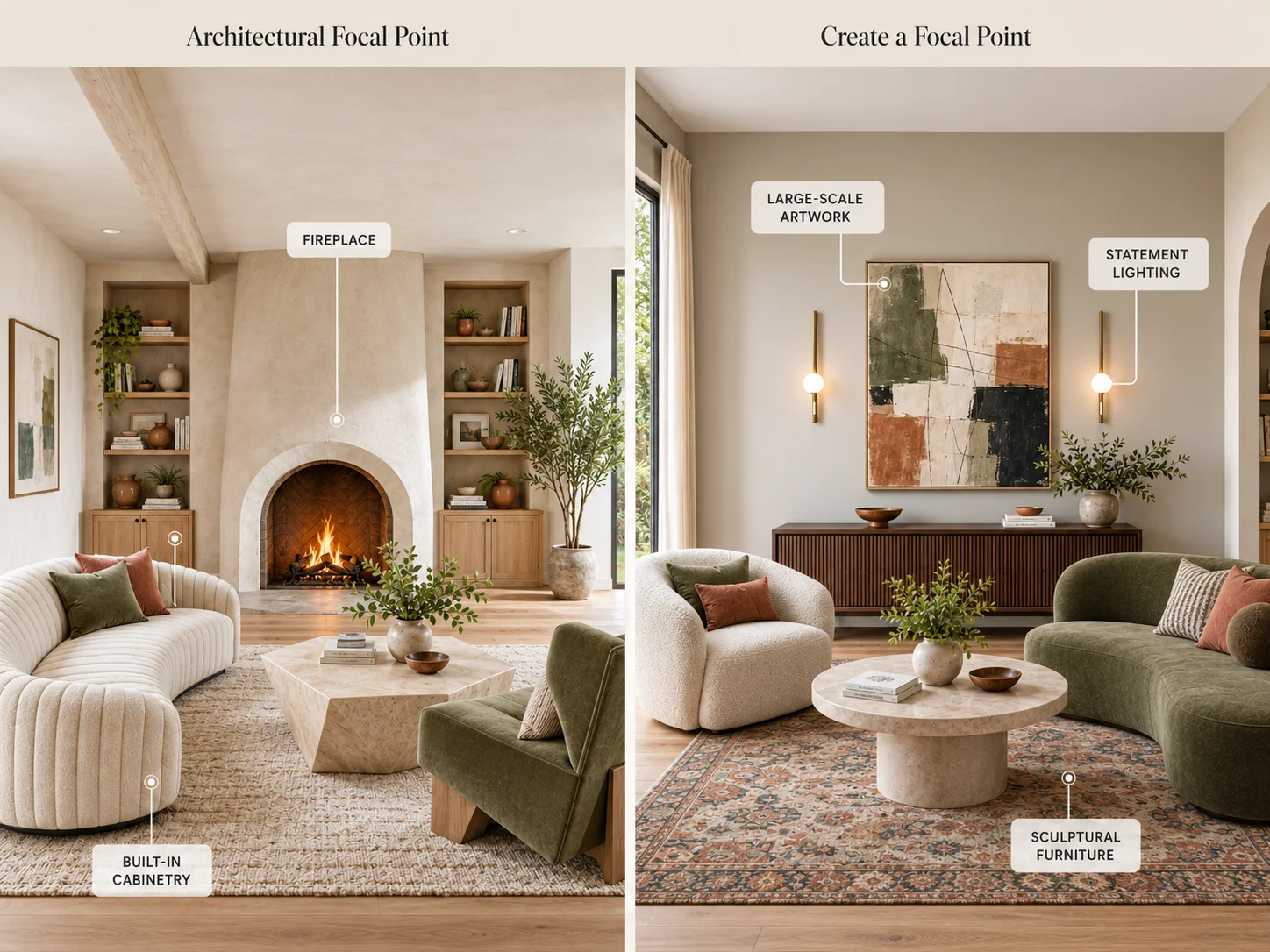
If your room does not have one, you can create a focal point using:
- large-scale artwork
- a statement headboard
- distinctive lighting
- a sculptural furniture piece
- a dramatic console arrangement
- a textured wall treatment
Not every object in the room should compete for attention. When several dramatic elements have equal visual strength, the result can feel chaotic.
Choose one dominant feature and allow secondary elements to support it.
Understand Scale and Proportion
Scale describes how large an object feels in relation to the room, while proportion describes how different elements relate to one another.
This is one of the most important reasons professionally designed rooms often feel more polished than randomly furnished spaces.
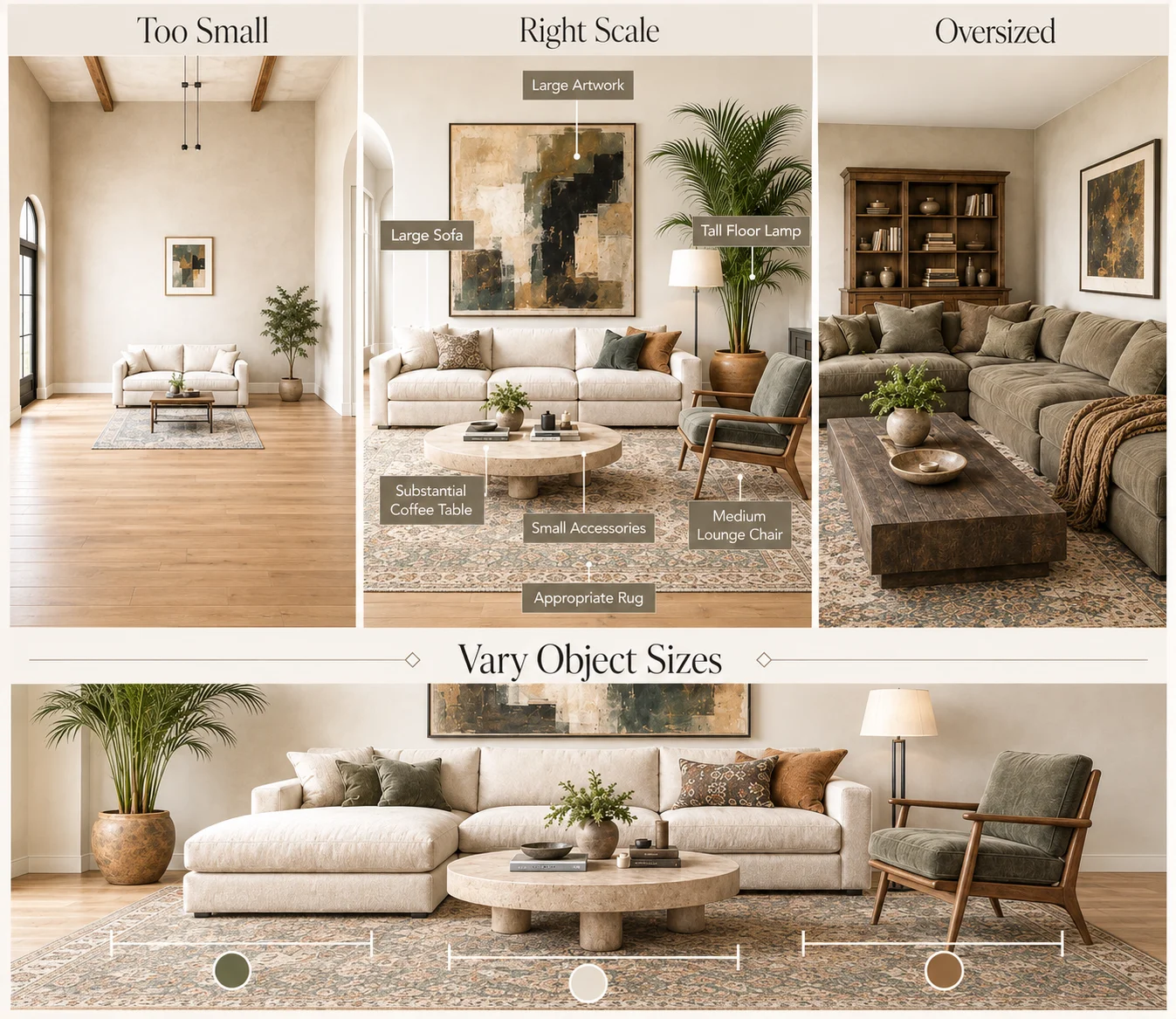
Avoid Furniture That Is Too Small
Beginners frequently underestimate furniture size because they are worried about making a room feel crowded.
The result can be the opposite: a large room filled with undersized furniture often feels disconnected and unfinished.
A substantial sofa, appropriately sized rug and larger artwork can actually make the same room feel more coherent.
Also Avoid Oversized Furniture
Furniture should not overwhelm circulation or visually dominate every part of the room.
Before purchasing a sofa, bed, dining table or cabinet, mark its dimensions on the floor using painter’s tape. This simple exercise makes scale much easier to understand than relying only on measurements written on a product page.
Vary Object Sizes
Rooms become more interesting when they contain a deliberate mixture of large, medium and small elements.
For example, combine:
- a large sofa
- a medium lounge chair
- a substantial coffee table
- a tall floor lamp
- a few smaller accessories
Using too many small objects creates visual noise.
Create Visual Balance
Balance refers to how visual weight is distributed through a room.
An object does not need to be physically heavy to carry visual weight. A dark cabinet, bold artwork or strongly patterned chair may visually dominate more than a larger pale object.
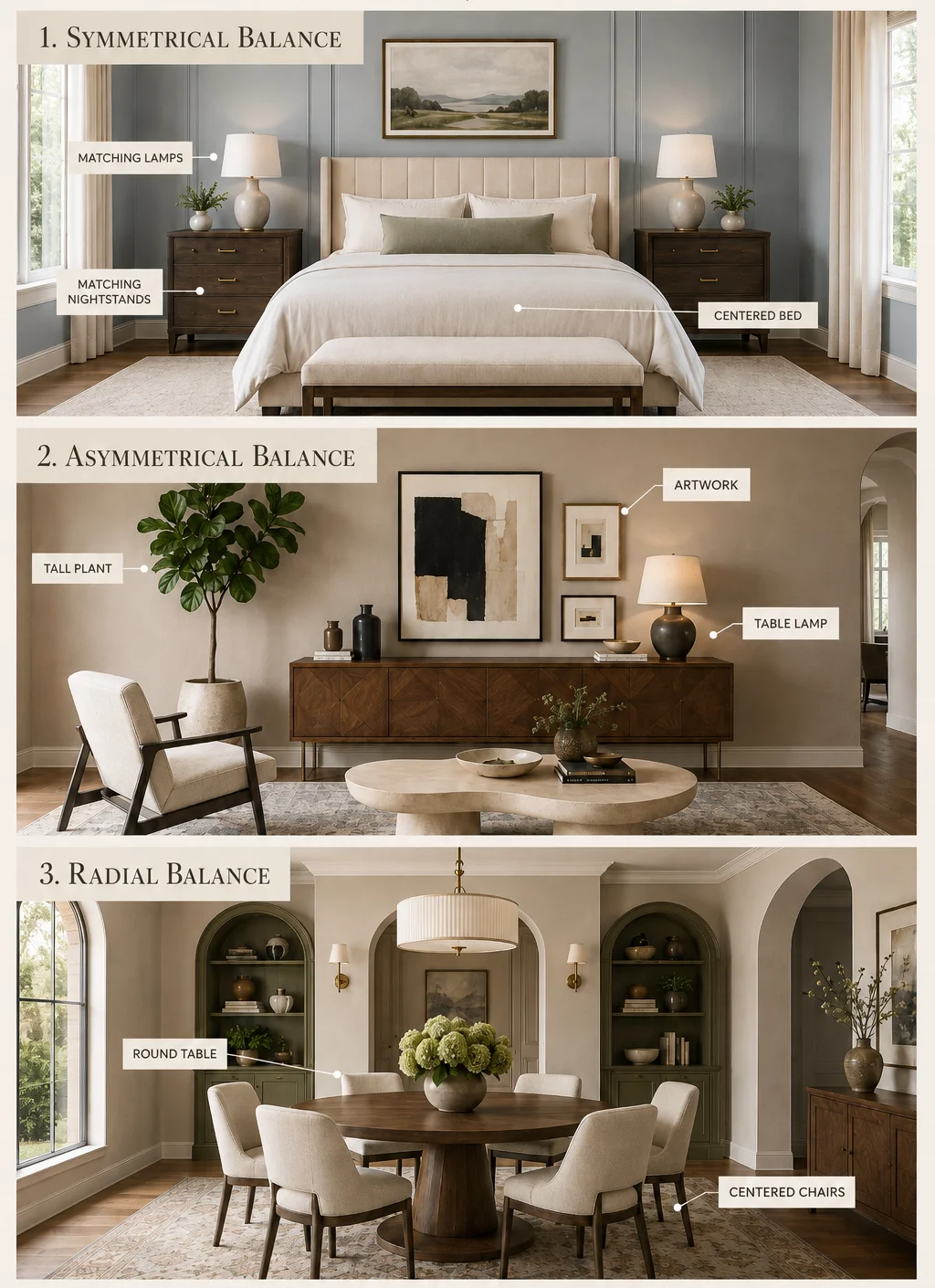
Symmetrical Balance
Symmetrical arrangements mirror similar elements on either side of a central point.
Examples include:
- matching nightstands beside a bed
- two lamps on a console
- matching chairs opposite a sofa
Symmetry feels orderly, calm and relatively formal.
Asymmetrical Balance
Asymmetrical interiors use different objects with similar visual weight.
For example, a tall plant on one side of a console might visually balance a table lamp and artwork on the other.
This approach tends to feel more relaxed and contemporary.
Radial Balance
Radial balance arranges elements around a central point, such as dining chairs around a round table.
Most homes use a combination of all three forms.
Build a Cohesive Color Palette
A color palette is one of the easiest ways to make separate pieces feel connected.
Rather than choosing each color independently, define a small family of tones that can repeat throughout the room.
Start With Existing Elements
If you already own flooring, a sofa, cabinetry or a rug that will remain in the space, use those items as part of your starting palette.
It is usually easier to coordinate paint with furniture than to find furniture that perfectly matches a paint color selected months earlier.
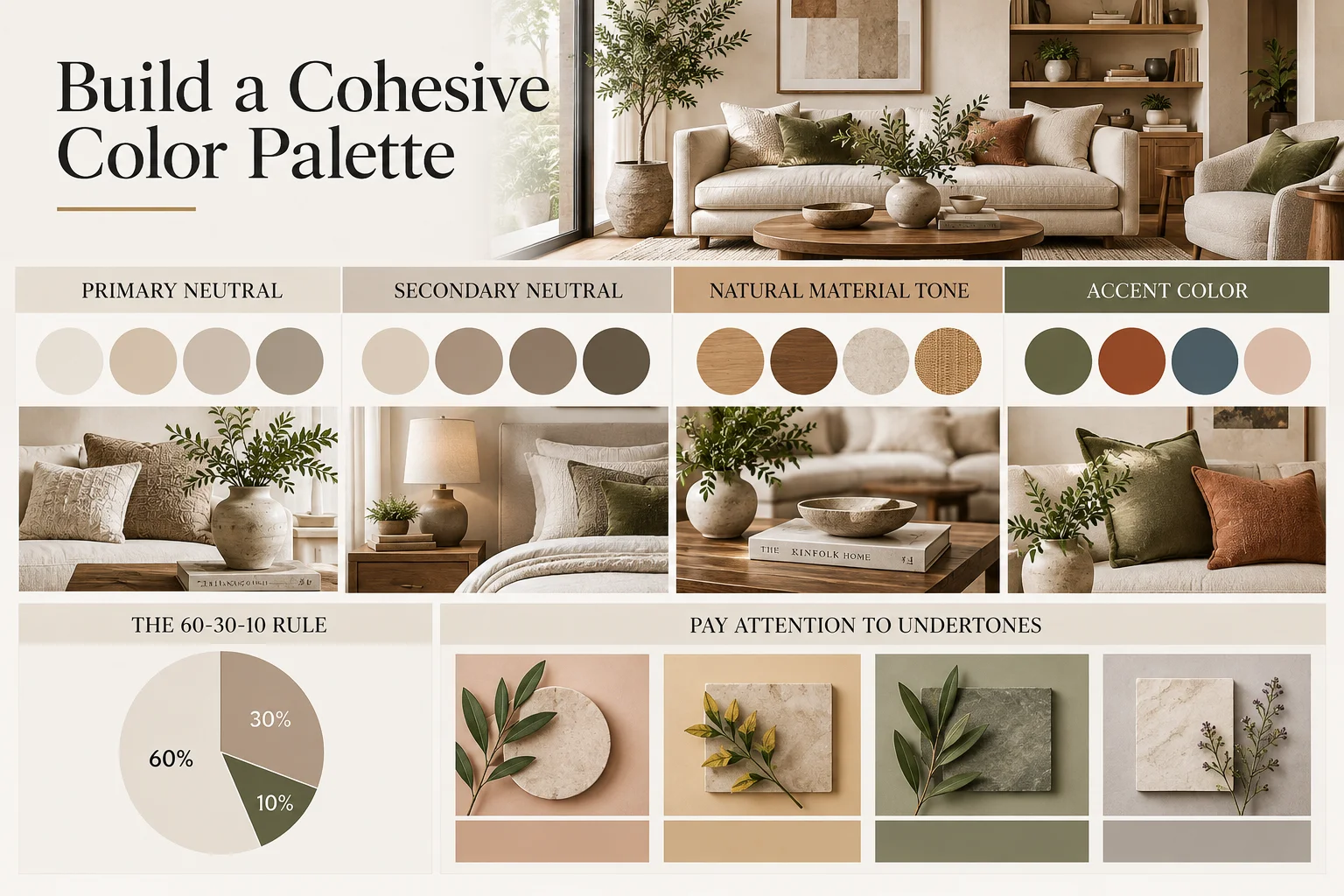
A Simple Beginner Palette
You might choose:
- Primary neutral: warm white, beige, greige or soft gray
- Secondary neutral: taupe, tan, charcoal or cream
- Natural material tone: oak, walnut, stone or rattan
- Accent color: olive, rust, blue, terracotta or another preferred tone
Use the 60-30-10 Rule as a Starting Point
A traditional decorating guideline suggests approximately:
- 60% dominant color
- 30% secondary color
- 10% accent color
You do not need to calculate these percentages precisely. The principle simply reminds you that one color should generally dominate while others play supporting roles.
Pay Attention to Undertones
Two beige colors may appear similar until one reveals a pink undertone and another appears yellow or green.
Always compare paint and material samples inside the actual room because natural light, artificial light, flooring and surrounding materials can change how a color appears.
Layer Materials and Texture
A room decorated entirely in similar smooth surfaces can feel flat even when the color palette is attractive.
Texture creates depth and makes neutral interiors particularly effective.
Consider combining materials such as:
- linen
- wool
- bouclé
- velvet
- natural wood
- stone
- ceramic
- glass
- metal
- woven fibers
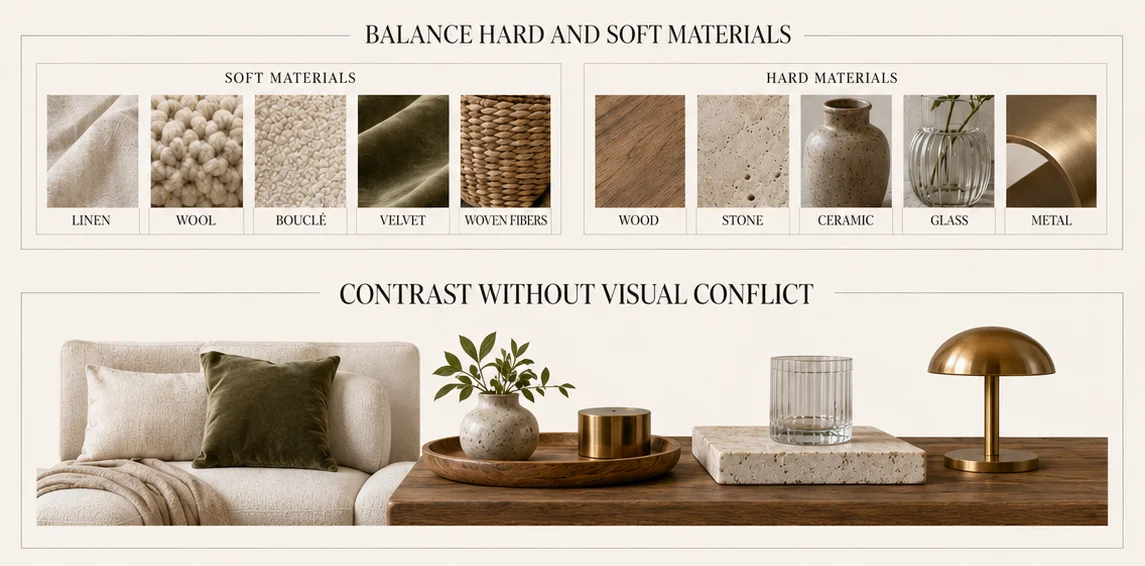
For example, a neutral living room might combine a linen sofa, wool rug, oak table, ceramic lamp and woven basket. The colors may remain restrained while the different surfaces prevent the room from feeling monotonous.
Balance Hard and Soft Materials
Hard materials such as stone, metal and glass benefit from softer textiles, while heavily upholstered rooms often need timber, metal or stone to provide structure.
The objective is contrast without visual conflict.
Use Pattern Intentionally
Pattern adds movement and personality, but beginners sometimes either avoid it completely or introduce too many unrelated patterns.
A simple approach is to vary pattern scale.
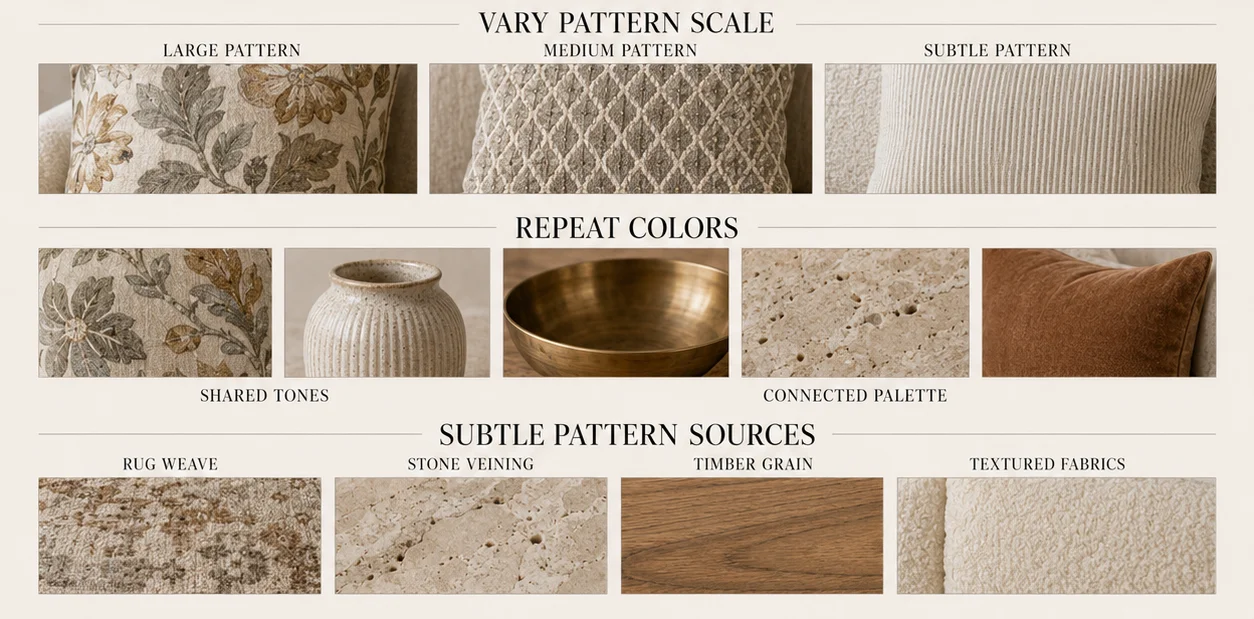
For example:
- one larger geometric or botanical pattern
- one medium-scale pattern
- one subtle stripe or textured solid
Connect patterns through repeated colors rather than expecting them to match exactly.
If you prefer a minimal interior, pattern can remain subtle through rug weaves, natural stone veining, timber grain and textured fabrics.
Layer Your Lighting
Lighting has an enormous effect on how a finished room feels.
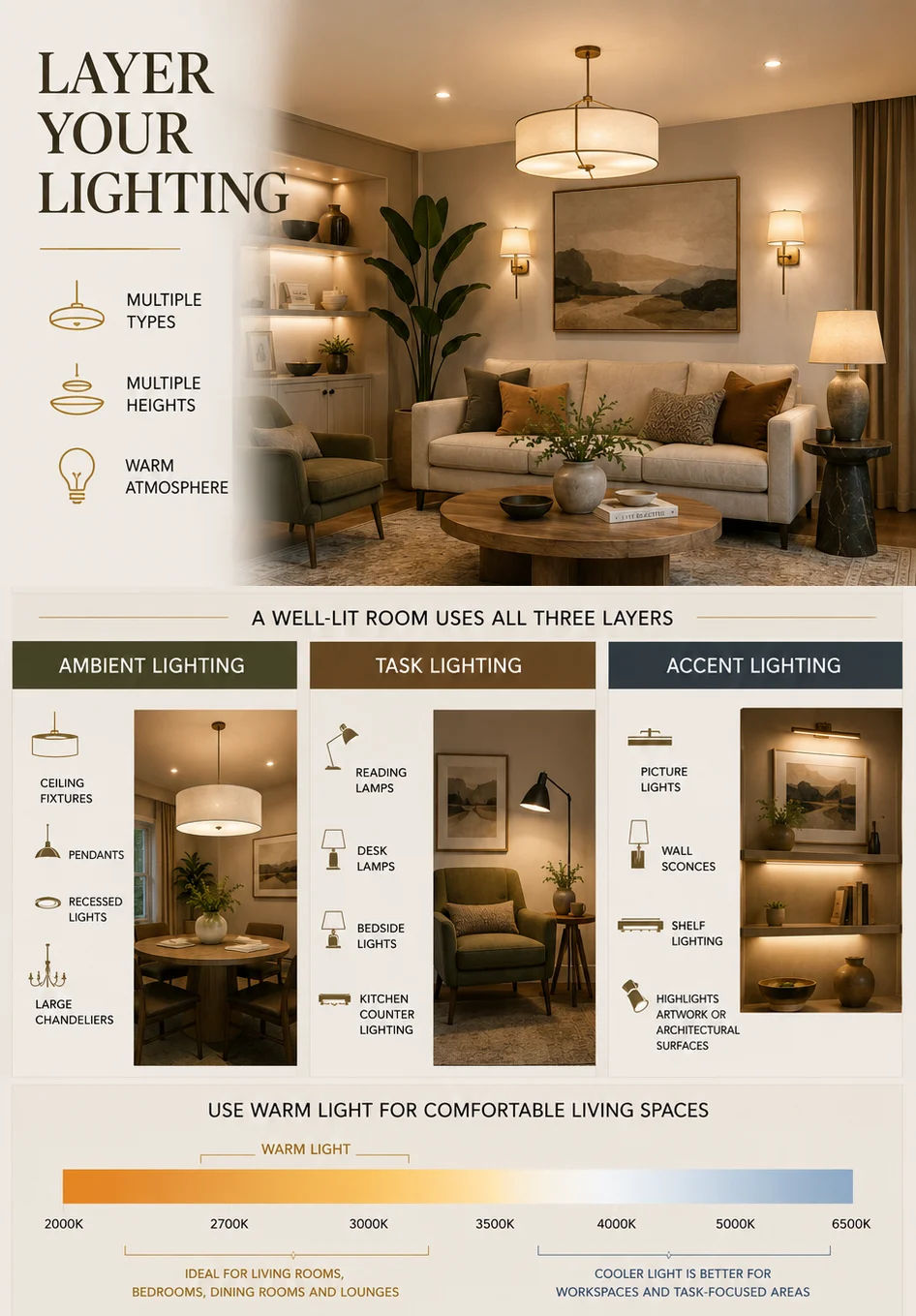
Relying on one central ceiling fixture often produces either flat or harsh illumination. A more comfortable room uses several types of lighting at different heights.
Ambient Lighting
Ambient light provides general illumination.
Examples include:
- ceiling fixtures
- pendants
- recessed lights
- large chandeliers
Task Lighting
Task lighting supports specific activities.
Examples include:
- reading lamps
- desk lamps
- bedside lights
- kitchen counter lighting
Accent Lighting
Accent lighting adds depth or highlights architecture and decor.
Examples include:
- picture lights
- wall sconces
- shelf lighting
- lights highlighting artwork or architectural surfaces
Use Warm Light for Comfortable Living Spaces
For many residential living spaces, approximately 2700K to 3000K creates a warmer atmosphere than cooler blue-white lighting.
However, lighting should also respond to the room’s purpose, natural light and finishes.Designer Tip: A room often feels more inviting when light comes from several heights rather than exclusively from the ceiling.
Choose Furniture Strategically
You do not need to buy all your furniture at once.
In fact, rooms often feel more natural when they are assembled gradually.
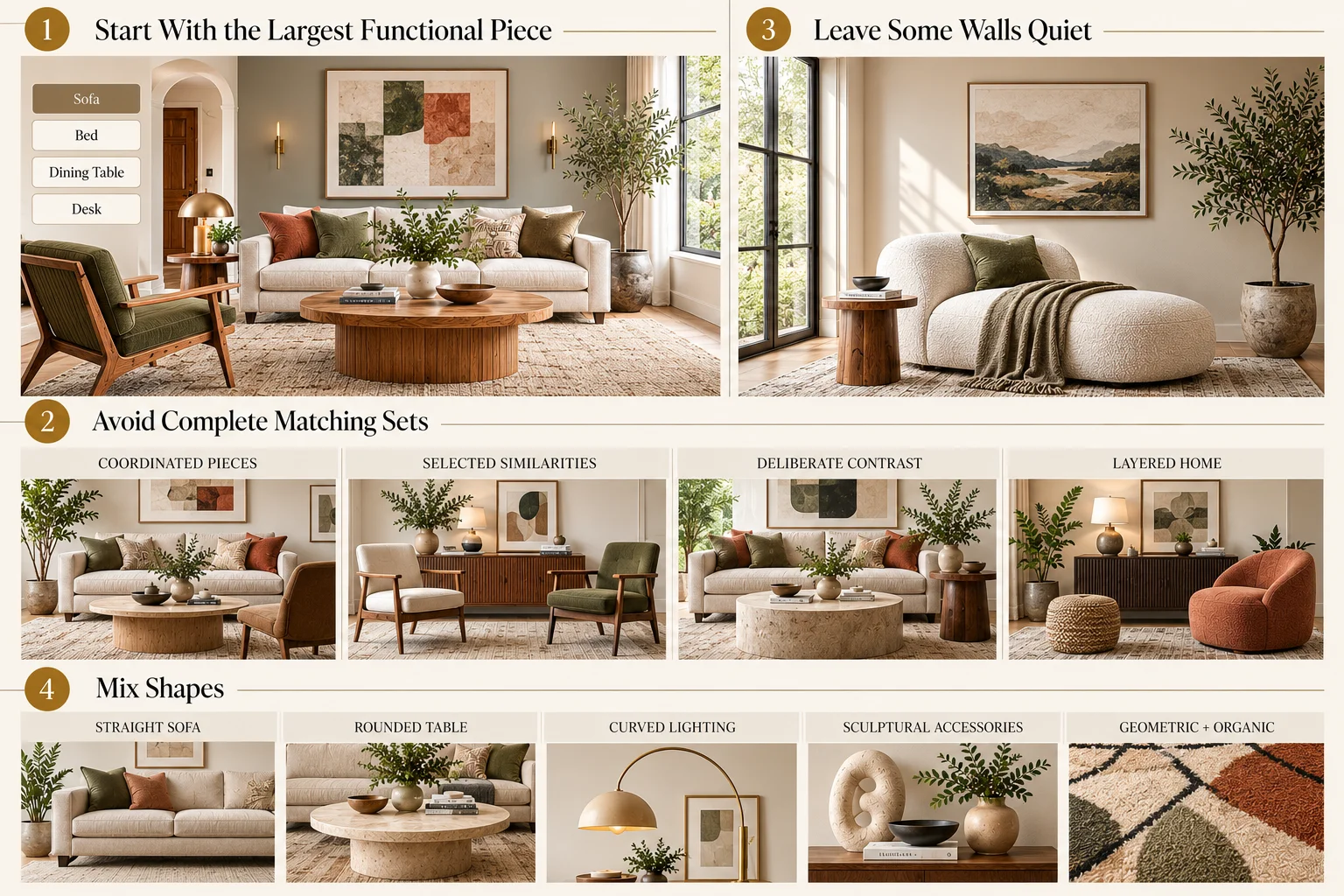
Start With the Largest Functional Piece
Depending on the room, this may be:
- a sofa
- a bed
- a dining table
- a desk
This large piece establishes much of the scale and layout.
Avoid Complete Matching Sets
A sofa, loveseat, chair and tables purchased as one matching collection can make a room feel like a showroom rather than a layered home.
Instead, coordinate pieces through selected similarities while allowing some contrast.
For example, an oak coffee table can work with a walnut side table if their forms, tones and surrounding materials create a deliberate relationship.
Mix Shapes
If your sofa and cabinetry contain many straight lines, introduce rounded tables, curved lighting or sculptural accessories.
Alternating geometric and organic forms keeps the interior visually dynamic.
Use Rugs to Anchor the Room
Rugs help define a seating or dining area and visually connect furniture.
One of the most common decorating mistakes is selecting a rug that is too small.
Living Rooms
Whenever practical, the rug should be large enough for at least the front legs of the major seating pieces to sit on it.
In larger rooms, placing all major furniture legs on the rug can create an even stronger sense of unity.
Dining Rooms
The rug should extend far enough beyond the table for chairs to remain on it when pulled out.
Bedrooms
A bedroom rug should extend visibly around the lower and side portions of the bed rather than disappearing almost completely underneath it.
Add Window Treatments
Window treatments contribute to privacy, light control, acoustics and visual softness.
Even rooms that look nearly finished can feel incomplete when windows remain untreated.
Hang Curtains Higher When Appropriate
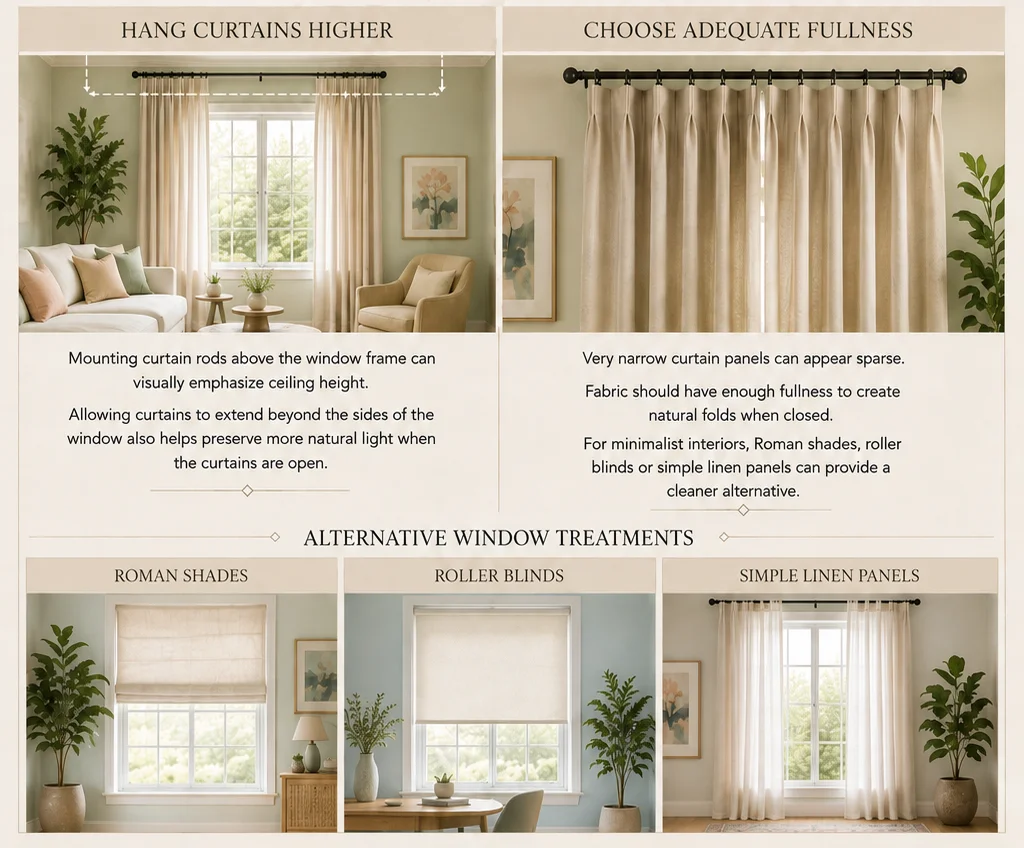
Mounting curtain rods above the window frame can visually emphasize ceiling height.
Allowing curtains to extend beyond the sides of the window also helps preserve more natural light when the curtains are open.
Choose Adequate Fullness
Very narrow curtain panels can appear sparse. Fabric should have enough fullness to create natural folds when closed.
For minimalist interiors, Roman shades, roller blinds or simple linen panels can provide a cleaner alternative.
Choose Artwork at the Right Scale
Artwork should relate to the furniture and wall around it.
A tiny picture floating above a wide sofa is unlikely to provide enough visual weight.
Instead, consider:
- one substantial artwork
- a pair of coordinated pieces
- a thoughtfully proportioned gallery wall
Do Not Decorate Every Wall
Negative space is an important part of interior design.
Leaving some walls relatively quiet gives artwork, furniture and architecture more room to breathe.
Add Accessories Last
Accessories should finish the room rather than compensate for problems with layout, furniture scale or lighting.
Useful finishing pieces include:
- books
- ceramics
- trays
- bowls
- candles
- plants
- sculptural objects
- decorative boxes
Group Objects Rather Than Scattering Them
A few thoughtfully arranged objects usually create greater impact than many small accessories spread across every available surface.
Vary Height
Combine tall, medium and low objects to create rhythm.
Leave Empty Space
You do not need to fill every shelf, table or corner.
Editing is often the final step that makes a styled room feel sophisticated.
Create a Cohesive Home Without Making Every Room Match
A cohesive home does not require using exactly the same paint, furniture or decor in every room.
Instead, repeat selected elements throughout the house.
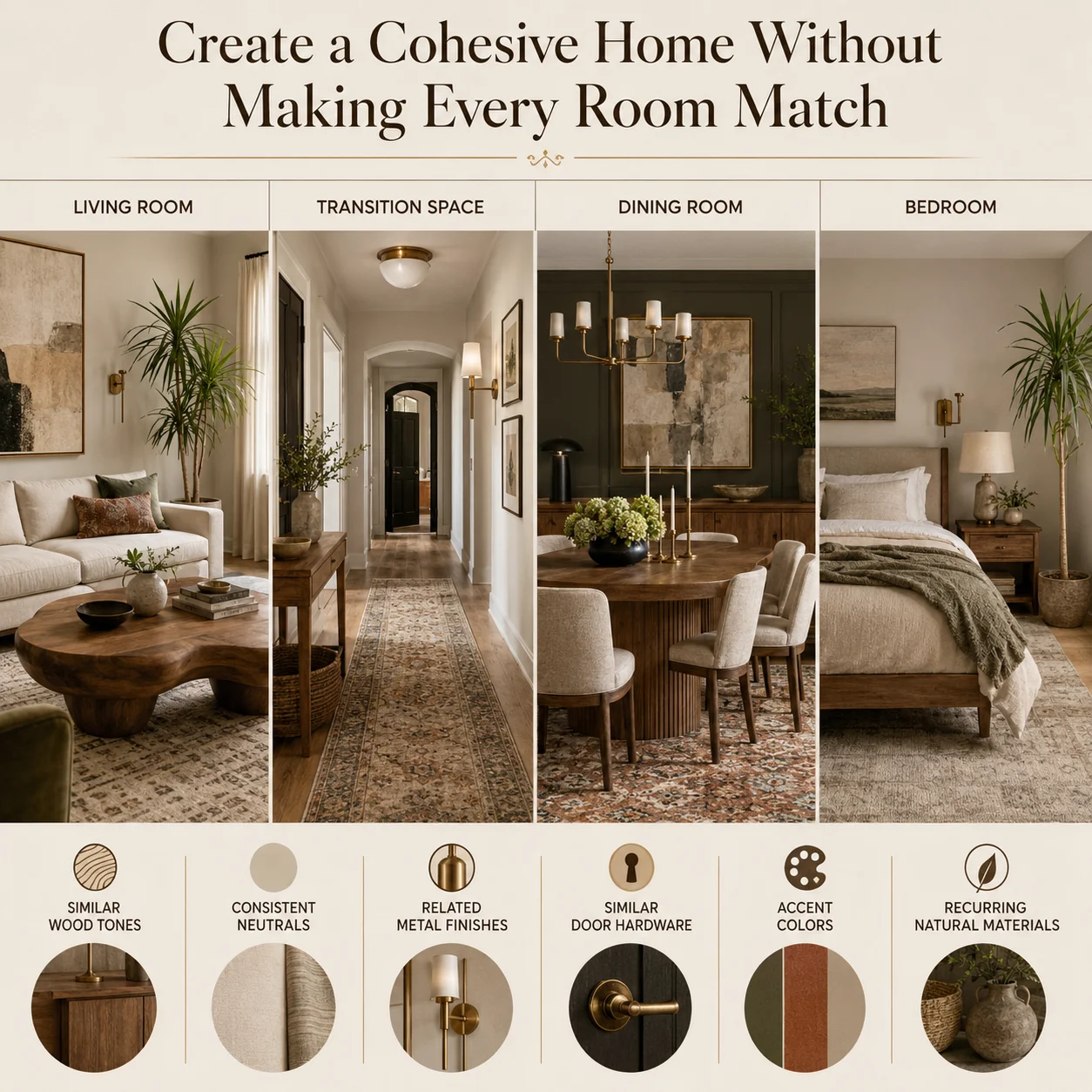
You might repeat:
- similar wood tones
- a consistent family of neutrals
- related metal finishes
- similar door hardware
- a limited group of accent colors
- recurring natural materials
Each room can still develop its own identity.
A bedroom may feel softer and quieter while a dining room feels more dramatic, yet both can belong to the same overall home.
Use Transition Spaces
Hallways and connecting spaces are particularly important because they allow you to repeat colors, artwork, materials or lighting that visually connect different rooms.
Design Your Room in the Right Order
Buying decor before deciding on the major pieces often leads to wasted money.
A more reliable order is:
- Define how the room needs to function.
- Measure the space.
- Develop your design direction.
- Create a floor plan.
- Establish a color and material palette.
- Choose the main furniture pieces.
- Select rugs.
- Plan lighting.
- Add window treatments.
- Choose artwork.
- Finish with cushions, objects, plants and accessories.
This does not mean every room must be decorated according to a rigid sequence. The purpose is to prevent smaller purchases from dictating more important decisions.
How to Design a Beautiful Home on Different Budgets
Good interior design depends more on thoughtful choices than unlimited spending.
Small Budget
Prioritize changes that affect a large visual area:
- rearrange existing furniture
- edit unnecessary clutter
- paint walls
- replace lampshades or light bulbs
- add appropriately sized curtains
- introduce cushions and textiles
- shop secondhand furniture
- restyle existing artwork and accessories
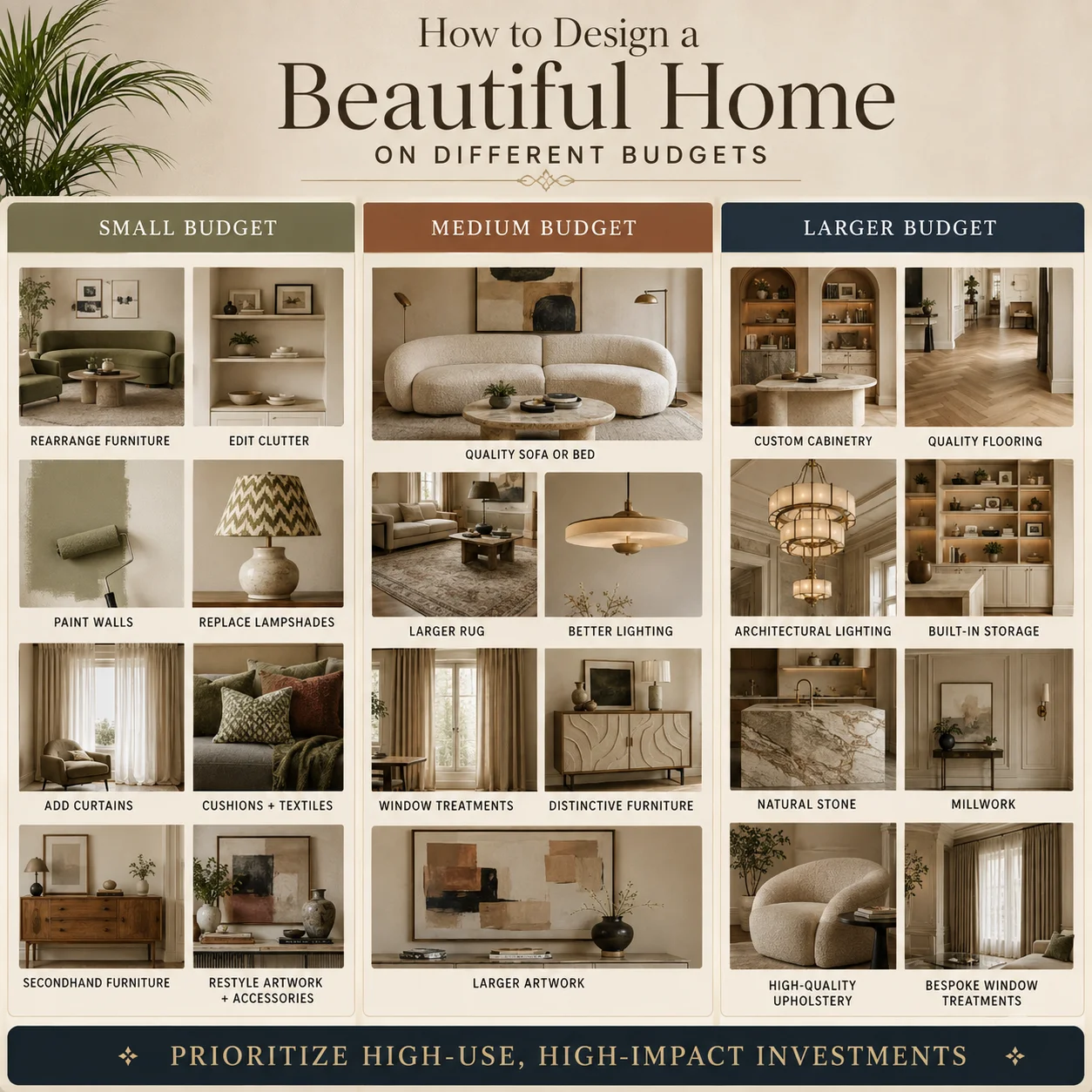
Medium Budget
Invest selectively in:
- a quality sofa or bed
- a larger rug
- better lighting
- window treatments
- one or two distinctive furniture pieces
- larger artwork
Larger Budget
Prioritize improvements that influence the architecture and longevity of the home:
- custom cabinetry
- quality flooring
- architectural lighting
- built-in storage
- natural stone
- millwork
- high-quality upholstery
- bespoke window treatments
Regardless of budget, allocate the largest portion to items that are used frequently or expensive to replace.
Common Interior Design Mistakes Beginners Make
Buying Everything From One Store
When furniture, lighting and accessories all come from the same collection, the room can lack individuality.
Better approach: combine pieces from different periods, brands or materials while maintaining a consistent palette.
Using Furniture That Is Too Small
Tiny furniture can make a large space feel sparse.
Better approach: measure carefully and prioritize fewer, appropriately scaled pieces.
Choosing a Rug That Is Too Small
A small rug can visually separate furniture rather than connect it.
Better approach: choose a rug large enough to relate directly to the main furniture grouping.
Relying on One Ceiling Light
A single overhead source often creates flat illumination.
Better approach: combine ceiling, floor, table and accent lighting.
Pushing Every Piece of Furniture Against the Walls
This can create a large empty area in the middle of the room and weaken conversation zones.
Better approach: bring furniture inward where room size allows.
Buying Before Measuring
Furniture that looks perfectly proportioned online may be far too large or small in your home.
Better approach: measure the room and map furniture dimensions before purchasing.
Following Too Many Trends
A room designed entirely around current trends can date quickly.
Better approach: use timeless materials and major furniture pieces, then introduce trends through smaller elements.
Adding Too Many Small Accessories
Excessive small objects create visual clutter.
Better approach: use fewer, larger decorative pieces and allow negative space.
Ignoring Practicality
A beautiful chair that nobody finds comfortable or a pale rug placed in a busy family entryway may not be successful design.
Better approach: consider maintenance and lifestyle before appearance alone.
Simple Interior Designer Rules Worth Remembering
You do not need dozens of decorating rules. These principles solve many of the most common problems.
- Measure before buying.
- Plan the furniture layout before decorating.
- Choose fewer pieces at an appropriate scale.
- Mix shapes rather than repeating one silhouette everywhere.
- Layer at least two or three forms of lighting.
- Repeat selected colors and materials throughout the room.
- Use contrast to prevent the space from feeling flat.
- Leave some empty visual space.
- Prioritize function before styling.
- Decorate gradually rather than buying everything at once.
A Beginner’s Step-by-Step Interior Design Process
If you are unsure where to begin, follow this simplified process.
Step 1: Decide What the Room Must Do
Identify activities, storage needs and practical requirements.
Step 2: Measure Everything
Record walls, windows, doorways and architectural features.
Step 3: Collect Inspiration
Create a small mood board and identify recurring colors, materials and shapes.
Step 4: Create Your Layout
Position large furniture and protect circulation routes.
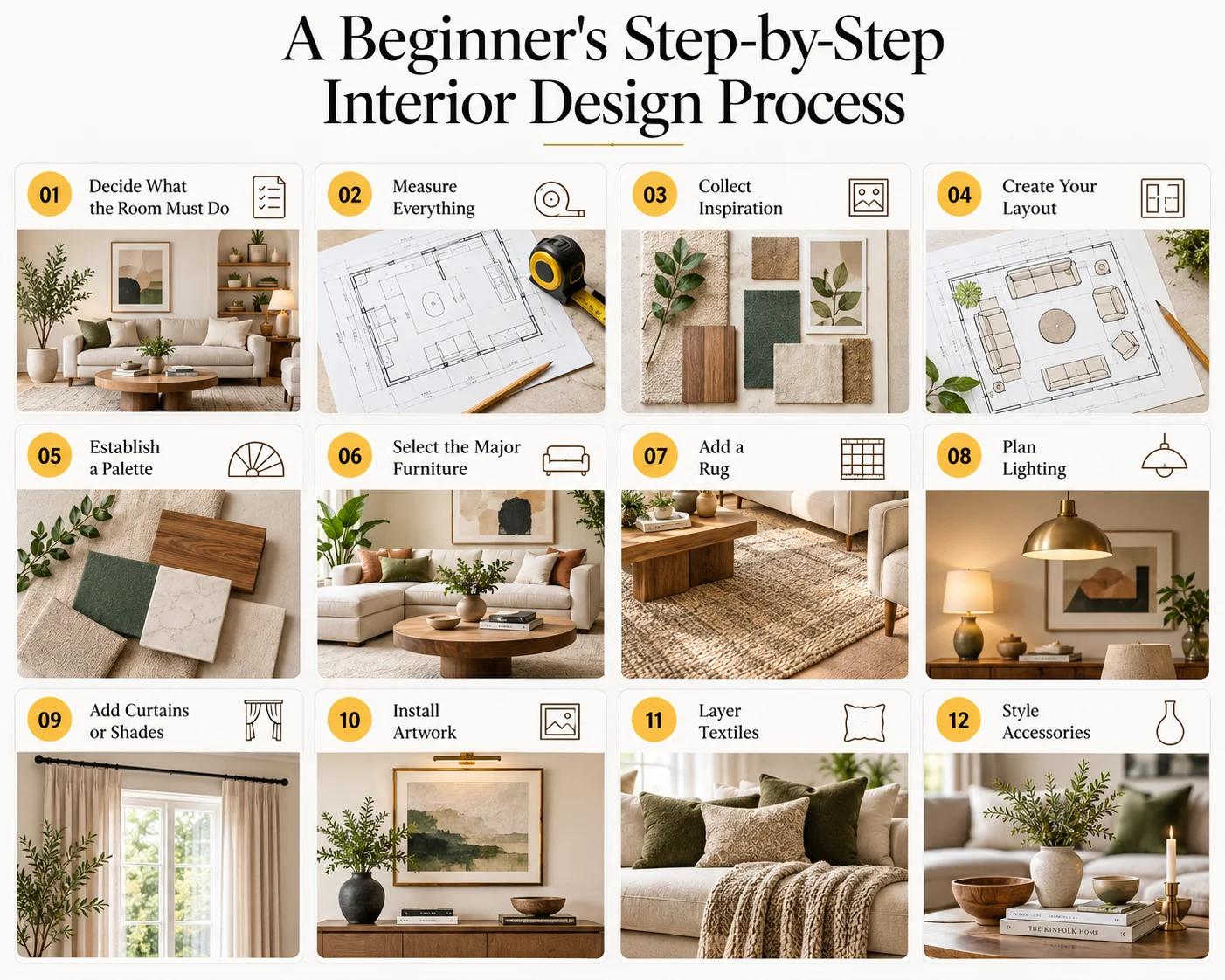
Step 5: Establish a Palette
Choose several complementary colors and materials.
Step 6: Select the Major Furniture
Start with the largest functional pieces.
Step 7: Add a Rug
Use it to anchor the main furniture grouping.
Step 8: Plan Lighting
Combine ambient, task and accent lighting.
Step 9: Add Curtains or Shades
Use window treatments to control light and visually soften the architecture.
Step 10: Install Artwork
Select pieces at a scale appropriate to nearby furniture and wall dimensions.
Step 11: Layer Textiles
Add cushions, throws and other tactile materials where appropriate.
Step 12: Style Accessories
Introduce books, ceramics, plants and decorative objects gradually.
Step 13: Edit
Remove anything that feels unnecessary, repetitive or visually distracting.
Shop the Foundations
If you are decorating your first home, concentrate your budget on versatile foundational pieces before accumulating accessories.
- comfortable, appropriately scaled sofa
- quality bed and mattress
- well-proportioned dining table
- durable area rug
- functional storage furniture
- floor and table lamps
- full-length curtains or practical shades
- one or two meaningful artworks
- quality neutral cushions and throws
- natural materials such as timber, linen, wool or ceramic
These pieces can establish the room while decorative details evolve over time.
Interior Design Style Variations
The same design principles can create very different interiors depending on the materials, colors and furniture you choose.
Scandinavian
Use light woods, soft neutrals, practical furniture, natural textiles and simple forms to create a bright yet comfortable interior.
Japandi
Combine warm wood, low-profile furniture, handmade objects, natural textiles and deliberate negative space.
Organic Modern
Blend contemporary furniture with stone, wood, linen, sculptural shapes and an earthy neutral palette.
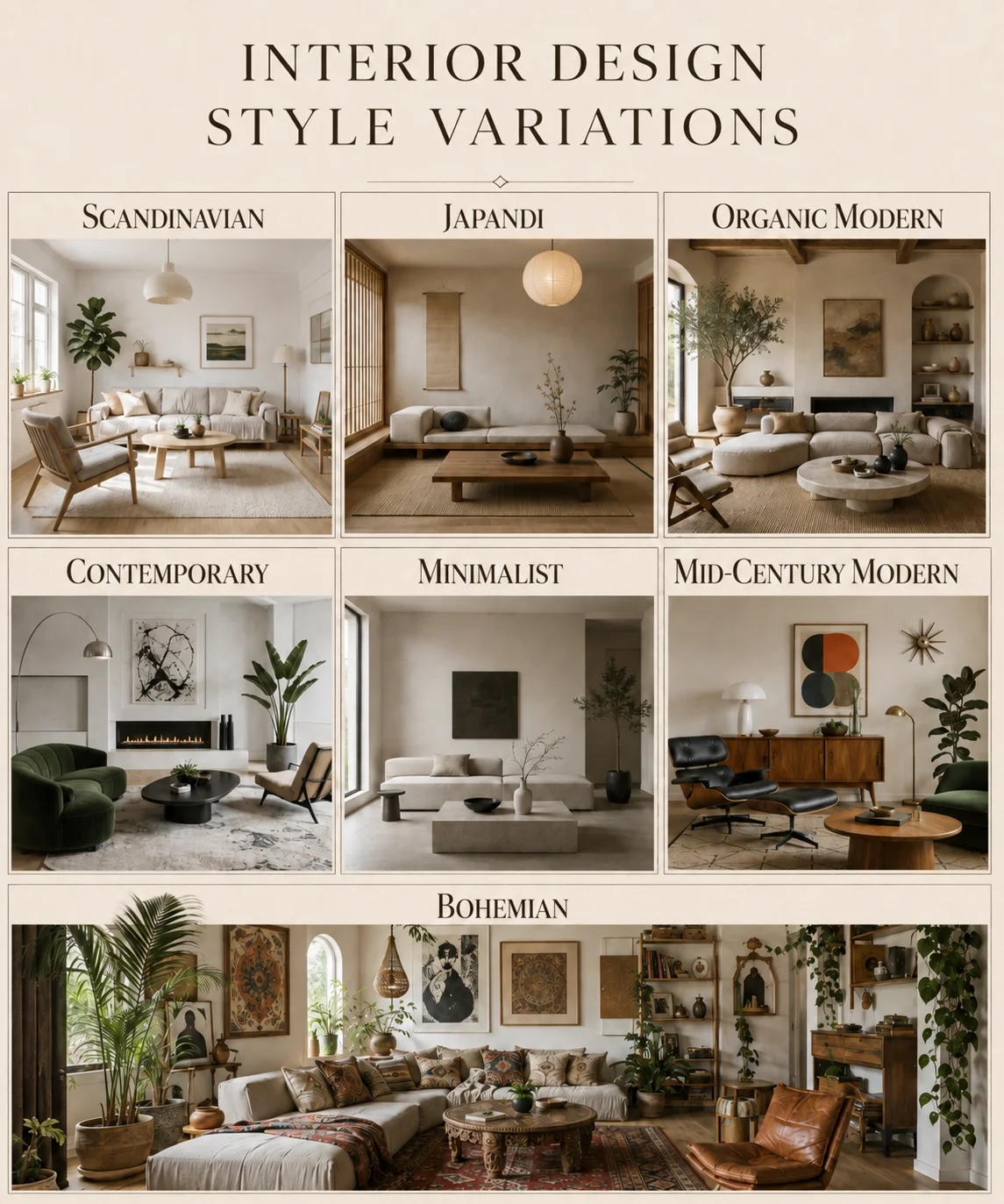
Contemporary
Use streamlined furniture, mixed materials, sculptural lighting, controlled color and carefully selected statement pieces.
Minimalist
Focus on essential furniture, quality materials, strong proportions, concealed storage and visual restraint.
Mid-Century Modern
Combine clean lines, warm timber, tapered legs, geometric forms and carefully selected vintage-inspired furniture.
Bohemian
Layer natural materials, textiles, collected objects, artwork, plants and varied furniture while maintaining enough repetition to keep the room cohesive.
The Most Important Interior Design Lesson
A beautiful home is rarely created through one dramatic purchase.
It emerges from a series of thoughtful relationships: the sofa fits the scale of the room, the rug connects the seating, the lighting creates atmosphere, the colors repeat naturally and the accessories reinforce rather than compete with the overall design.
When something in a room feels wrong, the answer is not always to add another decorative object. Often the problem lies deeper—in scale, layout, lighting, contrast or proportion.
Learning to recognize these relationships is the real foundation of interior design.
Start with function. Measure carefully. Establish a visual direction. Invest in the important pieces first and allow the smaller details to develop gradually.
Your home does not need to resemble a showroom, nor does it need to follow one design style perfectly. The most successful interiors are functional, cohesive and personal enough to feel like they genuinely belong to the people who live there.
Frequently Asked Questions About Interior Design Basics
What are the basic principles of interior design?
The main interior design principles include balance, scale, proportion, rhythm, contrast, emphasis, harmony and functionality. These principles help furniture, lighting, color, materials and accessories work together as a cohesive interior.
How should a beginner start designing a home?
Start by identifying how each room needs to function, measuring the space and collecting visual inspiration. Then plan the furniture layout and develop a color and material palette before buying major furniture or decorative accessories.
What should you choose first when designing a room?
Begin with function and layout rather than decor. Once the layout is established, choose major furniture and foundational materials before selecting smaller accessories.
How many colors should a room have?
There is no fixed number, but beginners often find it easier to work with one dominant neutral or color, one secondary tone, one natural material tone and one or two accents. Variations of these colors can create additional depth.
How do you make a home look cohesive?
Repeat selected colors, wood tones, materials, shapes and finishes throughout different rooms. The spaces do not need to match exactly, but recurring design elements help the home feel visually connected.
What makes a room look professionally designed?
Professional-looking rooms usually have an intentional furniture layout, appropriate scale, a clear focal point, coordinated colors, varied textures, layered lighting, properly sized rugs and carefully edited accessories.
Should all the rooms in a home match?
No. Each room can have its own personality. Cohesion comes from repeating selected colors, materials and design ideas rather than making every room identical.
What are the most common interior design mistakes?
Common mistakes include buying furniture before measuring, choosing undersized rugs, relying on one ceiling light, using too many small decorative objects, ignoring scale, buying complete matching furniture sets and prioritizing trends over functionality.
Continue Learning Interior Design
Once you understand these fundamentals, individual decorating decisions become much easier. Explore Home Style Studio Co. for detailed guides covering interior design styles, room layouts, color palettes, furniture, lighting, materials, styling techniques and practical decorating ideas.