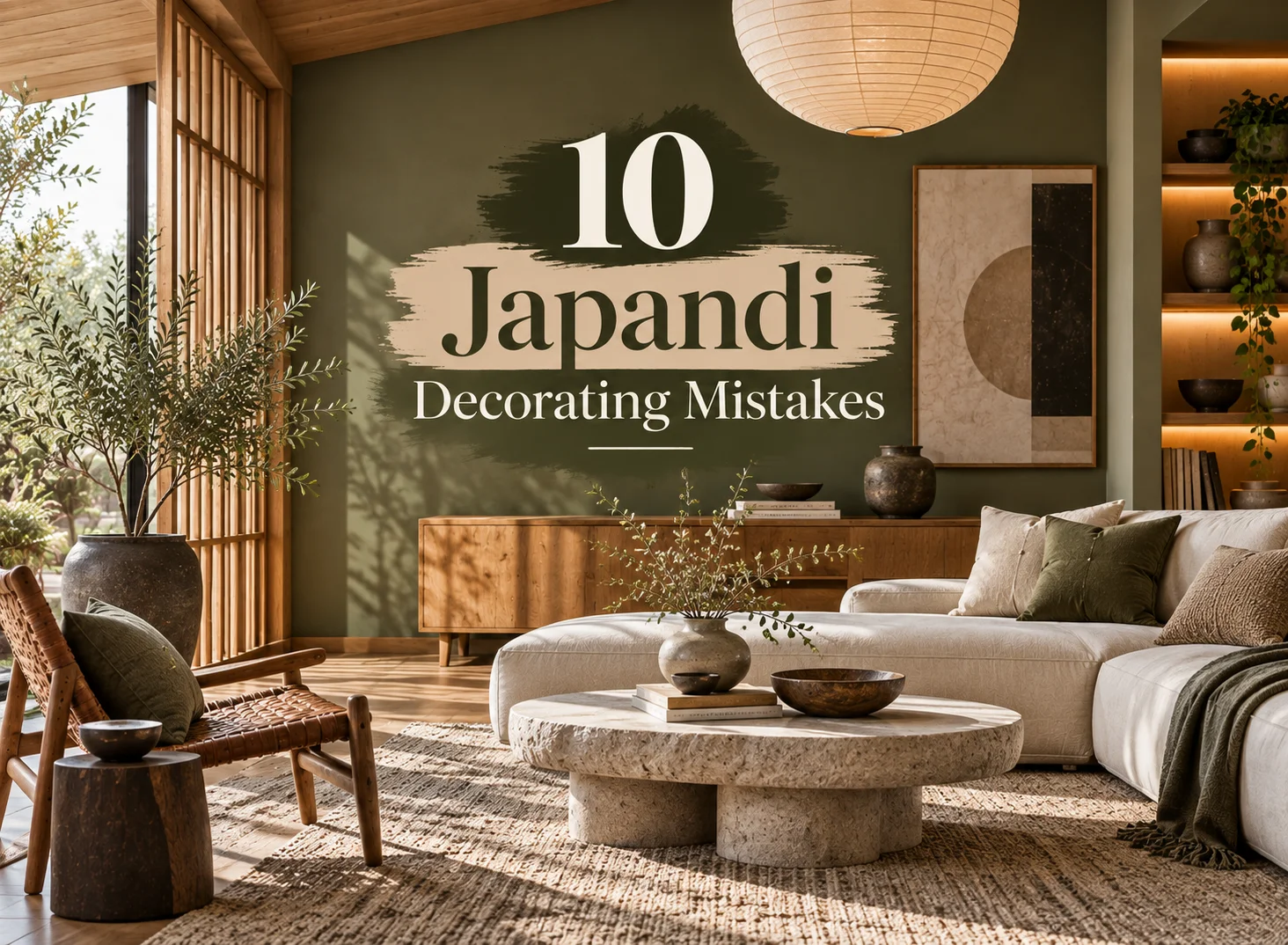
Japandi interiors often look effortless: warm neutral colors, natural materials, simple furniture and thoughtfully chosen objects arranged in calm, uncluttered rooms. Yet creating that sense of simplicity is more difficult than it appears.
Many unsuccessful Japandi rooms contain the right individual ingredients but combine them in the wrong proportions. Too much minimalism can make the space feel empty. Too many beige finishes can make it flat. Excessive decoration removes the visual breathing room that makes Japandi distinctive in the first place.
The most common Japandi decorating mistakes come from treating the style as a visual trend rather than a balance of function, craftsmanship, nature and restraint.
If you are still establishing the fundamentals, begin with our Japandi Interior Design: The Complete Guide. Then use the mistakes below to identify what may be preventing your own rooms from achieving the calm, warm atmosphere associated with successful Japandi design.
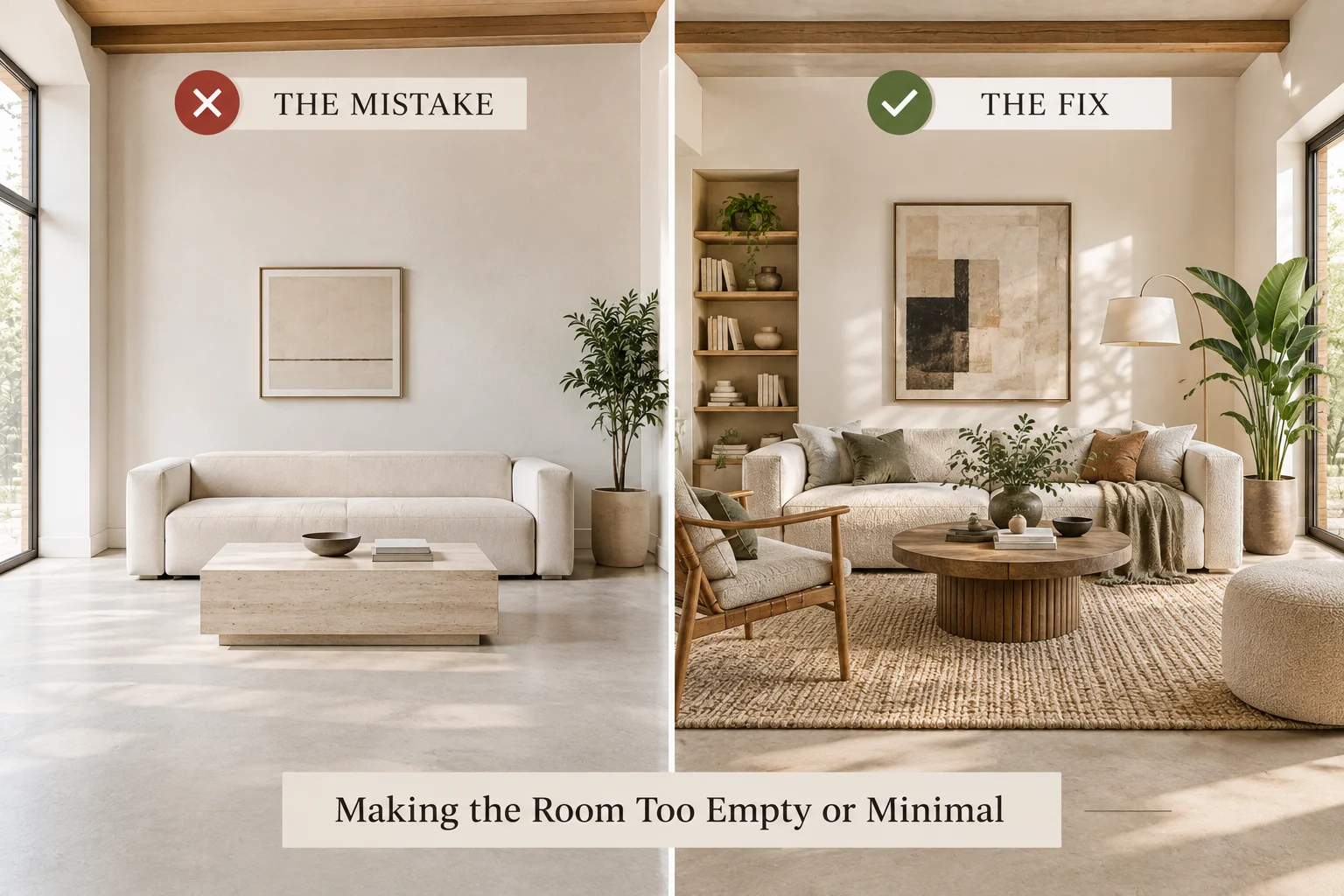
Mistake #1. Making the Room Too Empty or Minimal
One of the easiest mistakes to make is assuming that Japandi means removing almost everything from the room.
Visual simplicity is important, but Japandi is not about creating an empty interior. A room still needs to feel comfortable, useful and emotionally inviting.
If you remove too much furniture, artwork, lighting and texture, the result can resemble an unfinished minimalist space rather than a thoughtful Japandi home.
The Fix
Remove objects that create unnecessary visual noise, but retain pieces that serve a practical, tactile or personal purpose.
A successful living room might contain a comfortable sofa, one or two chairs, a substantial rug, a coffee table, several lamps, artwork, ceramics and greenery. The difference is that each object has enough visual space around it to be appreciated.
Think in terms of intentional simplicity rather than emptiness.
For a deeper understanding of this balance, explore our guide to Japandi design principles.
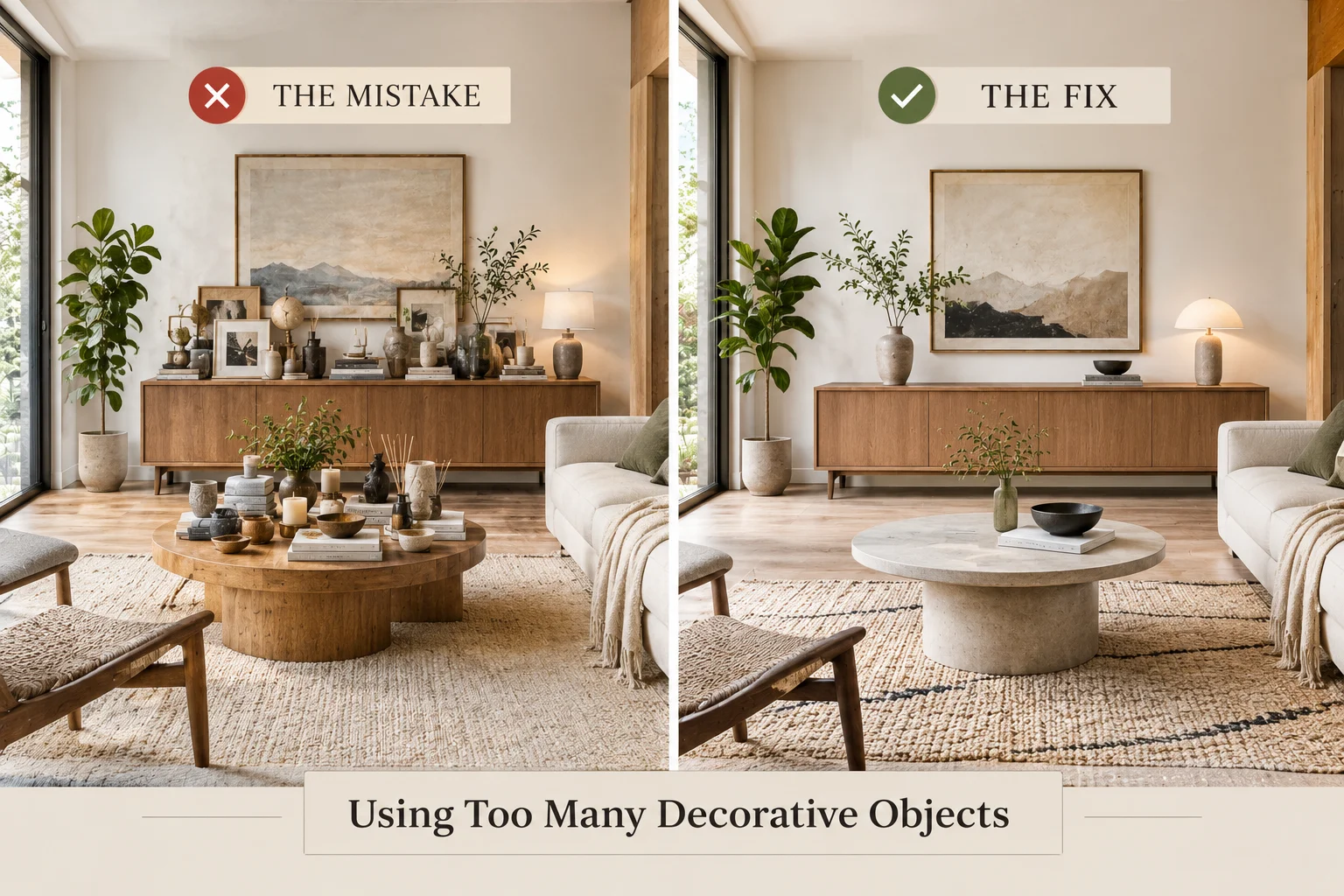
Mistake #2. Using Too Many Decorative Objects
The opposite mistake is filling every table, shelf and console with small accessories.
Japandi interiors value craftsmanship and meaningful objects, but their impact depends heavily on restraint. Ten small decorative pieces scattered across a console usually create more visual activity than two carefully selected objects with distinctive form or texture.
Too many accessories also make surfaces difficult to maintain, undermining the functional simplicity central to the style.
The Fix
Edit decorative objects by asking whether each piece contributes texture, meaning, function or visual balance.
Instead of grouping numerous small accessories together, try:
- one sculptural ceramic vessel;
- a small stack of books;
- one natural branch arrangement; or
- a single handcrafted object.
Leave part of the surface intentionally empty. In Japandi design, the negative space around an object is often as important as the object itself.
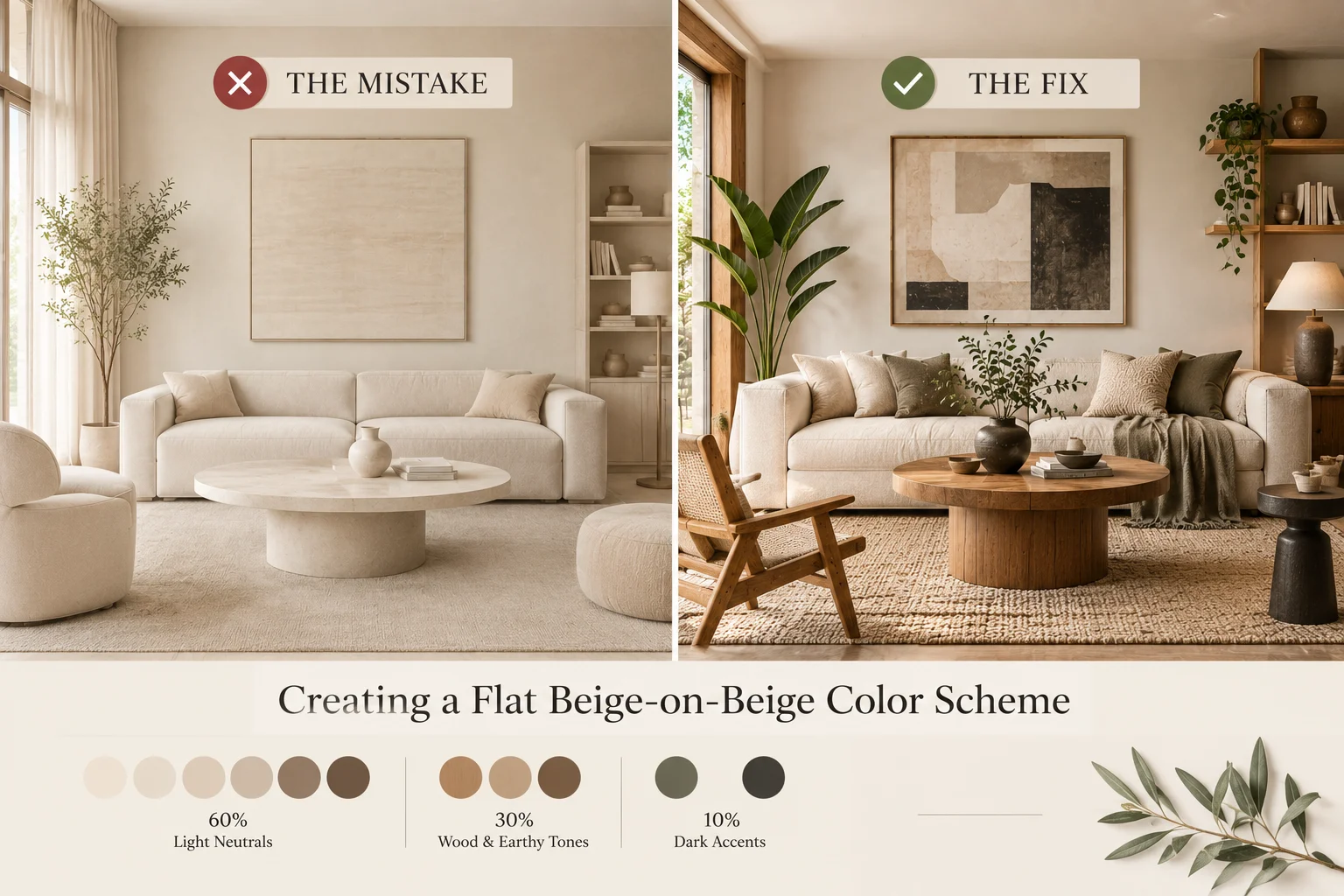
Mistake #3. Creating a Flat Beige-on-Beige Color Scheme
Warm neutrals are closely associated with Japandi interiors, but that does not mean every surface should be the same shade of beige.
When walls, upholstery, rugs, curtains and furniture all sit within an extremely narrow color range, the room can appear washed out and visually flat.
A restrained palette still needs variation.
The Fix
Build the palette in layers.
Begin with a warm off-white, stone, soft greige or muted cream foundation. Add natural timber, then introduce slightly deeper tones through upholstery, rugs, ceramics or artwork.
Finally, use a small amount of grounding color such as charcoal, dark brown, blackened timber, muted olive or clay.
The objective is not high contrast. It is enough tonal variation to give individual elements definition.
A useful formula is:
- 60% light foundational neutrals;
- 30% natural wood and secondary earthy tones; and
- 10% darker or muted accents.
Treat this as a flexible visual guideline rather than a strict mathematical rule.
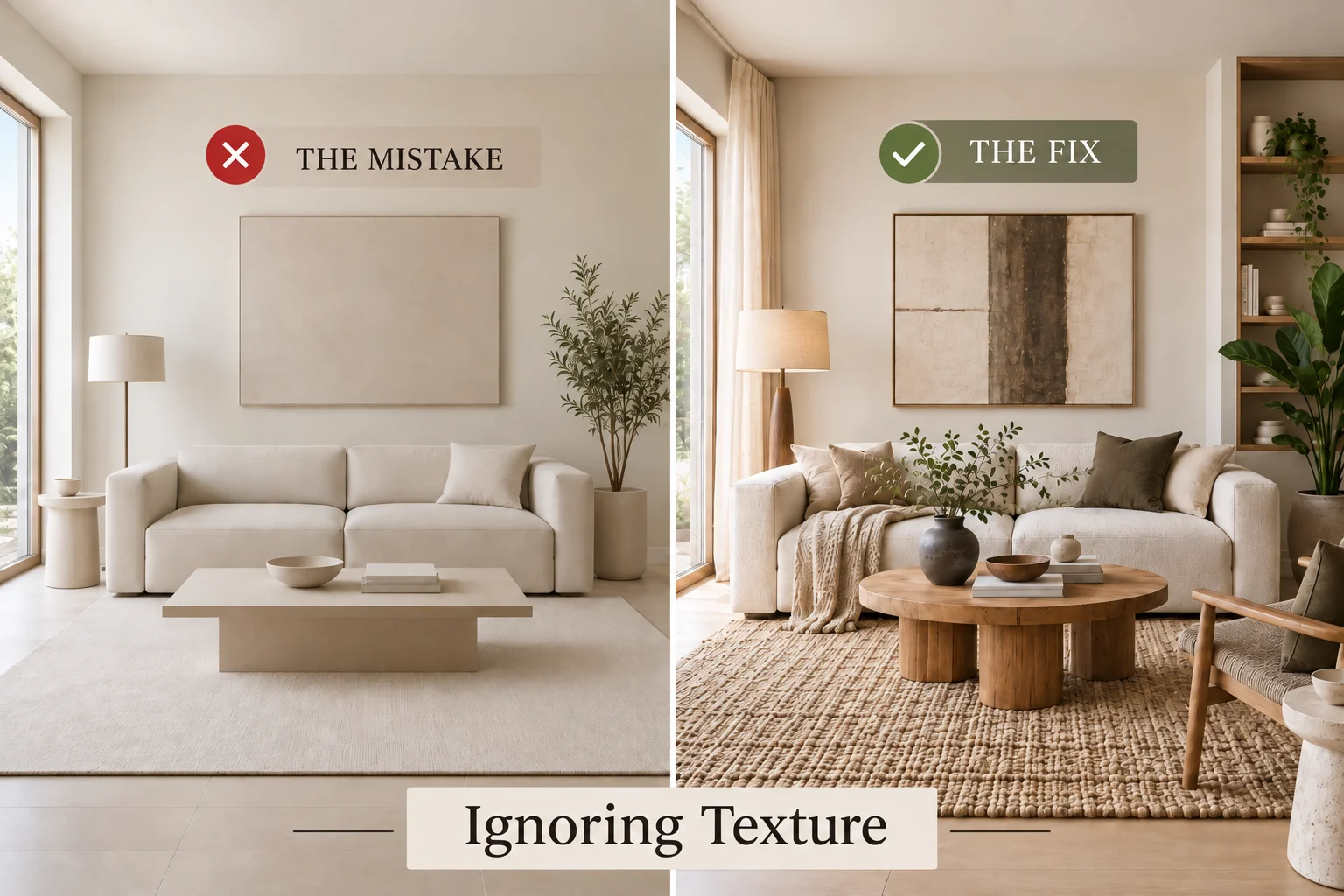
Mistake #4. Ignoring Texture
When color is intentionally limited, texture becomes one of the primary ways a Japandi room develops character.
Smooth walls, flat upholstery, polished furniture and identical finishes may technically fit the palette, but together they can make the space feel sterile.
The Fix
Layer tactile materials before adding more decoration.
Consider combining smooth plaster, visible wood grain, woven linen, boucle, wool, handmade ceramic, natural stone, rattan or paper lighting.
For example, a neutral sofa becomes significantly more interesting when placed on a thick wool rug beside a timber table, textured linen curtains and a handmade ceramic lamp.
The color scheme can remain extremely restrained because the surfaces themselves provide variation.
This is one of the most reliable ways to make neutral Japandi interiors feel warm rather than bland.
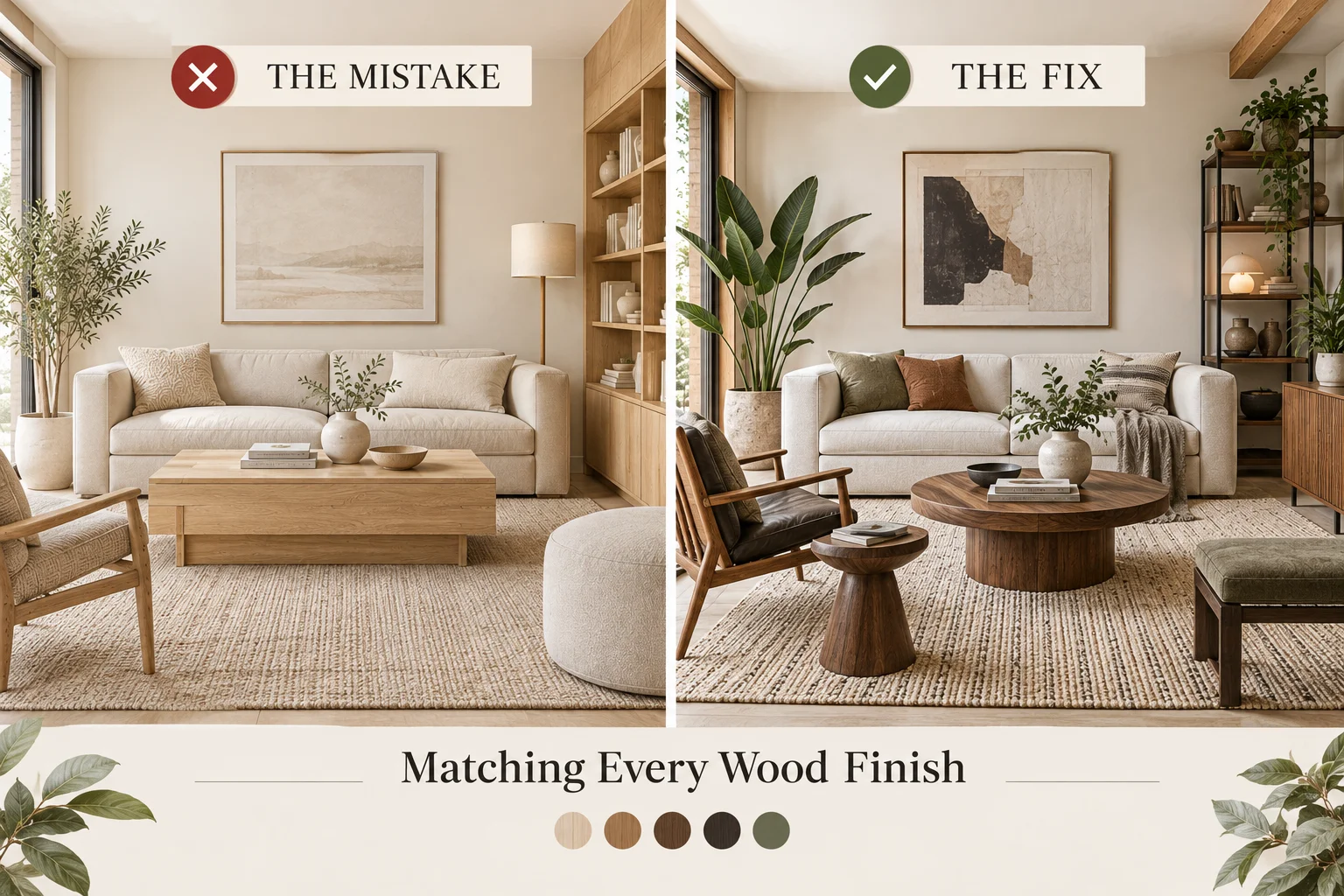
Mistake #5. Matching Every Wood Finish
Trying to make every timber surface identical can make a Japandi room look overly coordinated.
Natural materials are valued partly because of their grain, variation and imperfections. A room containing only one identical manufactured wood tone can lose that organic quality.
The Fix
Choose one dominant wood family and introduce one complementary secondary tone.
For example, pale oak might dominate the floor, cabinet and occasional furniture, while a walnut chair, darker stool or stained timber frame creates contrast.
Wood tones do not need to match exactly, but their undertones should feel compatible.
Repeating each wood tone at least once somewhere else in the room can also help the combination feel intentional.
If you are applying these principles specifically to your main living space, our Japandi Living Room Style Guide explains furniture, materials and styling in greater detail.
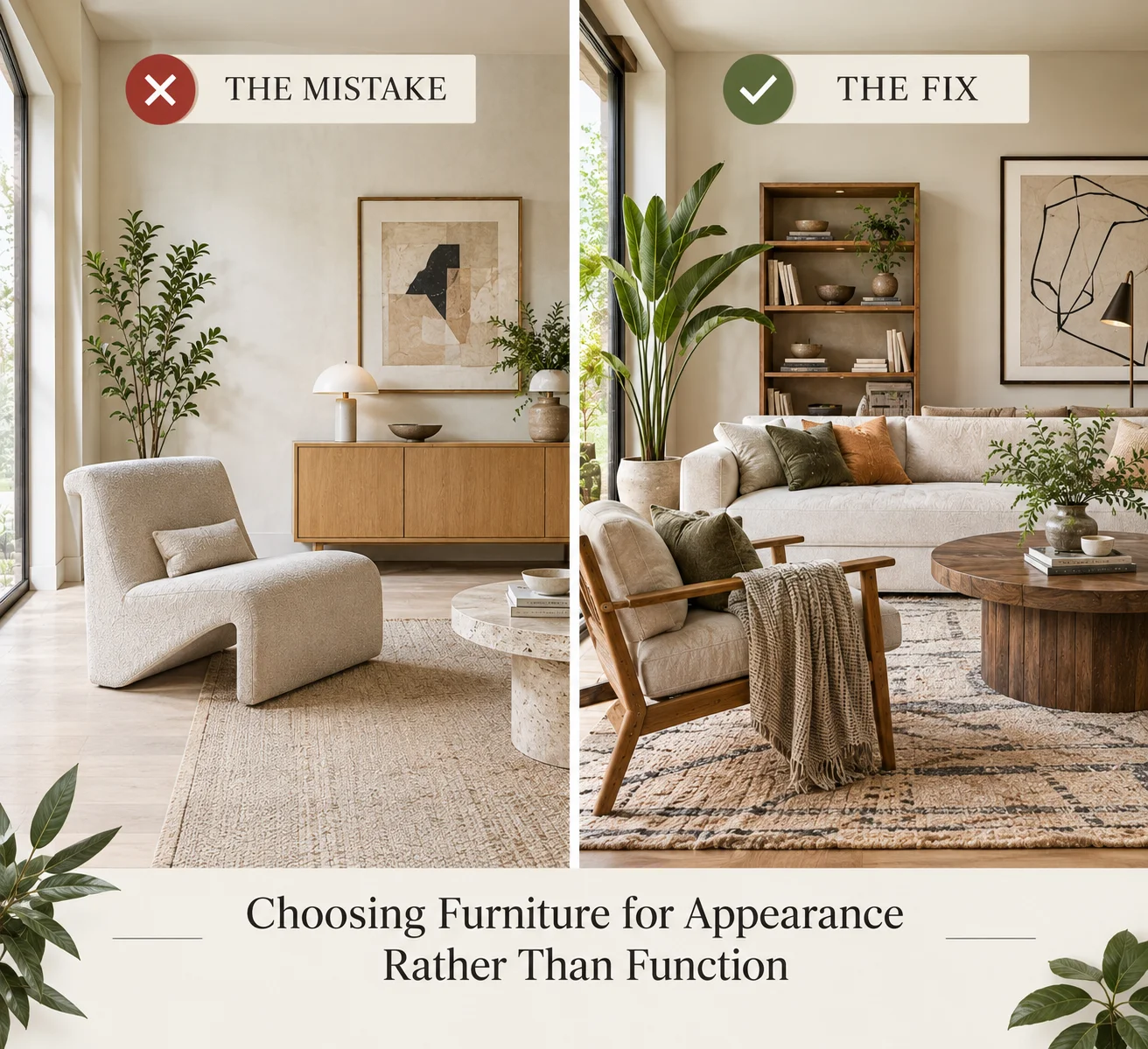
Mistake #6. Choosing Furniture for Appearance Rather Than Function
A beautiful low-profile chair may look perfect in a photograph but become frustrating if nobody enjoys sitting in it.
This is particularly important in Japandi design because functionality is not secondary to aesthetics. It is part of the aesthetic.
Furniture that looks minimal but does not adequately support everyday life contradicts one of the central ideas behind the style.
The Fix
Evaluate furniture according to both appearance and use.
Before buying a piece, consider:
- how frequently it will be used;
- whether its proportions suit the people using it;
- whether it provides enough storage or surface area;
- whether circulation remains comfortable; and
- whether the materials will age appropriately.
Choose fewer pieces if necessary, but prioritize furniture that is comfortable, durable and well made.
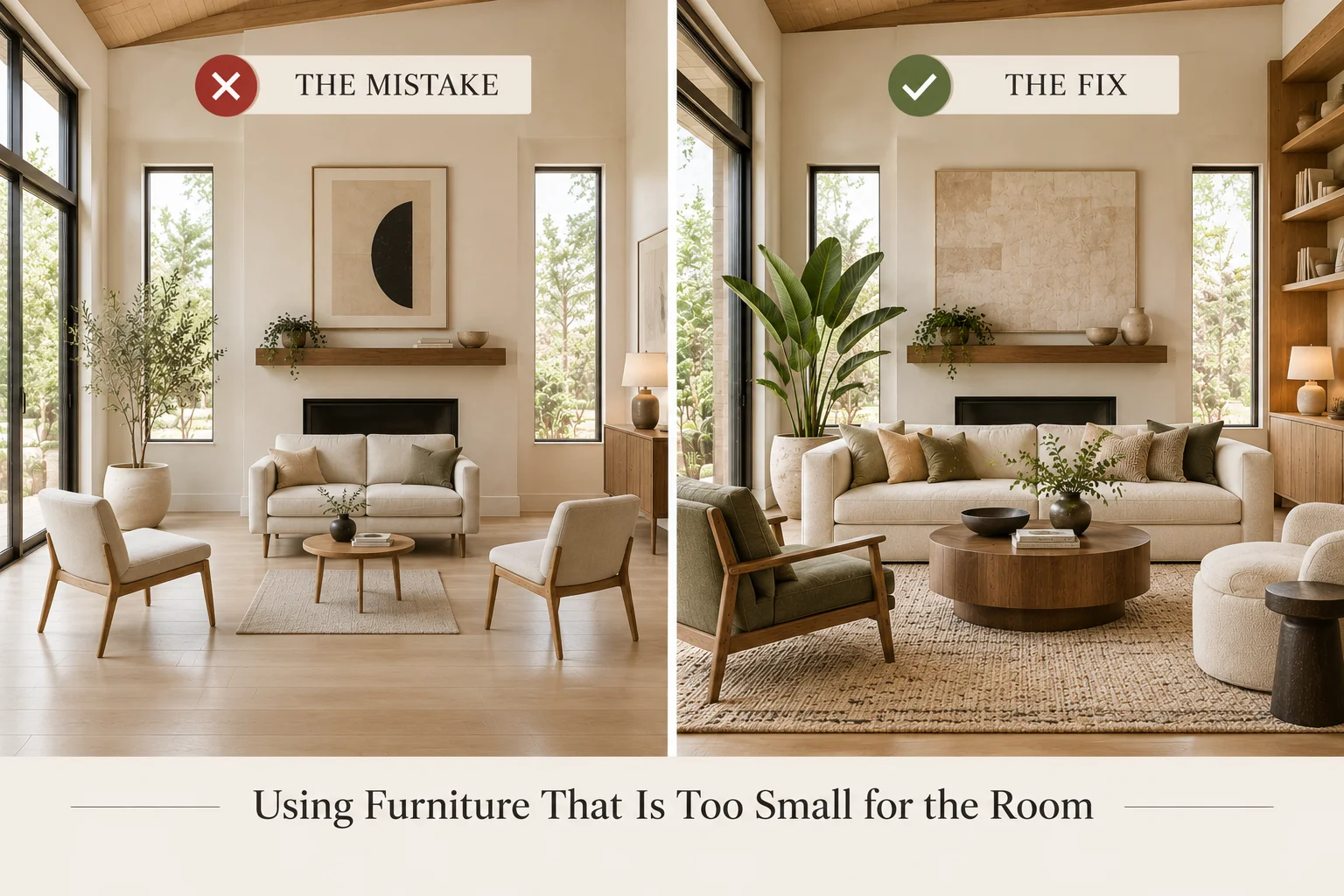
Mistake #7. Using Furniture That Is Too Small for the Room
Because Japandi interiors emphasize open space, homeowners sometimes compensate by purchasing undersized furniture.
A small sofa floating beside a tiny coffee table on an equally small rug does not necessarily make a room feel more spacious. It can instead make the layout appear disconnected.
The Fix
Use appropriately scaled furniture and create open space around it.
In a living room, a larger rug that connects the sofa and chairs will usually create a calmer visual composition than several small isolated pieces.
A substantial coffee table can also provide a stronger focal point than multiple small side tables.
The goal is to use fewer properly proportioned elements, not numerous undersized ones.
For a step-by-step approach to furniture selection, layout and finishing details, see How to Create a Japandi Living Room.
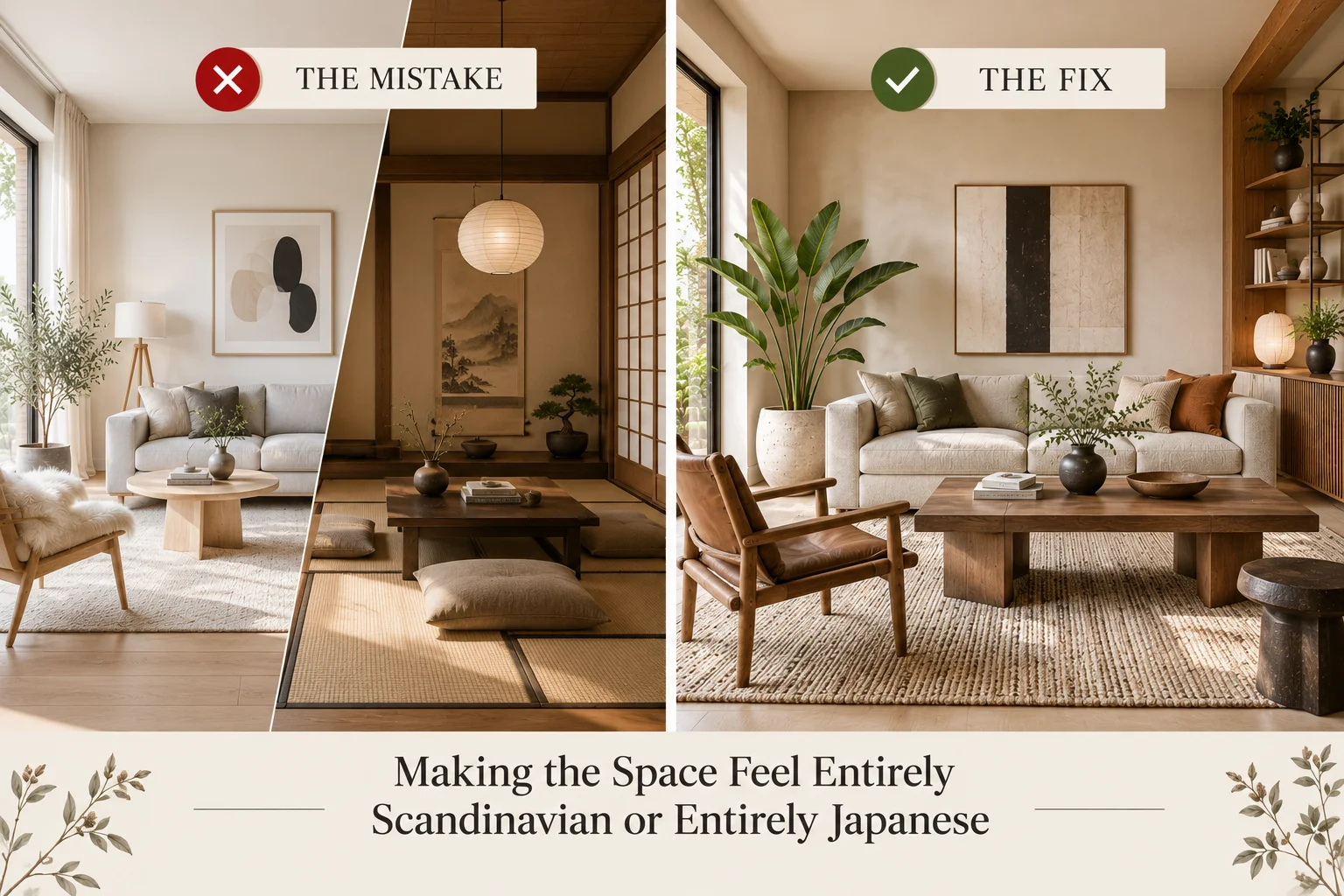
Mistake #8. Making the Space Feel Entirely Scandinavian or Entirely Japanese
Japandi is influenced by both Scandinavian and Japanese design traditions, but simply decorating a Scandinavian room with a few Japanese-looking objects does not necessarily create Japandi style.
Likewise, an extremely traditional Japanese interior with no Nordic influence represents a different aesthetic.
The Fix
Focus on the principles the two traditions share rather than trying to divide the room equally between recognizable Scandinavian and Japanese objects.
Common ground includes:
- functional furniture;
- natural materials;
- craftsmanship;
- visual restraint;
- a connection with nature;
- simple forms; and
- appreciation for quality over quantity.
Then introduce subtle contrasts.
Scandinavian influence might appear through pale oak, comfortable textiles and brighter neutrals, while Japanese influence may appear through lower furniture, darker timber, handcrafted ceramics and greater emphasis on negative space.
The strongest rooms feel integrated rather than divided into two competing styles.
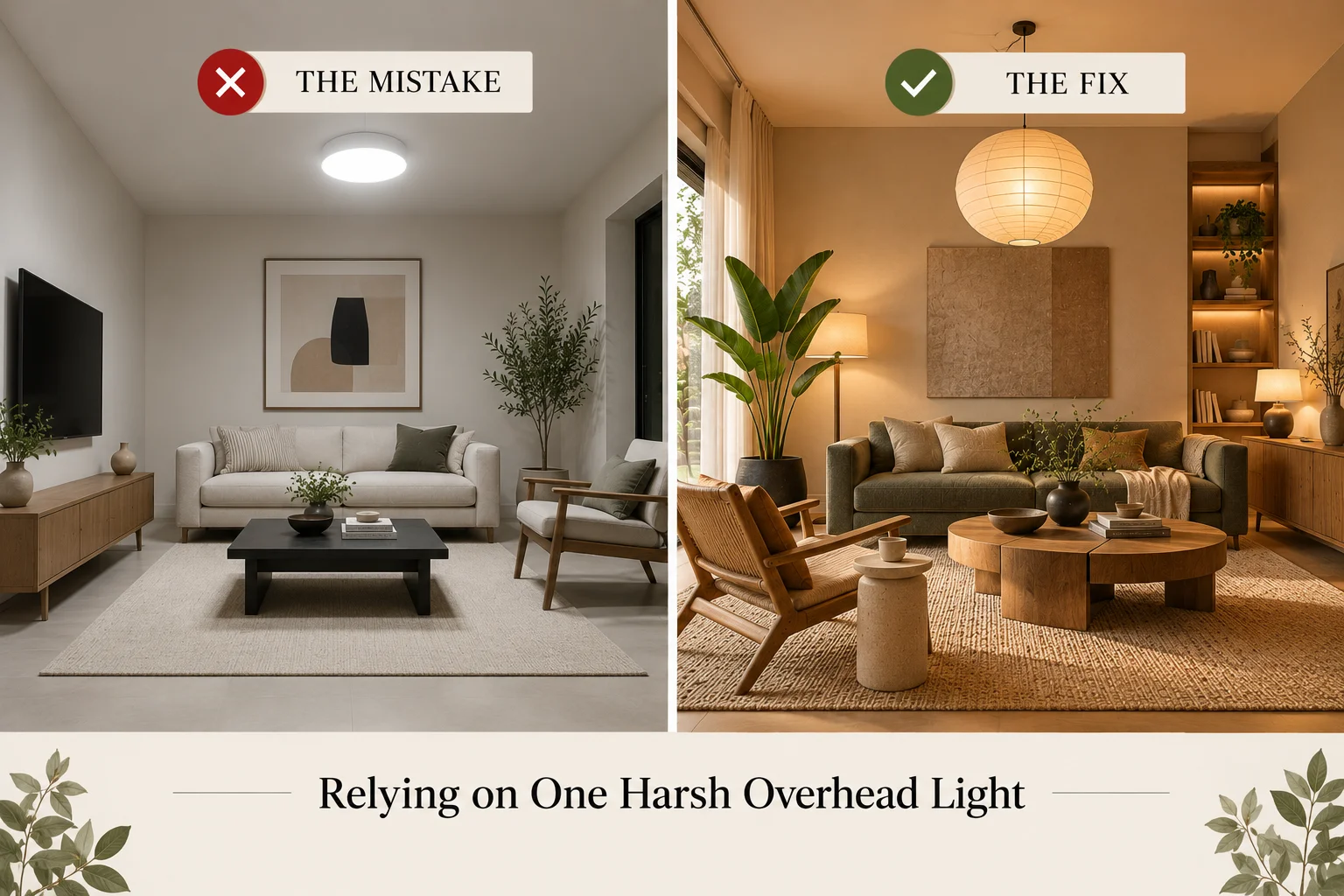
Mistake #9. Relying on One Harsh Overhead Light
Lighting can undermine an otherwise beautifully designed Japandi room.
A single bright ceiling fixture tends to flatten texture, produce hard shadows and remove much of the intimate atmosphere created by natural materials.
The Fix
Create several layers of warm, diffused lighting.
A balanced scheme could include:
- a paper or fabric pendant for general illumination;
- a floor lamp beside a chair;
- a table lamp on a console; and
- subtle directional lighting for artwork or architectural details.
During the day, maximize natural light while softening it with linen or similarly lightweight window treatments where privacy is required.
The goal is not simply to make the room brighter. Good Japandi lighting creates small areas of warmth and emphasizes the texture of wood, stone and textiles.
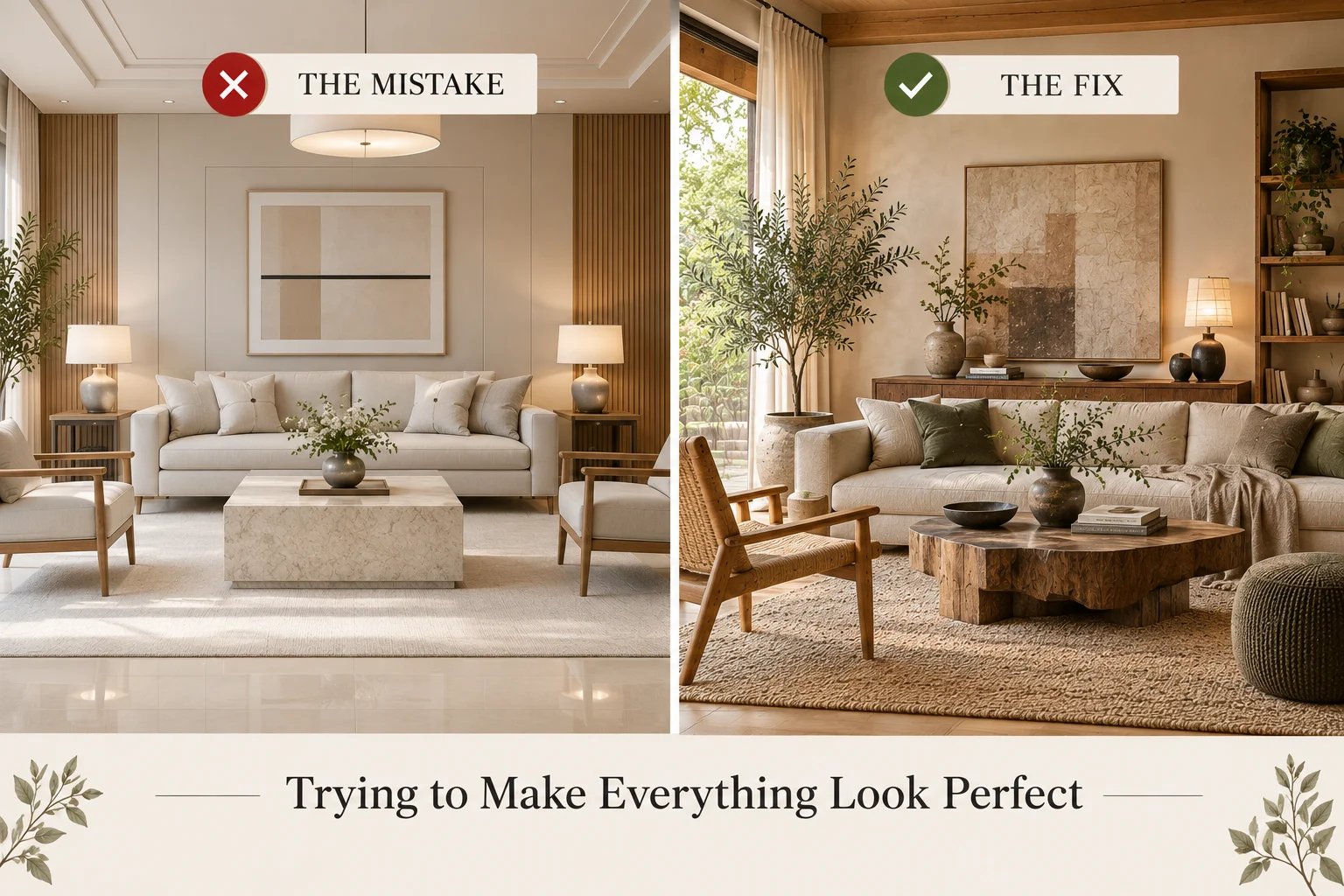
Mistake #10. Trying to Make Everything Look Perfect
Perhaps the most subtle Japandi mistake is making the room feel too polished.
Perfectly matched furniture, flawless synthetic surfaces and accessories arranged with absolute symmetry may produce an elegant photograph, but they can remove much of the natural character that gives Japandi interiors depth.
The Japanese concept of appreciating imperfection is often associated with the aesthetic influence of wabi-sabi. In practical decorating terms, this means allowing materials and objects to show evidence of craftsmanship, age and natural variation.
The Fix
Introduce controlled imperfection.
Choose a ceramic bowl with subtle irregularities, a timber table where the grain remains visible, natural stone with variation or linen that retains its relaxed texture.
A handmade object can sit beside a precisely designed contemporary sofa. A slightly asymmetrical branch arrangement can soften a structured cabinet.
The room should feel considered, but it should still feel human.
How to Tell If Your Japandi Room Is Working
After correcting individual decorating mistakes, step back and evaluate the room as a whole.
A successful Japandi interior usually feels calm without feeling empty, warm without becoming overly rustic and minimal without appearing sterile.
Ask yourself:
- Can you clearly understand the function of the room?
- Does each major piece have enough visual breathing room?
- Are natural materials doing more visual work than decorative accessories?
- Does the neutral palette contain enough tonal variation?
- Can you see several different textures?
- Is there a balance between light and darker elements?
- Does the lighting feel warm and layered?
- Are most visible objects either useful, beautiful or meaningful?
If the answer is yes to most of these questions, the room is probably moving in the right direction.
A Simple Rule for Avoiding Most Japandi Decorating Mistakes
When you are uncertain whether to add another color, object or piece of furniture, consider whether it improves the room’s function, warmth, texture or meaning.
If it contributes none of those qualities, the room may be stronger without it.
At the same time, do not remove something simply because minimal interiors are supposed to contain fewer objects. A comfortable chair, favorite artwork, useful reading lamp or handmade bowl can make the room more personal while remaining completely compatible with Japandi design.
The objective is thoughtful selection rather than arbitrary reduction.
Final Thoughts
The biggest Japandi decorating mistakes usually occur when one characteristic of the style is taken too far. Too much minimalism creates emptiness. Too many neutrals create flatness. Too much coordination removes natural variation, while too many decorative objects eliminate the calm you were trying to create.
The most successful Japandi rooms balance opposites: simplicity with comfort, pale timber with grounding darker tones, clean lines with organic materials and carefully edited interiors with signs of everyday life.
Instead of trying to make your home look like a perfectly styled photograph, focus on creating a space that feels functional, peaceful and naturally cohesive.
For a complete overview of the aesthetic, materials, colors, furniture and philosophy behind the style, continue with our complete Japandi interior design guide. If you are ready to apply the ideas specifically to your main living space, follow our practical guide on how to create a Japandi living room.