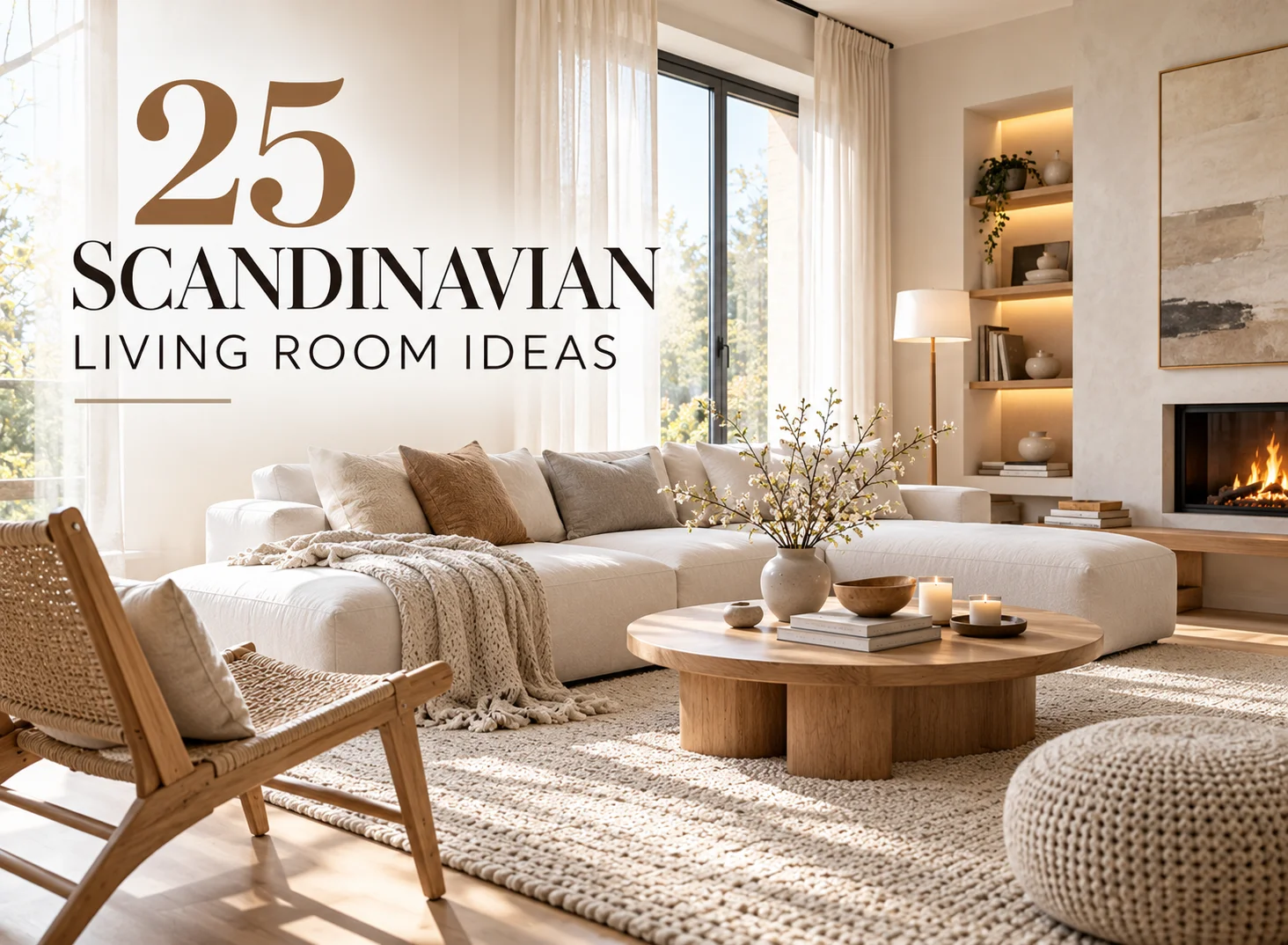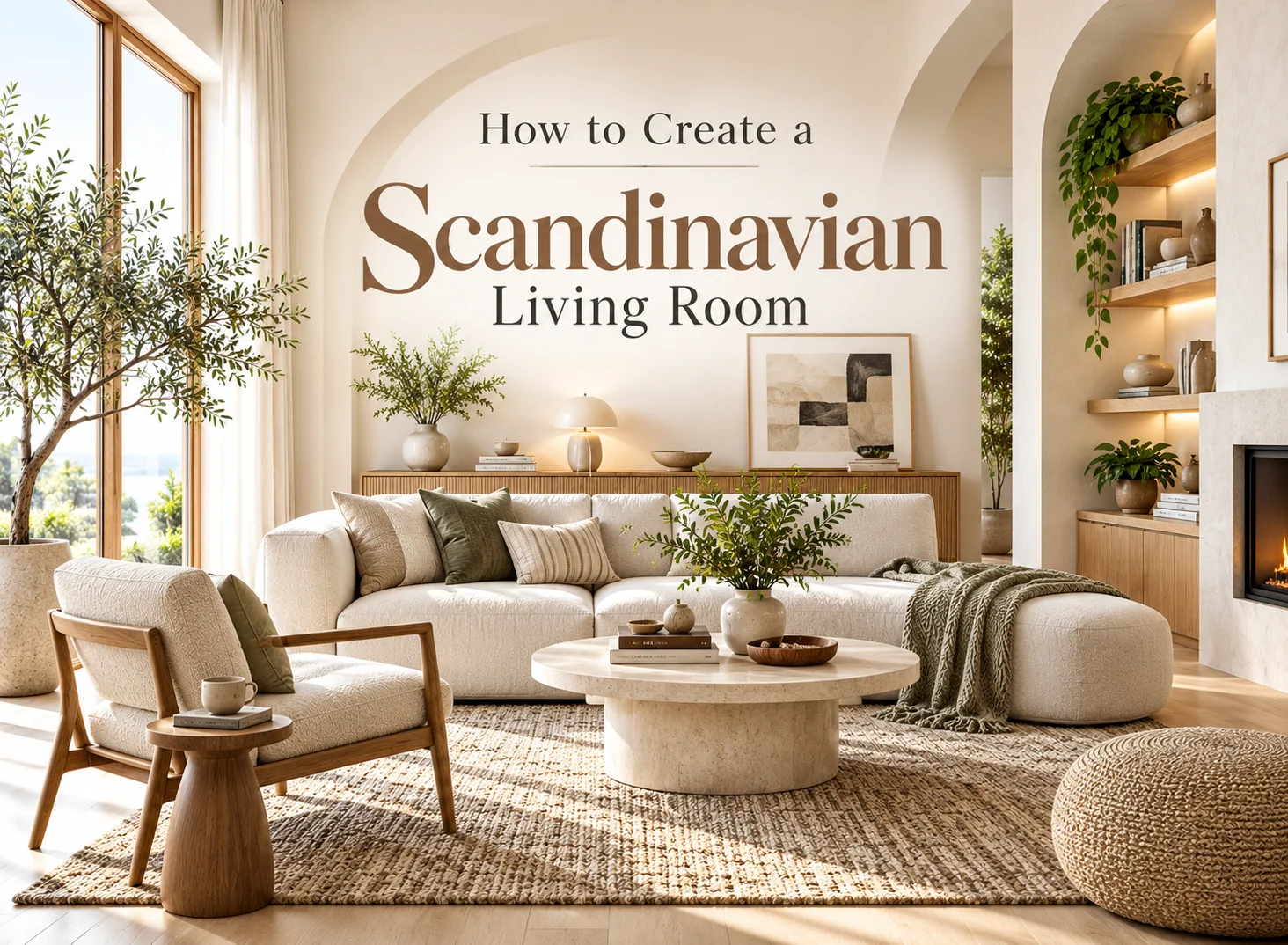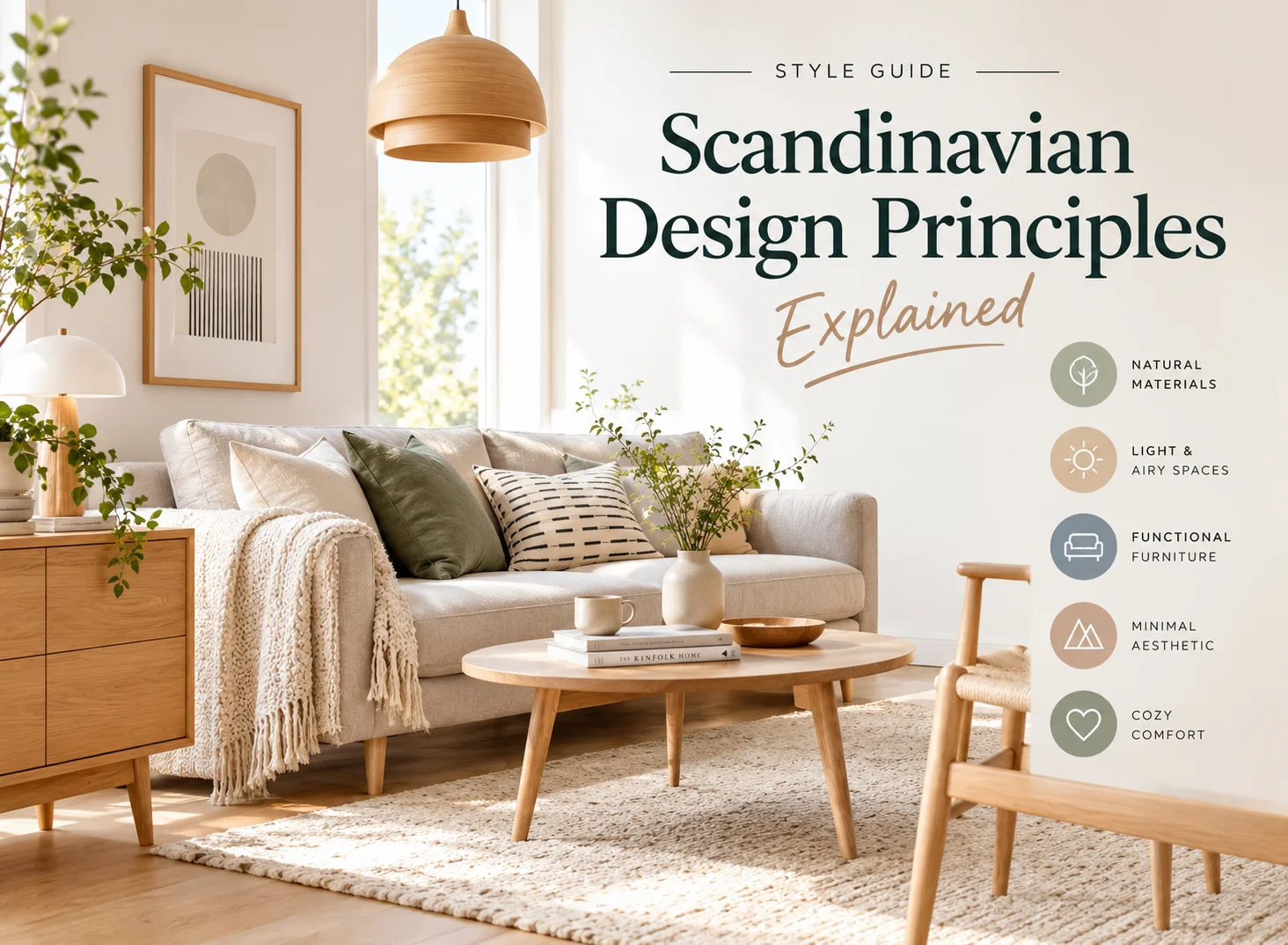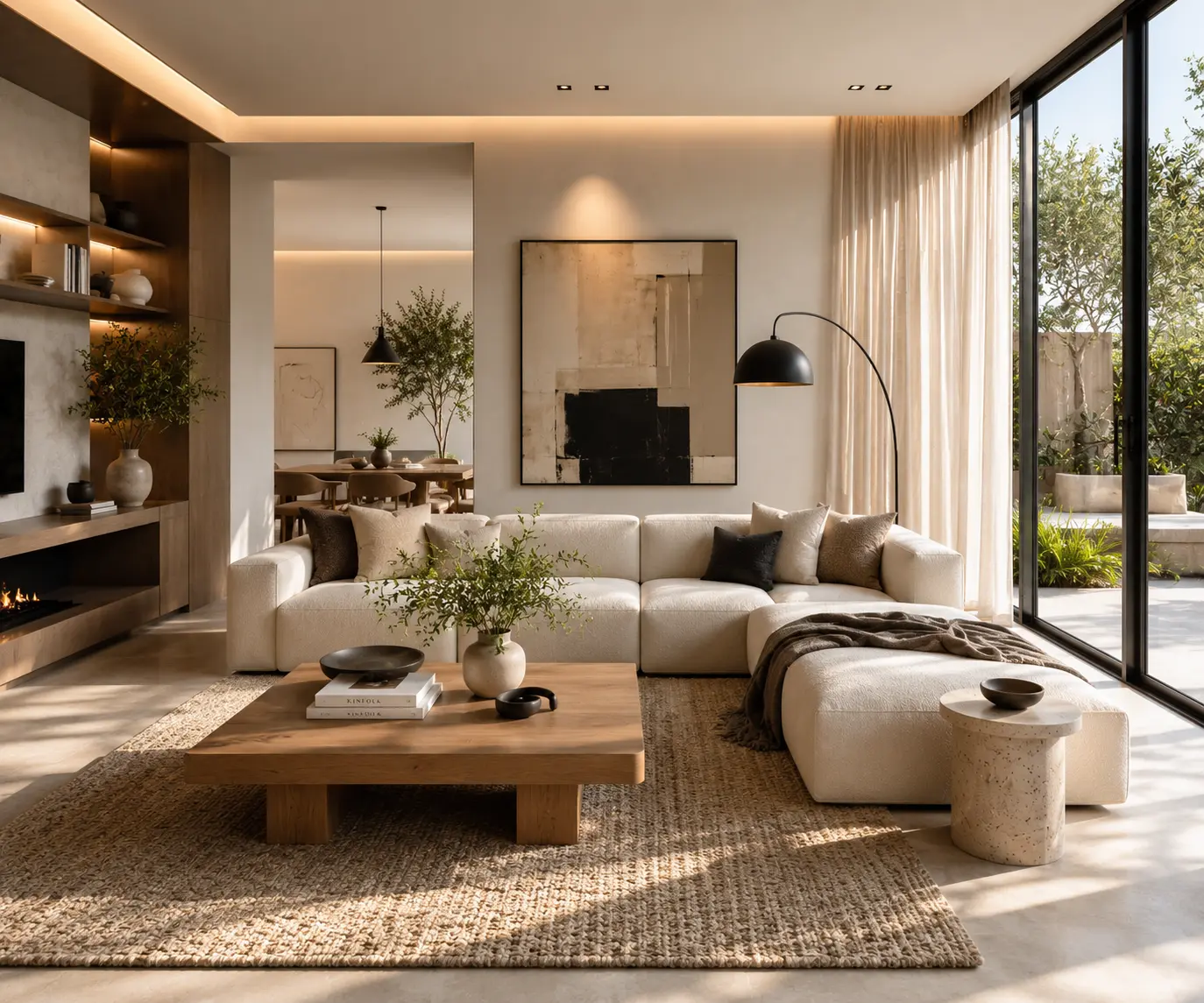
Modern living room style is a timeless interior design approach that combines clean lines, functional furniture, neutral color palettes, natural materials, and uncluttered layouts to create spaces that feel calm, elegant, and comfortable. Unlike trend-driven decorating styles, modern design focuses on simplicity, quality craftsmanship, and purposeful décor that remains stylish for years.
Your living room is the heart of your home—a place where family gathers, guests are welcomed, and everyday moments unfold. Choosing the right design style influences not only how the room looks but also how it feels and functions. Among the many interior design styles available today, modern living room design continues to be one of the most popular because it balances beauty, comfort, and practicality.
However, the word “modern” is often misunderstood. Many homeowners use it interchangeably with contemporary, minimalist, or even Scandinavian design. While these styles share certain characteristics, modern interior design has its own history, philosophy, and defining features that set it apart.
Whether you’re decorating a small apartment, renovating your family home, or simply refreshing your existing space, this guide will help you understand what makes a modern living room truly timeless. You’ll discover the key design principles, furniture choices, color palettes, materials, lighting ideas, and expert styling tips that define this enduring interior style.
What Is Modern Living Room Style?
At a Glance
- Best For: Apartments, family homes, open-plan living spaces
- Overall Feel: Calm, sophisticated, functional, timeless
- Color Palette: Warm whites, greige, taupe, charcoal, earthy neutrals
- Key Materials: Wood, stone, glass, metal, linen, wool
- Signature Feature: Clean lines with purposeful simplicity
Modern living room style is built around the idea that every design element should have both a practical purpose and visual value. Rather than filling a room with decorative objects, modern interiors prioritize thoughtful furniture selection, balanced layouts, and carefully chosen materials that create an atmosphere of effortless elegance.
The philosophy behind modern design can be summarized in one simple principle:
“Less clutter. More purpose.”
Instead of relying on ornate details or constantly changing trends, modern interiors achieve beauty through proportion, craftsmanship, and simplicity. Every piece contributes to the overall composition, allowing the room to feel open, breathable, and comfortable.
A well-designed modern living room typically includes:
- Clean architectural lines and geometric forms.
- Simple furniture with timeless silhouettes.
- A neutral color palette accented by natural textures.
- Large windows that maximize natural light.
- Open layouts that encourage movement and conversation.
- Minimal but meaningful decorative accessories.
- High-quality materials that age beautifully over time.
Designer Tip
When decorating a modern living room, resist the temptation to fill every empty corner. Strategic negative space allows furniture, artwork, and architectural details to stand out while making the room feel larger and more relaxing.
Why It Matters
Modern design isn’t about making a room look empty—it’s about creating visual balance. Removing unnecessary clutter improves circulation, highlights quality furnishings, and gives your living room the flexibility to evolve as your lifestyle changes.
The History of Modern Interior Design
At a Glance
- Origin: Early 20th century
- Major Influence: Bauhaus movement
- Core Principle: Form follows function
- Evolution: Inspired today’s modern and Mid-Century Modern interiors
Modern interior design emerged during the early twentieth century as architects and designers moved away from heavily ornamented Victorian and traditional interiors. Rather than celebrating elaborate decoration, they believed homes should support everyday living through intelligent planning, quality craftsmanship, and functional beauty.
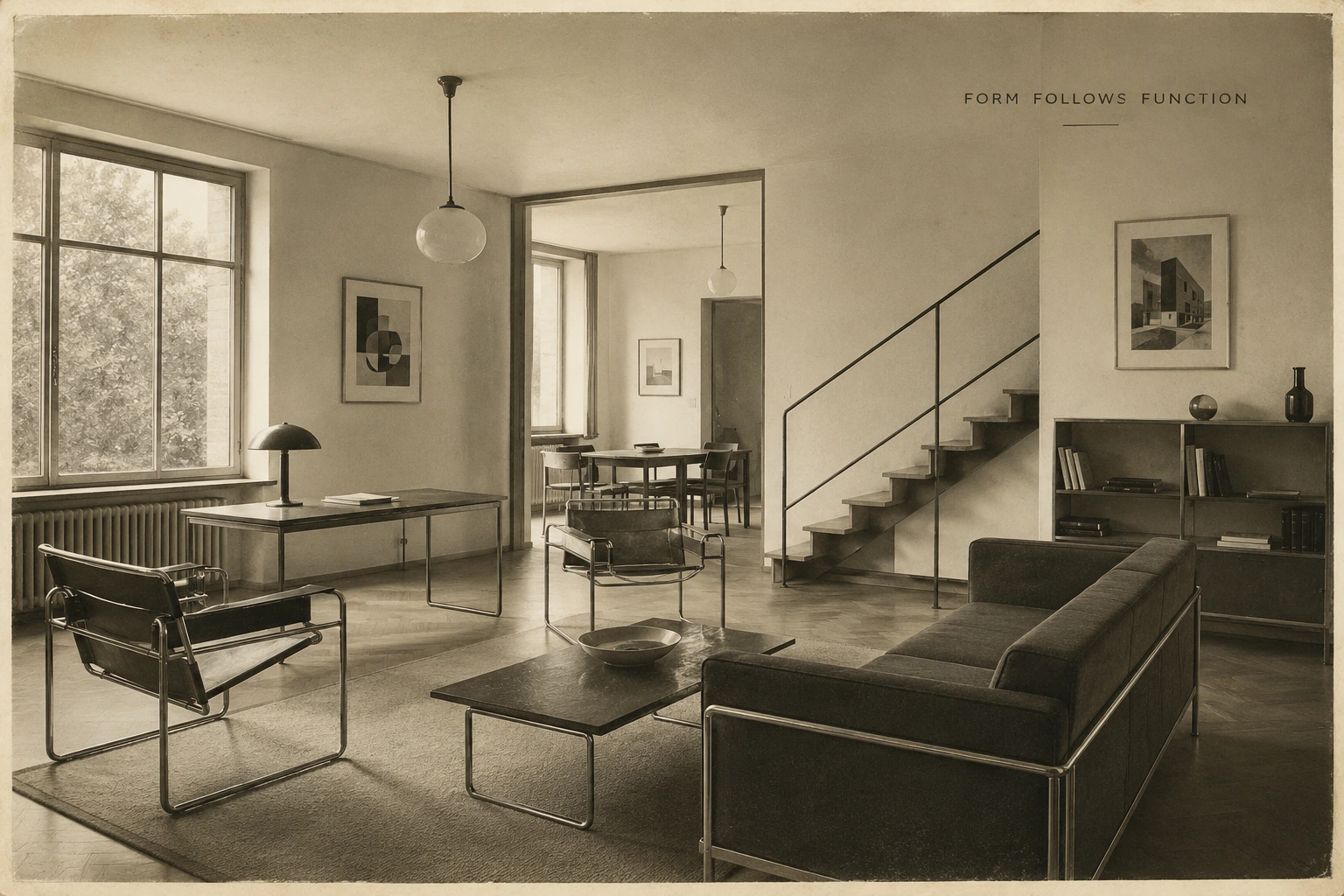
One of the most influential movements behind modern design was the Bauhaus School, founded in Germany in 1919. Bauhaus designers championed the idea that everyday objects—from furniture to lighting—should be simple, practical, and beautifully made. Their philosophy of “form follows function” continues to shape modern interiors today.
As these ideas spread across Europe and North America, modern design evolved to embrace open floor plans, expansive windows, honest materials, and furniture that prioritized comfort without unnecessary ornamentation. Later, the Mid-Century Modern movement introduced softer organic shapes and iconic furniture pieces, many of which remain design classics.
Today’s modern living rooms build on these foundations while incorporating contemporary lifestyles, sustainable materials, and improved technology. The result is a design style that feels fresh, welcoming, and remarkably timeless decades after its origins.
Good to Know
Although modern and contemporary interiors often look similar, they are not the same. Modern design refers to a specific historical design movement, while contemporary design reflects the styles and trends that are popular today. We’ll explore this distinction in a dedicated comparison article later in this content hub.
Core Design Principles
At a Glance
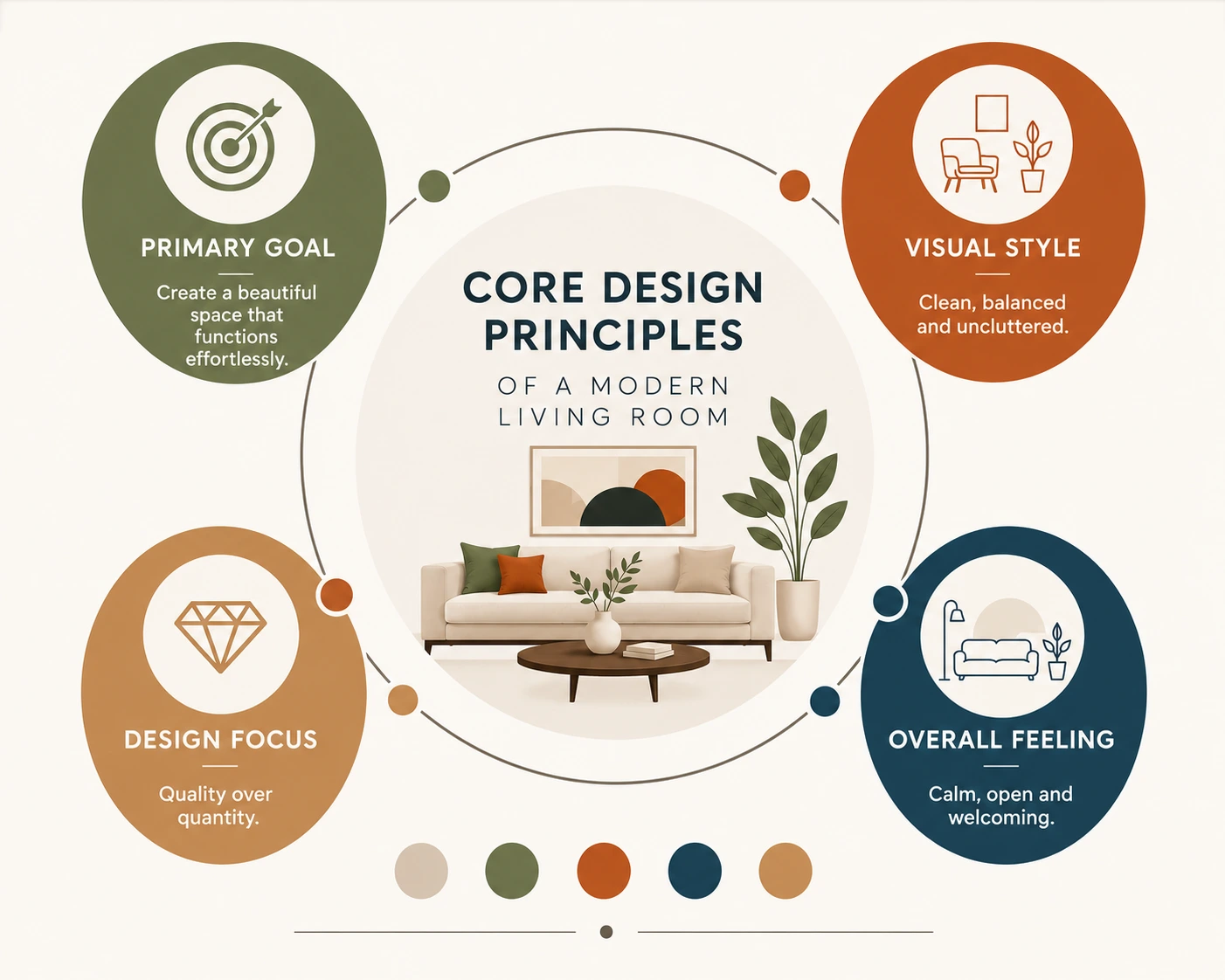
- Primary Goal: Create a beautiful space that functions effortlessly.
- Visual Style: Clean, balanced and uncluttered.
- Design Focus: Quality over quantity.
- Overall Feeling: Calm, open and welcoming.
A successful modern living room isn’t defined by expensive furniture or designer décor. Instead, it’s built on a set of timeless design principles that work together to create harmony throughout the space. Once you understand these principles, you’ll find it much easier to decorate your own living room while avoiding costly mistakes.
1. Simplicity Without Feeling Empty
Modern interiors remove unnecessary visual clutter while maintaining warmth through carefully layered textures, balanced proportions, and thoughtfully selected furnishings. The goal isn’t to create an empty room—it’s to ensure that every item has a purpose.
- Keep furniture arrangements intentional.
- Avoid overcrowding walls and shelves.
- Choose fewer but higher-quality decorative pieces.
- Allow empty space to become part of the overall design.
Why It Matters
Visual clutter competes for attention and can make even a spacious living room feel smaller. Simplifying your décor creates a more relaxing environment and allows key design features to stand out.
2. Function Comes Before Decoration
Every piece of furniture should improve how the room works. Instead of buying furniture simply because it looks attractive, modern interiors prioritize comfort, usability, and long-term value.
- Choose sofas designed for everyday comfort.
- Select coffee tables with practical surfaces or hidden storage.
- Use media units that conceal cables and electronics.
- Include flexible seating for entertaining guests.
Designer Tip
Before purchasing any furniture, ask yourself one simple question: “How will this improve the way I use my living room?” If you can’t answer confidently, it may not belong in the space.
3. Balance Over Symmetry
Many people assume modern interiors must be perfectly symmetrical. In reality, modern design focuses on visual balance rather than identical arrangements. Different shapes, textures and furniture sizes can coexist beautifully when their visual weight feels balanced.
- Balance a large sectional with oversized artwork.
- Pair soft fabrics with hard materials like stone or metal.
- Mix curved furniture with clean architectural lines.
- Distribute lighting evenly throughout the room.
4. Honest Materials
Modern interiors celebrate authentic materials rather than imitations. Natural wood, marble, linen, leather, wool, glass and metal bring depth and character while aging beautifully over time.
Instead of hiding imperfections, modern design embraces natural grain patterns, subtle stone veining and handcrafted finishes.
Good to Know
Modern interiors don’t require luxury materials everywhere. Even affordable furniture feels more sophisticated when you combine authentic textures such as oak veneer, linen cushions and ceramic accessories.
5. Timeless Design Over Short-Lived Trends
Perhaps the greatest strength of modern interior design is its longevity. Instead of following seasonal decorating trends, modern spaces rely on classic proportions and neutral foundations that remain stylish for many years.
Accent colors, artwork and textiles can easily be updated without replacing your largest furniture pieces.
Why It Matters
Investing in timeless furniture reduces decorating costs over time because you can refresh the look with smaller accessories instead of undertaking a complete room makeover every few years.
Key Characteristics
At a Glance
- Clean architectural lines
- Open and airy layouts
- Neutral color palette
- Natural materials
- Minimal decorative accessories
- Statement lighting
- Layered textures
Although every home is unique, most modern living rooms share several recognizable design characteristics. These elements work together to create a space that feels elegant, functional and inviting.
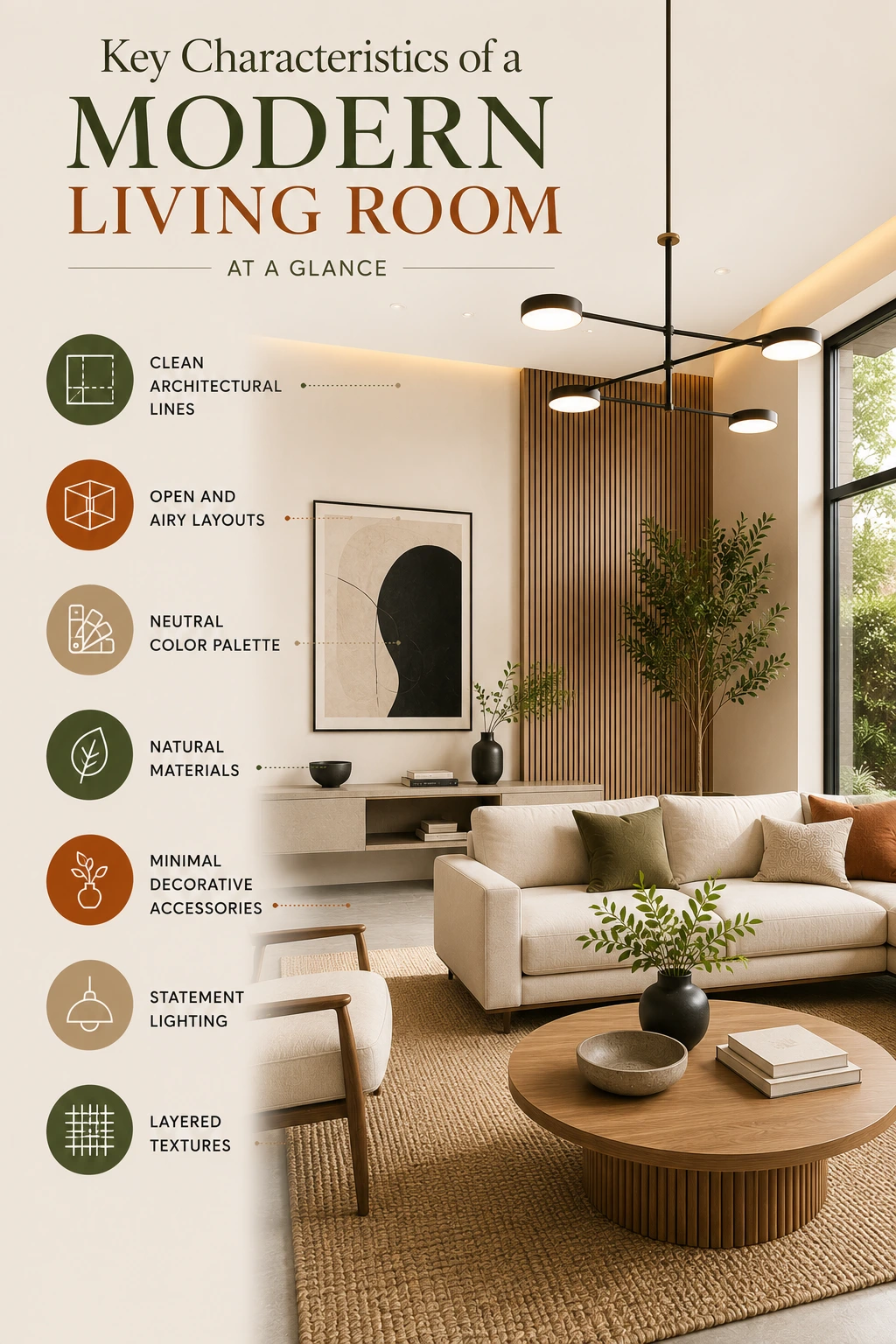
Clean Architectural Lines
Modern furniture features crisp silhouettes with minimal ornamentation. Sofas, shelving units and coffee tables typically emphasize straight edges, geometric forms and smooth surfaces.
- Simple sofa arms
- Slim furniture legs
- Floating media units
- Minimal cabinetry
- Frameless shelving
Open, Airy Layouts
Modern living rooms avoid overcrowding. Furniture is arranged to encourage movement, conversation and natural flow throughout the room.
Whenever possible, leave comfortable walking paths around seating areas instead of pushing furniture tightly together.
Neutral Color Foundations
Neutral colors provide the calm backdrop that defines modern interiors. Warm whites, soft greys, greige, taupe and earthy beige tones create a timeless canvas that complements both natural materials and statement décor.
Designer Tip
Use your largest furniture pieces—such as the sofa and rug—in neutral shades. Add personality through cushions, artwork and accessories that are easier and less expensive to replace later.
Layered Texture Instead of Busy Patterns
Modern interiors rely on texture rather than excessive pattern to create visual interest.
Combining materials with different finishes keeps the room feeling sophisticated without becoming visually overwhelming.
- Bouclé fabric
- Linen curtains
- Oak wood
- Travertine stone
- Leather accents
- Wool rugs
- Ceramic décor
Why It Matters
Texture introduces warmth and personality while preserving the clean aesthetic that modern interiors are known for.
Thoughtful Statement Pieces
Rather than filling every surface with decorative accessories, modern interiors typically feature one or two carefully selected focal points.
Examples include:
- An oversized abstract artwork.
- A sculptural coffee table.
- A designer lounge chair.
- A dramatic pendant light.
- A large indoor tree.
These statement pieces create visual impact without making the room feel cluttered.
Color Palette
At a Glance
- Base Colors: White, greige, taupe, warm grey.
- Accent Colors: Charcoal, black, olive, terracotta.
- Natural Elements: Oak, walnut and stone.
The color palette forms the foundation of every modern living room. Rather than relying on bold colors throughout the space, modern interiors begin with calming neutral tones and introduce contrast through furniture, artwork and carefully selected accents.
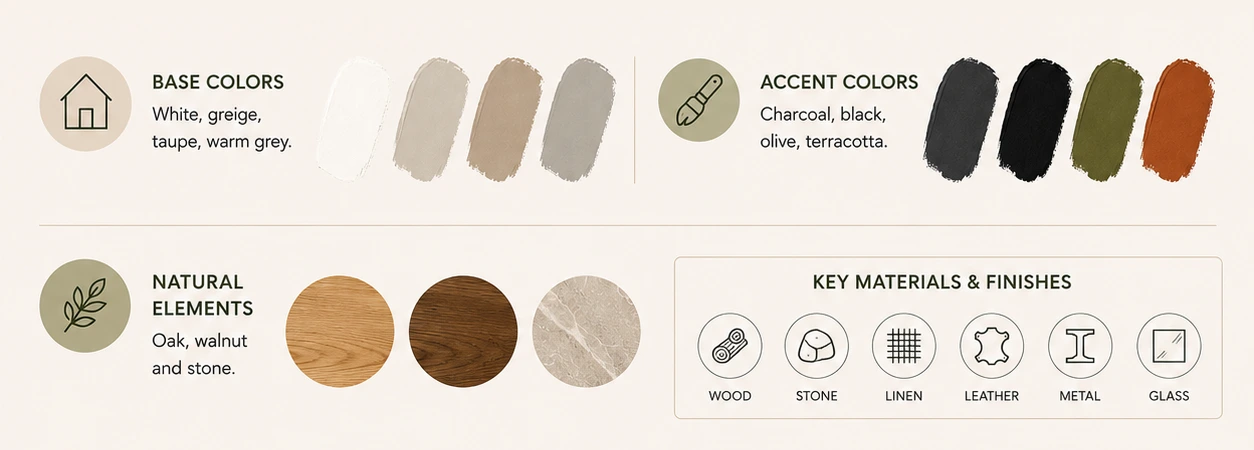
A balanced modern palette usually includes:
- Warm white walls.
- Greige or taupe upholstery.
- Natural oak furniture.
- Black metal accents.
- Soft charcoal accessories.
- Muted greenery from indoor plants.
Designer Tip
Follow the 60–30–10 color rule for an effortlessly balanced modern living room: 60% dominant neutral color, 30% secondary tone and 10% accent color.
Furniture
At a Glance
- Focus: Comfort, simplicity and functionality
- Style: Clean silhouettes with minimal ornamentation
- Materials: Wood, fabric, leather, metal and glass
- Rule: Buy fewer, better-quality pieces
Furniture is one of the most important elements of modern living room design. Instead of filling the room with multiple matching pieces, modern interiors prioritize carefully selected furniture that offers both visual balance and everyday comfort.
Each piece should contribute to the overall design while maintaining enough open space for the room to feel airy and uncluttered.
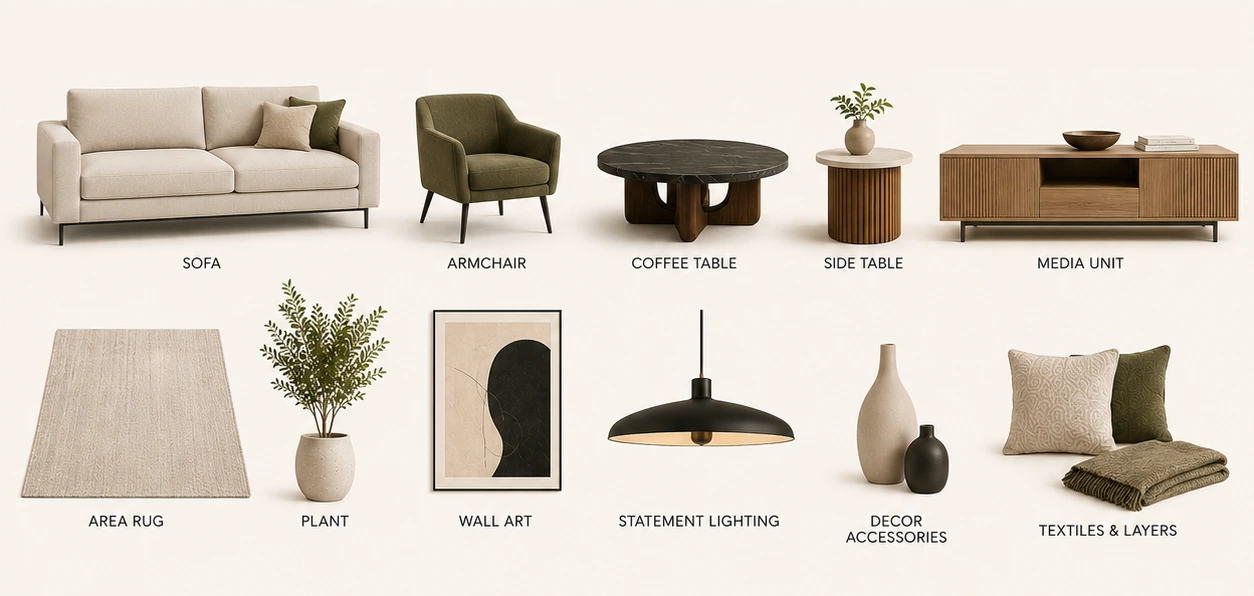
Sofa
The sofa is usually the largest and most important furniture piece in the room.
Look for:
- Low-profile silhouettes
- Straight or gently curved arms
- Neutral upholstery
- Comfortable deep seating
- Simple legs in wood or metal
Designer Tip
Choose the highest-quality sofa your budget allows. Since it serves as the room’s focal point, a timeless sofa can remain stylish for many years while smaller accessories are updated seasonally.
Coffee Table
Modern coffee tables emphasize sculptural forms and honest materials rather than excessive decoration.
Popular choices include:
- Solid oak
- Travertine stone
- Glass tops
- Rounded organic shapes
- Minimal black metal frames
Accent Chairs
Accent chairs introduce additional seating while adding visual interest through contrasting textures or shapes.
Consider:
- Bouclé lounge chairs
- Leather armchairs
- Wood-framed occasional chairs
- Curved upholstered seating
Storage Furniture
Modern interiors value hidden storage that keeps everyday clutter out of sight.
- Floating TV units
- Built-in shelving
- Minimal sideboards
- Storage benches
- Closed cabinetry
Why It Matters
Well-designed furniture creates visual harmony while supporting your daily lifestyle. A functional layout helps your living room stay organized and enjoyable to use every day.
Materials and Textures
At a Glance
- Natural oak
- Walnut
- Linen
- Bouclé
- Leather
- Marble
- Travertine
- Ceramic
- Glass
One of the biggest misconceptions about modern interiors is that they feel cold. In reality, the warmth comes from layering natural materials rather than adding excessive decoration.
Texture becomes the primary design tool.
Instead of introducing bold patterns everywhere, modern interiors mix finishes that create subtle visual contrast.
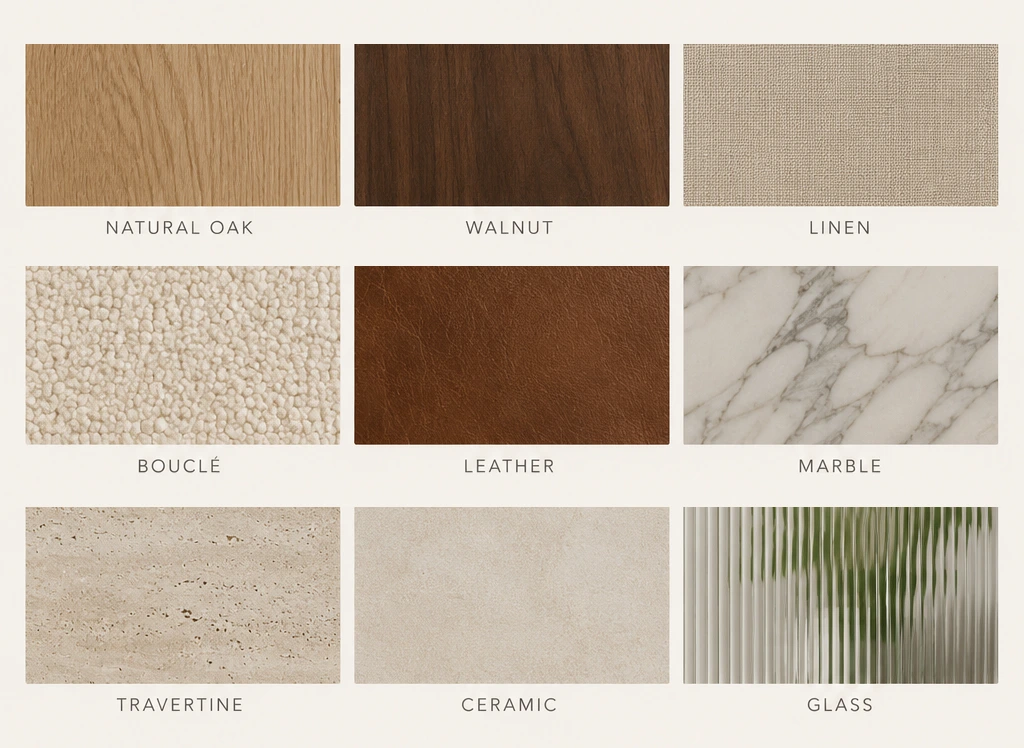
Wood
Wood introduces warmth and balances harder materials such as glass and metal.
- White oak
- Natural oak
- Walnut
- Ash wood
Stone
Stone adds timeless elegance and visual depth.
- Travertine
- Marble
- Slate
- Quartz
Textiles
- Linen curtains
- Bouclé chairs
- Wool rugs
- Cotton cushions
- Leather accessories
Designer Tip
Layer at least three different textures within your seating area—for example, a linen sofa, wool rug and oak coffee table. This creates depth without relying on busy patterns.
Lighting Ideas
At a Glance
- Maximize natural light
- Use layered lighting
- Add statement fixtures
- Create warm ambience
Lighting plays a major role in shaping the atmosphere of a modern living room. Rather than relying on a single ceiling fixture, modern interiors combine multiple light sources to create depth and flexibility throughout the day.
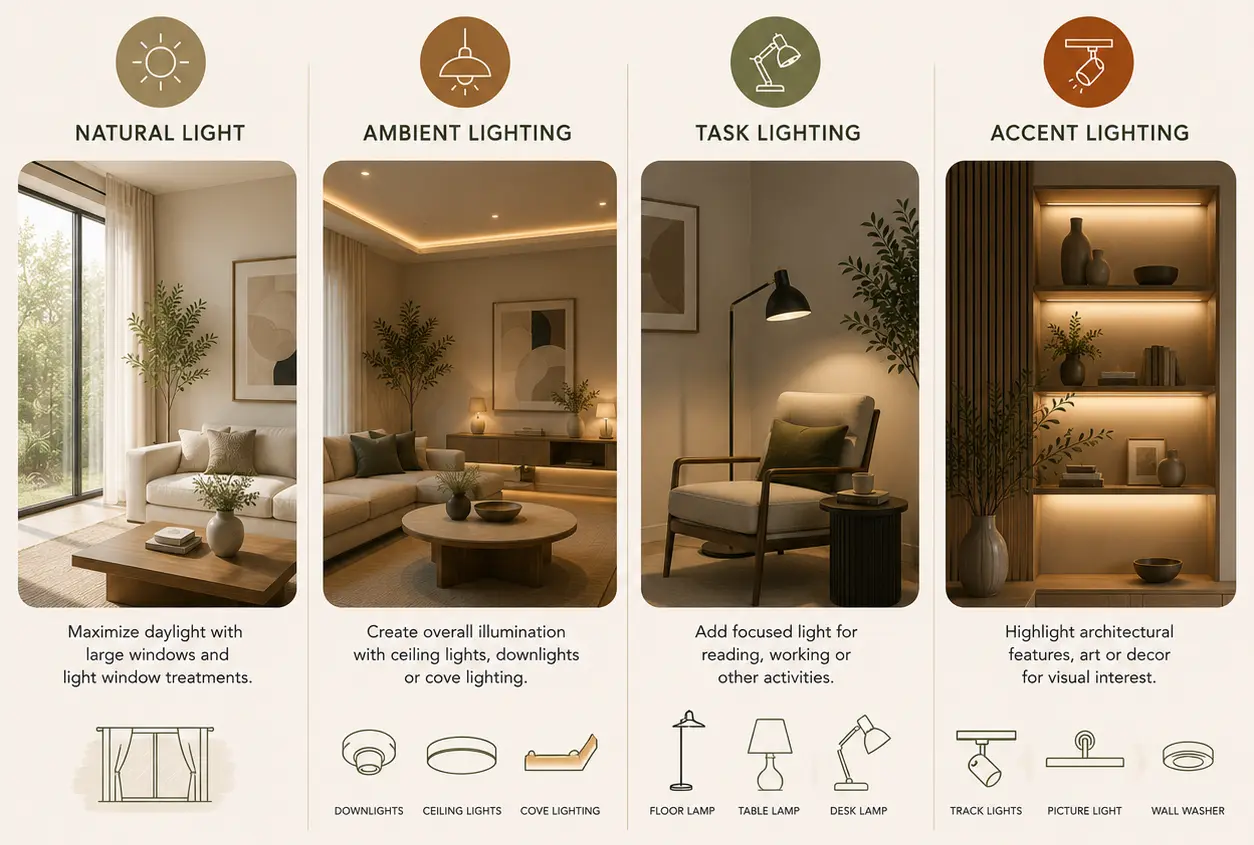
Natural Light
Whenever possible, allow natural daylight to become the room’s primary light source.
- Use sheer curtains.
- Avoid blocking windows with oversized furniture.
- Choose reflective surfaces to bounce light around the room.
Ambient Lighting
- Recessed lighting
- Modern ceiling fixtures
- LED cove lighting
Task Lighting
- Reading lamps
- Floor lamps
- Adjustable wall sconces
Accent Lighting
- Picture lights
- Table lamps
- LED shelving
- Sculptural pendant lights
Why It Matters
Layered lighting allows your living room to adapt to different activities—from relaxing evenings and movie nights to entertaining guests and working from home.
Décor and Accessories
At a Glance
- Decorate intentionally
- Choose quality over quantity
- Use artwork as focal points
- Bring nature indoors
Accessories complete the room, but in modern design they should never overwhelm it. Every decorative item should contribute to the room’s personality while maintaining a clean and uncluttered appearance.
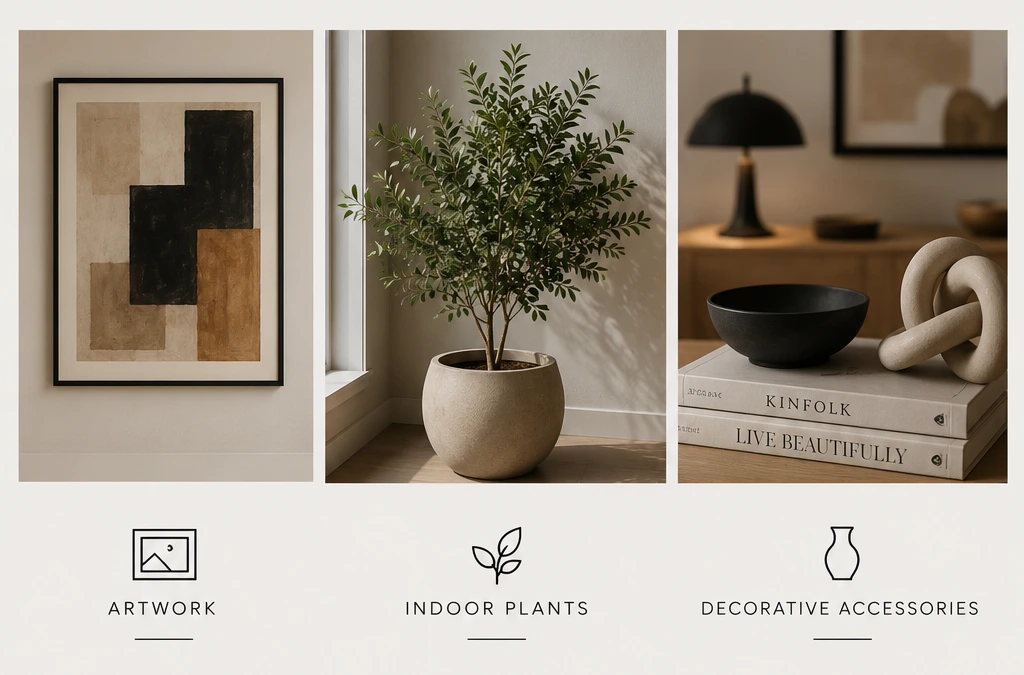
Artwork
Large-scale artwork generally creates more impact than several smaller frames.
Popular options include:
- Abstract paintings
- Black and white photography
- Minimal line art
- Textured canvas artwork
Indoor Plants
Plants soften modern interiors while introducing natural color and texture.
Excellent choices include:
- Fiddle Leaf Fig
- Olive Tree
- Rubber Plant
- Bird of Paradise
- Snake Plant
Decorative Accessories
Keep styling simple by selecting a few carefully curated pieces.
- Ceramic vases
- Coffee table books
- Sculptural bowls
- Natural candles
- Stone objects
Designer Tip
Instead of displaying many small decorative objects, group accessories in odd numbers and vary their height, texture and shape for a professionally styled appearance.
Who Is Modern Living Room Style Best For?
Modern living room design is incredibly versatile, making it suitable for many different homes and lifestyles.
This style is an excellent choice if you:
- Prefer uncluttered interiors.
- Enjoy timeless rather than trendy design.
- Value comfort and functionality.
- Have an open-plan living space.
- Want furniture that will remain stylish for years.
- Like decorating with neutral colors and natural materials.
Good to Know
If you prefer rooms with more character, warmth and layered personality, consider blending modern design with Scandinavian, Japandi or Organic Modern styles. These variations retain modern simplicity while introducing softer textures and additional natural elements.
How to Create a Modern Living Room: Step-by-Step
At a Glance
- Declutter first.
- Choose a neutral foundation.
- Invest in timeless furniture.
- Layer natural textures.
- Add lighting at different levels.
- Decorate with intention.
You don’t need a complete renovation to achieve a modern living room. By following a few intentional design decisions, you can gradually transform almost any space into a timeless, functional interior.
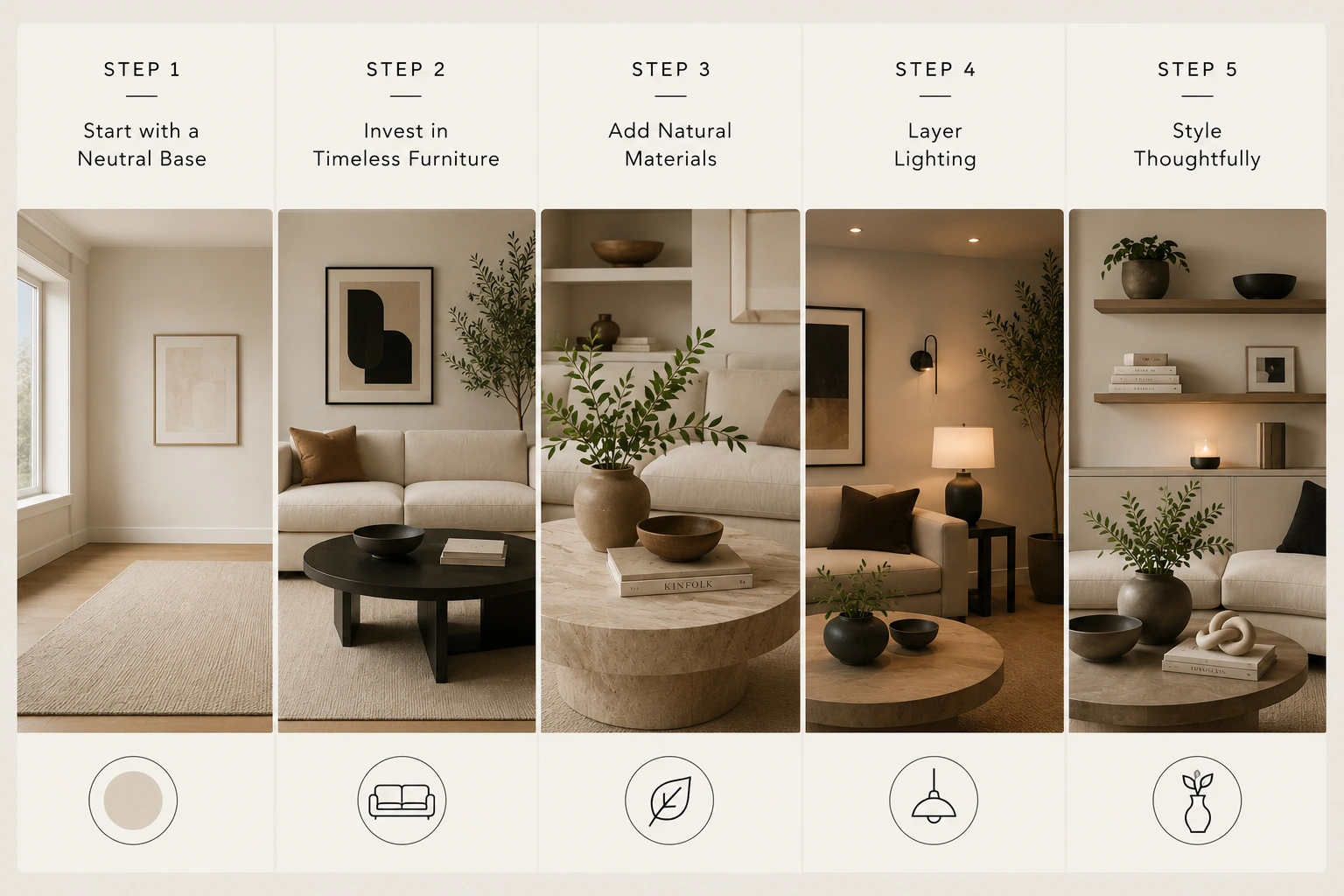
Step 1: Start with a Neutral Base
Paint the walls in warm white, soft greige or light taupe. Neutral backgrounds make the room feel larger and allow furniture to become the focal point.
Step 2: Invest in Timeless Furniture
Choose one high-quality sofa with clean lines, then build the room around it using complementary furniture rather than purchasing complete matching sets.
Step 3: Add Natural Materials
Introduce warmth using oak furniture, linen fabrics, wool rugs, stone accessories and ceramic décor.
Step 4: Layer Lighting
Combine ceiling lighting, floor lamps, table lamps and natural daylight to create a comfortable atmosphere throughout the day.
Step 5: Style Thoughtfully
Finish the room with artwork, greenery and a small selection of decorative accessories that reflect your personality without overwhelming the space.
Designer Tip
If you’re decorating on a budget, replace your largest furniture pieces last. Updating wall color, lighting, rugs and accessories often creates a dramatic transformation for a fraction of the cost.
Common Modern Living Room Decorating Mistakes
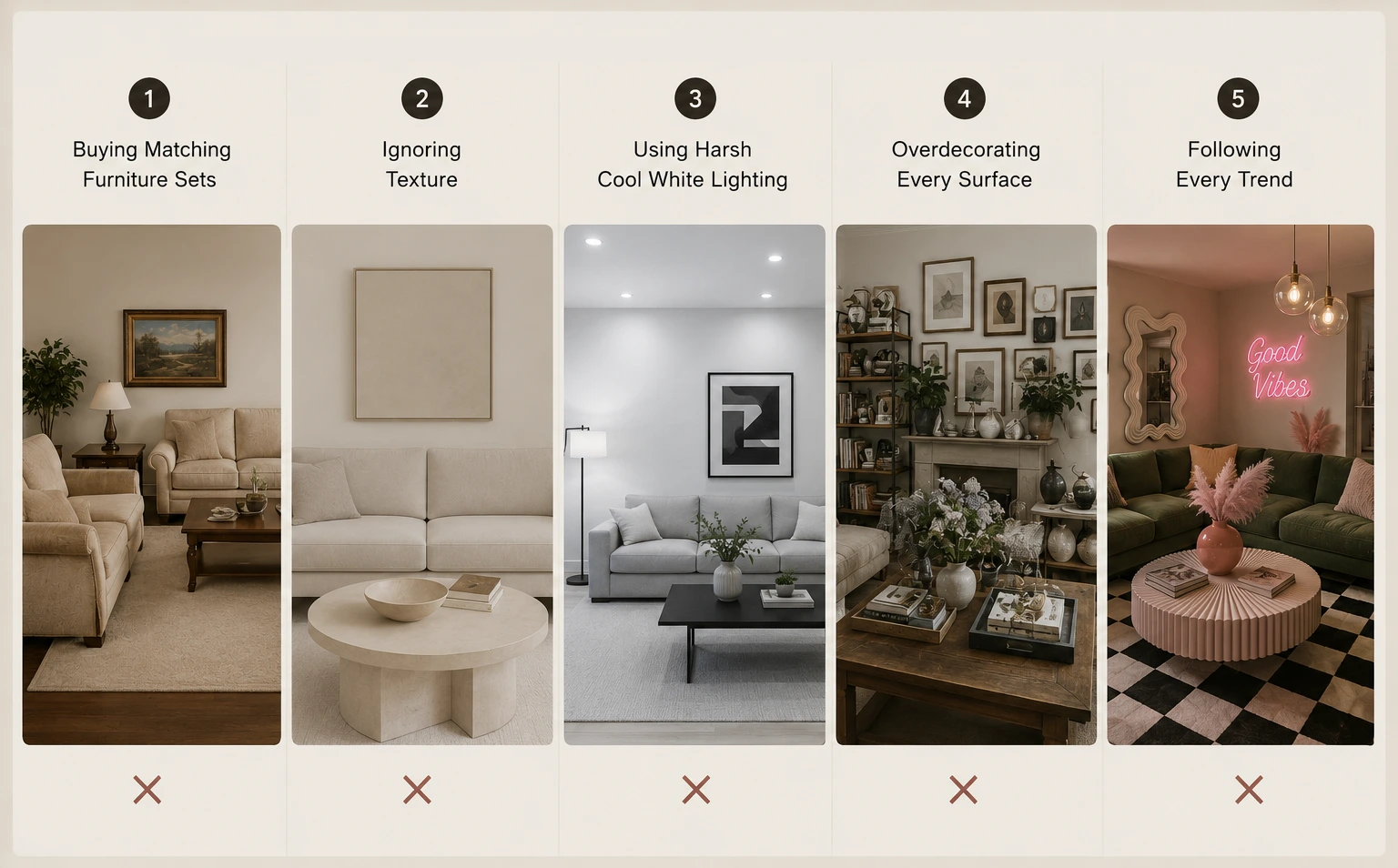
1. Buying Matching Furniture Sets
Matching furniture collections often make a room feel flat and lacking personality. Instead, combine complementary pieces with different textures and materials.
2. Ignoring Texture
Too many smooth surfaces can make a room feel cold. Layer wood, wool, linen, leather and ceramics to create warmth.
3. Using Harsh Cool White Lighting
Warm white lighting creates a far more inviting atmosphere than cool blue-toned bulbs.
4. Overdecorating Every Surface
Leave breathing room on shelves and tables. Empty space is an important design element in modern interiors.
5. Following Every Trend
Modern interiors are designed to last. Invest in timeless furniture and update smaller accessories as trends change.
Why It Matters
Avoiding these common mistakes will help your living room remain stylish for years while saving money on unnecessary redecorating.
Shop the Look
If you’re recreating this style, prioritize investing in timeless foundation pieces before buying decorative accessories.
- Neutral upholstered sofa
- Oak or walnut coffee table
- Minimal TV unit or media console
- Wool or textured area rug
- Linen curtains
- Modern floor lamp
- Ceramic decorative vases
- Indoor plants
- Oversized abstract wall art
- Accent chair in bouclé or leather
Style Variations You May Also Love
Modern living room style serves as the foundation for several popular interior design styles. If you enjoy its clean aesthetic but want a slightly different look, consider exploring these related styles:
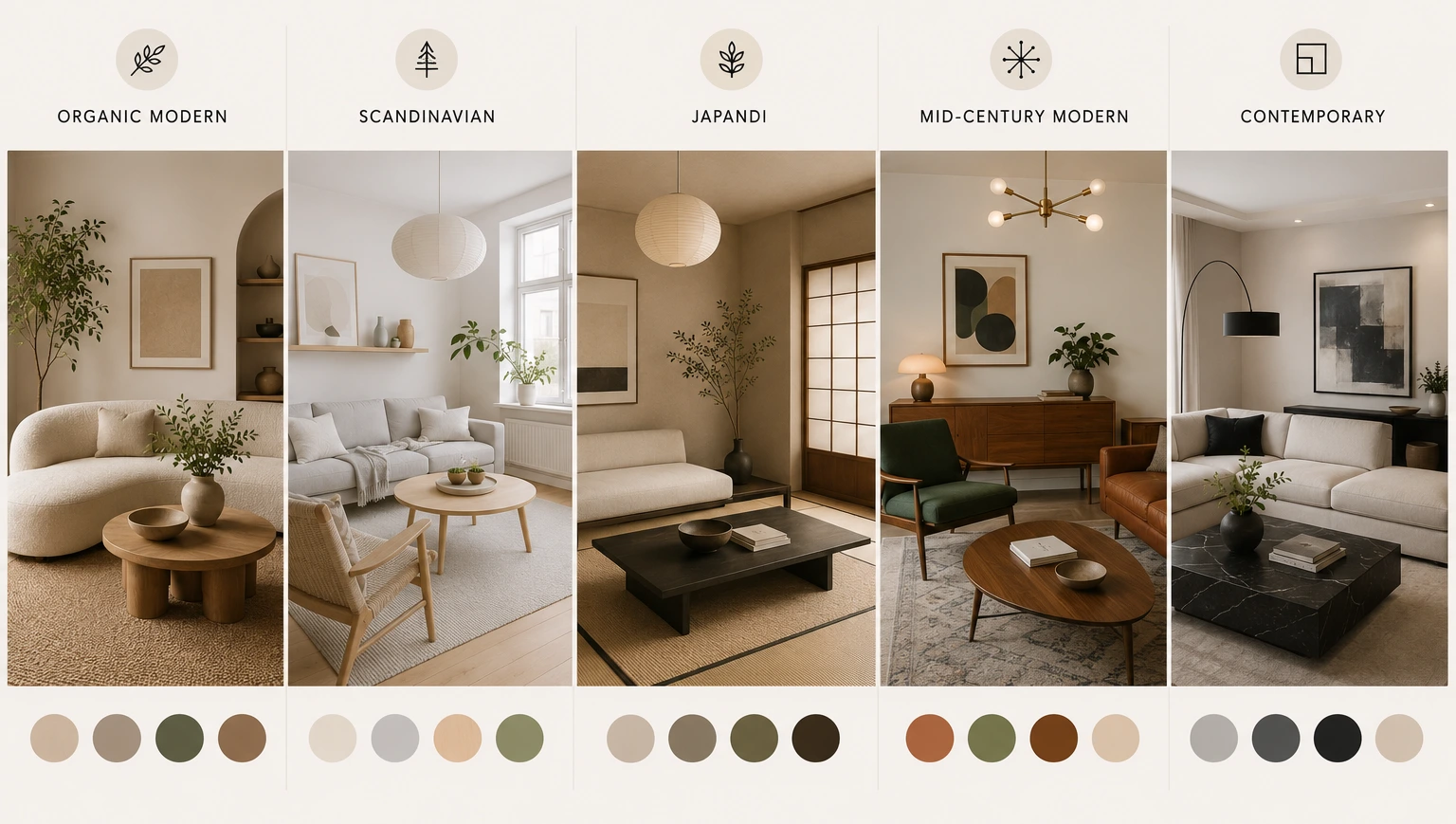
- Organic Modern — Softens modern design with earthy colors, organic shapes and abundant natural materials.
- Scandinavian — Combines functionality with light woods, cozy textiles and bright interiors.
- Japandi — Blends Scandinavian comfort with Japanese minimalism for a peaceful, balanced atmosphere.
- Mid-Century Modern — Features iconic furniture, tapered legs, bold geometric shapes and rich wood finishes.
- Contemporary — Continuously evolves with current design trends while borrowing elements from modern interiors.
Frequently Asked Questions
What is the difference between modern and contemporary living room design?
Modern design refers to a specific design movement that began in the early twentieth century, while contemporary design reflects current decorating trends. Modern interiors remain consistent over time, whereas contemporary interiors evolve as styles change.
Can a modern living room feel cozy?
Absolutely. Layering natural textures, warm lighting, wood finishes, soft rugs and comfortable seating creates a welcoming modern living room without sacrificing its clean aesthetic.
Which colors work best in a modern living room?
Warm white, greige, taupe, beige, charcoal, black and natural wood tones form the perfect foundation for modern interiors.
Is modern design suitable for small living rooms?
Yes. Clean lines, uncluttered layouts and multifunctional furniture often make small living rooms feel larger and more open.
Can I mix modern furniture with other decorating styles?
Yes. Modern furniture pairs beautifully with Scandinavian, Japandi, Organic Modern and even Industrial interiors when united by a consistent color palette and balanced proportions.
Final Thoughts
Modern living room style has remained one of the world’s most popular interior design approaches because it combines timeless aesthetics with everyday functionality. Rather than chasing short-lived trends, it focuses on clean lines, quality materials, thoughtful furniture selection and uncluttered spaces that continue to look beautiful for years.
The beauty of modern design lies in its flexibility. Whether you’re furnishing a compact apartment or renovating a spacious family home, these design principles can be adapted to suit your lifestyle, budget and personal taste.
Start with a neutral foundation, invest in well-made furniture, embrace natural materials and remember that every piece should serve a purpose. By focusing on quality instead of quantity, you’ll create a living room that feels elegant, comfortable and effortlessly timeless.