Your living room has to do a lot. It may be where you relax at the end of the day, entertain friends, watch television, read, work occasionally and spend time with family. The best living room ideas therefore balance appearance with everyday comfort rather than treating the room as a purely decorative space.
Fortunately, creating a stylish living room does not require replacing everything you own. Changes to the furniture arrangement, color palette, lighting, rug, textiles or even the way accessories are displayed can noticeably change how the room looks and feels.
If you are starting from scratch, our living room design guide can help you establish the fundamentals first. Otherwise, use the 35 ideas below individually or combine several that suit your room, decorating style and lifestyle.
35 Living Room Ideas at a Glance
A well-designed living room usually combines four things: a practical layout, comfortable furniture, layered lighting and enough personality to make the room feel lived in. Start with the biggest elements first, then add smaller decorative layers gradually.
Living Room Layout and Furniture Ideas
1. Start With a Clear Focal Point
Choose one feature to visually organize the room around. It might be a fireplace, large window, artwork, media wall or particularly attractive piece of furniture.
Not every chair has to face the focal point directly, but the overall furniture arrangement should acknowledge it. This gives the room a clearer sense of purpose and prevents individual pieces from appearing randomly positioned.
2. Pull Furniture Away From the Walls
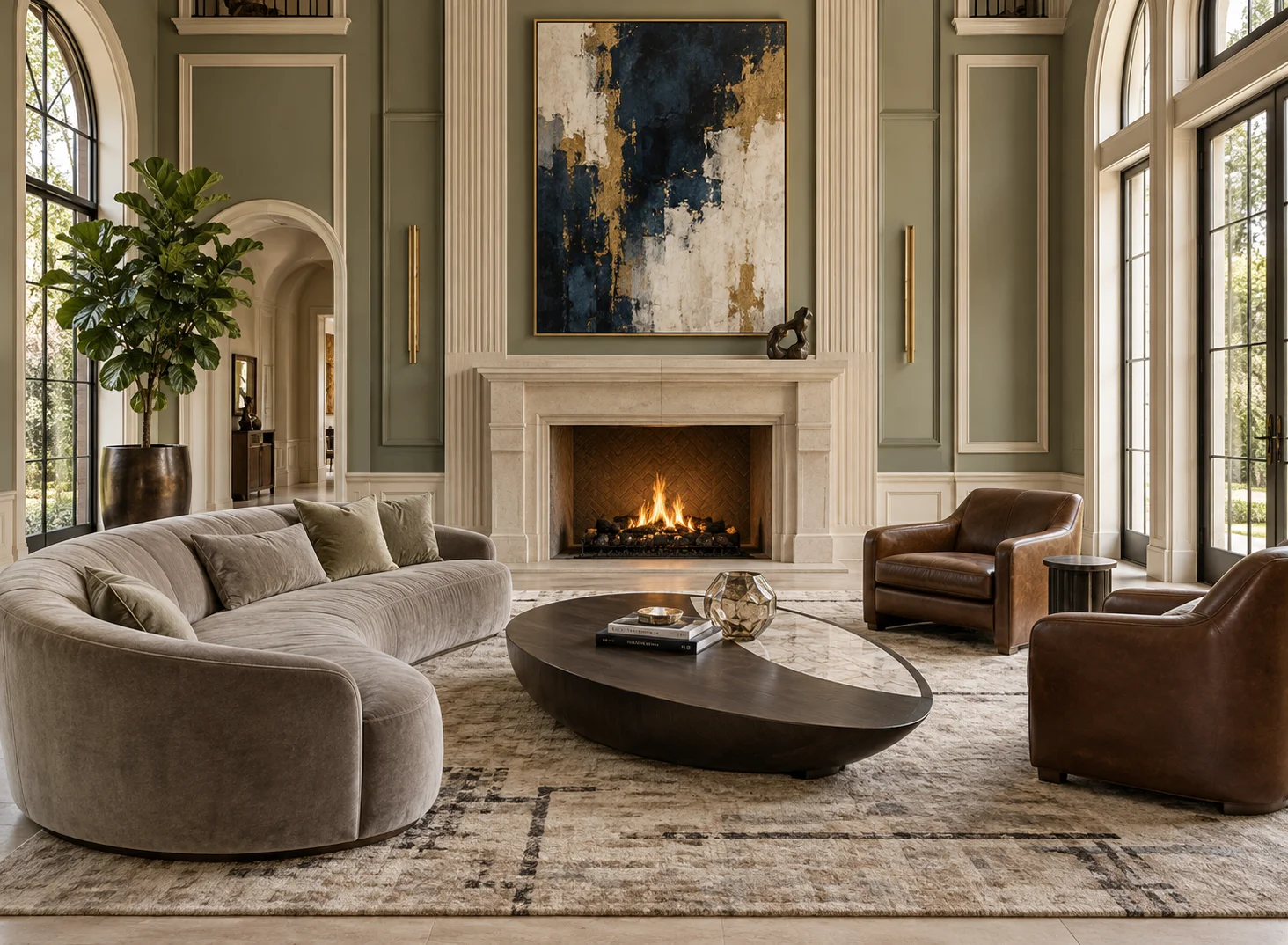
Pushing every piece of furniture against the perimeter can make even a large room feel surprisingly disconnected. Where space allows, bring the sofa and chairs slightly inward to create a more intimate conversation area.
Even a modest gap between furniture and the wall can make the arrangement look more intentional.

3. Create a Conversation-Friendly Seating Arrangement
Arrange seating so people can comfortably talk without turning sharply or speaking across the entire room. A sofa paired with two angled chairs is a flexible solution, while facing sofas work particularly well in longer or more formal living rooms.
When planning furniture placement, the principles of scale, proportion and circulation covered in our interior design basics guide are especially useful.
4. Choose a Sofa That Fits the Room
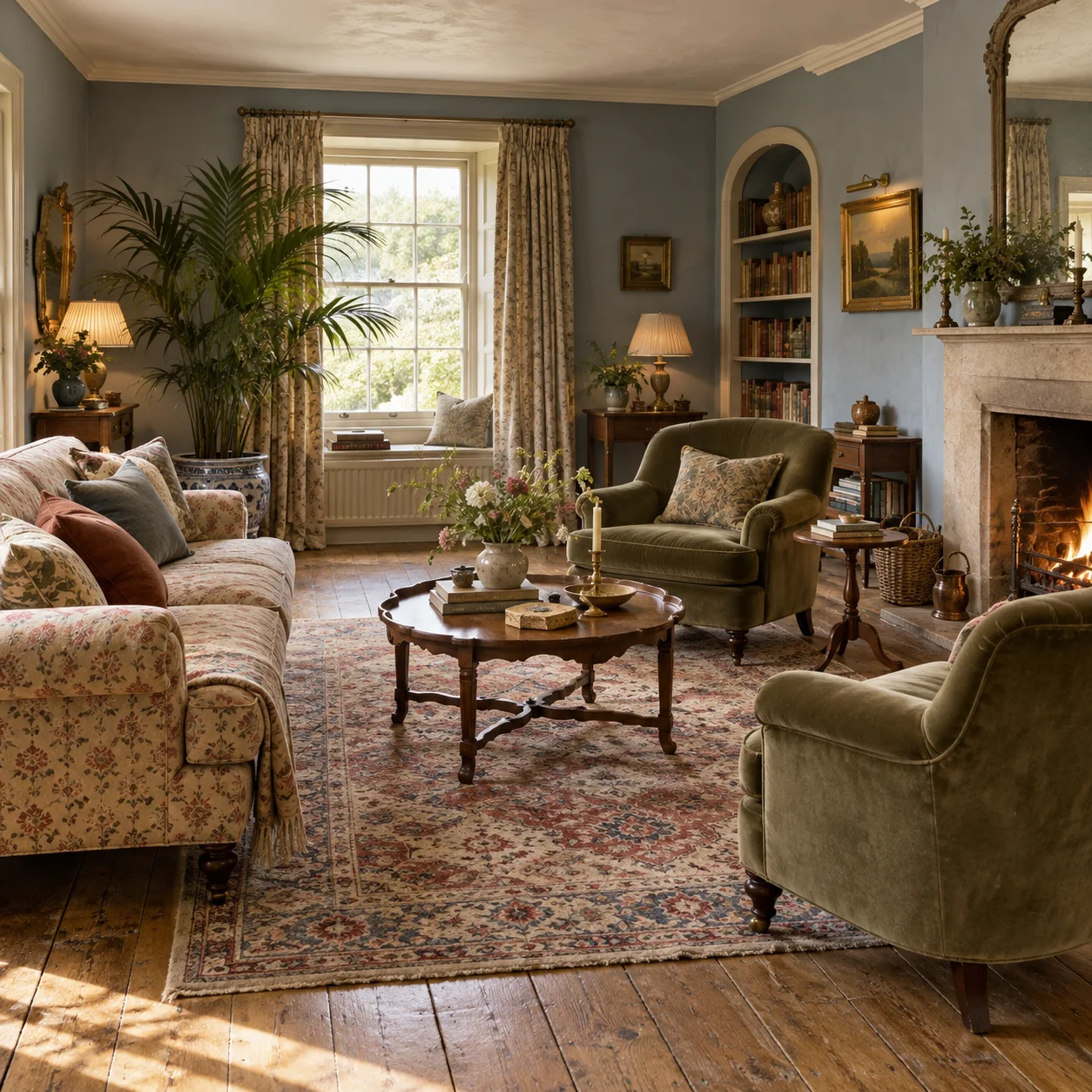
The biggest sofa you can physically squeeze into the room is rarely the best sofa for it. Leave enough visual and physical breathing space around large furniture so that the room remains easy to navigate.
Before buying, mark the sofa dimensions on the floor with painter’s tape. This provides a much more realistic idea of its scale than measurements alone.
5. Mix Your Seating Instead of Buying a Matching Set
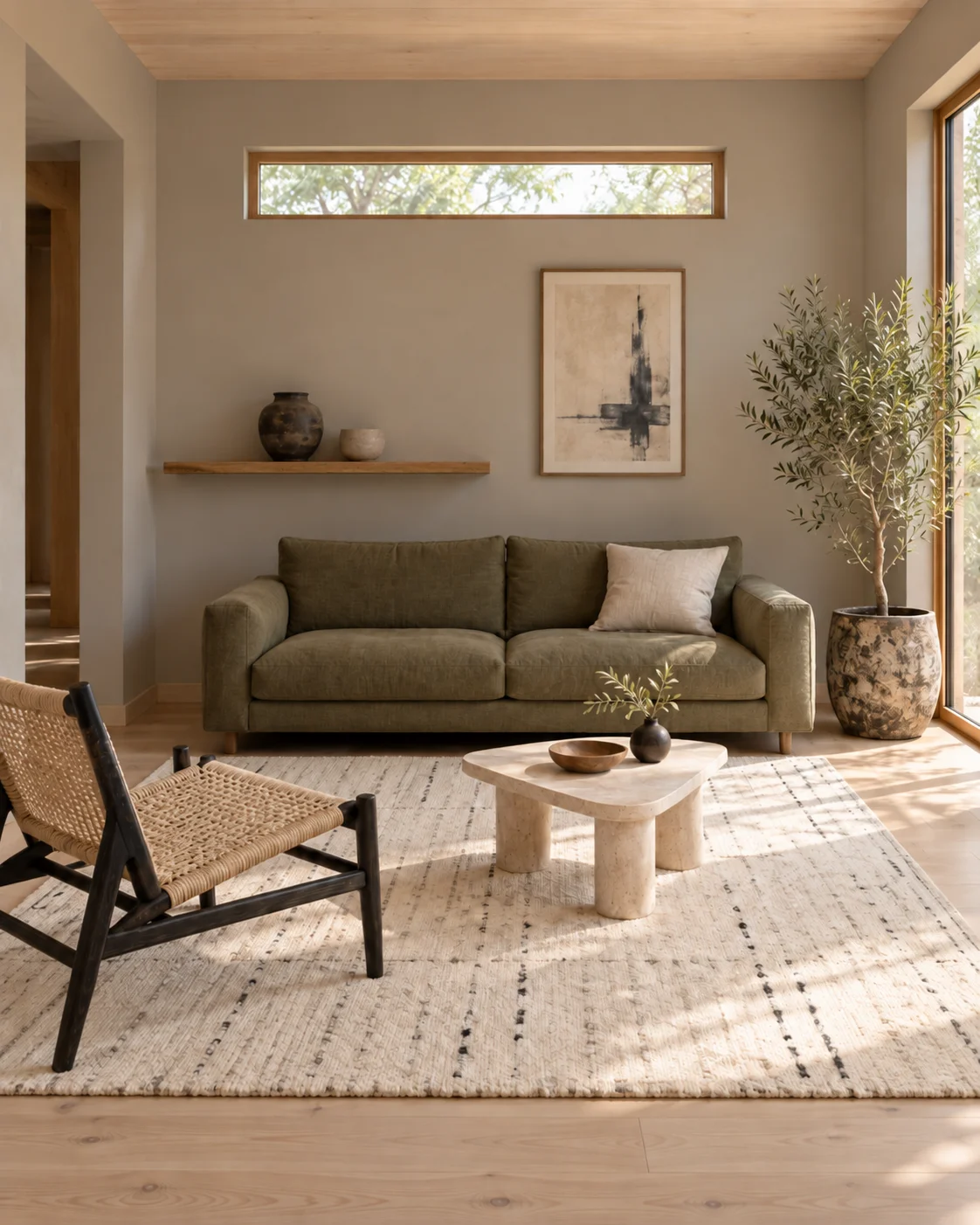
A sofa and chairs do not have to come from the same furniture collection. Mixing complementary pieces often creates a more sophisticated, collected look.
Try a clean-lined upholstered sofa with timber lounge chairs, a traditional sofa with a contemporary accent chair or a neutral sectional beside a vintage leather chair.
6. Use an Ottoman Instead of a Standard Coffee Table
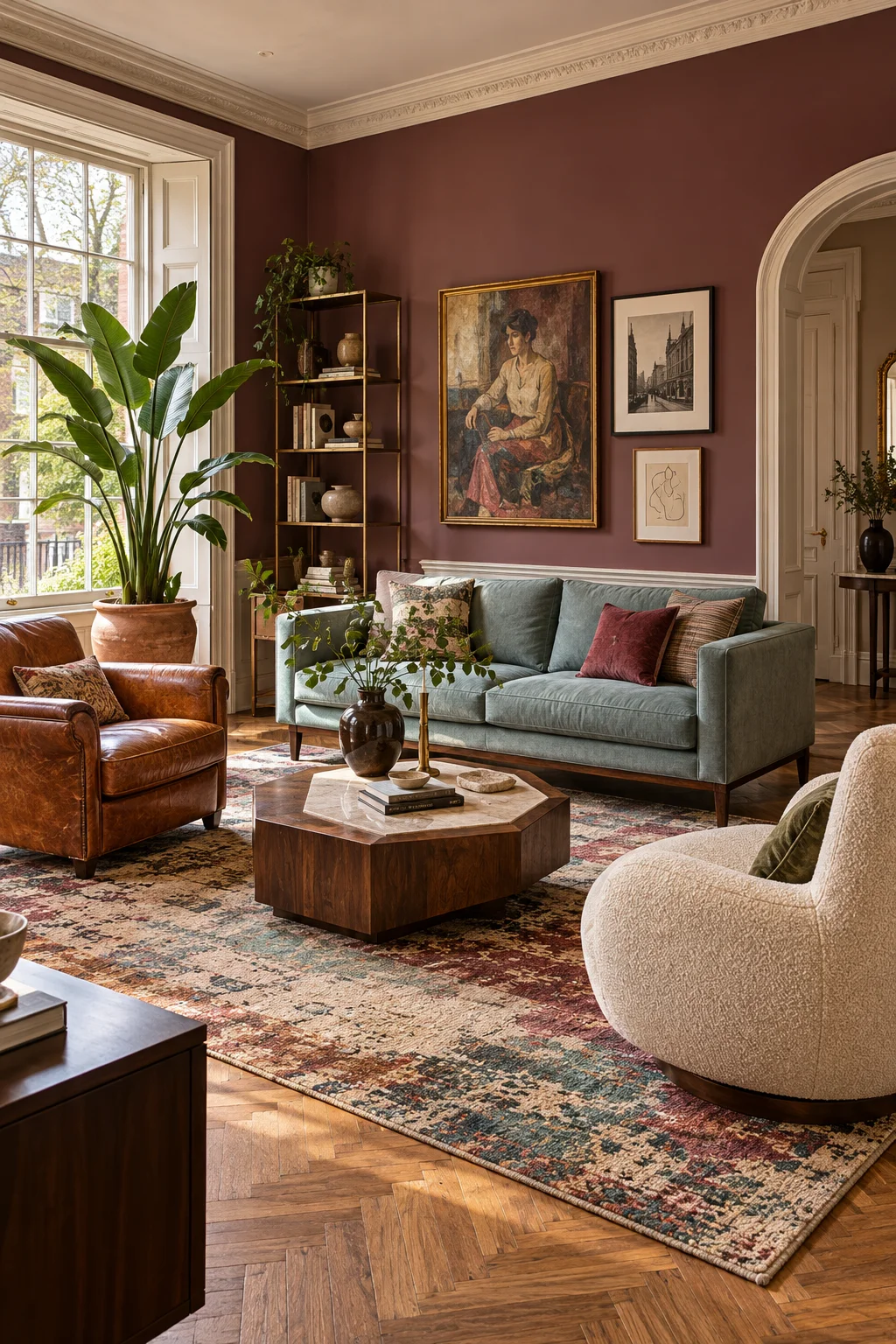
A large upholstered ottoman makes the center of the room softer and more comfortable. It can work as a footrest, additional seating or a surface for a tray holding drinks and accessories.
This is particularly useful in family living rooms where hard furniture edges are not always ideal.
7. Try Nesting or Multiple Coffee Tables
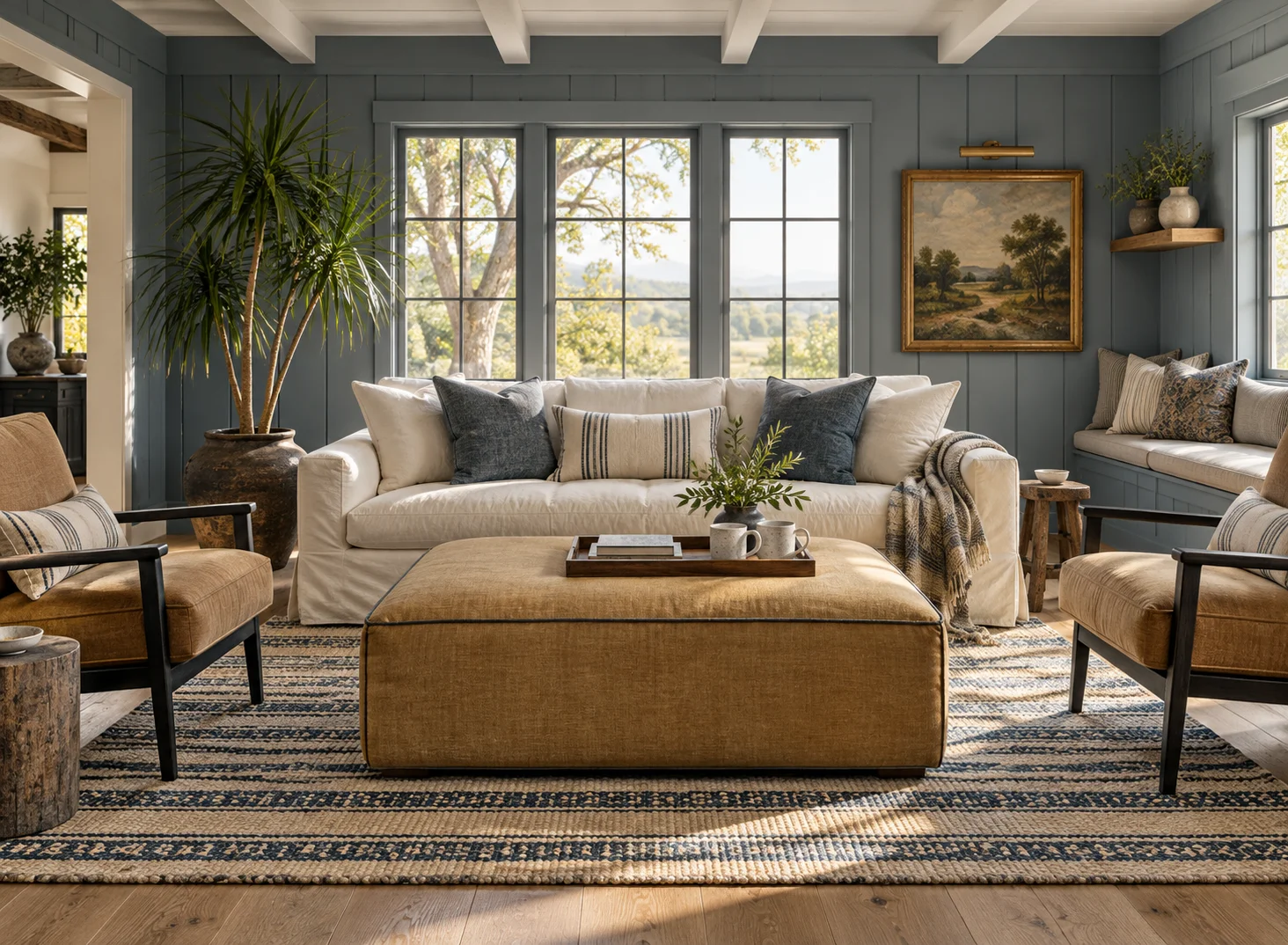
Instead of one large rectangular coffee table, combine two or three smaller tables. Different heights and materials can create a more relaxed composition while allowing the pieces to be repositioned when needed.
Round, organic and nesting tables are also useful when circulation space is limited.
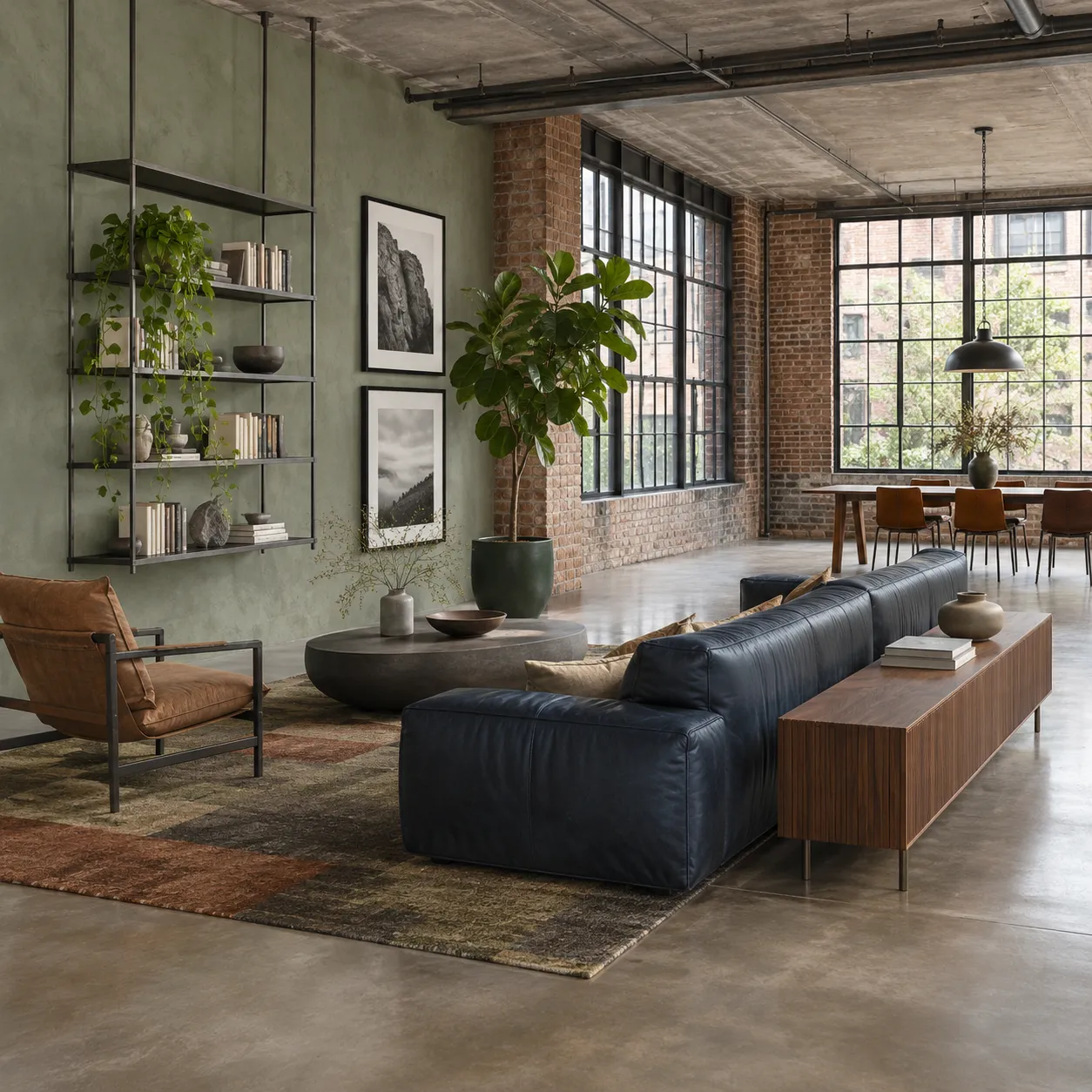
8. Float Furniture in an Open-Plan Space
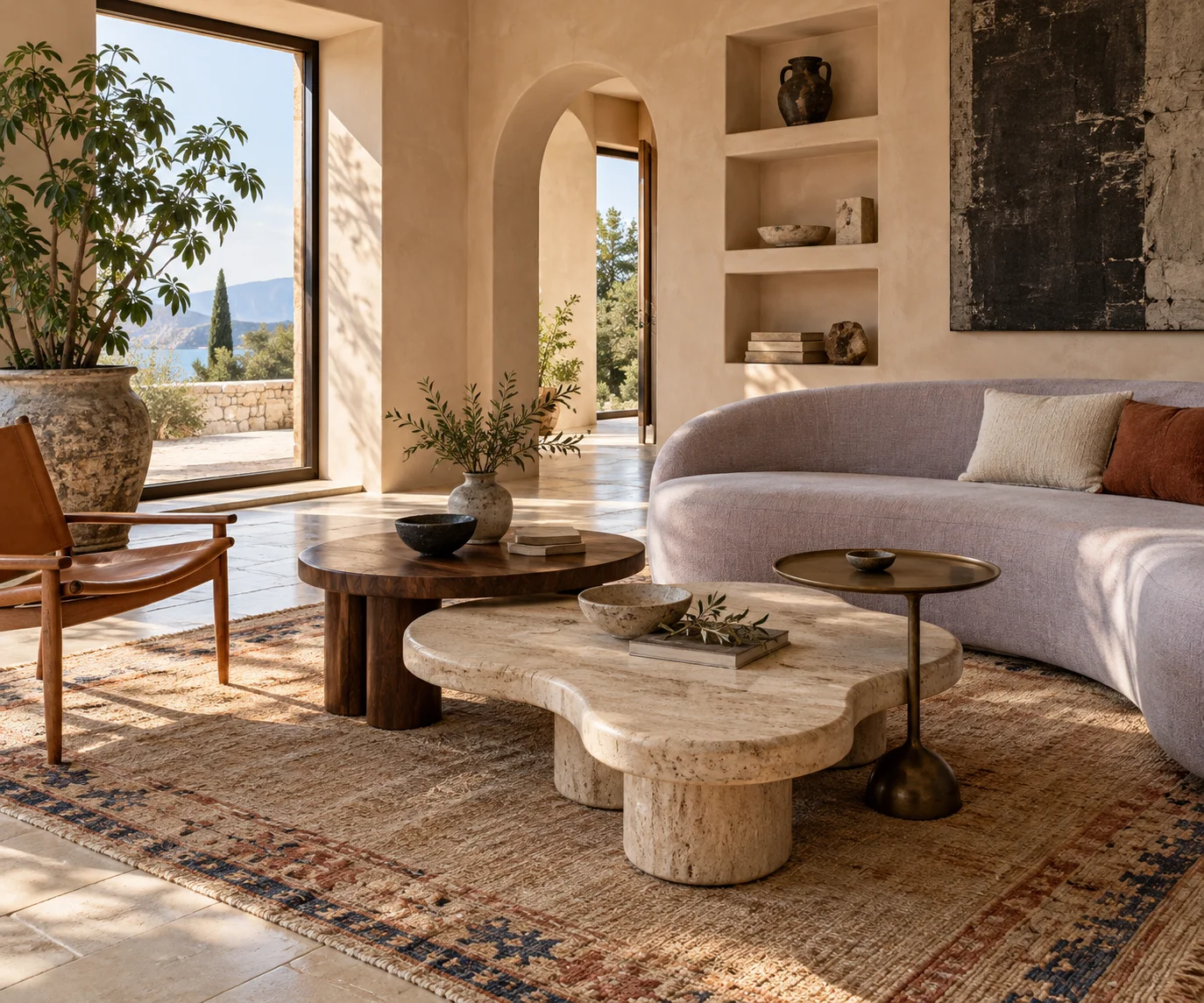
Use the back of a sofa to establish a visual boundary between the living area and a dining room or kitchen rather than relying on walls.
A console table behind the sofa can reinforce this division while providing a surface for lamps, books or decorative objects.
Living Room Color Ideas
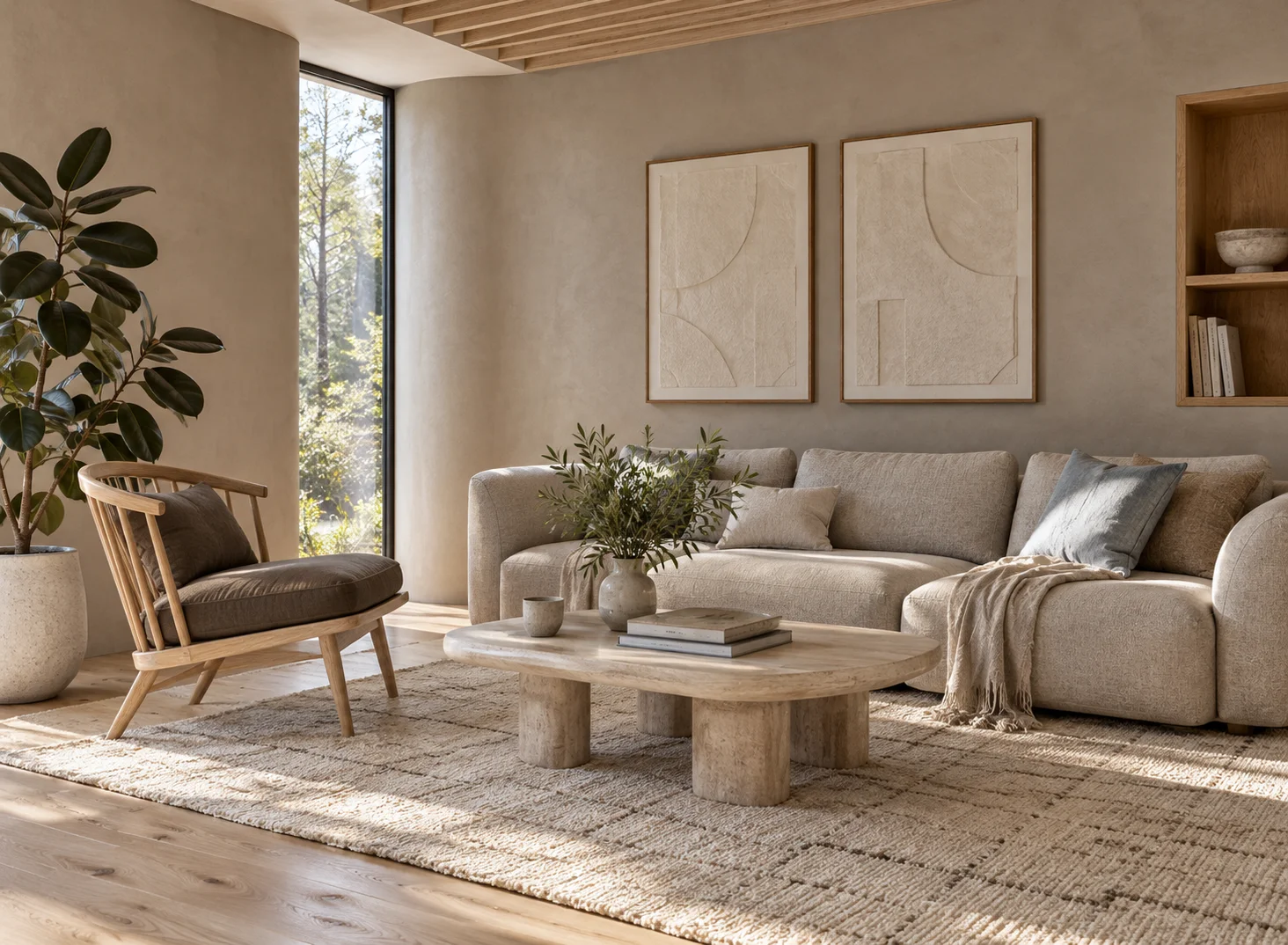
9. Build the Room Around a Warm Neutral Palette
Warm white, oatmeal, mushroom, taupe and soft stone create a flexible base that works across many interior styles. The key is introducing enough tonal variation and texture to prevent the room from feeling flat.
Layer wool, linen, timber, ceramics and subtle pattern instead of relying on many different colors.
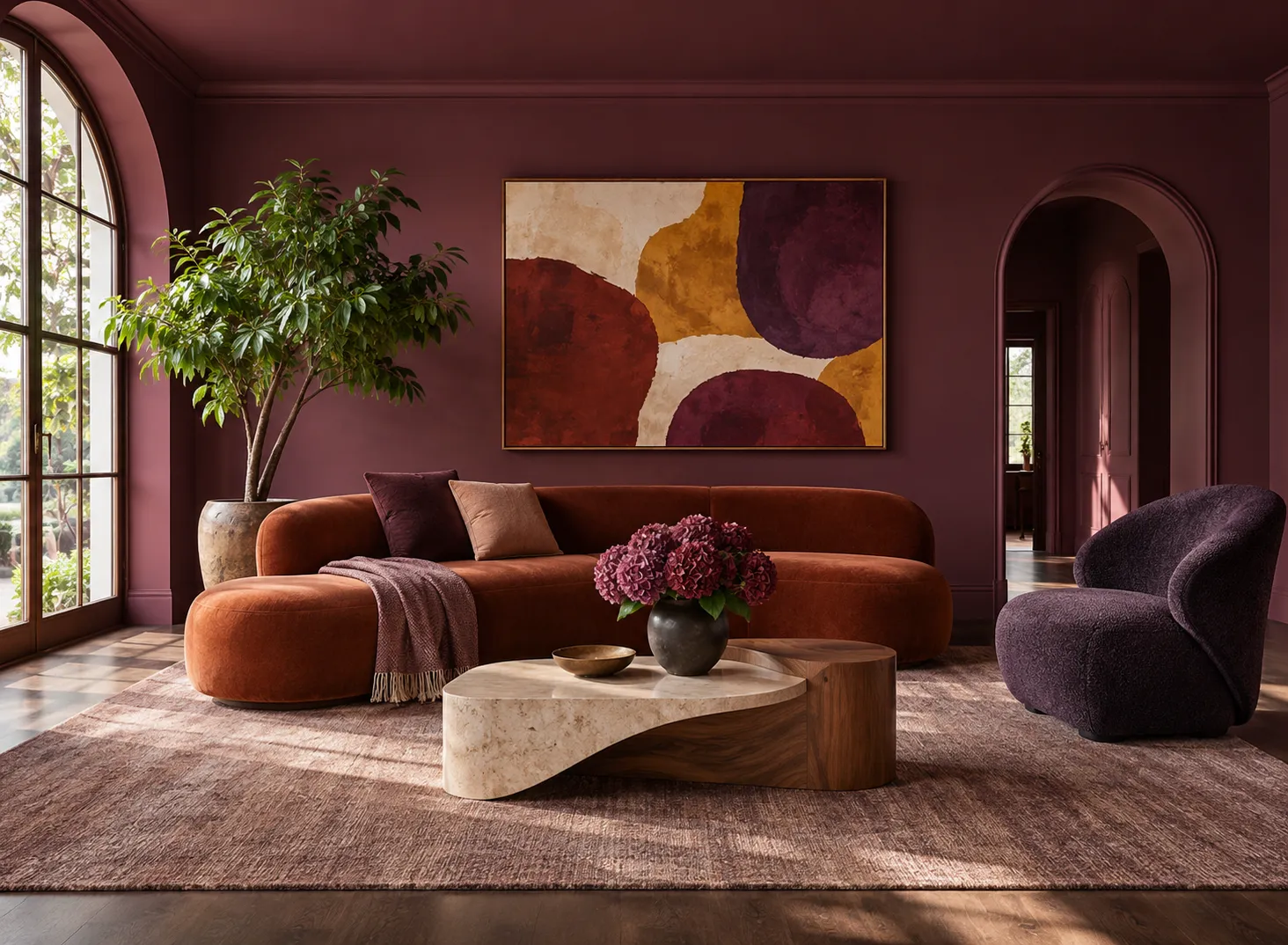
10. Use Color on the Walls
White is not the only versatile wall color. Dusty blue, muted olive, clay, soft plum, warm terracotta and deep taupe can give a living room significantly more character.
Choose colors with muted rather than highly saturated undertones if you want the result to remain calm and sophisticated.

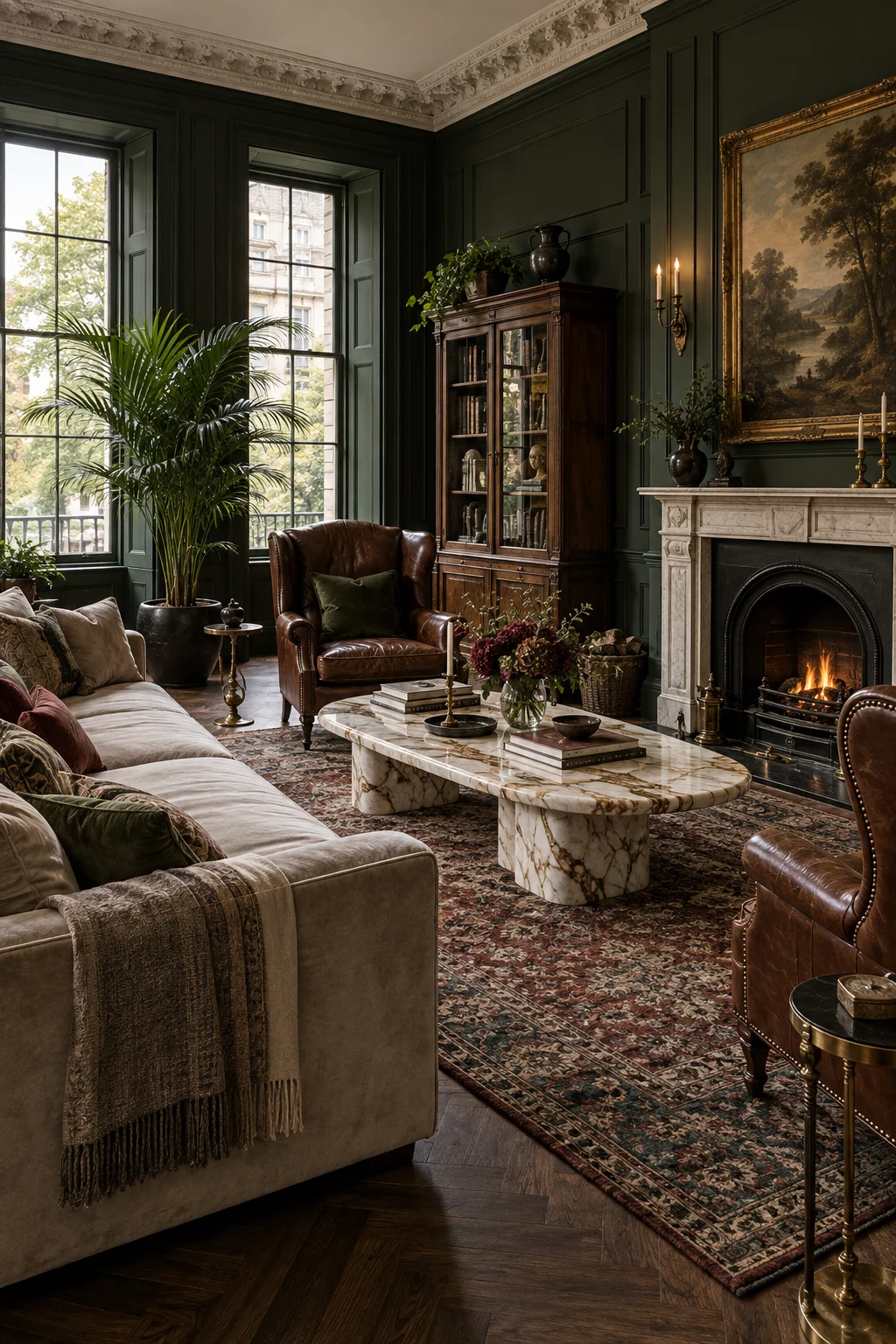
11. Try a Dark and Moody Living Room
Deep charcoal, chocolate brown, navy or forest green can make a living room feel intimate rather than gloomy when balanced correctly.
Introduce lighter upholstery, reflective surfaces, warm lamps and natural materials so the darker palette still has depth and contrast.
12. Repeat an Accent Color Around the Room
An accent color becomes more convincing when it appears in several separated locations. For example, a muted rust tone might appear in artwork, one cushion and a small ceramic object.
Repeating color creates visual relationships without requiring every item to match.
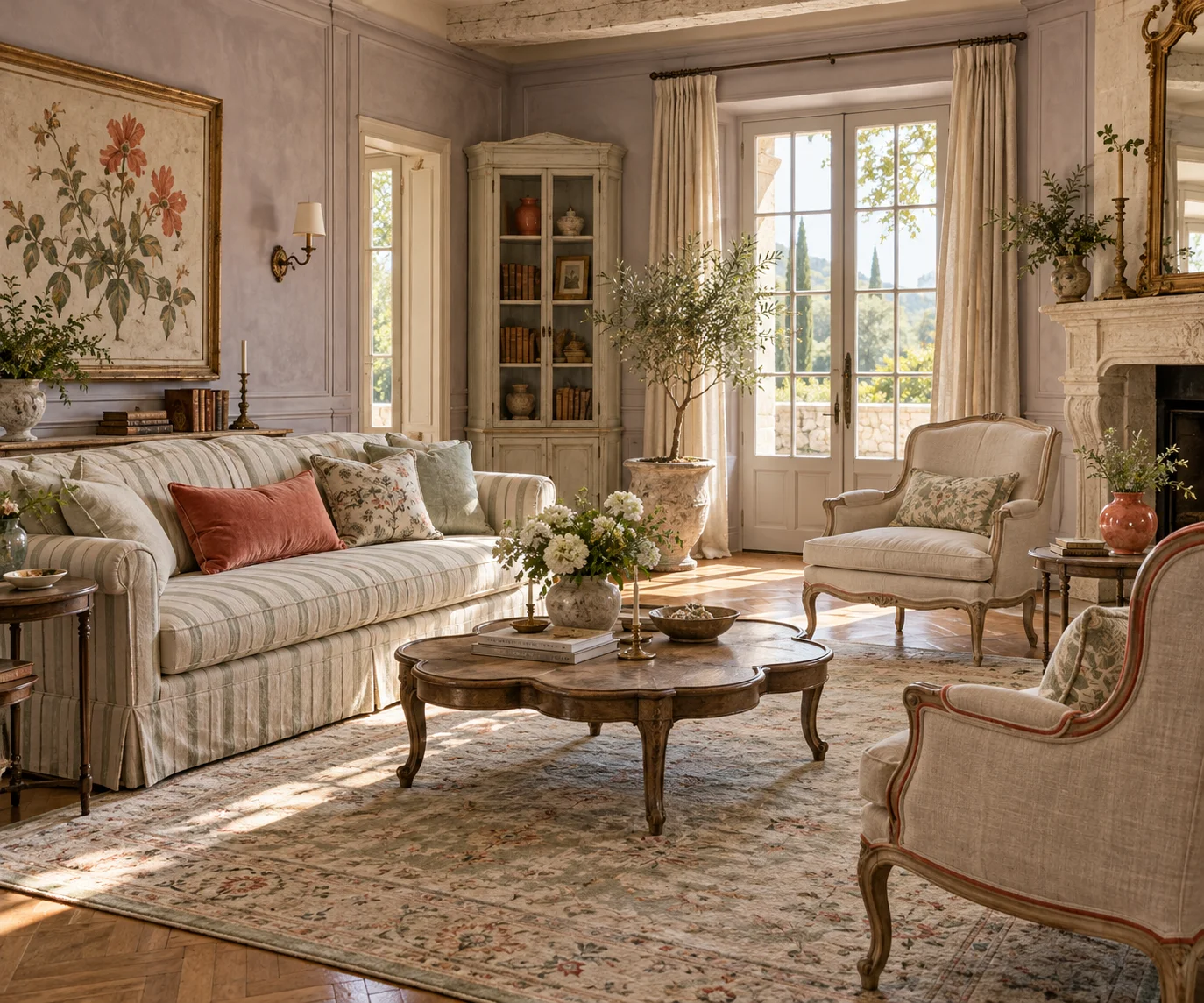
13. Let a Rug Establish Your Color Palette
If choosing colors feels difficult, begin with a patterned rug you love and extract several shades from it. Use the quietest color for larger surfaces and repeat smaller accent colors through textiles, artwork and accessories.
This creates a naturally coordinated palette without making the room feel overly planned.

Living Room Lighting Ideas
14. Layer Several Types of Lighting
A single ceiling fixture rarely creates a comfortable living room after dark. Combine ambient lighting with task and accent lighting instead.
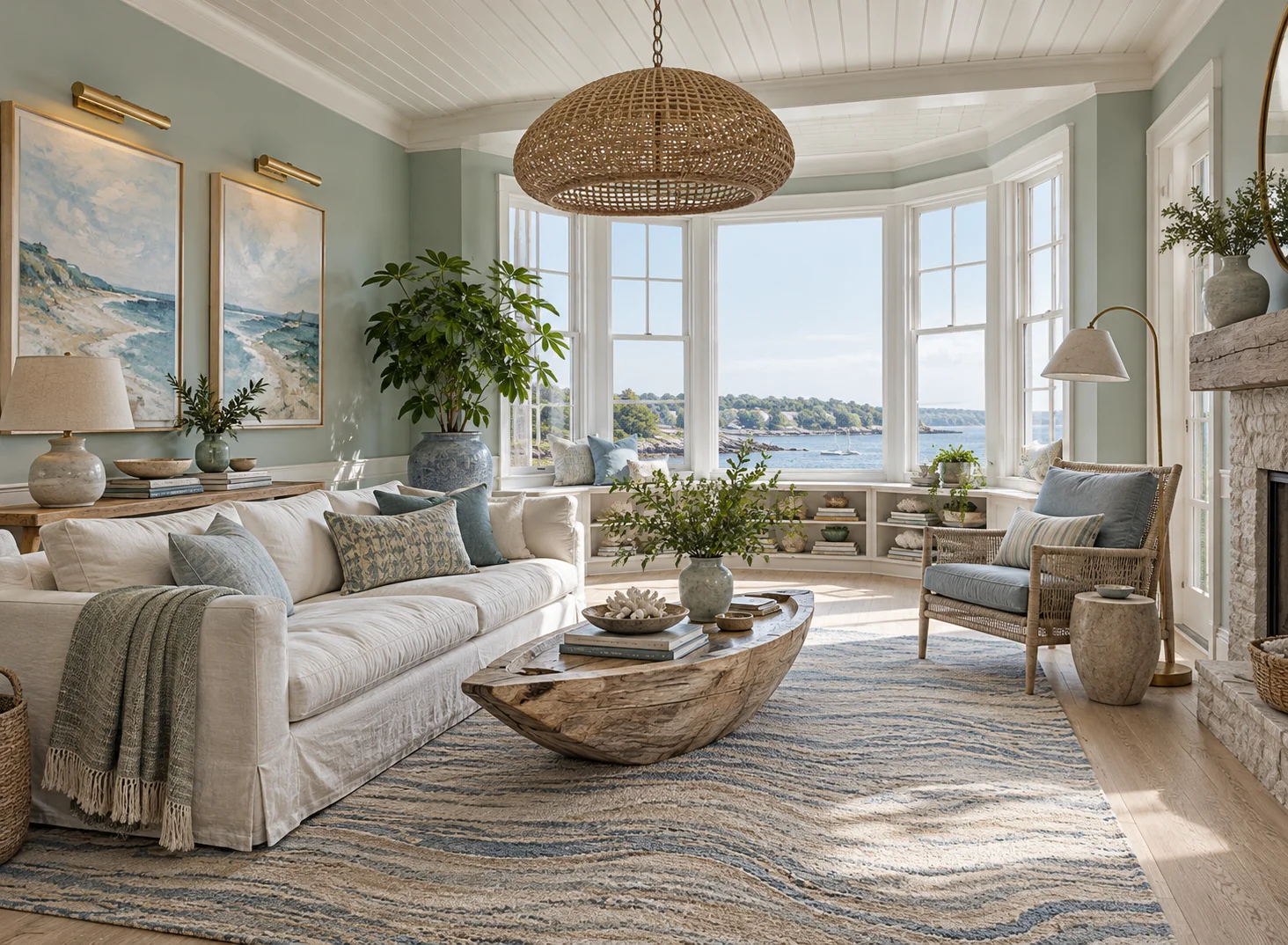
This might include a ceiling pendant, floor lamp beside a chair, table lamp on a console and small picture lights or wall sconces.
15. Add a Statement Floor Lamp
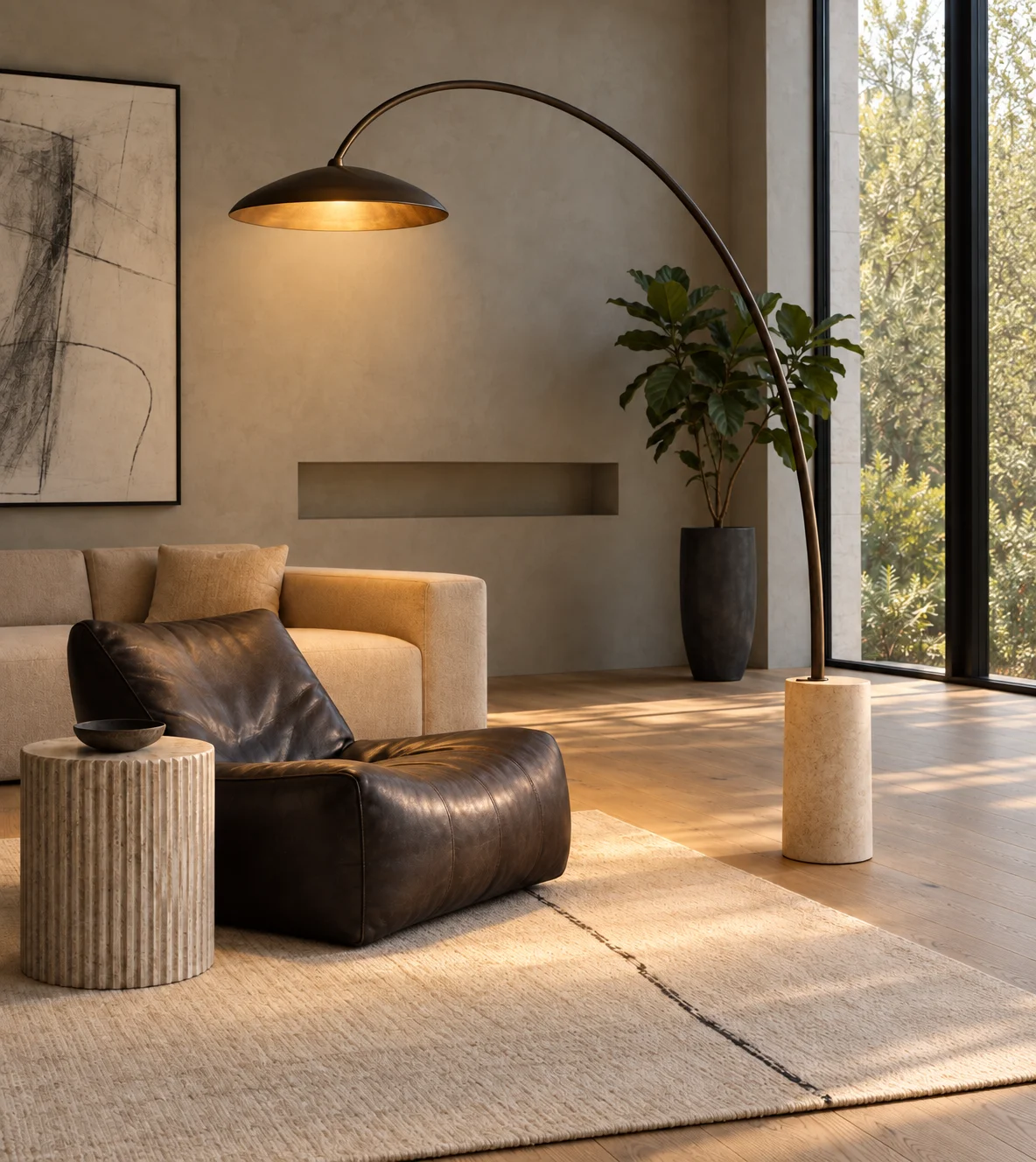
A sculptural floor lamp can function almost like a piece of furniture. Choose an arched lamp for a contemporary room, a pleated shade for a softer traditional look or a simple timber or metal lamp for a minimalist interior.
16. Use Lamps to Create Evening Atmosphere
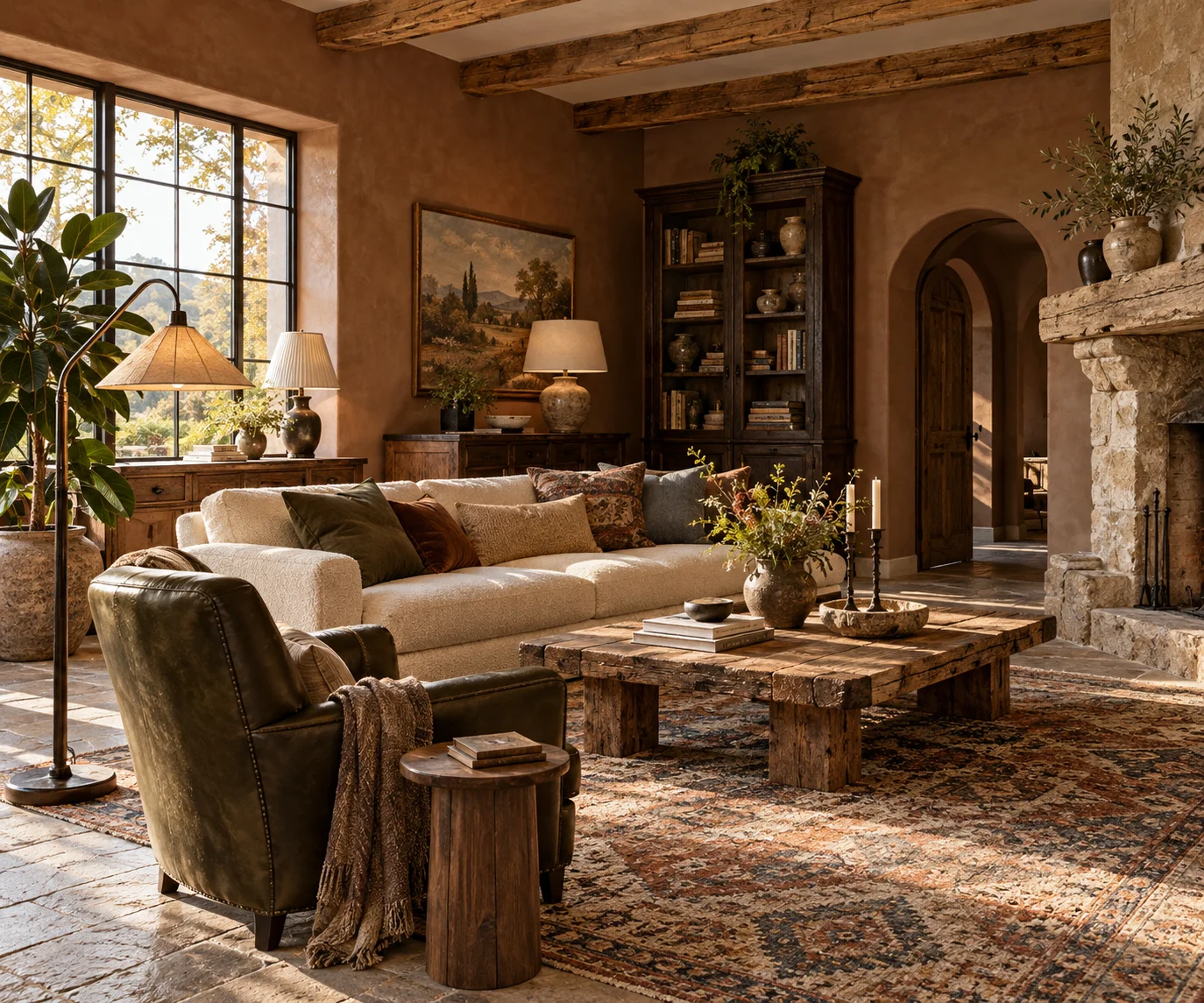
Position smaller lamps around the room so you can turn off bright overhead lighting in the evening. Warm pools of light at different heights immediately make a living room feel more inviting.
Living Room Rug and Textile Ideas
17. Choose a Rug Large Enough for the Seating Area
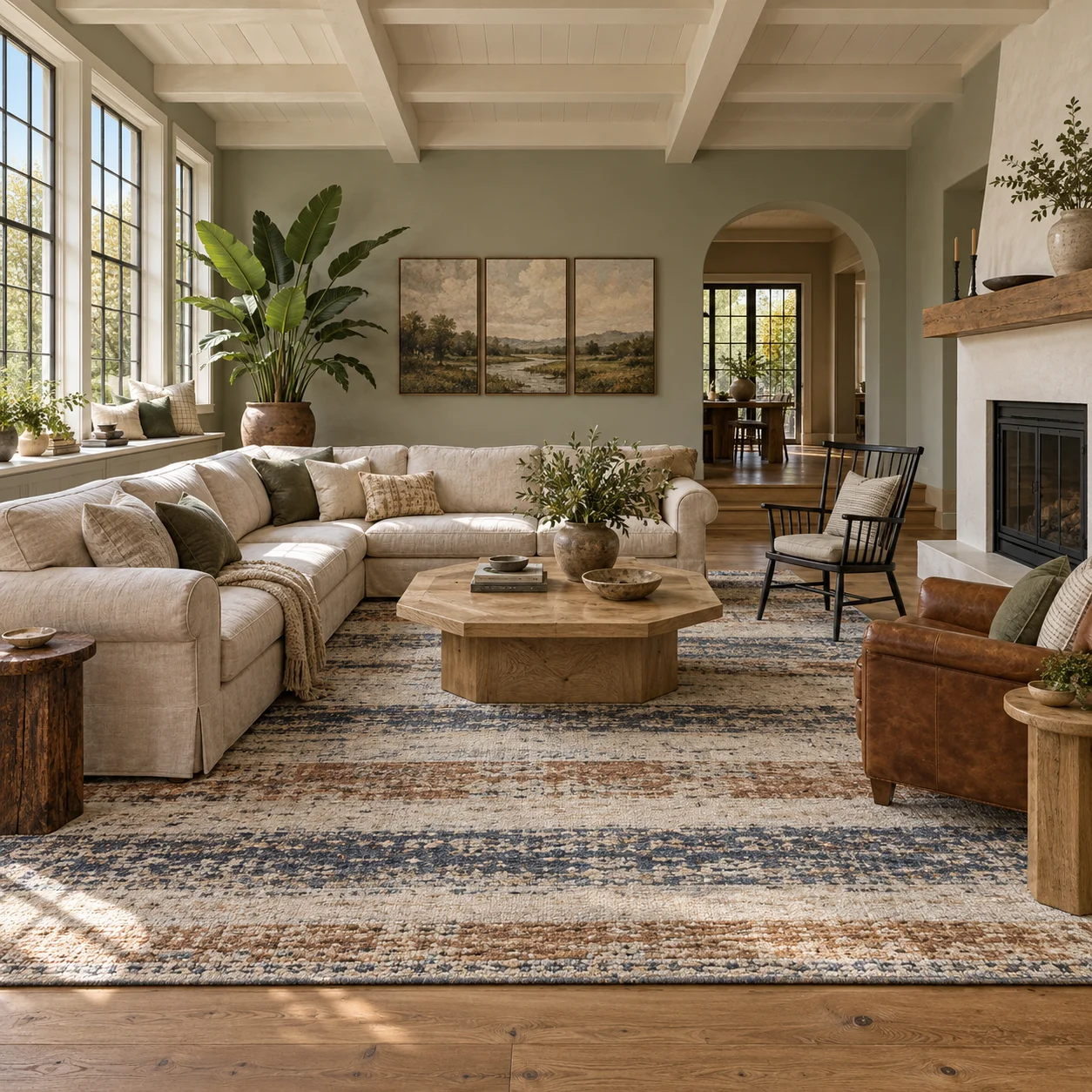
One of the easiest ways to make a living room look more cohesive is to increase the rug size. Ideally, the rug should relate to all the major seating rather than floating beneath the coffee table by itself.
At minimum, try to place the front legs of the sofa and surrounding chairs on the rug.
18. Layer Textures Instead of Adding More Decor
When a room feels unfinished, the solution is not always another decorative object. Combining linen, boucle, velvet, leather, wool, timber and woven materials can create richness with relatively little clutter.
This approach is especially effective when creating the relaxed feel explored in our cozy living room ideas.
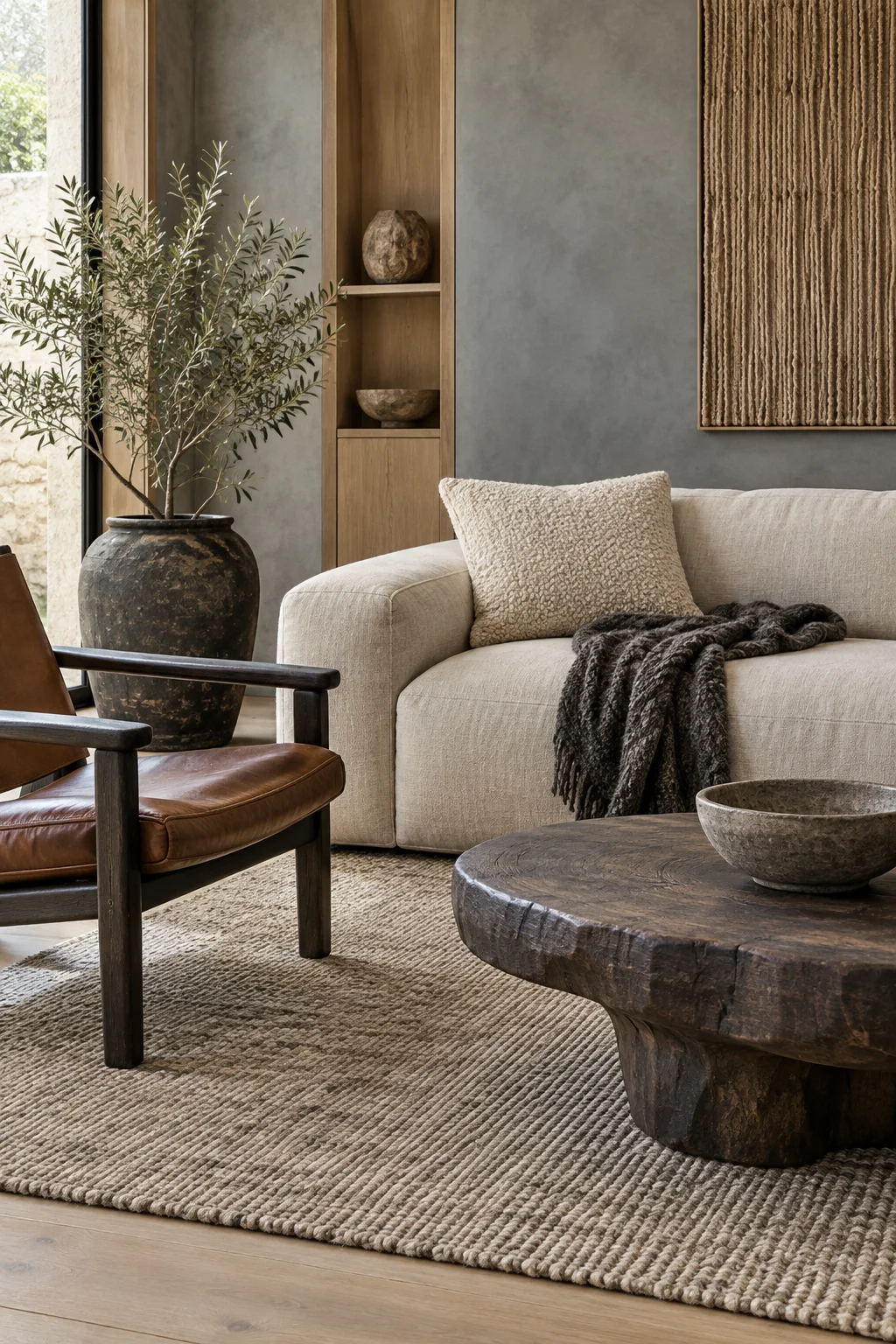
19. Mix Cushion Sizes and Fabrics
Use cushions in two or three complementary sizes rather than lining up identical pieces across the sofa. Combine plain fabrics with restrained patterns and vary textures to make the arrangement look less formulaic.
You do not need to fill every inch of the sofa. Leaving some empty seating space usually looks more natural.
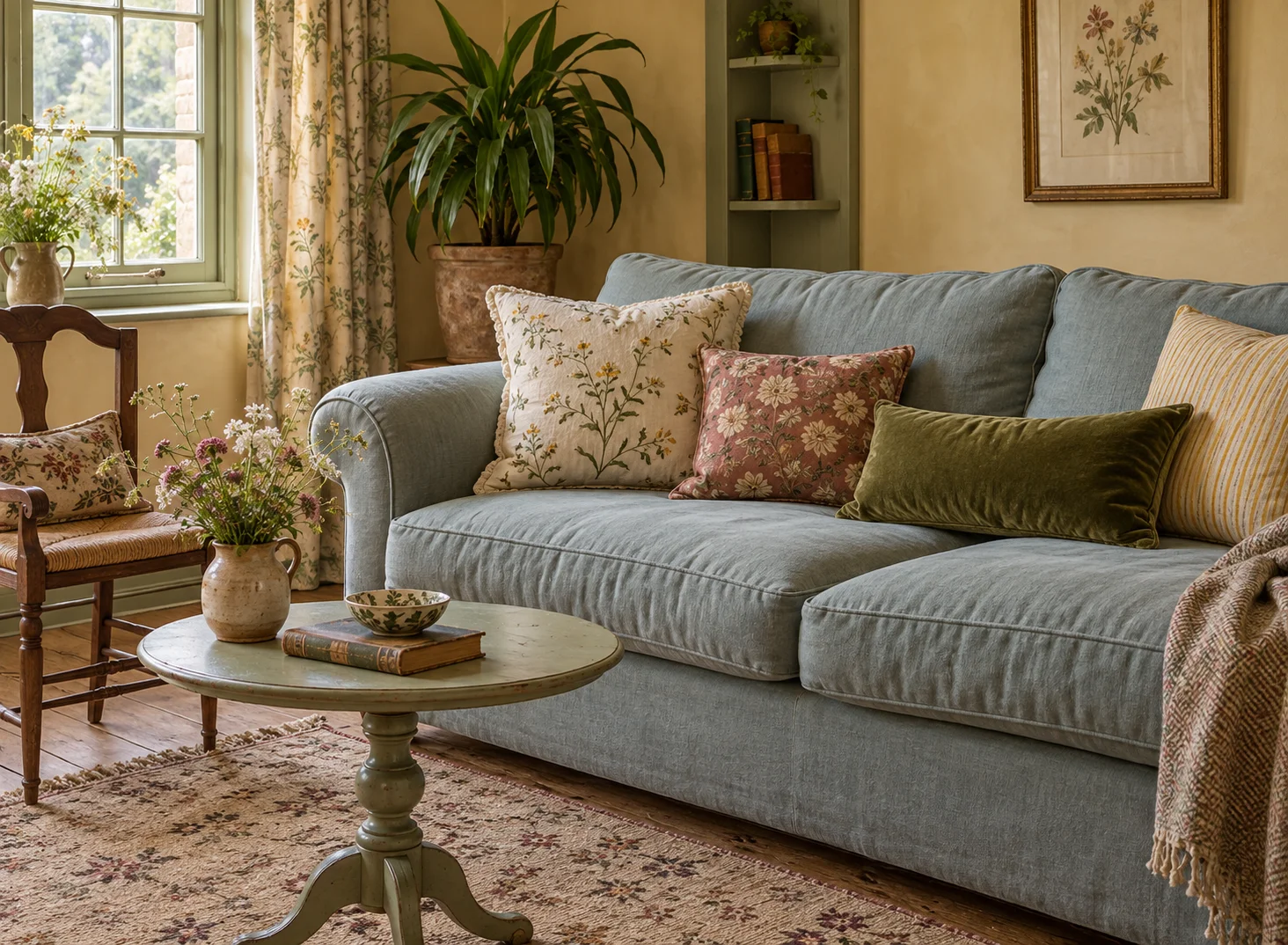
20. Add Curtains Even When You Have Blinds
Full-length curtains soften windows, absorb sound and introduce another layer of texture. Hang the curtain rod above the window and extend it beyond the frame when possible to make the opening appear larger.
For a relaxed look, choose linen or linen-blend fabric with enough fullness to form soft folds.
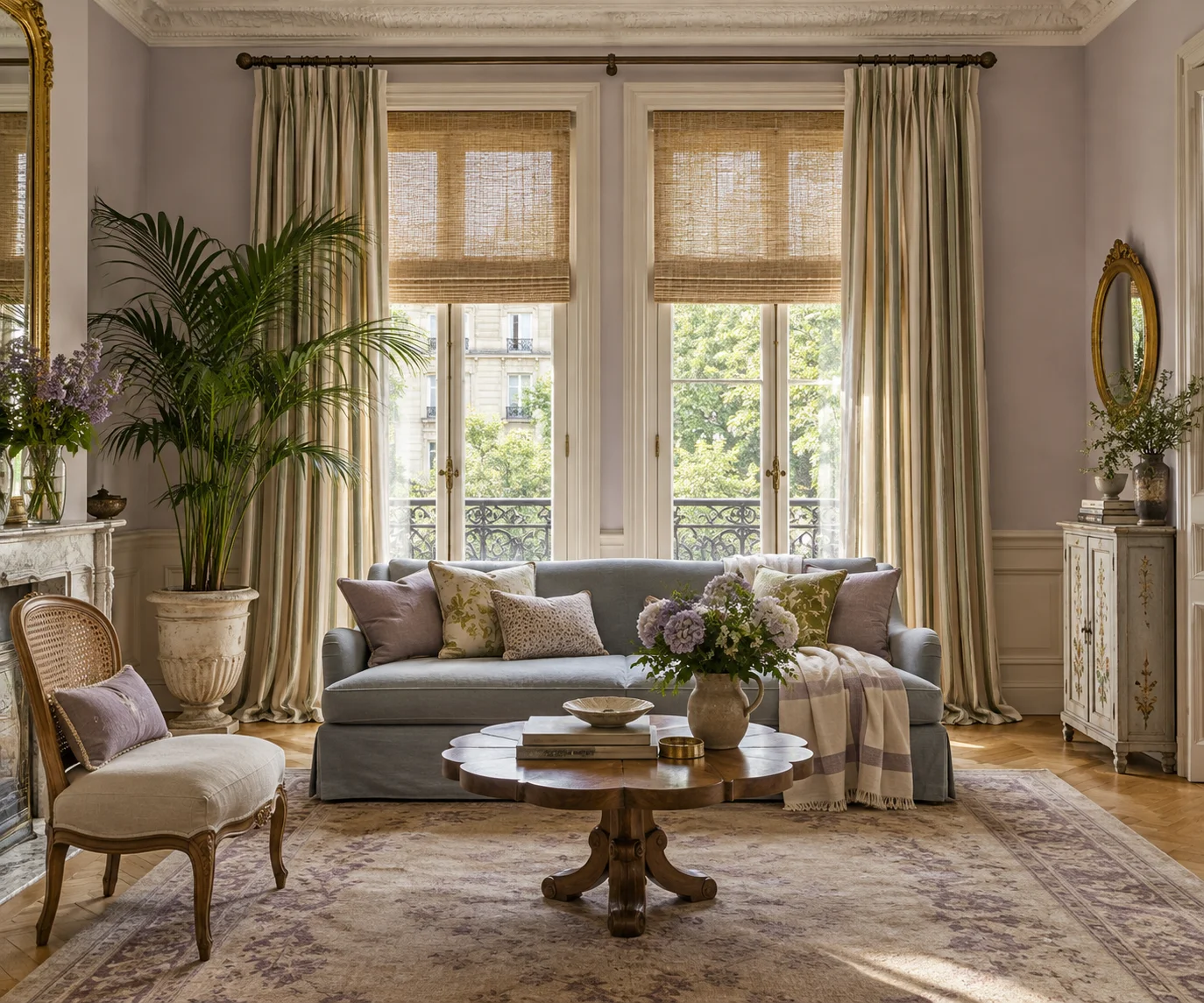
Living Room Storage and Display Ideas
21. Build Storage Around the Fireplace
Alcoves beside a fireplace are ideal for shelving, cabinets or a combination of both. Closed storage below can hide practical items while open shelves provide space for books and decorative pieces.
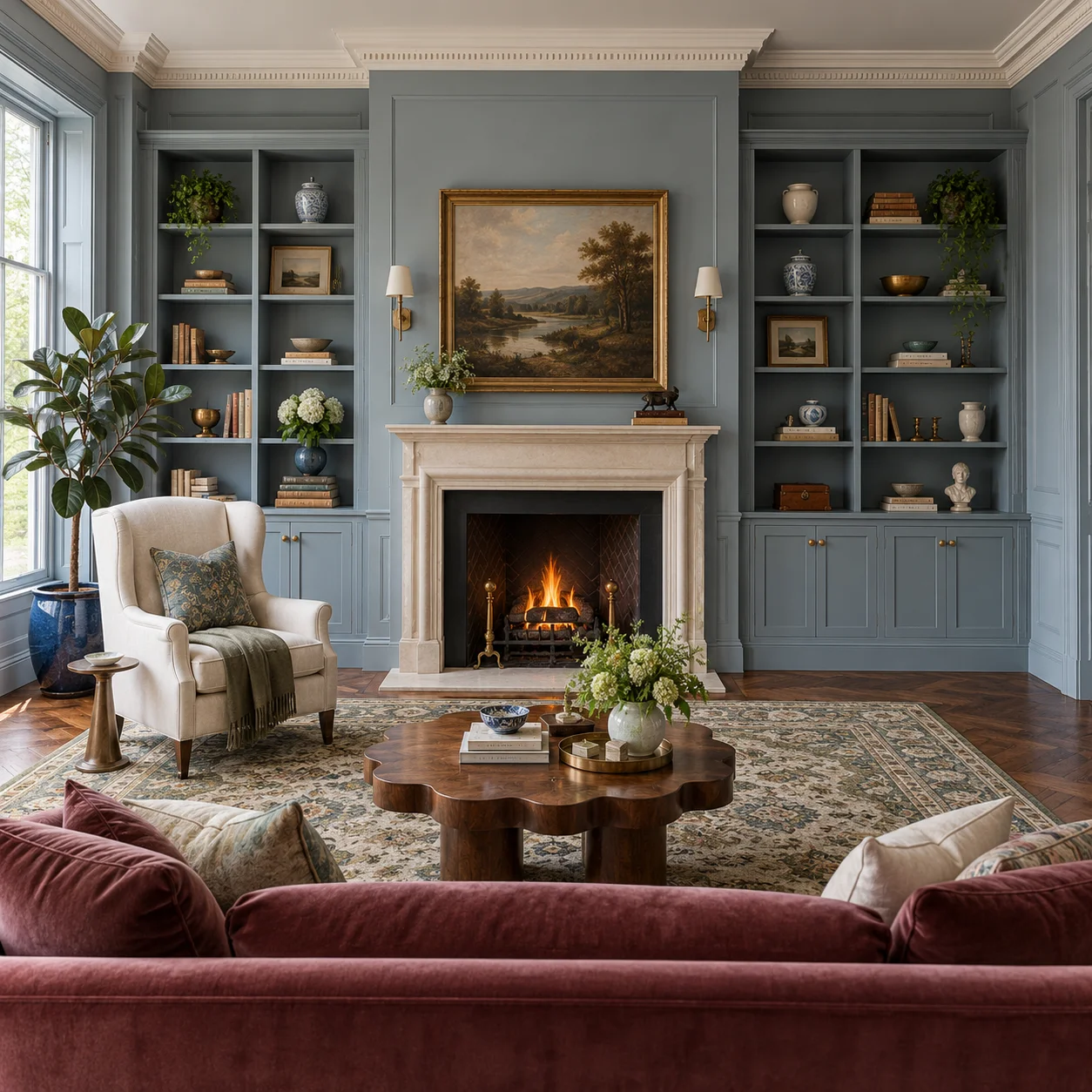
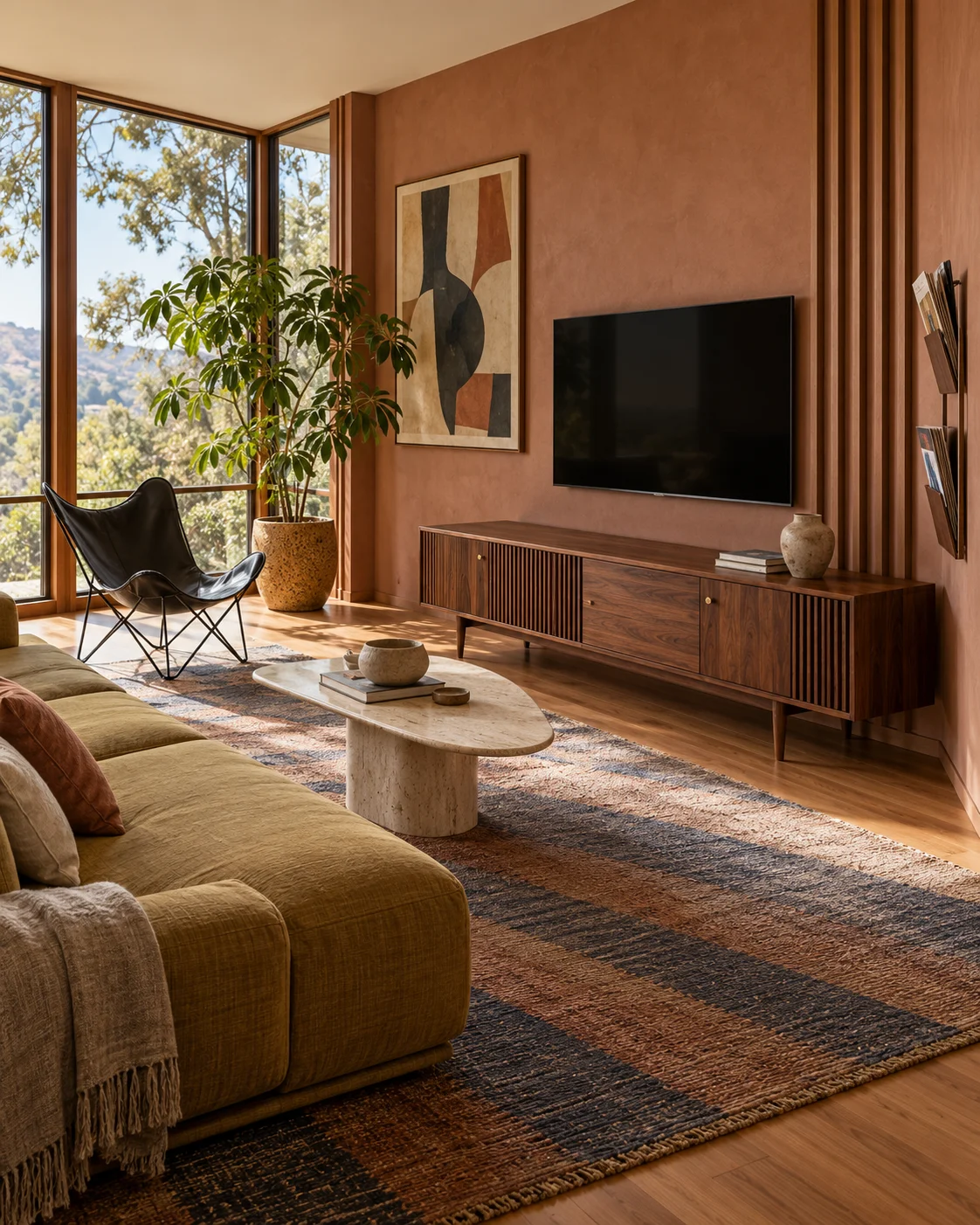
22. Use a Media Unit That Looks Like Furniture
Instead of making the television the dominant element, choose a media console with an attractive material, interesting doors or furniture-like proportions.
Timber, painted cabinetry and textured fronts help integrate technology into the rest of the room.
23. Leave Some Shelves Empty
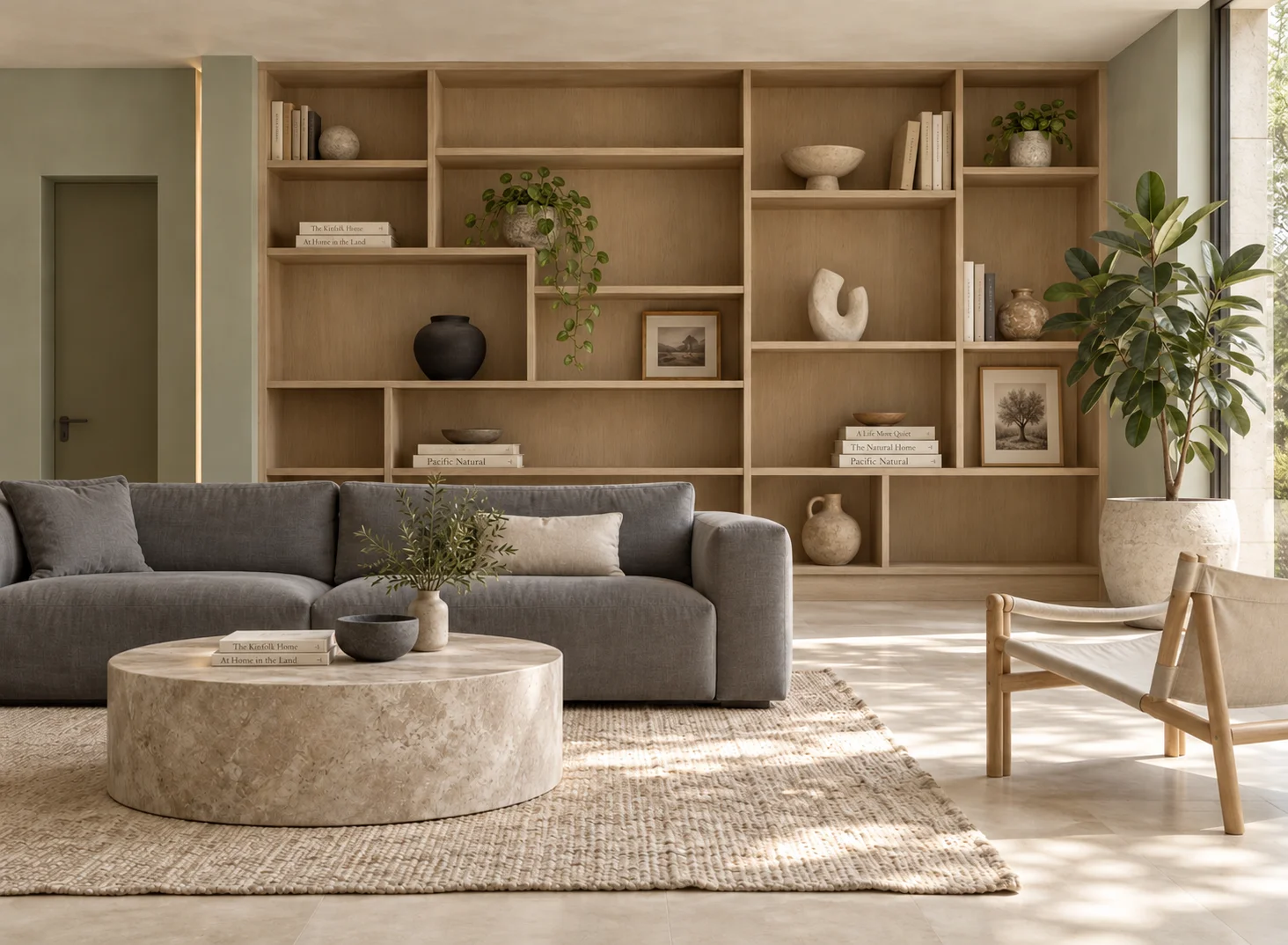
Open shelves do not need to be filled from edge to edge. Empty space helps individual objects stand out and prevents a display from becoming visually exhausting.
Combine upright and horizontal books with ceramics, framed photographs and a few sculptural pieces while leaving several sections deliberately quiet.
24. Hide Everyday Clutter in Decorative Storage
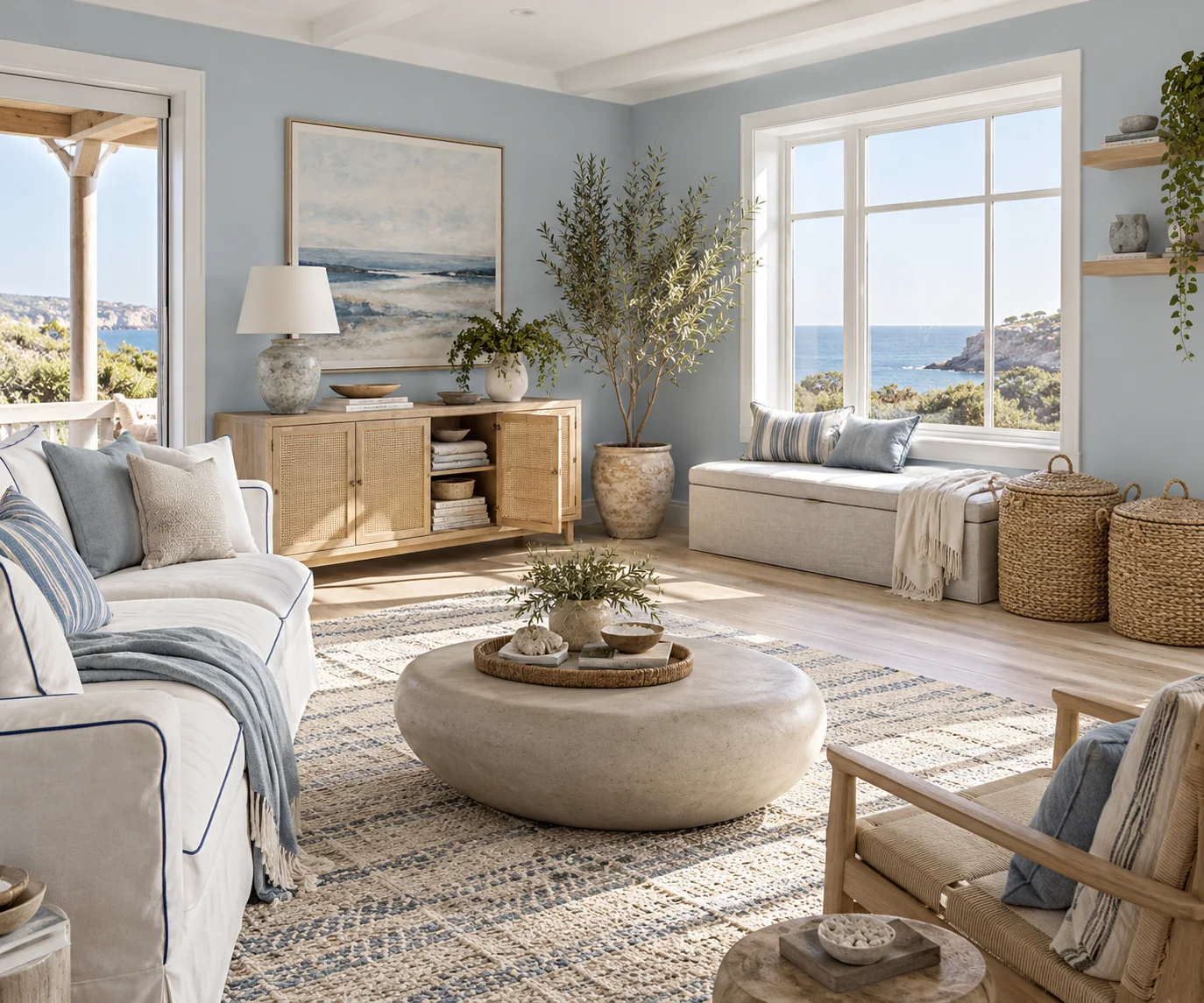
Use baskets, lidded boxes, drawers and cabinets for remote controls, chargers, children’s toys, games and other small items that accumulate in a living room.
Good storage makes it easier for the room to remain comfortable and functional without requiring everything to stay permanently on display.
Living Room Wall Decor Ideas
25. Create an Art-Led Focal Wall
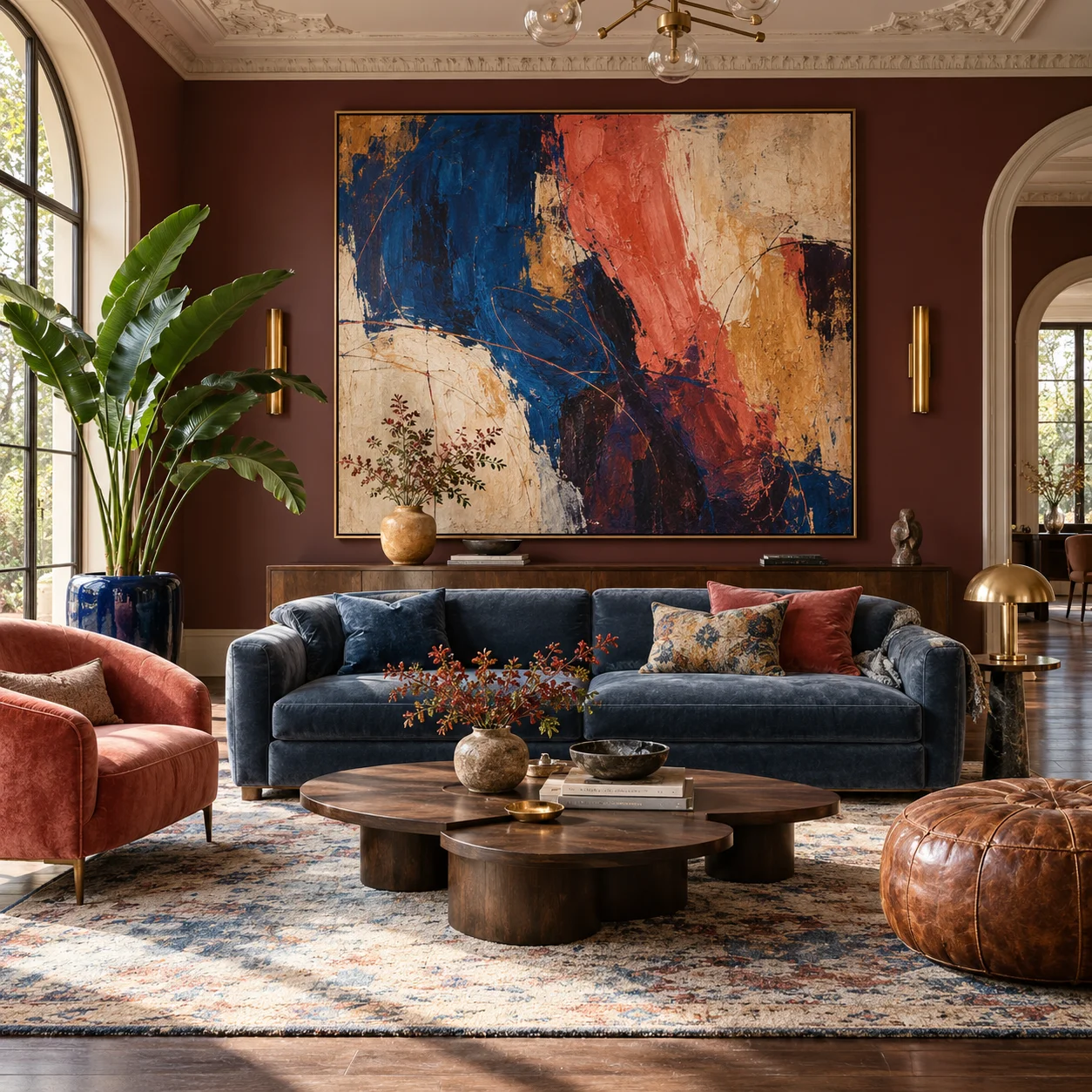
Instead of choosing artwork after everything else is finished, use a large painting or print as a starting point for the room. Its colors can influence cushions, upholstery, rugs and smaller accessories.
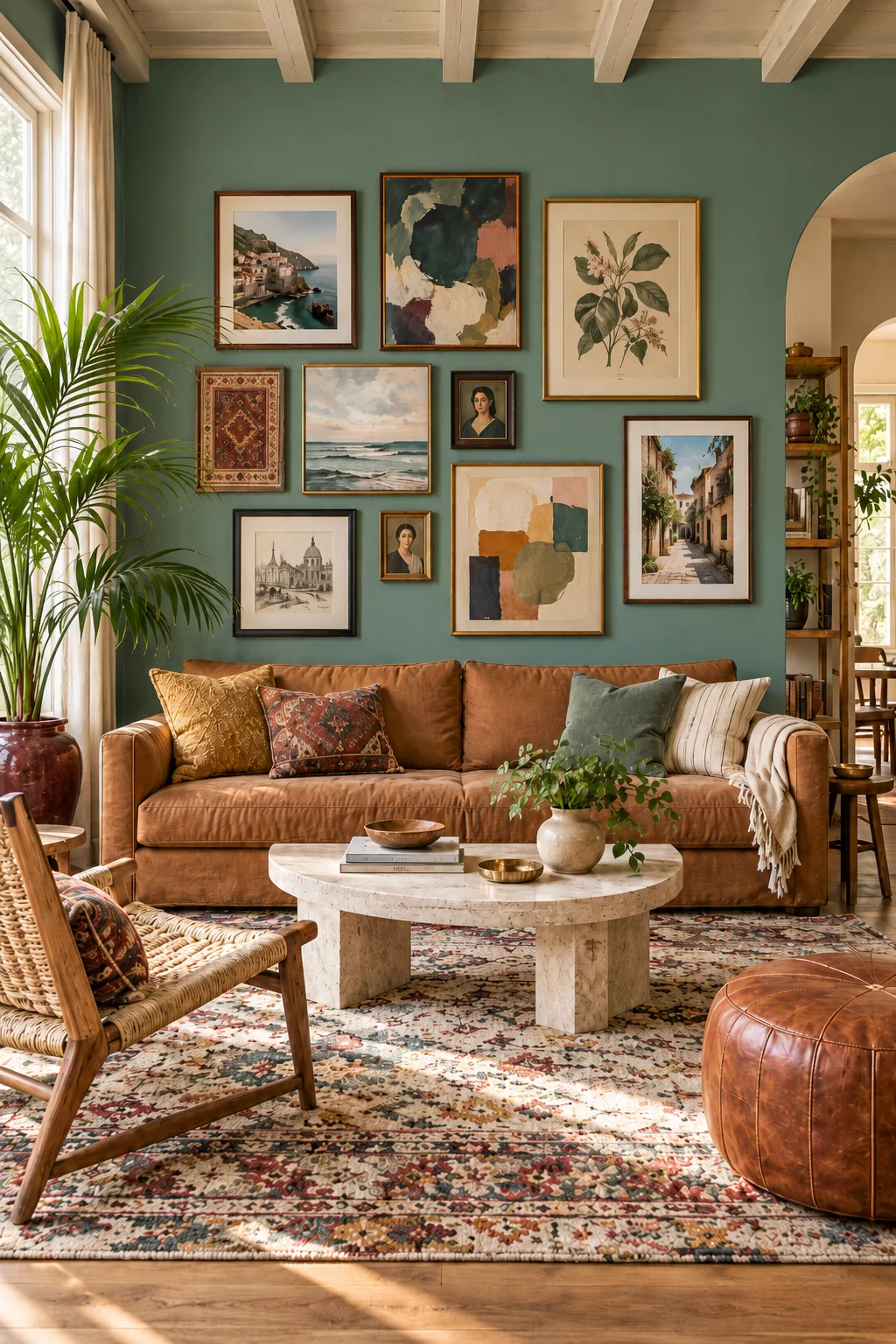
26. Build a Collected Gallery Wall
Combine artwork of different sizes and formats for a gallery wall that feels accumulated gradually. Photography, paintings, prints and small dimensional objects can coexist as long as there is some visual connection between them.
Keep spacing reasonably consistent to prevent an eclectic collection from appearing chaotic.
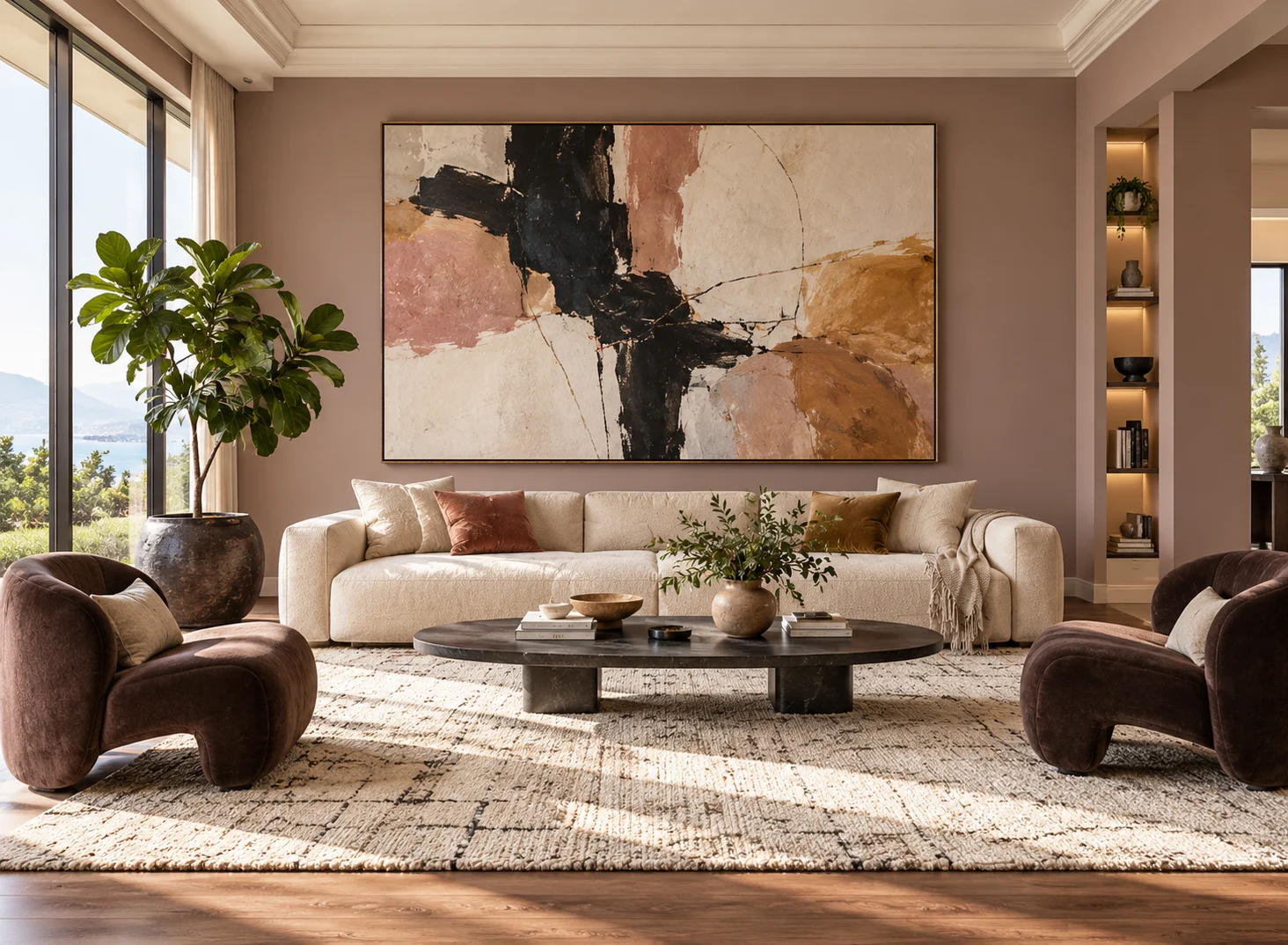
27. Use One Oversized Artwork
A single large artwork is often more effective than several undersized pieces, particularly above a sofa. It provides visual impact while keeping the wall composition relatively simple.
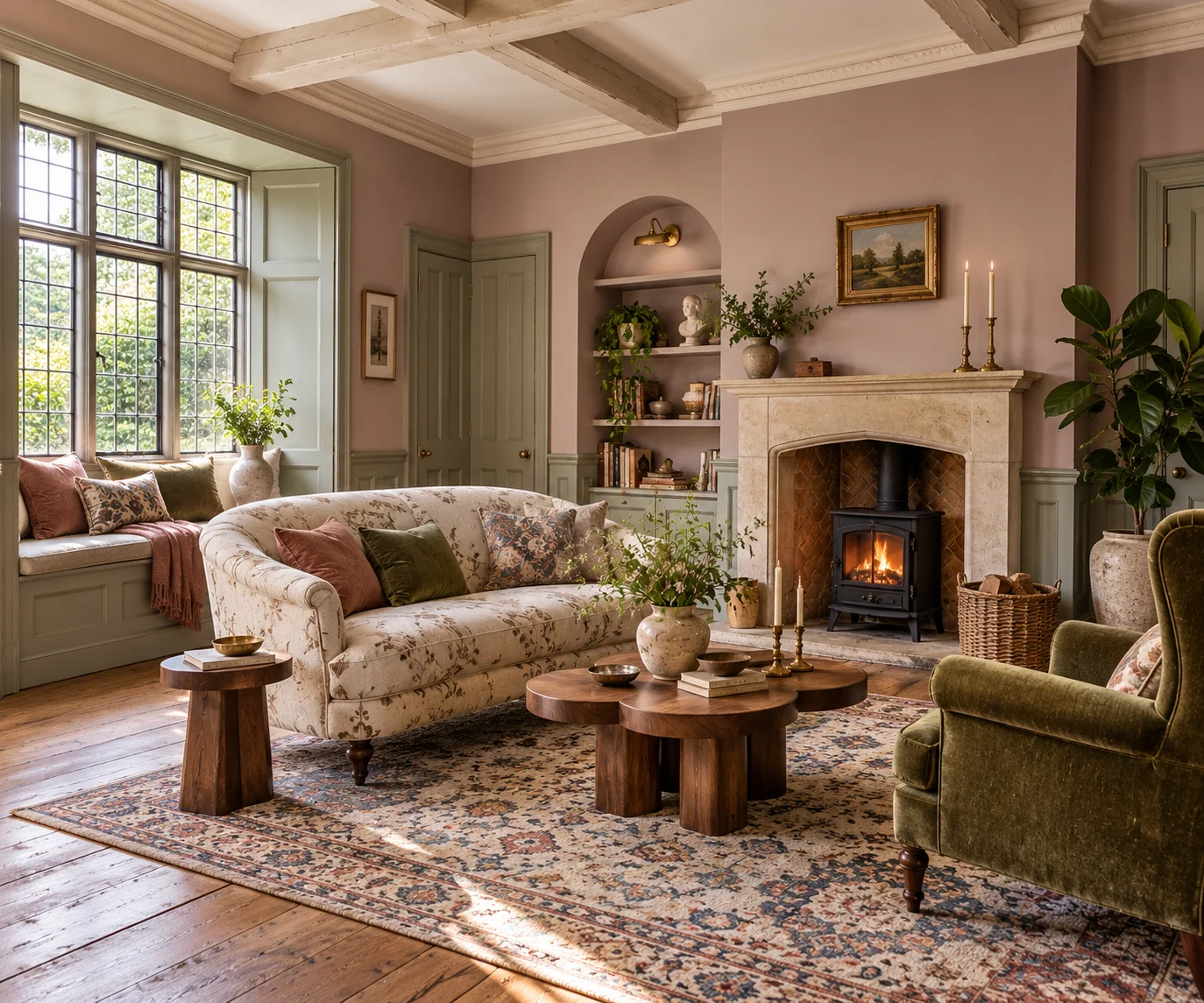
28. Add Character With Architectural Details
Wall molding, ceiling trim, paneling, built-in niches or a painted fireplace surround can introduce interest without relying heavily on accessories.
Even in a newer home, simple molding can give plain walls more depth and proportion.
Living Room Style and Decorating Ideas
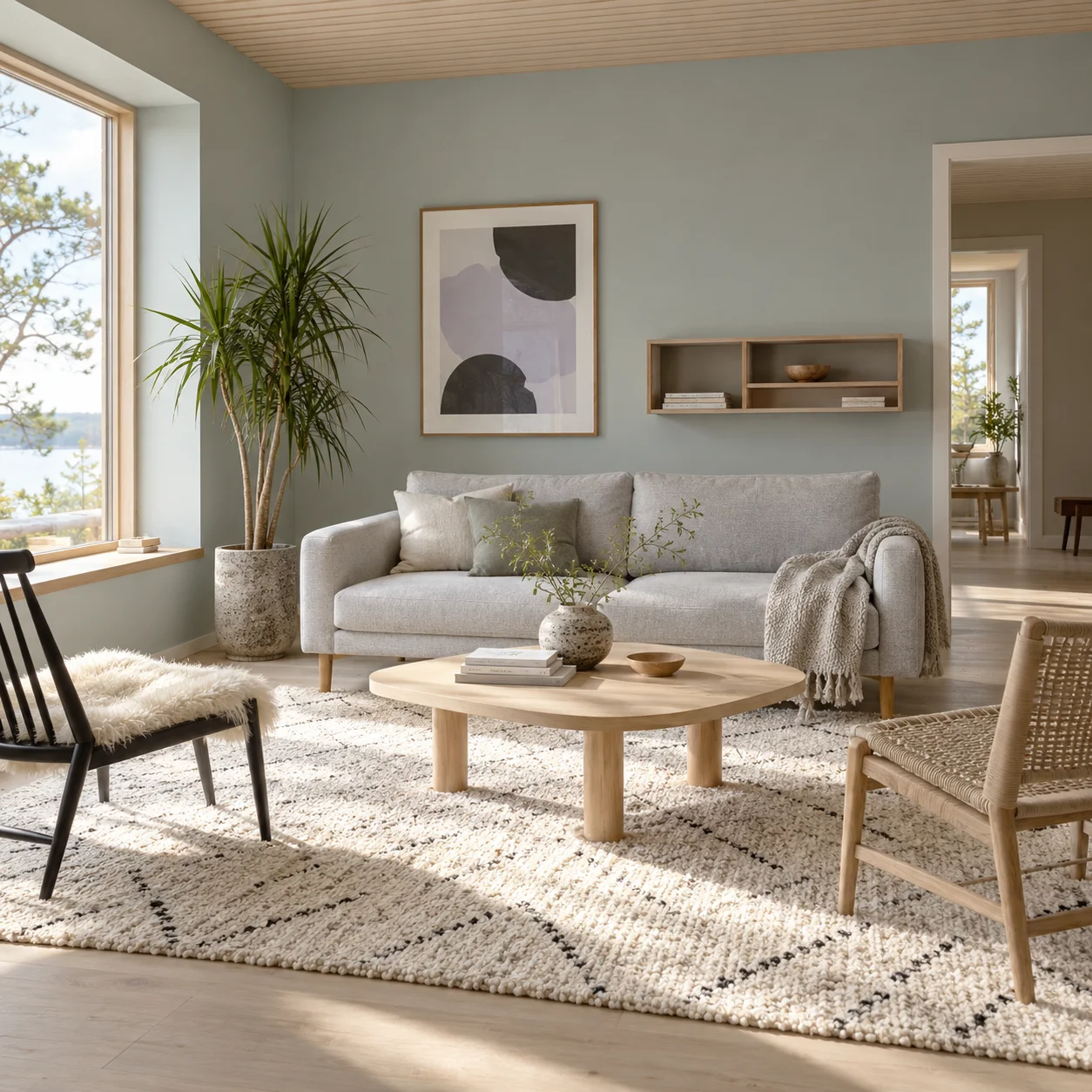
29. Create a Calm Scandinavian-Inspired Living Room
Combine pale timber, practical furniture, natural textiles and a restrained palette for a room that feels light and comfortable without becoming stark.
The style works best when simplicity is balanced with warmth. Our Scandinavian interior design guide explains the furniture, colors and materials in greater detail.
30. Introduce Boho Character Through Textiles
You do not need to fill a room with macrame and patterned accessories to create a Bohemian influence. Start with a vintage-inspired rug, natural materials, collected artwork and tactile cushions.
For a more complete approach, see our Bohemian living room style guide and Boho design principles.
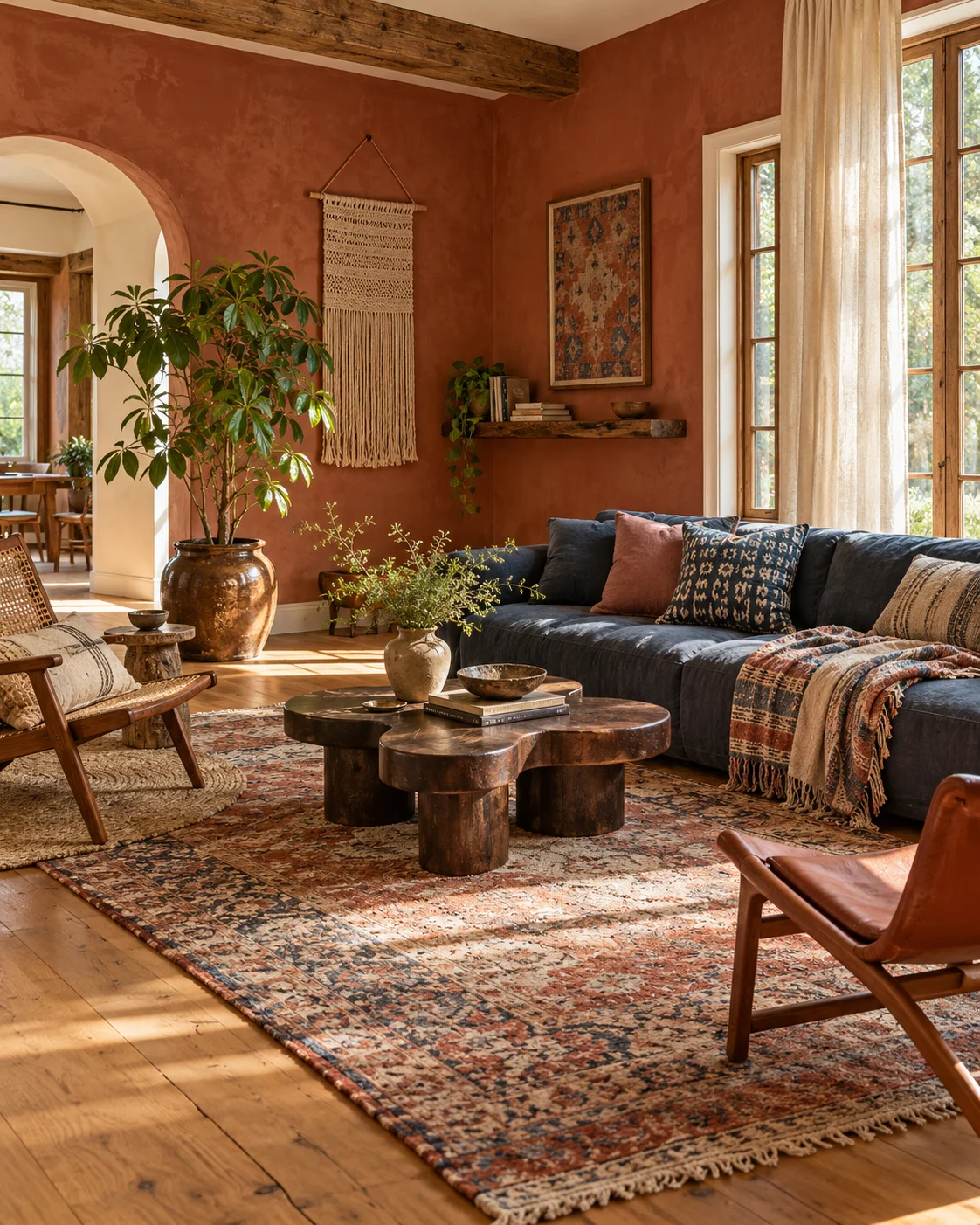
31. Mix Vintage and Contemporary Pieces
Rooms filled entirely with furniture from one period can sometimes feel like showrooms. Pairing contemporary furniture with a vintage side table, old wooden cabinet, antique mirror or inherited object creates contrast and individuality.
The pieces do not need to share a style as long as their proportions, materials or colors relate in some way.

32. Bring in One Large Houseplant
A substantial plant can soften hard architectural lines and add an organic element to a living room without requiring numerous small accessories.
Depending on the available light and growing conditions, consider an olive tree, rubber plant, Kentia palm, fiddle-leaf fig or another indoor plant suited to your home.

33. Decorate With Personal Objects Slowly
Resist the urge to fill every surface immediately. A few photographs, travel objects, books, handmade ceramics or inherited pieces usually have more impact when they are given enough room to be noticed.
This gradual approach is particularly effective in eclectic and Bohemian rooms. You can find additional examples in our guide to Boho living room ideas.
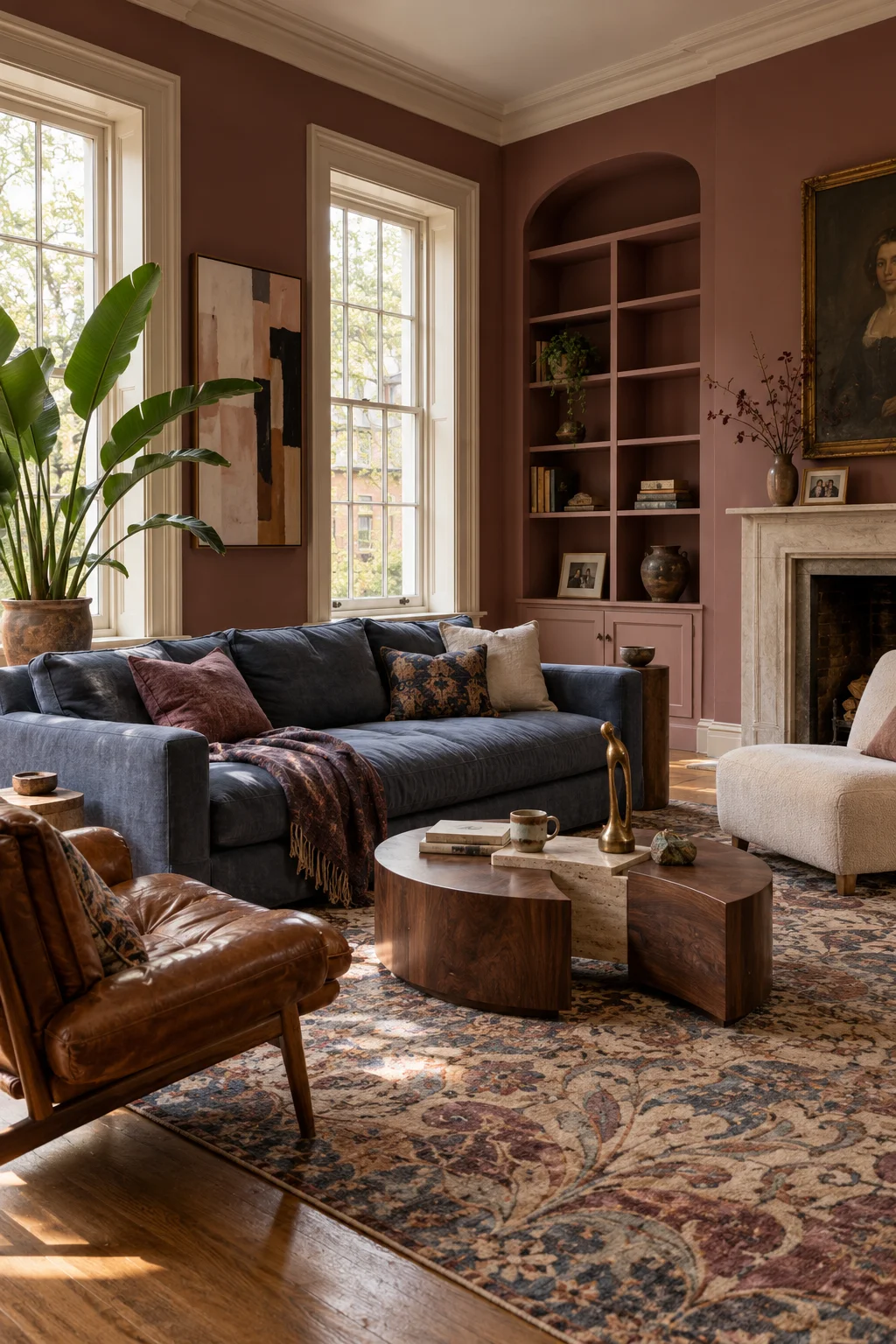
34. Make the Room Feel Lived In
A stylish living room does not need to look untouched. Keep a favorite book near the reading chair, drape a throw naturally over the sofa and allow useful objects to remain visible when they contribute to the room.
The goal is controlled informality: comfortable enough for everyday life, but organized enough to prevent clutter from taking over.

35. Edit the Room Before Adding Anything Else
One of the most effective living room updates costs nothing. Remove accessories, small furniture and decorative pieces that no longer contribute to the space, then reassess the room before buying something new.
Editing helps clarify which areas genuinely need attention. You may discover that the room needs a larger rug or better lamp rather than additional decor.
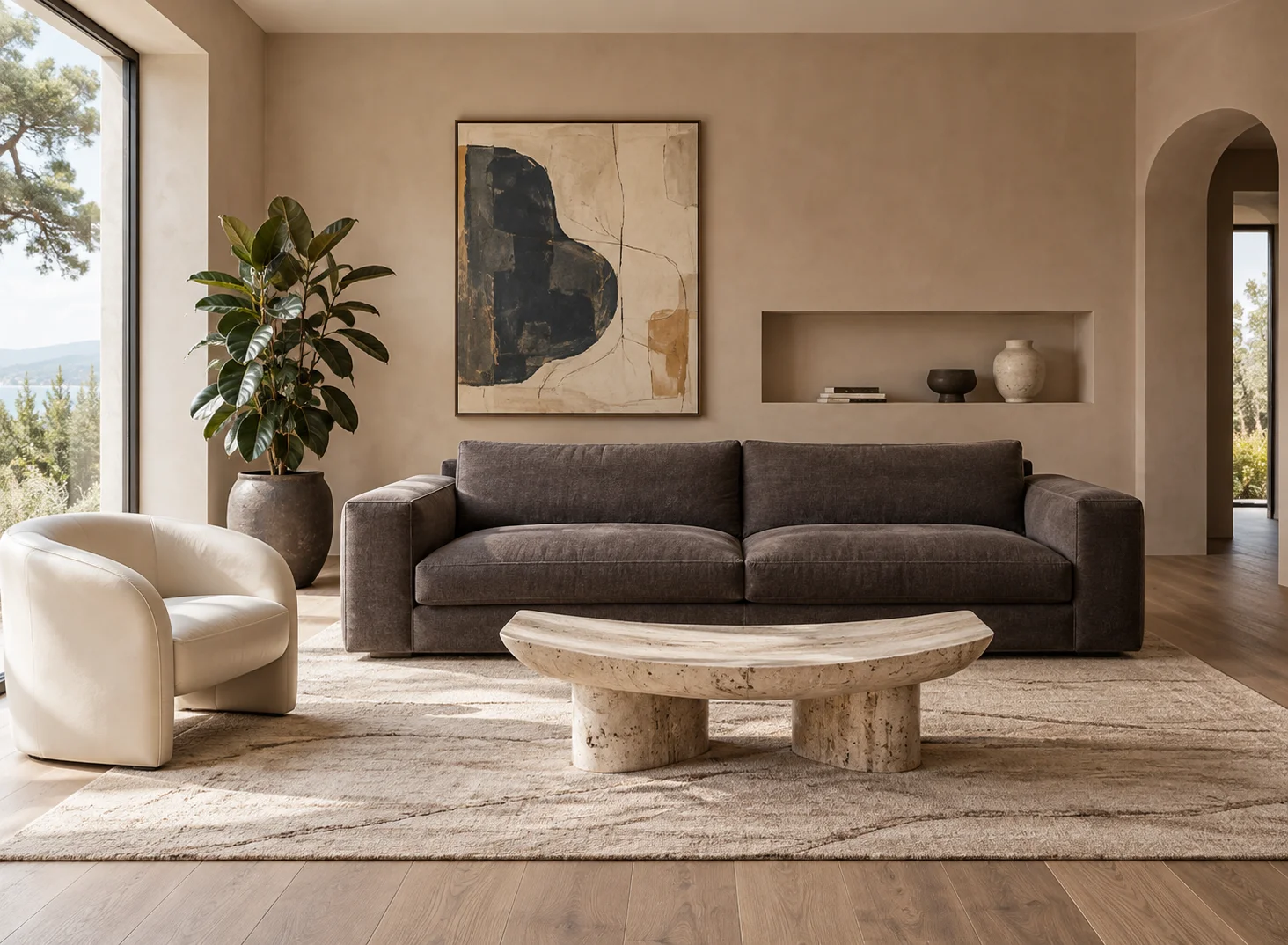
How to Choose the Right Living Room Ideas for Your Home
You do not need to use all 35 ideas at once. In fact, the most successful rooms are usually built by solving the biggest design issues first.
Start by considering how you actually use the living room. A household that regularly entertains may prioritize flexible seating and conversation areas, while a family room may require durable materials, closed storage and generous seating. A small apartment living room might benefit most from compact furniture, multifunctional pieces and a carefully planned layout.
Then evaluate the room in this order:
- Layout: Make sure movement through the space feels natural.
- Furniture: Check that major pieces are appropriately scaled.
- Rug: Use it to visually connect the seating arrangement.
- Lighting: Provide several light sources rather than relying on one fixture.
- Color and texture: Establish visual continuity across the room.
- Storage: Give everyday clutter somewhere practical to go.
- Personality: Finish with artwork, books, plants and meaningful objects.
Working in this order makes it easier to distinguish structural design problems from purely decorative ones.
How Can I Make My Living Room Look More Stylish?
The fastest way to make a living room look more stylish is to improve proportion and visual cohesion rather than simply adding decorations. Start with a properly sized rug, arrange furniture into a defined seating group, introduce lighting at several heights and repeat a few colors or materials throughout the space.
After those elements are working, add artwork and personal accessories selectively. A room with fewer well-chosen objects usually appears more intentional than one filled with unrelated decor.
How Can I Make My Living Room More Comfortable?
Comfort comes from more than a soft sofa. Think about how people sit, move, read, talk and relax in the room.
Provide somewhere to put down a drink within easy reach of major seats. Add task lighting beside reading areas, include cushions and throws in tactile fabrics, control glare from windows and arrange seating so conversation feels natural.
Comfort also includes visual comfort. A room with balanced lighting, enough storage and some empty space generally feels calmer than one filled with furniture and accessories.
Living Room Ideas FAQs
What living room styles are popular but still timeless?
Warm minimalism, Scandinavian-inspired interiors, transitional rooms, modern organic design and relaxed contemporary spaces can all have long-term appeal because they rely more on proportion, natural materials and functional furniture than short-lived decorative trends.
What is the easiest way to update a living room?
Begin by rearranging the furniture and removing unnecessary accessories. Then consider changing the rug, cushions, artwork or lighting. These updates can significantly alter the character of a room without requiring major renovation.
How many colors should a living room have?
There is no fixed number, but many cohesive living rooms use one dominant base color, one or two supporting colors and a smaller accent. The colors can appear in several tones rather than matching exactly.
Should all living room furniture match?
No. Mixing furniture can make a living room feel more personal and layered. Aim for compatibility rather than identical style. Similar proportions, repeated materials, coordinated colors or complementary shapes can visually connect different pieces.
How do I make a small living room feel bigger?
Choose appropriately scaled furniture, maintain clear walking routes, use fewer but more functional pieces and avoid blocking natural light. Raising some furniture on visible legs can also expose more floor and create a lighter visual impression.
Final Thoughts
The best living room ideas are not necessarily the most dramatic. A better furniture arrangement, larger rug, softer evening lighting or carefully chosen piece of art can sometimes improve a room more than an expensive renovation.
Focus first on how the room needs to function, then build visual interest through color, texture, lighting and objects that genuinely belong in your home. When comfort and personality guide the decorating process, the result is much more likely to remain stylish long after individual trends have changed.