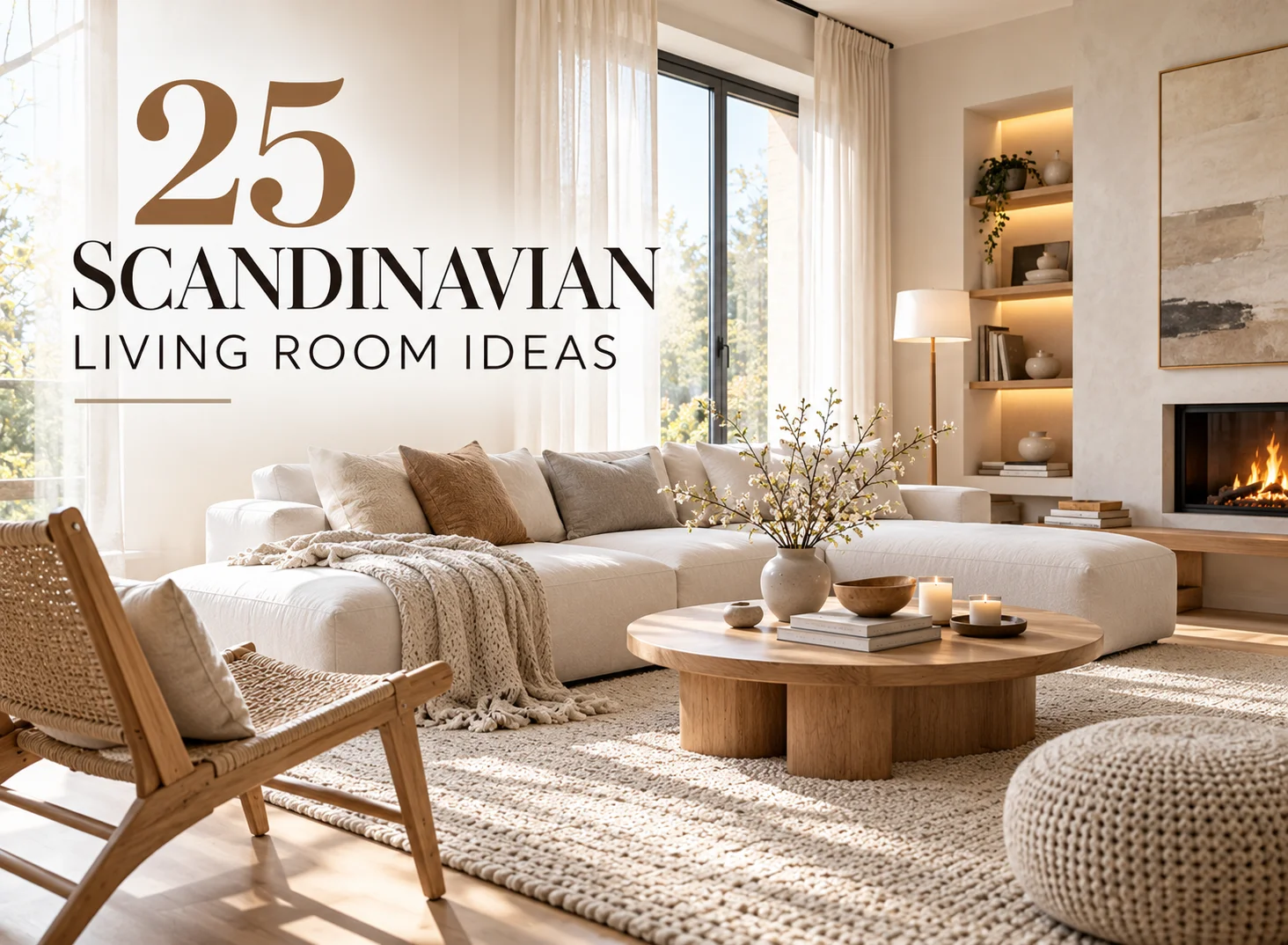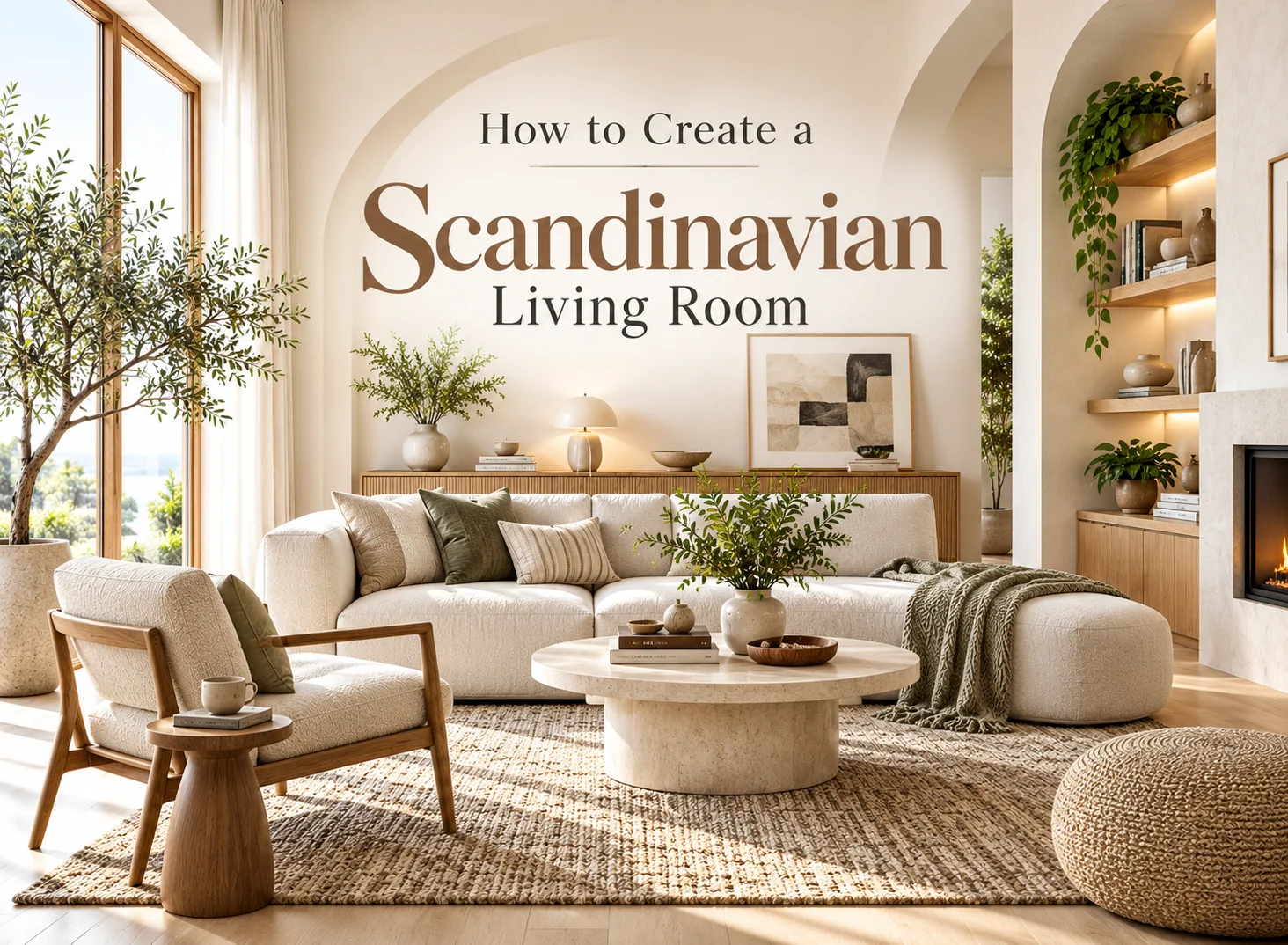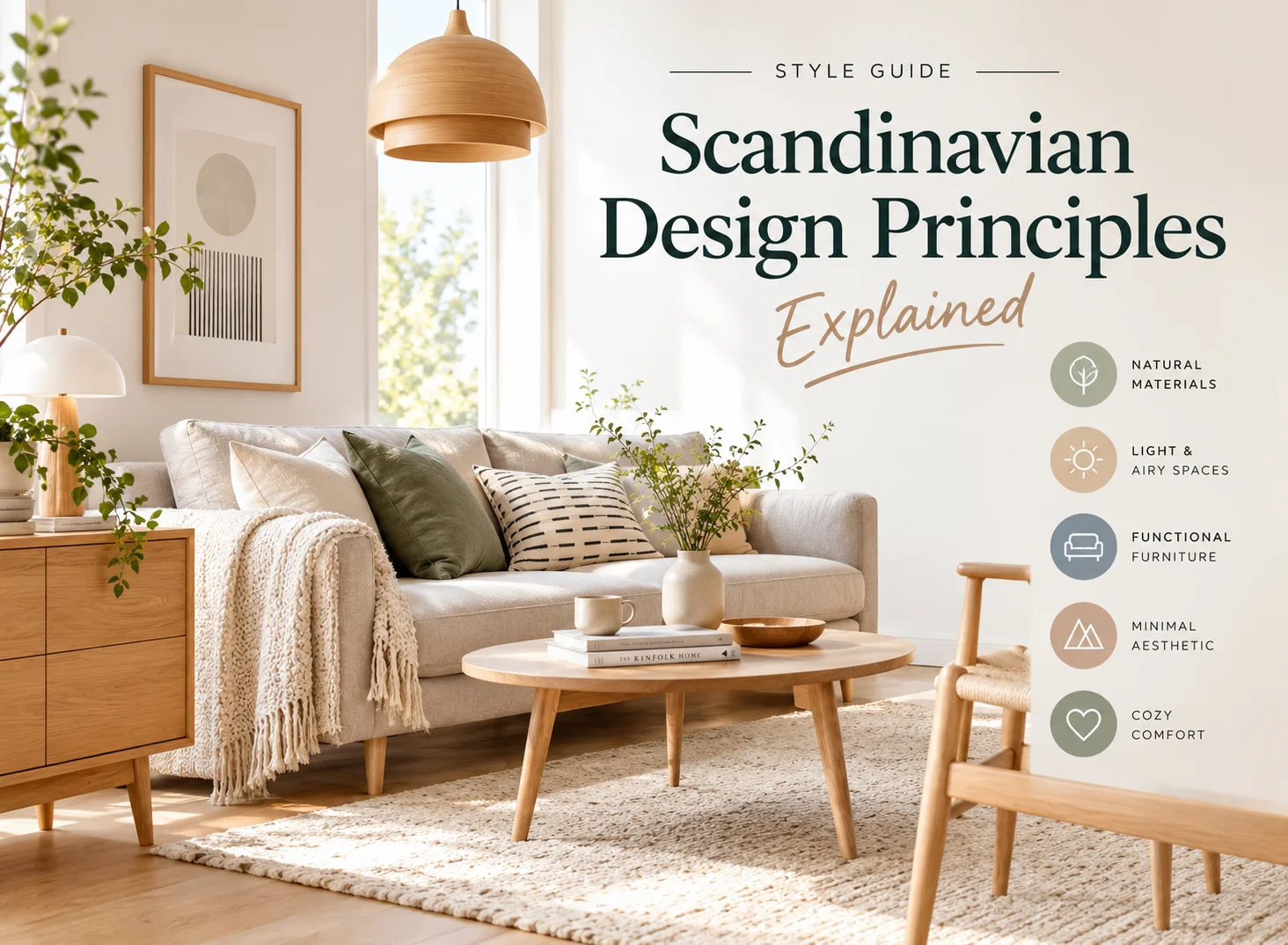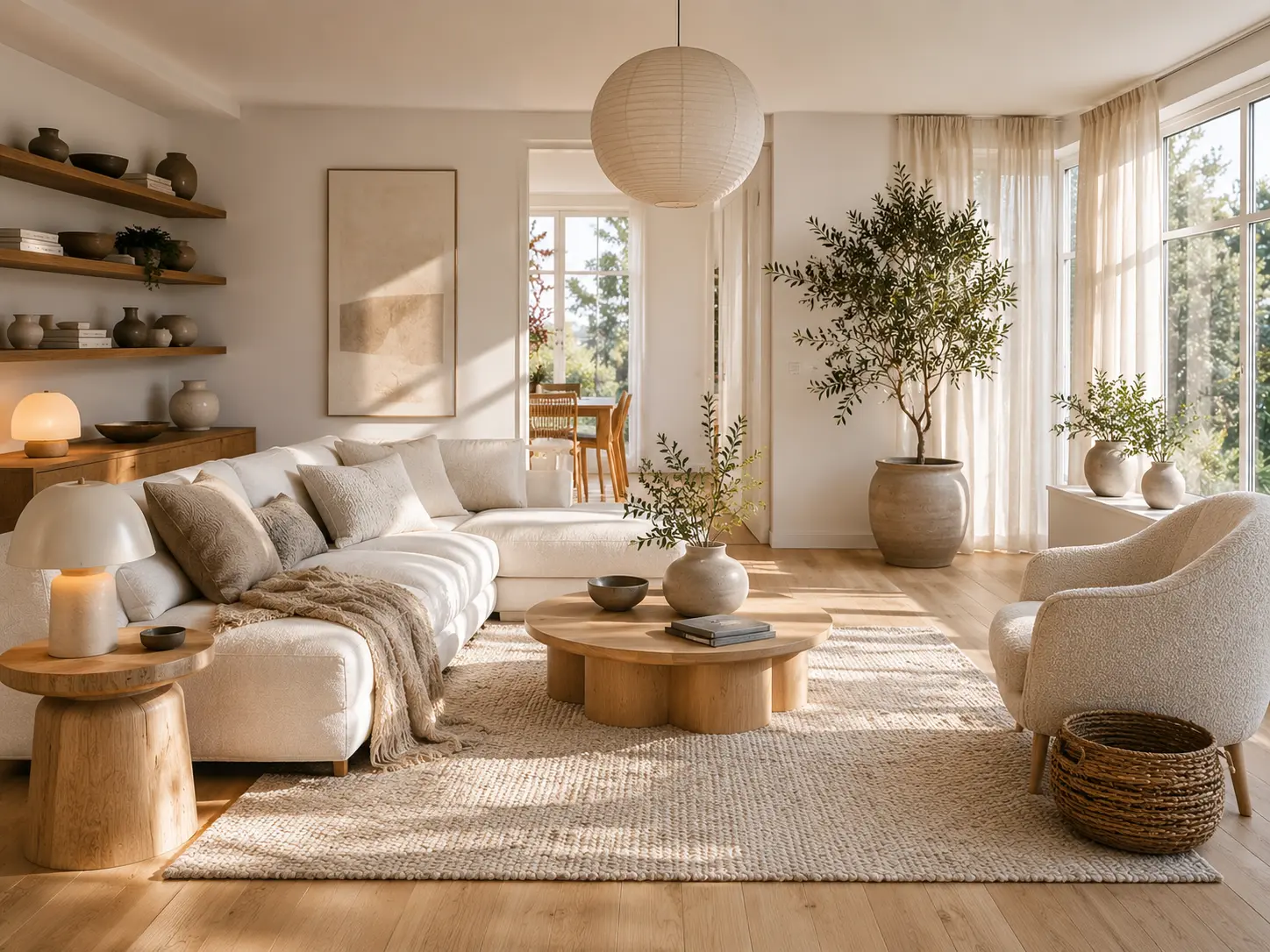
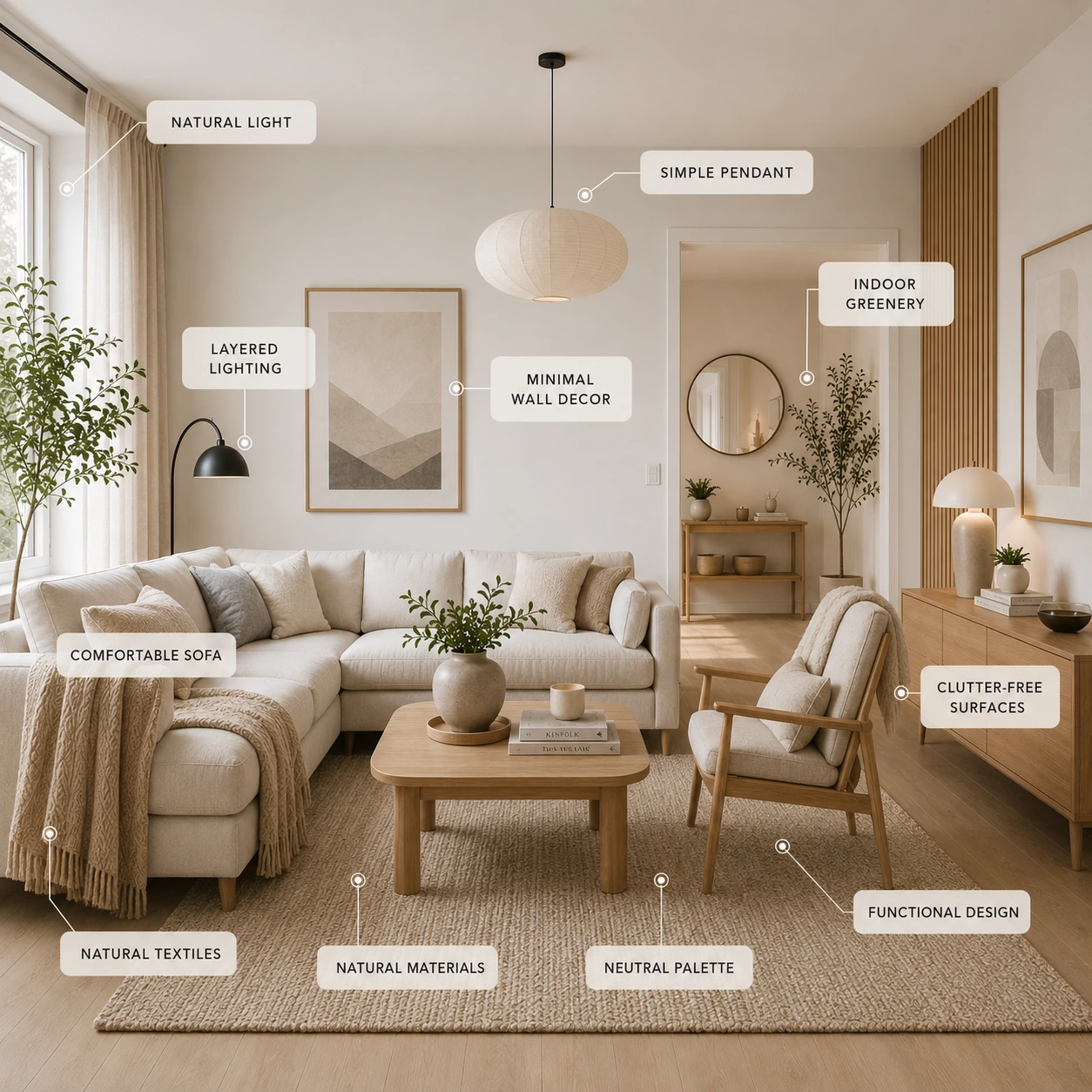
Scandinavian interior design is a decorating style that originated in the Nordic countries and focuses on simplicity, functionality, natural materials, and everyday comfort. A Scandinavian living room combines bright neutral colors, light wood furniture, cozy textiles, layered lighting, and uncluttered layouts to create a warm, inviting, and timeless space that feels both practical and beautiful.
A Scandinavian living room is proof that a home doesn’t need extravagant furniture or excessive decoration to feel luxurious. Instead, the style celebrates thoughtful design, natural materials, and everyday comfort. Every piece has a purpose, every material adds warmth, and every detail contributes to a calm, welcoming atmosphere.
History of Scandinavian Design
Scandinavian design developed across Denmark, Sweden, Norway and Finland during the early twentieth century, shaped by Nordic craftsmanship, functionalism and the belief that good design should make everyday life more comfortable and practical.
The 1930 Stockholm Exhibition helped popularize functionalist architecture and simpler interiors across Scandinavia. Unlike some forms of European Modernism, Nordic designers softened clean lines with natural materials, craftsmanship and human-centered proportions.
During the 1940s and 1950s, Scandinavian Modern gained international recognition through influential designers such as Hans J. Wegner, Arne Jacobsen, Børge Mogensen and Alvar Aalto. Their furniture combined elegant simplicity with wood craftsmanship, comfort and functionality.
By the 1960s and 1970s, light woods, wool, linen, ceramics and clean-lined furniture had become defining elements of the Scandinavian aesthetic.
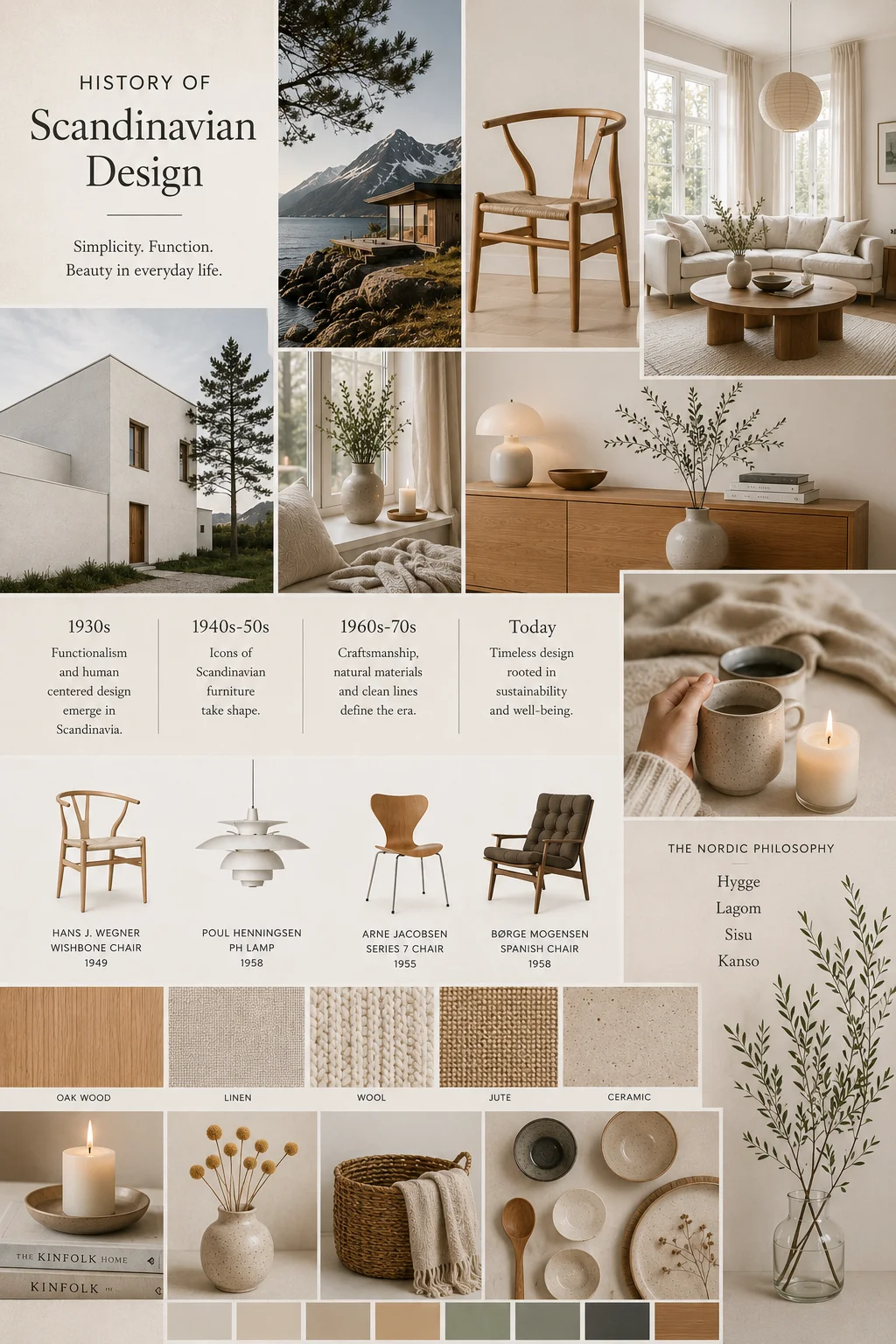
Today, Scandinavian design continues to evolve, but its core philosophy remains largely unchanged: simplicity, functionality, natural materials, craftsmanship and everyday comfort. These principles explain why the style remains relevant in modern homes rather than feeling like a passing design trend.
In this guide, you’ll learn how to decorate a Scandinavian living room using designer-approved principles, furniture recommendations, color palettes, layout ideas, shopping advice, and styling tips that will help your home feel brighter, cozier, and effortlessly elegant.
What Is Scandinavian Interior Design?
At a Glance
- Origin: Denmark, Sweden, Norway, Finland & Iceland
- Best Known For: Bright, functional and cozy interiors
- Core Philosophy: Beauty through simplicity and practicality
- Lifestyle: Hygge, comfort and intentional living
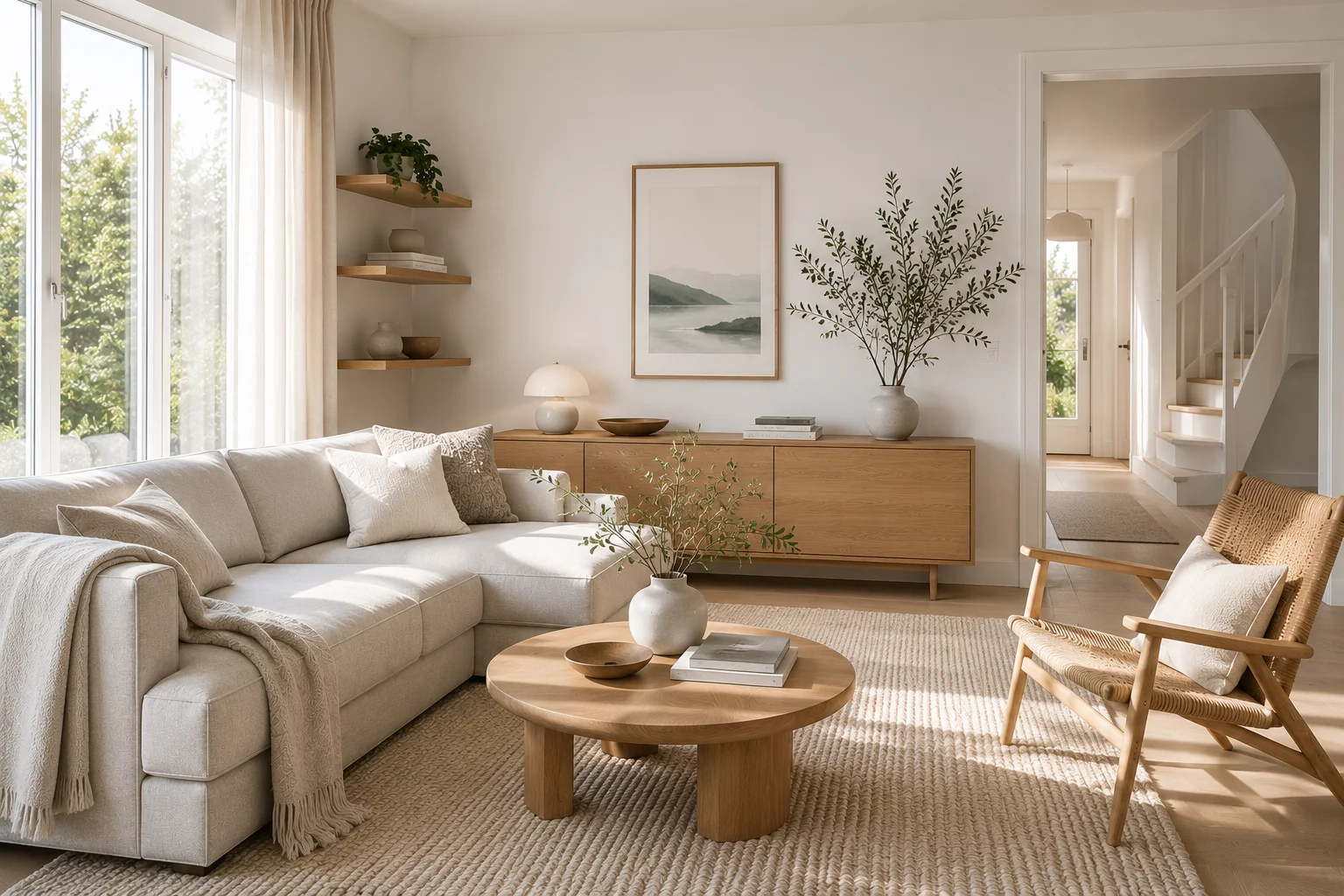
Scandinavian interior design emerged during the early twentieth century as designers sought to create homes that were practical, comfortable, and accessible. Rather than emphasizing luxury through ornamentation, Nordic design focused on high-quality craftsmanship, natural materials, and furniture that improved everyday living.
One of the defining ideas behind Scandinavian interiors is hygge, a Danish concept that encourages creating warm, relaxing spaces where people enjoy spending time with family and friends. Hygge isn’t a decorating style—it’s a lifestyle that influences how Scandinavian homes are designed.
Because Nordic countries experience long winters and limited daylight, Scandinavian interiors maximize natural light using white walls, light wood finishes, reflective surfaces, and carefully layered lighting. The result is a home that feels bright, welcoming, and comfortable throughout the year.
Good to Know
Although Scandinavian and Japandi interiors share many similarities, Scandinavian design places greater emphasis on brightness, comfort, and hygge, while Japandi introduces stronger Japanese influences such as wabi-sabi, darker accents, and handcrafted simplicity.
Key Characteristics of a Scandinavian Living Room
Every authentic Scandinavian living room combines beauty with practicality. Rather than decorating for appearance alone, each design decision supports comfort, functionality, and everyday life.
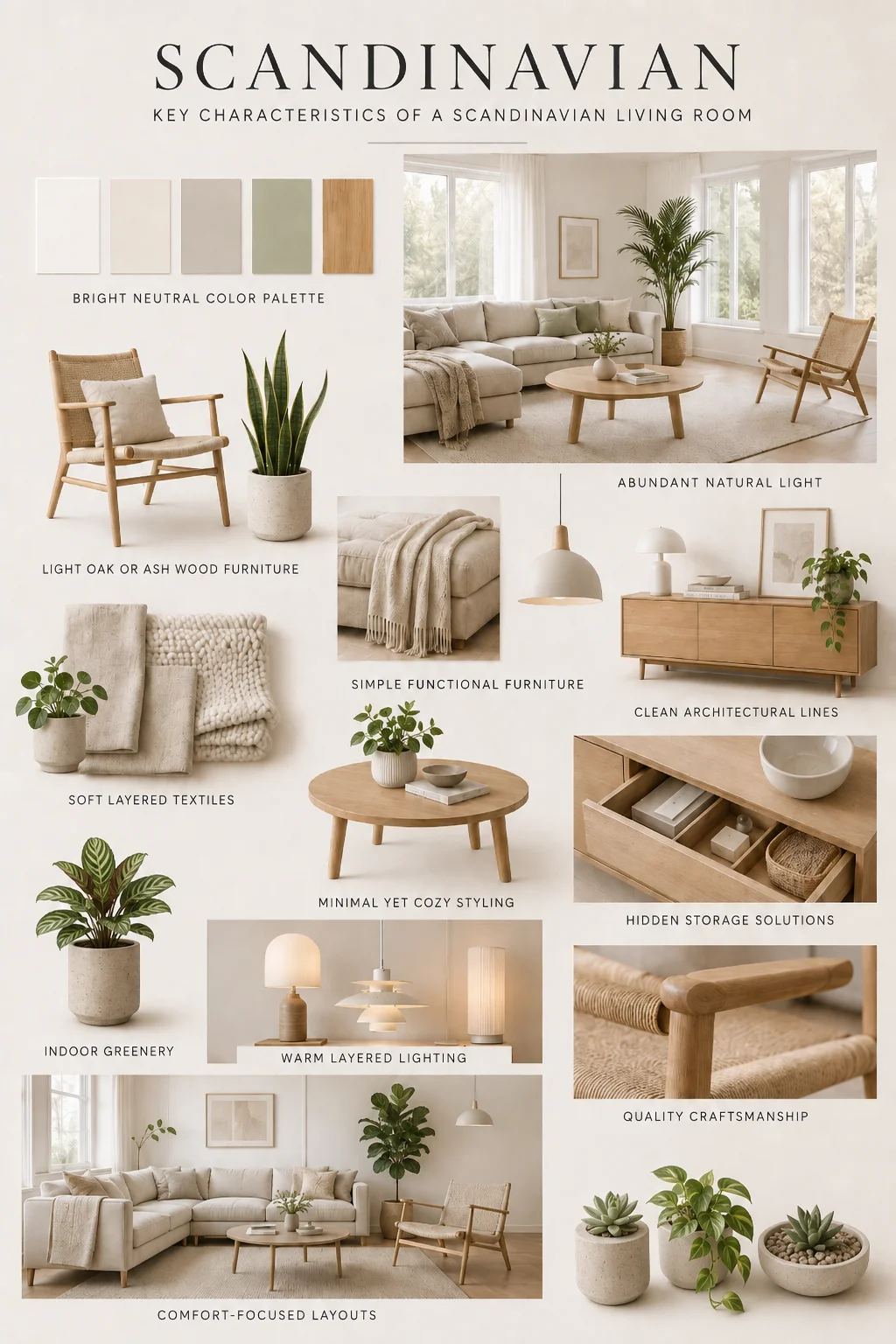
- Bright neutral color palette
- Abundant natural light
- Light oak or ash wood furniture
- Clean architectural lines
- Simple functional furniture
- Soft layered textiles
- Minimal yet cozy styling
- Hidden storage solutions
- Indoor greenery
- Warm layered lighting
- Quality craftsmanship
- Comfort-focused layouts
Designer Tip
If you’re unsure whether something belongs in a Scandinavian living room, ask yourself: Does it improve comfort, functionality, or visual calm? If not, consider leaving it out.
Scandinavian Color Palette
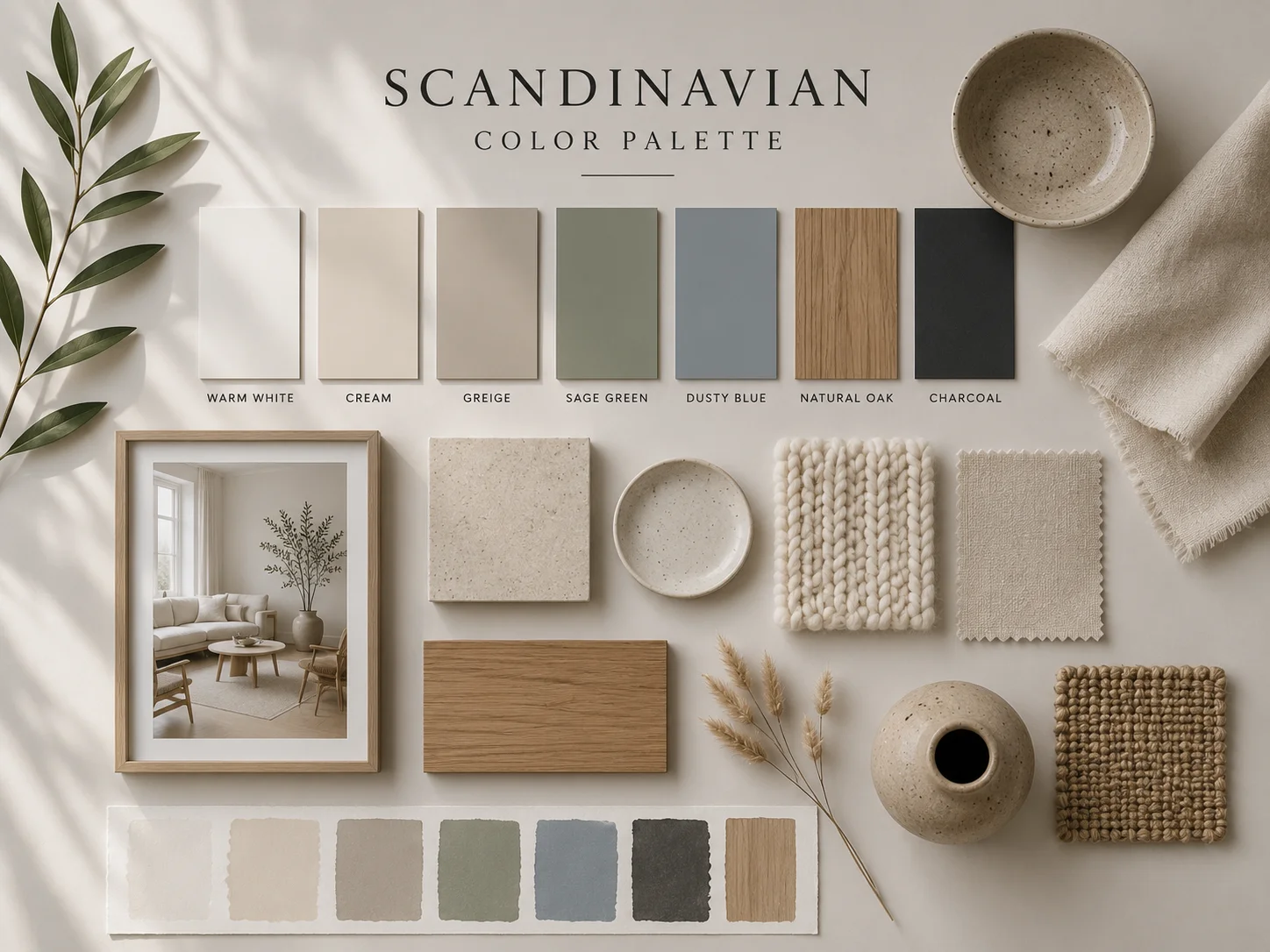
Color plays a major role in making Scandinavian interiors feel open and welcoming. Because natural daylight is limited for much of the year in Nordic countries, interiors traditionally rely on light-reflecting colors that brighten the home.
Primary Colors
- Warm White
- Soft White
- Ivory
- Cream
- Light Beige
- Greige
- Pale Gray
Natural Accent Colors
- Sage Green
- Dusty Blue
- Muted Olive
- Charcoal Gray
- Soft Black
- Natural Oak
Unlike highly colorful interiors, Scandinavian rooms rely on texture, natural materials, and changing daylight to create depth. The restrained palette allows furniture and craftsmanship to become the visual focus.
Why It Matters
Light neutral colors reflect daylight, making even compact living rooms feel larger and brighter. Combined with natural wood furniture and cozy textiles, they create the signature warmth that defines Scandinavian design.
Choosing Scandinavian Living Room Furniture
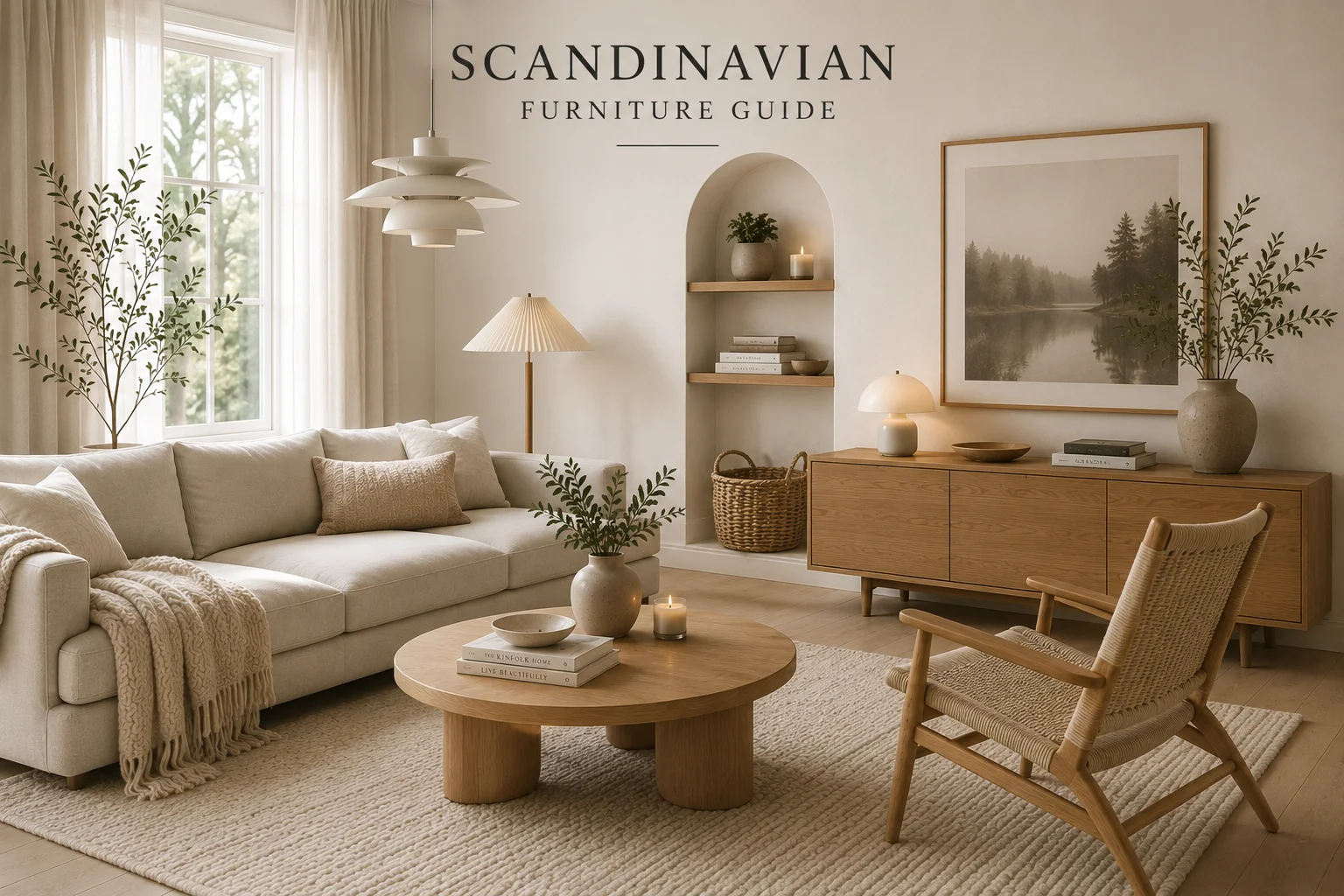
Scandinavian furniture is known for its clean lines, practical proportions, and timeless craftsmanship. Rather than using oversized or highly decorative pieces, the style favors furniture that feels light, comfortable, and easy to live with.
The best Scandinavian living rooms combine simple silhouettes with natural materials and subtle texture. Each piece should contribute to everyday comfort while keeping the room visually open.
Designer Tip
Choose furniture with raised legs whenever possible. Exposed floor area creates a lighter visual appearance and helps smaller rooms feel more spacious.
Sofa
A Scandinavian sofa should feel comfortable without appearing bulky. Look for a streamlined shape, supportive cushions, and upholstery in a warm neutral color.
- Low or medium-profile silhouette
- Simple arms
- Neutral linen or woven upholstery
- Light oak or tapered wooden legs
- Soft but structured cushions
- Removable covers where possible
Warm white, oatmeal, beige, pale gray, and soft greige are especially versatile because they work beautifully with wood furniture and layered textiles.
Coffee Table
Scandinavian coffee tables typically feature clean geometry and natural wood finishes. Round, oval, and softly rectangular shapes work particularly well because they support easy movement around the seating area.
- Light oak coffee table
- Ash wood table
- White laminate with wood legs
- Round nesting tables
- Minimal storage table
Accent Chairs
An accent chair is an opportunity to introduce craftsmanship and texture without overwhelming the room.
- Light wood lounge chair
- Paper cord chair
- Wool-upholstered armchair
- Leather sling chair
- Curved bouclé chair
Media Console
Choose a low-profile media console with concealed storage to reduce visual clutter. Light oak, pale ash, and matte white finishes are especially suitable for Scandinavian interiors.
- Handleless cabinet doors
- Slatted wood fronts
- Simple tapered legs
- Open shelving used sparingly
- Integrated cable management
Storage Furniture
Scandinavian homes are known for practical storage that helps maintain a calm, organized environment. Use a combination of concealed cabinets, baskets, and thoughtfully styled open shelving.
Good to Know
Scandinavian design is minimalist, but it is not empty. The goal is to keep useful and meaningful objects while removing unnecessary visual clutter.
Scandinavian Design: Materials & Textures
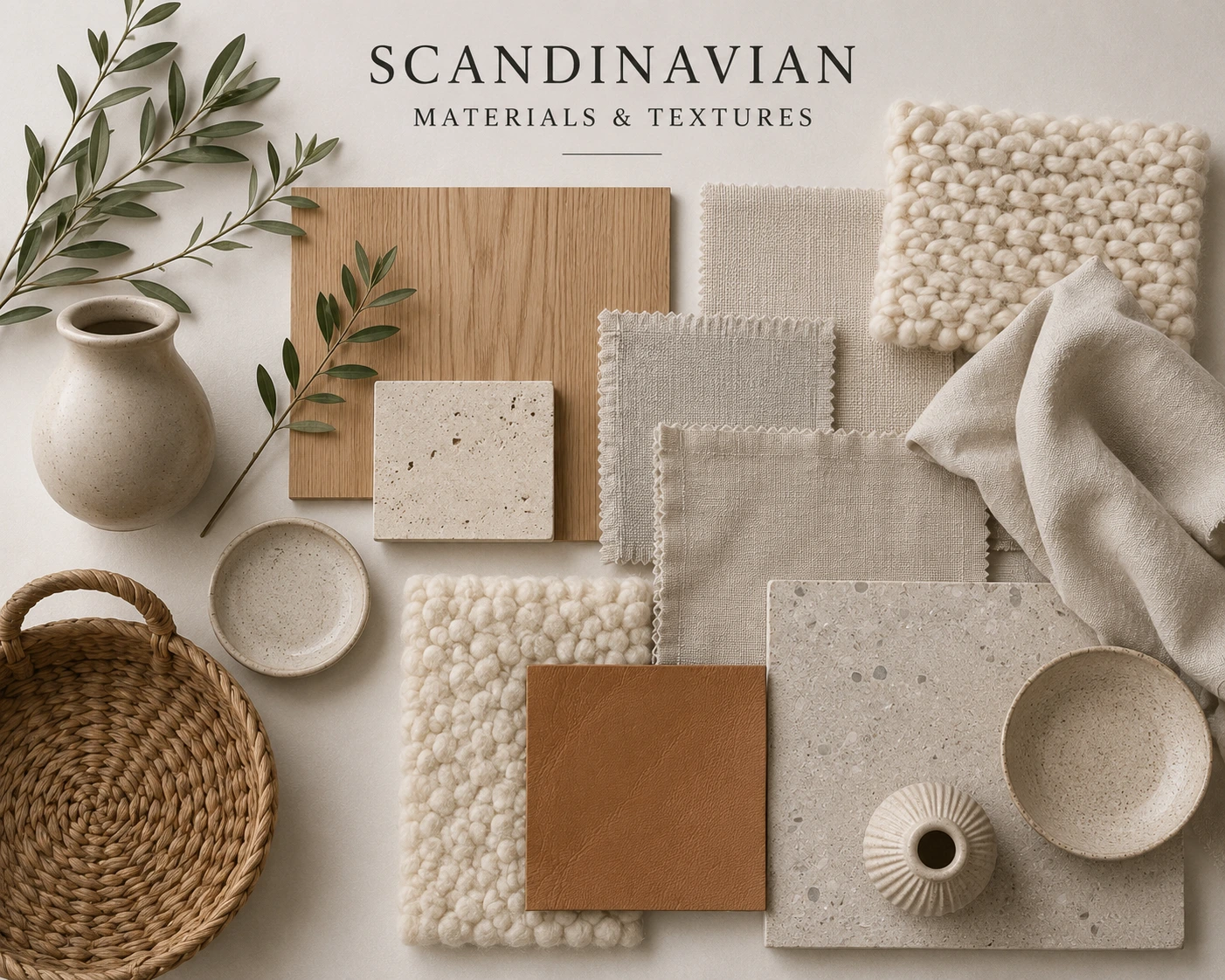
Natural materials are essential to Scandinavian design because they add warmth to an otherwise light and restrained palette. Without texture, a neutral living room can feel flat or overly clinical.
Wood
Light wood is one of the most recognizable features of Scandinavian interiors.
- White Oak
- Natural Oak
- Ash
- Beech
- Birch
- Pine
Choose matte, oiled, or lightly whitewashed finishes that allow the natural grain to remain visible.
Textiles
- Linen
- Wool
- Cotton
- Bouclé
- Sheepskin
- Knitted fabrics
Layer different textiles through rugs, cushions, curtains, and throws to create a cozy atmosphere without introducing unnecessary decoration.
Leather
Natural leather adds warmth and contrast, especially when used on accent chairs, stools, or smaller accessories. Cognac, tan, and soft brown work best with Scandinavian color palettes.
Ceramics and Stone
- Matte ceramic vases
- Stoneware bowls
- Concrete planters
- Marble trays
- Natural stone candle holders
Woven Materials
- Rattan
- Paper cord
- Jute
- Seagrass
- Woven baskets
Why It Matters
Scandinavian interiors rely on texture to create comfort. Combining wood, wool, linen, leather, ceramics, and woven fibers prevents the neutral palette from feeling cold.
Lighting for a Scandinavian Living Room
Scandinavian lighting is designed to make a living room feel bright, calm and comfortable throughout the day. The most effective approach is to combine natural daylight with several soft artificial light sources rather than relying on one strong fixture.
Ambient Overhead Lighting
Use a simple pendant light or understated ceiling fixture to provide general illumination. Sculptural paper, opal glass or layered Scandinavian-style pendants work especially well because they diffuse light gently while adding visual interest.
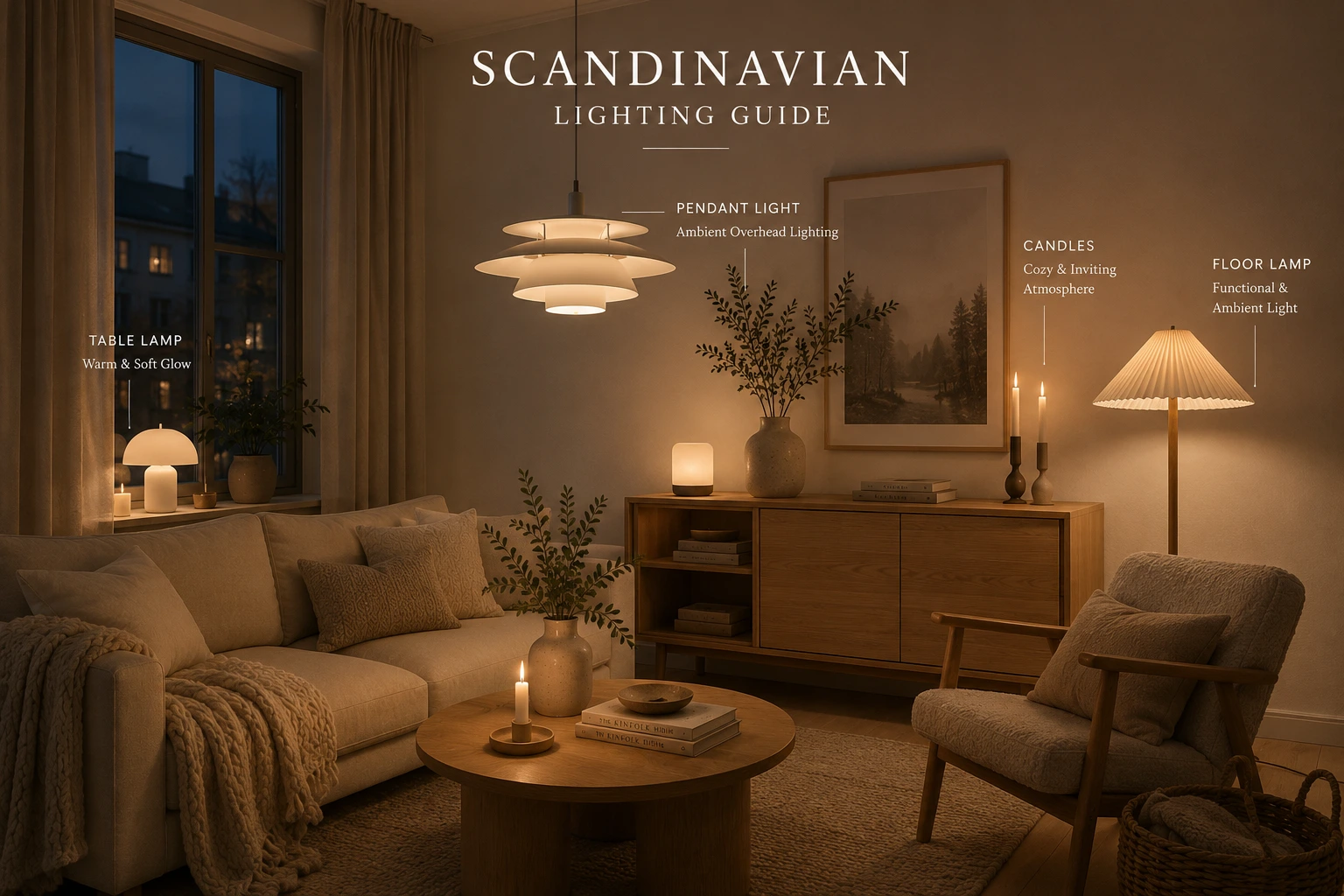
Functional & Ambient Light
Add a floor lamp beside a reading chair, sofa or quiet corner to provide practical task lighting while contributing to the overall atmosphere. Choose clean silhouettes in wood, metal or fabric that complement the room without dominating it.
Cozy & Inviting Atmosphere
Introduce candles and small accent lights in the evening to create the intimate warmth associated with Scandinavian living. A few carefully placed candles on a coffee table, windowsill or console are often more effective than excessive decorative lighting.
Warm & Soft Glow
Use table lamps with fabric, paper, ceramic or frosted-glass shades to produce a gentle glow around the room. Warm white bulbs around 2700K–3000K help maintain a comfortable atmosphere and prevent neutral Scandinavian interiors from feeling cold.
Designer Tip
Layer at least three types of lighting—overhead, task and accent lighting—and position them at different heights. Add dimmers where possible so the living room can transition easily from bright daytime functionality to a softer evening setting.
Decor & Accessories
Scandinavian décor should feel personal, useful, and relaxed. The style avoids excessive ornamentation, but it still allows room for books, artwork, candles, plants, and meaningful objects.
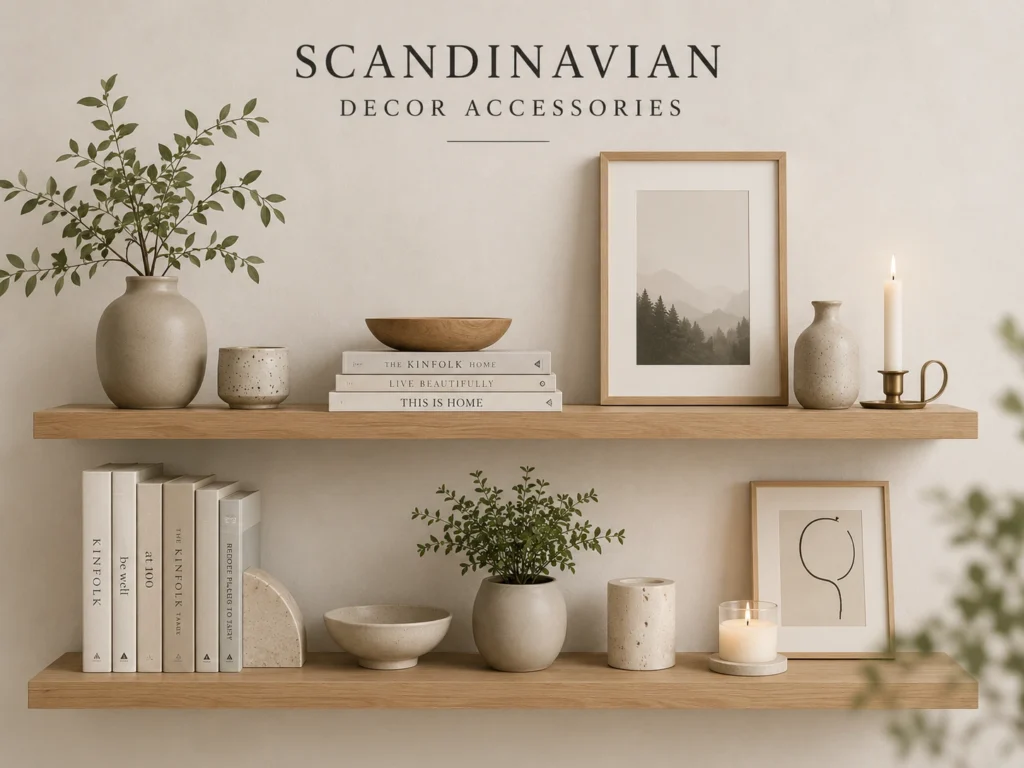
Recommended Decor
- Handmade ceramic vases
- Minimal candle holders
- Wooden trays
- Coffee table books
- Wool throw blankets
- Textured cushions
- Framed prints
- Woven baskets
- Simple clocks
- Indoor plants
Wall Art
- Black-and-white photography
- Minimal line drawings
- Nature-inspired prints
- Abstract neutral artwork
- Graphic Nordic posters
Indoor Plants
- Rubber Plant
- Snake Plant
- Fiddle Leaf Fig
- Monstera
- Olive Tree
- ZZ Plant
- Trailing Pothos
Use a few healthy plants in simple ceramic or woven planters rather than filling every corner with greenery.
How to Style a Scandinavian Coffee Table
A Scandinavian coffee table should feel practical and visually relaxed. Keep the arrangement simple while combining objects with different heights and textures.
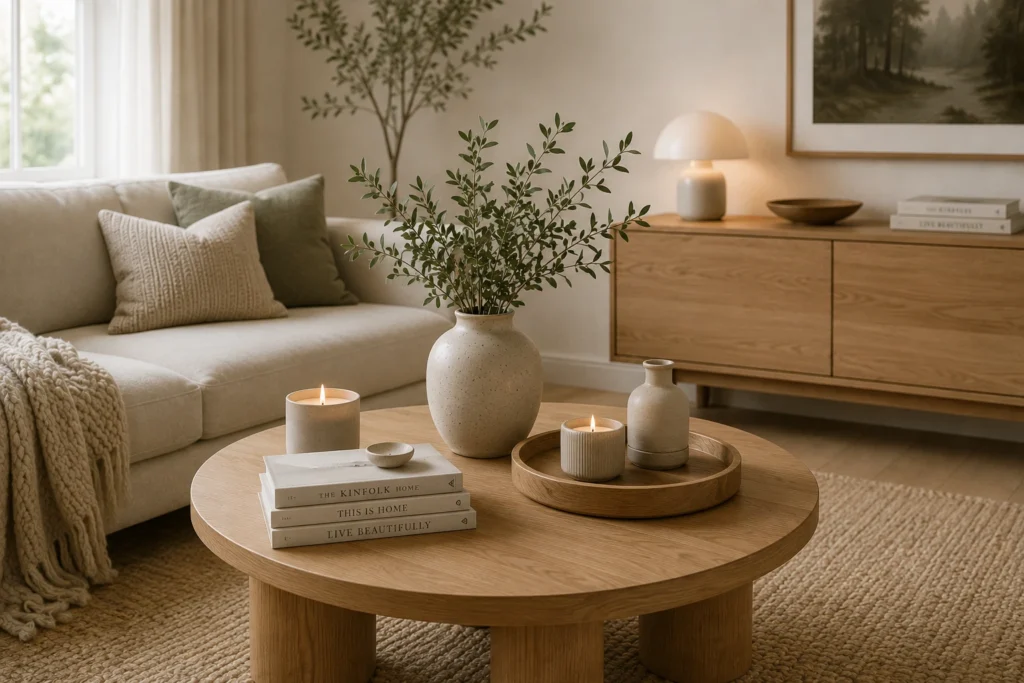
- Stack two coffee table books.
- Add a ceramic vase.
- Include one candle or candle holder.
- Use a small wooden or stone tray.
- Finish with a branch or simple greenery.
Leave enough empty space for drinks, books, and everyday use. Scandinavian styling should support real life, not make the table feel untouchable.
Hygge Tip
A candle, soft throw, and warm table lamp can instantly make a Scandinavian living room feel more inviting without changing the furniture.
Scandinavian Designer Styling Rules
Scandinavian styling is about intentional simplicity. Every element should contribute to function, comfort or visual calm, while natural materials and soft textures keep the room from feeling sparse.
1. Style Your Shelves
Keep shelves edited rather than full. Combine a few books, ceramics, framed art and small plants, varying height and shape while leaving generous negative space.
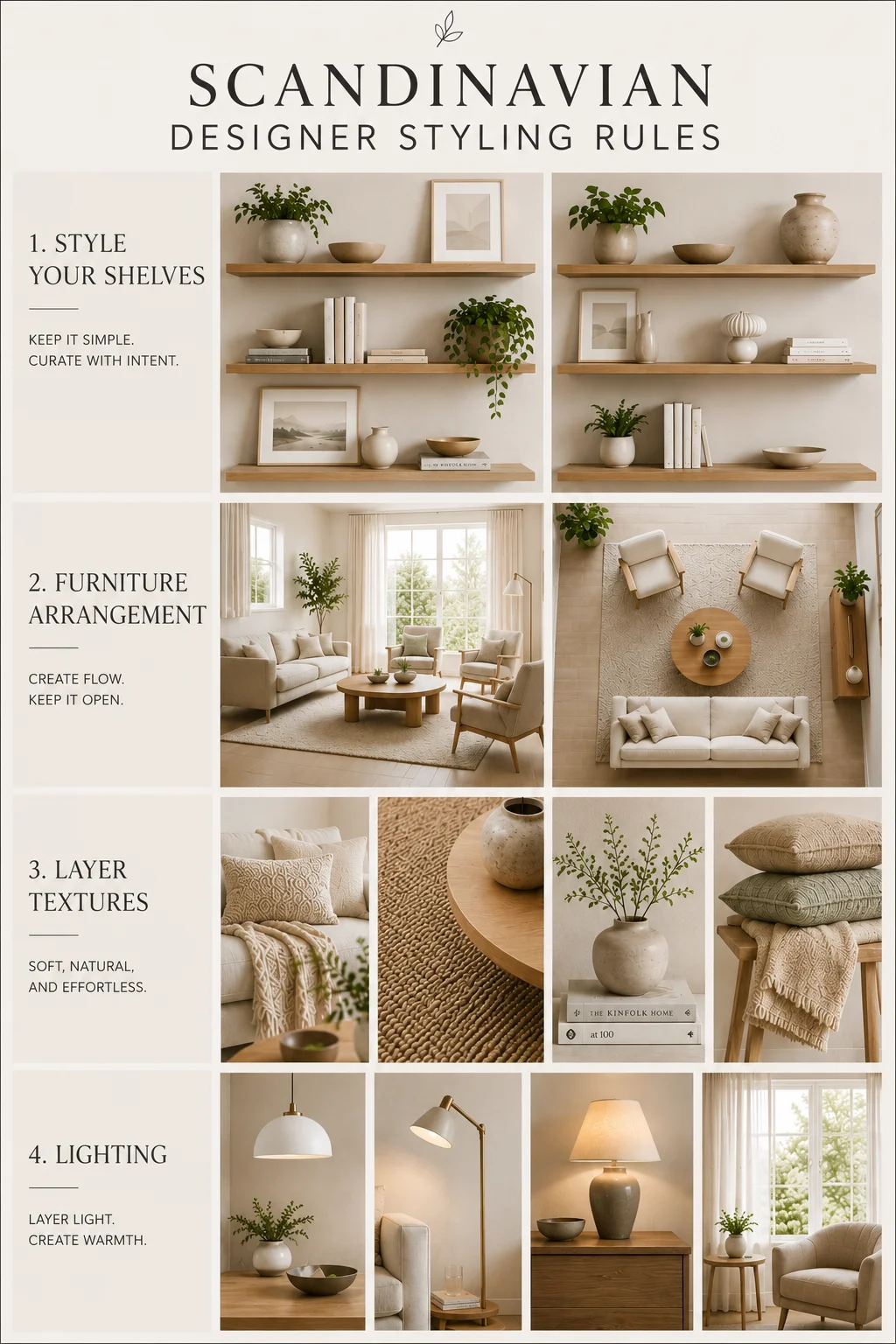
2. Furniture Arrangement
Create an open, conversation-friendly layout that preserves easy movement and natural light. Begin with the sofa, rug and coffee table, then position accent seating around them instead of automatically pushing every piece against a wall.
3. Layer Textures
Warm up the restrained palette with linen, wool, cotton, bouclé, knitted fabrics and woven fibers. Layer a rug, cushions and one or two throws to add depth without creating visual clutter.
4. Layer the Lighting
Combine overhead, task and accent lighting rather than relying on one central fixture. Pendants, floor lamps, table lamps and candles placed at different heights create the soft, welcoming glow that defines Scandinavian interiors.
Designer Tip: Before adding anything, ask whether it improves comfort, function or visual balance. If it does none of the three, the room will often look better without it.
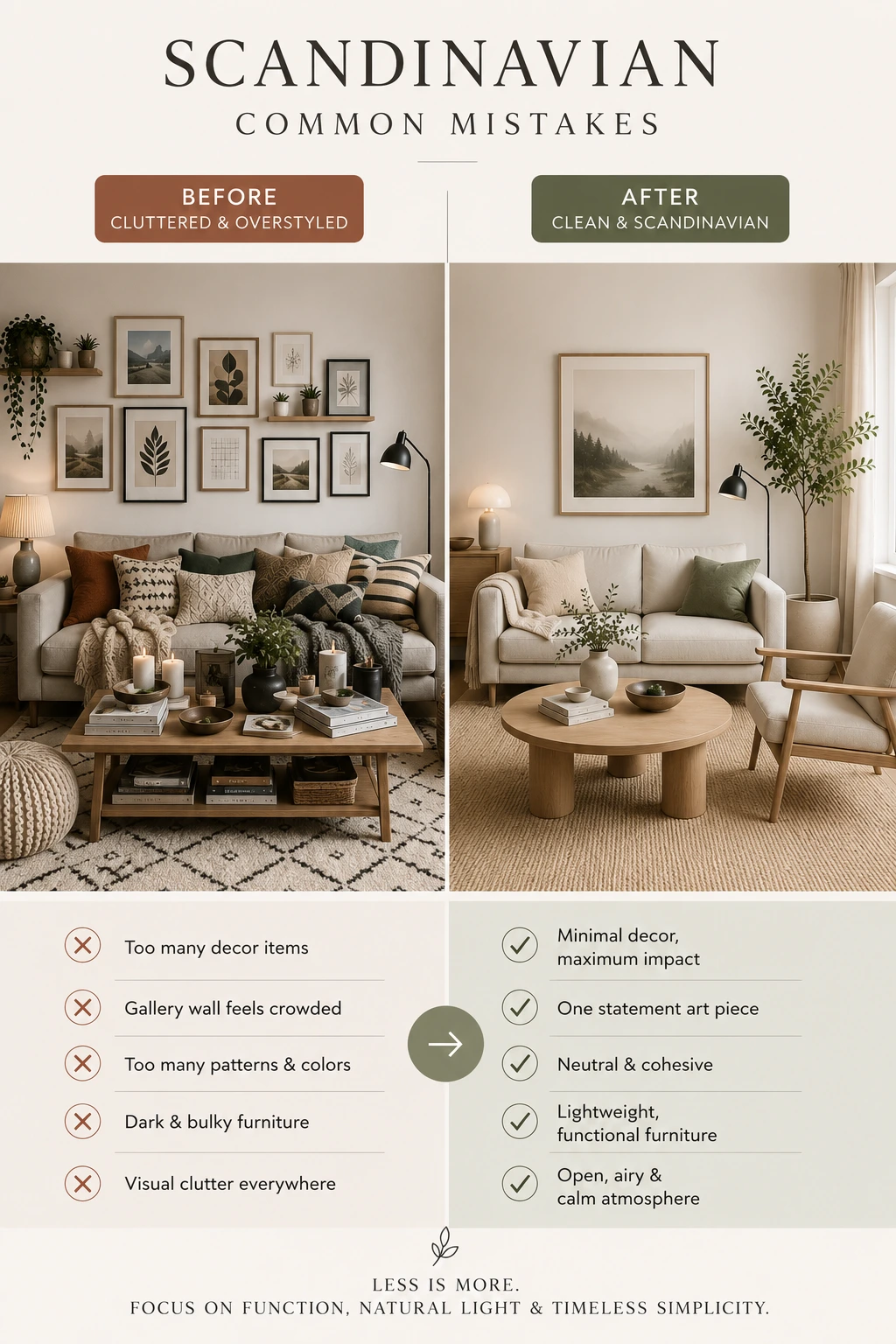
Common Scandinavian Decorating Mistakes
Although Scandinavian interiors appear effortless, they rely on thoughtful planning and restraint. Avoid these common mistakes to achieve a more authentic Nordic look.
| Mistake | Better Alternative |
|---|---|
| Too many decor items | Minimal decor, maximum impact |
| Gallery wall feels crowded | One statement art piece |
| Too many patterns & colors | Neutral & cohesive |
| Dark & bulky furniture | Lightweight, functional furniture |
| Visual clutter everywhere | Open, airy & calm atmosphere |
Why It Matters
Scandinavian design isn’t simply about buying Nordic furniture—it’s about creating an environment that feels comfortable, practical, and filled with natural light.
Scandinavian: Shop the Look
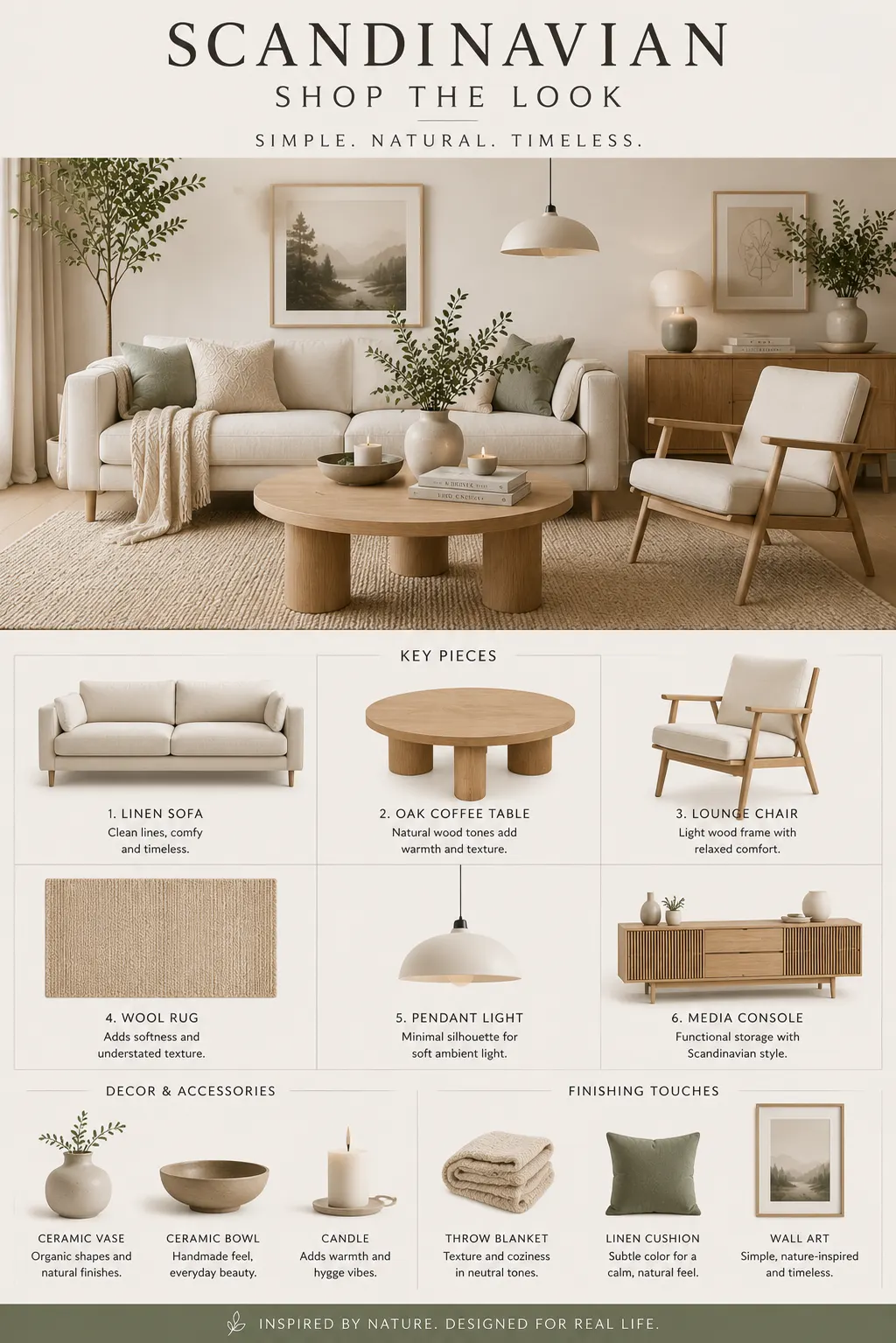
To recreate a Scandinavian living room, start with simple, well-made furniture in light woods and warm neutrals, then layer in texture, soft lighting and a few carefully chosen accessories. The goal is to create a room that feels functional, relaxed and timeless rather than overly styled.
Key Pieces
Choose a neutral linen or woven sofa, a round or oval oak coffee table, and a light-wood lounge chair with a comfortable upholstered or woven seat. Anchor the arrangement with a wool or textured natural-fiber rug, then add a simple pendant light and a low-profile media console with concealed storage to keep visual clutter under control.
Decor & Accessories
Finish the room with a small selection of handmade ceramics, candles, books and natural objects. A ceramic vase or bowl adds organic shape, while subtle greenery brings life to the neutral palette without overwhelming the space.
Finishing Touches
Introduce softness with linen cushions, wool throws and understated nature-inspired artwork. Keep colors muted and repeat materials such as oak, linen and ceramic throughout the room to create a cohesive Scandinavian look.
Styling Tip: Invest in the sofa, seating and storage first, then add decorative pieces gradually. Scandinavian interiors look best when every item feels useful, intentional and given enough space to be appreciated.
Scandinavian Style Variations
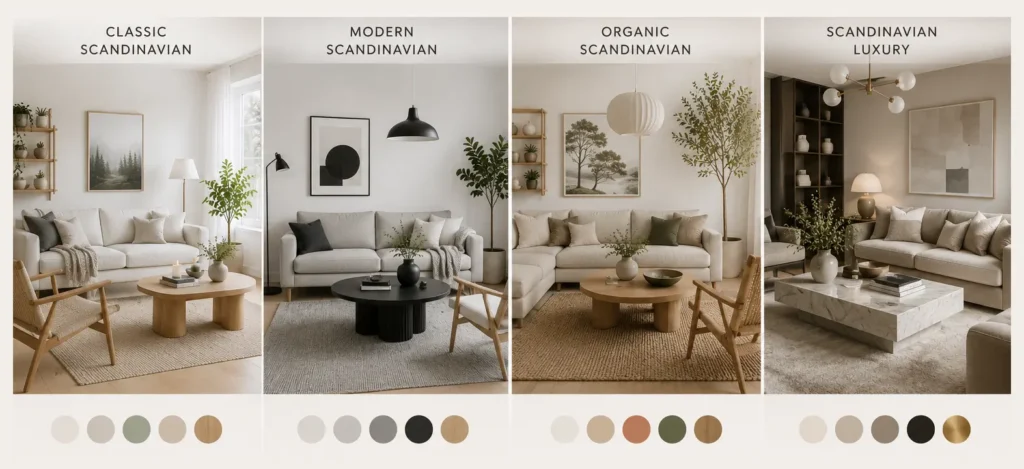
Although Scandinavian design follows consistent principles, several interpretations have emerged over the years. Each variation maintains simplicity and functionality while emphasizing different materials, colors, and lifestyles.
Classic Scandinavian
Features bright white walls, light oak furniture, soft textiles, and timeless Nordic craftsmanship.
Modern Scandinavian
Introduces cleaner architectural lines, minimalist furniture, and contemporary lighting while maintaining warmth.
Scandinavian Minimalist
Reduces decorative accessories to the essentials, emphasizing open space and purposeful furniture.
Organic Scandinavian
Blends Scandinavian simplicity with organic curves, earthy materials, and additional greenery.
Scandinavian Farmhouse
Combines Nordic functionality with rustic textures, vintage-inspired furniture, and cozy natural materials.
Scandinavian Luxury
Elevates the style through premium craftsmanship, designer lighting, marble accents, and bespoke furniture.
Small Apartment Scandinavian
Focuses on multifunctional furniture, hidden storage, and layouts that maximize both daylight and usable floor space.
Designer Tip
Choose one Scandinavian variation as your primary inspiration instead of mixing multiple styles. A consistent design direction creates a calmer, more cohesive living room.
Scandinavian vs. Japandi: What’s the Difference?
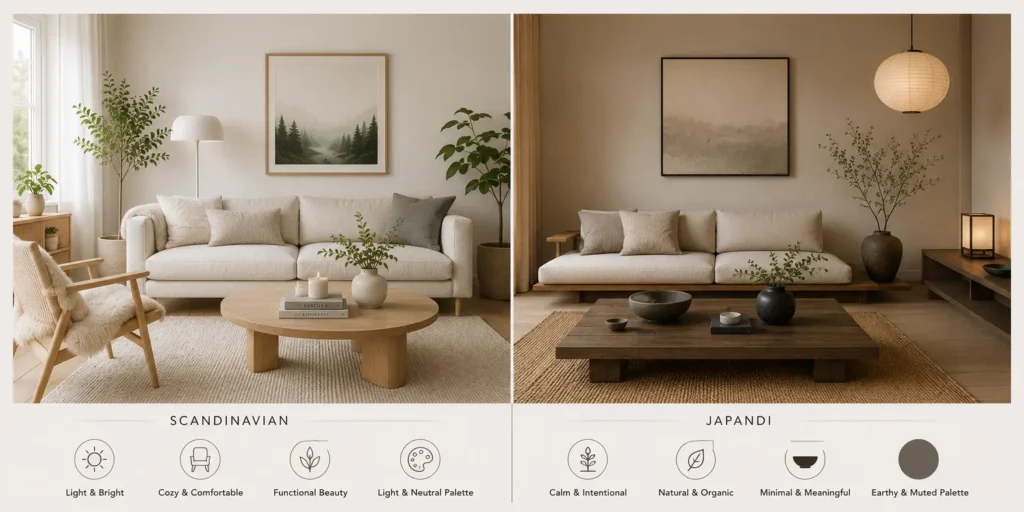
Because both styles emphasize simplicity and natural materials, they’re often confused. However, there are several important differences.
| Scandinavian | Japandi |
|---|---|
| Inspired by Nordic countries | Combines Japanese and Scandinavian design |
| Brighter overall palette | More earthy, muted palette |
| Focuses on hygge and comfort | Combines hygge with wabi-sabi |
| Light oak dominates | Mix of light and dark woods |
| Airy and cozy | Calm and contemplative |
| More decorative flexibility | Greater emphasis on restraint |
Read Next
If you love Scandinavian interiors but prefer a slightly more refined and minimalist aesthetic, don’t miss our Japandi Living Room Style Guide.
Frequently Asked Questions About Scandinavian Living Rooms
What is the difference between Scandinavian and Nordic design?
Scandinavian design refers specifically to the design traditions of Denmark, Sweden, and Norway, while Nordic design is a broader term that also includes Finland and Iceland. In modern interior design, the two terms are often used interchangeably because they share similar principles of simplicity, functionality, craftsmanship, and comfort.
Can Scandinavian style work in a small apartment?
Absolutely. Scandinavian interiors were designed with practicality in mind, making them ideal for apartments and compact homes. Multifunctional furniture, light color palettes, hidden storage, and uncluttered layouts help smaller spaces feel larger and brighter.
What colors are used in Scandinavian living rooms?
Warm white, soft white, ivory, cream, light gray, beige, greige, natural oak, sage green, dusty blue, charcoal, and muted earth tones form the foundation of most Scandinavian interiors.
Is Scandinavian style expensive?
Not necessarily. Scandinavian design emphasizes investing in fewer, higher-quality pieces over time rather than purchasing large amounts of inexpensive furniture. Many homeowners gradually build their interiors over several years.
What type of flooring works best?
Light oak, ash, birch, engineered wood, and natural timber flooring are classic Scandinavian choices. Large neutral rugs can also soften the room while improving comfort.
Can I mix Scandinavian and modern styles?
Yes. Modern Scandinavian interiors successfully combine contemporary architecture with classic Nordic furniture, provided the overall palette remains simple and natural.
How do I make a Scandinavian living room feel cozy?
Layer wool throws, linen cushions, warm lighting, natural wood furniture, candles, textured rugs, and indoor plants while keeping the overall space uncluttered.
Are black accents allowed?
Yes. Matte black lighting fixtures, picture frames, and furniture details can add visual contrast, but they should be used sparingly so the room remains bright and airy.
Save vs. Splurge
| Worth Splurging On | Save Your Budget On |
|---|---|
| Quality sofa | Decorative cushions |
| Solid wood coffee table | Candle holders |
| Handwoven wool rug | Decorative bowls |
| Designer lighting | Coffee table books |
| Accent chair | Seasonal décor |
| Media console | Small accessories |
Designer Tip
Spend your decorating budget where you’ll notice the biggest improvement every day—comfortable seating, beautiful lighting, and quality furniture. Accessories can always be added gradually.
Continue Your Living Room Design Journey
Explore more expertly curated style guides from Home Style Studio Co. to discover the decorating style that best reflects your home and lifestyle.
- Modern Living Room Styles Explained
- Modern vs Contemporary Living Room
- Organic Modern Living Room Style Guide
- Japandi Living Room Style Guide
- Minimalist Living Room Style Guide
- Industrial Living Room Style Guide
- Mid-Century Modern Living Room Style Guide
- Boho Living Room Style Guide
- Living Room Lighting Guide
- How to Choose the Perfect Area Rug
Recommended Shopping Categories
Building a Scandinavian living room becomes much easier when you focus on timeless, versatile furniture and natural materials.
- Light oak sofas and sectionals
- Solid wood coffee tables
- Nordic lounge chairs
- Minimal TV consoles
- Wool area rugs
- Linen curtains
- Ceramic table lamps
- Scandinavian pendant lighting
- Wooden trays
- Minimal wall art
- Handmade ceramics
- Natural woven baskets
- Indoor planters
- Decorative candles
- Neutral throw blankets
Final Thoughts
Scandinavian design has remained popular for decades because it proves that beautiful interiors don’t require unnecessary complexity. By combining functional furniture, natural materials, warm lighting, and thoughtful styling, you can create a living room that feels inviting every day of the year.
Whether you’re decorating a compact apartment or a spacious family home, Scandinavian principles encourage you to prioritize quality, comfort, and simplicity over short-lived decorating trends. As your space evolves, continue investing in timeless furniture, meaningful accessories, and natural materials that improve both the appearance and functionality of your home.
Home Style Studio Co. Recommendation
Start with the essentials—a comfortable sofa, quality rug, warm lighting, and natural wood furniture. Once those foundations are in place, every decorative accessory will feel more intentional and your living room will naturally develop the calm, welcoming atmosphere that defines Scandinavian design.
Article Summary
- Learned the history and philosophy behind Scandinavian interior design.
- Discovered the ideal Nordic color palette.
- Explored furniture, lighting, and material recommendations.
- Learned how to arrange a functional Scandinavian living room.
- Avoided common decorating mistakes.
- Compared Scandinavian and Japandi styles.
- Found practical shopping recommendations.
- Answered the most frequently asked decorating questions.
Editor’s Note
Scandinavian interiors are not about following rigid decorating rules—they’re about creating a home that supports everyday living. Focus on comfort, thoughtful craftsmanship, and timeless materials, and your living room will continue to feel welcoming for many years to come.