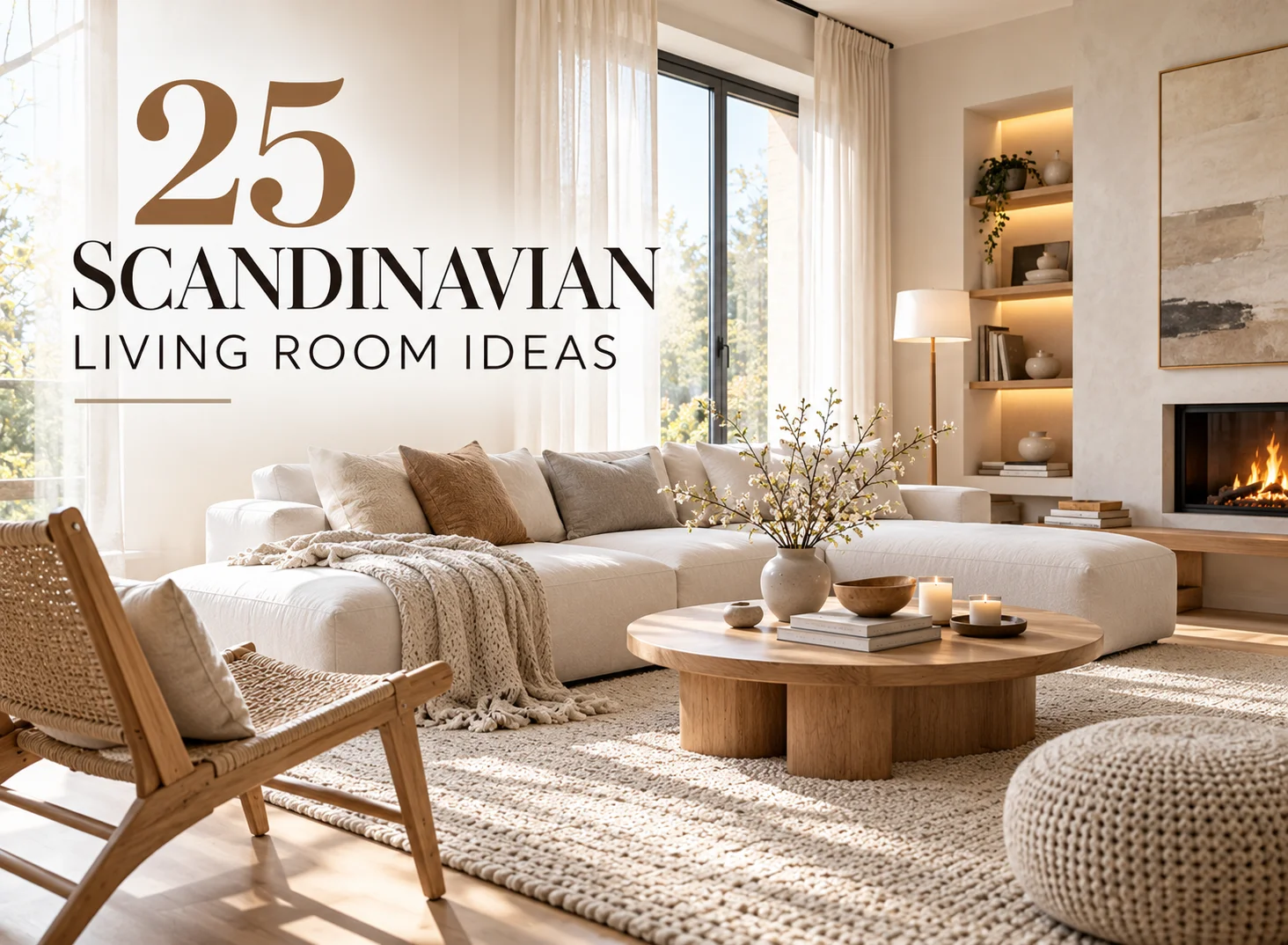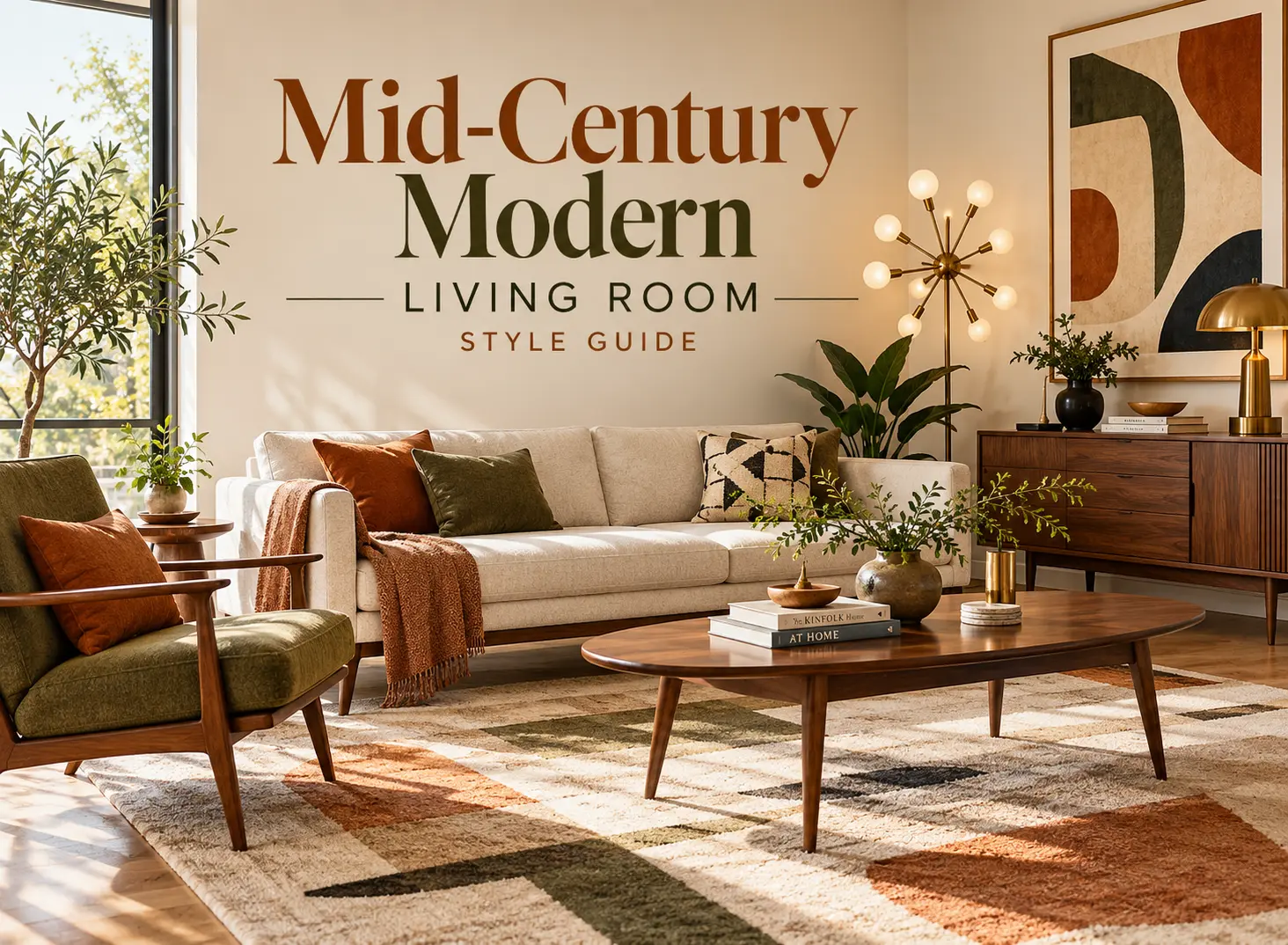
Clean lines, warm wood furniture, iconic silhouettes, and timeless functionality have made Mid-Century Modern living rooms one of the most enduring interior design styles. Originating in the mid-20th century, this aesthetic continues to influence today’s homes because it effortlessly combines simplicity, comfort, and sophisticated design.
Whether you’re furnishing a new home or refreshing your current space, Mid-Century Modern offers a balanced look that feels elegant without being overly decorative. Characterized by organic forms, tapered wooden legs, statement lighting, and thoughtfully chosen décor, the style creates interiors that are both practical and visually inviting.
In this comprehensive style guide, you’ll discover everything you need to know—from choosing the right furniture and color palette to selecting lighting, accessories, layouts, and décor. You’ll also learn how to avoid common decorating mistakes, shop for key pieces, and adapt the look to different home sizes and budgets.
What Is Mid-Century Modern Style?
Mid-Century Modern refers to a design movement that flourished roughly between the 1940s and the late 1960s. Influenced by Scandinavian simplicity, modern architecture, and post-war innovation, the style emphasizes clean geometry, practical living, natural materials, and beautiful craftsmanship.
Unlike ornate traditional interiors, Mid-Century Modern celebrates uncluttered spaces where every piece serves both a functional and aesthetic purpose. Furniture often appears light and airy thanks to slim frames, tapered legs, and elevated profiles that visually open up the room.
The style also embraces indoor-outdoor living through large windows, abundant natural light, organic materials, and greenery. Rather than filling a room with excessive décor, carefully selected statement pieces become the focal points.
Design Philosophy: Beautiful design should improve everyday living through simplicity, quality craftsmanship, and functional elegance.
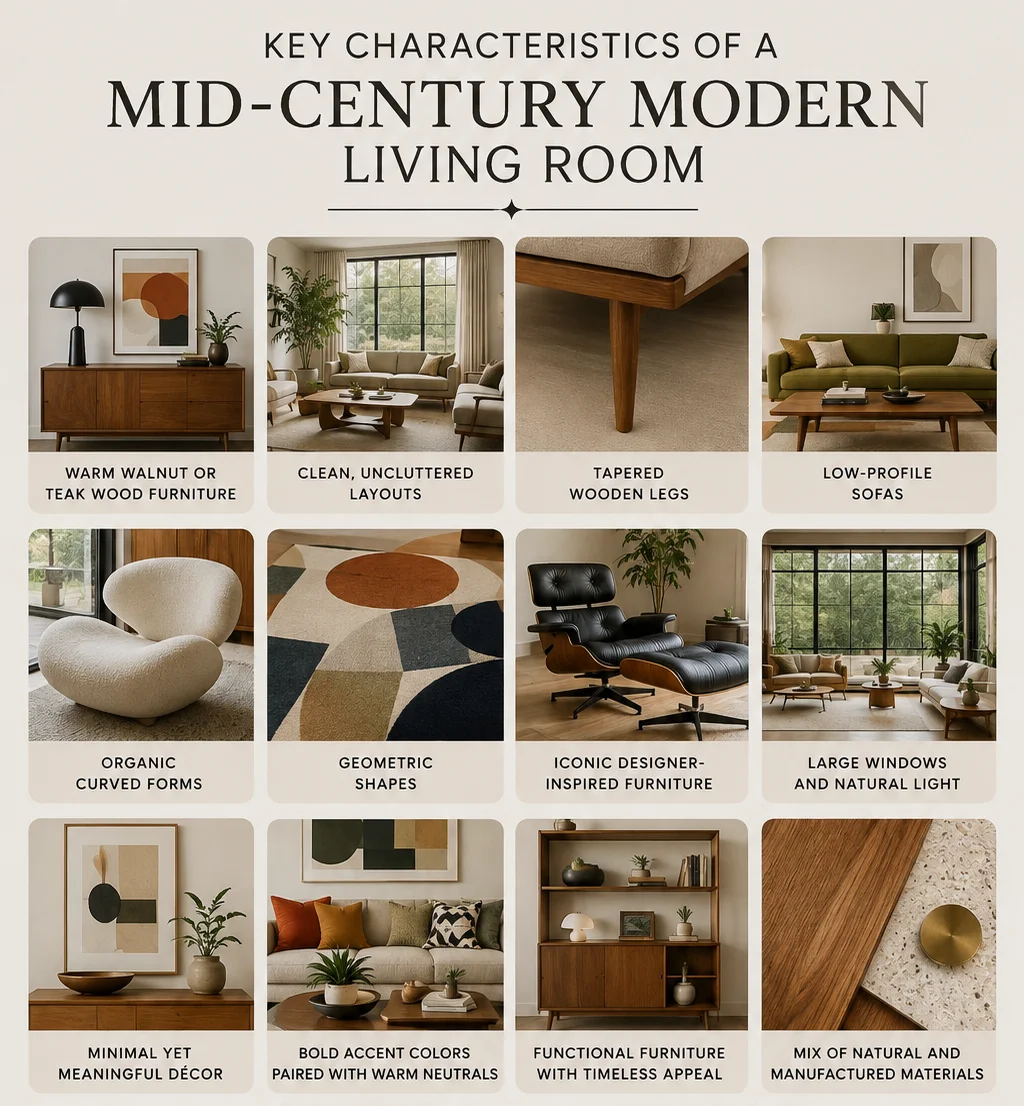
Key Characteristics of a Mid-Century Modern Living Room
- Warm walnut or teak wood furniture
- Clean, uncluttered layouts
- Tapered wooden legs
- Low-profile sofas
- Organic curved forms
- Geometric shapes
- Iconic designer-inspired furniture
- Large windows and natural light
- Minimal yet meaningful décor
- Bold accent colors paired with warm neutrals
- Functional furniture with timeless appeal
- Mix of natural and manufactured materials
Why Mid-Century Modern Remains Popular Today
Unlike many trend-driven styles, Mid-Century Modern has remained relevant for decades because it prioritizes timeless design over short-lived fashion. The furniture is comfortable, the layouts are practical, and the neutral foundation allows homeowners to personalize their spaces without losing the style’s identity.
Its versatility also makes it easy to blend with contemporary, Scandinavian, Japandi, Organic Modern, or even industrial interiors. A well-designed Mid-Century Modern room feels curated rather than decorated, offering a sense of warmth, openness, and understated luxury.
Another reason for its lasting popularity is sustainability. Investing in high-quality wood furniture, classic silhouettes, and durable materials encourages long-term ownership rather than frequent replacement.
Essential Elements of a Mid-Century Modern Living Room
1. Clean Architectural Lines
The foundation of this style begins with architecture. Straight horizontal lines, open layouts, and uncluttered walls help create an airy, spacious atmosphere. Decorative moldings are minimal, allowing furniture and materials to become the visual focus.
If your home doesn’t feature original Mid-Century architecture, you can still achieve the look by simplifying wall treatments, minimizing visual clutter, and maintaining consistent proportions throughout the room.
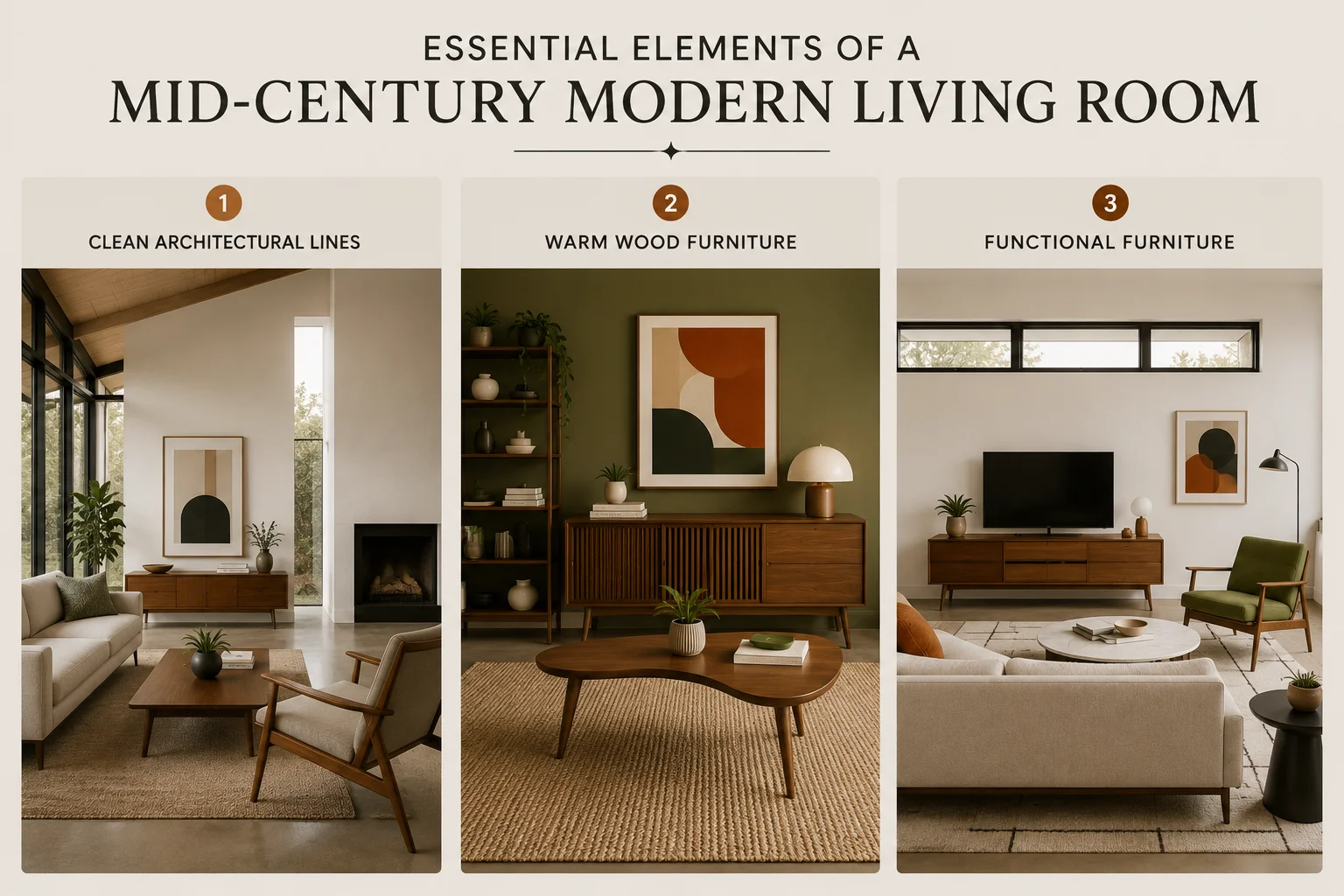
2. Warm Wood Furniture
Wood is arguably the defining material of Mid-Century Modern interiors. Walnut remains the most iconic choice, although teak, oak, and rosewood also work beautifully.
Choose furniture with:
- Tapered legs
- Rounded edges
- Slim profiles
- Visible wood grain
- Minimal ornamentation
Popular furniture pieces include:
- Walnut media consoles
- Low-profile credenzas
- Open shelving units
- Wood coffee tables
- Sideboards
- Console tables
3. Functional Furniture
Every furniture piece should have a clear purpose. Rather than overcrowding the room with multiple accent pieces, focus on fewer, better-quality items that contribute to comfort, functionality, and visual balance.
A typical Mid-Century Modern living room includes:
- One comfortable sofa
- One or two accent chairs
- A coffee table
- A media console or credenza
- One side table
- A floor lamp
- A carefully selected area rug
Mid-Century Modern Color Palette
The color palette combines warm neutrals with rich earthy hues and occasional vibrant accents. Wood tones play an equally important role, acting almost as a neutral throughout the room.
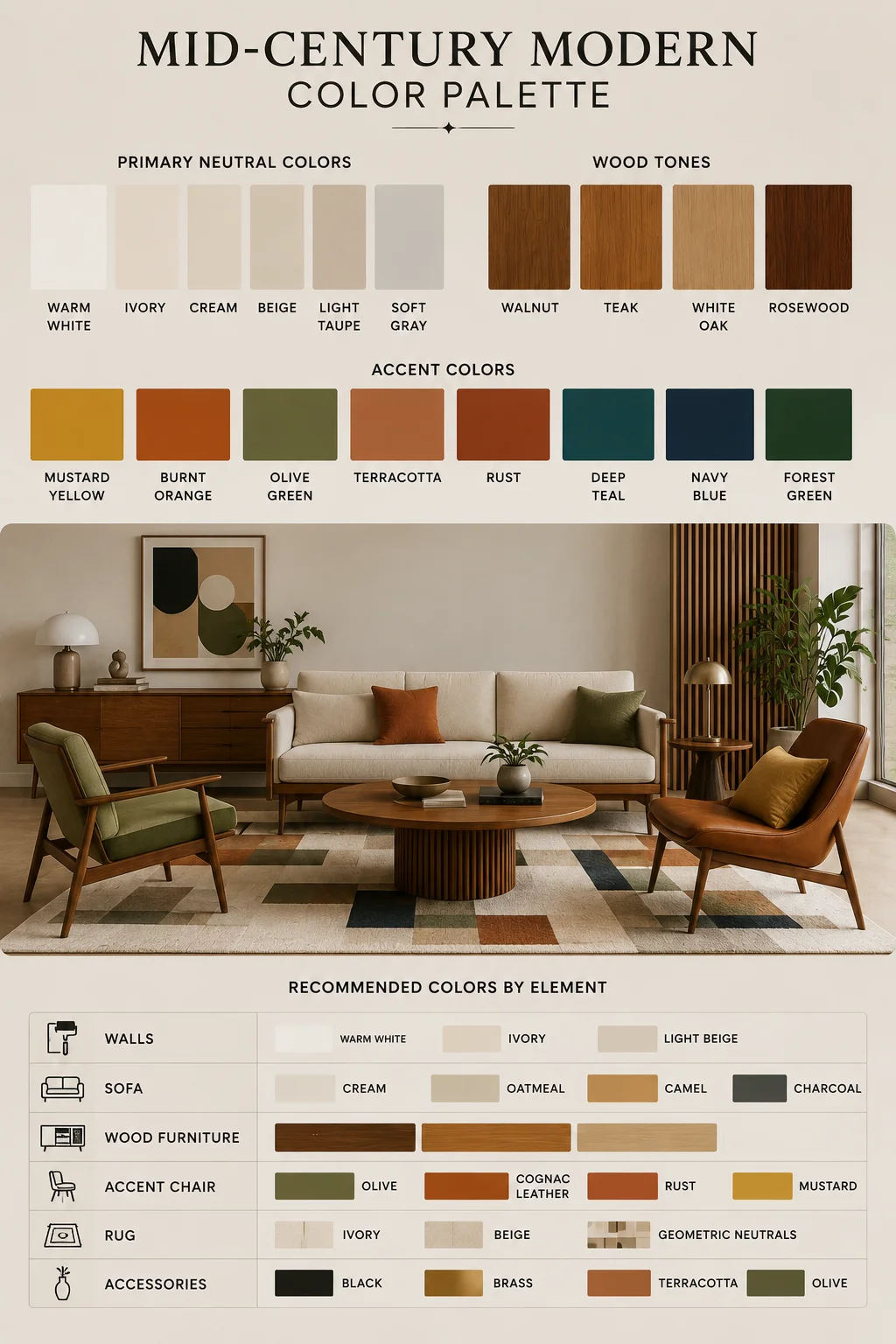
Primary Neutral Colors
- Warm white
- Ivory
- Cream
- Beige
- Light taupe
- Soft gray
Wood Tones
- Walnut
- Teak
- White oak
- Rosewood
Accent Colors
- Mustard yellow
- Burnt orange
- Olive green
- Terracotta
- Rust
- Deep teal
- Navy blue
- Forest green
| Element | Recommended Colors |
|---|---|
| Walls | Warm white, ivory, light beige |
| Sofa | Cream, oatmeal, camel, charcoal |
| Wood Furniture | Walnut, teak, oak |
| Accent Chair | Olive, cognac leather, rust, mustard |
| Rug | Ivory, beige, geometric neutrals |
| Accessories | Black, brass, terracotta, olive |
Materials & Textures That Define the Style
Texture plays an important role in preventing Mid-Century Modern interiors from feeling flat. While the overall look remains clean and uncluttered, layering different materials creates warmth and depth.
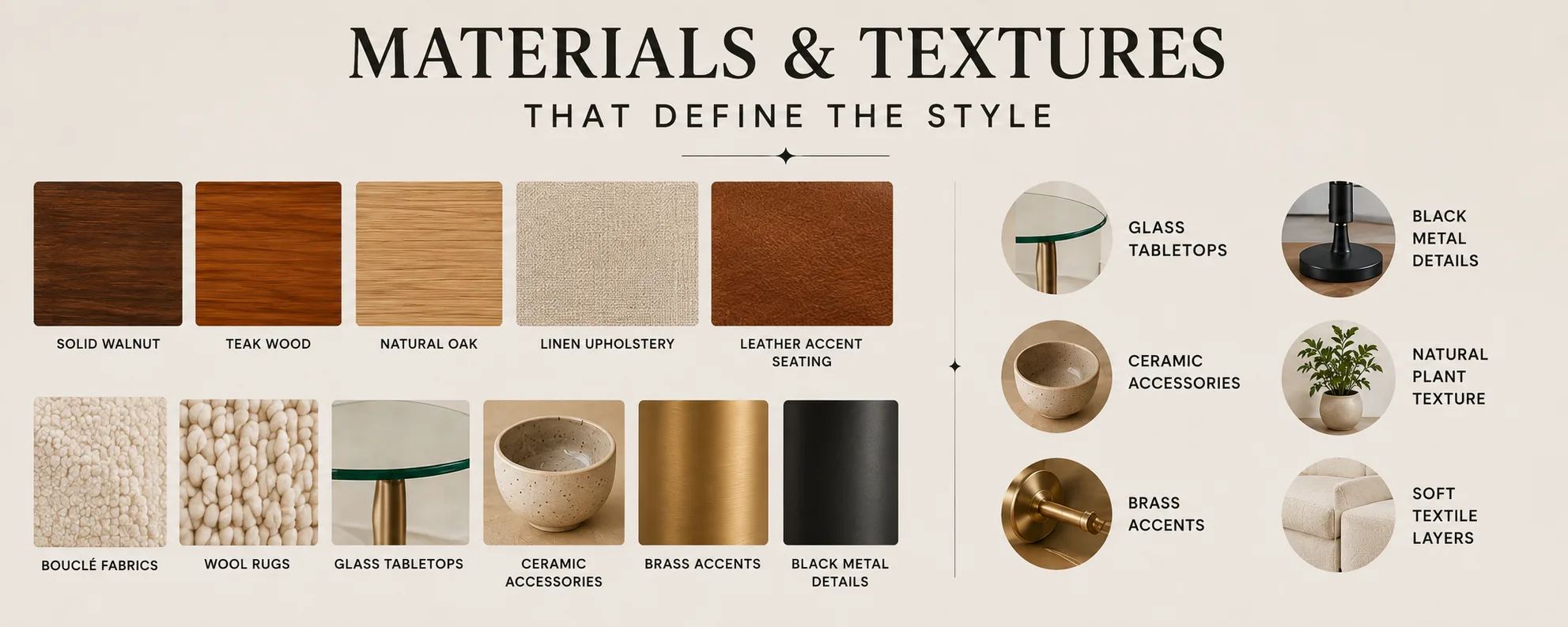
Recommended materials include:
- Solid walnut
- Teak wood
- Natural oak
- Linen upholstery
- Leather accent seating
- Bouclé fabrics
- Wool rugs
- Glass tabletops
- Ceramic accessories
- Brass accents
- Black metal details
The goal is to balance smooth finishes with tactile surfaces so the room feels comfortable, lived-in, and visually layered without becoming overly busy.
Choosing the Right Mid-Century Modern Furniture
Furniture is the defining feature of a Mid-Century Modern living room. Rather than filling the space with numerous decorative pieces, focus on investing in well-designed furniture with timeless proportions, natural materials, and exceptional craftsmanship.
The goal is to create a room that feels open, comfortable, and visually balanced while allowing each piece to stand out.
Sofa
A low-profile sofa anchors the room and establishes the overall style. Look for clean lines, slim arms, supportive cushions, and exposed wooden legs. Upholstery should remain understated so the furniture’s silhouette becomes the focal point.
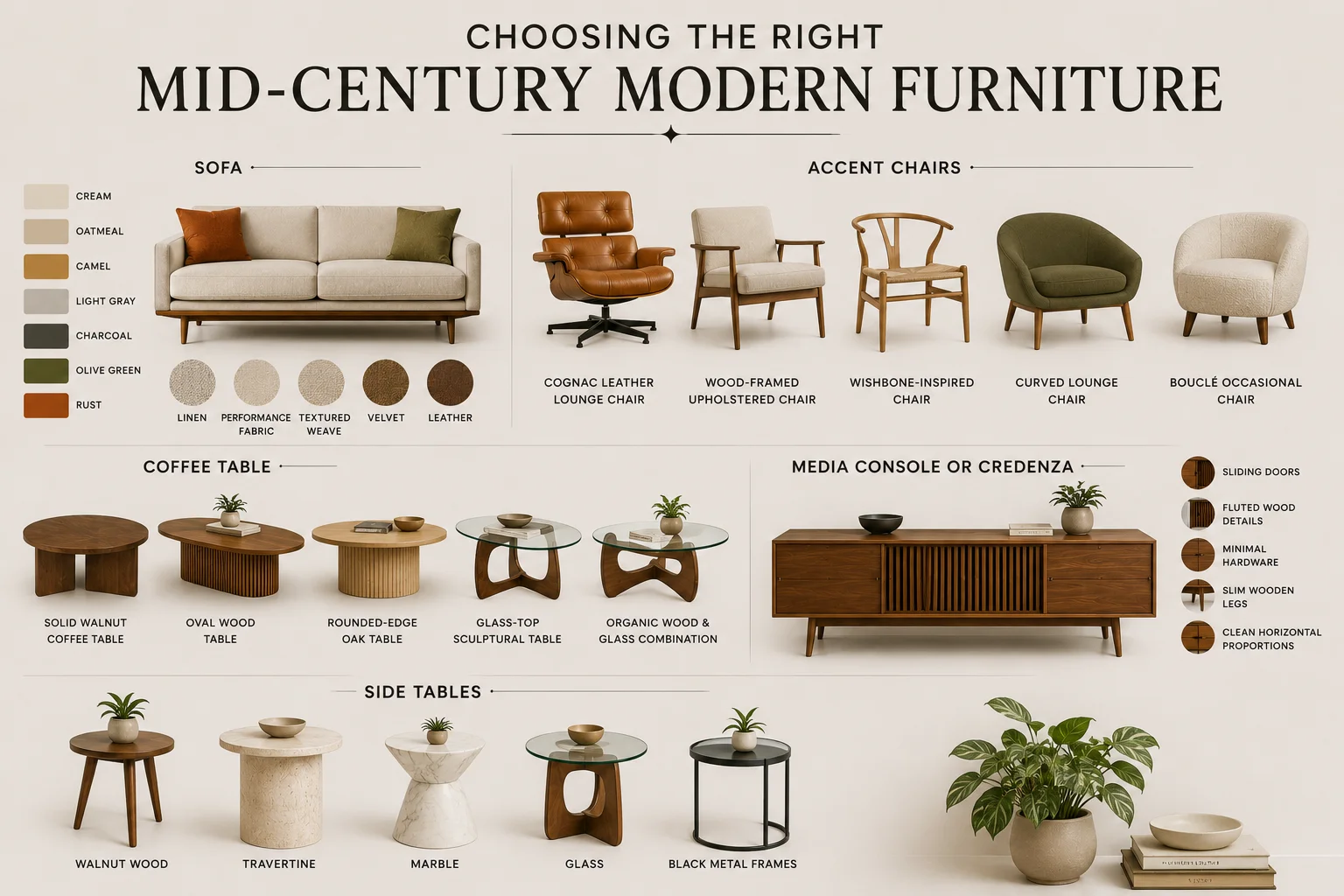
Recommended upholstery colors:
- Cream
- Oatmeal
- Camel
- Light Gray
- Charcoal
- Olive Green
- Rust
Best fabrics:
- Linen
- Performance fabric
- Textured weave
- Velvet (used sparingly)
- High-quality leather
Accent Chairs
Accent chairs introduce sculptural interest while providing additional seating. Mid-Century Modern chairs often feature curved backs, molded shells, or exposed wooden frames that emphasize elegant craftsmanship.
Popular options include:
- Cognac leather lounge chair
- Wood-framed upholstered chair
- Wishbone-inspired chair
- Curved lounge chair
- Bouclé occasional chair
Coffee Table
The coffee table should complement the room without dominating it. Organic shapes and natural materials work especially well.
Excellent choices include:
- Solid walnut coffee table
- Oval wood table
- Rounded-edge oak table
- Glass-top sculptural table
- Organic wood-and-glass combination
Choose rounded corners whenever possible to soften the room’s straight architectural lines.
Media Console or Credenza
A beautiful walnut credenza is one of the signature furniture pieces of Mid-Century Modern interiors. Besides providing storage, it creates a long horizontal visual line that complements the style’s architectural emphasis.
Look for:
- Sliding doors
- Fluted wood details
- Minimal hardware
- Slim wooden legs
- Clean horizontal proportions
Side Tables
Rather than matching every piece, mix complementary materials to create subtle contrast.
Examples include:
- Walnut wood
- Travertine
- Marble
- Glass
- Black metal frames
Planning the Ideal Layout
Mid-Century Modern interiors emphasize openness and conversation. Furniture should define functional zones while maintaining clear circulation paths throughout the room.
Small Living Rooms
- Choose furniture with exposed legs.
- Avoid oversized sectionals.
- Use a large rug to visually expand the room.
- Allow at least 30–36 inches of walking space.
- Maximize natural light by keeping window treatments light and airy.
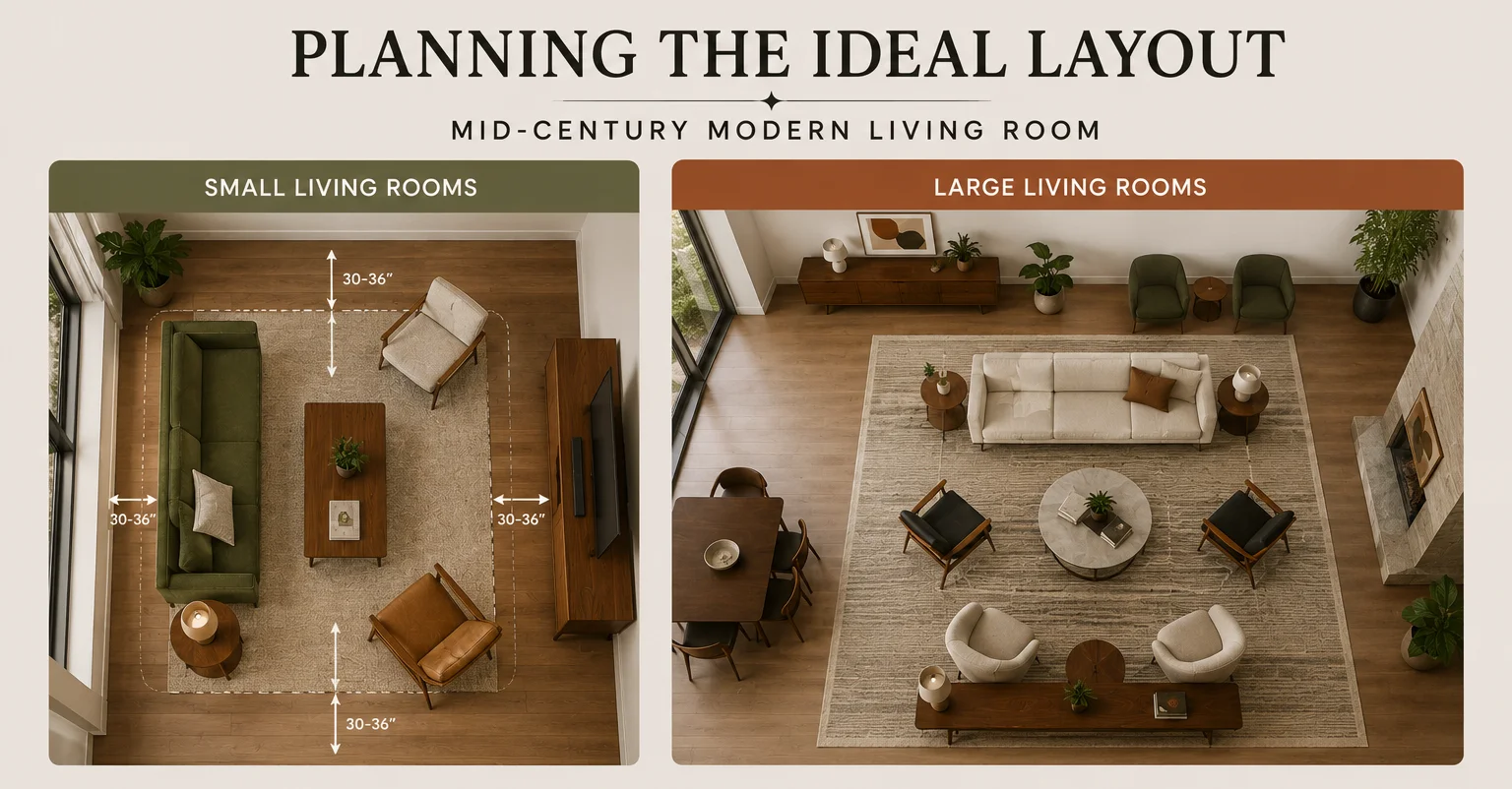
Large Living Rooms
- Create separate conversation areas.
- Use oversized rugs to anchor seating.
- Balance furniture with generous negative space.
- Incorporate statement lighting.
- Add plants to soften larger architectural spaces.
Lighting Ideas for Mid-Century Modern Living Rooms
Lighting is one of the easiest ways to reinforce the Mid-Century Modern aesthetic. Fixtures often become sculptural design elements that complement the furniture rather than simply illuminating the room.
Ceiling Lighting
- Sputnik chandelier
- Globe pendant lights
- Brass multi-arm chandelier
- Minimal black linear pendant
- Opal glass pendant
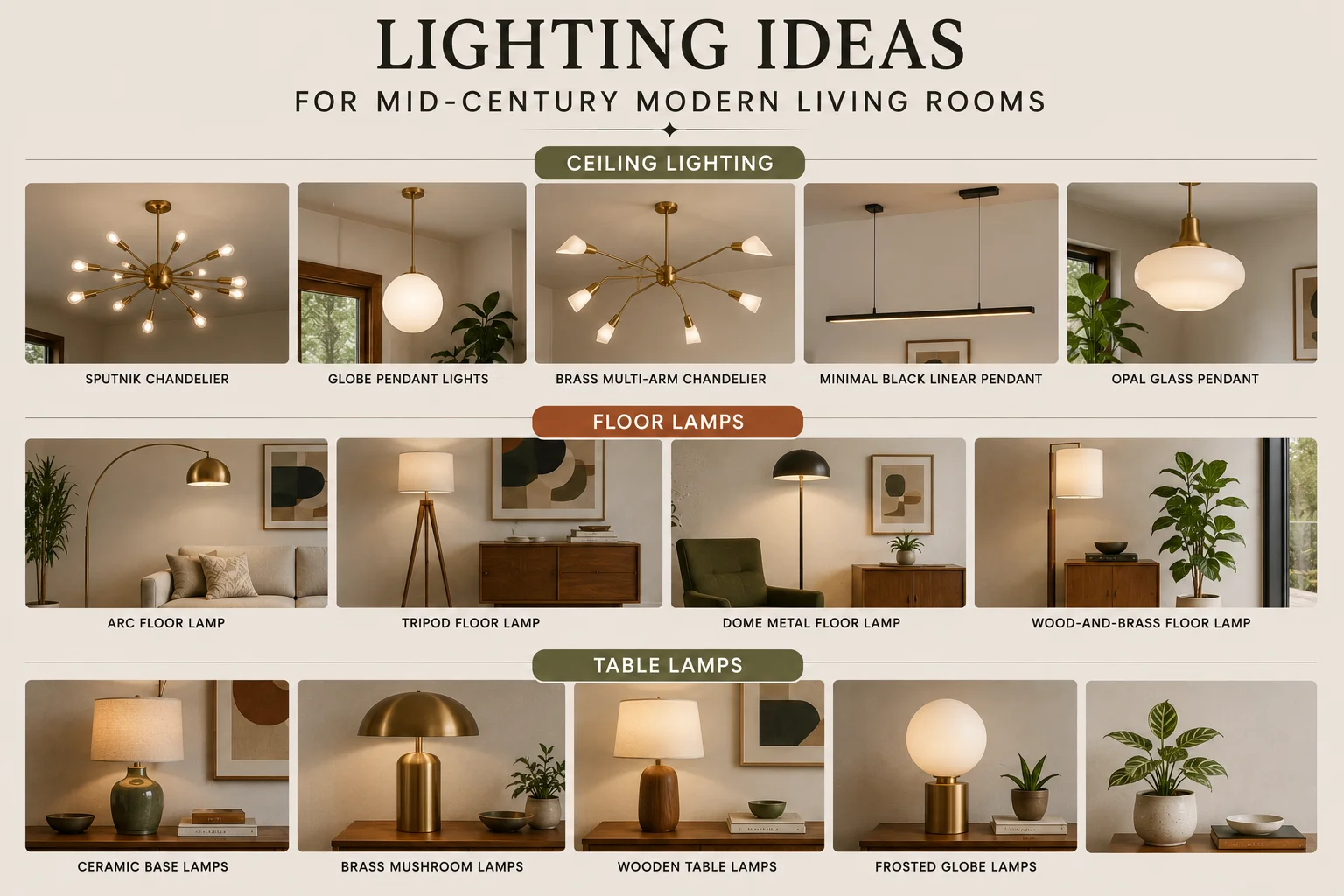
Floor Lamps
- Arc floor lamp
- Tripod floor lamp
- Dome metal floor lamp
- Wood-and-brass floor lamp
Table Lamps
- Ceramic base lamps
- Brass mushroom lamps
- Wooden table lamps
- Frosted globe lamps
Designer Tip: Layer ambient, task, and accent lighting instead of relying on a single ceiling fixture. This creates warmth while highlighting furniture, artwork, and architectural details.
Wall Décor
Wall décor should remain intentional and uncluttered. Rather than covering every wall, select one or two statement pieces that reinforce the room’s design language.
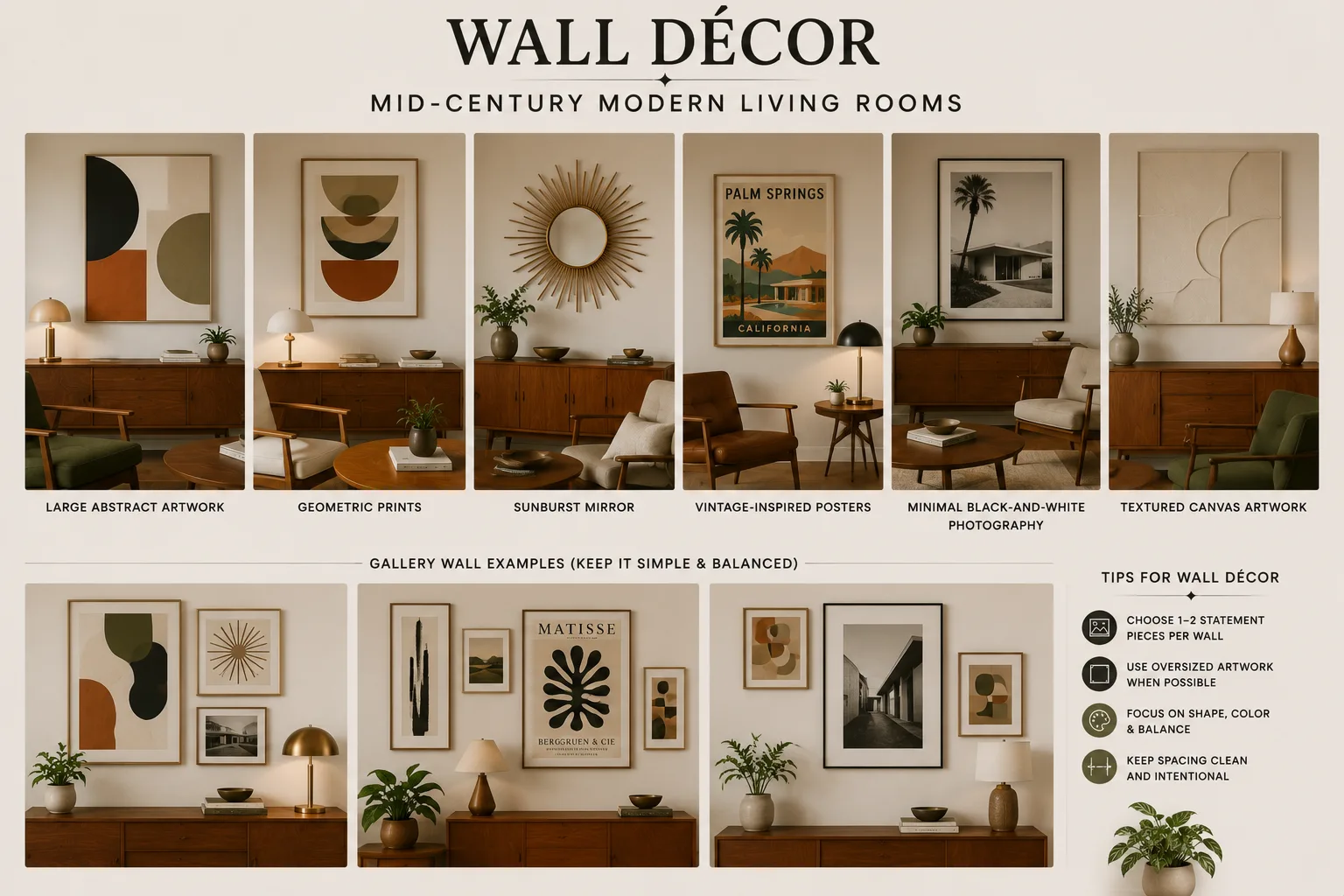
Excellent choices include:
- Large abstract artwork
- Geometric prints
- Sunburst mirror
- Vintage-inspired framed posters
- Minimal black-and-white photography
- Textured canvas artwork
Oversized artwork often works better than multiple small frames because it maintains the clean, spacious appearance associated with Mid-Century Modern interiors.
Choosing the Right Rug
A rug grounds the seating arrangement while introducing warmth and texture. It should be large enough for at least the front legs of all seating pieces to rest comfortably on the surface.
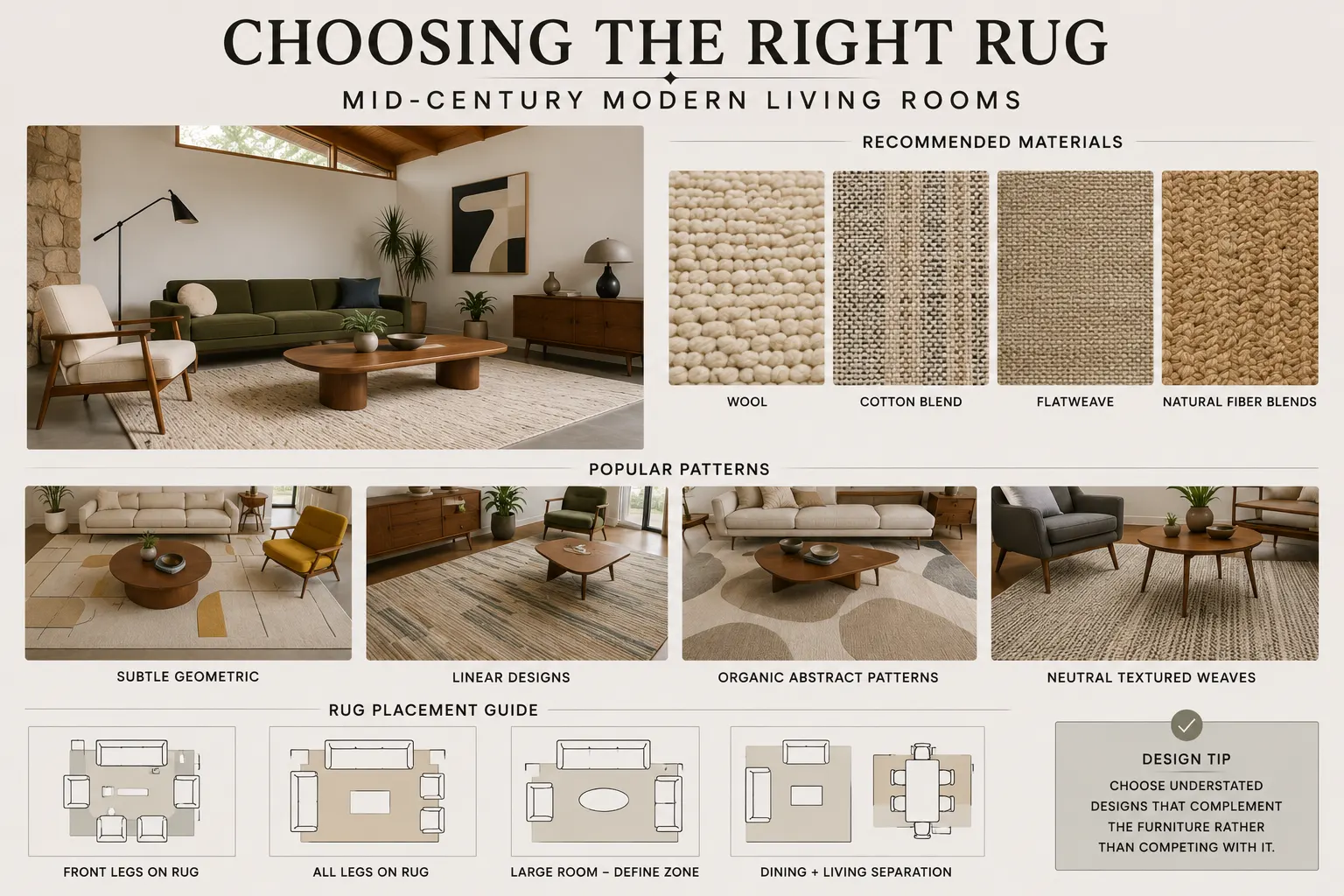
Recommended materials:
- Wool
- Cotton blend
- Flatweave
- Natural fiber blends
Popular patterns:
- Subtle geometric
- Linear designs
- Organic abstract patterns
- Neutral textured weaves
Choose understated designs that complement the furniture rather than competing with it.
Window Treatments
Natural light is essential to the Mid-Century Modern aesthetic. Window coverings should enhance brightness instead of blocking it.
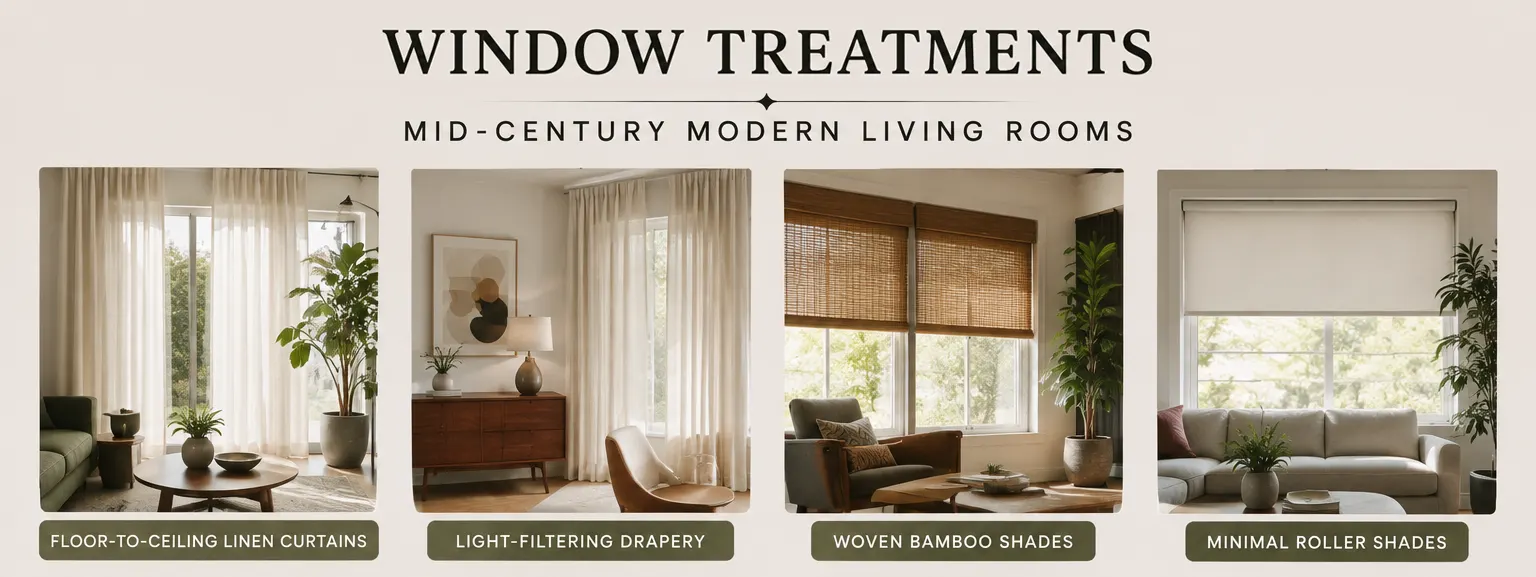
Recommended options include:
- Floor-to-ceiling linen curtains
- Light-filtering drapery
- Woven bamboo shades
- Minimal roller shades
Mount curtain rods close to the ceiling and extend them beyond the window frame to make the windows appear larger and allow more daylight to enter.
Plants That Complement Mid-Century Modern Style
Indoor greenery softens the clean lines of Mid-Century Modern interiors while reinforcing the style’s connection to nature.
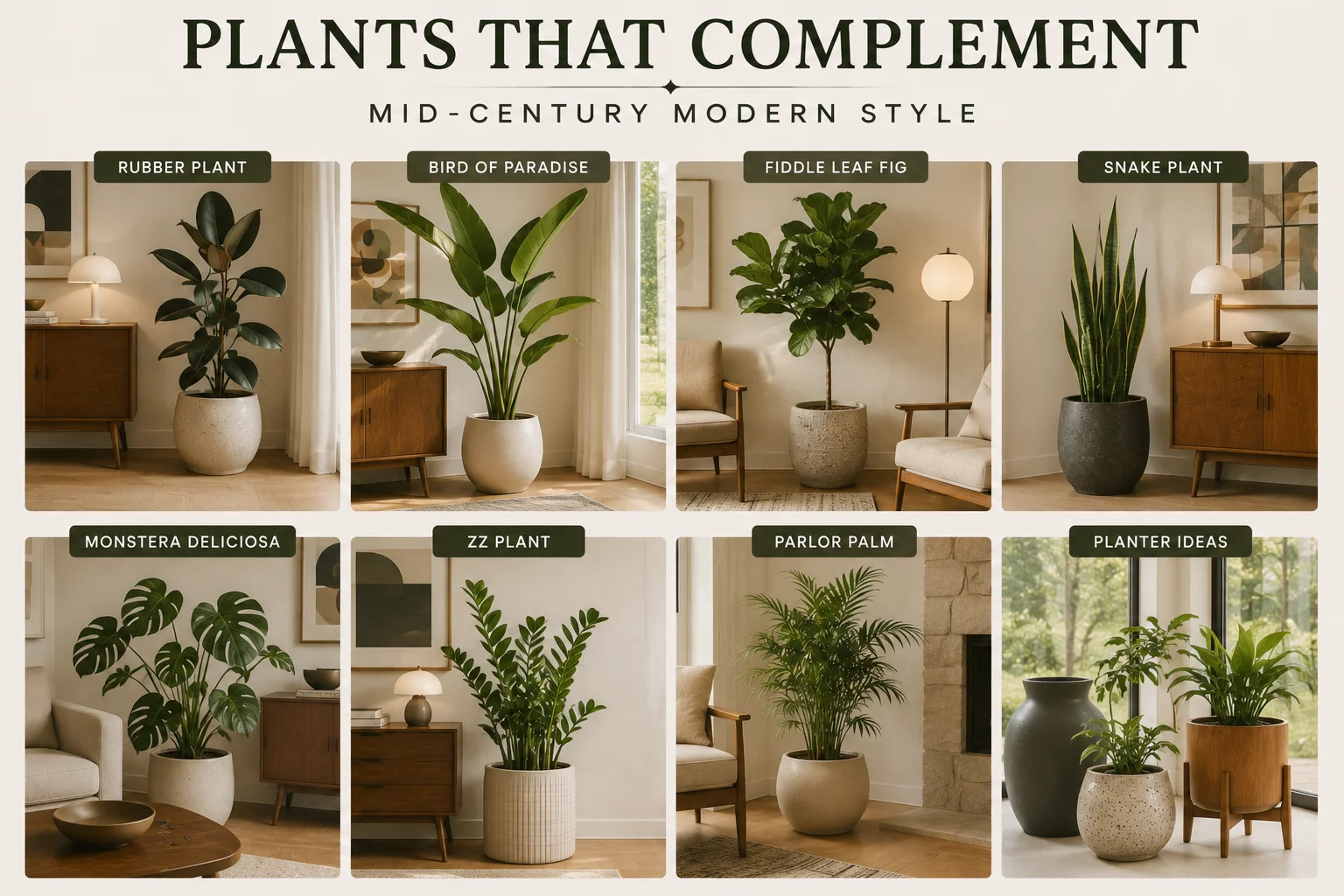
Top choices include:
- Rubber Plant
- Bird of Paradise
- Fiddle Leaf Fig
- Snake Plant
- Monstera Deliciosa
- ZZ Plant
- Parlor Palm
Choose simple ceramic, matte stone, or wooden planters that blend naturally with the room’s warm material palette.
Decor Accessories
Accessories should be curated rather than abundant. Each object should contribute to the room’s overall composition while allowing furniture and architecture to remain the stars of the space.
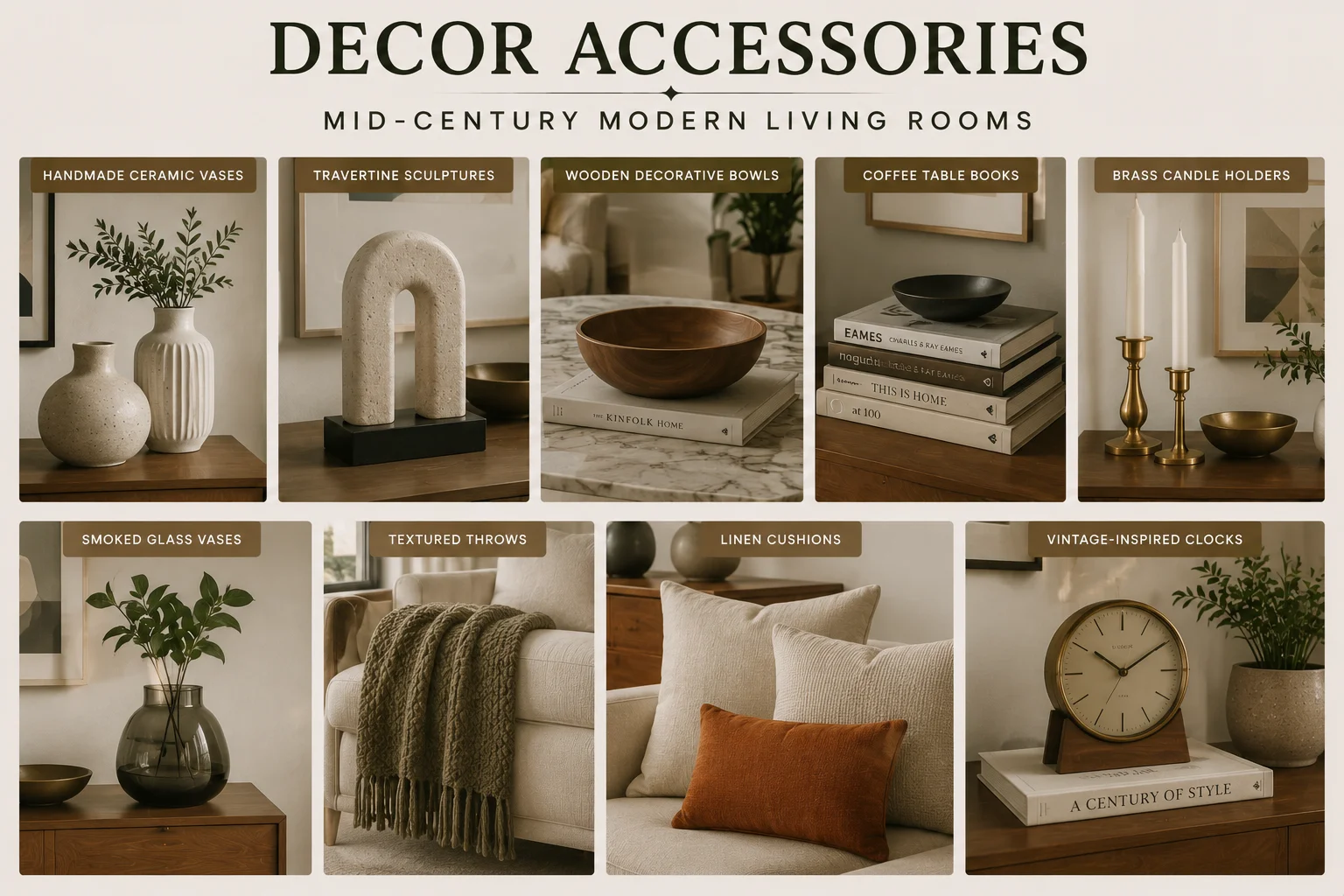
Ideal decorative accents include:
- Handmade ceramic vases
- Travertine sculptures
- Wooden decorative bowls
- Coffee table books
- Brass candle holders
- Smoked glass vases
- Textured throws
- Linen cushions
- Vintage-inspired clocks
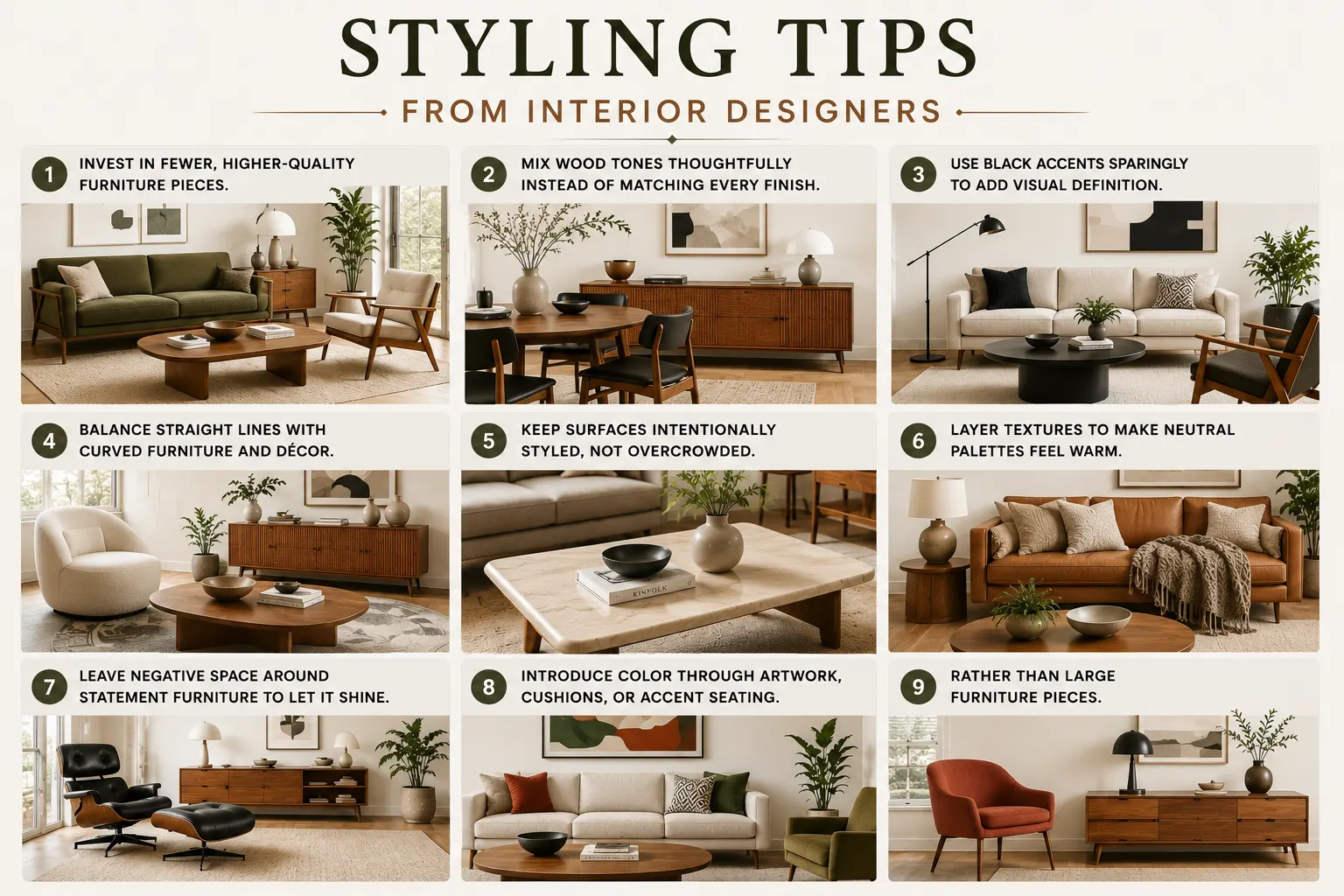
Styling Tips from Interior Designers
- Invest in fewer, higher-quality furniture pieces.
- Mix wood tones thoughtfully instead of matching every finish.
- Use black accents sparingly to add visual definition.
- Balance straight lines with curved furniture and décor.
- Keep surfaces intentionally styled, not overcrowded.
- Layer textures to make neutral palettes feel warm.
- Leave negative space around statement furniture to let it shine.
- Introduce color through artwork, cushions, or accent seating rather than large furniture pieces.
Common Mid-Century Modern Decorating Mistakes to Avoid
Although Mid-Century Modern interiors appear effortless, achieving the right balance requires thoughtful editing. A few common mistakes can make the room feel more like a retro showroom than a timeless living space.
1. Buying Every Piece in the Same Style
A common misconception is that every item must be an authentic Mid-Century Modern design. In reality, today’s most beautiful interiors combine classic silhouettes with contemporary accents for a layered, collected look.
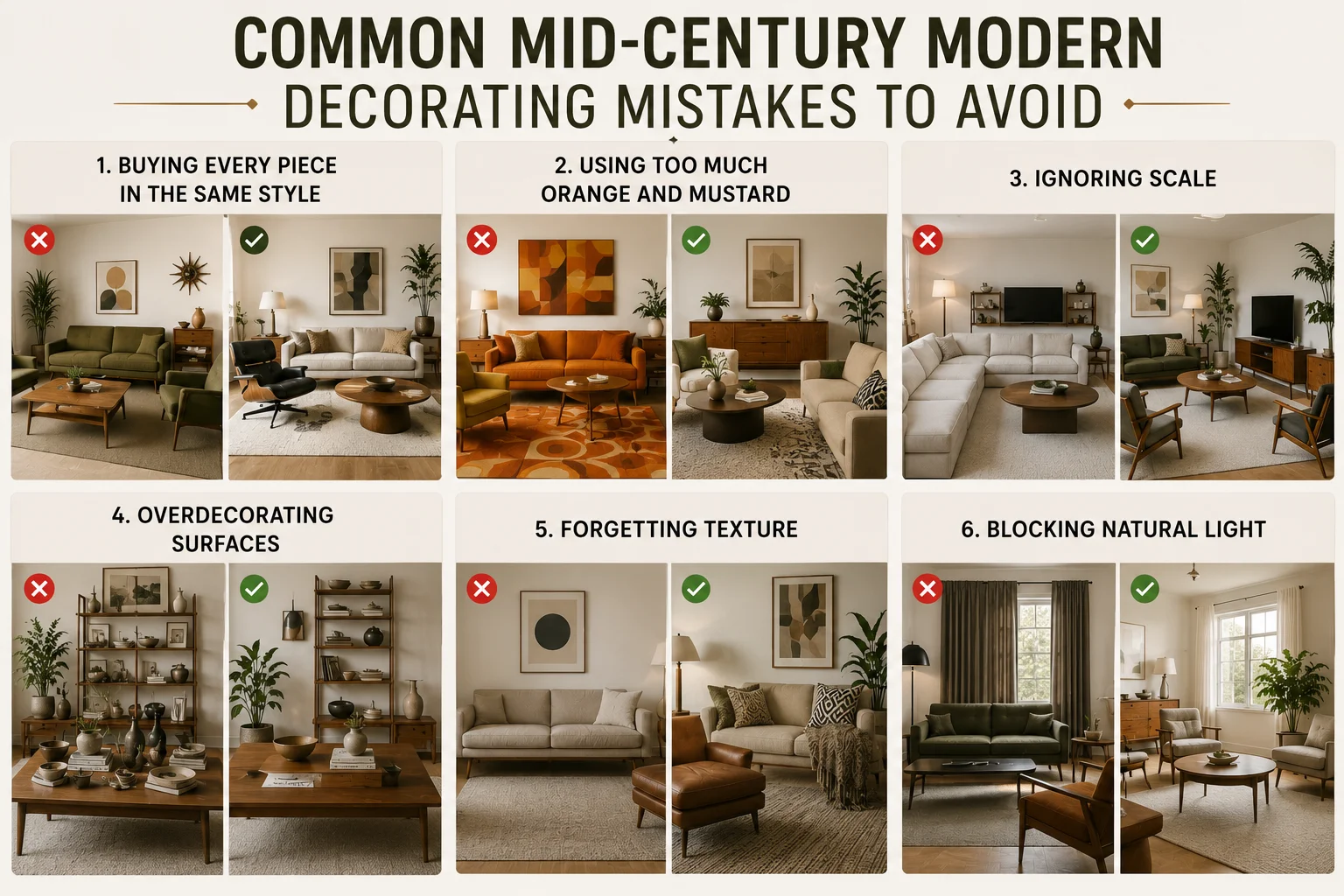
2. Using Too Much Orange and Mustard
Burnt orange, mustard yellow, and olive green are iconic accent colors, but they should remain accents. Build your room around warm neutrals and natural wood, then introduce richer colors through cushions, artwork, throws, or a single accent chair.
3. Ignoring Scale
Oversized sectionals, bulky coffee tables, or heavy entertainment units can overpower the clean proportions that define Mid-Century Modern interiors. Always choose furniture that suits the size of your room and leaves enough breathing space between pieces.
4. Overdecorating Surfaces
Open shelving, coffee tables, and sideboards don’t need to be filled completely. Leave empty space around decorative objects to create visual balance and allow statement pieces to stand out.
5. Forgetting Texture
A neutral color palette without texture can feel flat. Layer materials such as linen, wool, leather, wood, ceramic, glass, and brass to add warmth and depth.
6. Blocking Natural Light
Heavy drapes or oversized furniture placed in front of windows reduce one of the style’s greatest strengths—bright, airy interiors. Keep windows visually light whenever possible.
How to Achieve the Look on Any Budget
You don’t need a collection of vintage designer furniture to create a beautiful Mid-Century Modern living room. Focus on the core design principles first, then upgrade key pieces over time.
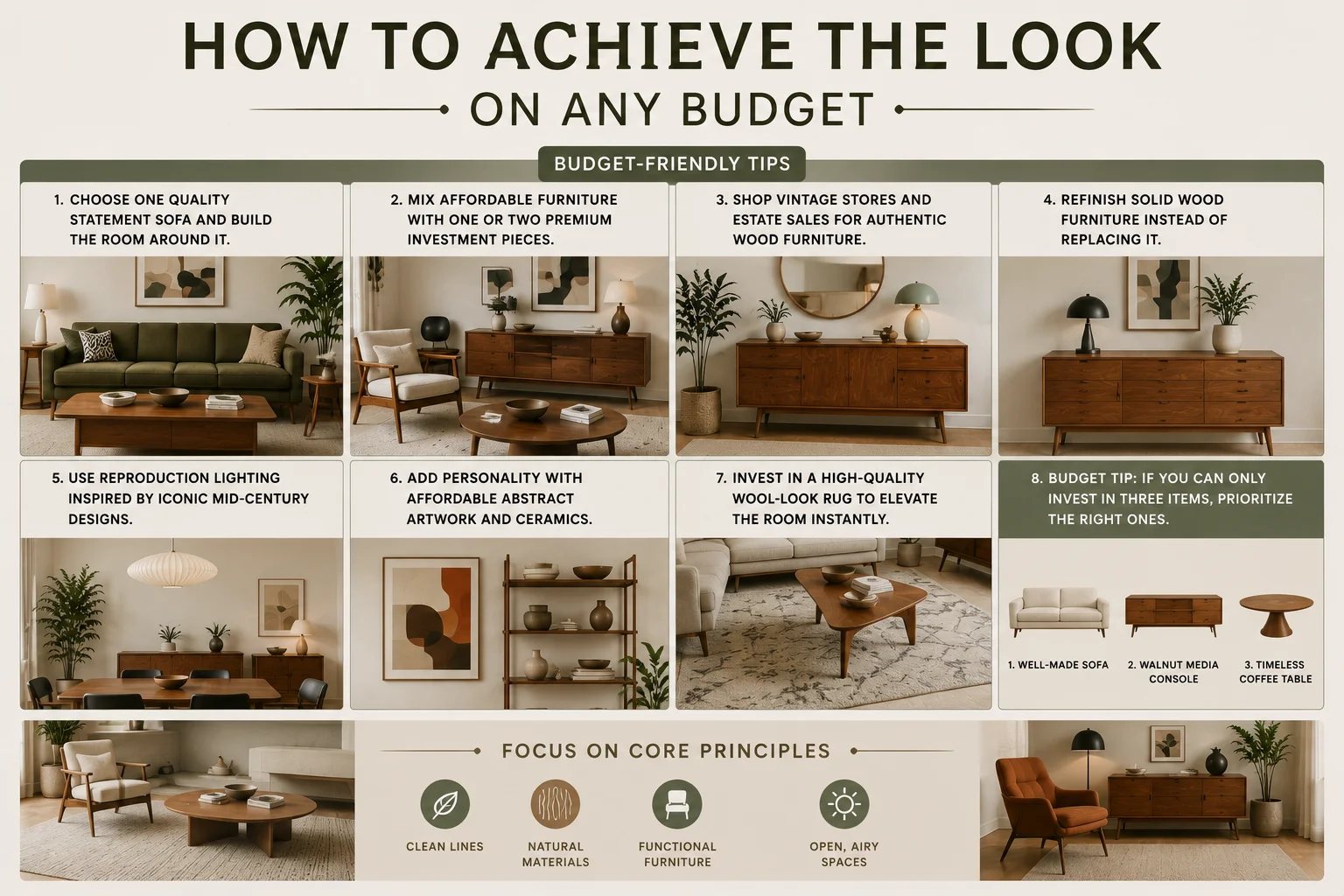
Budget-Friendly Tips
- Choose one quality statement sofa and build the room around it.
- Mix affordable furniture with one or two premium investment pieces.
- Shop vintage stores and estate sales for authentic wood furniture.
- Refinish solid wood furniture instead of replacing it.
- Use reproduction lighting inspired by iconic Mid-Century designs.
- Add personality with affordable abstract artwork and ceramics.
- Invest in a high-quality wool-look rug to elevate the room instantly.
Budget Tip: If you can only invest in three items, prioritize a well-made sofa, a walnut media console, and a timeless coffee table. These pieces establish the style and will remain relevant for years.
How to Mix Mid-Century Modern with Other Design Styles
One reason Mid-Century Modern remains so popular is its versatility. Its clean forms and natural materials blend effortlessly with many contemporary design aesthetics.
Mid-Century Modern + Scandinavian
- Lighter oak finishes
- Soft white walls
- Minimal décor
- Cozy textiles
- Bright, airy atmosphere
Mid-Century Modern + Japandi
- Muted earthy palette
- Handcrafted ceramics
- Natural linen
- Simple organic forms
- Intentional styling
Mid-Century Modern + Organic Modern
- Travertine tables
- Warm neutral upholstery
- Layered textures
- Oversized greenery
- Soft sculptural lighting
Mid-Century Modern + Contemporary
- Curved furniture
- Statement lighting
- Mixed materials
- Large-scale artwork
- Minimal color palette
Shop the Look
Recreating a Mid-Century Modern living room becomes much easier when you focus on a few foundational pieces. Begin with timeless furniture and layer in accessories that reinforce the style without overwhelming the space.
Furniture Essentials
- Low-profile linen or leather sofa
- Walnut coffee table
- Walnut media console or credenza
- Cognac leather accent chair
- Minimal side table
Lighting
- Sputnik chandelier
- Globe pendant light
- Tripod floor lamp
- Ceramic table lamp
Textiles
- Ivory wool rug
- Neutral linen curtains
- Textured throw blanket
- Mixed linen cushions
Accessories
- Handmade ceramic vase
- Coffee table books
- Travertine decorative object
- Brass candle holders
- Minimal abstract artwork
- Indoor Rubber Plant or Bird of Paradise
Future internal links: Best Mid-Century Modern Sofas, Mid-Century Modern Coffee Tables, Best Mid-Century Modern Lighting, Mid-Century Modern Rugs, Walnut Furniture Buying Guide.
Style Variations
Mid-Century Modern can be personalized to suit different homes and lifestyles while maintaining its timeless design principles.
Warm Mid-Century Modern
- Warm white walls
- Walnut furniture
- Camel leather
- Travertine accents
- Soft layered lighting
Minimal Mid-Century Modern
- Limited furniture
- Neutral palette
- Minimal accessories
- Open shelving
- Light oak finishes
Luxury Mid-Century Modern
- High-end designer-inspired furniture
- Natural stone surfaces
- Large statement lighting
- Premium wool rugs
- Museum-quality artwork
Small Apartment Mid-Century Modern
- Compact furniture
- Slim profiles
- Light wall colors
- Multi-functional storage
- Minimal styling
Frequently Asked Questions
What defines a Mid-Century Modern living room?
A Mid-Century Modern living room features clean lines, functional furniture, warm wood tones, organic shapes, natural materials, and a carefully edited collection of décor. The emphasis is on timeless design rather than excessive ornamentation.
Is Mid-Century Modern still in style?
Yes. It remains one of the most influential interior design styles because its furniture, materials, and layouts are both practical and timeless. Many contemporary homes continue to incorporate Mid-Century Modern elements.
Which wood is most commonly used?
Walnut is the signature wood for Mid-Century Modern furniture, although teak, oak, and rosewood are also popular choices depending on the overall look you want to achieve.
Can I mix Mid-Century Modern with contemporary furniture?
Absolutely. Combining Mid-Century Modern furniture with contemporary lighting, artwork, and accessories creates a fresh, updated interior while preserving the style’s timeless character.
What colors work best in a Mid-Century Modern living room?
Warm neutrals such as ivory, cream, oatmeal, and soft beige create the perfect foundation. Pair them with walnut or teak wood furniture and introduce accents like olive green, rust, mustard yellow, burnt orange, deep teal, or navy blue through cushions, artwork, or accent chairs.
Can Mid-Century Modern work in a small living room?
Yes. The style’s emphasis on clean lines, raised furniture, and uncluttered layouts actually makes compact spaces feel larger. Choose furniture with exposed legs, avoid oversized sectionals, and maximize natural light to maintain an open feel.
What flooring complements Mid-Century Modern interiors?
Natural hardwood flooring is the classic choice. Walnut, white oak, or teak-look floors pair beautifully with the style. If hardwood isn’t an option, high-quality wood-look flooring in warm tones provides a similar effect.
Do I need authentic vintage furniture?
Not at all. While authentic vintage pieces add character, many modern manufacturers produce excellent Mid-Century-inspired furniture with the same clean silhouettes and proportions. Mixing vintage and new pieces often creates the most balanced result.
Quick Design Formula
If you’re starting from scratch, this simple formula will help you build a cohesive Mid-Century Modern living room without feeling overwhelmed.
| Design Layer | Recommendation |
|---|---|
| Walls | Warm white or soft beige paint |
| Main Seating | Low-profile linen or leather sofa |
| Wood Finish | Walnut or teak |
| Coffee Table | Rounded wood or glass design |
| Lighting | Sputnik or globe pendant with layered lamps |
| Textiles | Neutral wool rug with linen cushions |
| Artwork | Large abstract statement piece |
| Greenery | Rubber Plant, Bird of Paradise, or Snake Plant |
| Accessories | Ceramics, books, brass accents, sculptural décor |
Why This Style Continues to Stand the Test of Time
Few interior design styles have influenced modern homes as profoundly as Mid-Century Modern. More than seventy years after its emergence, its principles of simplicity, functionality, and thoughtful craftsmanship remain as relevant as ever.
Rather than chasing seasonal trends, Mid-Century Modern encourages homeowners to invest in timeless furniture, durable materials, and carefully curated décor that can evolve over the years. This approach not only creates a more sophisticated home but also promotes sustainability by prioritizing quality over quantity.
Its versatility is another reason for its enduring appeal. Whether you prefer Scandinavian warmth, Japandi minimalism, Organic Modern textures, or Contemporary elegance, Mid-Century Modern serves as an excellent foundation that blends seamlessly with a variety of design styles.
Final Thoughts
A beautifully designed Mid-Century Modern living room isn’t defined by owning every iconic furniture piece or recreating a 1950s interior. Instead, it’s about embracing the style’s timeless design philosophy—clean lines, natural materials, functional furniture, and thoughtful simplicity.
Start with a neutral foundation, introduce warm walnut or teak furniture, layer in tactile materials such as linen, leather, wool, and ceramic, and complete the room with carefully selected lighting, artwork, and greenery. By focusing on quality over quantity, you’ll create a living room that feels inviting today and remains stylish for years to come.
Whether you’re furnishing your first apartment, renovating your family home, or simply updating a single corner of your living room, Mid-Century Modern offers a timeless blueprint for creating a space that is elegant, comfortable, and effortlessly livable.
Related Living Room Style Guides
Continue exploring our collection of expert style guides to discover the design aesthetic that best suits your home.
- Modern Living Room Style Guide
- Minimalist Living Room Style Guide
- Scandinavian Living Room Style Guide
- Japandi Living Room Style Guide
- Organic Modern Living Room Style Guide
- Contemporary Living Room Style Guide
- Modern vs. Contemporary Living Room: What’s the Difference?
- Modern Living Room Styles Explained: Find Your Perfect Look
Next on Home Style Studio Co.
If you loved this guide, you’ll also enjoy our upcoming articles covering:
- Best Mid-Century Modern Sofas for Every Budget
- Mid-Century Modern Coffee Table Buying Guide
- The Best Lighting for Mid-Century Modern Homes
- Mid-Century Modern Color Palettes You’ll Love
- How to Decorate a Small Mid-Century Modern Apartment
- The Ultimate Guide to Mid-Century Modern Wall Art
- Mid-Century Modern TV Wall Ideas
- Best Indoor Plants for Mid-Century Modern Interiors
Design Your Dream Living Room with Confidence
Every great living room starts with a timeless foundation. Mid-Century Modern proves that thoughtful design, quality craftsmanship, and carefully selected furnishings never go out of style.
Save this guide for future inspiration, explore our other living room style guides, and begin creating a space that reflects your personality while remaining beautifully functional for years to come.
Happy decorating!