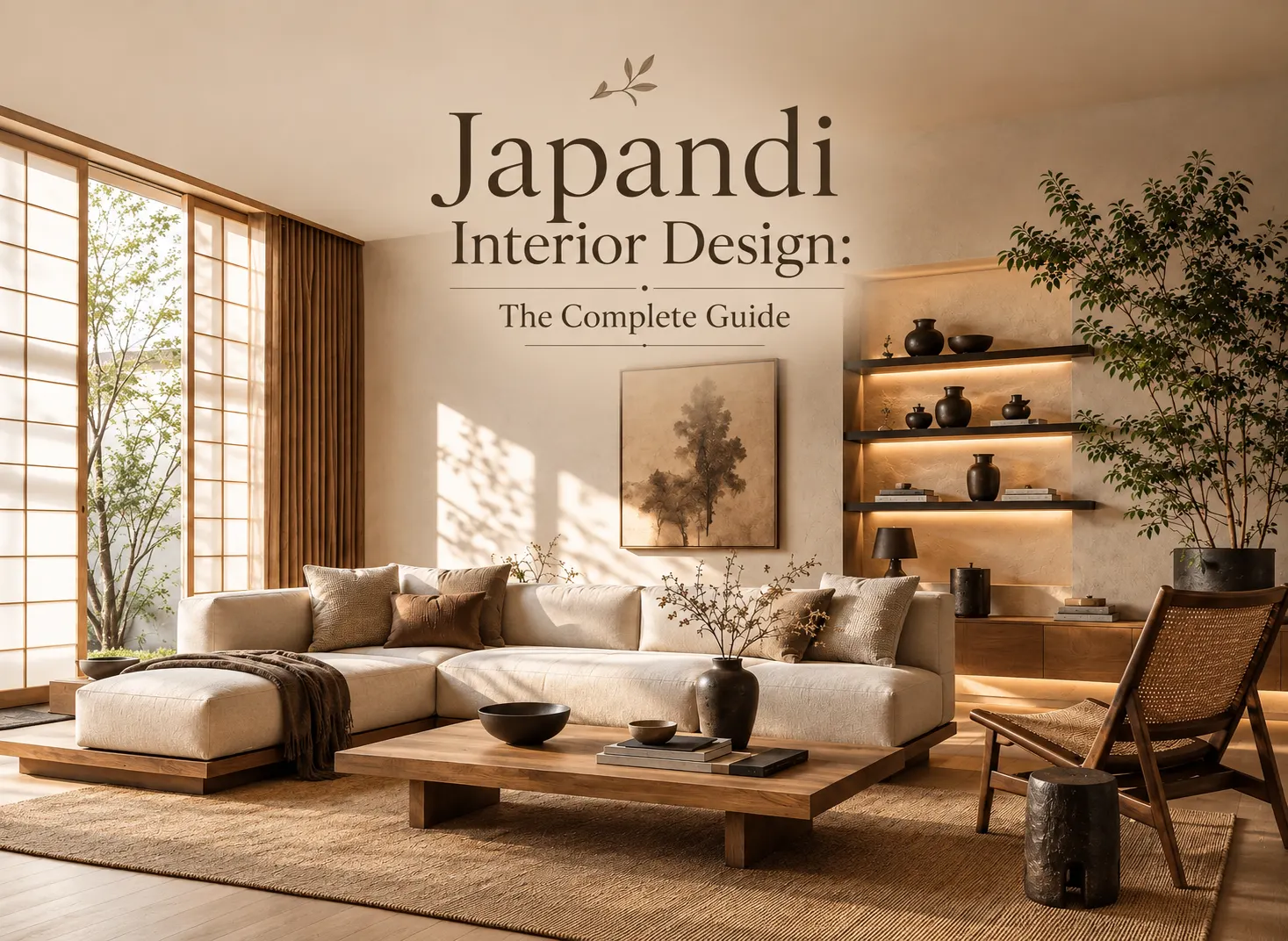
Japandi interior design combines the understated comfort of Scandinavian interiors with the simplicity, craftsmanship and appreciation of imperfection associated with Japanese design. The result is a home that feels calm and uncluttered without becoming cold, overly minimal or impersonal.
Rather than relying on obvious decorative themes, Japandi focuses on thoughtful furniture, natural materials, restrained color palettes, tactile surfaces and objects that contribute either function or genuine visual value.
A successful Japandi room may appear simple at first glance, but its warmth comes from subtle details: the grain of timber, the irregular surface of handmade ceramics, woven linen, softly textured walls, carefully positioned lighting and furniture with beautifully considered proportions.
This guide explores the essential characteristics of Japandi interior design, including its influences, principles, colors, materials, furniture, lighting and room-by-room application.
What Is Japandi Interior Design?
Japandi is an interior design approach that brings together elements of Japanese and Scandinavian design.
Both traditions value simplicity, functionality, natural materials and craftsmanship, which makes them naturally compatible. However, each contributes something slightly different.
Scandinavian interiors are strongly associated with practical comfort, pale timber, soft textiles, functional furniture and a bright atmosphere. Japanese interiors traditionally place greater emphasis on restraint, natural materials, negative space, craftsmanship and the beauty of imperfect or aged surfaces.
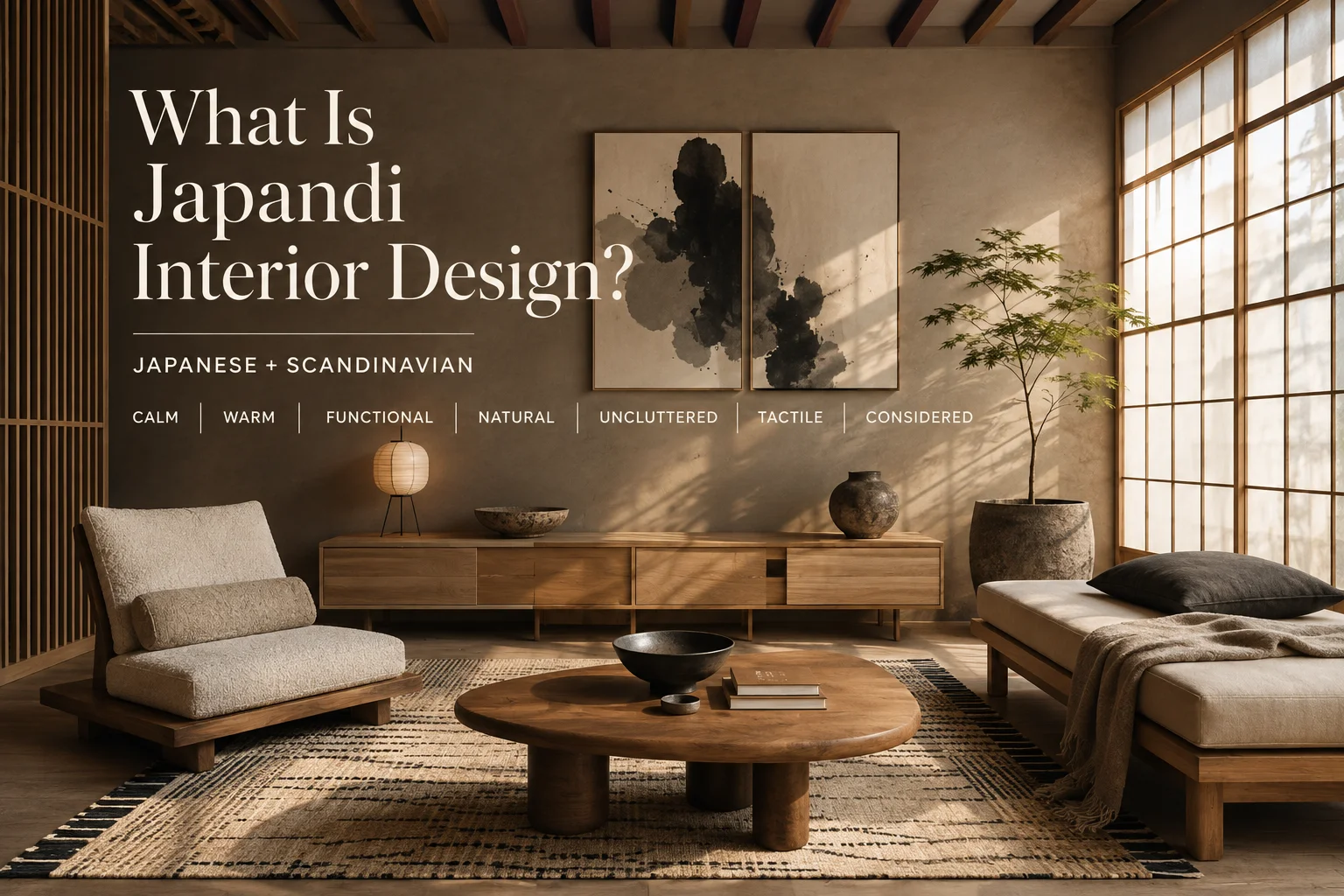
Japandi blends these ideas into interiors that feel:
- calm;
- warm;
- functional;
- natural;
- uncluttered;
- tactile; and
- carefully considered.
Unlike extreme minimalism, Japandi does not require removing everything decorative. Instead, it encourages choosing fewer pieces and allowing each one enough visual space to be appreciated.
Where Does Japandi Style Come From?
Japandi is a contemporary design term, but the compatibility between Japanese and Scandinavian aesthetics has much deeper roots.
Both design cultures developed strong traditions around craftsmanship, simplicity and a close relationship with natural materials. Timber, ceramics, woven fibers and understated furniture have long played important roles in both regions.
Scandinavian design also places great value on everyday comfort and practical living, while Japanese aesthetics frequently emphasize simplicity, balance and the natural character of materials.
Modern Japandi interiors bring these complementary ideas together rather than attempting to reproduce a traditional Japanese or Scandinavian home literally.
For a deeper understanding of the Nordic half of the aesthetic, see our guide to Scandinavian interior design.
The Core Principles of Japandi Design
Japandi works best when it is approached through design principles rather than treated as a collection of specific products.
1. Simplicity With Warmth
Visual simplicity is one of the foundations of Japandi interiors, but the objective is not to create an empty room.
The space should feel edited rather than sparse. Furniture has breathing room, decorative objects are limited and unnecessary visual clutter is reduced.
Warm timber, natural fabrics and tactile finishes prevent the simplicity from becoming clinical.
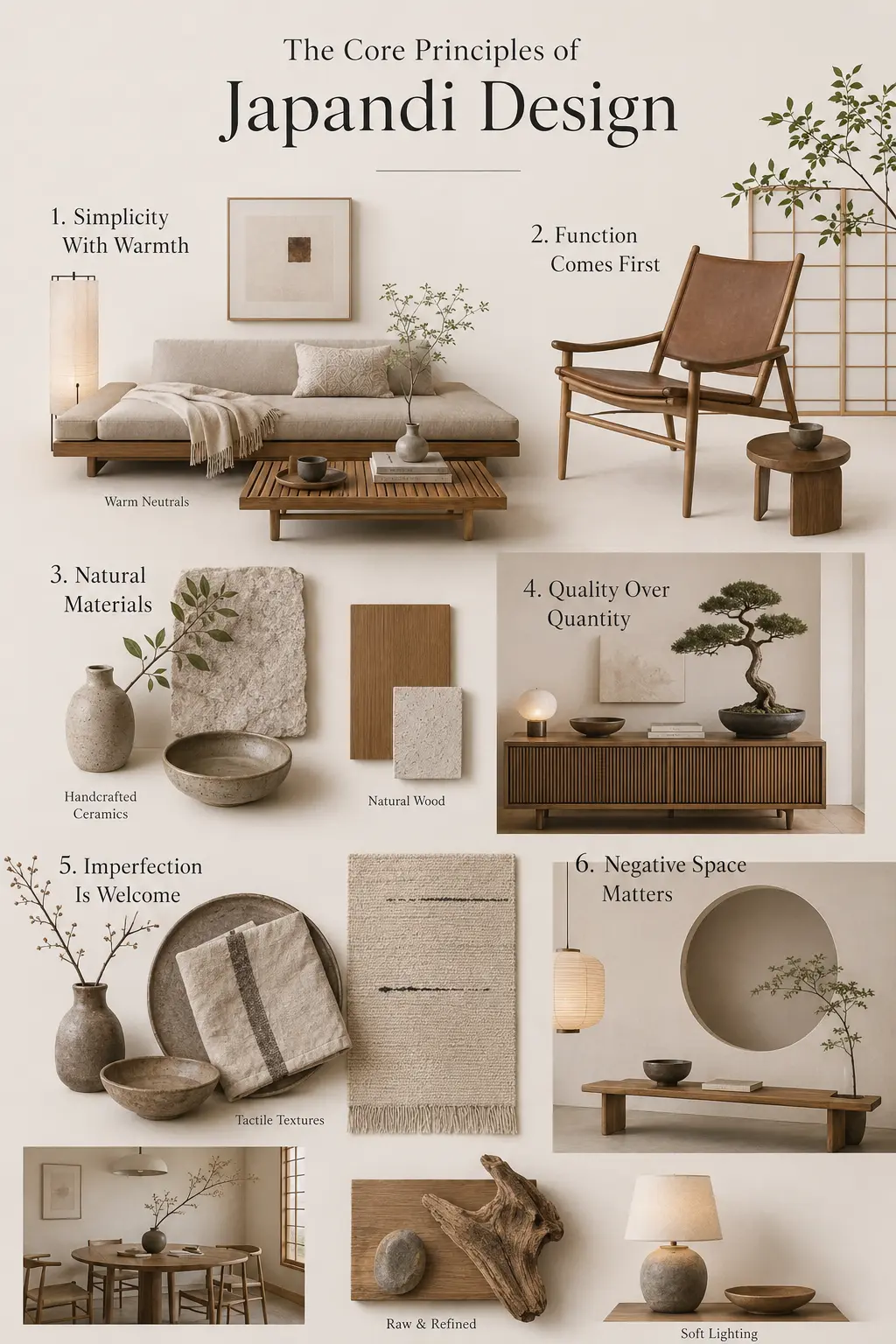
2. Function Comes First
Japandi furniture and decor should generally contribute to how the room functions.
Storage reduces clutter. Seating should be comfortable. Tables should suit the activities taking place around them. Lighting should provide both atmosphere and useful illumination.
This principle closely aligns with Scandinavian design, where practicality remains an important part of the aesthetic.
3. Natural Materials
Natural materials provide much of the visual interest in Japandi rooms.
Common choices include:
- oak;
- ash;
- walnut;
- stone;
- linen;
- cotton;
- wool;
- rattan;
- paper;
- clay; and
- handmade ceramics.
Because the color palette is usually controlled, variations in grain, texture and craftsmanship become especially important.
4. Quality Over Quantity
Rather than filling a room quickly, Japandi encourages slower and more selective decorating.
A single beautifully made timber chair or handcrafted ceramic vessel can contribute more character than several inexpensive decorative objects.
This does not mean every item must be expensive. The principle is simply to choose pieces deliberately and avoid unnecessary accumulation.
5. Imperfection Is Welcome
Perfectly polished surfaces are not required.
Irregular ceramics, visible timber grain, softly creased linen, textured plaster and materials that develop character with age can make a Japandi interior feel more authentic and relaxed.
The goal is controlled imperfection rather than a distressed or deliberately rustic appearance.
6. Negative Space Matters
Empty space is part of the design.
Leaving portions of walls, shelves and floors relatively open allows furniture and materials to stand out more clearly.
This is one reason Japandi rooms often feel calmer than interiors where every surface is decorated.
Japandi Color Palette
Japandi palettes are generally warm, muted and connected to natural materials.
Instead of relying entirely on stark white, consider softer foundational colors such as:
- warm white;
- ivory;
- stone;
- oatmeal;
- sand;
- mushroom;
- greige;
- taupe; and
- soft beige.
These neutrals can then be grounded with richer natural tones.
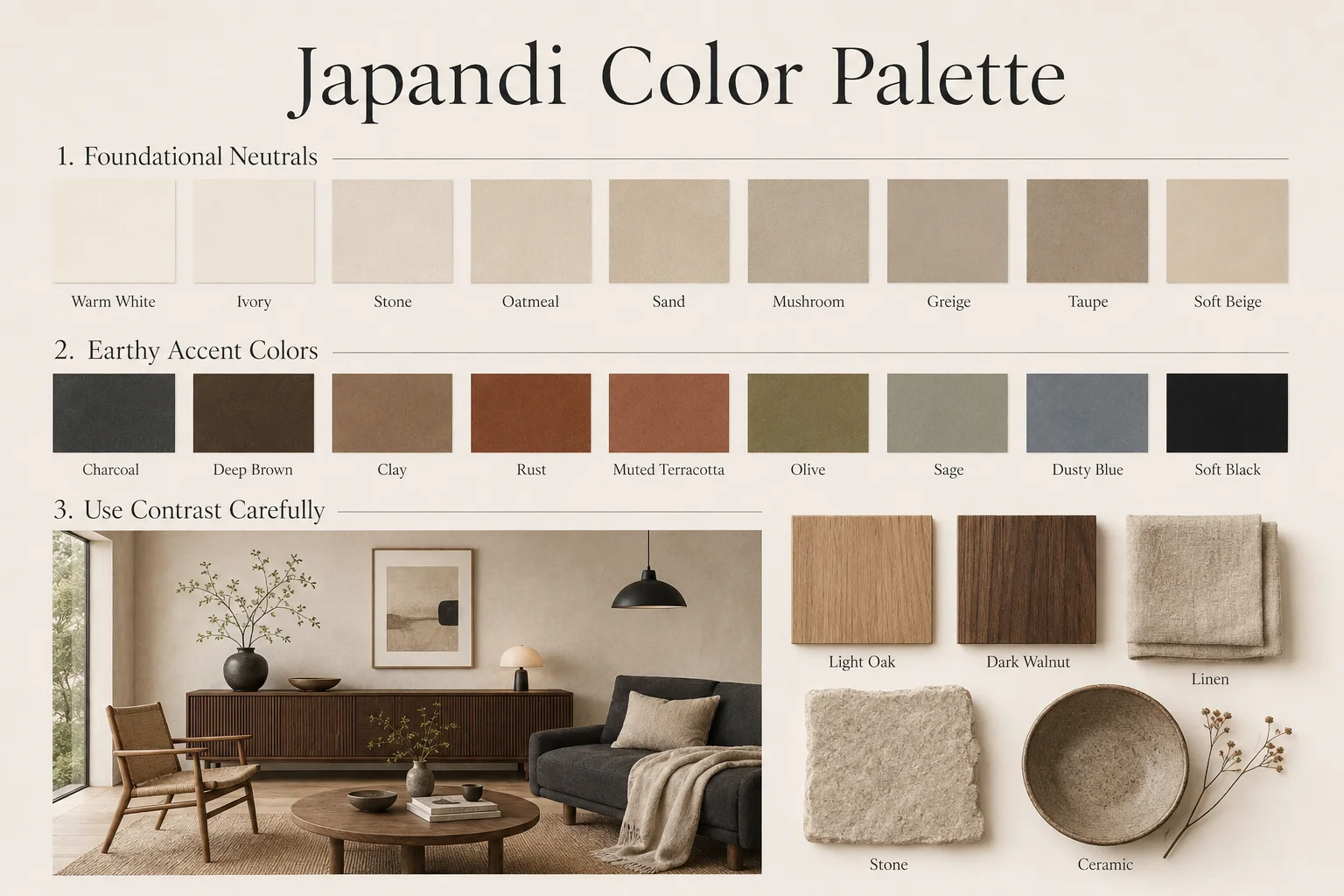
Earthy Accent Colors
Muted colors work particularly well when they resemble pigments found in nature.
Suitable accents include:
- charcoal;
- deep brown;
- clay;
- rust;
- muted terracotta;
- olive;
- sage;
- dusty blue; and
- soft black.
Dark accents are especially useful because they give structure to pale timber and neutral fabrics.
Use Contrast Carefully
Japandi is usually more grounded than an all-white Scandinavian interior.
A room might combine pale plaster walls and light oak flooring with a dark walnut cabinet, black metal lighting or charcoal upholstery.
The contrast adds depth without requiring numerous colors.
Materials and Textures That Define Japandi
Texture is essential because Japandi rooms often use relatively restrained color palettes.
Wood
Timber is arguably the most important Japandi material.
Light oak and ash reference Scandinavian interiors, while walnut, smoked oak and other darker woods can introduce the deeper contrast frequently seen in Japanese-inspired spaces.
Mixing different woods is possible when their undertones complement one another.
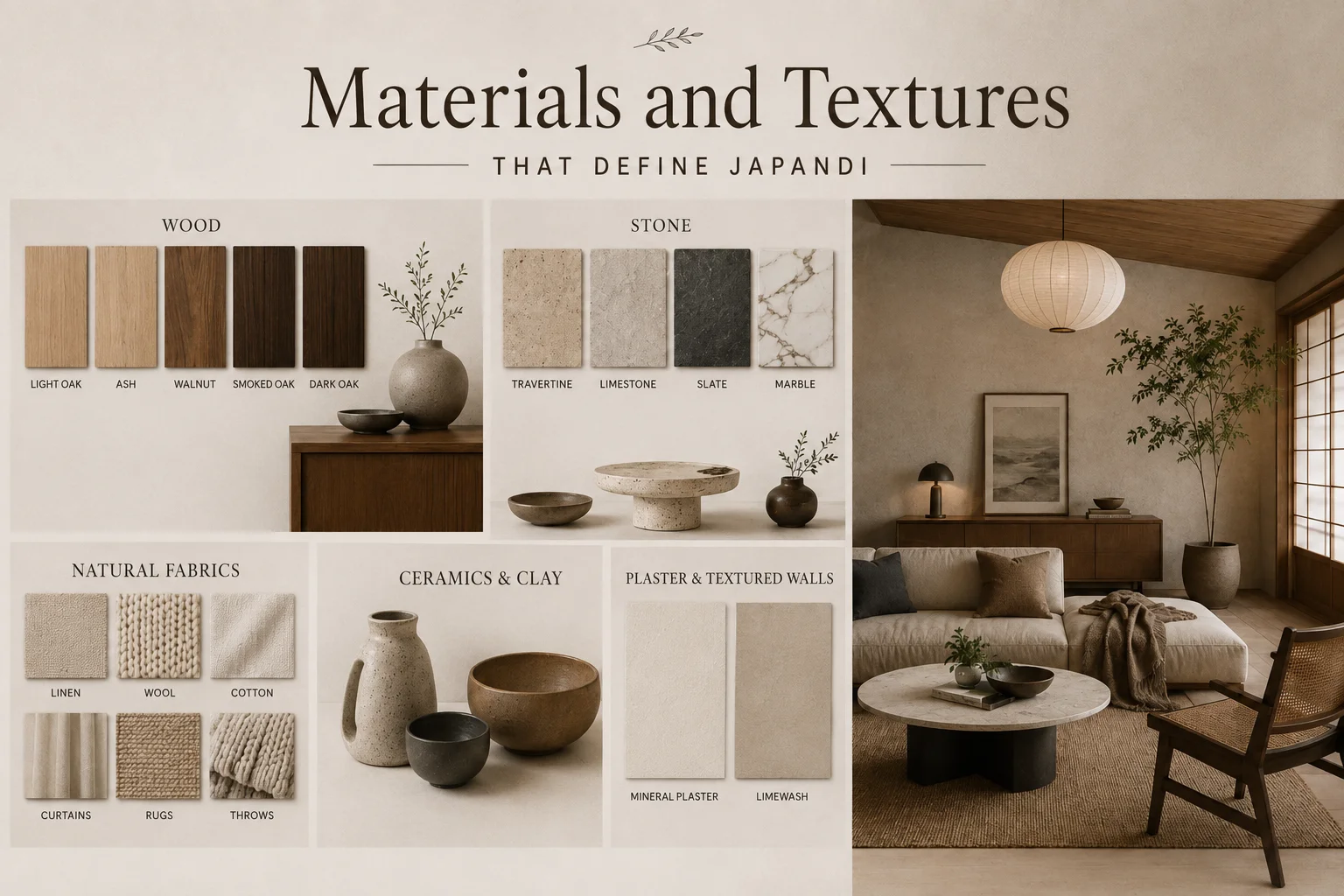
Stone
Travertine, limestone, slate and other natural-looking stone surfaces add quiet variation.
They work particularly well on coffee tables, side tables, fireplaces, kitchen surfaces and decorative objects.
Natural Fabrics
Linen, wool and cotton soften the hard surfaces found throughout Japandi interiors.
Use them through:
- sofa upholstery;
- curtains;
- cushions;
- throws;
- rugs; and
- bedding.
A slightly irregular weave often feels more appropriate than highly polished synthetic fabric.
Ceramics and Clay
Handmade or handmade-looking ceramics are particularly effective Japandi accessories.
Look for matte surfaces, subtle glazing and slightly irregular silhouettes rather than highly ornate designs.
Plaster and Textured Walls
Limewash, mineral finishes and softly textured plaster can provide depth without obvious pattern.
When these finishes are impractical, warm matte paint can achieve a similar visual restraint.
Japandi Furniture
Furniture establishes much of the character of a Japandi interior, so silhouette and proportion matter as much as material.
Choose Clean, Simple Forms
Furniture should generally avoid excessive ornamentation.
Look for straightforward silhouettes, refined joinery and forms that allow the material itself to become part of the design.
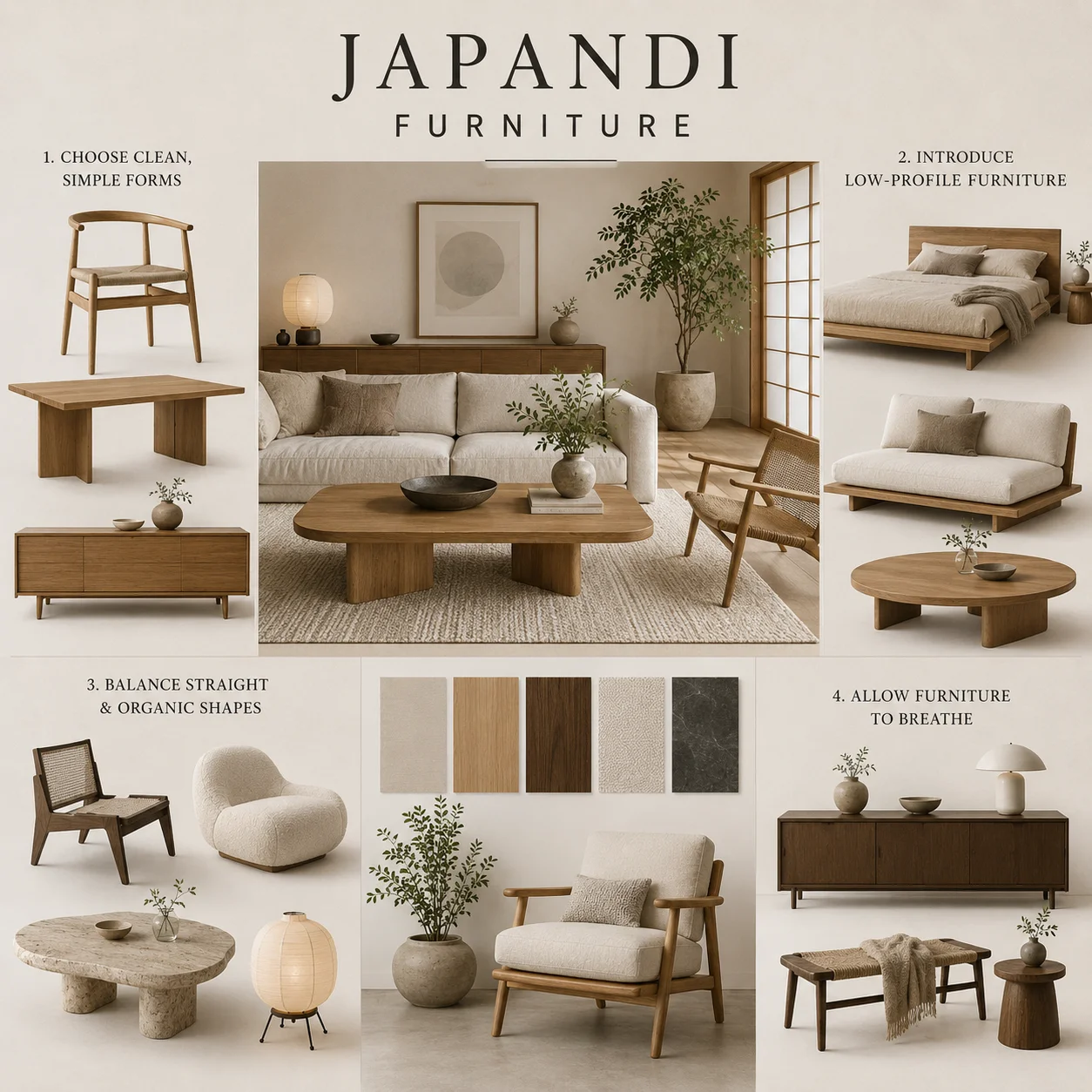
Introduce Low-Profile Furniture
Low sofas, lounge chairs, platform beds, benches and coffee tables can reinforce the grounded atmosphere associated with Japanese-inspired interiors.
However, not every piece needs to sit close to the floor. Comfort and proportion should remain more important than following the aesthetic literally.
Balance Straight and Organic Shapes
A room composed entirely of rectangular furniture can appear rigid.
Introduce gentle curves through a rounded lounge chair, irregular coffee table, sculptural lamp or ceramic accessory.
The contrast between clean architectural lines and softer organic forms creates a more sophisticated composition.
Allow Furniture to Breathe
Avoid positioning furniture simply to fill unused space.
Leaving visible floor area between important pieces creates clearer visual hierarchy and makes the room feel larger and calmer.
How to Choose Japandi Lighting
Lighting should support the calm atmosphere rather than dominate it unnecessarily.
A well-designed Japandi interior usually combines several light sources instead of relying entirely on one ceiling fixture.
Ambient Lighting
Use pendant lights, ceiling fixtures or recessed lighting to provide general illumination.
Simple paper, timber, ceramic, fabric or understated metal fixtures work particularly well.
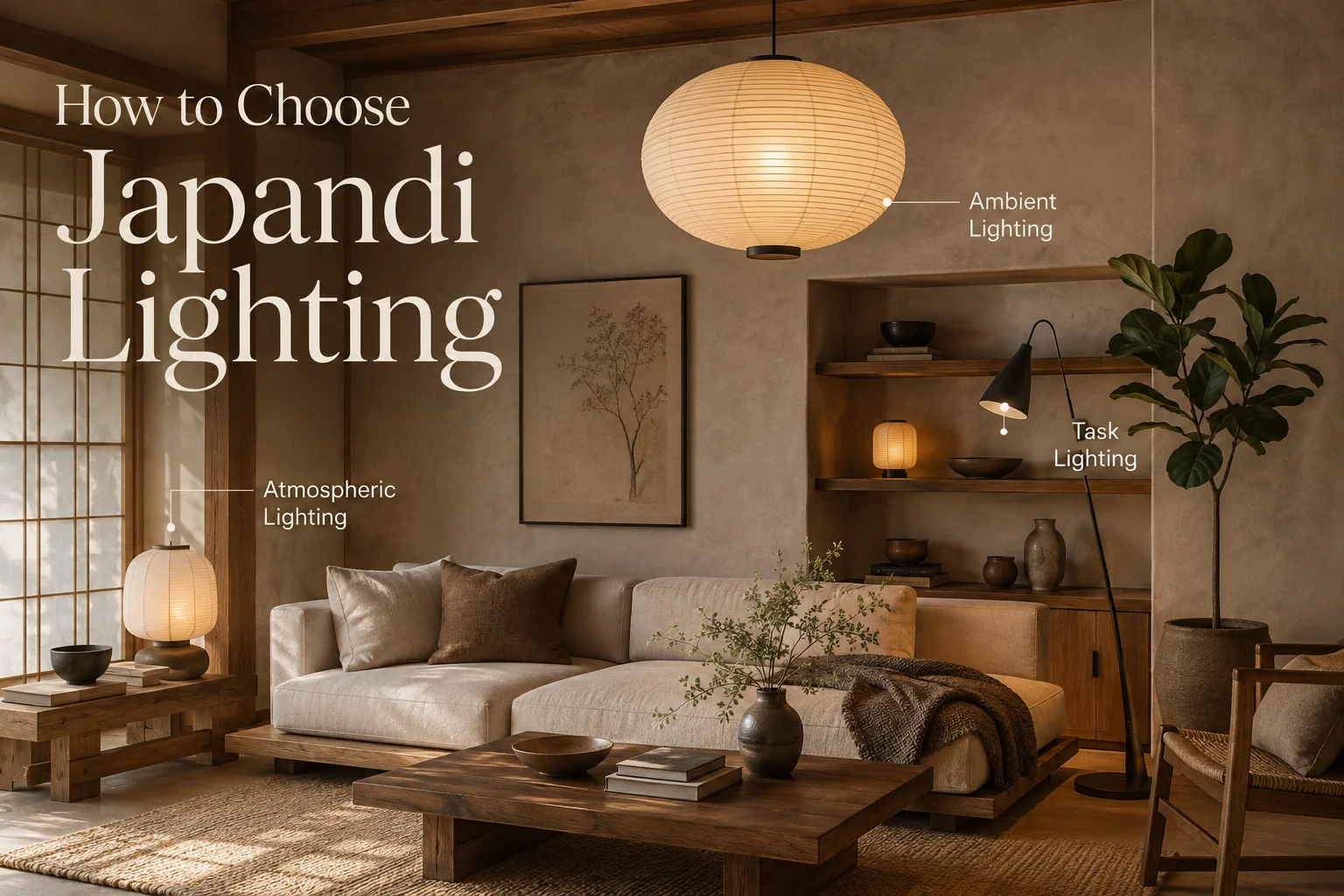
Task Lighting
Floor lamps, reading lamps and table lamps should provide practical illumination where it is actually needed.
Atmospheric Lighting
Smaller lamps create pools of soft light around seating areas, shelves and consoles.
Warm illumination generally complements Japandi materials better than extremely cool white lighting.
Japandi Decor and Accessories
Decor is intentionally limited, but that does not mean it is unimportant.
The difference is that accessories are selected individually rather than accumulated indiscriminately.
Ceramics
Display one or two sculptural vessels instead of filling every surface with small decorative objects.
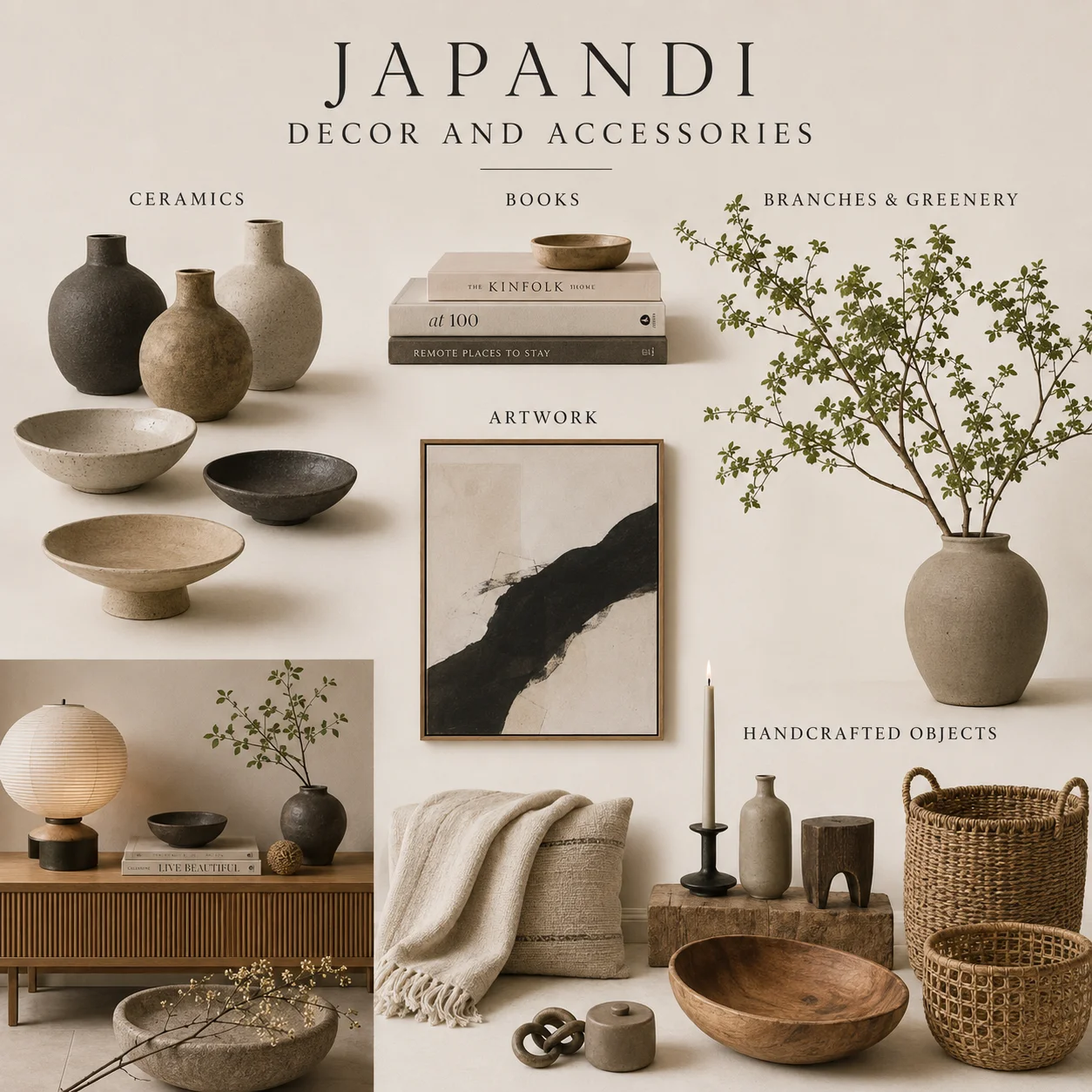
Books
A small collection of thoughtfully arranged books can introduce personality while remaining functional.
Branches and Greenery
Plants and simple botanical arrangements soften the architecture and strengthen the connection with nature.
Rather than clustering numerous tiny plants throughout the room, consider one substantial plant or a restrained branch arrangement.
Artwork
Choose fewer, larger artworks with calm compositions, earthy colors, abstract forms, landscapes, ink-inspired imagery or understated photography.
Handcrafted Objects
Woven baskets, timber bowls and handmade objects introduce human character without requiring excessive decoration.
How to Create a Japandi Living Room
The living room is one of the easiest places to introduce Japandi design because furniture, textiles, lighting and natural materials can all contribute to the aesthetic.
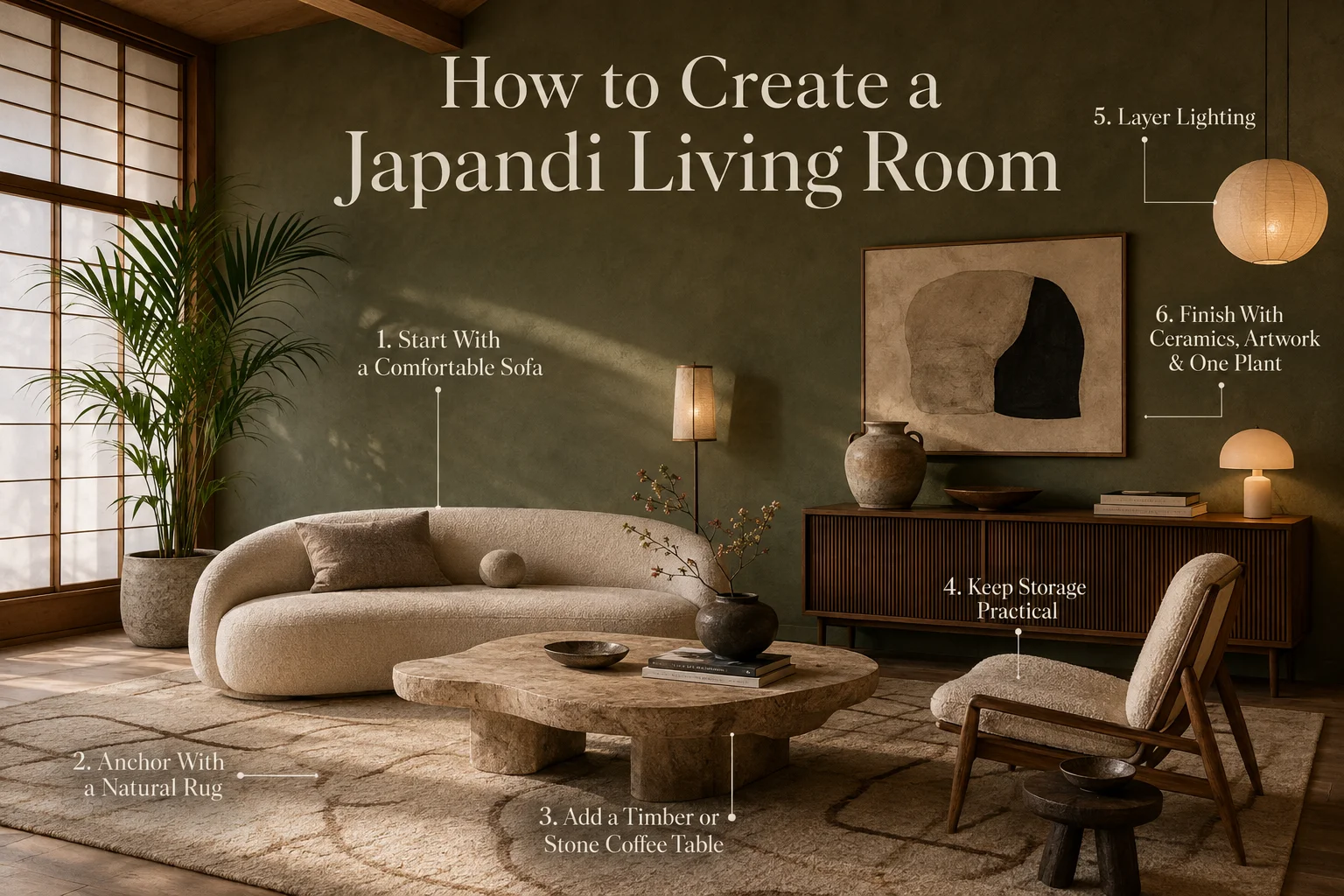
Begin with a comfortable sofa in linen-look, wool-blend or subtly textured upholstery. Anchor the seating arrangement with a generously sized wool or natural-fiber rug.
Add a timber or stone coffee table and one or two accent chairs with lighter visual profiles.
Keep storage practical and mostly contained so everyday clutter does not dominate the room.
Complete the space with layered lighting, a limited number of ceramics, one substantial plant and carefully chosen artwork.
Readers interested in the Nordic influence behind this approach can also explore our Scandinavian Living Room Style Guide.
Japandi Bedroom Design
A Japandi bedroom should prioritize rest, simplicity and tactile comfort.
Start with a simple timber or upholstered bed, preferably with a relatively low visual profile.
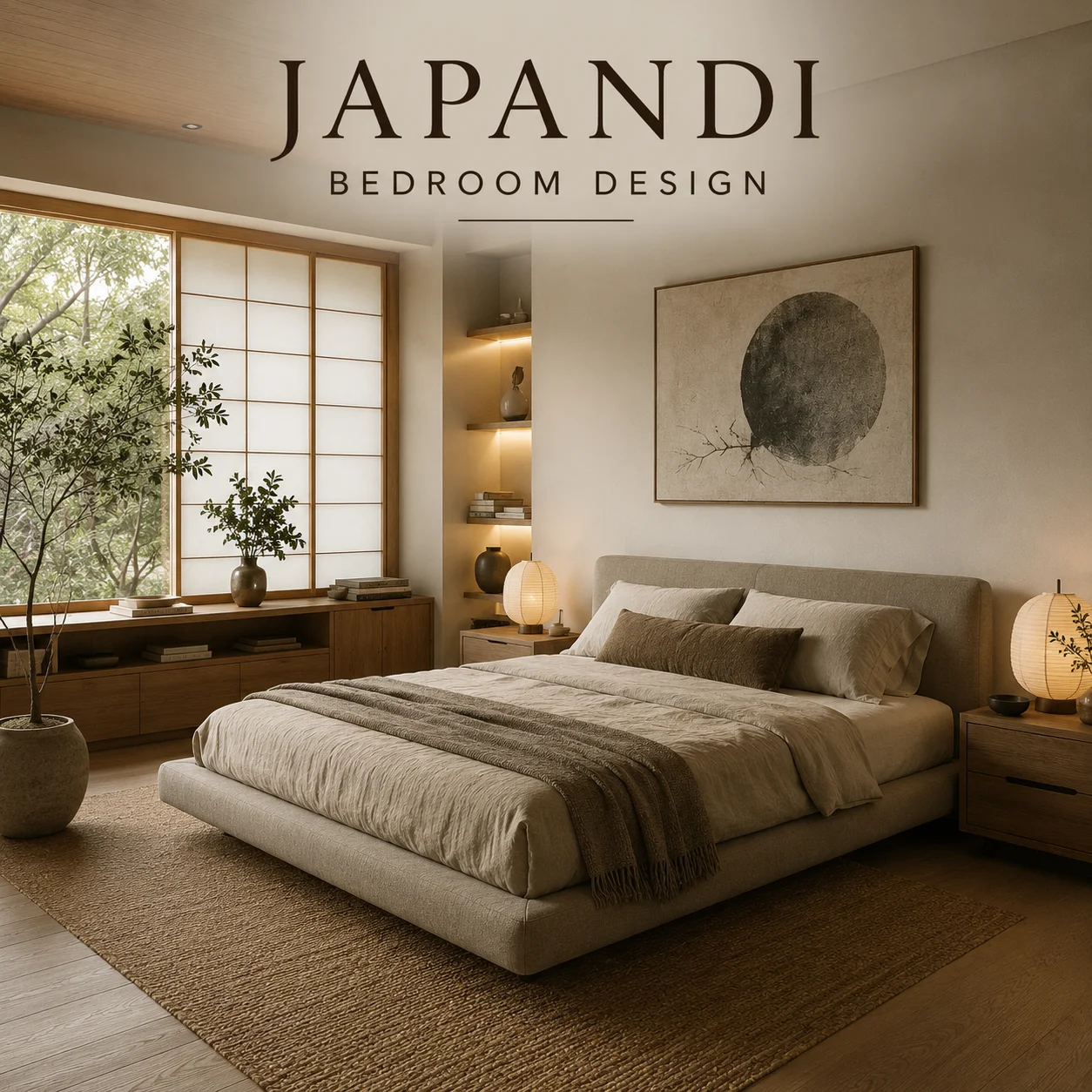
Choose linen or cotton bedding in warm white, oatmeal, taupe, muted brown or earthy gray.
Instead of decorating the bed with numerous cushions, rely on fabric texture and a restrained combination of layers.
Simple bedside tables, warm lamps, natural rugs and one substantial piece of artwork are often sufficient.
Keep surfaces relatively uncluttered and use closed storage where possible.
Japandi Kitchen Design
Japandi kitchens combine clean functionality with warm natural materials.
Flat-front timber cabinetry works particularly well, especially when combined with stone or mineral-inspired surfaces.
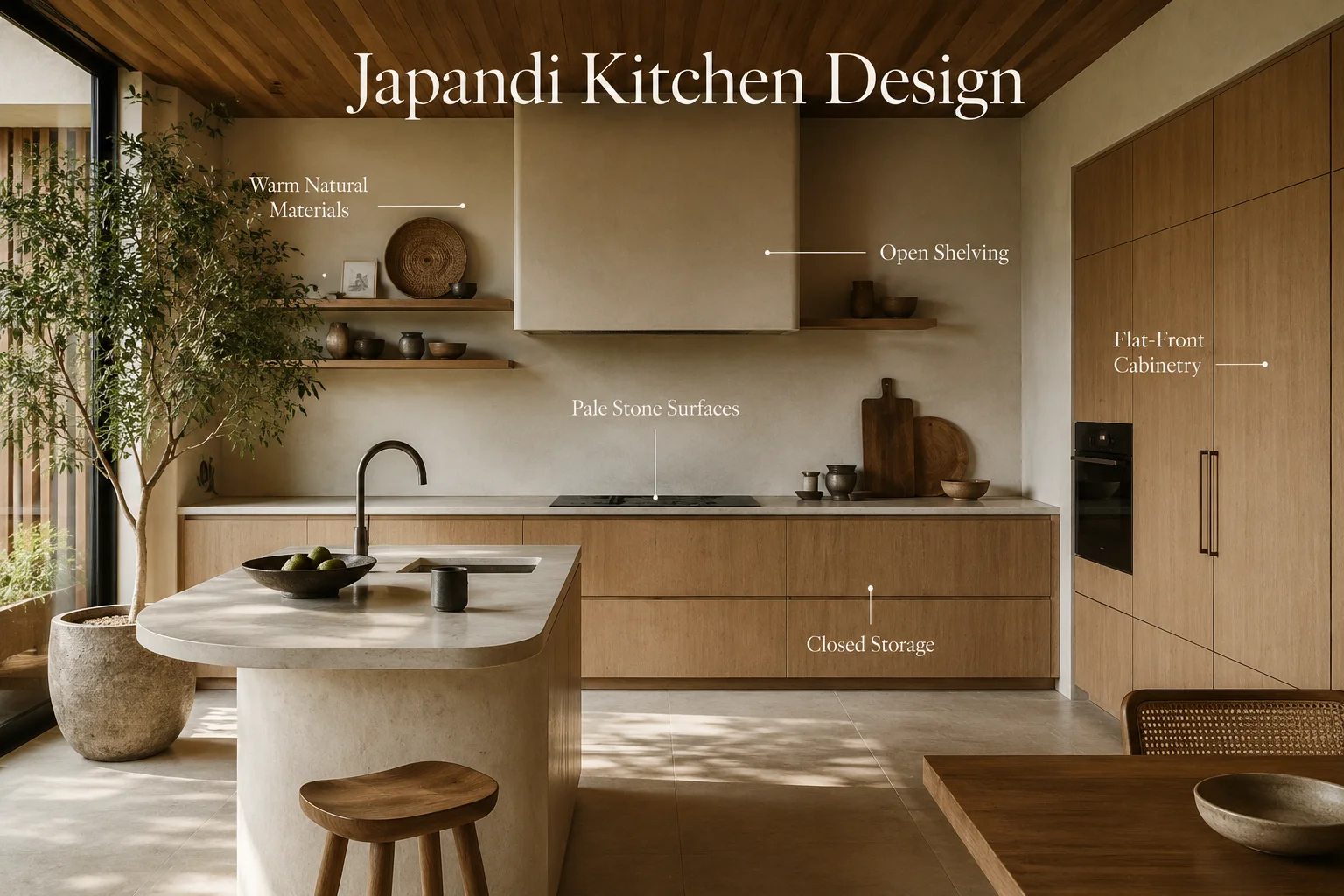
A simple palette might combine oak cabinets, warm white walls and pale stone counters with black or dark bronze accents.
Open shelving can work when it is carefully edited, but extensive closed storage usually makes maintaining the uncluttered aesthetic easier.
Ceramic tableware, timber boards and woven objects can provide enough visual detail without introducing unnecessary decoration.
Japandi Bathroom Design
Bathrooms lend themselves naturally to Japandi style because stone, timber and simple forms already suit functional spaces.
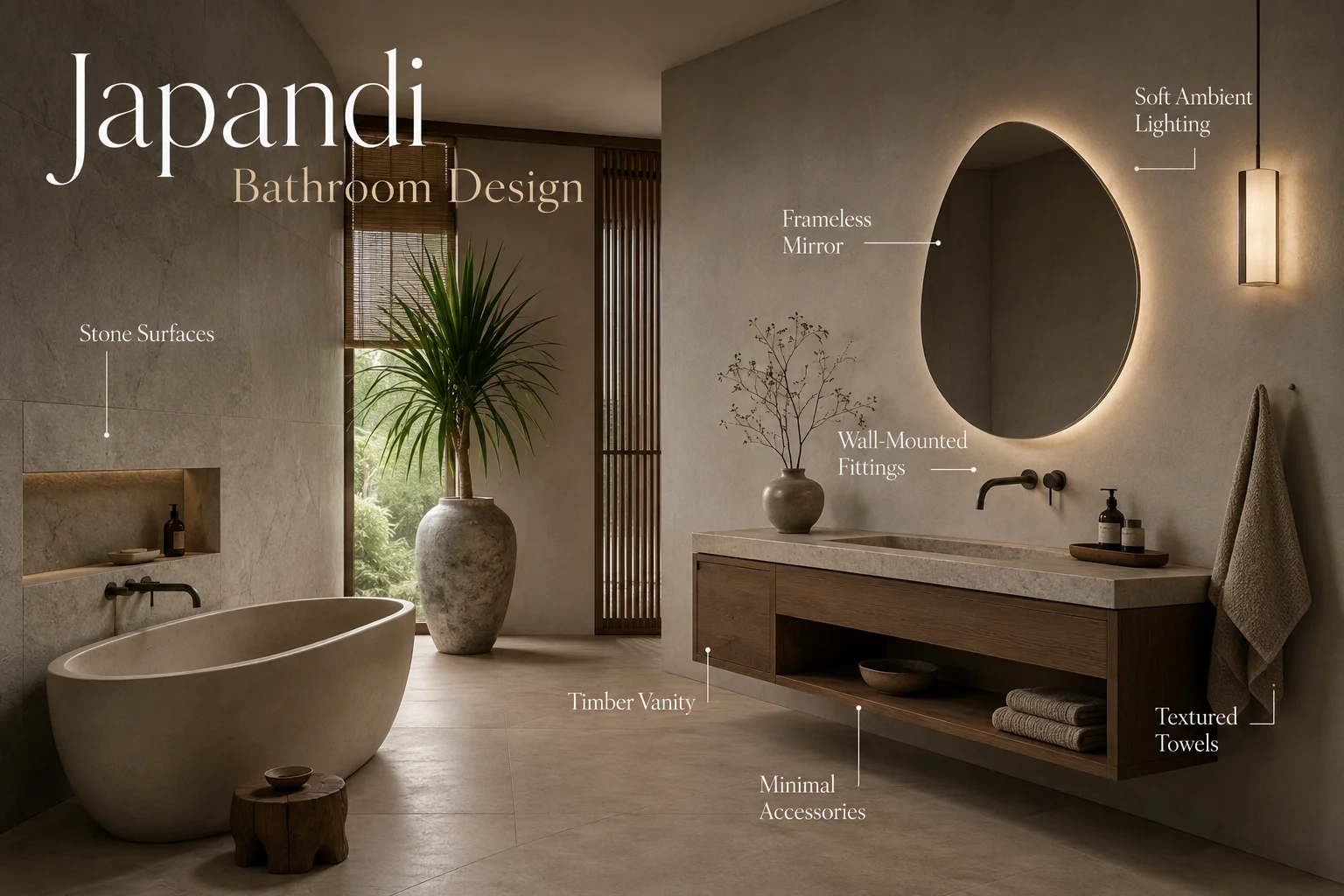
Consider:
- stone-effect or natural stone surfaces;
- timber vanities;
- frameless mirrors;
- simple wall-mounted fittings;
- textured neutral towels;
- minimal accessories; and
- soft ambient lighting.
The palette should remain calm, but introducing contrasting timber or dark hardware can prevent the room from becoming visually flat.
Japandi vs Scandinavian Interior Design
Japandi and Scandinavian design share several characteristics, including functionality, simplicity, natural materials and uncluttered interiors.
However, Scandinavian rooms often feel lighter, brighter and more casual, with pale woods, soft textiles and a stronger emphasis on domestic coziness.
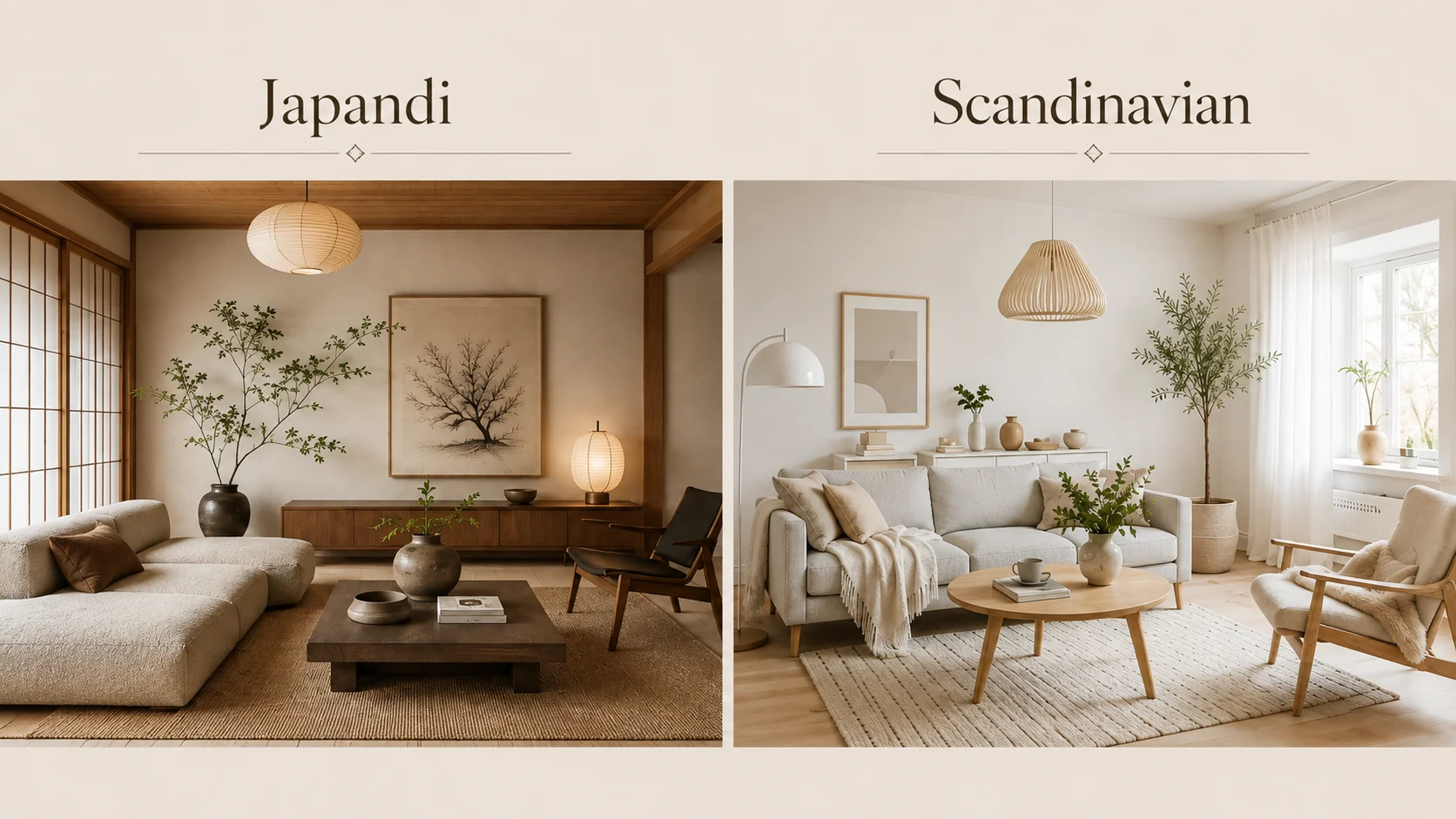
Japandi interiors generally introduce greater contrast, darker timbers, earthier neutrals and a stronger emphasis on negative space and handcrafted imperfection.
A Scandinavian room might use pale oak, white walls, colorful textiles and familiar decorative objects.
A Japandi interpretation may use warmer plaster walls, oak combined with walnut, restrained textiles and fewer sculptural objects.
Neither approach is inherently more minimal; the difference lies primarily in the balance of influences.
Japandi vs Minimalism
Japandi and minimalism both reduce visual clutter, but they should not be treated as identical styles.
Minimalism often emphasizes reduction itself: fewer objects, simplified forms and substantial negative space.
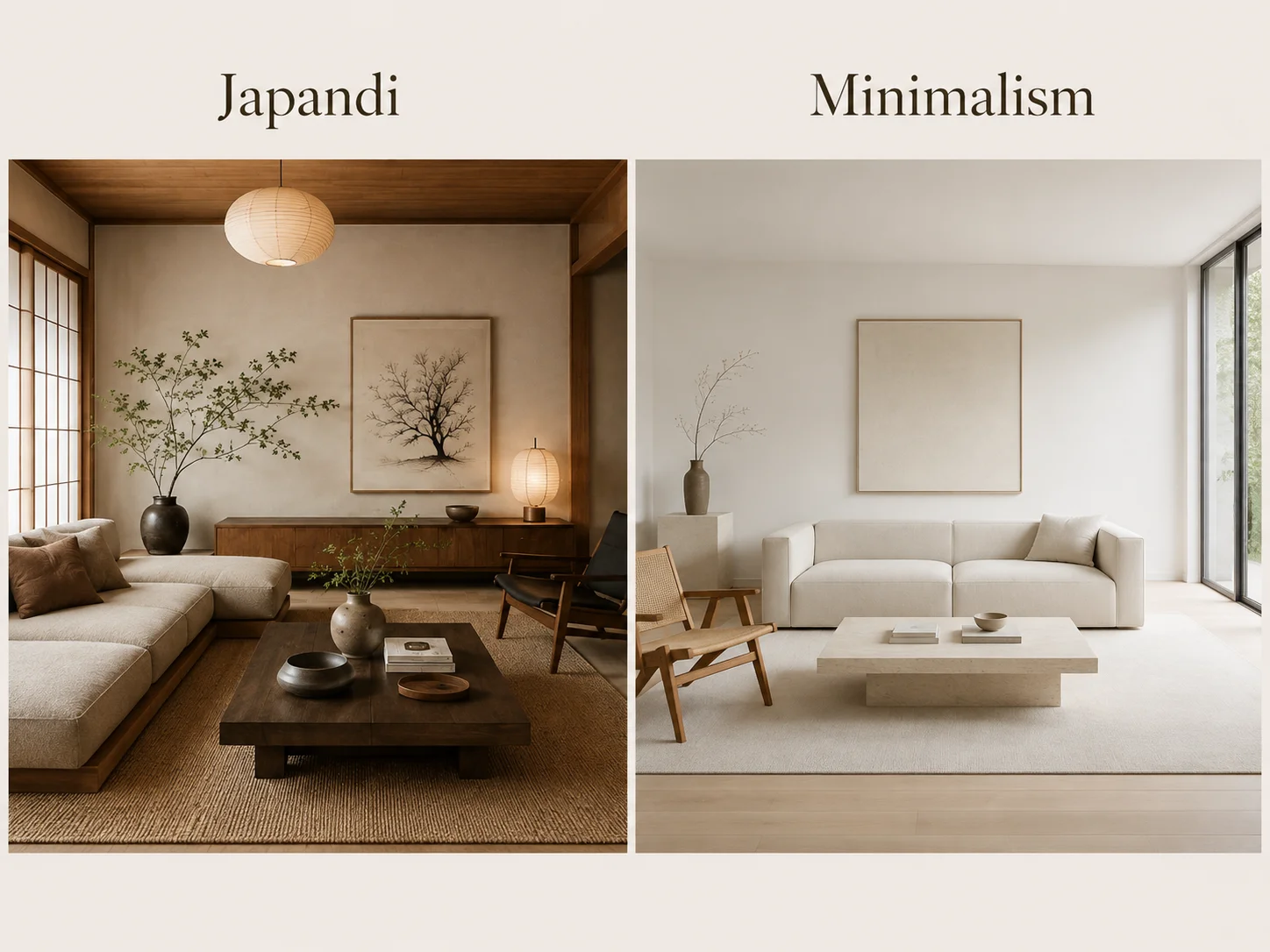
Japandi uses restraint as a foundation but places greater emphasis on warmth, natural materials, craftsmanship and texture.
Consequently, a Japandi room can contain books, ceramics, textiles, plants and artwork while still appearing calm.
The Role of Wabi-Sabi in Japandi Interiors
Wabi-sabi is frequently referenced in discussions of Japandi because it encourages appreciation of simplicity, age, natural materials and imperfection.
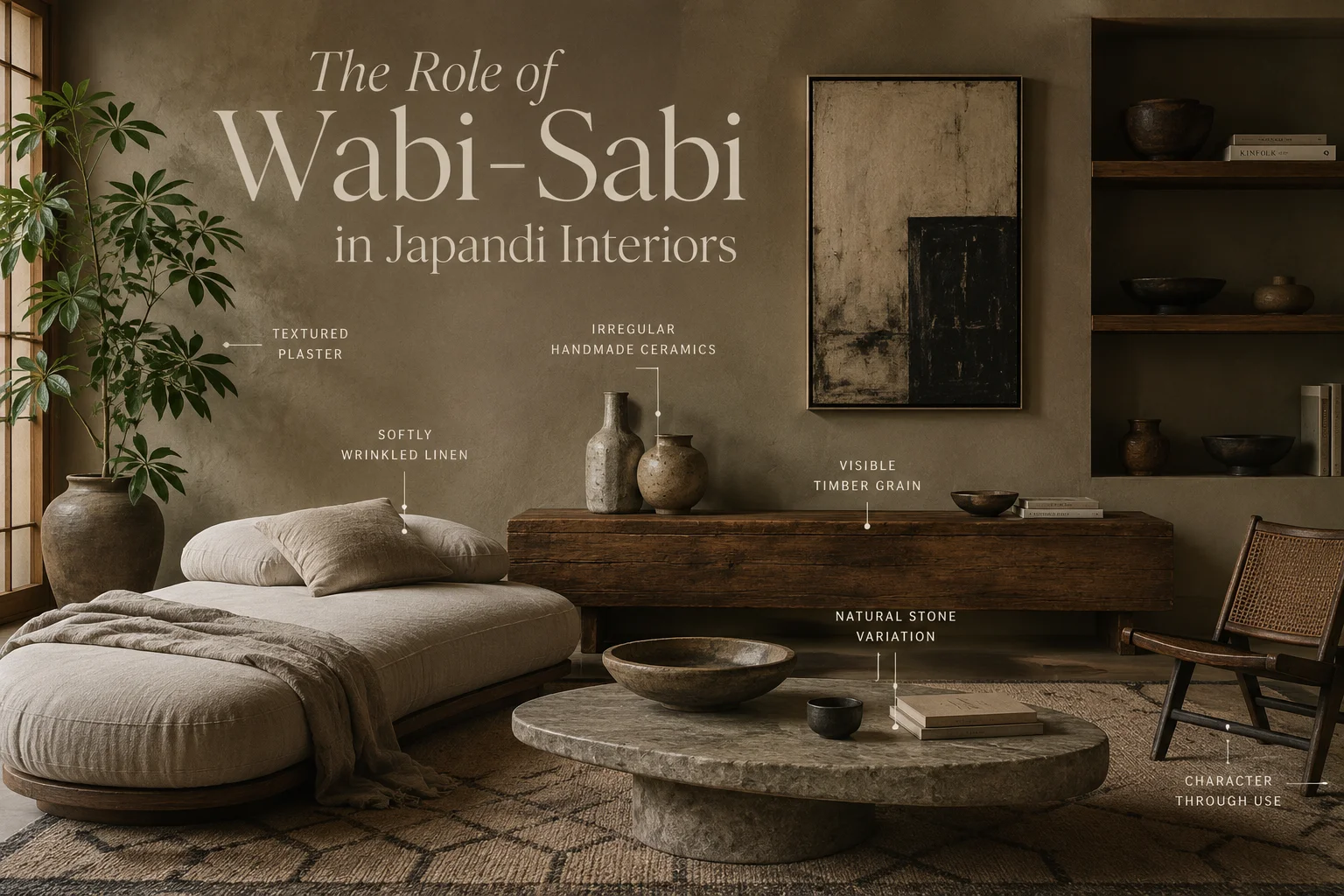
Within a contemporary interior, this might translate into:
- irregular handmade ceramics;
- visible timber grain;
- natural stone variation;
- textured plaster;
- softly wrinkled linen; and
- objects that develop character through use.
The objective is not to deliberately make a home appear unfinished or weathered. Instead, materials are allowed to look natural rather than artificially perfect.
Common Japandi Decorating Mistakes
Making Everything Beige
A completely beige room can quickly become flat.
Introduce tonal variation through wood, stone, textiles, darker accents and greenery.
Removing Too Much
Japandi is restrained, but a home should still feel personal and comfortable.
Books, artwork, ceramics and meaningful objects can remain as long as they are displayed thoughtfully.
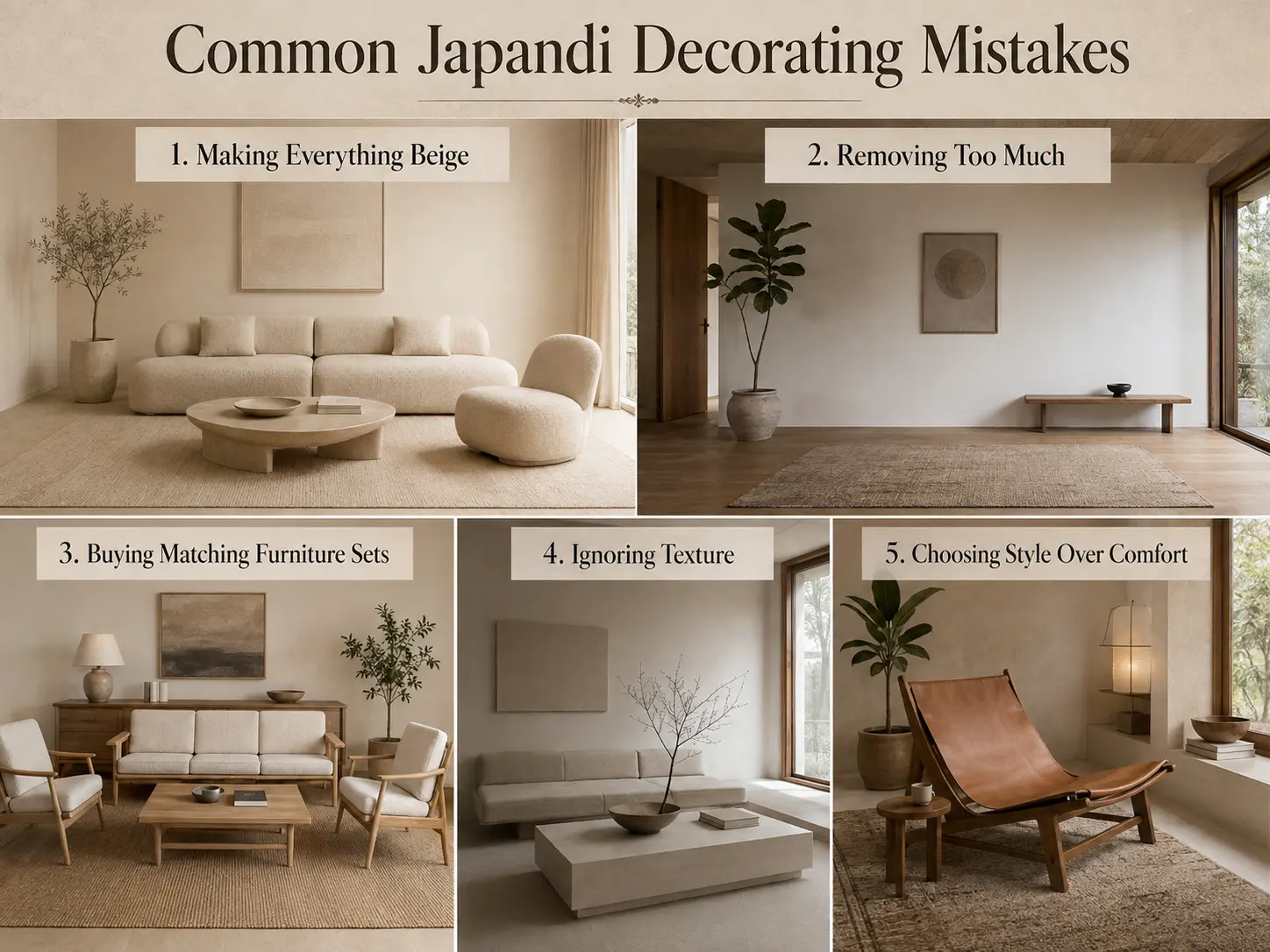
Buying Matching Furniture Sets
Perfectly matching furniture can make an interior feel more like a showroom than an evolved home.
Combine compatible materials and silhouettes rather than purchasing every item from the same collection.
Ignoring Texture
A neutral palette requires material variation. Without it, the room may feel unfinished.
Choosing Style Over Comfort
A low-profile chair may look beautiful but still needs to be comfortable enough for its intended use.
Function should remain one of the guiding principles of Japandi.
Shop the Look: Japandi Interior Design
You do not need to replace every item in your home to introduce Japandi style. Concentrate on a few foundational pieces that improve both function and visual calm.
- Textured neutral sofa: Choose linen-look, wool-blend or softly woven upholstery.
- Solid wood coffee table: Look for oak, ash, walnut or other naturally finished timber.
- Wool or natural-fiber rug: Use subtle texture instead of busy pattern.
- Sculptural lounge chair: Introduce a contrasting shape without excessive ornamentation.
- Paper, ceramic or timber lighting: Choose simple fixtures that create warm, diffused light.
- Handcrafted ceramics: Select a few substantial objects instead of numerous small accessories.
- Linen curtains: Use softly filtered window treatments in natural neutral tones.
- Minimal timber storage: Closed cabinetry helps control everyday visual clutter.
Style Variations: Different Ways to Use Japandi
Japandi does not have to look identical from one home to another. The same underlying principles can support several distinct interpretations.
Classic Japandi
Warm neutrals, light and dark timber, understated furniture, natural fabrics and handcrafted ceramics create the most recognizable version of Japandi.
Modern Japandi
Cleaner architecture, sculptural furniture and contemporary lighting create a sharper interpretation while maintaining warmth and natural materials.
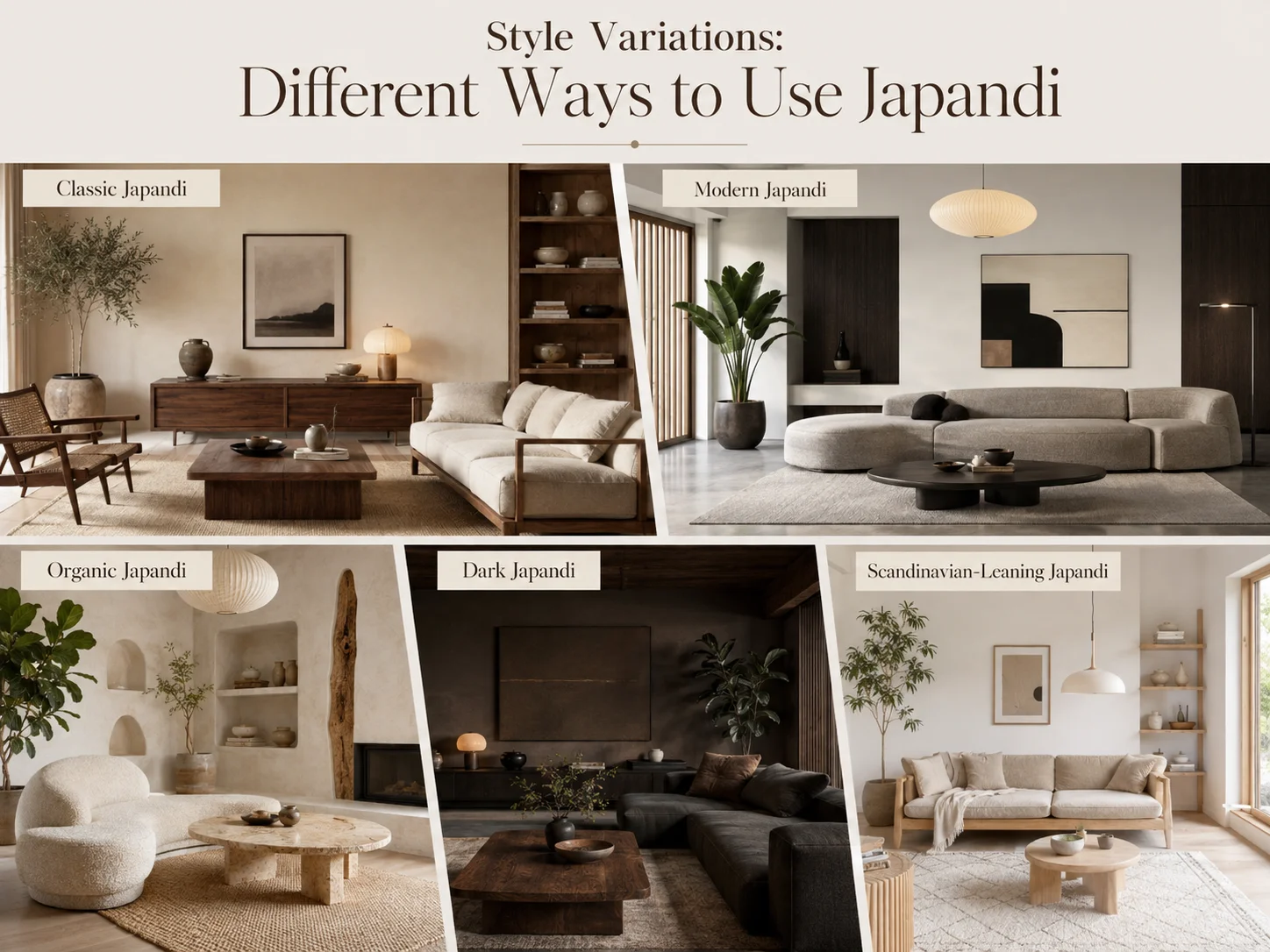
Organic Japandi
Curved furniture, textured plaster, stone, irregular timber and increased greenery emphasize natural form and tactile surfaces.
Dark Japandi
Walnut, smoked timber, charcoal, deep brown and earthy walls create a moodier version of the style while restrained styling keeps the room calm.
Scandinavian-Leaning Japandi
Paler timber, brighter walls, softer textiles and a lighter overall palette move the interior closer to Scandinavian design while Japanese influences remain visible through simplicity and restrained decoration.
How to Start Creating a Japandi Home
You do not need to redesign an entire home at once.
Begin by assessing what already works and removing objects that create unnecessary clutter.
Then establish a restrained palette of:
- one dominant neutral;
- one or two natural wood tones;
- a grounding darker shade; and
- one optional muted accent.
Prioritize the largest functional furniture first. Once the layout is established, add textiles, lighting and storage.
Finish with a relatively small collection of artwork, ceramics, books and greenery.
The process should feel gradual. Japandi interiors often become more convincing when objects are selected over time rather than purchased as a complete decorative package.
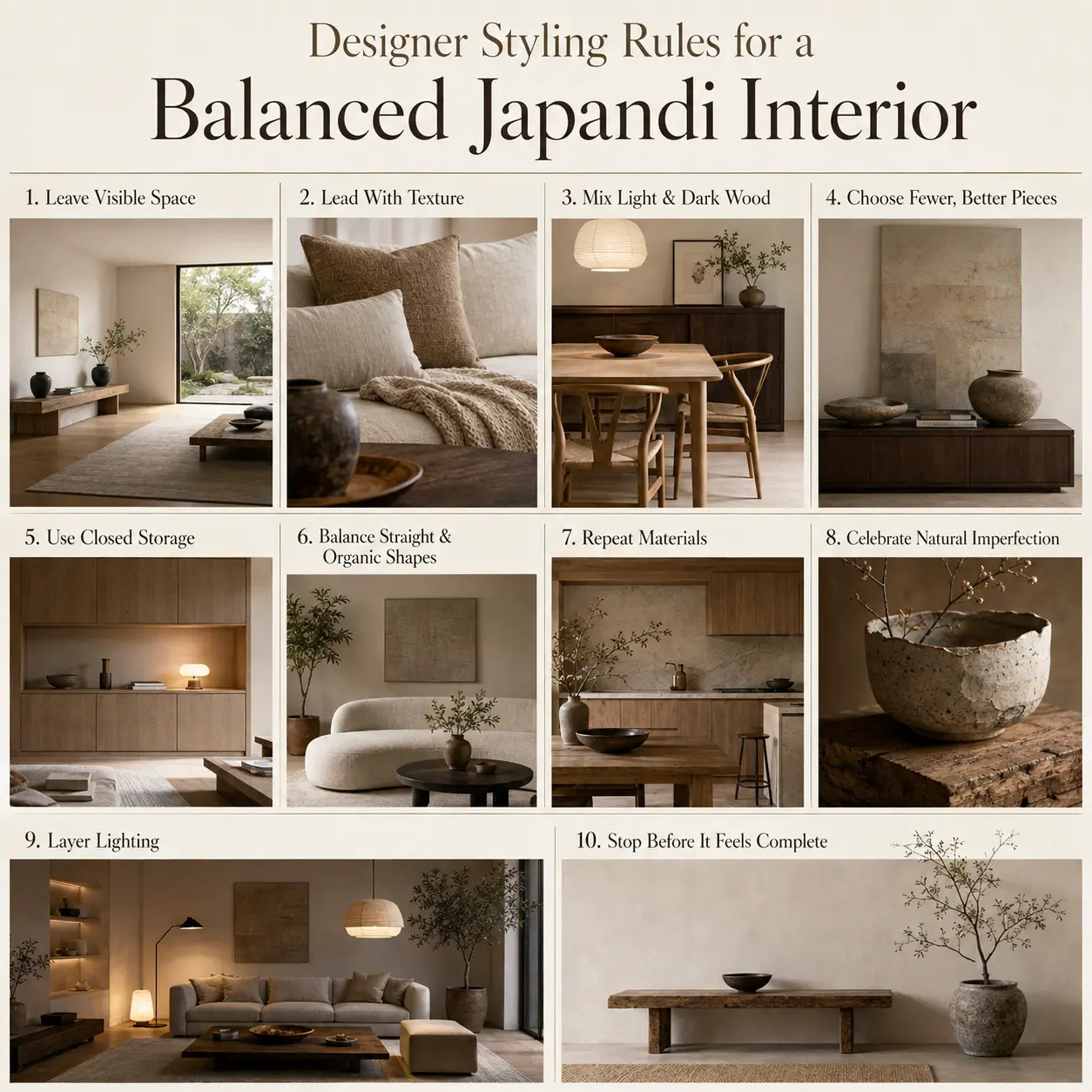
Designer Styling Rules for a Balanced Japandi Interior
- Leave visible space around important furniture and decorative objects.
- Use texture to create interest before introducing additional color.
- Mix light and dark wood deliberately rather than trying to match every finish.
- Choose fewer decorative pieces but increase their scale or craftsmanship.
- Use closed storage to control everyday clutter.
- Balance straight architectural lines with occasional organic curves.
- Repeat materials in several locations to make the room feel cohesive.
- Allow natural materials to show grain, texture and subtle imperfection.
- Layer lighting rather than relying entirely on ceiling fixtures.
- Stop decorating before every surface feels complete.
Is Japandi Interior Design Timeless?
Japandi has become widely recognized as a contemporary interior style, but many of the ideas behind it are not dependent on short-lived decorating trends.
Natural timber, useful furniture, handcrafted objects, functional layouts and restrained palettes have remained relevant across many different periods of interior design.
This makes Japandi particularly suitable for homeowners who prefer interiors that can evolve gradually.
Instead of building the room around fashionable accessories, invest in strong foundational materials and furniture. Smaller elements such as artwork, cushions and decorative objects can then change over time without requiring the entire room to be redesigned.
Japandi Interior Design Frequently Asked Questions
What is Japandi interior design?
Japandi interior design combines influences from Japanese and Scandinavian design. It emphasizes simplicity, functionality, natural materials, craftsmanship, warm neutral colors and carefully edited decoration.
What colors are used in Japandi interiors?
Common Japandi colors include warm white, beige, stone, taupe, greige, brown, charcoal, muted green and earthy clay tones. Natural timber provides much of the palette.
What is the difference between Japandi and Scandinavian design?
Both favor simplicity and functional furniture, but Scandinavian interiors often use lighter colors, pale woods and a brighter atmosphere. Japandi typically introduces earthier colors, stronger dark accents, handcrafted textures and greater emphasis on negative space.
Is Japandi the same as minimalism?
No. Japandi incorporates minimalist principles but usually feels warmer and more tactile because of its emphasis on timber, natural textiles, ceramics, craftsmanship and imperfect materials.
What materials are commonly used in Japandi interiors?
Common materials include oak, ash, walnut, stone, linen, cotton, wool, clay, ceramics, rattan and paper. Textured plaster and other mineral-inspired finishes are also frequently used.
How do you make a home look Japandi?
Start with a warm neutral palette, simple functional furniture and natural materials. Reduce unnecessary clutter, introduce layered lighting and complete the room with a limited number of ceramics, artwork, plants and handcrafted objects.
Final Thoughts
Japandi interior design demonstrates that minimal interiors do not need to feel empty or impersonal.
By combining functional Scandinavian design with Japanese-inspired restraint, craftsmanship and appreciation of natural materials, Japandi creates homes that feel both sophisticated and comfortable.
The key is not to reproduce a specific aesthetic formula. Instead, focus on the underlying principles: choose useful furniture, prioritize natural materials, control visual clutter, appreciate texture and craftsmanship, and allow enough space for individual pieces to be noticed.
When those principles guide the room, Japandi becomes more than a decorating trend. It becomes a practical approach to creating a calmer, warmer and more intentional home.