A beautiful bedroom should do more than look inviting in photographs. It should make everyday routines easier, provide comfortable places to sleep and unwind, and create a sense of calm without sacrificing personal style.
Yet bedroom design can be surprisingly challenging. A bed that looks perfect in a showroom may overwhelm a small room. An attractive paint color can appear entirely different under artificial lighting. A carefully decorated space can still feel uncomfortable if there is not enough room to walk around the furniture, open drawers or reach a bedside table.
The secret to successful bedroom design is to make decisions in the right order. Begin with the room’s dimensions and practical needs, establish a functional layout, choose appropriately scaled furniture, and then develop the color, lighting, textiles and decorative details.
In this complete bedroom design guide, we will explore how to plan a bedroom from the ground up, including furniture placement, bed sizes, recommended clearances, color schemes, layered lighting, storage, window treatments and finishing touches.
Whether you are designing a compact apartment bedroom, refreshing your primary bedroom or furnishing a guest room, these principles will help you create a space that feels comfortable, balanced and distinctly yours.
Understand the Basics of Bedroom Design
Bedroom interior design is the process of arranging furniture, lighting, colors, materials and storage to create a space that supports comfortable sleeping, dressing and relaxation.
Unlike a living room, which often needs to accommodate entertaining, conversation and several activities at once, a bedroom usually has one clear priority: rest. However, many bedrooms also need to function as dressing rooms, reading spaces or occasional home offices.

A successful design balances five essential elements:
- Function: The room supports everyday activities without awkward movement or unnecessary obstacles.
- Layout: The bed, storage furniture and circulation paths work together.
- Comfort: The mattress, bedding, lighting, acoustics and temperature suit the people using the room.
- Visual balance: Furniture, colors, textures and decorative features feel appropriately proportioned.
- Personality: Artwork, meaningful objects and selected design details reflect individual taste.
The strongest bedroom interiors combine these qualities rather than prioritizing decoration at the expense of function.
If you are new to planning interiors, begin with our interior design fundamentals to understand scale, proportion, balance, rhythm and visual harmony.
How to Plan the Best Bedroom Layout
Bedroom layout is the foundation of the entire design. Before buying furniture or deciding on a decorating style, establish where the major pieces can fit and how people will move through the room.
Measure the Bedroom First
Start with a simple floor plan showing the length and width of the room. Mark windows, doors, closets, radiators, heating and cooling vents, electrical outlets and other fixed architectural features.
Record the door swings and the direction in which closet doors open. A furniture arrangement that appears spacious on paper can become unusable when a door collides with a dresser or nightstand.
Also measure any ceiling slopes, alcoves and architectural projections that reduce usable furniture space.

Choose the Best Position for the Bed
In many rectangular bedrooms, placing the headboard against a substantial uninterrupted wall provides the most balanced arrangement.
This often allows bedside tables on both sides and makes the bed a natural focal point when entering the room.
However, the longest wall is not automatically the best choice. Window placement, closet access, door swings and circulation should determine the final position.
Consider these practical guidelines:
- Position the bed where it can be accessed comfortably.
- Avoid blocking windows, closet doors or major circulation routes.
- Allow access to both sides when two people regularly share the bed, where space permits.
- Check that nearby heating outlets and ventilation pathways remain unobstructed.
- Keep electrical cords and bedside lighting connections organized and safely routed.
Designer tip: Before committing to a layout, mark the bed’s dimensions on the floor with painter’s tape. Walk around the outline and open nearby doors to test whether the arrangement feels practical.
Recommended Bedroom Furniture Clearances
The following measurements are useful residential planning targets, not universal building-code requirements. Accessible routes and local regulations may require more space.
| Location | Planning Target | Why It Matters |
|---|---|---|
| Accessible sides of bed | 24–36 inches | Comfortable access and bed making |
| Foot of bed to opposite wall | 30–36 inches when possible | Easy movement around the bed |
| In front of dresser drawers | 36–42 inches | Room to open drawers and stand |
| Main walking route | About 36 inches where feasible | Comfortable everyday circulation |
| In front of a sliding closet | 24–30 inches or more | Closet access without a door swing |
Compact bedrooms may require tighter arrangements, but reducing clearance around functional furniture should be a deliberate choice rather than an accidental consequence of oversized pieces.
Adapt the Layout to the Room Shape
Rectangular bedroom: Position the bed against an appropriate uninterrupted wall and use the remaining length for a dresser, wardrobe or compact seating area.
Square bedroom: A centered bed and two nightstands can create a symmetrical arrangement. Use different furniture heights and textures to prevent it from feeling rigid.
Narrow bedroom: Choose a slimmer bed frame, wall-mounted bedside lighting and shallow storage. If a bed must sit against one wall, consider how access and bed making will work.
Bedroom with multiple windows: Select a headboard wall that preserves natural light and avoids obstructing windows. Low furniture can sometimes sit beneath a window when ventilation and safety considerations allow.
Choose the Right Bedroom Furniture and Sizes
The bed is usually the largest and most important piece of furniture in a bedroom. Its dimensions influence almost every subsequent decision, from the rug and nightstands to the remaining circulation space.
Standard US Mattress Dimensions
| Mattress Size | Dimensions | Typical Use |
|---|---|---|
| Twin | 38 × 75 inches | Children’s rooms and compact single bedrooms |
| Twin XL | 38 × 80 inches | Taller single sleepers and some guest rooms |
| Full | 54 × 75 inches | Single adults and smaller bedrooms |
| Queen | 60 × 80 inches | Many primary and shared bedrooms |
| King | 76 × 80 inches | Spacious bedrooms and couples wanting more width |
| California King | 72 × 84 inches | Longer sleeping surfaces in suitably sized rooms |
These dimensions describe common US mattresses rather than the complete bed frame. Upholstered frames, platform edges and substantial headboards can increase the overall footprint.
Always use the manufacturer’s external furniture measurements when testing a floor plan.

Select the Bed Frame
Low platform beds work well in contemporary, minimalist and small bedrooms. Upholstered frames add softness, while timber frames introduce natural warmth and visible texture.
A tall headboard can provide a strong architectural focal point, particularly in a room with generous ceiling height. In a compact room, a visually lighter headboard may make the space feel more open.
Consider the practical details too: mattress support, frame durability, ease of cleaning, under-bed access and the height at which you comfortably sit and stand.
Choose Nightstands That Fit
Nightstands should relate to both the bed and the available floor space.
A bedside table with a top close to the mattress height is generally convenient for reaching a lamp, glass of water or book.
In small bedrooms, narrow nightstands, wall-mounted shelves or floating drawers can provide essential surfaces without consuming unnecessary floor area.
Matching nightstands create symmetry, but they are not required. Two different pieces can look cohesive when their heights, proportions or materials relate to one another.
Add Dressers, Benches and Seating Carefully
A dresser should offer useful storage without restricting walking space. Where space is limited, a tall chest may be more suitable than a wide dresser.
An upholstered bench at the foot of the bed can be attractive and practical, but only if enough clearance remains for comfortable circulation.
A reading chair is best treated as an optional feature. In a small bedroom, preserving open floor space is often more valuable than adding seating that rarely gets used.
Anchor appropriate freestanding storage furniture to the wall using suitable anti-tip hardware, particularly in homes with children.
How to Create a Beautiful Bedroom Color Scheme
Bedroom colors influence how the room feels, how furniture and artwork relate to one another, and how natural and artificial light interact with the space.
There is no single color that guarantees relaxation. Instead, choose a palette that suits your preferences, available light, architectural details and desired atmosphere.
Popular Bedroom Color Palettes
Warm neutrals: Cream, ivory, taupe, sand and warm gray create a versatile foundation. Layering different textures prevents a neutral bedroom from feeling flat.
Soft greens: Sage, eucalyptus and muted olive combine beautifully with timber furniture, woven materials and understated brass finishes.
Muted blues: Dusty blue, blue-gray and slate offer a quieter interpretation of blue than highly saturated tones.
Earthy colors: Terracotta, clay, caramel and warm brown produce an inviting atmosphere, particularly when combined with off-white bedding.
Deep, enveloping tones: Charcoal, midnight blue, burgundy and dark olive can create a dramatic bedroom. Balance these colors with considered lighting, texture and sufficient visual contrast.

Use a Balanced Color Distribution
A simple starting framework is to dedicate approximately 60% of the visible design to a dominant color, 30% to a supporting color and 10% to accents.
For example, a bedroom might combine warm white walls, oak furniture and sage bedding with smaller touches of aged brass or dark bronze.
The 60–30–10 principle is a decorating guideline rather than a strict mathematical rule. A successful monochromatic bedroom may rely on material contrast instead of several distinct colors.
Test Paint in Different Lighting Conditions
Paint colors can change significantly between morning daylight, afternoon shade and evening artificial lighting.
Apply sample colors to test boards or suitably prepared wall areas and observe them at different times of day.
Consider the undertones of existing flooring and furniture. Warm timber flooring may make a cool gray appear more blue, while creamy upholstery can look yellow beside certain bright whites.
Designer tip: Choose the main wall color after identifying major fixed finishes, but before purchasing every decorative accessory. It is easier to coordinate cushions with a room than to redesign an entire palette around one cushion.
How to Plan Layered Bedroom Lighting
Bedroom lighting should support different activities throughout the day: getting dressed in the morning, reading in the evening and moving safely through the room at night.
One central ceiling fixture rarely performs all these functions equally well.
Ambient Lighting
Ambient lighting provides the room’s general illumination. Ceiling fixtures, flush mounts, recessed lights and carefully selected pendants can all contribute.
Choose fixtures that distribute light comfortably rather than creating glare when you are lying in bed.
Dimmable lighting is particularly valuable because the brightness needed for cleaning or organizing a wardrobe is usually different from the brightness desired before bedtime.

Task Lighting
Task lighting supports activities such as reading, applying makeup or selecting clothes.
Bedside table lamps, adjustable wall sconces and directional reading lights can illuminate a particular area without flooding the whole bedroom with bright light.
Wall-mounted bedside lights are especially useful when nightstand surfaces are narrow.
Place switches where they can be reached conveniently, and avoid directing exposed bright bulbs toward the pillows.
Accent Lighting
Accent lighting adds visual depth. Examples include subtle headboard lighting, concealed illumination around shelving, picture lights and understated architectural lighting.
Not every bedroom needs elaborate decorative lighting. A thoughtfully positioned pair of lamps may provide a more comfortable result than several competing fixtures.
Choose Appropriate Light Color
For a warm residential atmosphere, bulbs around 2700K are a useful starting point, with 3000K sometimes appropriate for general lighting depending on the room and personal preference.
Color temperature alone does not determine whether lighting is restful. Brightness, glare, timing and exposure also matter.
During the evening, use lower-intensity, warmer lighting rather than keeping bright overhead fixtures on until bedtime.
For nighttime movement, a low-level night light or motion-activated pathway light can provide visibility without requiring the main lighting system.
Research summarized by the Sleep Foundation explains how evening light exposure can affect circadian rhythms and why reducing unwanted bedroom light can support a better sleep environment.
Choose Bedroom Rugs and Flooring
Rugs soften the visual appearance of a bedroom, add texture and provide a comfortable surface underfoot.
They also help visually connect the bed, nightstands and surrounding furniture into one deliberate composition.
How Large Should a Bedroom Rug Be?
As a general decorating target, a rug that extends roughly 18–24 inches beyond the accessible sides of the bed can create a balanced appearance. More generous extensions work in larger rooms.
An 8 × 10-foot rug is a common starting point for a queen bed, while a 9 × 12-foot rug can work beneath a king bed when the room is sufficiently spacious.
These are not fixed rules. The final choice depends on the bed frame, orientation of the rug, room dimensions and furniture placement.
One effective arrangement places the rug beneath the lower two-thirds of the bed, leaving the headboard and sometimes the nightstands off the rug.
Alternatively, in a large bedroom, a generously sized rug can accommodate the bed and adjoining furniture.

Select Materials Based on Use
Wool provides warmth and natural texture. Low-pile rugs are relatively easy to maintain and can be suitable for rooms with frequent movement.
Flatwoven options create a lighter appearance, while plush rugs provide softness but may require more careful maintenance.
Use an appropriate rug pad to reduce movement and protect the flooring. Avoid loose edges that could become tripping hazards.
Design Bedroom Window Treatments
Bedroom window treatments must balance aesthetics with privacy, daylight control and nighttime comfort.
The best choice depends on the room’s orientation, nearby buildings, outside lighting and how much natural light you prefer in the morning.
Choose Curtains, Shades or Blinds
Blackout curtains: Useful for bedrooms affected by streetlights or early morning sunlight. Pay attention to gaps at the edges and top, as these can allow significant light leakage.
Roller shades: Provide a relatively discreet appearance and can be paired with decorative curtains.
Roman shades: Offer a tailored fabric treatment that works well in traditional, transitional and contemporary interiors.
Sheer curtains: Soften daylight and offer some daytime screening, but typically provide limited nighttime privacy when interior lights are on.

Layer Window Treatments
Combining a practical blackout shade with softer curtain panels can provide both effective light control and a more finished appearance.
Where appropriate, mounting curtains above the window frame can emphasize ceiling height. Extend the rod beyond the window when space permits, allowing panels to stack away from the glass.
Always measure the actual window, surrounding wall space and mounting requirements before ordering treatments.
In homes with children, choose cordless or otherwise compliant window coverings and follow manufacturer safety guidance.
How to Plan Smart Bedroom Storage
A visually calm bedroom becomes easier to maintain when everyday belongings have practical, accessible storage locations.
Start by identifying what must be stored inside the room: clothing, bedding, shoes, books, accessories, electronics and occasional-use items.
Use Closed Storage Strategically
Closed wardrobes, dressers and bedside drawers reduce the amount of visual clutter. They are particularly effective in small bedrooms where many exposed objects can make the room feel crowded.
Combine hanging storage with drawers and adjustable shelving to suit the belongings you actually own.

Make Use of Under-Bed Space
Under-bed drawers, lifting storage beds and shallow storage containers can accommodate additional bedding and seasonal items.
Check the clearance and operating mechanism before buying. Storage beds with lifting platforms also require sufficient access around the bed to operate safely.
Think Vertically
Tall wardrobes and carefully placed shelves can increase storage without expanding the furniture footprint.
However, avoid filling every wall with cabinetry. Leaving some walls visually open helps preserve a sense of balance.
Designer tip: Prioritize concealed storage for frequently used everyday belongings before adding decorative baskets, trays and display shelving.
How to Style a Bedroom With Bedding, Artwork and Decor
Once the layout, furniture and lighting are established, decorative layers give the bedroom its character.
These elements should work with the larger composition rather than distract from it.
Layer Bedding for Comfort and Texture
Begin with comfortable sheets, pillows and a duvet or comforter suited to your climate and personal preferences.
Introduce visual depth through complementary materials such as cotton, linen, velvet or wool. For example, crisp white bedding can be paired with a woven coverlet and a muted accent throw.
You do not need a large collection of decorative pillows. A smaller, carefully chosen arrangement is easier to maintain and often feels more relaxed.

Choose Artwork That Relates to the Bed
Artwork above a headboard should feel connected to the bed rather than floating independently on the wall.
As a starting point, a single large artwork or coordinated arrangement spanning approximately half to two-thirds of the headboard width can create an attractive proportion.
Adjust the scale according to the artwork’s shape, surrounding wall space and headboard height.
Hang artwork securely using hardware appropriate for the wall construction, and avoid placing heavy or fragile unsecured objects where they could fall onto the bed.
Introduce Materials and Personal Details
Timber, woven fibers, ceramics, upholstered surfaces and carefully selected metal finishes can create a layered interior without requiring a complicated color scheme.
A photograph, favorite book, handmade object or meaningful piece of art makes a bedroom feel more personal than a collection of unrelated decorations.
If the room receives sufficient natural light, one well-positioned indoor plant can add color and shape. Select plants according to actual lighting conditions and household safety needs.
Explore Popular Bedroom Interior Design Styles
Different interior design styles offer different approaches to furniture, color and decoration, but the underlying requirements for comfort and usability remain the same.
Modern Bedroom
Use clean furniture silhouettes, a controlled palette, functional storage and a combination of architectural and decorative lighting.
Introduce interest through wood grain, upholstery, artwork or an expressive headboard rather than excessive ornament.
Scandinavian Bedroom
Combine light timber, warm whites, natural fibers and practical furniture. Layer blankets, rugs and soft lighting to create warmth without clutter.
Japandi Bedroom
Blend Japanese-inspired restraint with Scandinavian comfort through low-profile furniture, muted colors, natural materials and carefully edited accessories.
Organic Modern Bedroom
Choose softened modern furniture, warm timber, tactile fabrics, gentle curves and an earthy palette. Balance simple forms with contrasting textures.
Contemporary Bedroom
Build the design around a refined bed frame, substantial materials, clean storage and elegant lighting. A sculptural pendant or oversized artwork can provide a focal point.
Learn more about the broader approach in our contemporary interior design guide.
Traditional or Transitional Bedroom
Use upholstered headboards, paneled furniture, tailored window treatments and classic details. Transitional bedrooms can balance traditional proportions with simplified contemporary finishes.
Bohemian or Eclectic Bedroom
Mix textiles, collected artwork, vintage furniture and expressive colors. Repeat selected colors and materials to keep the overall composition cohesive.
Key principle: A bedroom does not need to follow one interior design style perfectly. Combining complementary elements can produce a more personal, enduring space.
Bedroom Design Ideas for Different Room Sizes
Bedroom size influences furniture selection, but it does not determine whether a room can feel beautiful and comfortable.
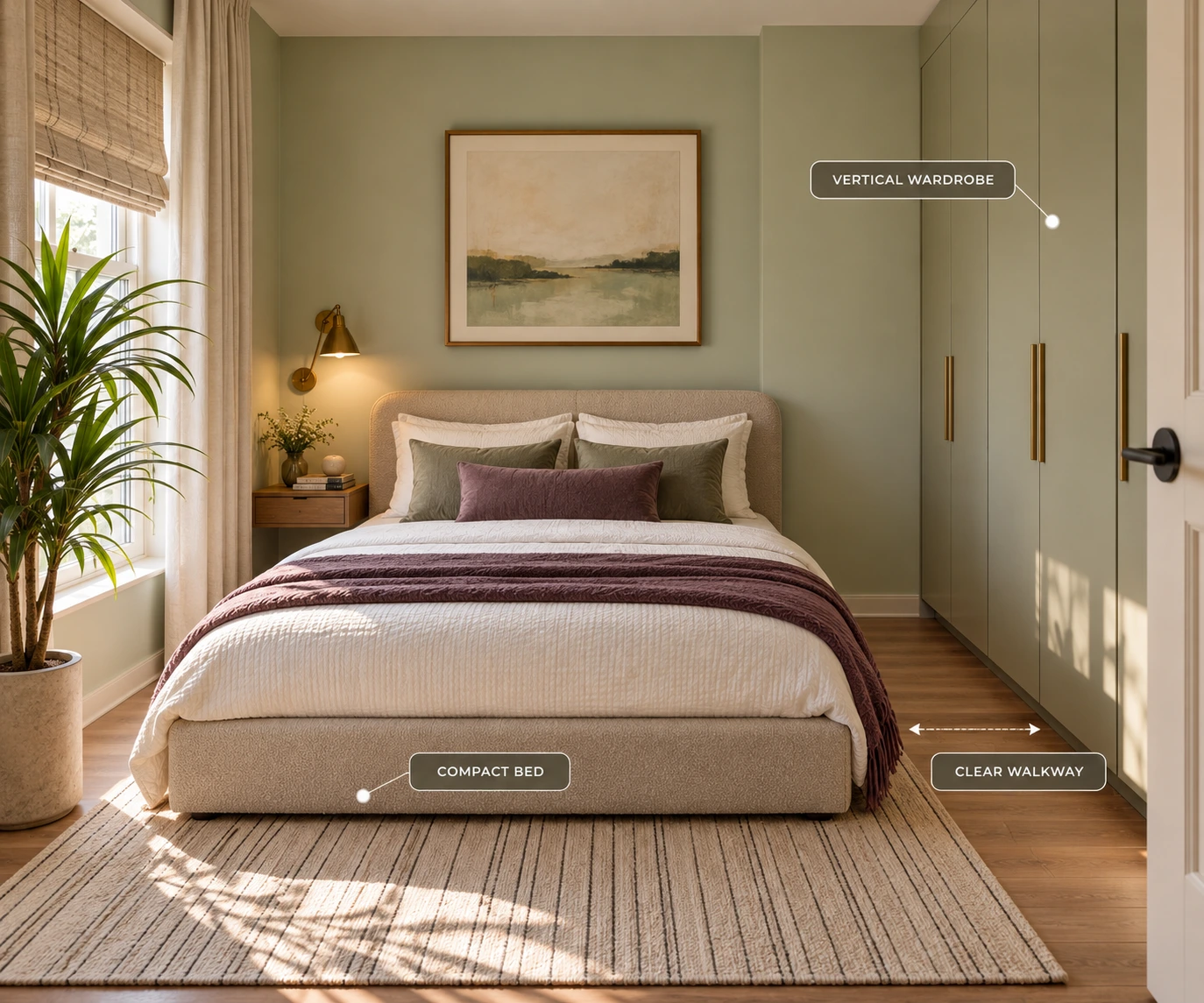
Small Bedrooms
In compact bedrooms, the priority is preserving usable circulation and providing storage without overwhelming the room.
Choose a bed size that suits the occupants and available space, use slim furniture, consider wall-mounted lighting and reduce unnecessary decorative pieces.
A simple design with appropriate proportions will often feel more spacious than one filled with miniature furniture and numerous accessories.
Medium-Sized Bedrooms
Medium bedrooms often provide sufficient room for a queen bed, two modest nightstands and a dresser, depending on the actual footprint and door positions.
Focus on balancing the wall containing the bed with the surrounding furniture. A substantial rug, coordinated lighting and thoughtfully chosen curtains can establish a polished interior.
Large Primary Bedrooms
Large bedrooms can accommodate additional functions, such as a reading chair, dressing area or small seating group.
Rather than distributing furniture randomly around the perimeter, create meaningful zones and preserve clear routes between them.
A rug can help visually anchor the bed, while a separate chair and floor lamp can establish a comfortable reading corner.
Remember that floor area alone is not enough to determine furniture fit. A 12 × 12-foot bedroom and a 9 × 16-foot bedroom have the same area but very different layout possibilities.
How to Design a Bedroom on Different Budgets
A successful bedroom does not require replacing every piece of furniture at once.
Start by identifying what already works. Reusing a suitable bed frame, dresser or bedside table can free up money for improvements that have a greater effect on comfort and function.
Budget Refresh
- Rearrange existing furniture to improve circulation.
- Remove unnecessary items and organize visible storage.
- Refresh bedding using a coordinated palette.
- Replace unsuitable lampshades or lighting where appropriate.
- Paint the walls if a new color will meaningfully improve the room.

Mid-Range Bedroom Makeover
Focus spending on the pieces that influence daily use: a comfortable mattress, an appropriately scaled bed frame, reliable storage and effective window treatments.
Complete the design with a substantial rug, bedside lighting and a small number of meaningful decorative elements.
Higher-Budget Bedroom Design
Consider custom wardrobes, high-quality upholstery, architectural lighting, upgraded window treatments and built-in furniture only after the room’s layout has been resolved.
Custom cabinetry can improve difficult storage configurations, but it should be designed around measured belongings, doors, ventilation and long-term usability.
Common Bedroom Design Mistakes to Avoid
Choosing a Bed That Is Too Large
A large bed may feel luxurious but can make the entire bedroom awkward if it leaves insufficient access to storage or circulation.
Better approach: Test the full frame dimensions and clearances before purchasing.
Ignoring the Furniture Layout
Buying a dresser, bench or chair without considering door swings and walking routes often results in unnecessary crowding.
Better approach: Work from a measured floor plan before selecting additional furniture.
Relying on One Bright Ceiling Light
A single overhead fixture can produce harsh illumination and offers limited flexibility for different activities.
Better approach: Combine general illumination with bedside task lighting and dimmer evening light.
Using an Undersized Rug
A rug that barely extends beyond the bed can appear disconnected from the furniture arrangement.
Better approach: Select the rug after confirming the bed size, orientation and available floor space.
Overlooking Storage
Attractive furniture alone will not create a calm room when everyday belongings have no practical storage location.
Better approach: Plan wardrobe, dresser and bedside storage before decorating shelves and surfaces.
Following Trends Without Considering Comfort
A dramatic design choice can be appealing in photographs yet difficult to live with if the lighting is uncomfortable, materials are impractical or maintenance is excessive.
Better approach: Invest in dependable fundamentals and introduce trends through more easily replaceable decorative elements.
Step-by-Step Bedroom Design Checklist
Use this sequence when decorating a bedroom from scratch or planning a substantial makeover.
- Define the room’s purpose. Decide whether it needs to support sleeping, dressing, reading, working or additional storage.
- Measure the entire room. Record wall lengths, doors, windows and fixed features.
- Choose a suitable bed size. Compare mattress and frame dimensions with available floor space.
- Establish the layout. Place the bed first and protect circulation and storage access.
- Select essential furniture. Add nightstands, dressers and wardrobes according to practical needs.
- Develop a color palette. Coordinate the walls with flooring, furniture and major textiles.
- Plan the lighting. Combine ambient light, task lighting and comfortable evening illumination.
- Choose window treatments. Address privacy, daylight, glare and nighttime darkness.
- Add an appropriately sized rug. Check its relationship to the bed and surrounding furniture.
- Organize storage. Give frequently used belongings accessible places.
- Layer bedding and textiles. Introduce softness, warmth and controlled material contrast.
- Install artwork and decor. Use appropriately sized pieces that support the overall design.
- Evaluate the bedroom in daily use. Walk through the space, open storage and test lighting at different times.
- Edit the final arrangement. Remove unnecessary pieces and adjust details that interfere with comfort or usability.

Designing in this order reduces expensive purchasing mistakes and makes it easier to create a room that feels cohesive from the beginning.
Bedroom Essentials: Shop the Look
If you are furnishing a bedroom from scratch, prioritize the following foundational items before purchasing additional decorative accessories.
| Category | What to Look For |
|---|---|
| Bed and mattress | Comfortable, supportive and appropriately sized |
| Bed frame | Durable construction and proportionate headboard |
| Nightstands | Convenient height, usable surfaces and storage |
| Dresser or wardrobe | Enough capacity without blocking circulation |
| Bedroom rug | Appropriate size, comfortable texture and secure placement |
| Bedside lighting | Low-glare, accessible and suitable for reading |
| Window treatments | Privacy and adjustable natural light control |
| Bedding | Comfortable fabrics and climate-appropriate layers |
| Artwork | Meaningful, appropriately scaled and securely mounted |
| Decor | A small selection of complementary personal objects |

Shopping principle: Spend first on items that affect sleep quality, furniture usability and daily comfort. A cohesive bedroom is created through good planning, not the quantity of accessories.
Frequently Asked Questions About Bedroom Design
What is the best way to design a bedroom?
Start by measuring the room and selecting a suitable bed size. Establish a layout that preserves circulation and storage access, then choose appropriately scaled furniture. Complete the design with a coordinated color palette, layered lighting, practical window treatments and carefully selected decor.
Where should a bed be placed in a bedroom?
In many bedrooms, placing the headboard against a substantial uninterrupted wall creates a balanced arrangement. However, the final position should account for windows, doors, closets, electrical outlets and the clearance needed to move comfortably around the bed.
What colors work best in a bedroom?
Warm neutrals, muted blues, sage greens and earthy colors are versatile choices. Deeper tones can also create a comfortable, enveloping atmosphere. The best palette depends on natural light, personal taste, existing materials and the mood you want to establish.
How much space should be left around a bed?
Where feasible, aim for approximately 24–36 inches along accessible sides and around 30–36 inches at the foot of the bed. More room may be necessary in front of dressers and closets. Treat these as planning guidelines and confirm any applicable accessibility or building requirements.
What lighting is best for a bedroom?
A layered arrangement usually works best: general ceiling lighting, focused bedside task lighting and softer evening illumination. Dimmers and warm, low-glare light sources help adapt the room to different activities.
How can I make a small bedroom look bigger?
Choose furniture that fits the available dimensions, protect clear walking routes and limit unnecessary pieces. Wall-mounted lighting, well-organized storage, an appropriately sized rug and a cohesive palette can make a compact bedroom feel more open.
How do I make my bedroom look professionally designed?
Prioritize proportion, visual balance and repetition. Use an appropriately scaled bed, coordinate the main furniture pieces, select a rug that anchors the arrangement and layer lighting and textiles. Finish with a few meaningful accessories rather than decorating every available surface.
Final Thoughts: Create a Bedroom That Looks Beautiful and Lives Comfortably
The most successful bedrooms are not necessarily the largest, most expensive or most elaborately decorated. They are the rooms where furniture fits naturally, movement feels easy, storage supports daily routines and the visual atmosphere suits the people who use the space.
Start with the layout. Choose a bed that fits comfortably, protect circulation and establish useful storage. Build a coordinated palette, layer the lighting and introduce texture through rugs, curtains, upholstery and bedding.
Finally, add artwork and personal details that make the room feel like your own.
A thoughtfully designed bedroom should feel just as good to live in as it looks in a photograph.
For more inspiration on creating cohesive interiors throughout the home, explore our complete living room design guide and continue developing your understanding of interior design basics.
References and Further Reading
The bedroom planning recommendations in this guide combine practical interior design principles with general furniture-sizing conventions. Clearance measurements are planning suggestions, not substitutes for local building or accessibility requirements.