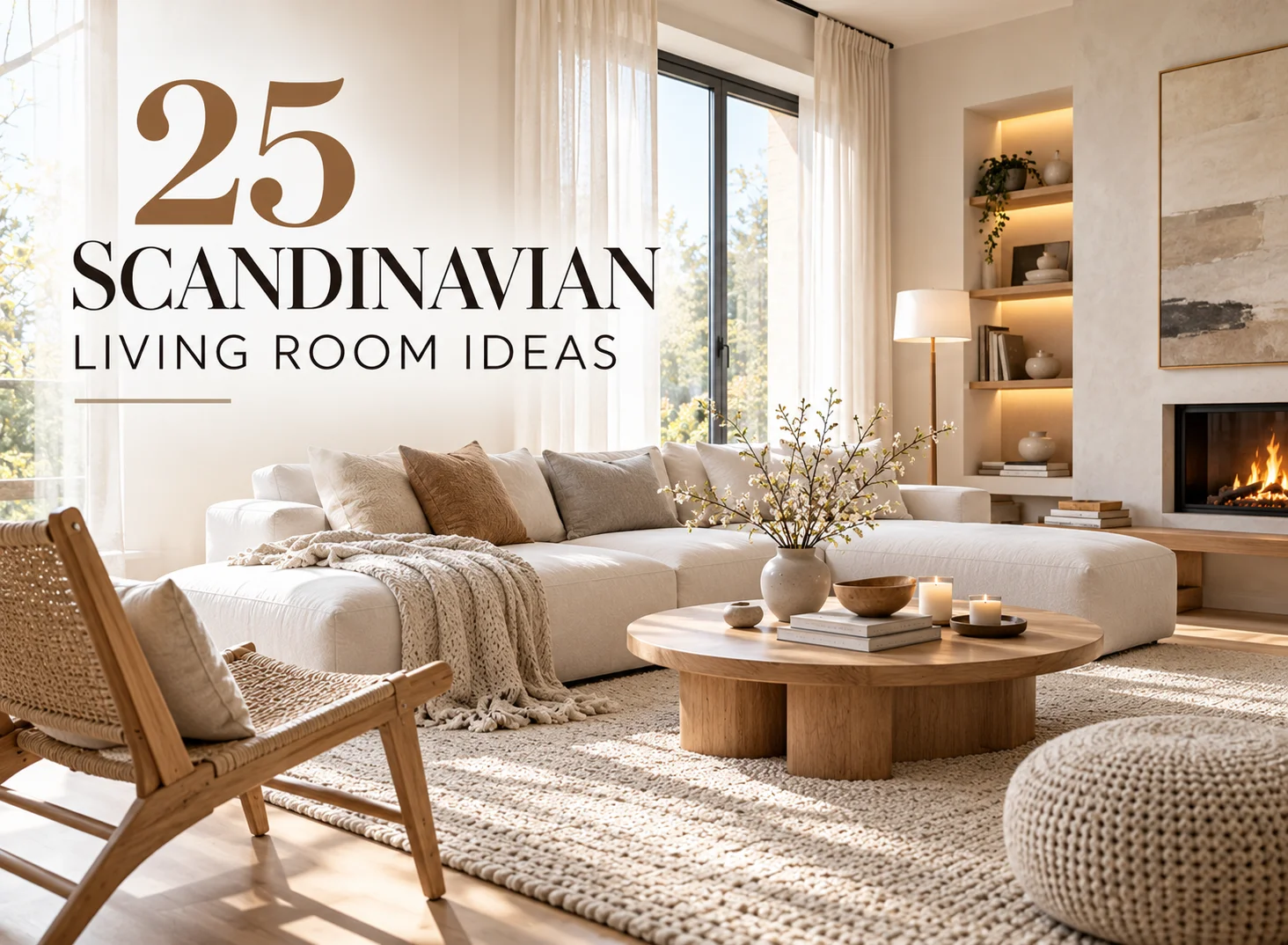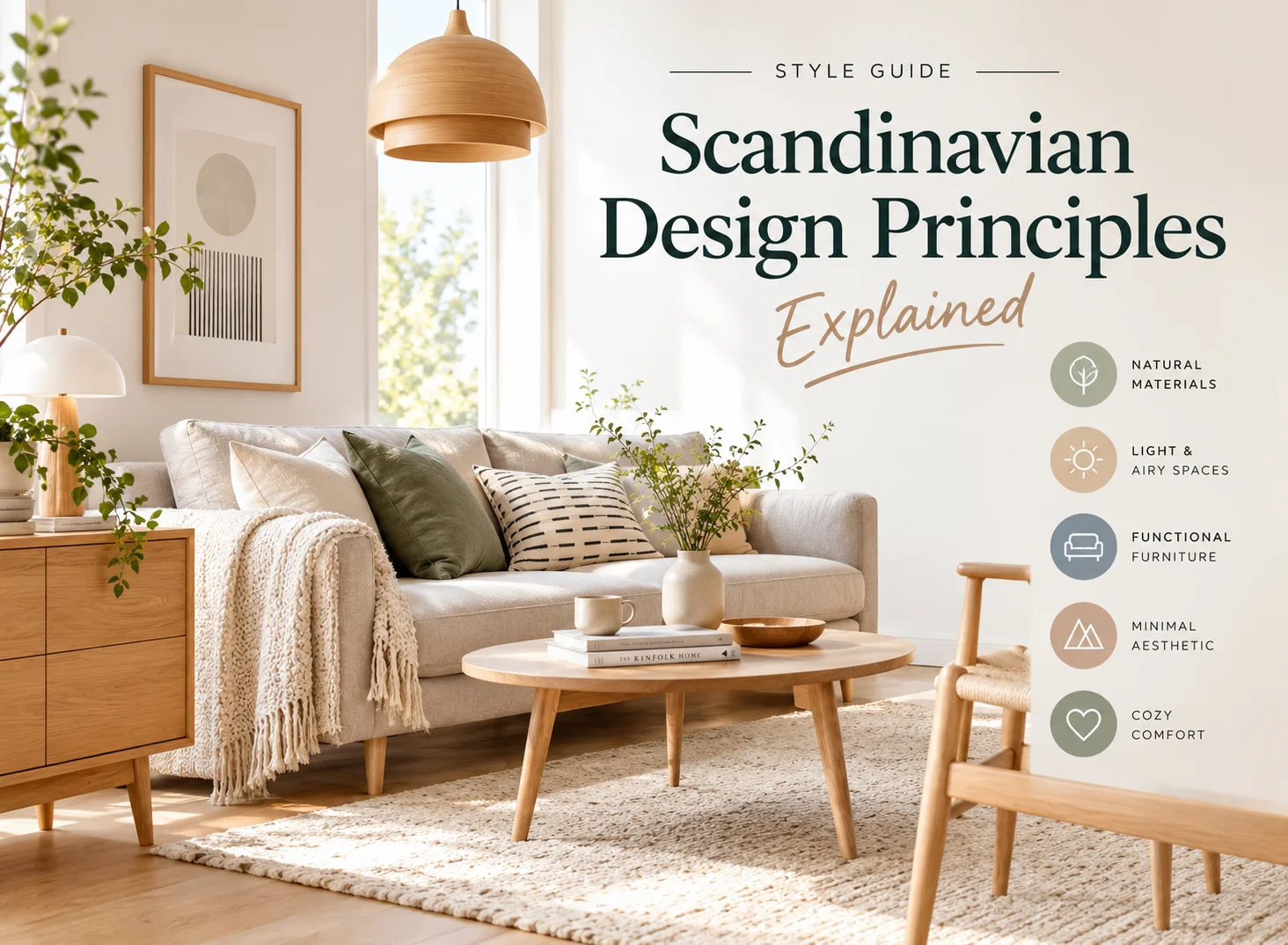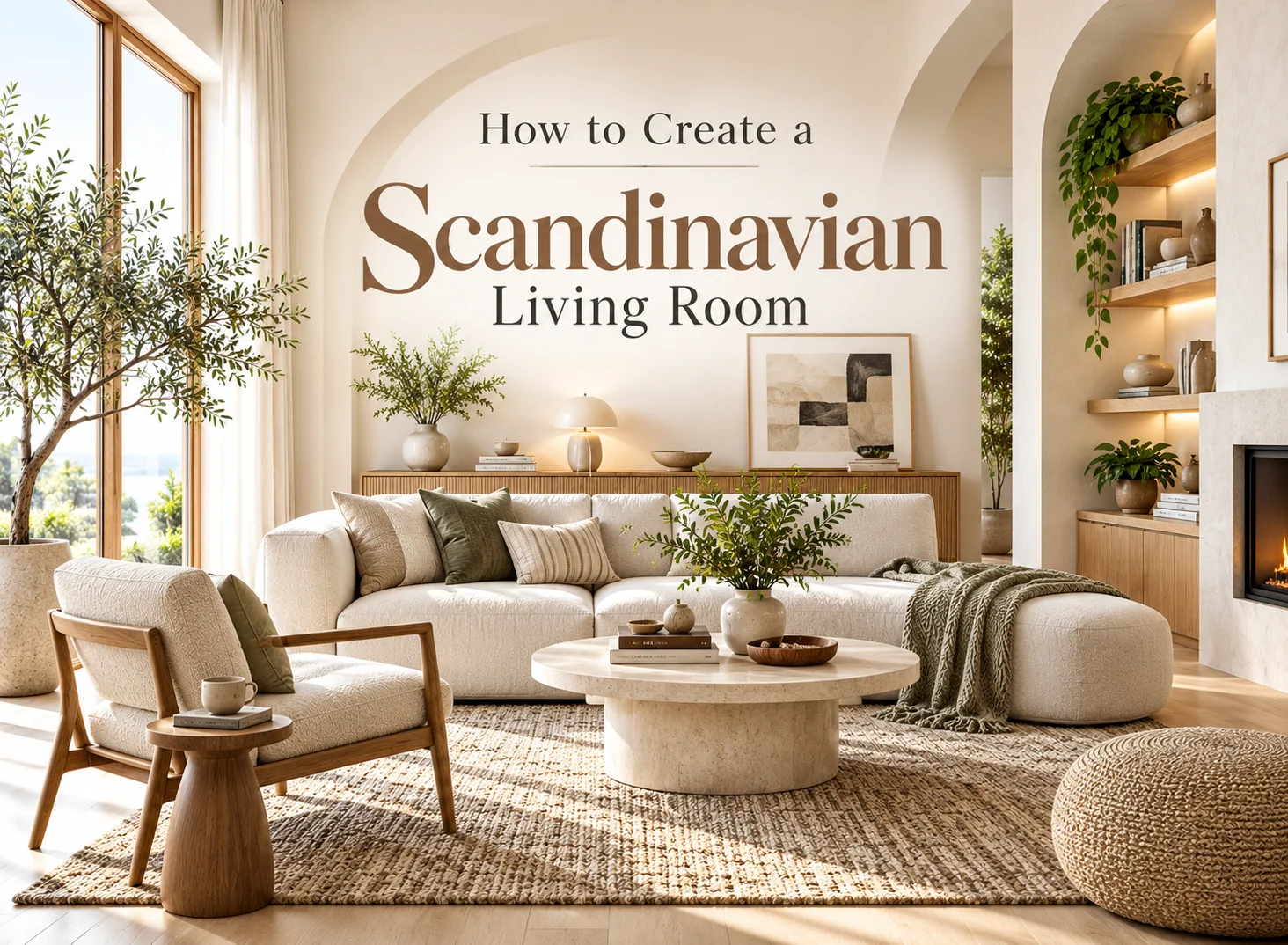
Creating a Scandinavian living room is less about filling your home with recognizable Nordic furniture and more about making a series of thoughtful design decisions in the right order. Start with function and layout, establish a light but warm foundation, choose comfortable furniture with simple proportions, introduce natural materials and then build coziness through textiles, lighting and a limited number of meaningful accessories.
The result should feel bright, comfortable and uncluttered without becoming cold or overly minimal. Scandinavian design works particularly well in living rooms because it balances visual simplicity with the practical requirements of everyday life.
If you want a deeper introduction to the furniture, colors, materials and defining characteristics of the aesthetic, read our Scandinavian Living Room Style Guide. This guide focuses specifically on how to put those elements together step by step.
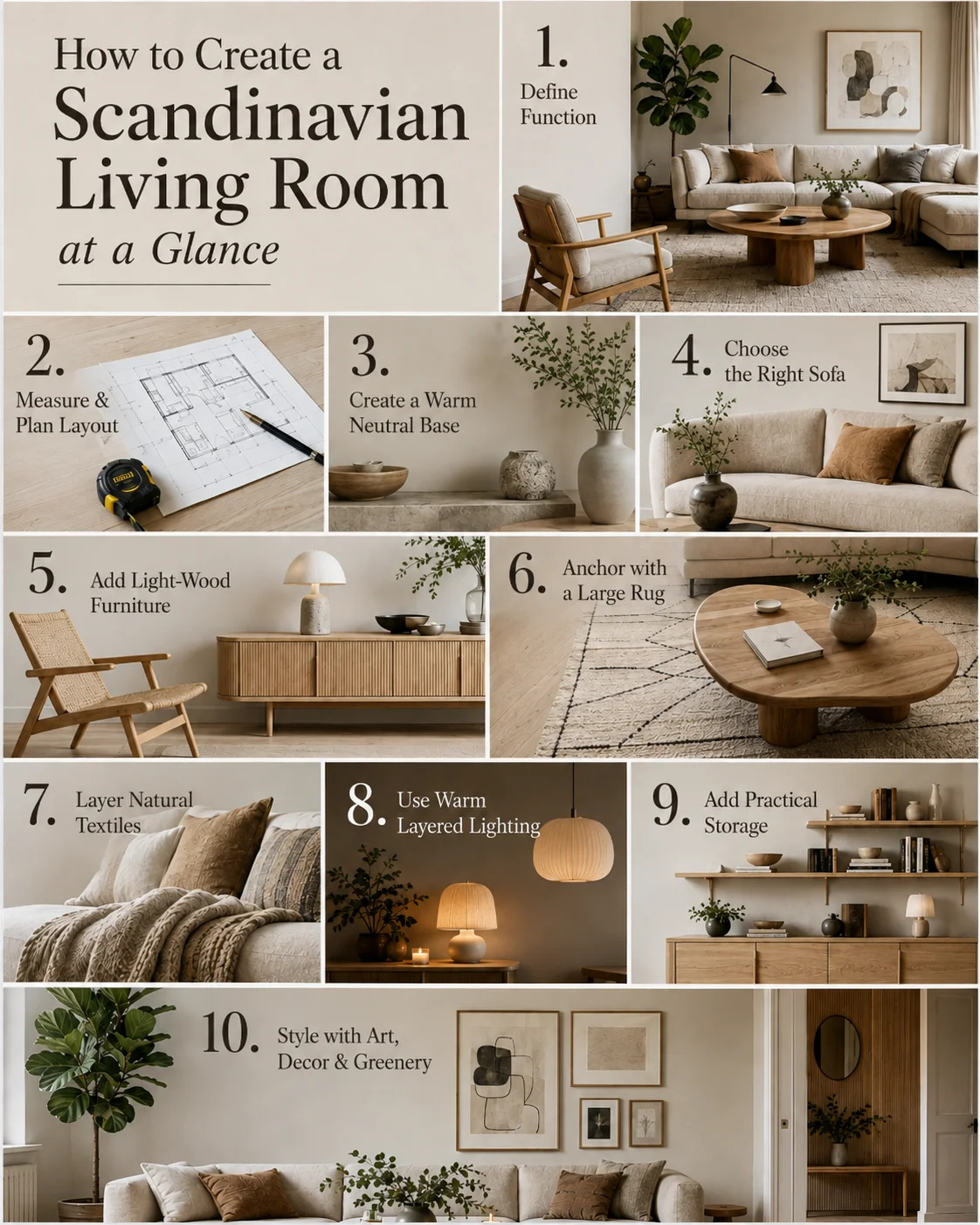
How to Create a Scandinavian Living Room at a Glance
For a successful Scandinavian living room, follow this order:
- Define how the living room needs to function.
- Measure the room and plan the furniture layout.
- Create a light, warm neutral color foundation.
- Choose a comfortable, appropriately scaled sofa.
- Add simple light-wood furniture.
- Anchor the seating area with a generously sized rug.
- Layer natural textiles and tactile materials.
- Create warm, layered lighting.
- Add practical storage and control visual clutter.
- Finish with restrained artwork, accessories and greenery.
The order matters. Choosing decorative accessories before solving the room’s layout, furniture scale and lighting usually makes the decorating process more difficult and can lead to unnecessary purchases.
Step 1: Decide How Your Living Room Needs to Function
Begin with everyday life rather than aesthetics. Scandinavian design has a strong relationship with functionality, so the room should work comfortably before it looks finished.
Consider what actually happens in your living room. Is it primarily a space for conversation, family television time, reading, entertaining or a combination of several activities? Do you need toy storage, additional seating, a home-working corner or space for children to move freely?
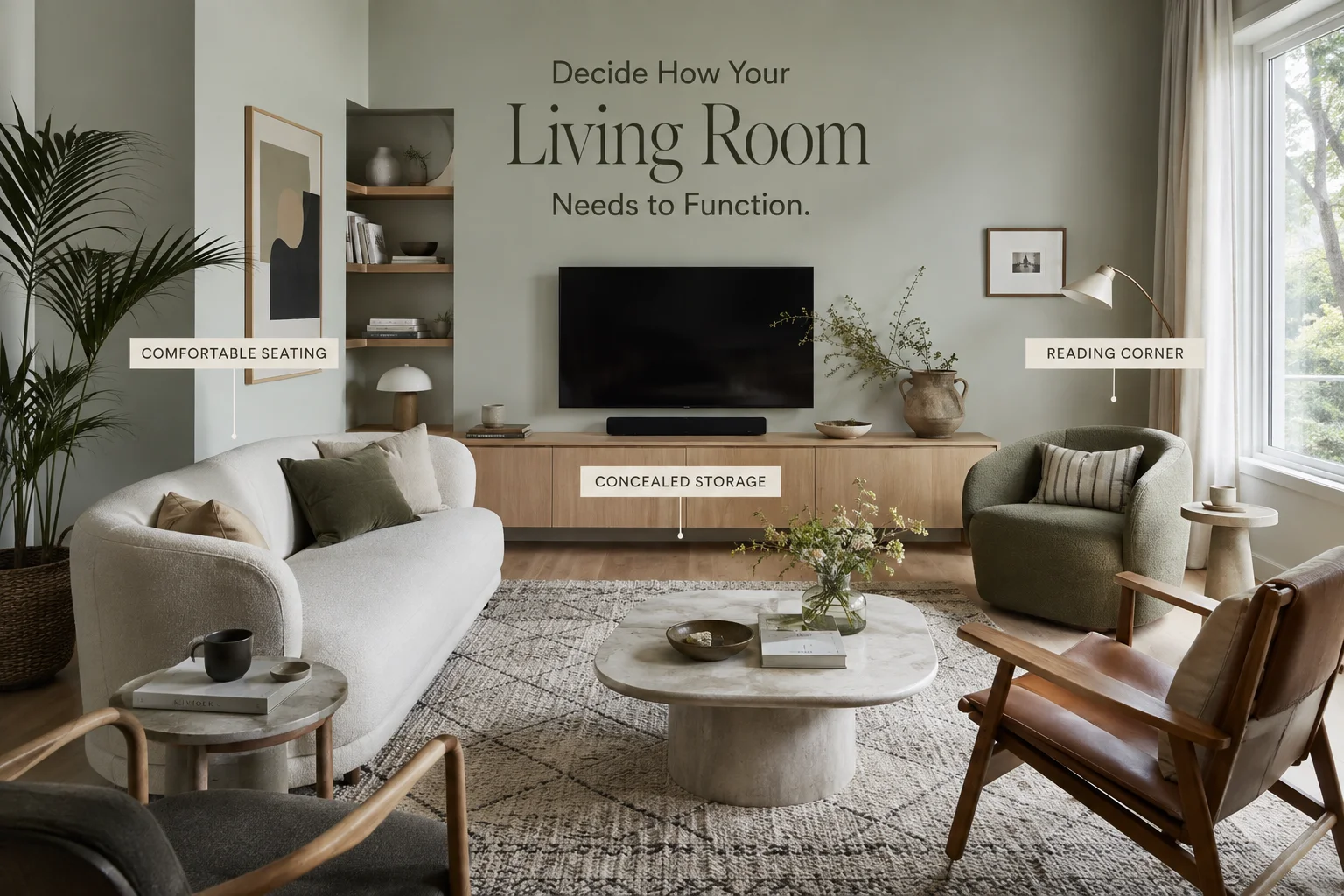
Write down your three most important requirements before buying furniture. For example:
- comfortable seating for four people;
- concealed storage for media equipment;
- a reading chair beside the window.
This simple exercise prevents you from designing a beautiful room that does not support the way you actually live.
Designer Tip: Scandinavian rooms often appear effortless because unnecessary furniture has been removed. Give every substantial piece a clear purpose before allowing it into the layout.
Step 2: Measure the Room and Plan the Layout
Next, measure the living room before selecting your sofa, rug or coffee table. Record the length of each wall and note windows, doors, radiators, fireplaces, electrical outlets and major circulation routes.
Then establish the main seating zone.
The sofa will usually become the largest visual element, but it should not automatically be pushed against the longest wall. Depending on the room, floating the sofa slightly away from the wall can produce a more intentional conversation area.
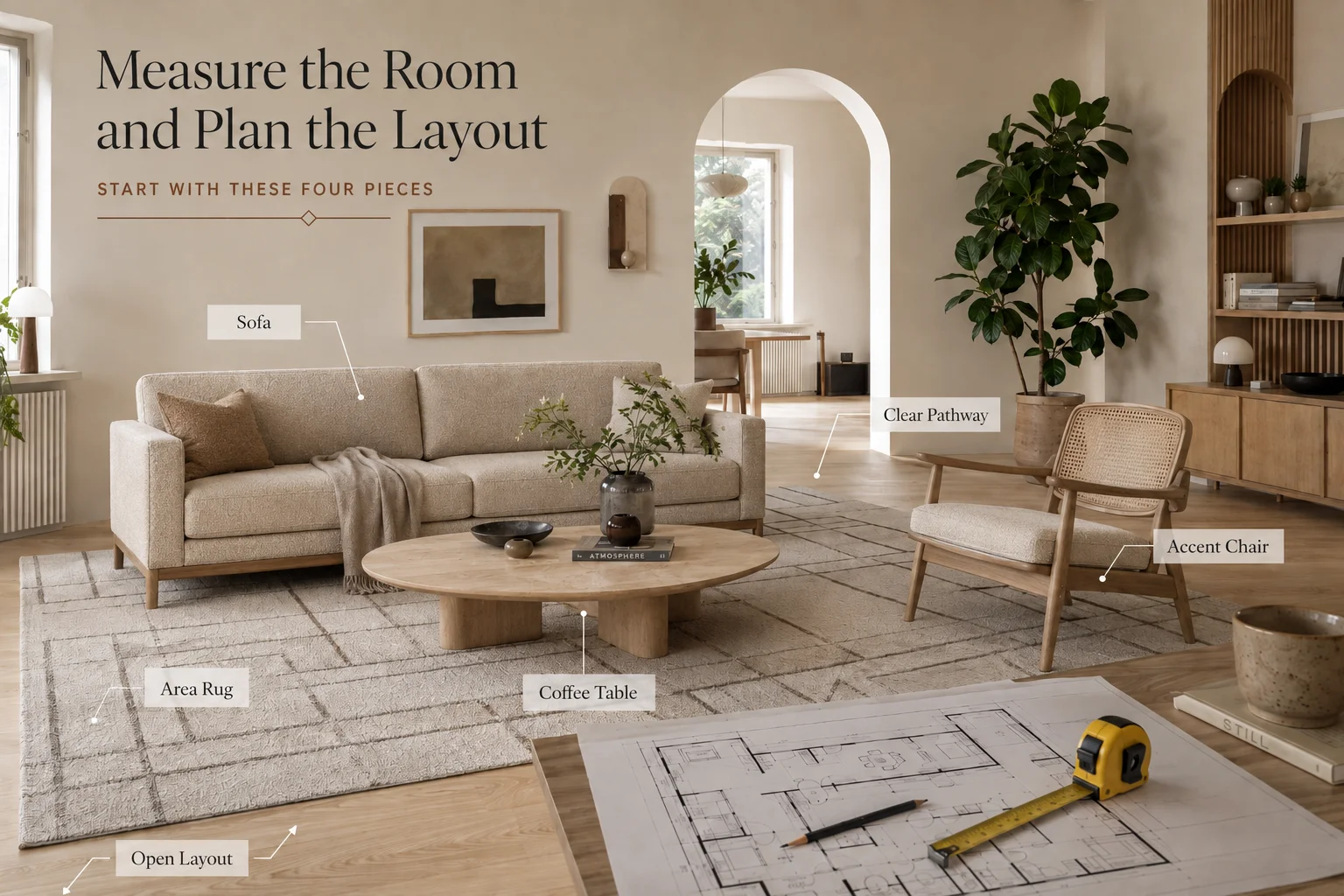
Arrange chairs so people can comfortably face one another, keep clear pathways between entrances and avoid placing tall or bulky furniture where it blocks natural light.
A Scandinavian layout should feel open rather than empty. Negative space is useful when it improves circulation or gives important furniture room to breathe.
Start with These Four Pieces
- Sofa
- Area rug
- Coffee table
- Primary accent chair
Once those elements work together proportionally, introduce side tables, storage and smaller furniture only where needed.
Step 3: Establish a Warm, Light Color Foundation
Scandinavian living rooms are strongly associated with light interiors, but pure white on every surface can quickly make the room feel sterile.
Instead, build a warm neutral foundation using colors such as warm white, soft ivory, cream, pale beige, oatmeal or light greige. Then allow timber, textiles, artwork and smaller decorative pieces to introduce additional color.
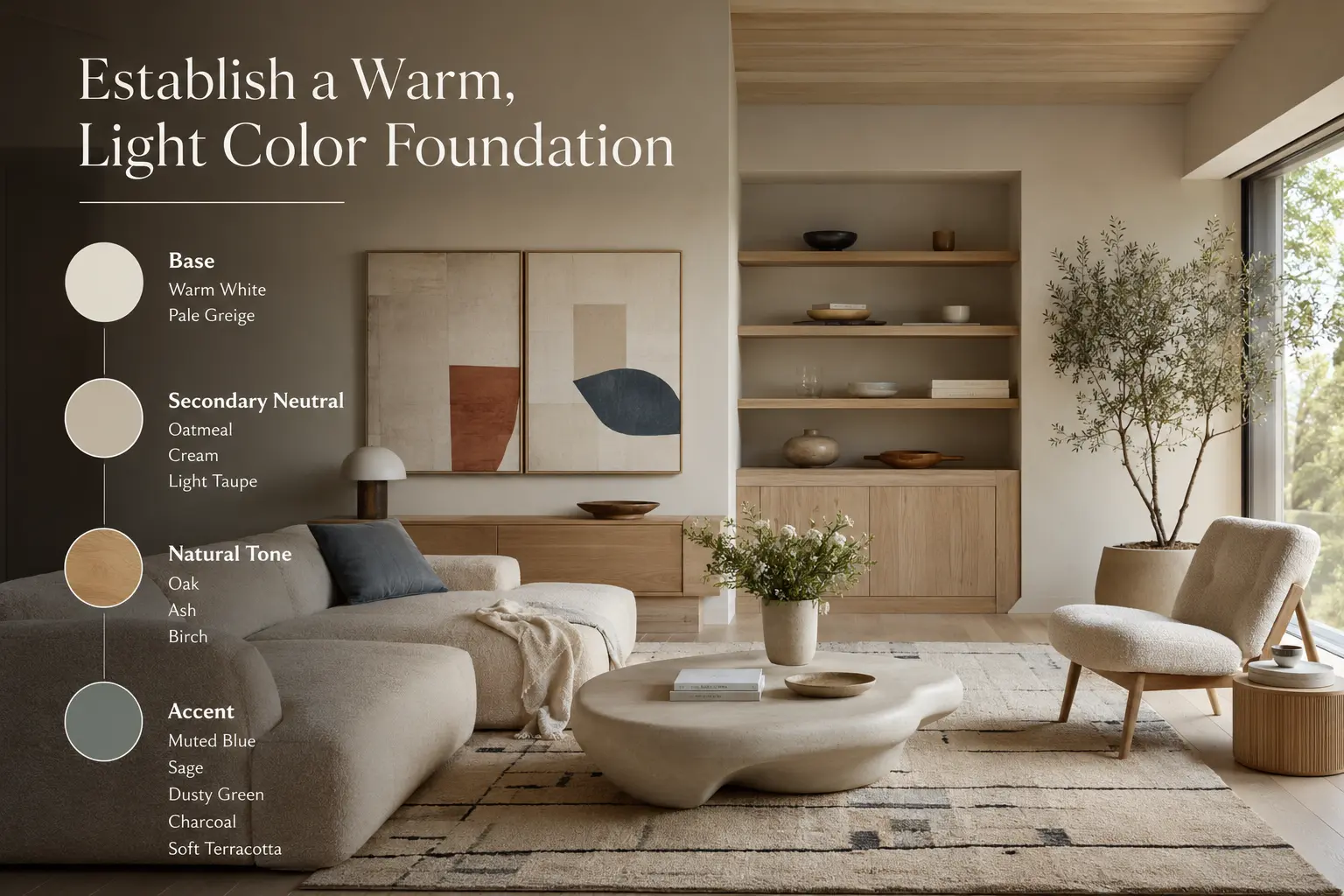
A simple working palette might include:
- Base: warm white or pale greige;
- Secondary neutral: oatmeal, cream or light taupe;
- Natural tone: oak, ash or birch;
- Accent: muted blue, sage, dusty green, charcoal or soft terracotta.
You do not need to use every color equally. Keep the largest surfaces visually quiet and introduce stronger tones in smaller amounts.
For a more detailed breakdown of suitable shades and combinations, see the color section in our Scandinavian Living Room Style Guide.
Step 4: Choose the Sofa Before Smaller Furniture
The sofa influences the scale, comfort and visual weight of almost everything else in the living room, so choose it before shopping for occasional tables and decorative pieces.
Look for a sofa with relatively straightforward proportions rather than an oversized or heavily embellished silhouette. Neutral linen-look fabrics, wool blends and textured woven upholstery work particularly well.
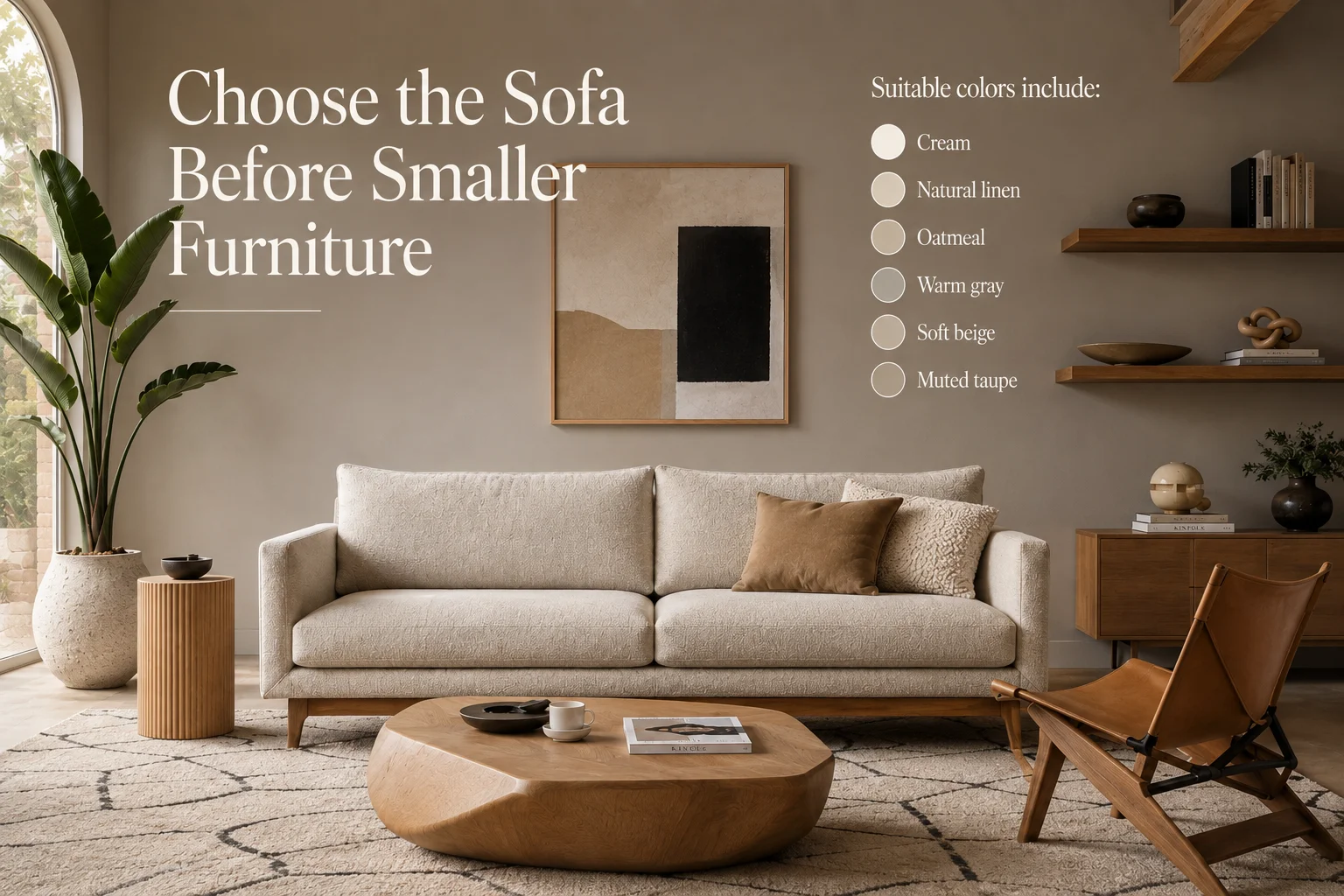
Suitable colors include:
- cream;
- natural linen;
- oatmeal;
- warm gray;
- soft beige;
- muted taupe.
Exposed timber legs can visually lighten a sofa, although contemporary Scandinavian rooms can also accommodate low-profile upholstered bases when the overall composition remains balanced.
Most importantly, prioritize comfort. Scandinavian interiors are meant to support daily living, not simply photograph well.
Spend Here: If your budget is limited, the sofa is one of the better places to prioritize durability and comfort because it will influence your experience of the room every day.
Step 5: Introduce Light Wood and Simple Furniture Forms
Once the sofa is established, introduce timber through the coffee table, lounge chair, media console, shelving or side tables.
Light and medium-light woods—including natural oak, ash, beech and birch—work especially well because their visible grain adds warmth without making the room visually heavy.
You do not need every wooden item to match perfectly. Slight variations often make a room feel more natural. What matters is keeping the undertones reasonably compatible.
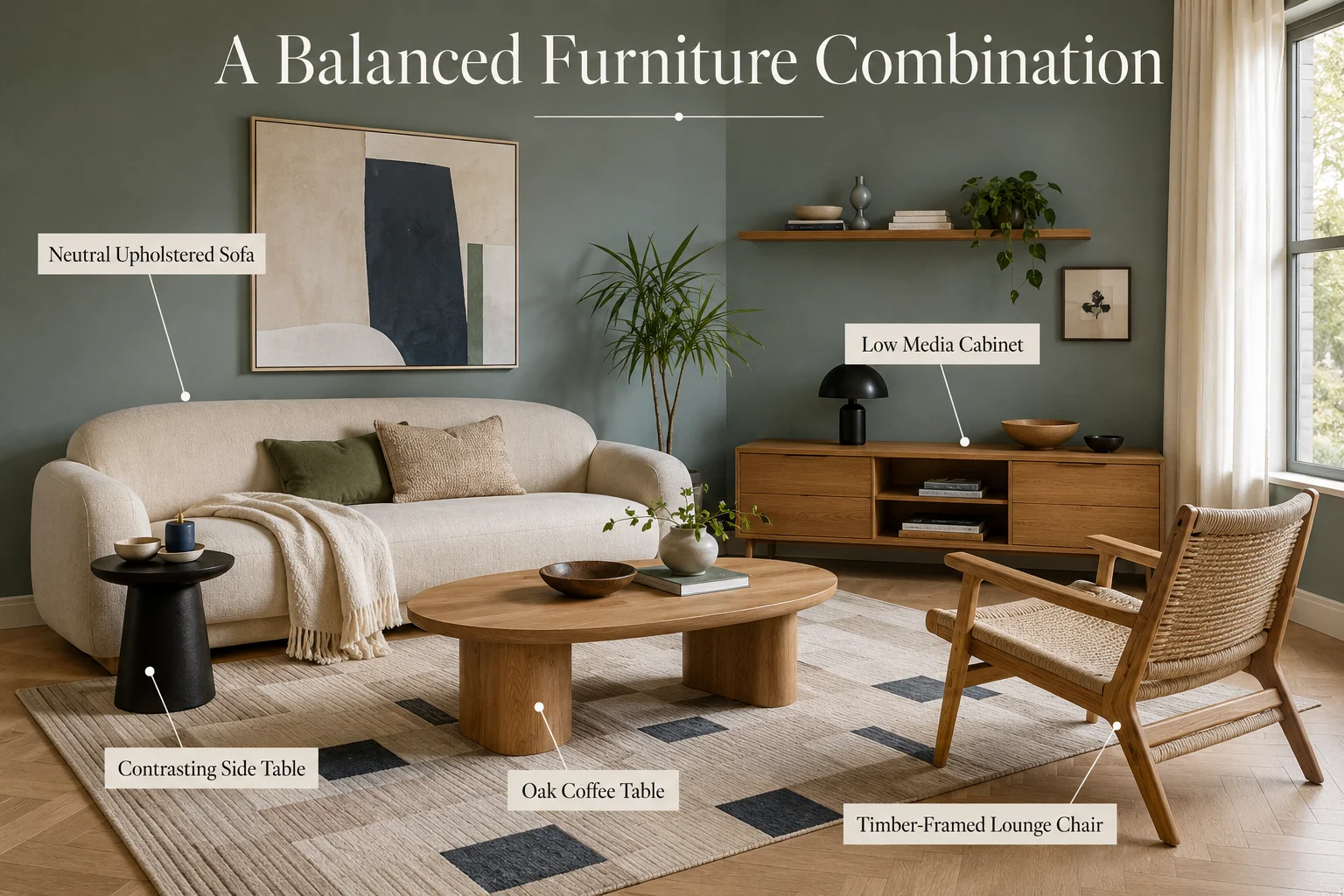
A balanced furniture combination could include:
- a neutral upholstered sofa;
- an oak coffee table;
- a timber-framed lounge chair;
- a low media cabinet;
- one small contrasting side table.
Avoid filling the room with several pieces of similar visual weight. If the sofa is substantial, use lighter chairs or tables around it. If the coffee table is solid and sculptural, choose simpler nearby furniture.
Step 6: Use the Rug to Connect the Seating Area
A rug is not simply a decorative finishing touch. It helps visually connect the sofa, chairs and coffee table into one defined conversation zone.
One of the most common decorating mistakes is choosing a rug that is too small. Ideally, the rug should feel substantial enough for at least the front legs of the primary seating pieces to sit comfortably on it.
For a Scandinavian look, consider:
- textured wool;
- flatwoven wool;
- soft geometric patterns;
- subtle stripes;
- tonal natural-fiber designs;
- cream, oatmeal, beige or pale gray foundations.
If the furniture and walls are extremely simple, the rug can introduce a little more pattern. If the artwork or upholstery already has stronger visual interest, keep the rug quieter.
Step 7: Build Warmth Through Texture
This is the stage where a neutral room begins to feel genuinely comfortable.
Instead of introducing many additional colors, layer materials with different tactile qualities. Scandinavian interiors often gain depth through the contrast between smooth timber, soft wool, relaxed linen, woven fibers, ceramics and subtle natural imperfections.
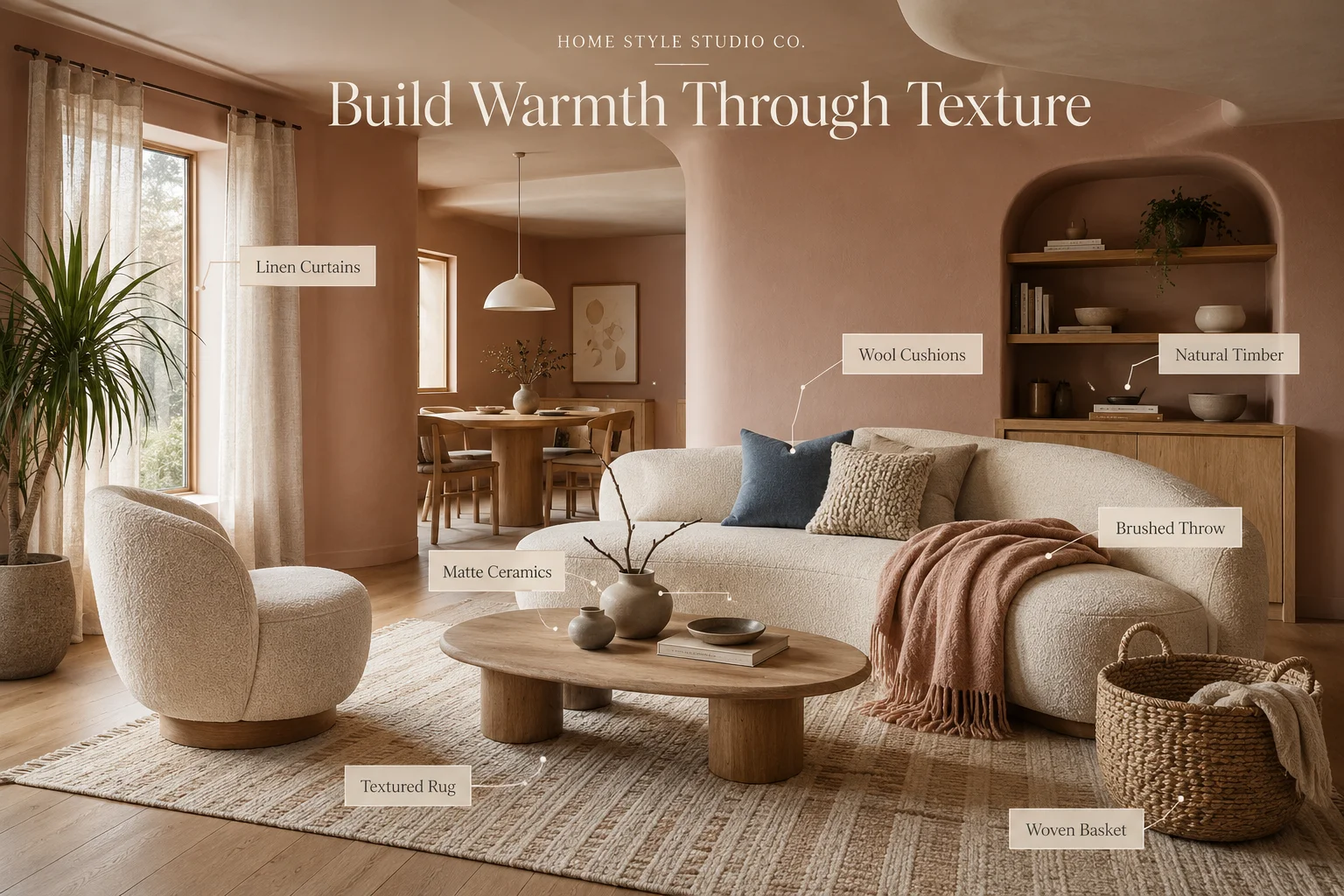
Try combining:
- wool cushions;
- a knitted or brushed throw;
- a textured rug;
- woven baskets;
- matte ceramics;
- natural timber.
Keep the number of patterns relatively controlled. Variation in weave, surface and material is usually enough to create interest without making the room visually busy.
Easy Formula: If your room feels too plain, add another texture before adding another color.
Step 8: Layer the Lighting Instead of Relying on One Fixture
Good lighting is one of the most important elements in creating the warm, inviting atmosphere associated with Scandinavian interiors.
A single bright ceiling fixture rarely creates enough depth. Instead, build several pools of light around the living room.
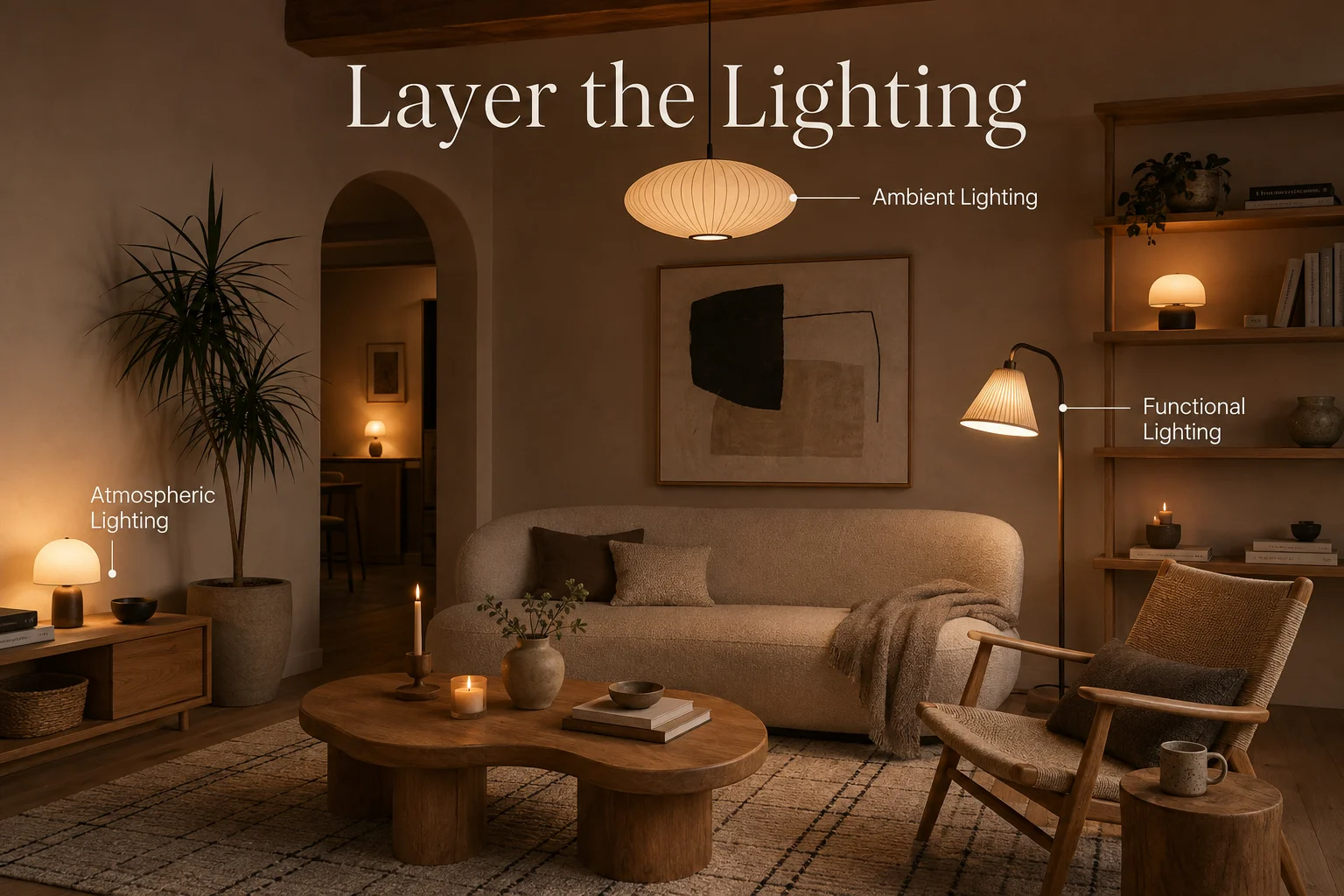
Ambient Lighting
Use the ceiling fixture or pendant for overall illumination. Select a simple but visually considered design rather than an unnecessarily ornate chandelier.
Functional Lighting
Place a floor lamp beside a reading chair or sofa where focused light is useful.
Atmospheric Lighting
Add one or two table lamps on a console, shelving unit or side table. Smaller lamps positioned below eye level help soften the room during the evening.
Warm-toned light generally creates a more comfortable residential atmosphere than harsh, cool illumination.
Candles can provide an additional finishing layer, particularly during evenings, but they should complement rather than replace practical lighting.
Step 9: Add Storage Before Adding More Decor
A Scandinavian living room can contain books, technology, toys and everyday possessions. The difference is that storage prevents all of those items from competing visually at the same time.
Introduce concealed storage for the things you use regularly but do not need to display.
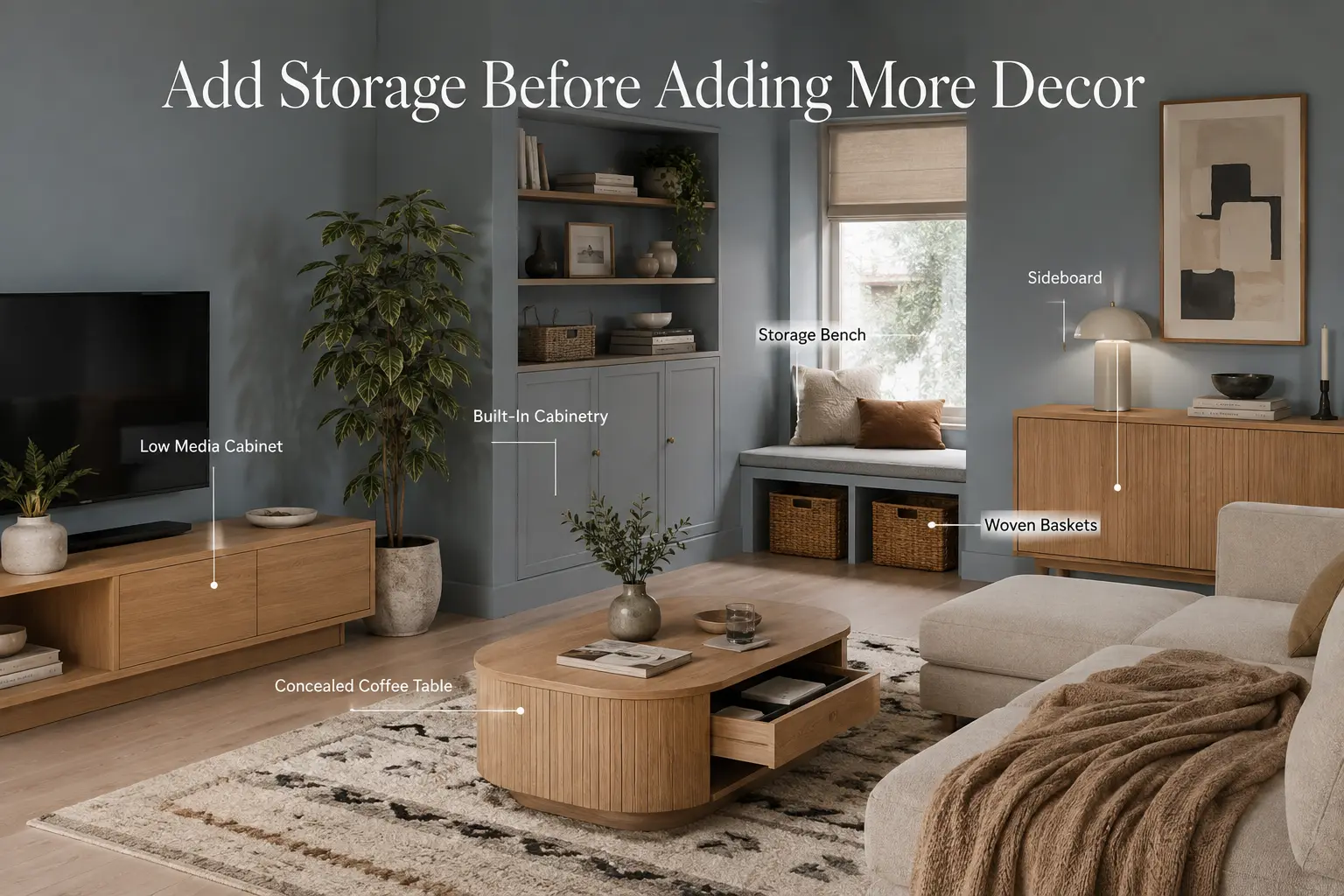
Useful options include:
- low media cabinets;
- sideboards;
- built-in cabinetry;
- storage benches;
- woven baskets;
- coffee tables with concealed compartments.
Open shelving can still work, but resist the temptation to fill every section. Combine books with a small number of ceramics, artwork and personal objects while leaving deliberate empty space around them.
Practical Rule: If clutter continually reappears on the coffee table, floor or console, the problem may be insufficient storage rather than insufficient styling.
Step 10: Finish with Artwork, Accessories and Greenery
Decorate only after the larger design decisions are resolved.
A Scandinavian living room does not need to be bare, but smaller objects should feel considered. Choose pieces because they contribute meaning, texture or practical value rather than because an empty surface needs filling.
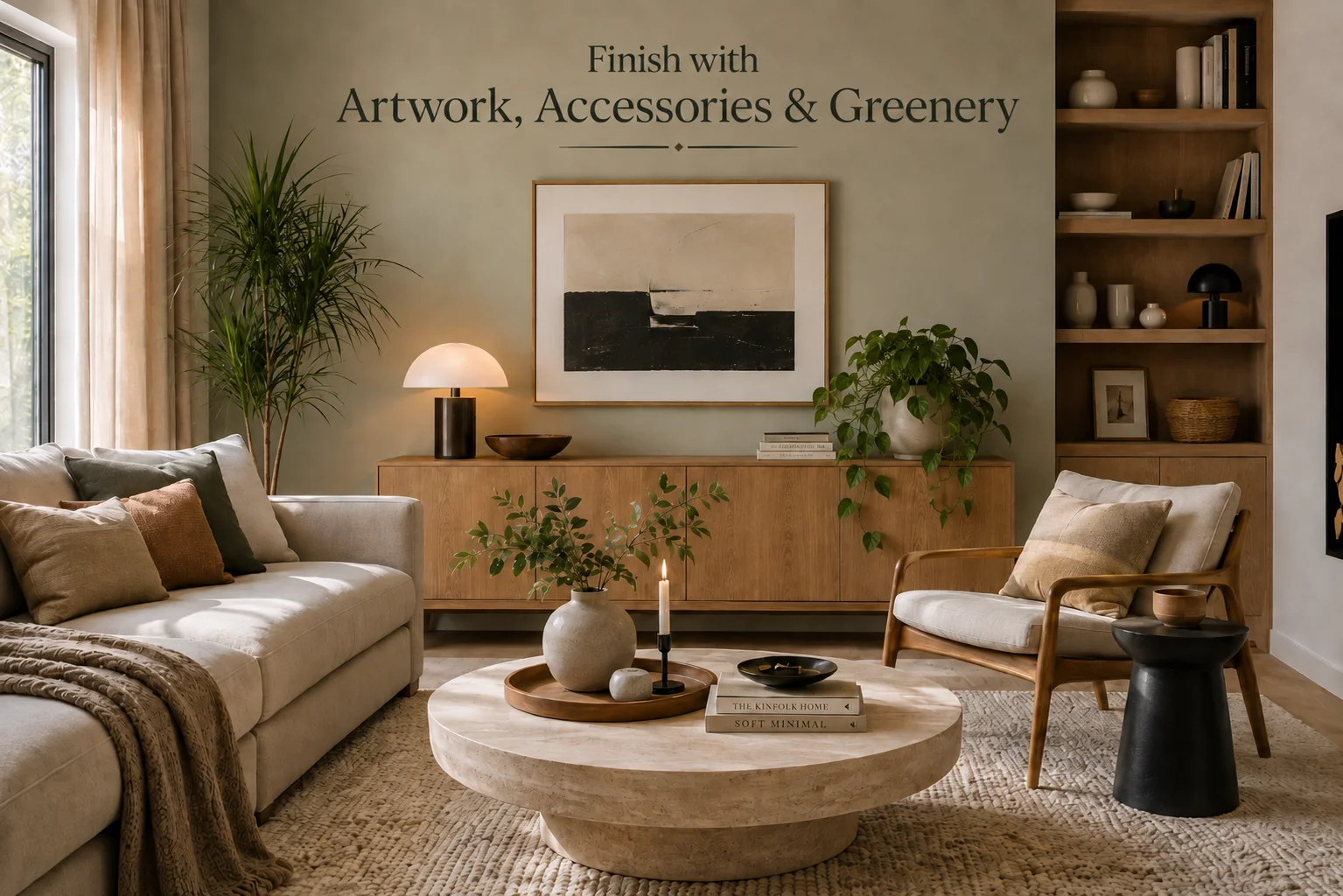
Consider introducing:
- one substantial artwork or a restrained gallery wall;
- handmade or matte ceramic vessels;
- two or three coffee-table books;
- simple candle holders;
- a wooden or stone tray;
- one sculptural decorative object;
- one or two healthy plants.
Greenery provides natural color and organic shape without disrupting the restrained palette. A Ficus Audrey, Kentia palm, rubber plant, olive tree, Schefflera or other architectural indoor plant can work particularly well when its size suits the room.
Avoid placing a tiny accessory on every surface. Fewer, more substantial objects generally create a calmer result.
The Best Order for Buying a Scandinavian Living Room
If you are starting from an empty space, buy in order of visual and functional importance rather than purchasing whichever decorative item catches your attention first.
- Sofa
- Rug
- Primary accent chair
- Coffee table
- Storage or media furniture
- Essential lighting
- Curtains or blinds
- Side tables
- Cushions and throws
- Artwork
- Accessories and plants
This approach also makes budgeting easier. Expensive foundational purchases can be resolved before discretionary decorative spending begins.
How to Make a Scandinavian Living Room Feel Cozy, Not Cold
The biggest risk when recreating Scandinavian style is confusing simplicity with emptiness.
If your room looks technically correct but feels uninviting, check four areas first.
Add More Tactile Materials
A room containing only painted walls, smooth furniture and hard flooring will feel flatter than one combining wool, linen, timber and woven surfaces.
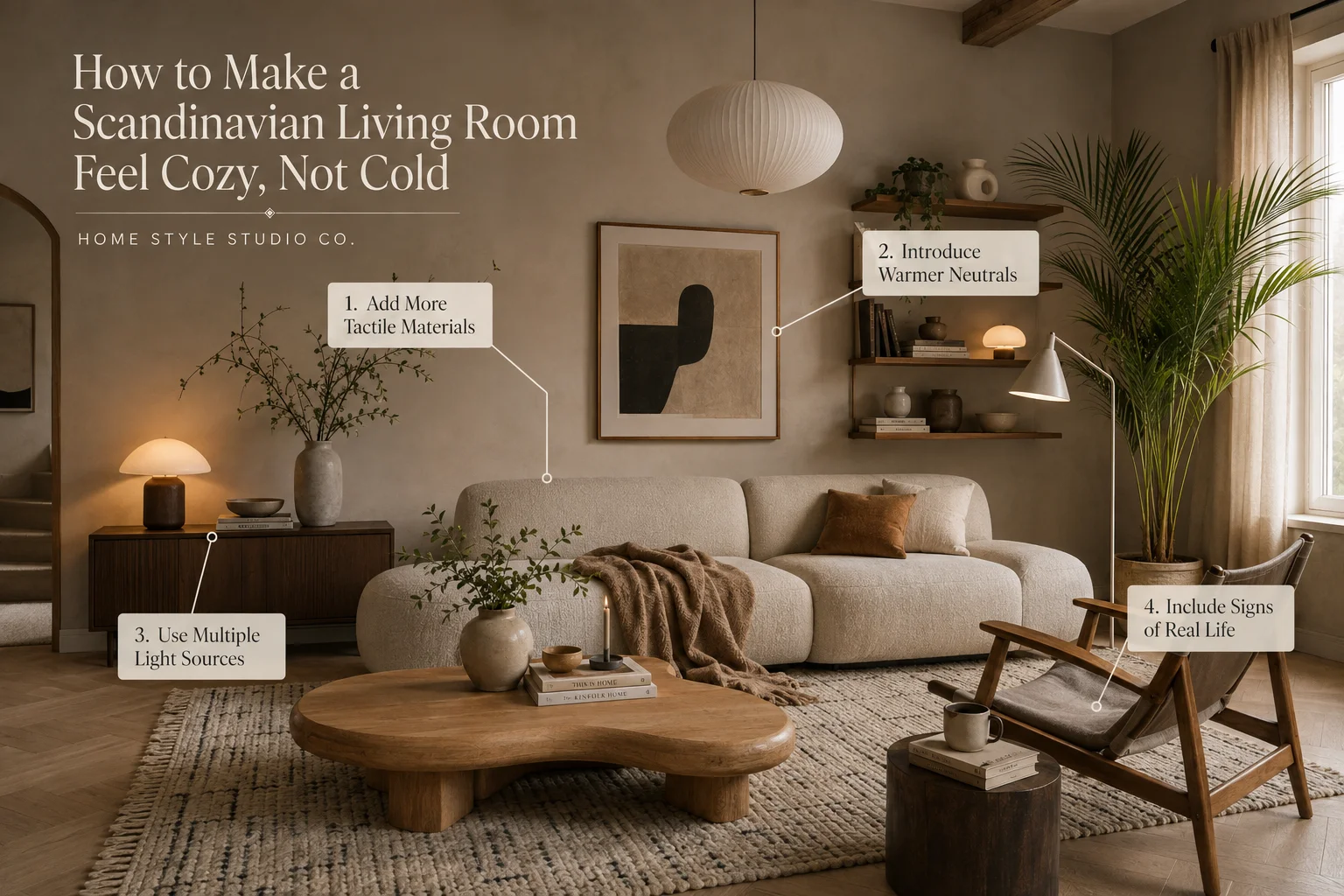
Introduce Warmer Neutrals
Replace icy whites and blue-gray tones with ivory, cream, oatmeal, soft beige or warm greige where appropriate.
Use Multiple Light Sources
Floor and table lamps dramatically change how neutral interiors feel after sunset.
Include Signs of Real Life
Books, artwork, a favorite ceramic piece and one casually placed throw can make the room feel inhabited without creating clutter.
Common Mistakes to Avoid
Making Everything White
Scandinavian design is light, but it is rarely visually flat. Natural wood, warm textiles, artwork and subtle tonal variation are essential.
Buying a Rug That Is Too Small
An undersized rug can make even good furniture look disconnected. Use the rug to unify the seating arrangement.
Choosing Furniture Only for Appearance
A beautiful lounge chair is a poor choice if nobody enjoys sitting in it. Comfort and practicality should remain part of every furniture decision.
Using Too Many Small Accessories
Numerous small decorative objects can undermine the visual calm you are trying to create. Choose fewer pieces and give them enough space.
Copying a Showroom Exactly
Scandinavian design should accommodate personal objects, existing architecture and the way you live. Use the principles as a framework rather than attempting to reproduce someone else’s room piece for piece.
Scandinavian Living Room — Shop the Look
You do not need to purchase every element at once. Begin with foundational pieces and add the softer decorative layers gradually.
- Sofa: neutral linen-look or textured woven upholstery
- Coffee Table: natural oak in a round, oval or simple rectangular shape
- Accent Chair: timber frame with upholstered, woven or paper-cord details
- Area Rug: generous wool or wool-blend rug in a soft neutral
- Media Console: low-profile timber cabinet with concealed storage
- Floor Lamp: simple adjustable reading light or sculptural Nordic-style lamp
- Table Lamp: ceramic, glass, timber or understated metal base with warm illumination
- Curtains: full-length linen or lightweight woven panels
- Textiles: wool throw and a small collection of textured cushions
- Accessories: ceramics, candles, books and one natural or handmade object
Home Style Studio Co. Recommendation: Spend more of the budget on the sofa, rug, seating, storage and lighting. Smaller decorative objects can be inexpensive, collected gradually or changed seasonally without affecting the fundamental quality of the room.
Scandinavian Style Variations
Once the Scandinavian foundation is established, you can personalize the room without abandoning its core principles.
Classic Scandinavian
Use pale walls, light oak furniture, simple silhouettes, wool textiles and restrained decoration for the most recognizable Nordic interpretation.
Modern Scandinavian
Add cleaner architectural lines, more sculptural lighting and contemporary furniture while keeping the room functional, warm and uncluttered.
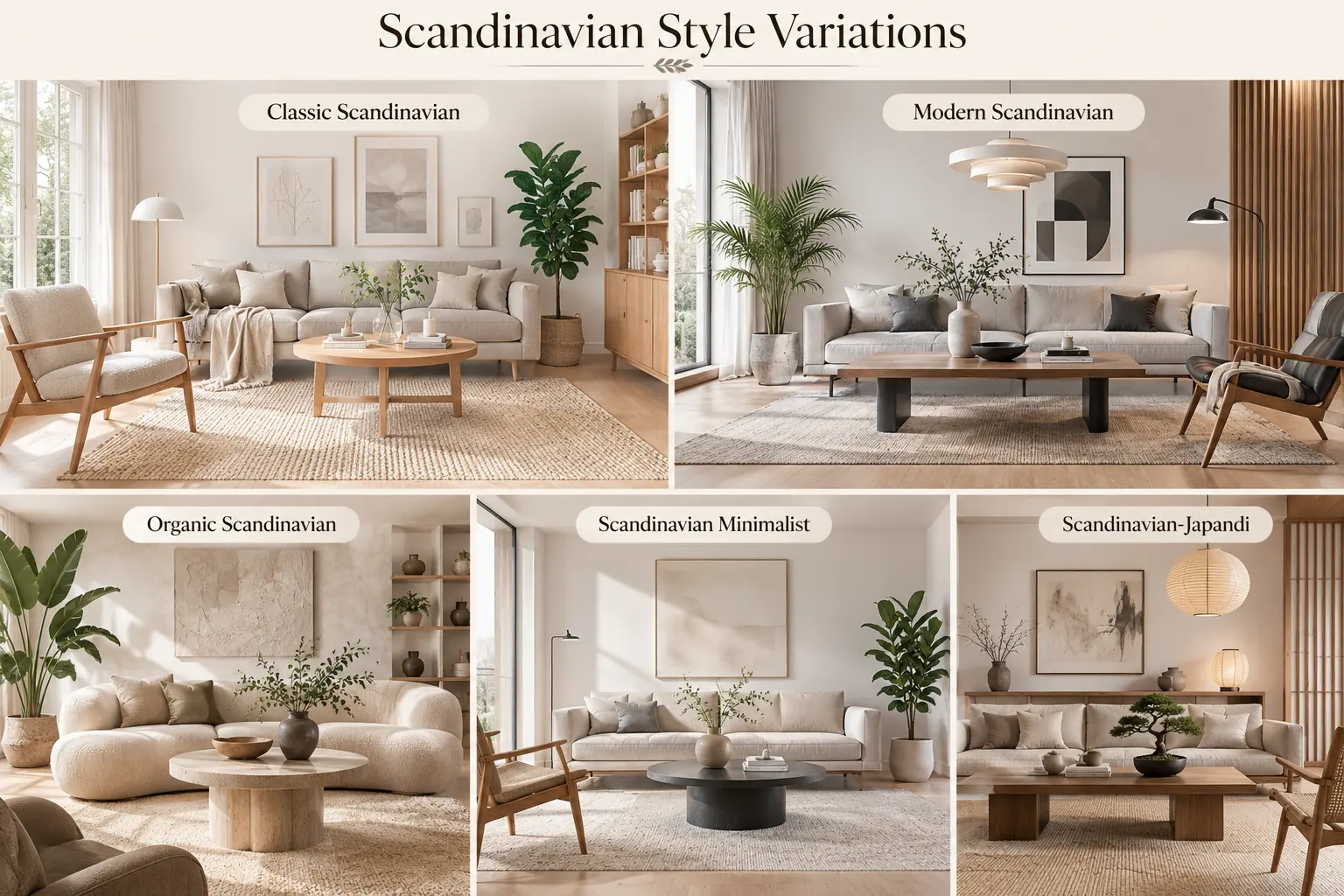
Organic Scandinavian
Introduce curved forms, tactile plaster, natural stone, handmade ceramics and additional greenery for a softer, nature-focused result.
Scandinavian Minimalist
Reduce decorative objects further and emphasize open space, simple furniture and visual clarity. For related ideas, explore our Minimalist Living Room Style Guide.
Scandinavian-Japandi
Introduce lower furniture, handcrafted details, darker wood accents and greater decorative restraint. If you prefer this calmer hybrid aesthetic, see our Japandi Living Room Style Guide.
Frequently Asked Questions
How do I make my living room look Scandinavian?
Start with a light warm-neutral foundation, then combine comfortable simple furniture, pale or natural wood, a generously sized rug, natural textiles, layered lighting and limited decor. Keep the layout functional and avoid unnecessary visual clutter.
How do I make my living room look Scandinavian?
Start with a light warm-neutral foundation, then combine comfortable simple furniture, pale or natural wood, a generously sized rug, natural textiles, layered lighting and limited decor. Keep the layout functional and avoid unnecessary visual clutter.
What colors are best for a Scandinavian living room?
Warm white, cream, ivory, beige, greige and pale gray work well as foundation colors. Natural oak introduces warmth, while muted blue, sage, olive, charcoal and other restrained tones can be used as accents.
Does Scandinavian design have to use white walls?
No. Light walls are common because they help create a bright atmosphere, but Scandinavian interiors can also use soft beige, pale gray, muted green and other restrained colors. The overall balance of light, warmth, simplicity and natural materials matters more than using one specific wall color.
How can I create a Scandinavian living room on a budget?
Keep existing furniture that already has suitable proportions, simplify the palette, remove unnecessary clutter and spend strategically on high-impact elements such as a larger rug or better lighting. Add affordable cushions, throws, secondhand timber furniture and simple ceramics gradually rather than replacing the entire room at once.
Can a Scandinavian living room have color?
Yes. Scandinavian interiors do not have to be completely neutral. Muted blues, greens, ochres, dusty pastels and earthy tones can introduce personality, particularly through artwork, textiles and accessories. Keep the overall palette controlled so the room retains its calm character.
Final Checklist: Does Your Scandinavian Living Room Work?
Before considering the room complete, ask yourself:
- Can people move around the room comfortably?
- Is the seating genuinely comfortable?
- Does the rug visually connect the main furniture?
- Have you used natural materials or convincing natural textures?
- Does the neutral palette contain enough warmth and contrast?
- Are there several sources of light rather than one ceiling fixture?
- Is everyday clutter easy to put away?
- Does the room contain some personal artwork or objects?
- Are there enough textiles to make the space feel inviting?
- Could you remove anything without reducing function or comfort?
If most of those answers are yes, you are already close to the essence of Scandinavian living room design.
Creating a Scandinavian Living Room That Lasts
The most successful Scandinavian living rooms are not created through one shopping trip. They develop from a strong foundation: a functional layout, comfortable furniture, warm natural materials, good lighting and enough storage to support everyday life.
Once those elements are working, decoration becomes much easier. Add textiles, artwork, ceramics, books and greenery gradually, allowing the room to develop personality without losing its visual calm.
Rather than asking whether every piece looks Scandinavian, ask whether it is useful, comfortable, well proportioned and compatible with the materials already in the room. That mindset will help you create a living room that feels Nordic in spirit while still belonging unmistakably to your own home.
For deeper guidance on colors, furniture, materials, lighting and different interpretations of the style, continue with our complete Scandinavian Living Room Style Guide.