A well-designed living room does more than look attractive. It supports everyday life, encourages conversation, provides comfortable places to relax and establishes the visual character of the home.
Yet creating a successful living room involves more than choosing a sofa and adding decorative accessories. Furniture scale, circulation, color, lighting, rugs, storage, materials and architectural features all need to work together.
This complete living room design guide explains how to approach those decisions systematically. Whether your taste leans Scandinavian, Japandi, contemporary, Mid-Century Modern, minimalist, Bohemian, Organic Modern or somewhere between several styles, the same fundamental design principles can help you create a room that feels balanced, comfortable and personal.
What to Consider Before Designing Living Room
One of the most common decorating mistakes is buying individual pieces before establishing an overall plan. A beautiful sofa, coffee table or rug may work perfectly on its own but still feel wrong when placed in the room.
Before shopping, consider how the room needs to function, how people will move through it and which existing features need to remain.
Start With How You Actually Use the Room
A living room designed primarily for conversation requires a different layout from a room centered around television viewing. A family living room may need durable materials, substantial storage and flexible seating, while a formal sitting room can prioritize symmetry, statement furniture and entertaining.
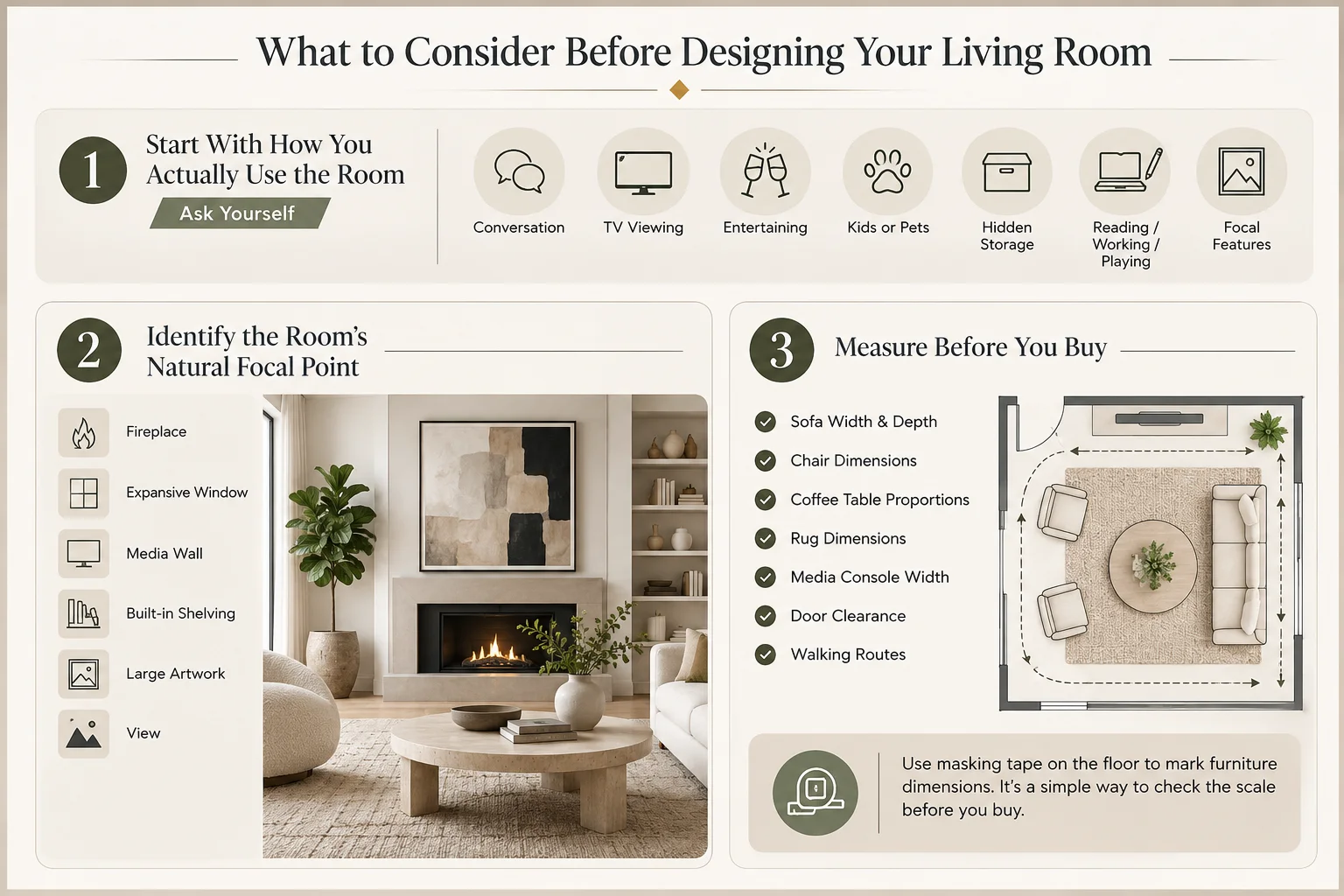
Ask yourself:
- How many people regularly use the room?
- Is television viewing important?
- Do you entertain frequently?
- Do children or pets use the space?
- Do you need hidden storage?
- Will the room also accommodate reading, working or playing?
- Which architectural features should become focal points?
These practical considerations should influence the design before aesthetic decisions are made.
Identify the Room’s Natural Focal Point
Most successful living rooms have a visual anchor. Depending on the architecture, this might be a fireplace, expansive window, media wall, built-in shelving, large artwork or an attractive view.
Furniture does not need to face the focal point perfectly, but the arrangement should acknowledge it.
If the room lacks an obvious architectural focal point, create one with an oversized artwork, distinctive media console, sculptural fireplace surround or carefully styled shelving.
Measure Before You Buy
Accurate measurements are essential. Record the room’s width and length along with windows, doors, radiators, fireplaces, electrical outlets and major architectural features.
Then create a simple furniture plan before ordering large pieces.
Pay particular attention to:
- sofa width and depth;
- chair dimensions;
- coffee table proportions;
- rug dimensions;
- media console width;
- clearance around doors;
- walking routes through the room.
Masking tape can also be used to mark furniture dimensions directly on the floor. This simple exercise often reveals whether a piece that looks appropriately sized online will actually overwhelm the room.
How to Plan a Living Room Layout
A successful furniture layout should feel visually balanced while allowing people to move through the space naturally.
Rather than pushing every piece of furniture against a wall, think of the seating area as a composition within the room.
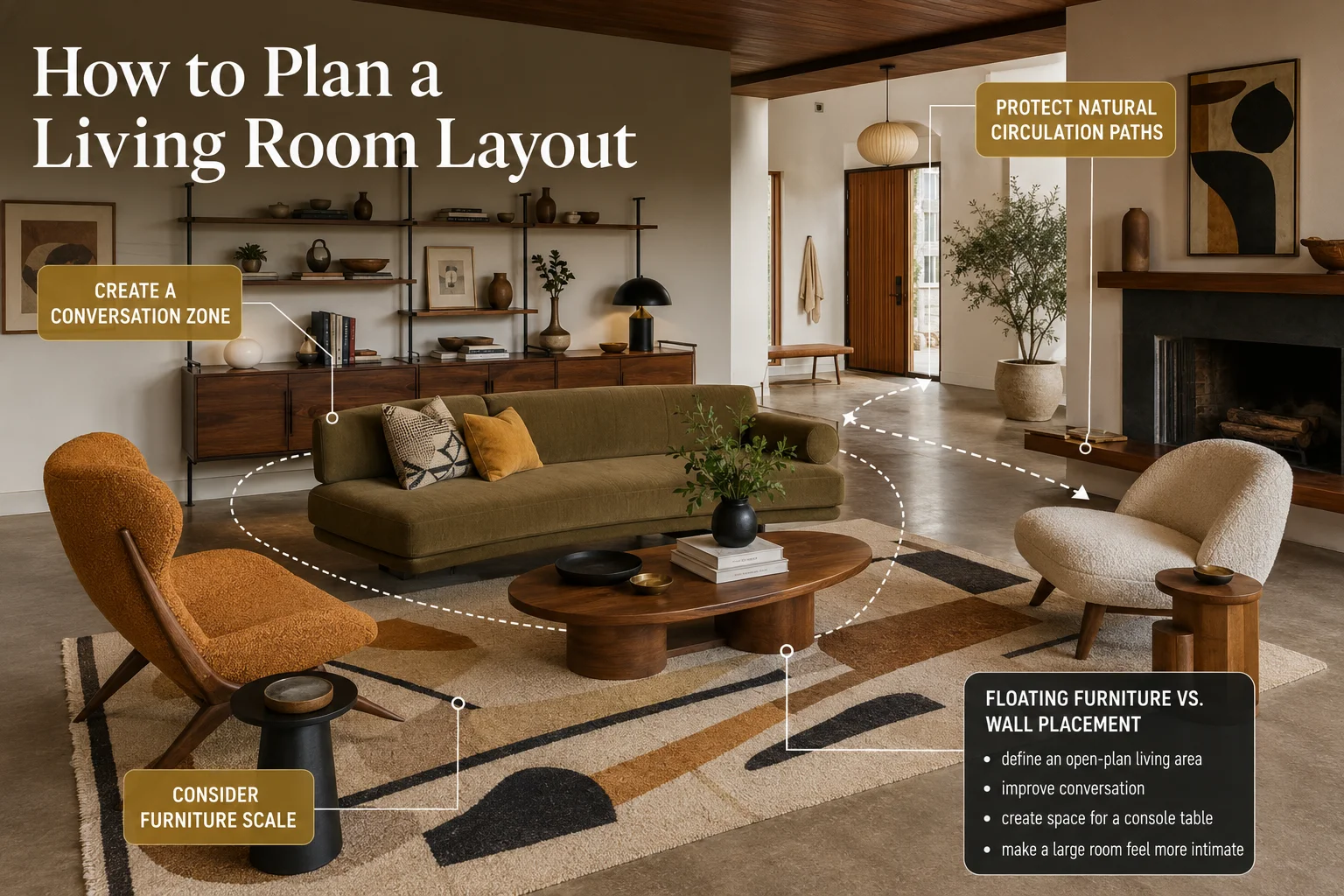
Create a Conversation Zone
Position sofas and chairs close enough that people can speak comfortably without the arrangement feeling crowded.
In larger living rooms, bringing seating toward the center often creates a more intimate and intentional environment than lining furniture around the perimeter.
Protect Natural Circulation Paths
People should be able to enter and move through the living room without weaving between furniture.
Keep major circulation routes relatively open and avoid placing large tables directly in the path between doors or adjoining rooms.
Consider Furniture Scale
Large rooms can accommodate substantial sofas, generous rugs and heavier coffee tables. Small living rooms generally benefit from visually lighter furniture, narrower arms, exposed legs and fewer oversized pieces.
Scale should also be considered within the furniture grouping itself. A very small coffee table paired with a large sectional can look disconnected, while an oversized coffee table may restrict movement.
Floating Furniture vs. Wall Placement
Furniture does not automatically need to touch the walls.
Floating a sofa can:
- define an open-plan living area;
- improve conversation;
- create space for a console table;
- make a large room feel more intimate.
Wall placement remains practical in small or narrow rooms where every centimetre matters.
Common Living Room Layouts
Sofa + Two Chairs
A versatile arrangement that works particularly well for conversation. Place the sofa opposite the focal point and use two chairs to complete the seating zone.
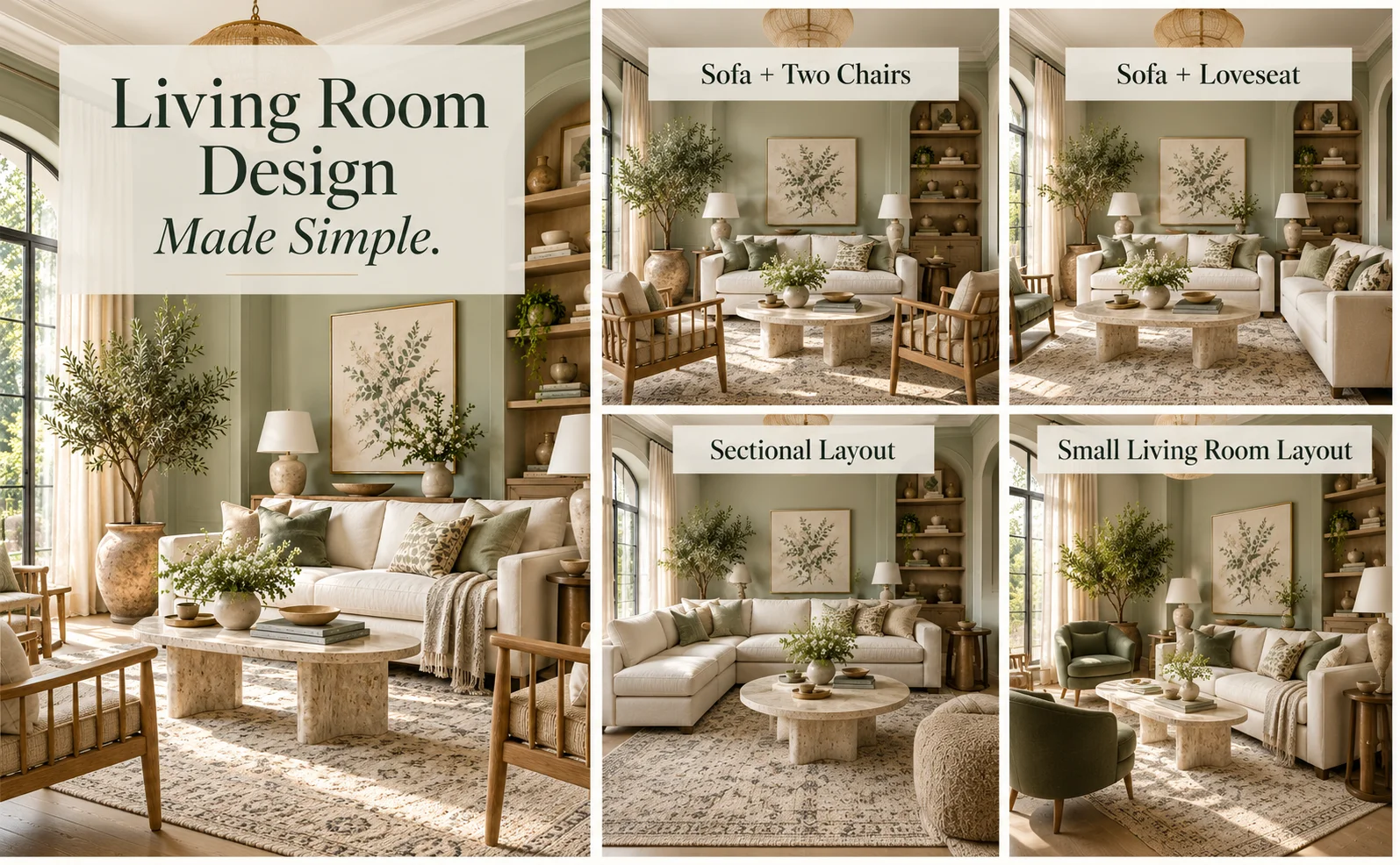
Sofa + Loveseat
Useful for medium-sized rooms where additional seating is needed without the visual weight of a sectional.
Sectional Layout
Ideal for families, television rooms and open-plan spaces. Make sure the sectional does not interrupt the main circulation route.
Two Sofas Facing Each Other
A classic arrangement for larger or more formal living rooms. It creates symmetry and makes conversation the focus.
Small Living Room Layout
Use one appropriately scaled sofa with one or two compact chairs, nesting tables or a small coffee table. Avoid filling every available wall.
Designer Tip
Plan the rug and furniture arrangement together. The rug should visually unite the seating group rather than appear as a separate decorative island in the centre of the room.
How to Choose Your Interior Design Style
Choosing a style does not mean reproducing a showroom or following rigid decorating rules. A style is better understood as a visual framework that helps guide decisions about color, furniture, materials and decoration.
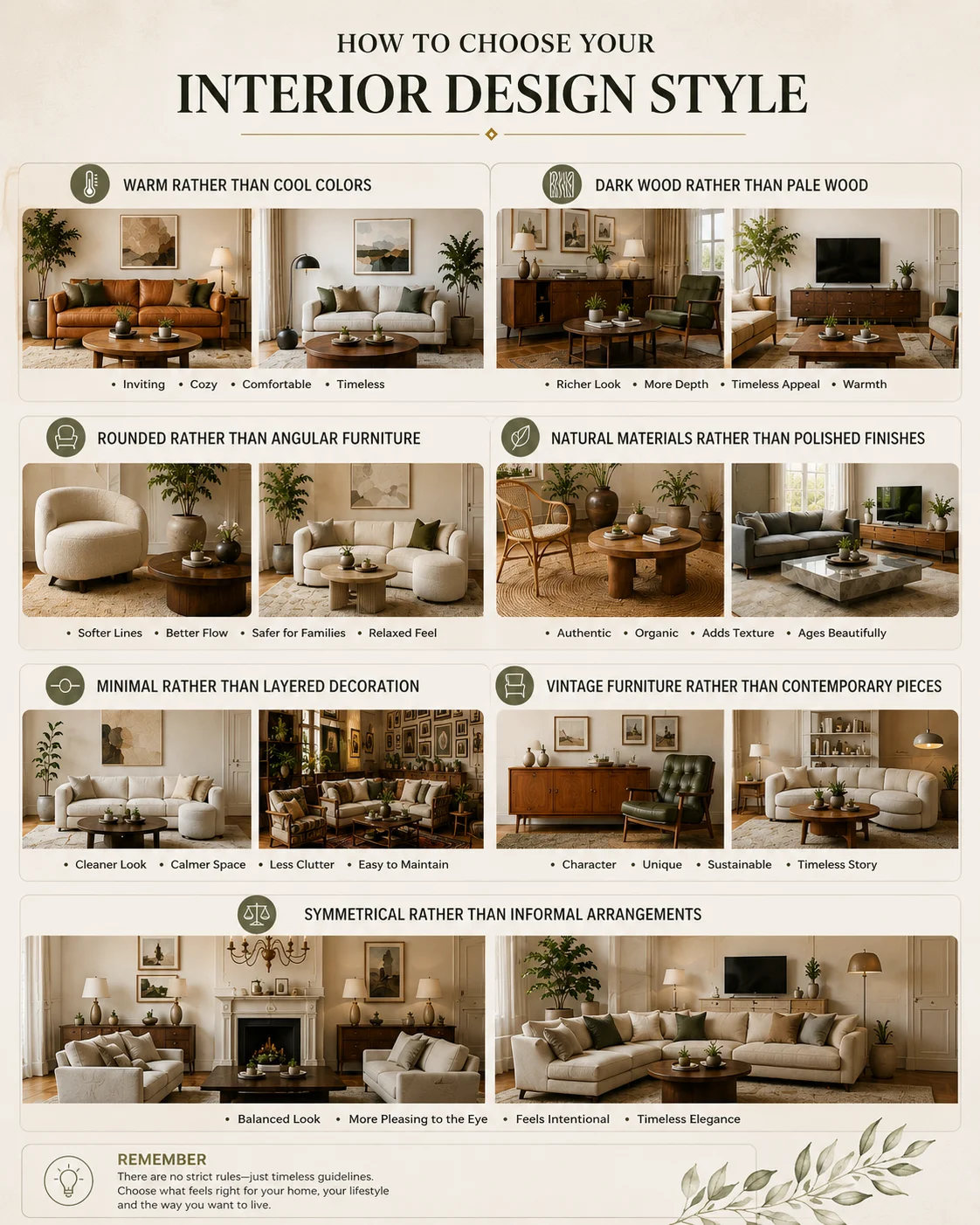
Start by collecting interiors you genuinely like. Instead of concentrating only on their labels, look for repeated characteristics.
You may notice that you consistently prefer:
- warm rather than cool colors;
- rounded rather than angular furniture;
- minimal rather than layered decoration;
- dark wood rather than pale wood;
- natural materials rather than polished finishes;
- symmetrical rather than informal arrangements;
- vintage furniture rather than contemporary pieces.
Those patterns often reveal your preferences more accurately than choosing a style name first.
You Do Not Need to Follow One Style Exactly
Many of the most personal interiors combine influences from multiple design traditions.
A room might use the calm palette of Scandinavian design, the craftsmanship of Japandi interiors and the curved furniture associated with contemporary design.
The key is repetition. If materials, colors and forms appear intentionally throughout the room, different influences can coexist without making the space feel disconnected.
Popular Living Room Styles Explained
Understanding the defining characteristics of different interior styles can make furniture and decorating decisions considerably easier. The following overview covers several of the most versatile living room aesthetics and shows how they differ.
| Style | Overall Mood | Typical Materials | Color Direction |
|---|---|---|---|
| Scandinavian | Light, comfortable and functional | Oak, wool, linen, ceramics | Warm white, beige, gray and muted earth tones |
| Japandi | Calm, refined and intentional | Wood, stone, linen, handmade ceramics | Warm neutrals, brown and muted natural tones |
| Organic Modern | Relaxed, sophisticated and natural | Wood, stone, plaster, linen, wool | Cream, sand, taupe and earthy neutrals |
| Contemporary | Polished, current and architectural | Wood, glass, stone, metal, textured fabrics | Refined neutrals with controlled accents |
| Mid-Century Modern | Warm, graphic and design-focused | Walnut, teak, leather, glass and metal | Warm wood with mustard, olive, rust or blue |
| Minimalist | Quiet, uncluttered and deliberate | Wood, stone, plaster and restrained textiles | Neutral and limited palettes |
| Bohemian | Relaxed, expressive and collected | Wood, rattan, textiles, ceramics and plants | Earth tones, warm neutrals and layered accents |
| Traditional | Elegant, established and balanced | Dark wood, wool, linen and decorative finishes | Warm neutrals and classic accent colors |
| Transitional | Timeless, comfortable and refined | Wood, stone, linen and tailored upholstery | Soft neutrals with subtle contrast |
| Coastal | Bright, relaxed and airy | Light wood, linen, woven fibers and ceramics | White, sand, soft blue and natural tones |
Scandinavian Living Room
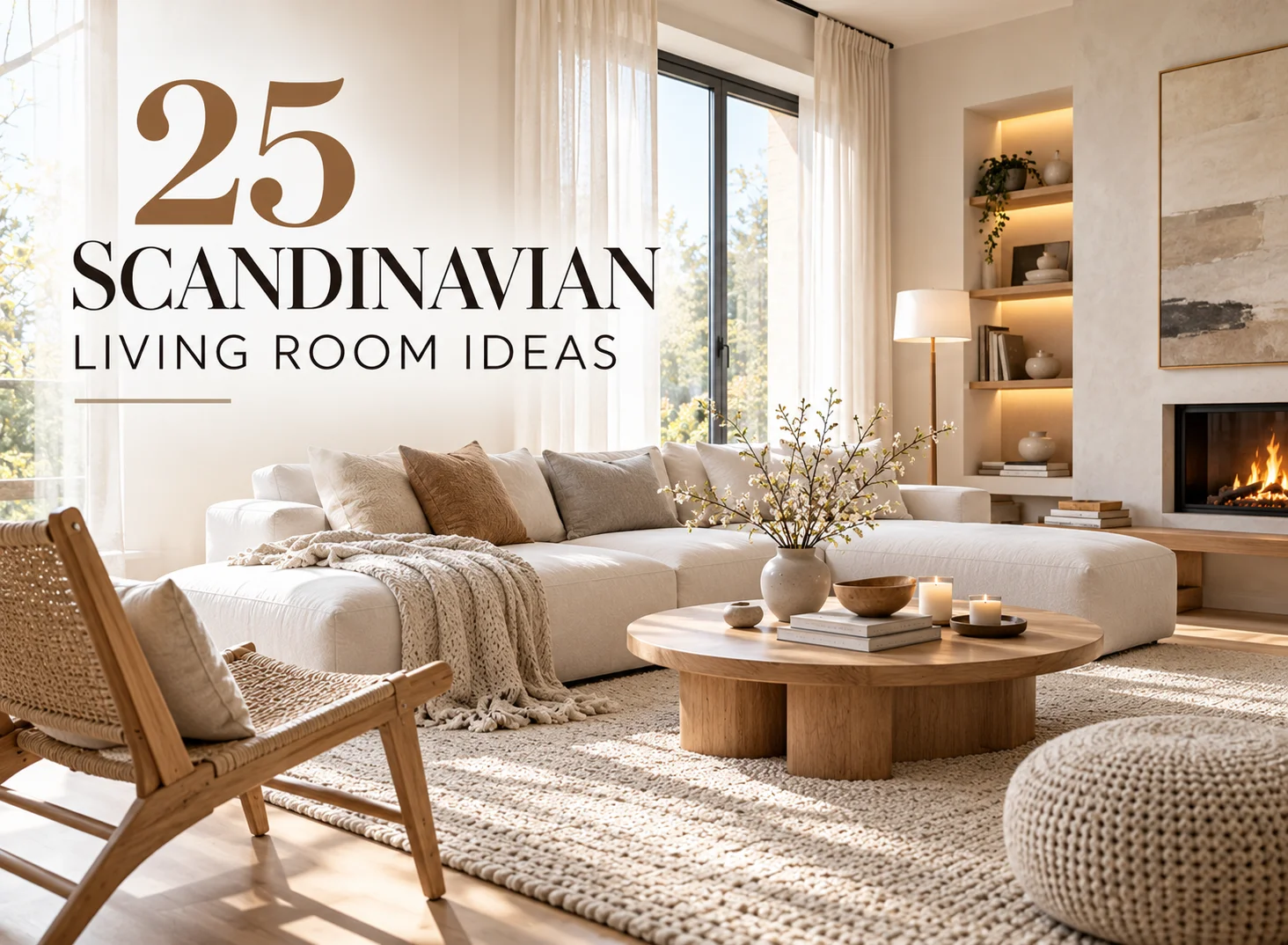
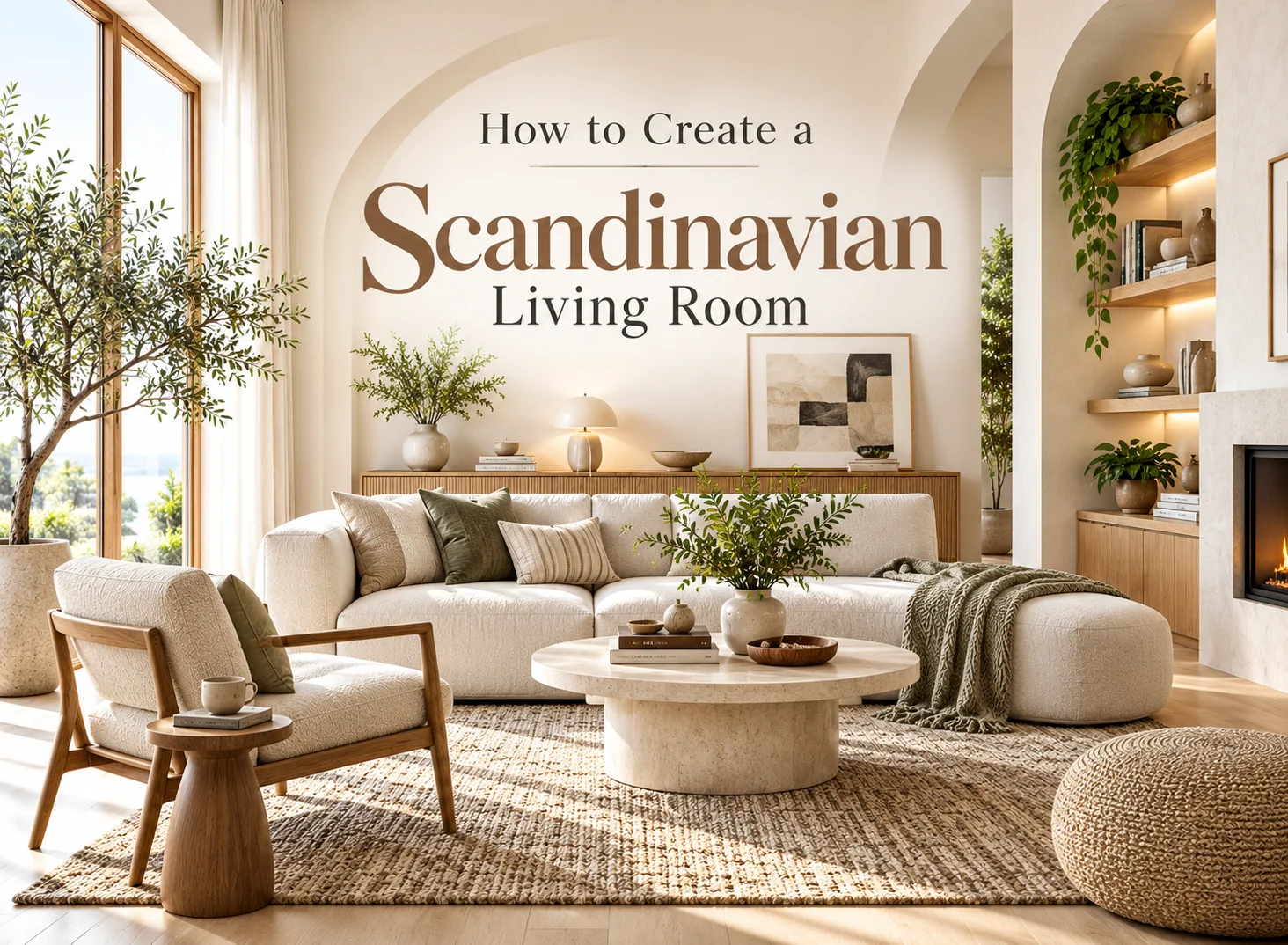
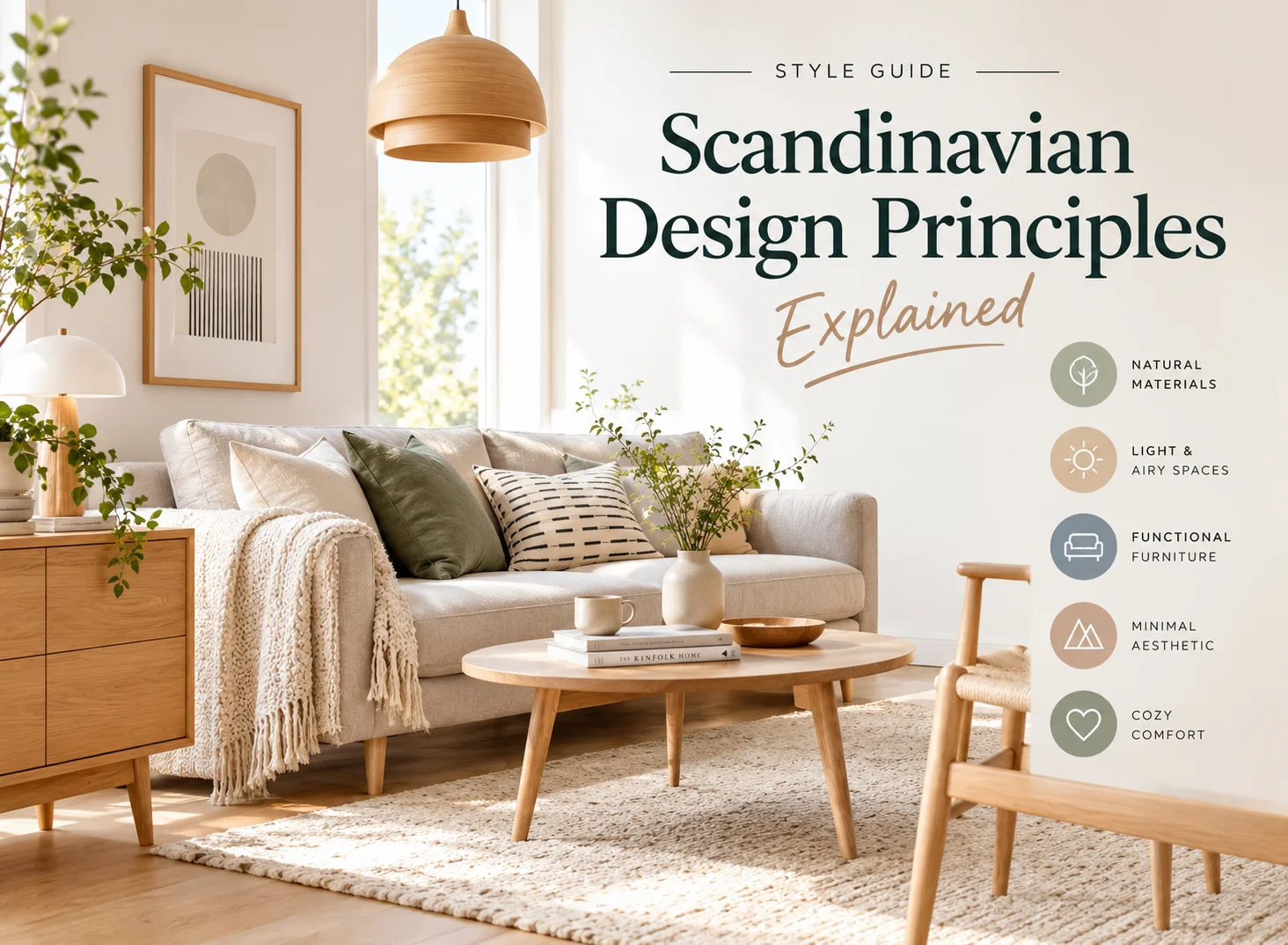
Scandinavian living rooms combine simplicity with comfort. Pale woods, natural fabrics, restrained decoration and practical furniture create interiors that feel airy without becoming sterile.
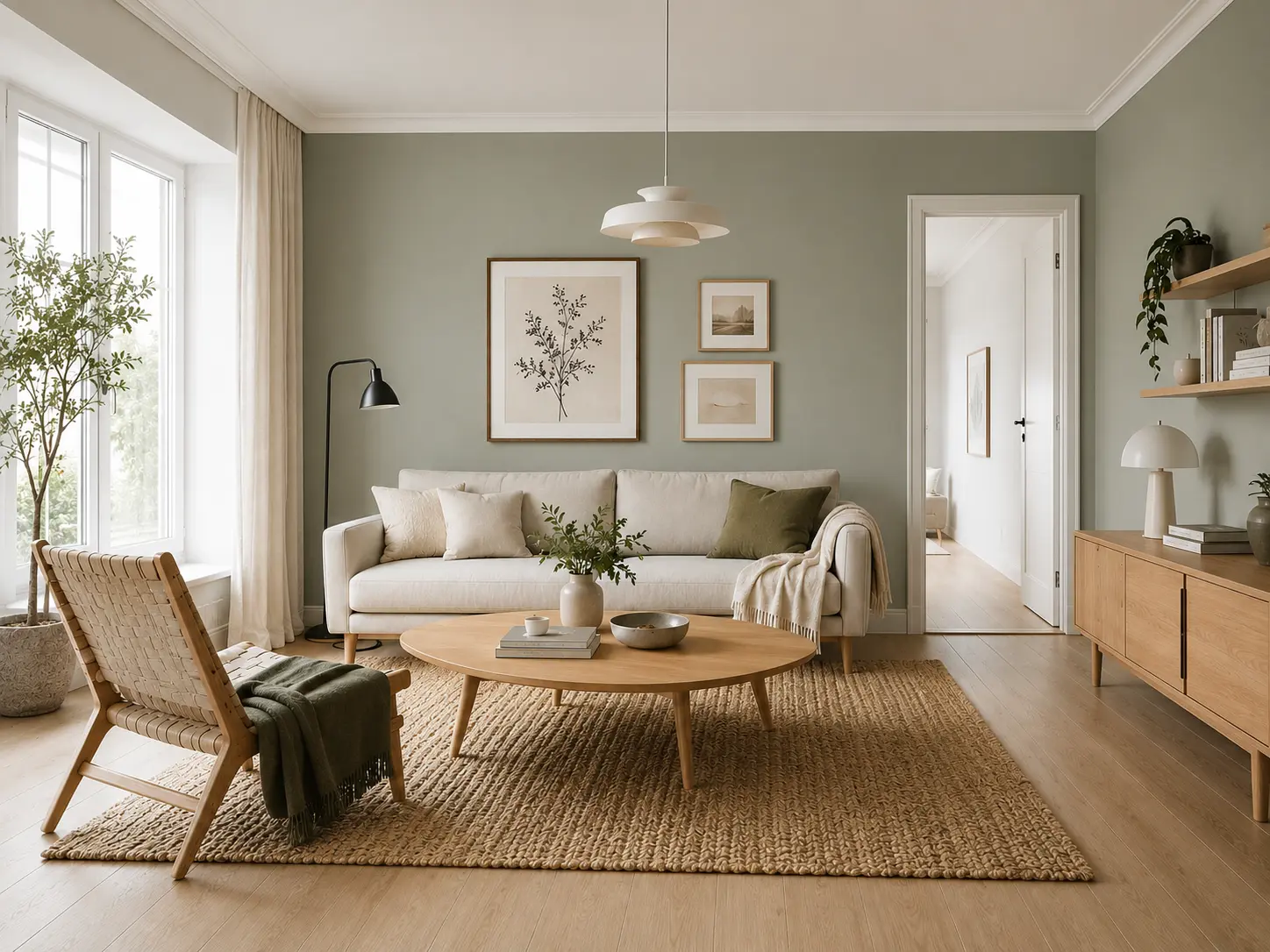
The strongest Scandinavian rooms usually include warmth through timber, wool, linen, tactile rugs, layered lighting and handcrafted accessories rather than relying entirely on white surfaces.
Choose this style if you prefer uncluttered interiors but still want the room to feel inviting and lived in.
Explore further: See our Scandinavian living room style guide for furniture, colors, lighting and styling ideas.
Japandi Living Room
Japandi combines Japanese and Scandinavian design influences through their shared appreciation for simplicity, craftsmanship, function and natural materials.
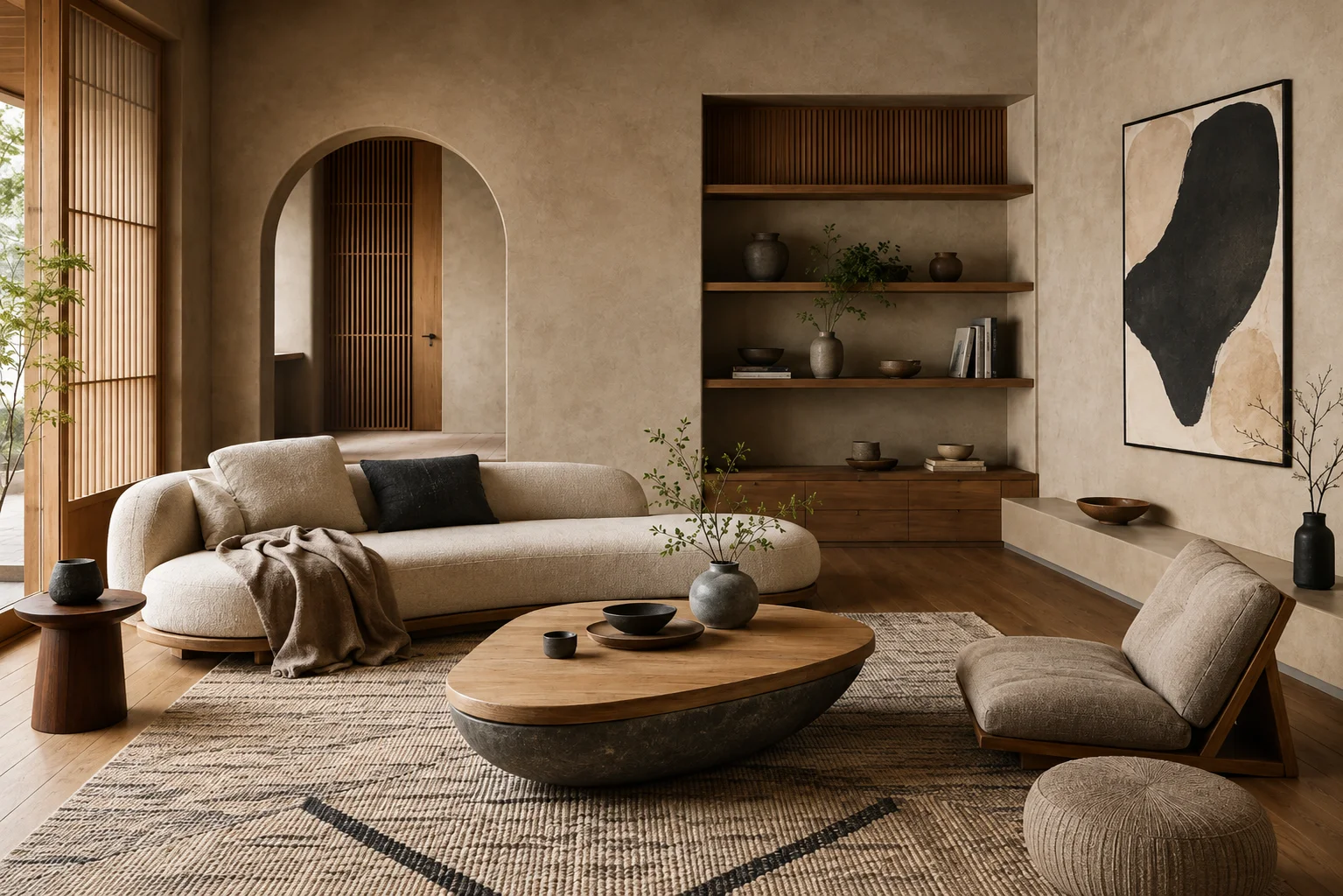
Furniture is often low and visually quiet. Decorative objects are limited, but pieces with beautiful texture or craftsmanship receive greater prominence. Warm wood, linen, stone, handmade ceramics and intentional negative space help create the calm character associated with the style.
Japandi is particularly suitable if you appreciate minimalism but want greater warmth, texture and connection with natural materials.
Explore further: Read our complete Japandi living room guide for a deeper look at furniture, materials, color and styling.
Organic Modern Living Room
Organic Modern design brings natural texture and warmer materials into a streamlined contemporary framework.
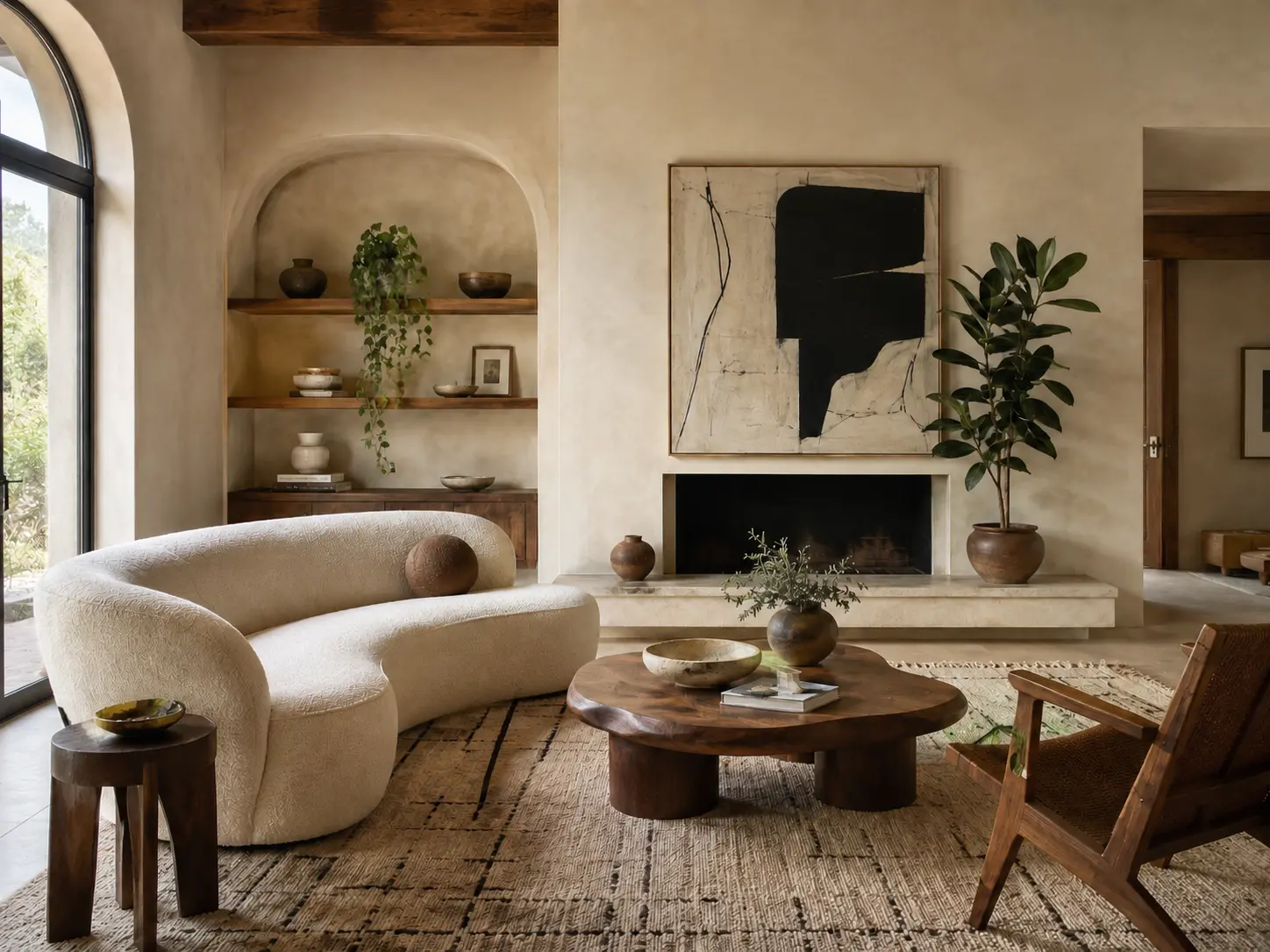
You might see curved upholstery, substantial wooden tables, limestone or travertine, plaster walls, textured rugs and sculptural accessories arranged within a relatively restrained room. The palette is typically earthy and quiet, allowing differences in material and texture to create visual interest.
This style works particularly well for people who love modern architecture but find conventional modern interiors too sharp or cold.
Explore further: Visit our Organic Modern living room style guide for detailed styling principles.
Contemporary Living Room
Contemporary design reflects current approaches to furniture, architecture, materials and space rather than one fixed historical period.
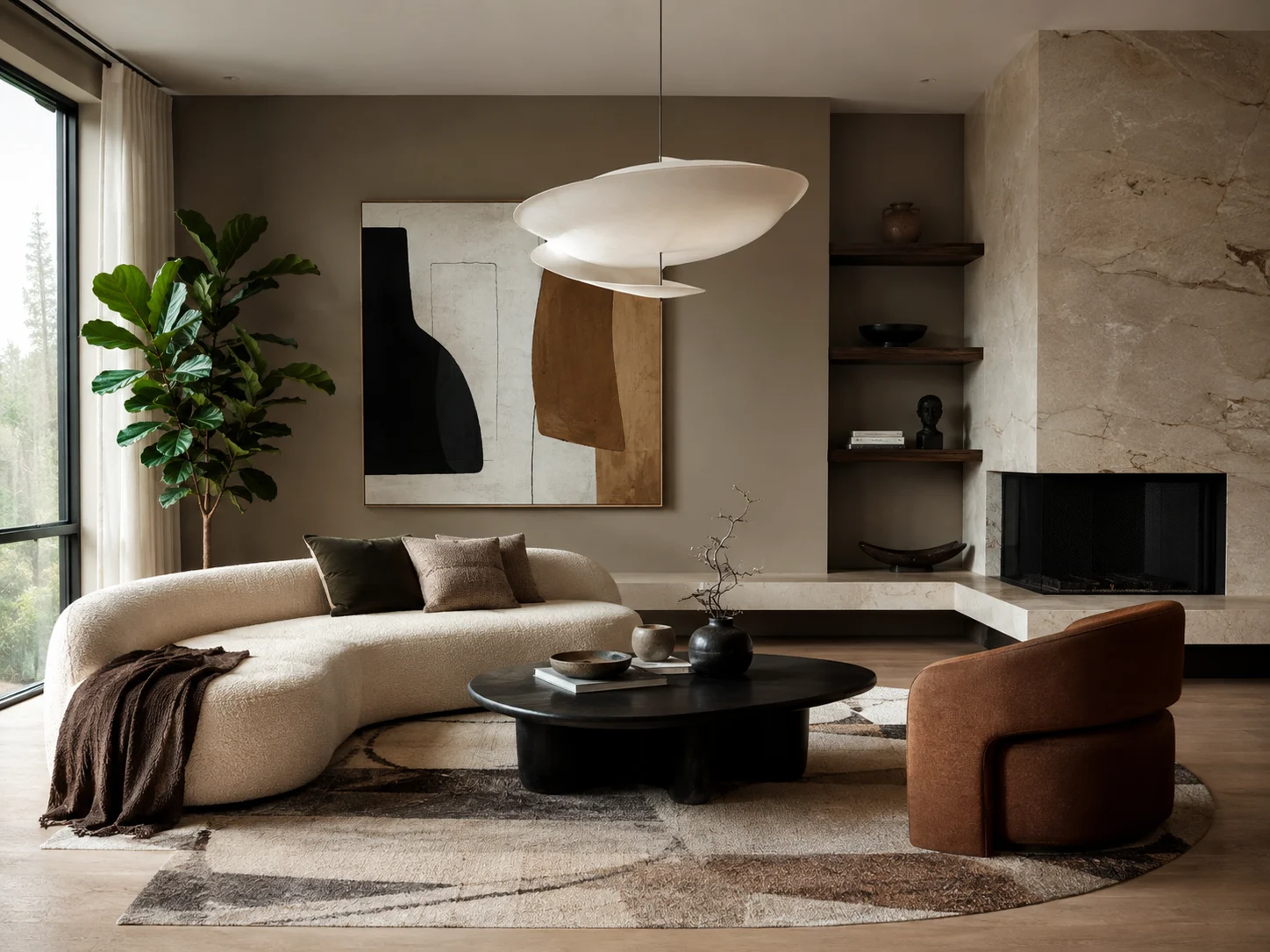
Today’s contemporary living rooms frequently combine streamlined architecture with curved furniture, natural stone, refined neutral palettes and sculptural lighting.
Unlike strict minimalism, contemporary interiors can include statement artwork, dramatic lighting and expressive furniture, provided the overall composition remains controlled.
Explore further: See our Contemporary Living Room Style Guide for layouts, furniture, palettes and decorating ideas.
Mid-Century Modern Living Room
Mid-Century Modern interiors draw inspiration from design associated broadly with the middle decades of the twentieth century.
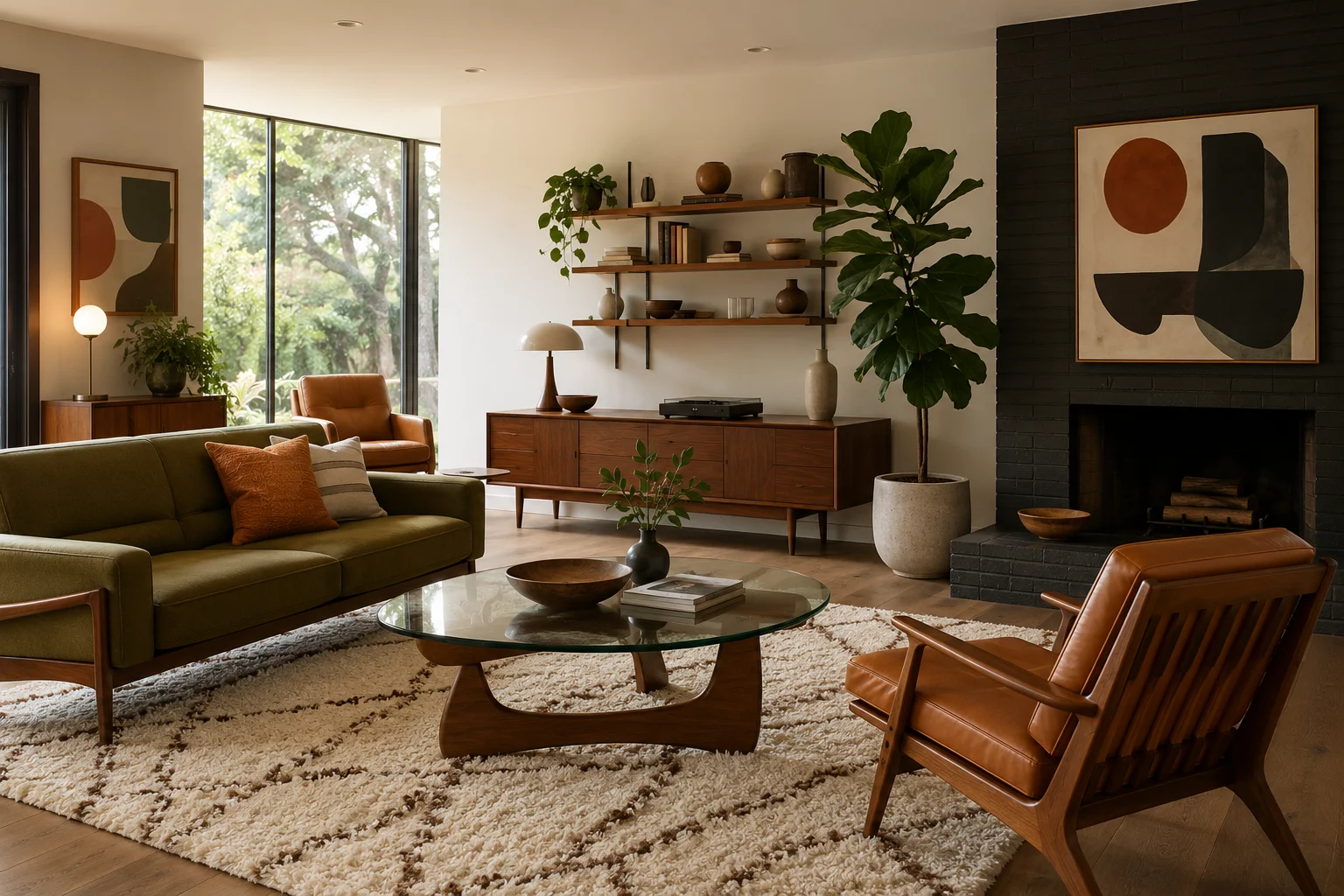
Common characteristics include warm wood furniture, tapered legs, functional forms, low-profile seating and an interplay between clean lines and organic shapes.
Walnut or teak can be balanced with colors such as olive, rust, mustard, cream, brown or muted blue.
The most convincing rooms usually mix Mid-Century influences with contemporary pieces rather than appearing like a complete historical recreation.
Explore further: Read our Mid-Century Modern living room style guide for furniture, lighting, color and styling guidance.
Minimalist Living Room
Minimalist design is not simply about owning fewer things. Successful minimalist interiors place greater emphasis on proportion, material quality, architecture and intentional selection.
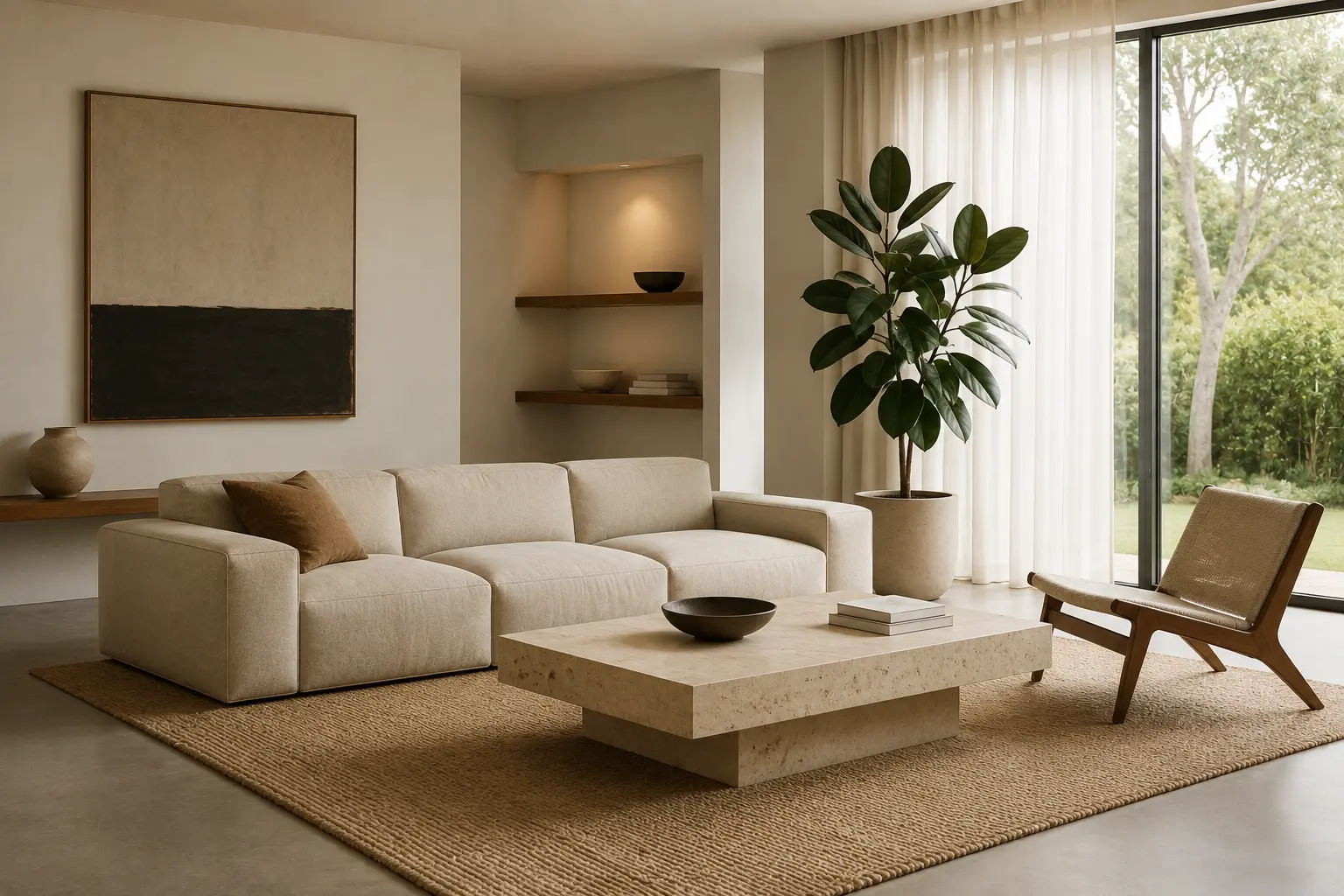
Furniture usually has a clear purpose, decorative objects are carefully edited and storage helps keep everyday clutter visually controlled.
Texture becomes particularly important because a limited palette can otherwise appear flat. Linen, wool, timber, stone, plaster and subtle tonal variation can provide depth without visual noise.
Explore further: Our Minimalist Living Room Guide explains furniture, storage, artwork and decorating in greater detail.
Bohemian Living Room
Bohemian interiors favor individuality, layering and a collected-over-time appearance.
Furniture does not need to match. Instead, vintage pieces, natural materials, textiles, artwork, books, ceramics and plants can be combined to create an informal room with personality.
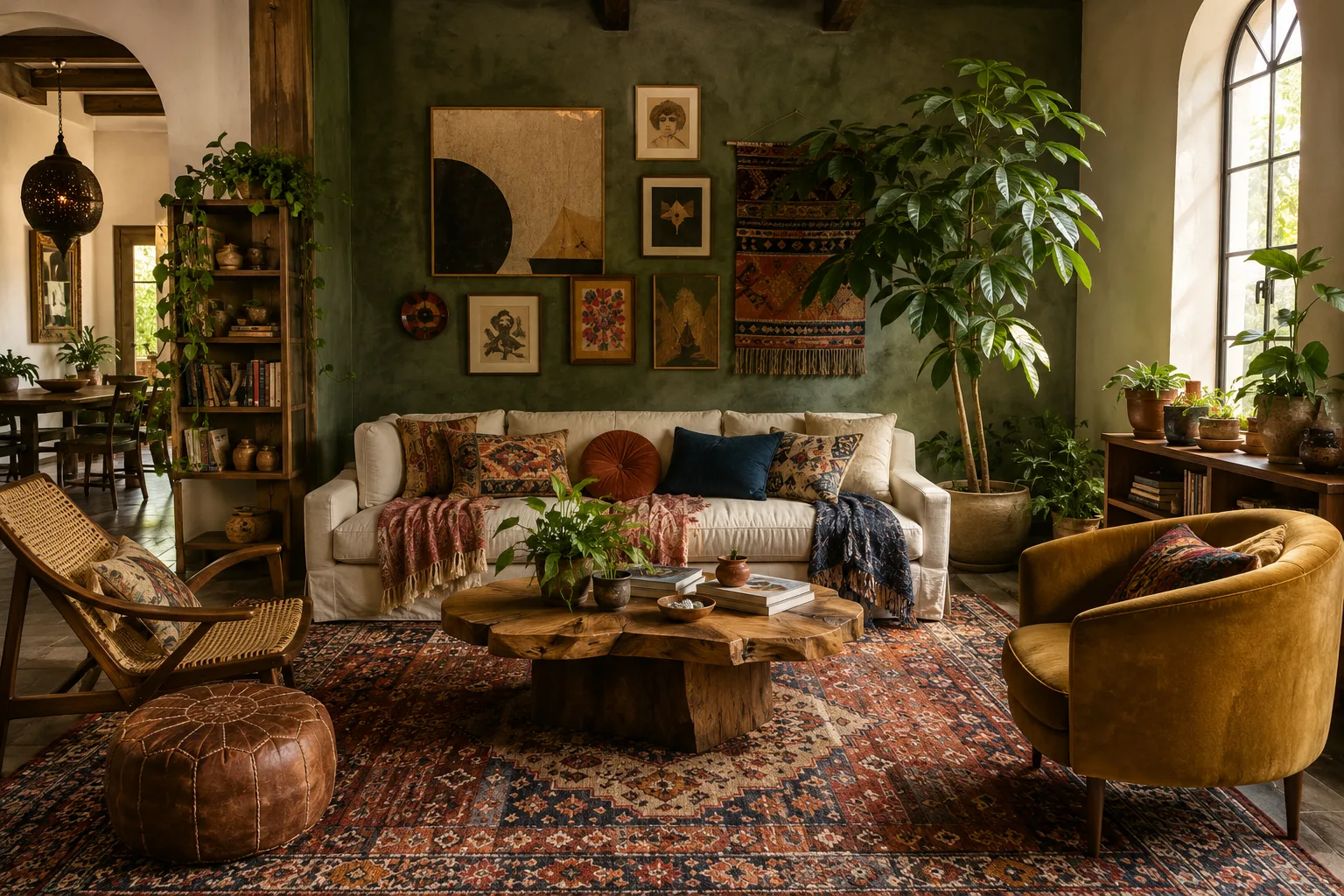
The key to sophisticated Bohemian styling is editing. Layering should feel intentional rather than random, with repeated colors or materials connecting seemingly different pieces.
Explore further: Read the Bohemian Interior Design Guide, Boho Design Principles Explained and How to Create a Bohemian Living Room for deeper coverage.
Traditional Living Room
Traditional living rooms emphasize balance, craftsmanship and furniture influenced by established European and American design traditions.
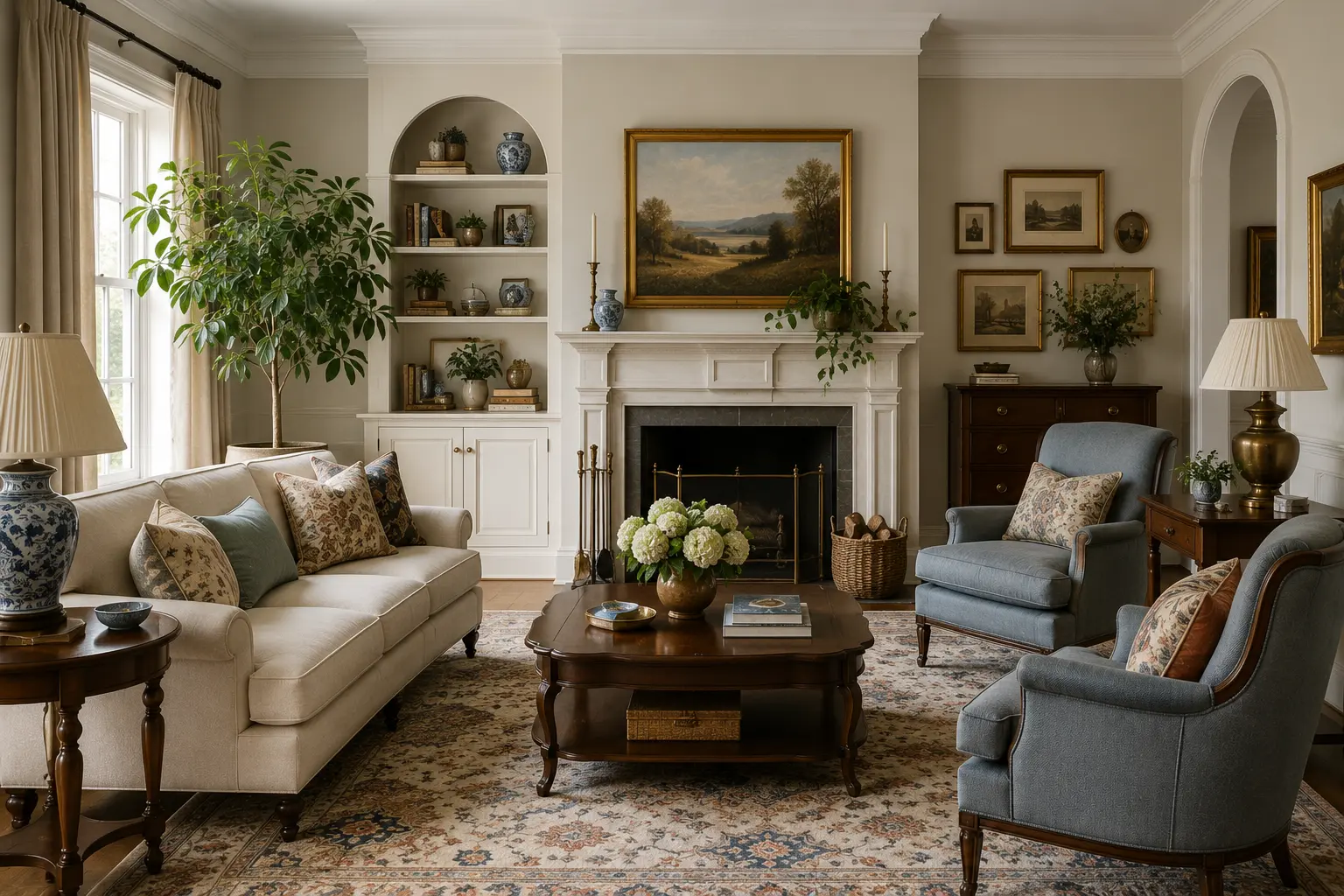
You may see rolled-arm sofas, framed artwork, wood casegoods, patterned textiles, substantial lamps and carefully arranged accessories.
Modern traditional interiors generally feel lighter than historical versions. Cleaner palettes and simplified window treatments can keep traditional furniture from appearing overly formal.
Transitional Living Room
Transitional design bridges traditional and contemporary aesthetics.
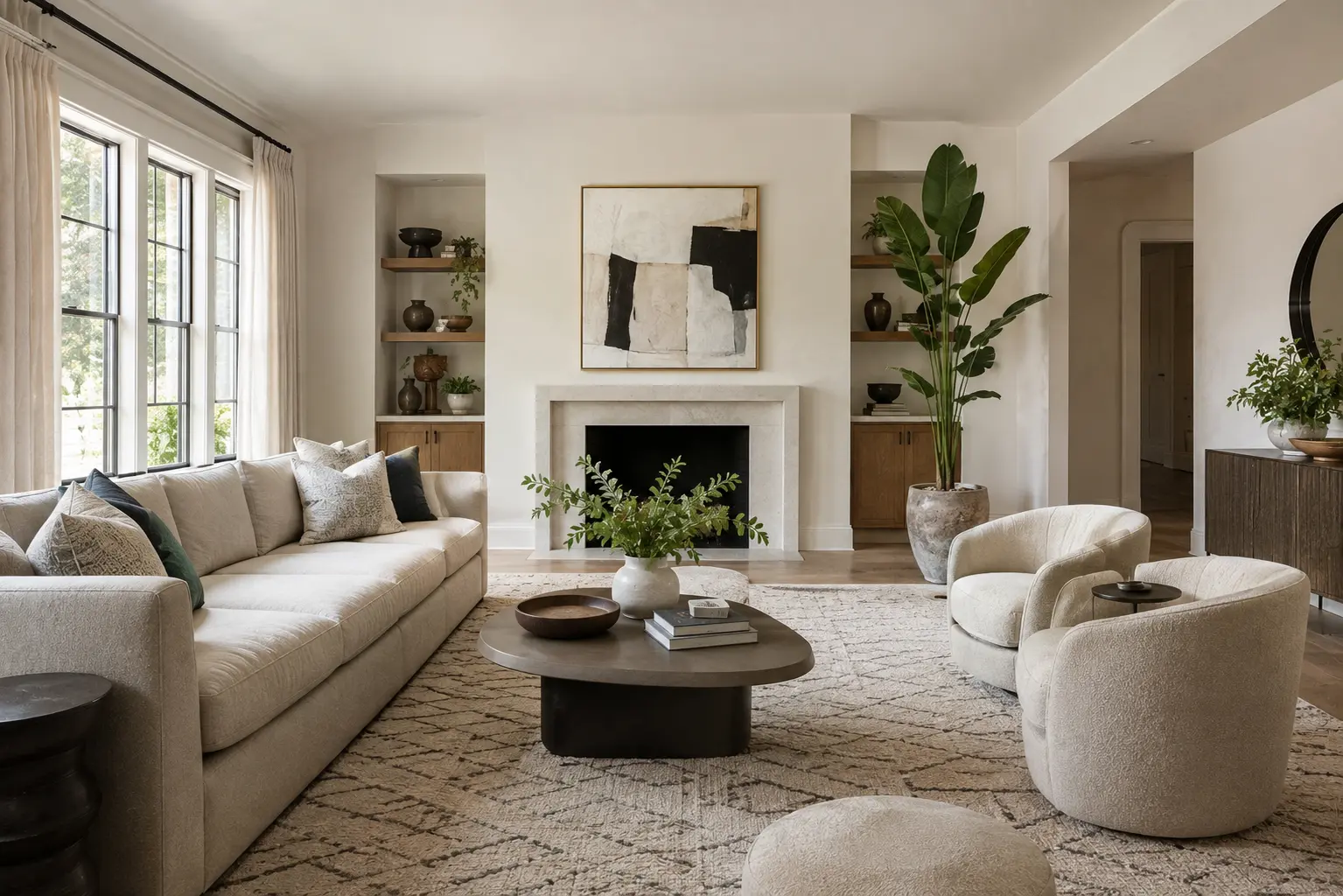
Furniture may have classic proportions but simplified details, while colors tend to remain neutral and materials sophisticated.
This is a particularly versatile approach for homes where architectural features are traditional but the desired atmosphere is lighter and more current.
Coastal Living Room
Modern coastal interiors focus less on obvious seaside motifs and more on light, texture and relaxed materials.
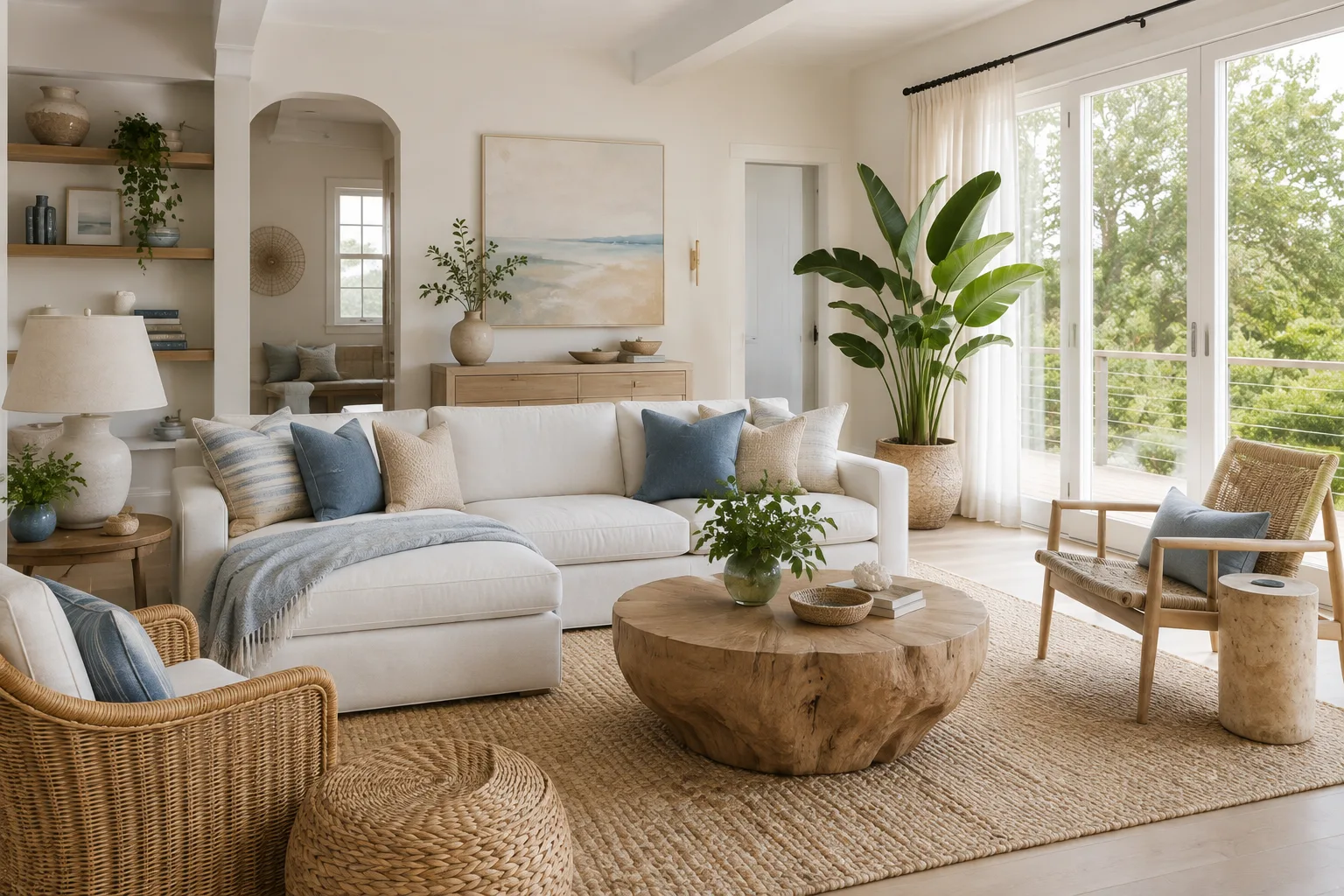
Think linen upholstery, pale timber, woven materials, soft blues, warm whites and casual furniture arrangements.
Avoid relying heavily on nautical accessories. Natural textures and an airy palette usually create a more timeless result.
Designer Tip
Instead of copying every characteristic associated with a design style, identify three or four elements you genuinely love and repeat them consistently throughout the living room. The result will usually feel more personal and less formulaic.
How to Choose a Living Room Color Palette
A cohesive color palette connects furniture, walls, flooring, textiles and accessories. This does not mean everything needs to match. In fact, rooms usually feel richer when several related tones are layered together.
Start With Existing Elements
If flooring, stone, cabinetry or major furniture pieces are staying, allow their undertones to influence the palette.
Warm oak floors, for example, generally work comfortably with cream, warm white, taupe, olive and earthy colors. Cooler flooring may relate more naturally to cooler neutrals, blue or gray-green.
Build a Simple Color Hierarchy
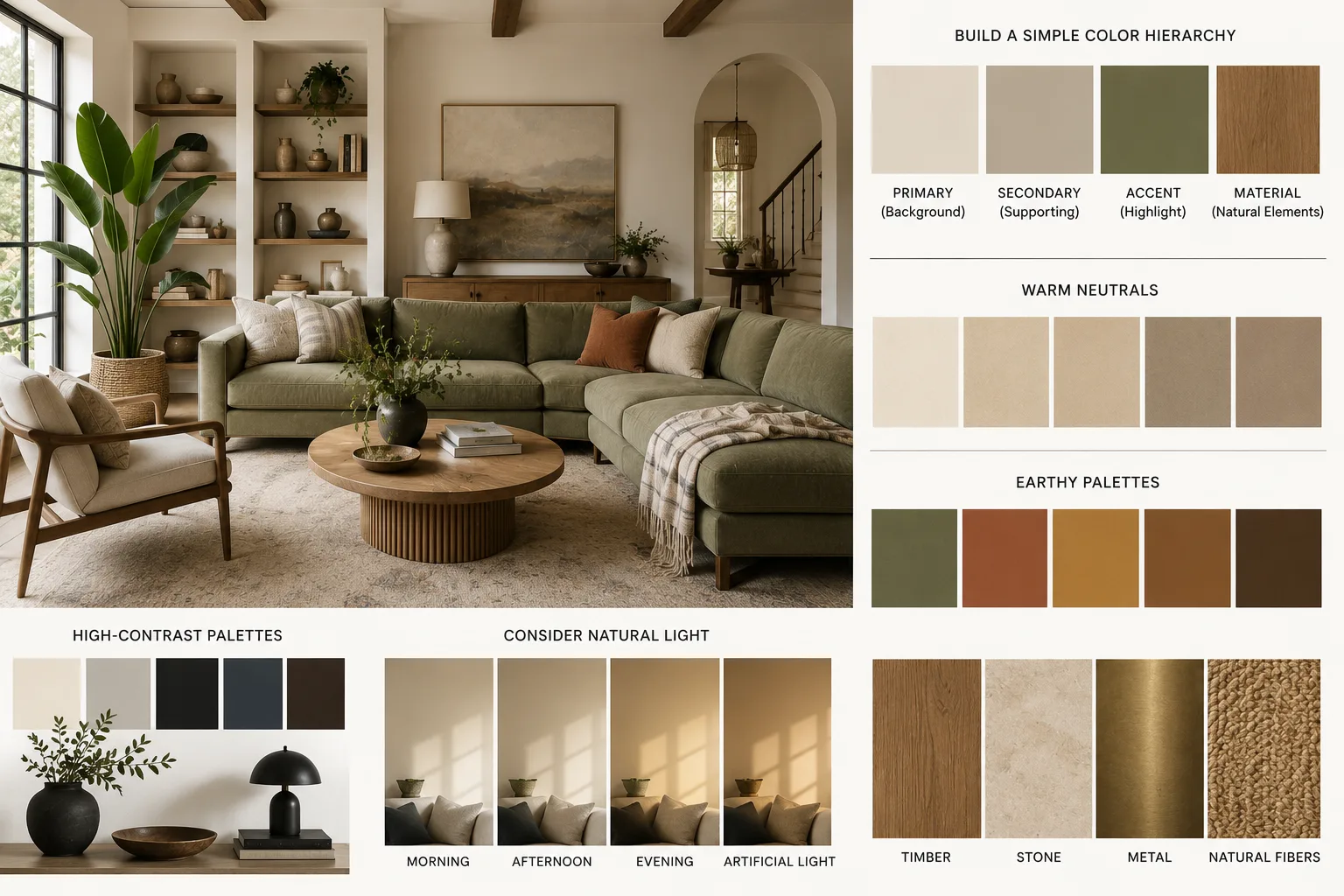
A practical living room palette can include:
- Primary color: the dominant background tone used across walls or major upholstery;
- Secondary color: a supporting neutral or natural material tone;
- Accent color: a smaller amount of stronger color introduced through artwork, cushions or accessories;
- Material colors: timber, stone, metal and natural fibers that function almost like additional colors.
Warm Neutrals
Cream, sand, beige, mushroom, taupe and warm gray create flexible foundations and work particularly well with Scandinavian, Japandi, Organic Modern and contemporary interiors.
Earthy Palettes
Olive, clay, terracotta, ochre and brown bring warmth and can complement Bohemian, Mid-Century Modern and Organic Modern interiors.
High-Contrast Palettes
Black, charcoal or deep brown can provide definition against lighter walls and furniture. Use darker tones selectively through frames, lighting, tables or architectural features instead of automatically distributing them equally throughout the room.
Consider Natural Light
Paint colors can change dramatically according to orientation, window size and time of day. Always test potential wall colors in the actual room and observe them in morning, afternoon and artificial light before committing.
How to Choose Living Room Furniture
Furniture determines both the function and visual weight of a living room. Rather than purchasing a complete matching set, build the room gradually using pieces that relate through proportion, material, color or form.
Choose the Sofa First
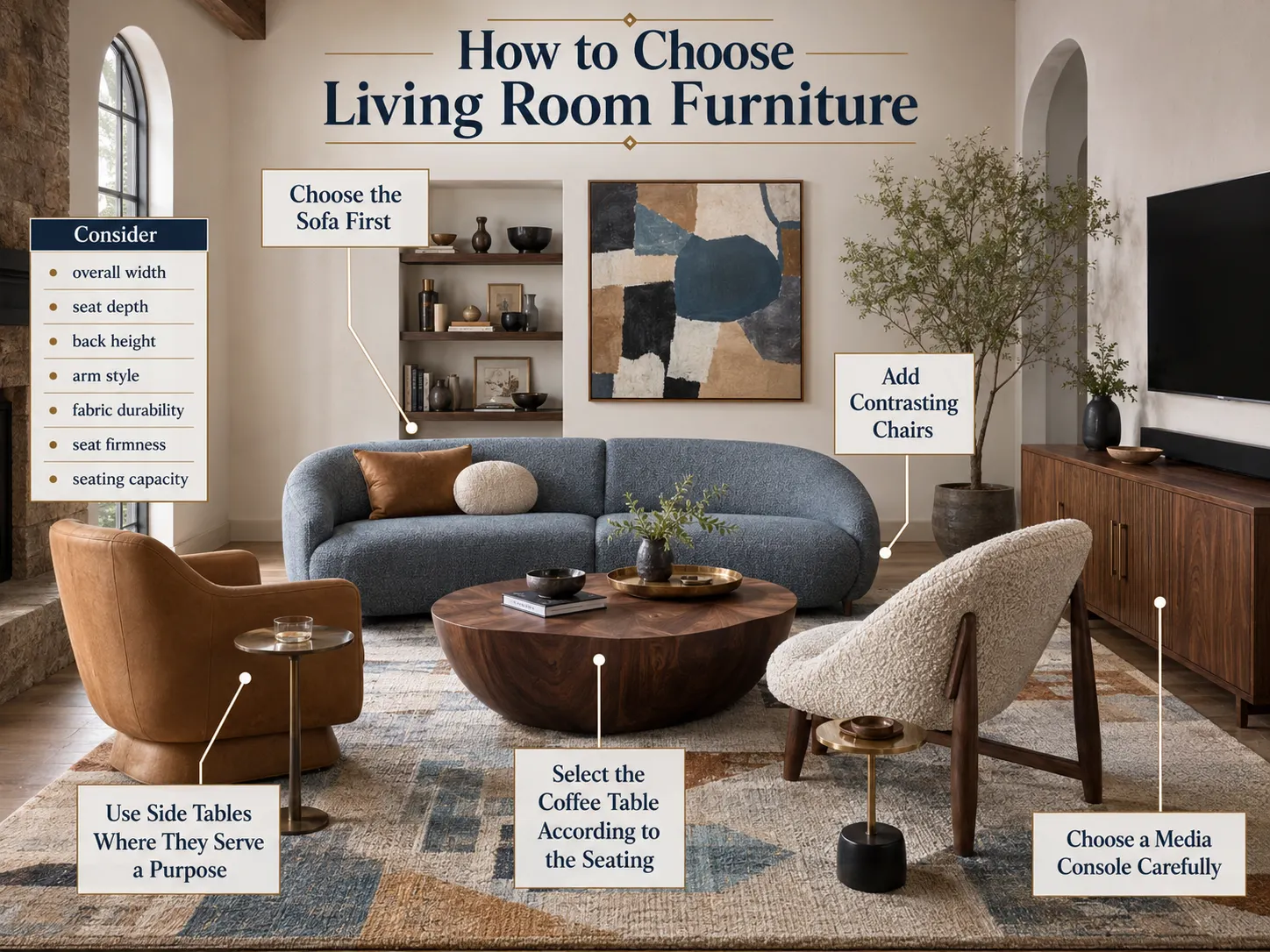
The sofa is usually the largest piece of furniture and should therefore establish the scale and direction of the room.
Consider:
- overall width;
- seat depth;
- back height;
- arm style;
- fabric durability;
- seat firmness;
- how many people regularly need seating.
Small rooms often benefit from narrower arms and raised legs, while larger rooms can support deeper sofas, modular seating or sectionals.
Add Contrasting Chairs
Accent chairs do not need to match the sofa.
A more layered interior can be created by contrasting shape or material—for example, pairing a softly upholstered sofa with timber-framed lounge chairs or a curved sofa with more angular seating.
Select the Coffee Table According to the Seating
Coffee table proportions should relate to the sofa rather than simply filling an empty area.
Rectangular tables work naturally with many conventional sofas. Round and oval tables can improve circulation and soften rooms dominated by straight architectural lines.
Nested tables can be useful when flexibility matters.
Use Side Tables Where They Serve a Purpose
Place side tables beside seating where someone may genuinely need to put down a drink, book or phone. They can also support table lamps and provide opportunities to introduce a contrasting material.
Choose a Media Console Carefully
A media unit should visually support the television rather than appear significantly smaller than it.
Closed cabinetry can conceal cables, gaming equipment and everyday clutter, helping even highly decorated rooms feel calmer.
How to Choose the Right Living Room Rug
A rug can visually connect the entire seating area, introduce texture and make hard-surface rooms feel considerably more comfortable.
Do Not Choose a Rug That Is Too Small
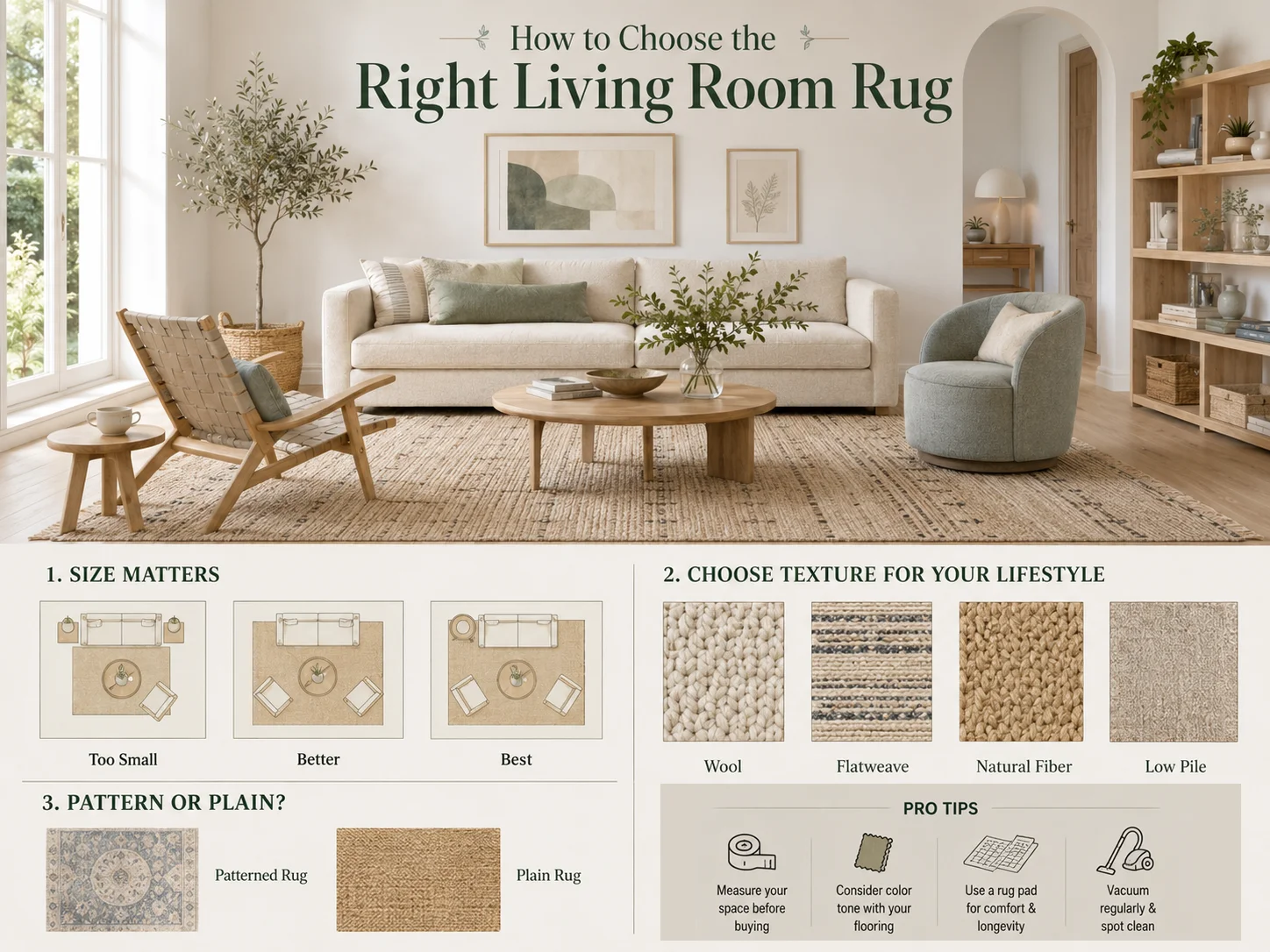
One of the most common living room mistakes is placing a small rug beneath only the coffee table.
Where possible, choose a rug large enough for at least the front legs of the principal seating pieces to rest on it.
In larger living rooms, placing all furniture legs on the rug can create an even more cohesive arrangement.
Choose Texture According to Lifestyle
Soft wool rugs can provide warmth and durability. Flatweaves are often easier to use beneath furniture and in busy rooms. Natural-fiber rugs introduce texture but may feel rougher underfoot.
Homes with children or pets may benefit from lower-pile, easy-care materials.
Pattern or Plain?
If upholstery and artwork already provide significant pattern, a quieter rug can give the room breathing space.
If the furniture is relatively simple, the rug can become a stronger design feature through pattern, texture or color.
How to Plan Living Room Lighting
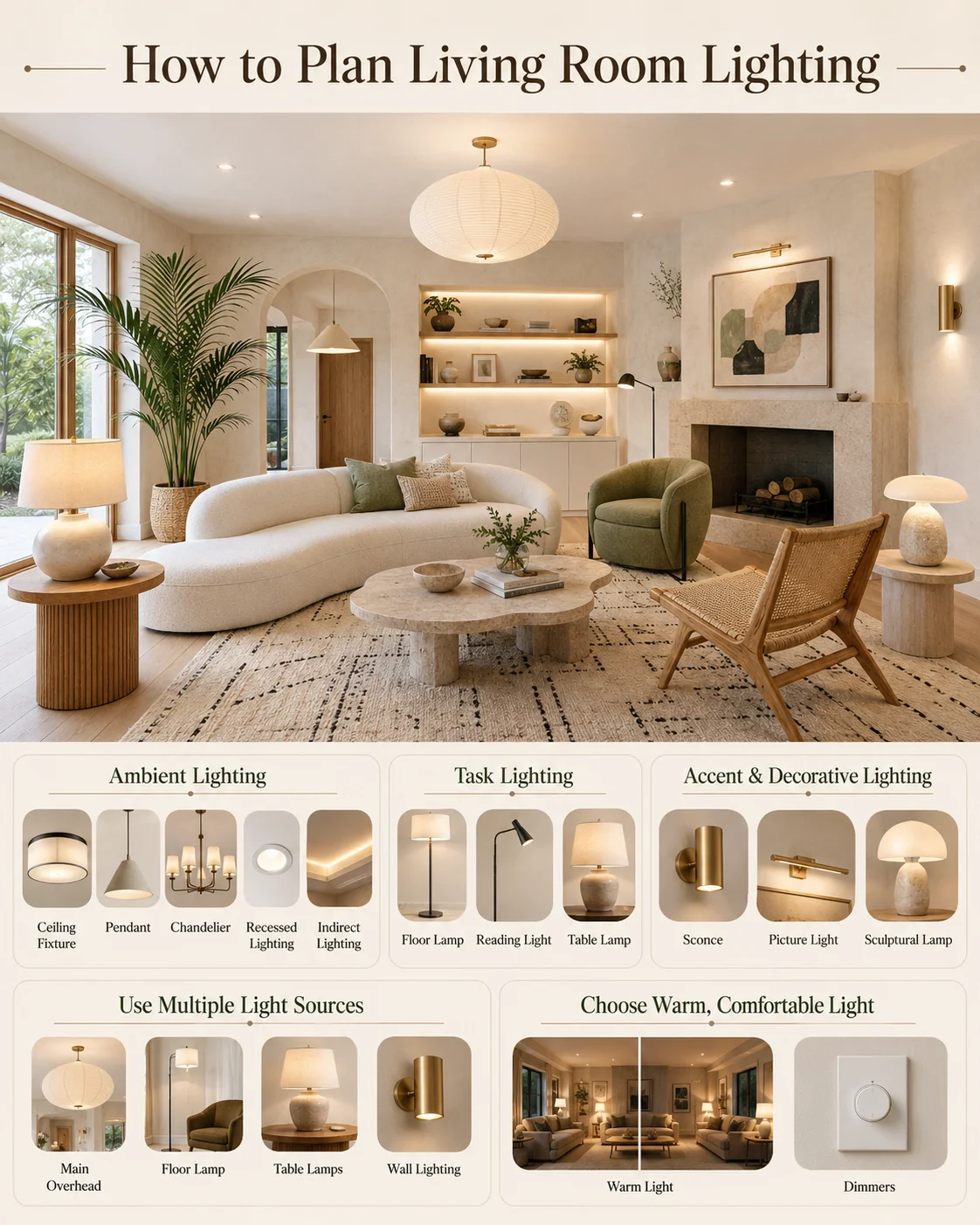
Beautiful living rooms rarely rely on one ceiling fixture. Layered lighting allows the room to function differently throughout the day and creates a far more comfortable atmosphere in the evening.
Ambient Lighting
Ambient light provides the general illumination for the room.
Sources may include:
- ceiling fixtures;
- pendants;
- chandeliers;
- recessed lighting;
- indirect architectural lighting.
Task Lighting
Task lighting supports activities such as reading or working.
A floor lamp beside an armchair or a directional table lamp can provide focused illumination without requiring the entire room to be brightly lit.
Accent and Decorative Lighting
Sconces, picture lights and sculptural lamps can highlight artwork, shelving and architectural features while contributing to the room’s visual identity.
Use Multiple Light Sources
A comfortable living room might combine:
- one main overhead fixture;
- one floor lamp;
- one or two table lamps;
- optional wall lighting.
Using lamps at different heights creates greater depth than relying solely on ceiling lighting.
Choose Warm, Comfortable Light
For most residential living rooms, warm light generally creates a more inviting atmosphere than very cool white lighting.
Dimmers are especially useful because the same fixtures can provide brighter functional lighting during the day and softer illumination at night.
Living Room Curtains and Window Treatments
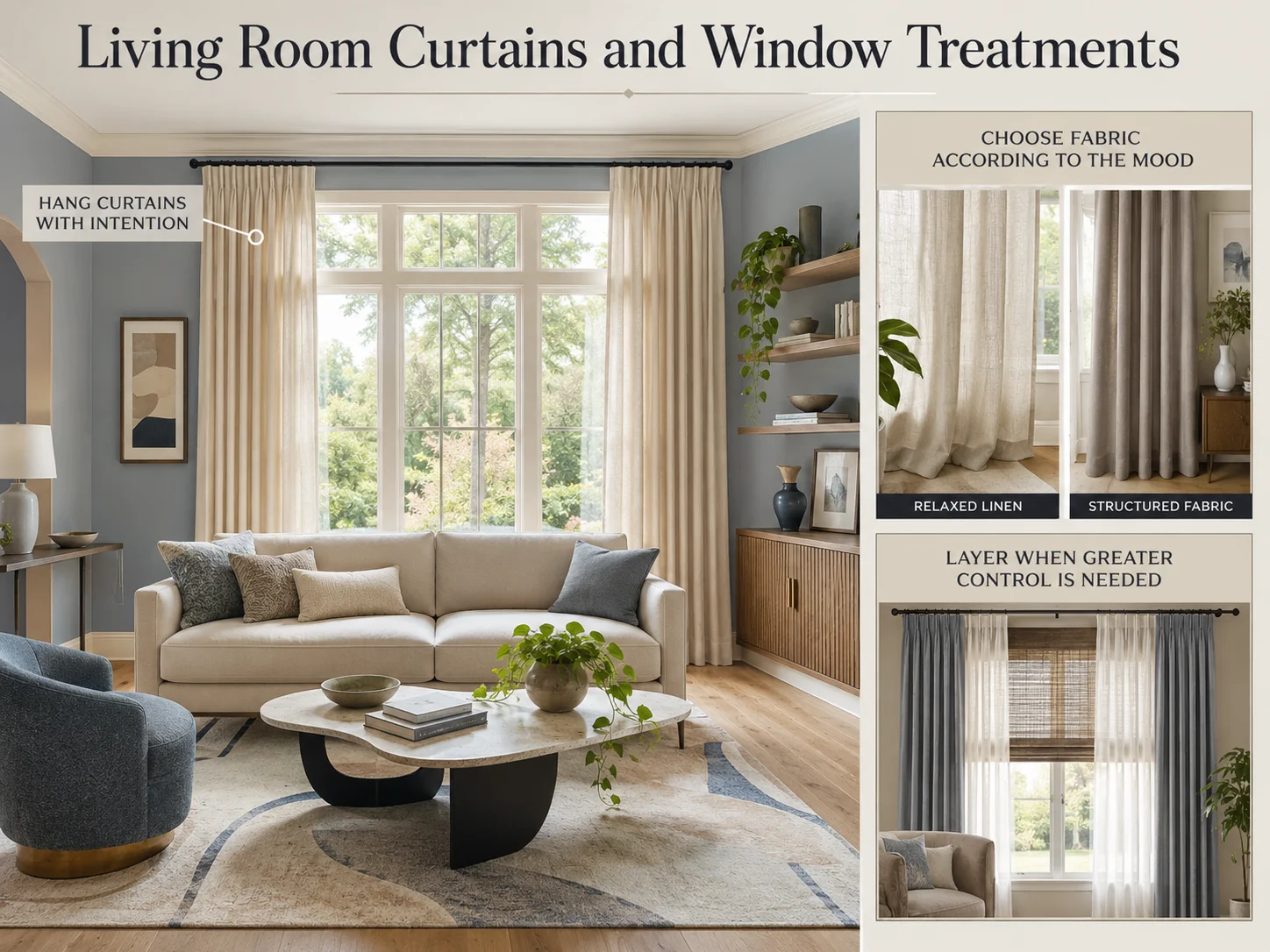
Window treatments provide privacy and light control, but they also influence the apparent scale and softness of the room.
Hang Curtains With Intention
Where architecture allows, mounting curtains higher and extending the track or rod beyond the sides of the window can make openings appear larger and allow more daylight to enter when curtains are open.
Choose Fabric According to the Mood
Linen and linen-look fabrics suit relaxed Scandinavian, Japandi, Organic Modern, coastal and contemporary rooms.
More structured fabrics can complement traditional and transitional interiors.
Layer When Greater Control Is Needed
Sheer curtains combined with blinds or heavier drapery can provide daytime privacy, light filtration and evening coverage without sacrificing softness.
Living Room Artwork and Wall Décor
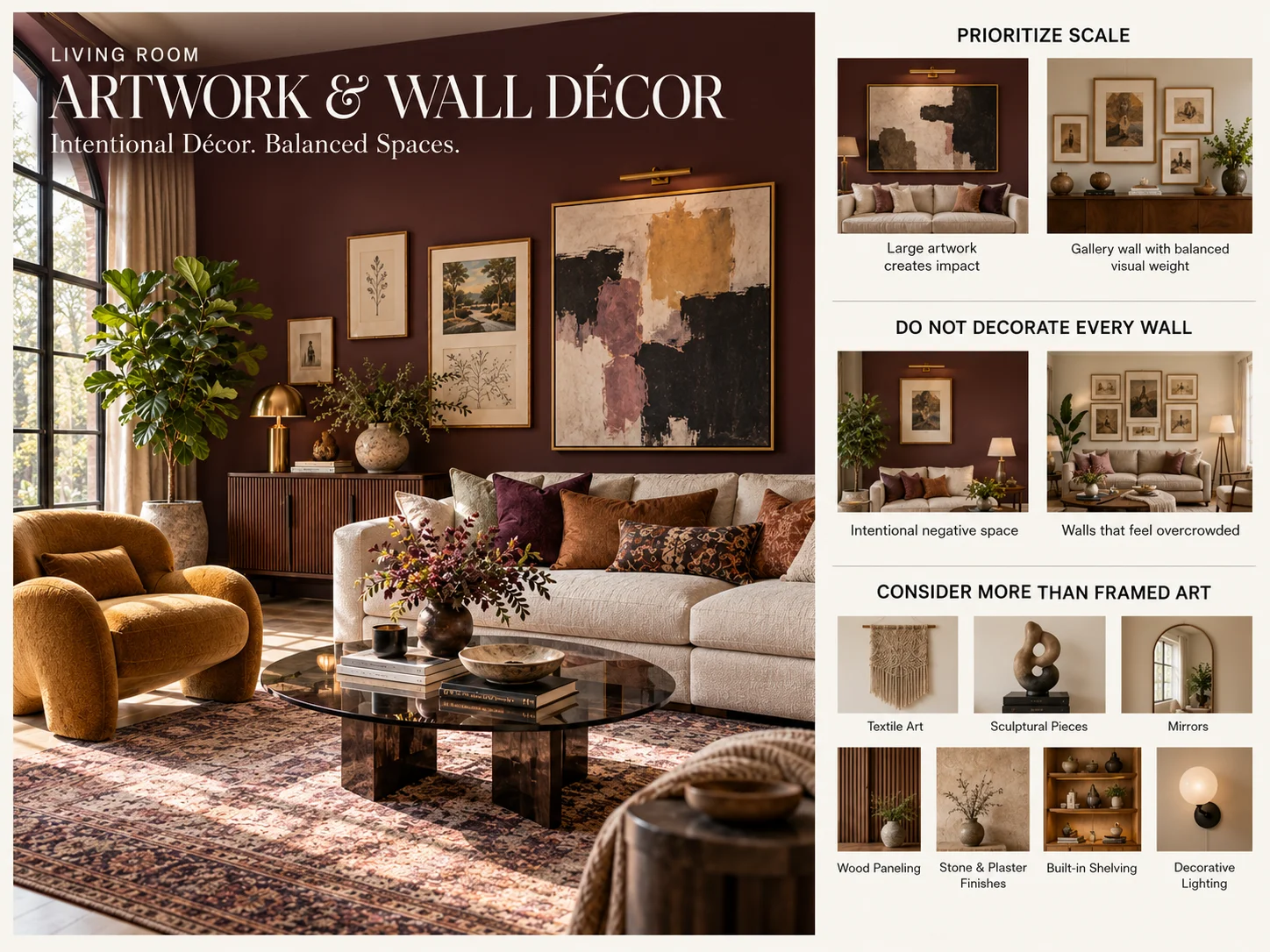
Wall decoration should support the composition of the room instead of simply filling empty surfaces.
Prioritize Scale
A substantial artwork above a sofa often appears more intentional than a single small picture floating on a large wall.
Alternatively, create a well-planned gallery wall where the artwork collectively occupies enough visual space to relate to the furniture below.
Do Not Decorate Every Wall
Negative space is part of the design. Leaving selected walls relatively quiet gives artwork, furniture and architectural features greater impact.
Consider More Than Framed Art
Wall interest can also come from:
- textile art;
- sculptural pieces;
- mirrors;
- wood paneling;
- stone;
- plaster finishes;
- built-in shelving;
- decorative lighting.
Clutter-Free Living Room Storage
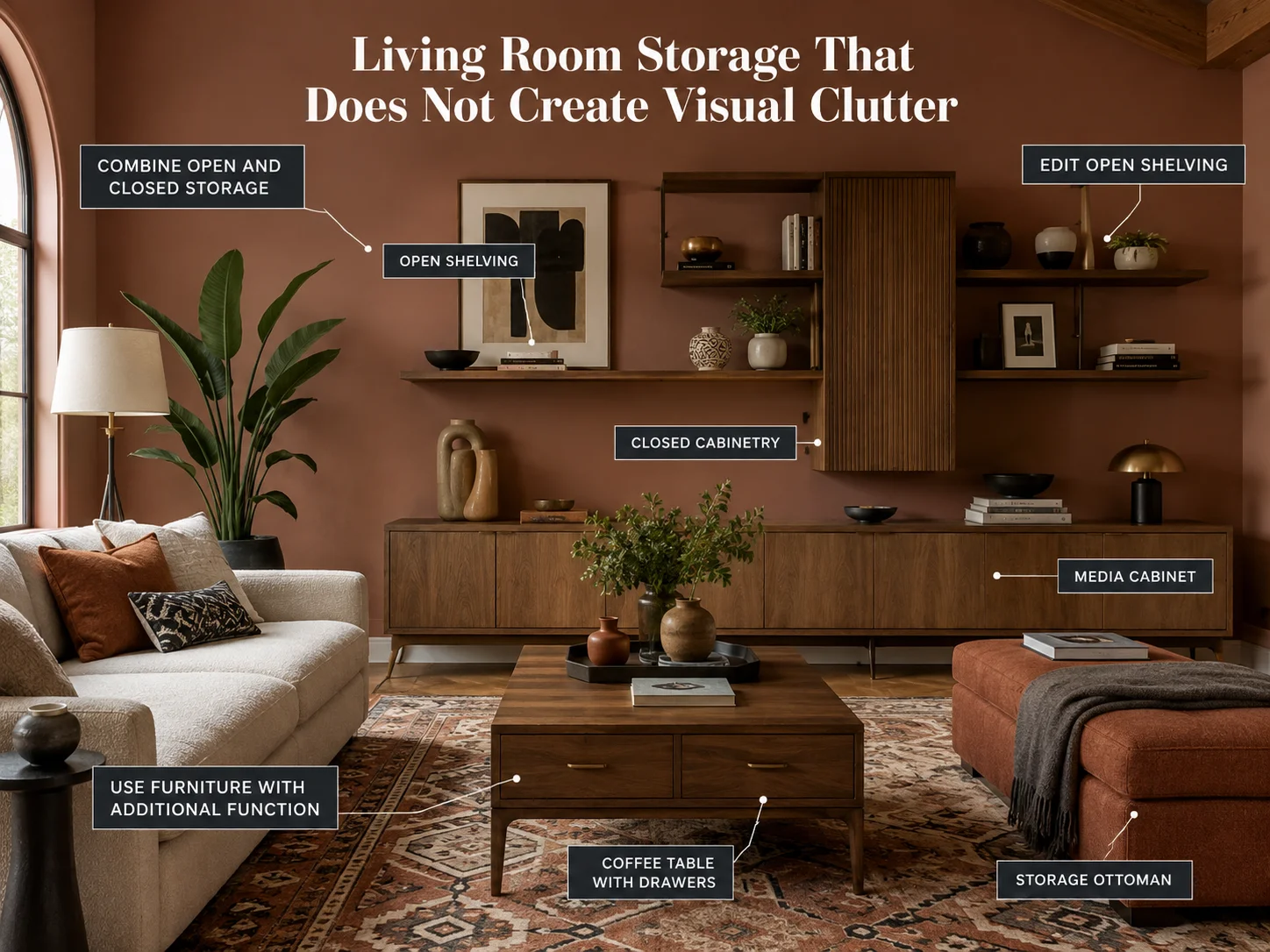
Even beautifully styled rooms need somewhere to store chargers, games, toys, paperwork, electronics and everyday objects.
Combine Open and Closed Storage
Open shelving works well for books, ceramics and decorative pieces, while closed cabinetry is better for less attractive everyday objects.
A combination of the two provides visual interest without forcing everything to remain permanently on display.
Use Furniture With Additional Function
Storage ottomans, media cabinets, sideboards and coffee tables with drawers can provide discreet storage without requiring additional furniture.
Edit Open Shelving
Avoid filling every shelf. Combine books with ceramics, framed artwork and sculptural pieces while leaving some negative space around objects.
How to Style Accessories, Textiles and Plants
Accessories are usually most successful when added after the main furniture, rug and lighting have been established.
Layer Textiles
Cushions and throws can introduce color, pattern and texture without requiring major changes to furniture.
Instead of purchasing a complete matching cushion set, combine related tones with different textures and occasional pattern.
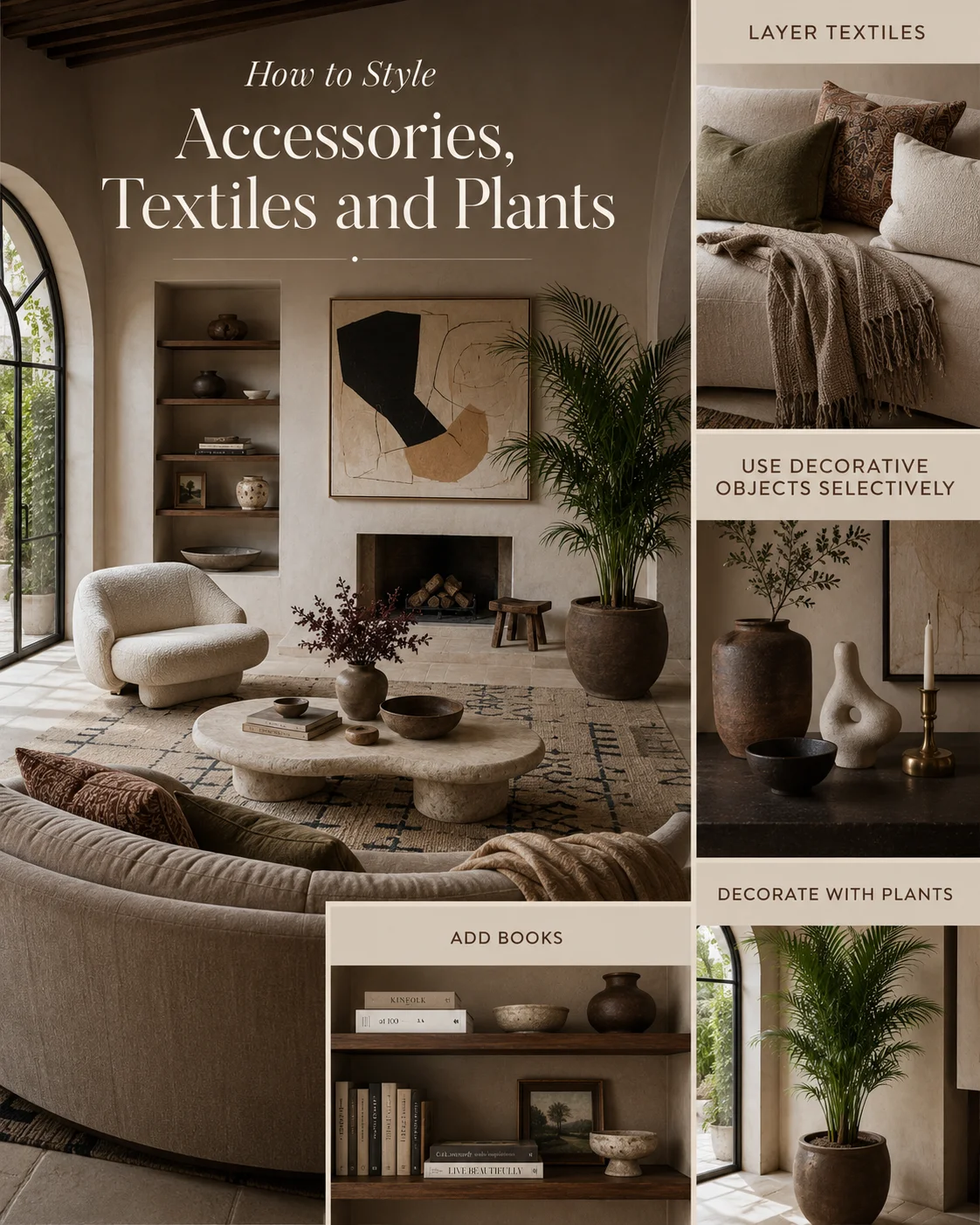
Use Decorative Objects Selectively
Ceramics, trays, bowls, candles, books and sculptural objects can make the room feel personal, but every available surface does not need decoration.
Group a few objects with varied heights and shapes, then allow empty space around them.
Add Books
Coffee table books and carefully arranged bookshelves bring personality while providing an opportunity to reflect interests in architecture, art, fashion, travel or design.
Decorate With Plants
Plants introduce organic shape, movement and color. Large plants can soften corners or balance substantial furniture, while smaller varieties work well on shelves and side tables.
Select plants according to the actual light conditions in the room rather than appearance alone.
Designer Tip
When a room feels unfinished, resist the temptation to add more small accessories immediately. Often the missing element is actually scale—a larger rug, taller lamp, substantial artwork or fuller curtains may solve the problem more effectively.
How to Design a Living Room Step by Step
Designing the room in the right order can prevent expensive mistakes and make the process considerably easier.
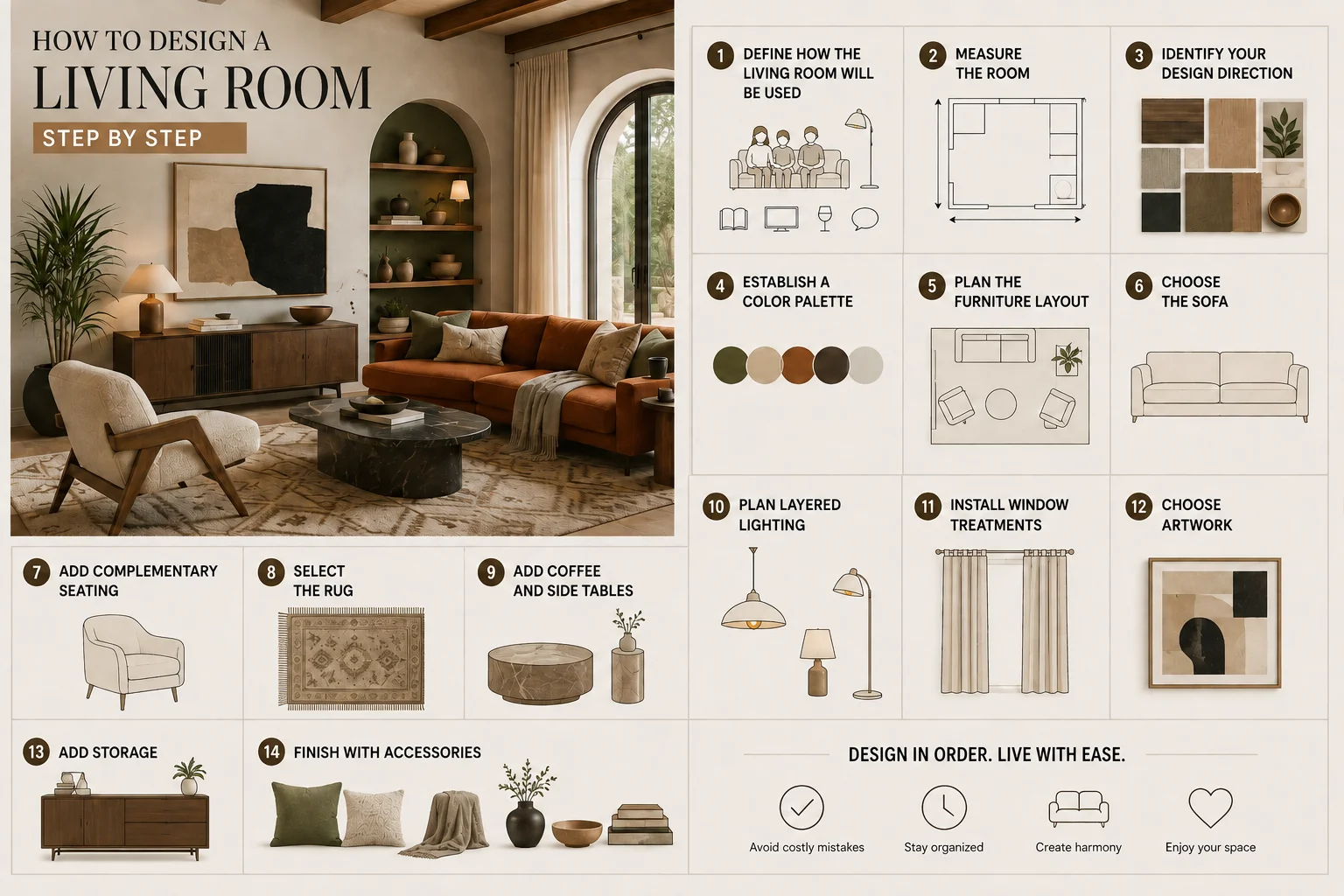
- Define How the Living Room Will Be Used Decide whether the priority is family relaxation, television, entertaining, conversation, reading or a combination of activities.
- Measure the Room Record walls, doors, windows, architectural features and circulation routes before choosing furniture.
- Identify Your Design Direction Create a small inspiration collection and identify recurring colors, furniture shapes, materials and styles.
- Establish a Color Palette Choose a dominant neutral or color, supporting tones and a limited number of accents that complement existing flooring and architectural materials.
- Plan the Furniture Layout Determine sofa and chair positions before ordering large pieces. Protect circulation and establish a clear focal point.
- Choose the Sofa Select a sofa based on the available space, required seating capacity, lifestyle and intended design style.
- Add Complementary Seating Introduce chairs or additional seating that complements the sofa without necessarily matching it.
- Select the Rug Choose a rug large enough to visually anchor the main seating arrangement.
- Add Coffee and Side Tables Balance function with proportion and use table materials to introduce contrast.
- Plan Layered Lighting Combine overhead, task and ambient light instead of relying on one central fixture.
- Install Window Treatments Use curtains, shades or blinds to provide privacy, manage natural light and soften the architecture.
- Choose Artwork Select pieces according to the scale of the wall and surrounding furniture rather than trying to decorate every surface.
- Add Storage Provide enough concealed storage for everyday items before decorative accessories begin to accumulate.
- Finish With Accessories Add cushions, throws, ceramics, books and plants gradually. Stop once the room feels balanced rather than continuing until every surface is occupied.
How to Design a Living Room on Different Budgets
A successful living room does not depend on purchasing everything at once. In many cases, a room assembled gradually feels more individual than one furnished entirely in a single shopping trip.
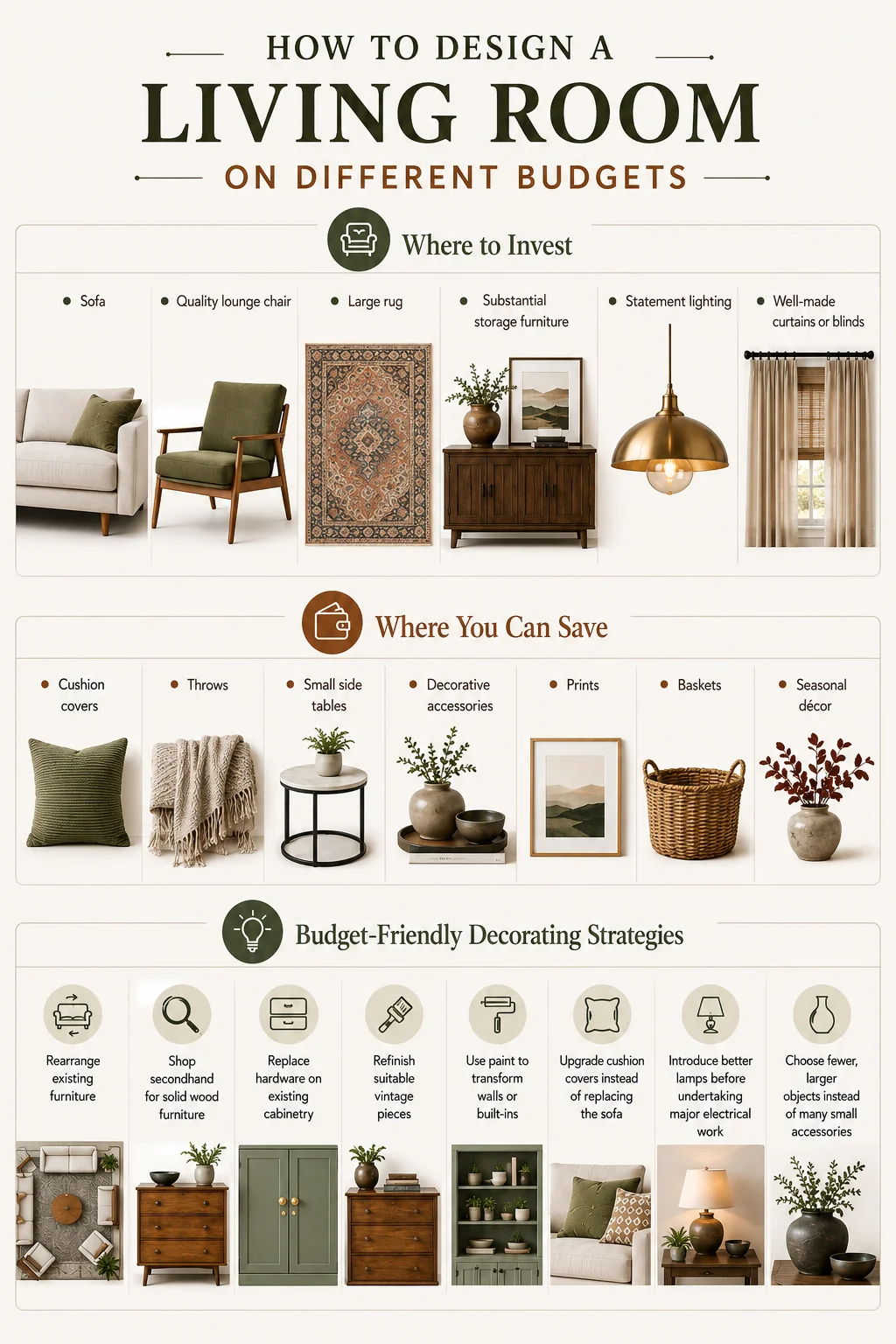
Where to Invest
Consider allocating a larger proportion of the budget to pieces that receive substantial use or strongly influence the room:
- sofa;
- quality lounge chair;
- large rug;
- substantial storage furniture;
- statement lighting;
- well-made curtains or blinds.
Where You Can Save
Smaller decorative elements can usually be replaced more easily:
- cushion covers;
- throws;
- small side tables;
- decorative accessories;
- prints;
- baskets;
- seasonal décor.
Budget-Friendly Decorating Strategies
- Rearrange existing furniture before buying anything new.
- Shop secondhand for solid wood furniture.
- Replace hardware on existing cabinetry.
- Refinish suitable vintage pieces.
- Use paint to transform walls or built-ins.
- Upgrade cushion covers instead of replacing the sofa.
- Introduce better lamps before undertaking major electrical work.
- Choose fewer, larger decorative objects instead of many small accessories.
A well-designed room is usually the result of proportion, planning and editing—not simply expenditure.
Common Living Room Design Mistakes
Buying Furniture Before Measuring
Always confirm dimensions and map the furniture footprint before ordering major pieces.
Choosing a Rug That Is Too Small
A rug should visually connect the seating arrangement instead of floating beneath the coffee table.
Pushing Every Piece Against a Wall
Where space allows, move furniture inward to create a more intimate conversation area.
Using Only One Light Source
Combine ceiling, floor, table and optional wall lighting for a more comfortable atmosphere.
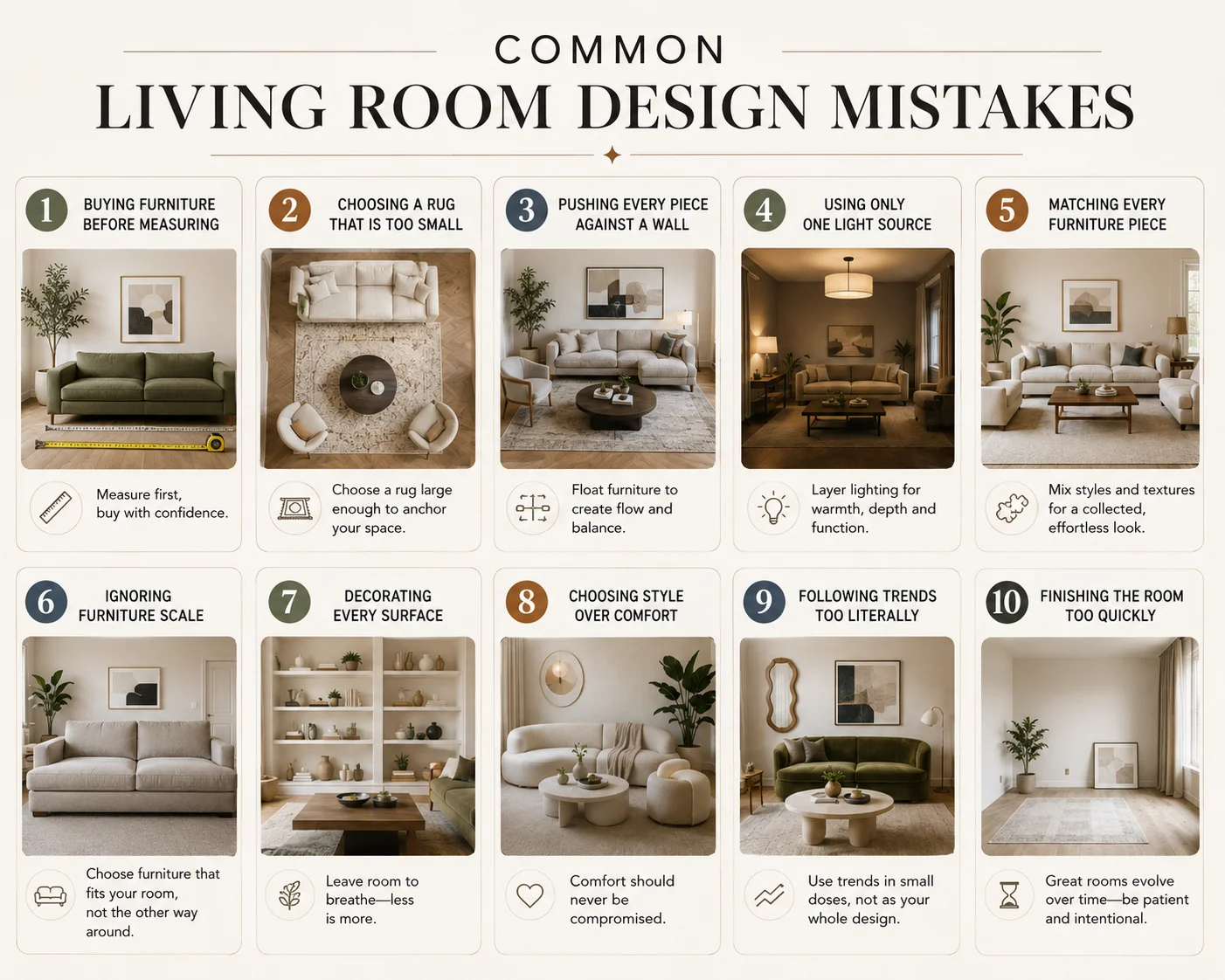
Matching Every Furniture Piece
Instead of complete matching sets, repeat selected materials, colors or shapes while allowing individual pieces to differ.
Ignoring Furniture Scale
Furniture should relate both to the dimensions of the room and to the other pieces in the arrangement.
Decorating Every Surface
Leave some visual breathing room. Empty areas help important objects receive greater attention.
Choosing Style Over Comfort
A visually impressive living room that is uncomfortable or difficult to use will rarely succeed long term.
Following Trends Too Literally
Use trends through easily changeable items while choosing larger furniture according to your lifestyle and longer-term preferences.
Finishing the Room Too Quickly
Live with the major furniture before filling every remaining corner. The final layers become easier to judge once the room is being used.
Shop the Look: Living Room Essentials
Rather than buying a collection of accessories first, prioritize foundational pieces that establish comfort, scale and function.
| Category | What to Look For | Why It Matters |
|---|---|---|
| Sofa | Comfortable proportions, durable upholstery and a versatile silhouette | Establishes the main seating area and visual direction |
| Accent Chair | A complementary shape, material or texture | Adds seating and creates contrast |
| Coffee Table | Correct scale with a practical surface | Anchors the centre of the seating arrangement |
| Area Rug | Generous dimensions and appropriate durability | Visually connects the furniture grouping |
| Media Console | Closed storage and proportions appropriate for the television | Reduces visual clutter |
| Floor Lamp | Functional light with a strong silhouette | Adds layered illumination and height |
| Table Lamp | Warm ambient lighting | Creates evening atmosphere |
| Curtains | Full-length panels suited to the architecture | Softens windows and improves visual scale |
| Artwork | Appropriate scale and genuine personal appeal | Provides character and a focal point |
| Cushions & Throws | Complementary textures and limited pattern | Adds softness and easily changeable color |
| Decorative Objects | Ceramics, books and sculptural pieces | Introduces personality |
| Plants | Species appropriate for available light | Adds natural shape and visual softness |
Shopping priority: If you are starting from scratch, purchase the sofa, rug, primary tables, lighting and storage first. Add artwork and decorative accessories only after these foundational pieces are established.
Living Room Style Variations
You do not have to choose between rigid design categories. Combining compatible influences can create a more distinctive living room.
Scandinavian + Mid-Century Modern
Combine Scandinavian lightness with walnut furniture, iconic chair silhouettes and stronger graphic accents.
Japandi + Organic Modern
Pair Japandi restraint with warmer stone, tactile upholstery, curved furniture and sculptural natural materials.
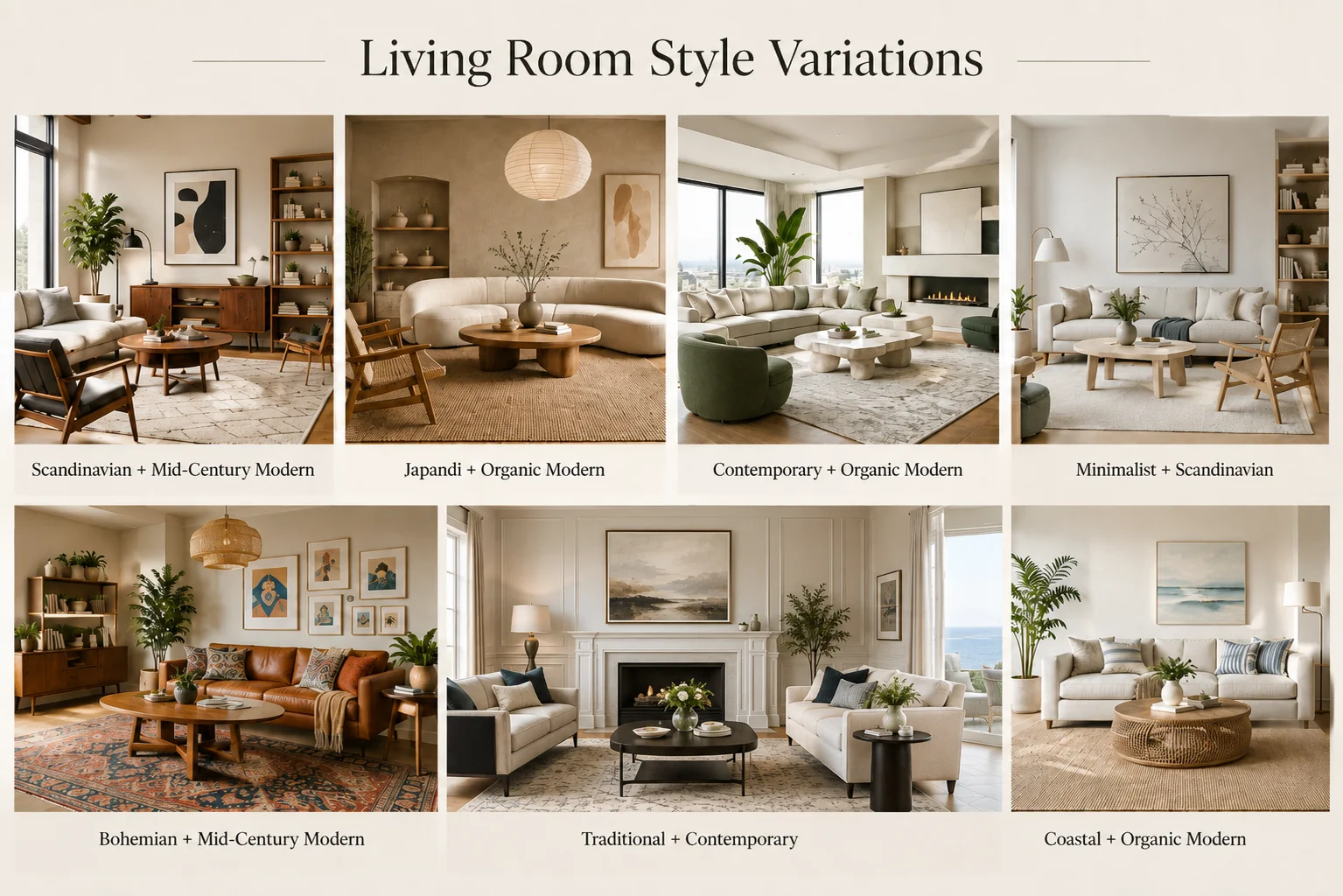
Contemporary + Organic Modern
Use contemporary architecture and streamlined furniture alongside earthy materials, tactile fabrics and organic forms.
Minimalist + Scandinavian
Keep decoration restrained while introducing pale timber, wool, linen and warmer lighting to prevent the room from feeling austere.
Bohemian + Mid-Century Modern
Use Mid-Century furniture as the structural foundation, then introduce vintage textiles, plants, artwork and collected accessories.
Traditional + Contemporary
Combine classic furniture proportions or architectural details with cleaner lighting, simplified window treatments and modern artwork.
Coastal + Organic Modern
Use light woods, linen, woven fibers and natural stone while avoiding overt nautical decoration.
The easiest way to combine styles successfully is to establish one dominant design language and use the second style as an influence rather than dividing the room equally between two competing aesthetics.
How to Make Your Living Room Feel Timeless
Timeless living rooms rarely depend on one particular trend. Their longevity usually comes from thoughtful proportions, practical layouts, good materials and furniture that suits the people using the room.
Prioritize:
- comfortable furniture;
- quality where it matters;
- materials that age gracefully;
- appropriate scale;
- flexible neutral foundations;
- personal artwork and objects;
- easy-to-change accent layers.
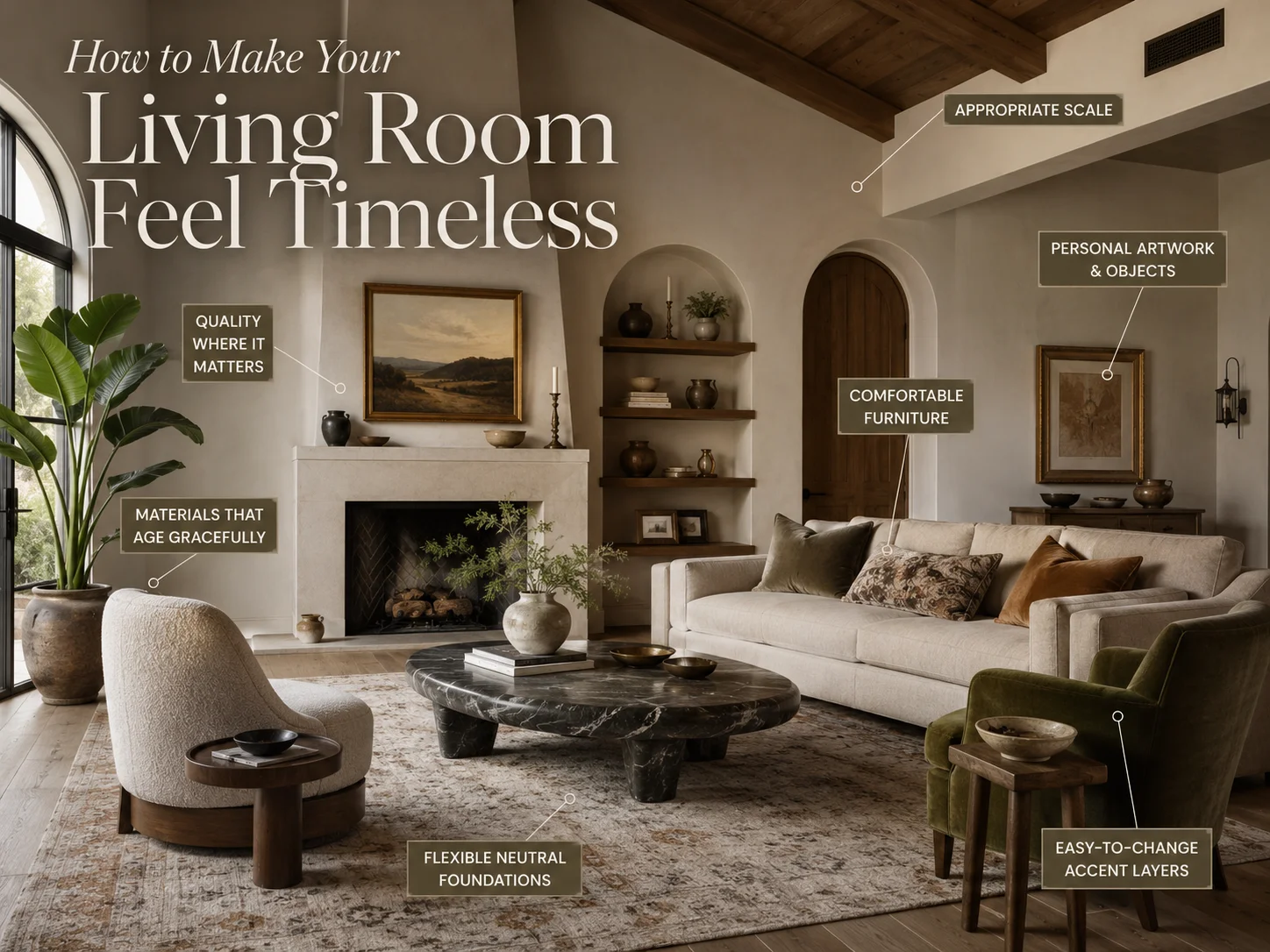
Trends can still be useful for inspiration. Introduce them through paint, cushions, smaller lighting, accessories and artwork rather than automatically replacing expensive foundational furniture.
FAQs About Living Room Design
What should I choose first when designing a living room?
Begin with function, room measurements and a furniture layout. Once the overall plan is established, choose the sofa and other large foundational pieces before purchasing small decorative accessories.
How do I find my living room design style?
Collect interiors you like and look for repeated characteristics such as furniture shapes, wood tones, colors, materials and levels of decoration. These patterns can reveal whether you lean toward styles such as Scandinavian, Japandi, contemporary, Mid-Century Modern, minimalist, Bohemian or a combination.
Does all living room furniture need to match?
No. A room usually feels more natural when furniture pieces complement rather than exactly match one another. Repeat selected materials, colors or shapes to create cohesion while allowing individual pieces to differ.
How can I make a living room look more expensive?
Focus on scale, full-length window treatments, a properly sized rug, layered lighting, substantial artwork and fewer but better-chosen accessories. Correct proportions often make a greater difference than expensive decorative items.
How many colors should a living room have?
There is no fixed number, but starting with one dominant color or neutral, one or two supporting tones and a smaller accent color creates an easy framework. Natural wood, stone and metal can function as additional colors within the palette.
Should a sofa be against the wall?
Not necessarily. In larger rooms, floating the sofa can improve conversation and define the seating zone. In smaller or narrow rooms, placing the sofa closer to a wall may make more efficient use of space.
How big should a living room rug be?
The rug should generally be large enough to visually connect the principal seating pieces. Where possible, place at least the front legs of the sofa and chairs on the rug rather than using a small rug beneath only the coffee table.
How do I make a neutral living room feel warm?
Layer different neutral tones and introduce texture through timber, wool, linen, stone, woven materials, curtains, rugs and warm lighting. A neutral room becomes cold primarily when it lacks tonal variation and tactile materials.
How can I make a small living room look bigger?
Choose appropriately scaled furniture, maintain clear circulation, use fewer substantial pieces instead of many small ones and allow some floor and wall space to remain visible. Full-height curtains and a sufficiently large rug can also make the room feel more cohesive.
What is the most important part of living room design?
There is no single decorative element that determines success. The strongest living rooms combine a functional layout, comfortable furniture, appropriate scale, cohesive color and materials, layered lighting and enough storage for everyday life.
Can I mix two interior design styles in one living room?
Yes. Choose one style as the dominant direction and introduce selected characteristics from the second. Repeating colors, materials and shapes throughout the room helps different influences feel intentional.
How often should I update my living room?
Well-chosen foundational furniture can remain for many years. Instead of redesigning the entire room whenever trends change, update smaller elements such as cushions, throws, artwork, accessories or paint when you want a different atmosphere.
Final Thoughts
The best living rooms are not defined by a particular style, expensive furniture or perfect adherence to design trends. They succeed because the room has been planned around the people who actually use it.
Begin with function and layout. Establish a cohesive palette. Choose furniture that fits both the room and your lifestyle. Use a generously sized rug to connect the seating arrangement, layer several types of lighting and introduce artwork, textiles, plants and decorative objects gradually.
Whether you ultimately prefer Scandinavian simplicity, Japandi restraint, Organic Modern warmth, Mid-Century character, contemporary sophistication, minimalist calm or Bohemian layering, these fundamentals remain remarkably consistent.
Use this guide as the foundation for your living room, then explore the individual style guides and decorating resources that best match the look you want to create.