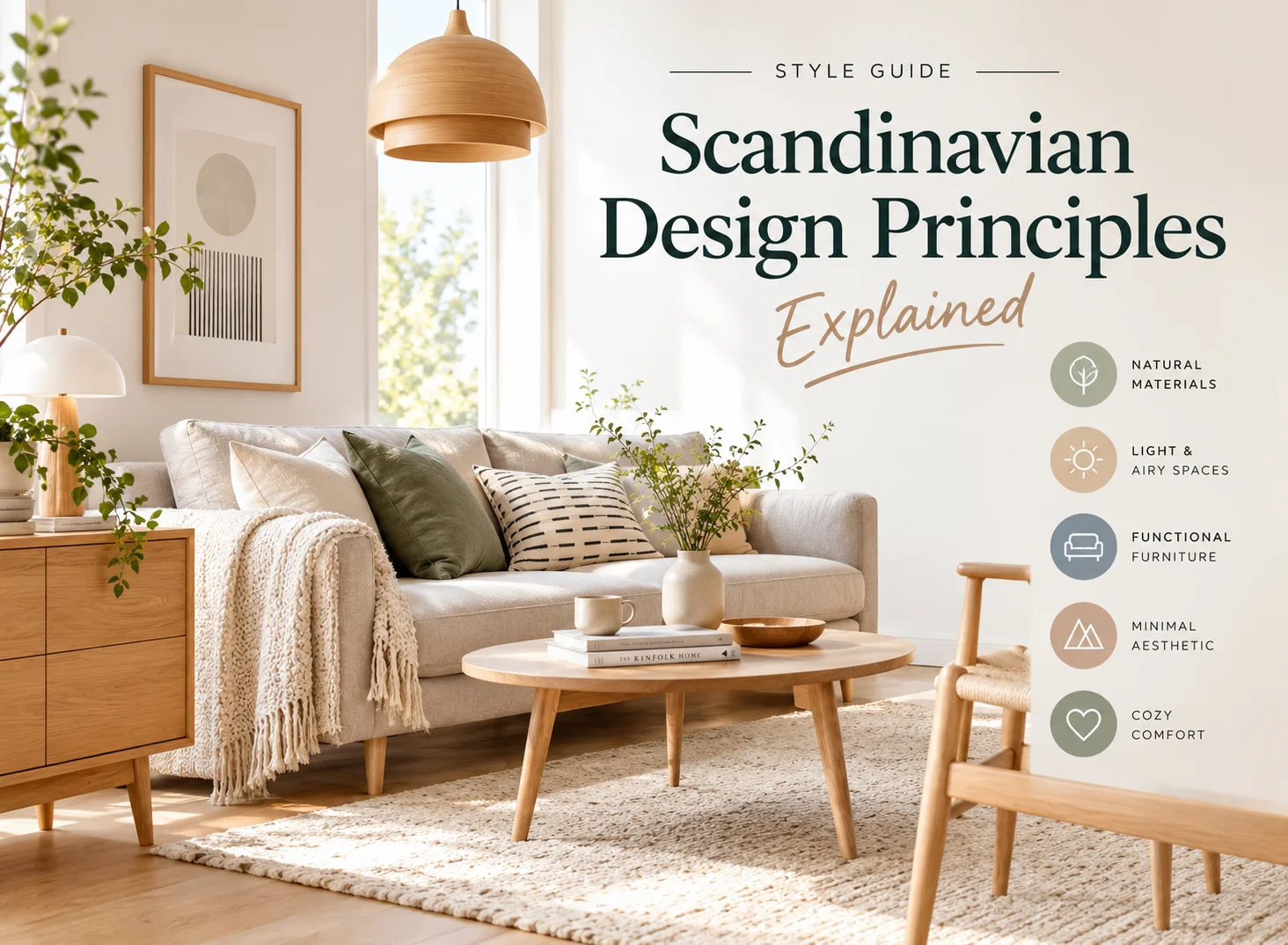
Scandinavian interiors often look effortless: pale walls, natural wood, simple furniture, soft textiles and just enough decoration to make a room feel personal. But the best Scandinavian spaces are not created by collecting a particular set of furniture or painting everything white. They are shaped by a much deeper set of design principles.
At the heart of Scandinavian design is the belief that a home should make everyday life easier, more comfortable and more enjoyable. Beauty matters, but it is rarely separated from function. Furniture should be useful. Materials should feel good to live with. Light should be treated as part of the design. Decoration should contribute rather than compete.
Understanding these Scandinavian design principles makes the style much easier to recreate because you can evaluate every decision—from furniture placement to lighting—according to the same underlying philosophy.
In this guide, we explain the core principles behind Scandinavian interiors and show how to apply them throughout a real home without making your rooms feel overly minimal, cold or staged.
What Are the Main Principles of Scandinavian Design?
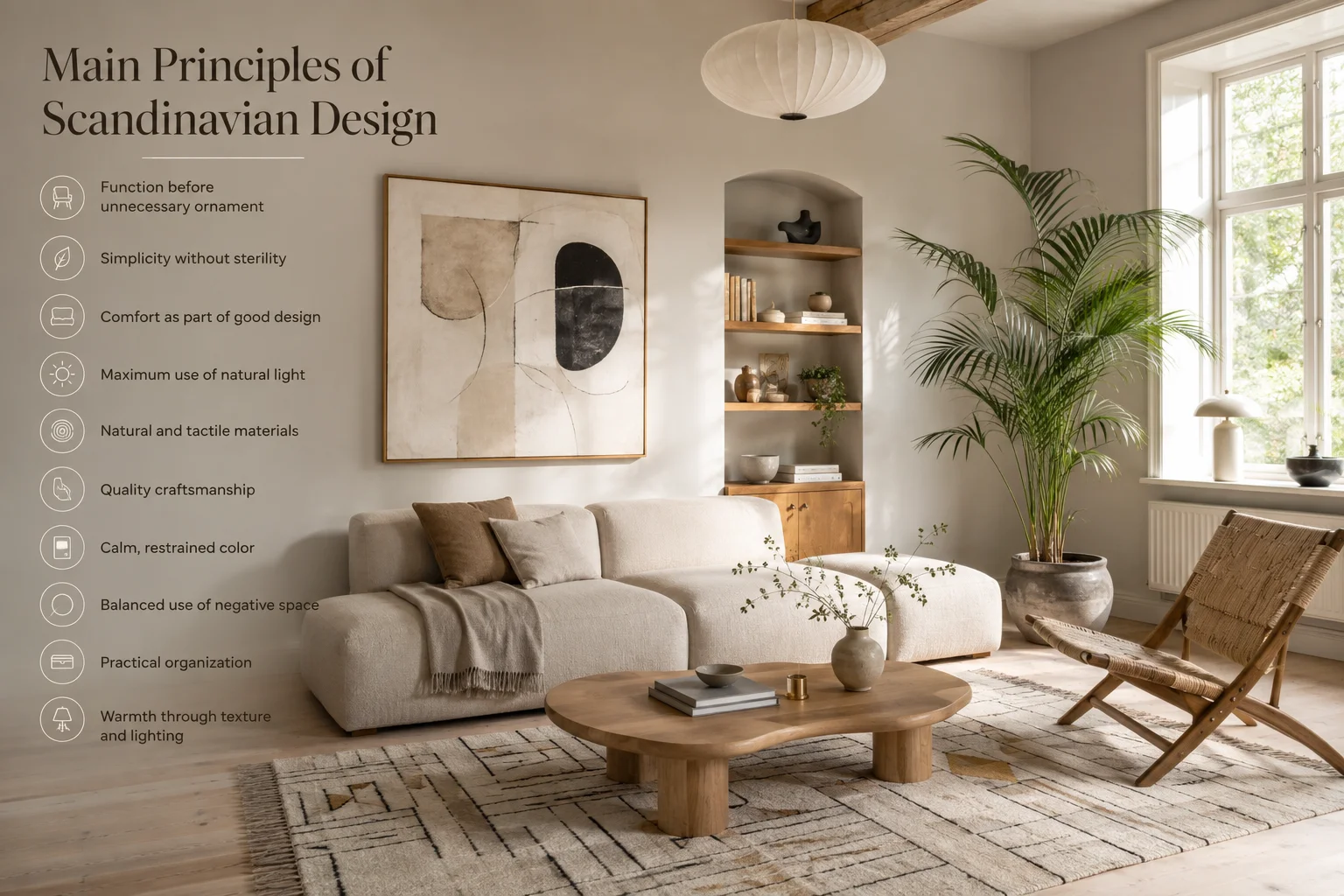
The main principles of Scandinavian design are simplicity, functionality, comfort, natural light, craftsmanship, natural materials, visual balance and a strong connection between beauty and everyday usefulness.
These ideas developed together rather than as independent decorating rules. A simple chair, for example, should not merely have a minimal silhouette. It should also be comfortable, well proportioned, thoughtfully made and appropriate for the space around it.
This relationship between form and function explains why authentic Scandinavian interiors rarely feel decorative for decoration’s sake.
- Function before unnecessary ornament
- Simplicity without sterility
- Comfort as part of good design
- Maximum use of natural light
- Natural and tactile materials
- Quality craftsmanship
- Calm, restrained color
- Balanced use of negative space
- Practical organization
- Warmth through texture and lighting
Together, these principles create interiors that feel calm and visually refined while remaining genuinely comfortable to live in.
Principle #1. Function Comes Before Decoration
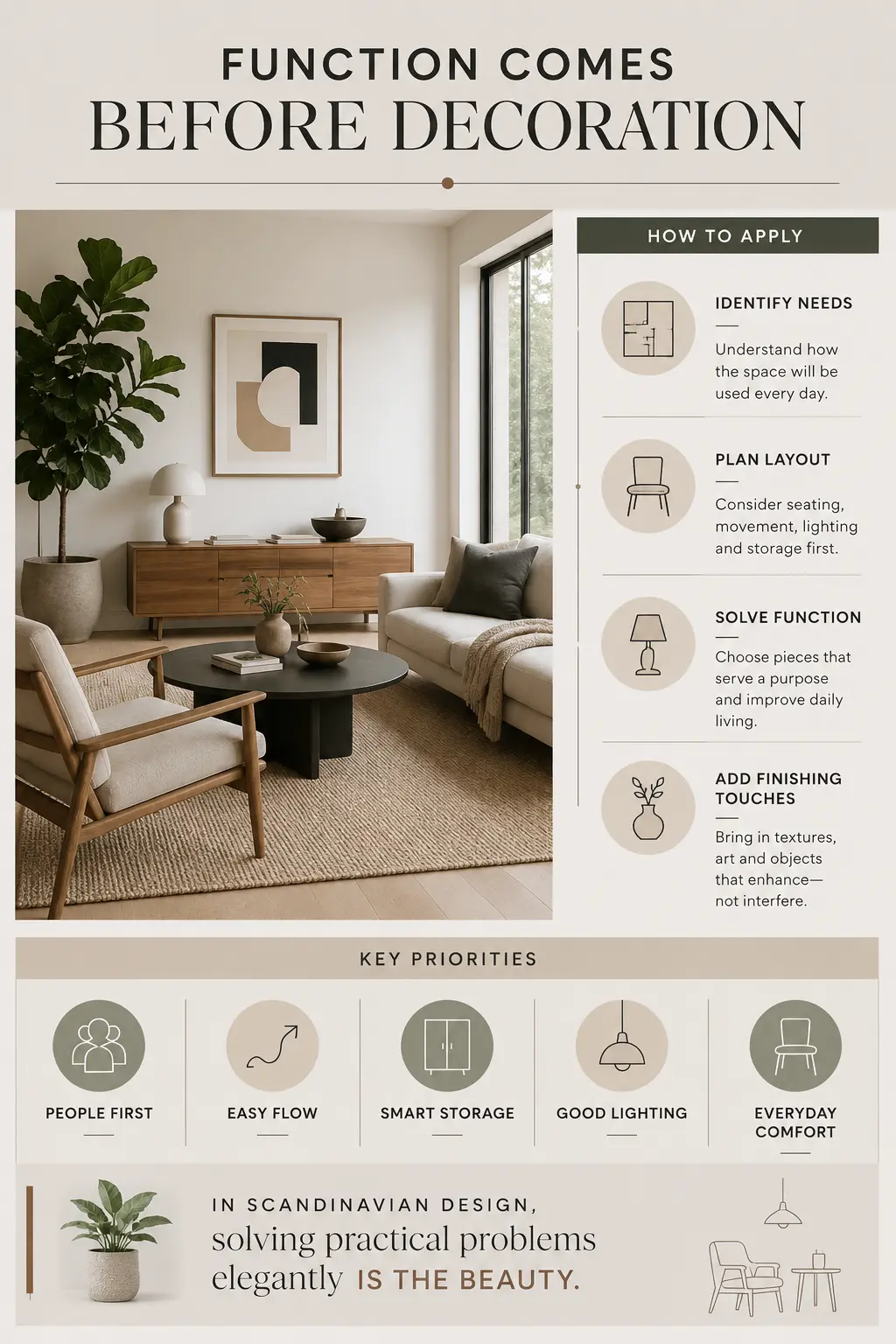
Functionality is one of the most important principles of Scandinavian design. Rooms are planned around how people actually use them rather than around creating a purely decorative composition.
Before choosing accessories, consider the practical requirements of the room. Where will people sit? How will they move through the space? Where is task lighting needed? What needs to be stored? Which furniture is used every day?
A beautiful object can still belong in a Scandinavian interior, but it should not interfere with everyday life.
How to Apply the Principle
Start with the essential functions of the room and build the design around them. In a living room, that might mean establishing comfortable seating, circulation paths, useful tables, lighting and storage before adding cushions, artwork and decorative objects.
In a dining room, make sure chairs pull out comfortably and lighting properly illuminates the table. In an entryway, prioritize somewhere to place shoes, coats, keys and bags before decorating the console.
Function does not make a room less beautiful. In Scandinavian design, solving practical problems elegantly is part of the beauty.
Principle #2. Simplicity Should Create Calm, Not Emptiness
Scandinavian interiors are associated with simplicity, but simplicity is frequently confused with removing as much as possible.
The objective is not emptiness. It is clarity.
Furniture shapes tend to be straightforward, color palettes controlled and accessories carefully edited so the room is easy for the eye to understand. Unnecessary visual distractions are reduced, allowing materials, craftsmanship and proportion to become more noticeable.
This is one reason Scandinavian design can feel restful even when a room contains books, textiles, artwork and personal possessions.
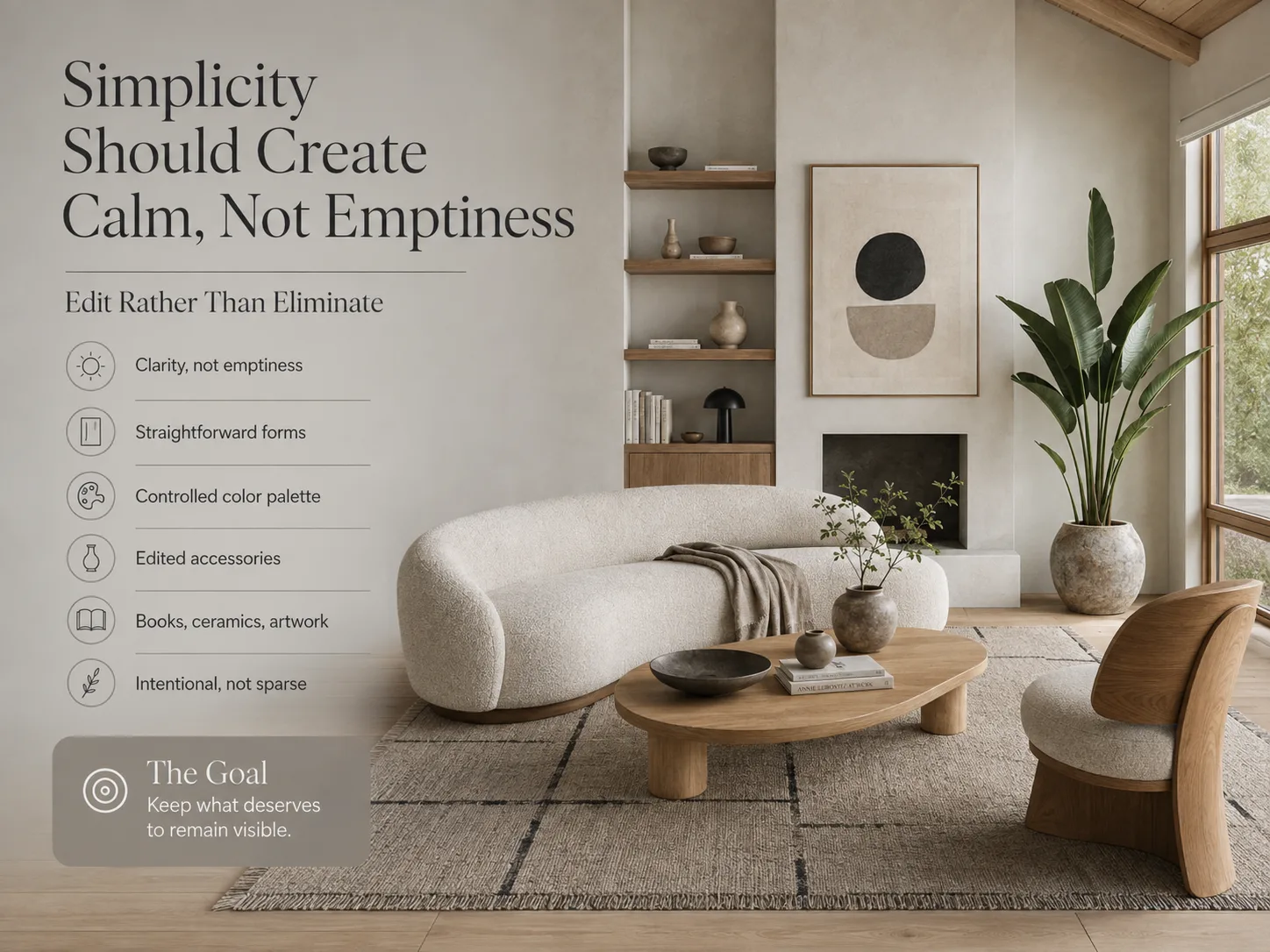
Edit Rather Than Eliminate
Instead of asking, “How little can I put in this room?” ask, “Which elements deserve to remain visible?”
A shelf might contain a small group of books, a handmade ceramic vessel and a framed photograph rather than being completely empty. A coffee table can hold a tray, candle and book while still leaving plenty of usable surface.
The result should feel intentional rather than sparse.
Principle #3. Good Design Should Make Everyday Life Comfortable
Scandinavian design is minimal in appearance, but comfort remains fundamental to the style.
Furniture should invite people to sit. Rooms should support conversation. Textiles should soften hard materials. Lighting should become gentler in the evening. Everyday objects should be easy to reach and use.
This human-centered approach separates Scandinavian design from more severe interpretations of minimalism.
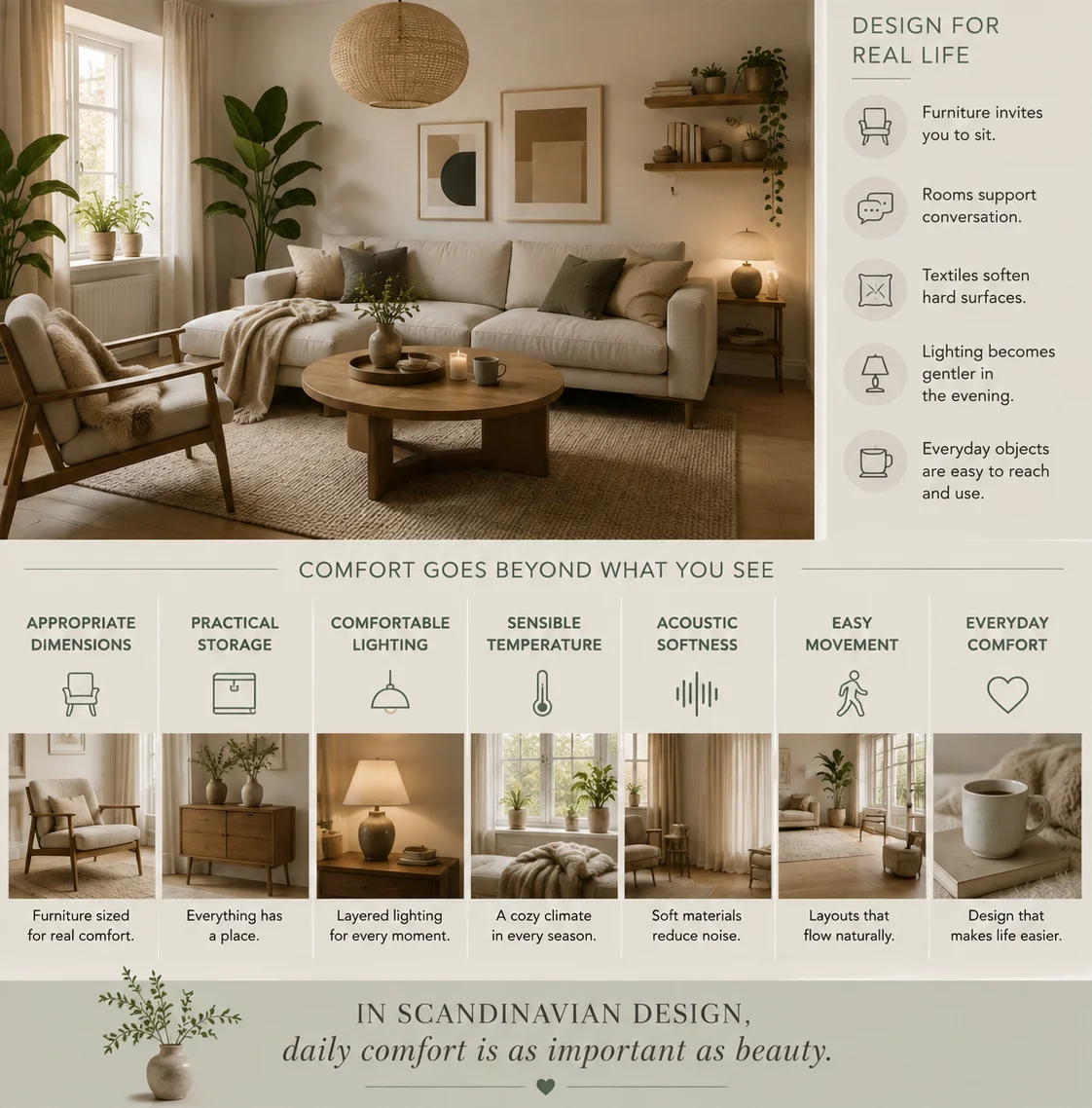
Think Beyond Visual Comfort
Comfort is not limited to adding cushions and throws. It also comes from appropriate furniture dimensions, convenient storage, comfortable lighting, sensible room temperature, acoustic softness and layouts that allow people to move naturally.
A beautifully styled room that is awkward to use misses one of the fundamental ideas behind Scandinavian design.
Principle #4. Natural Light Is a Design Material
Light plays an unusually important role in Scandinavian interiors. Rather than treating windows simply as architectural features, Scandinavian design often treats available daylight almost like another material within the room.
Walls, window treatments, furniture placement and surface finishes can all influence how effectively light moves through an interior.
This helps explain the popularity of warm whites, pale woods and relatively restrained window treatments. These choices can make rooms feel brighter and allow limited daylight to travel farther.
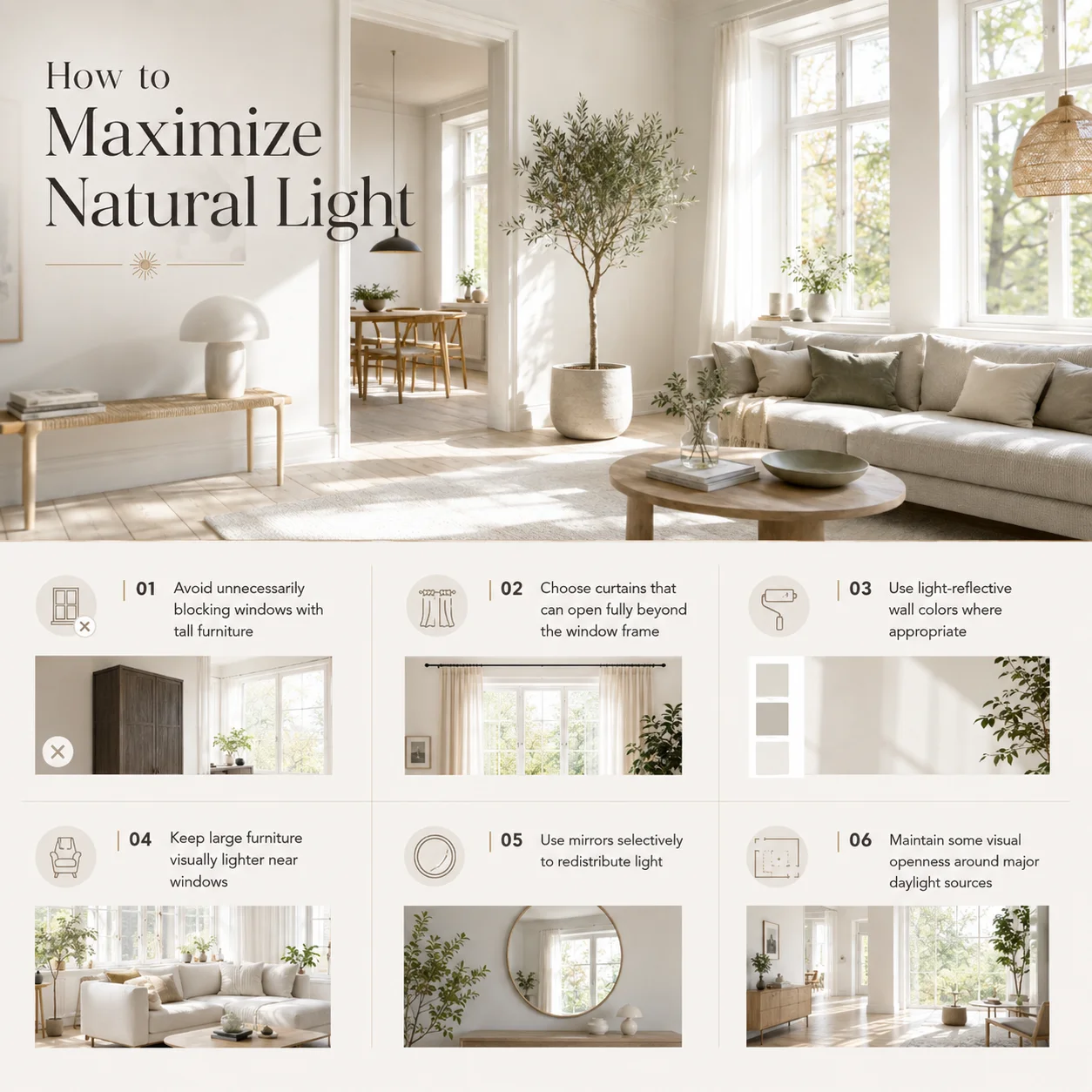
How to Maximize Natural Light
- Avoid unnecessarily blocking windows with tall furniture.
- Choose curtains that can open fully beyond the window frame.
- Use light-reflective wall colors where appropriate.
- Keep large furniture visually lighter near windows.
- Use mirrors selectively to redistribute light.
- Maintain some visual openness around major daylight sources.
The goal is not necessarily to make every room extremely bright. It is to make thoughtful use of the light the room naturally receives.
Principle #5. Natural Materials Bring Warmth and Character
Scandinavian interiors frequently combine relatively simple forms with materials that have visible texture and natural variation.
Wood grain, woven wool, washed linen, leather, paper, stone and handmade ceramics introduce subtle irregularity. These details prevent restrained interiors from becoming visually flat.
Natural materials also tend to develop character through use, supporting the Scandinavian preference for objects that can remain relevant for years rather than one decorating season.
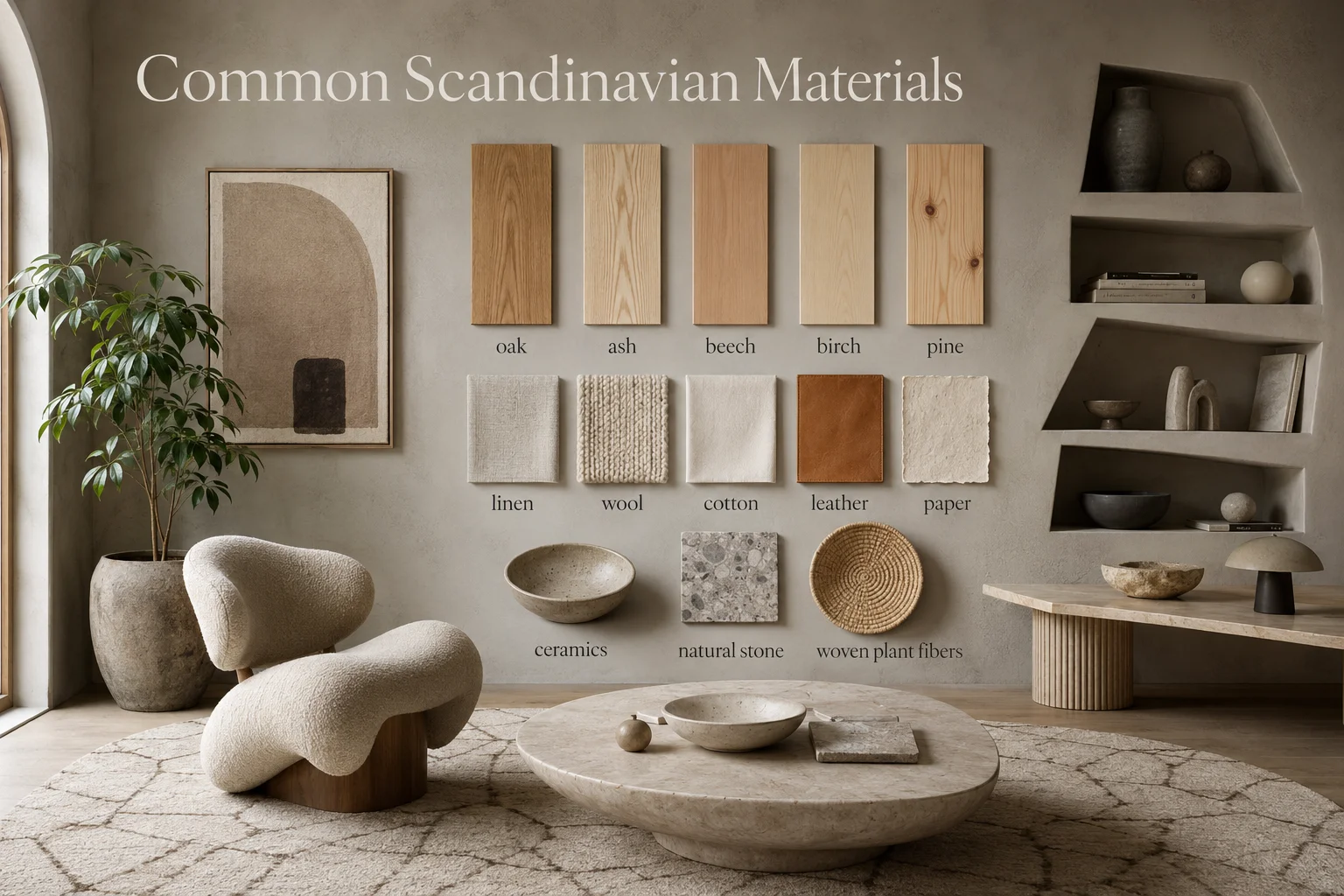
Common Scandinavian Materials
- oak
- ash
- beech
- birch
- pine
- linen
- wool
- cotton
- leather
- paper
- ceramics
- natural stone
- woven plant fibers
You do not need to use all of these materials at once. Repeating a smaller selection throughout a room usually creates a more cohesive result.
For a deeper look at furniture, textiles and finishes within a specific room, explore our Scandinavian living room style guide.
Principle #6. Craftsmanship Matters More Than Ornament
When decoration is restrained, construction and material quality become much easier to notice.
A beautifully shaped chair, carefully joined timber cabinet or handmade ceramic bowl can provide visual interest without needing additional ornament around it. This emphasis on craftsmanship is central to Scandinavian design.
Rather than using decoration to make an ordinary object appear special, the object itself becomes attractive through proportion, material and construction.
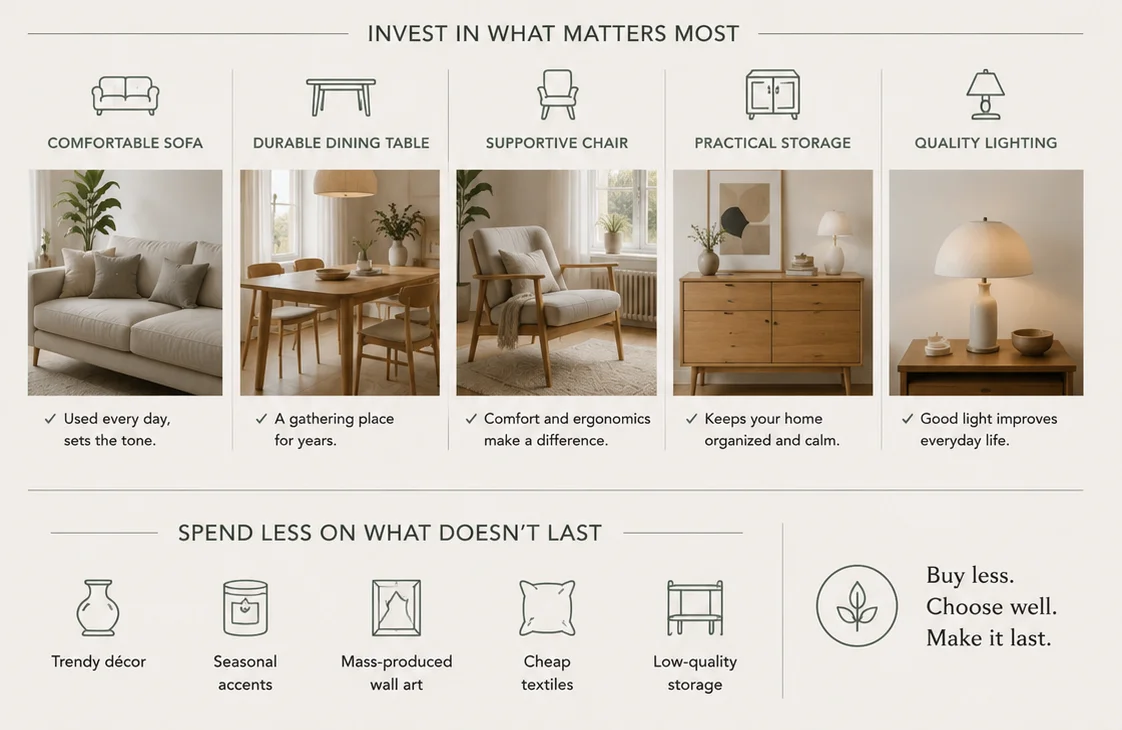
Choose Fewer, Better Pieces Where Possible
This does not mean every Scandinavian home must contain expensive designer furniture. The principle can be applied at different budgets.
Prioritize quality where an item receives frequent use or visually anchors the room. A comfortable sofa, durable dining table, supportive chair or practical storage cabinet may deserve a larger share of the budget than short-lived decorative accessories.
Principle #7. Use a Restrained Color Palette to Support the Room
Scandinavian interiors are strongly associated with white, but the underlying principle is broader than using one particular color.
The palette is typically restrained so that daylight, materials, furniture and texture can remain visually prominent.
Warm white, cream, beige, greige and pale gray create useful foundations, while muted greens, dusty blues, soft terracottas, charcoal and natural wood tones can provide depth.
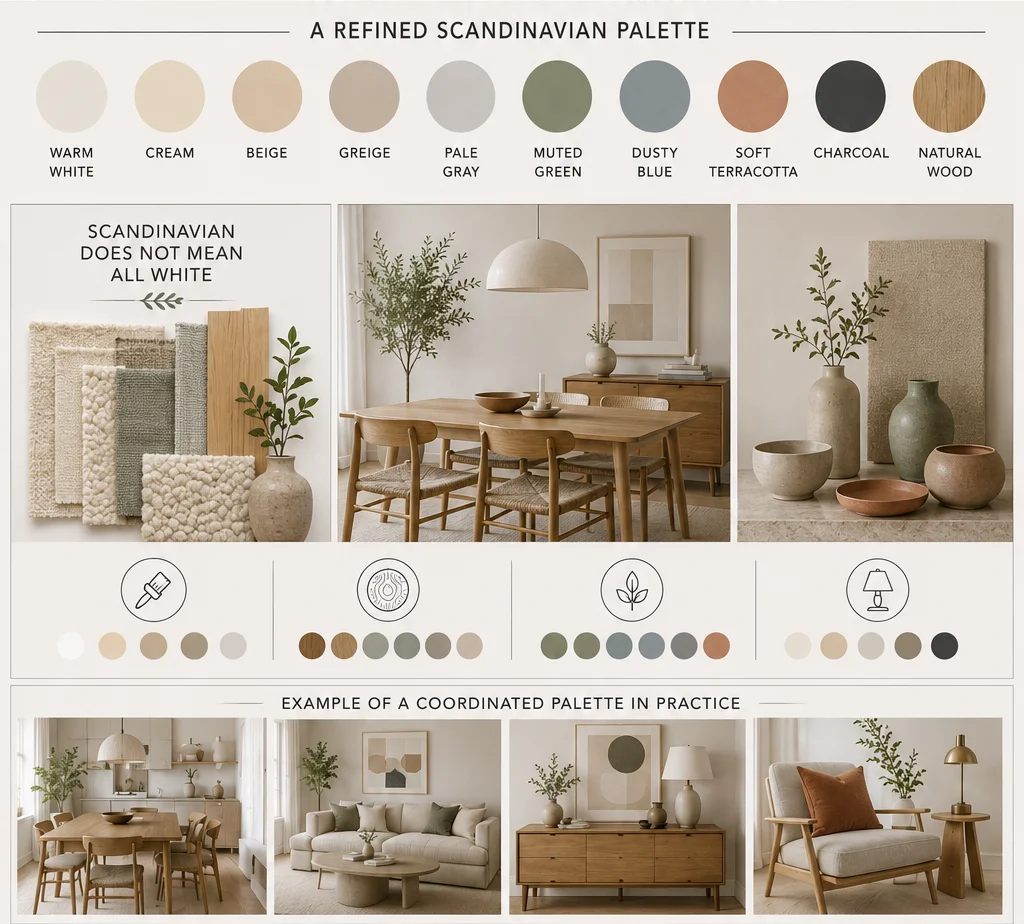
Scandinavian Does Not Mean All White
An entirely white room can actually feel colder than an interior using several related neutral tones.
Try combining warm white walls with natural oak, an oatmeal sofa, a slightly deeper wool rug and muted accent colors. Small tonal shifts add dimension while preserving the calm character of Scandinavian design.
The most successful palette usually feels coordinated rather than perfectly matched.
Principle #8. Texture Creates Warmth Without Visual Clutter
Because Scandinavian interiors often use limited color and relatively simple furniture, texture carries much of the visual interest.
A woven wool rug can contrast with smooth timber. Linen curtains soften painted walls. A knitted throw can add depth to simple upholstery. Matte pottery can provide an organic counterpoint to glass or metal lighting.
These contrasts make a neutral room feel layered without requiring numerous colors, patterns or decorative objects.
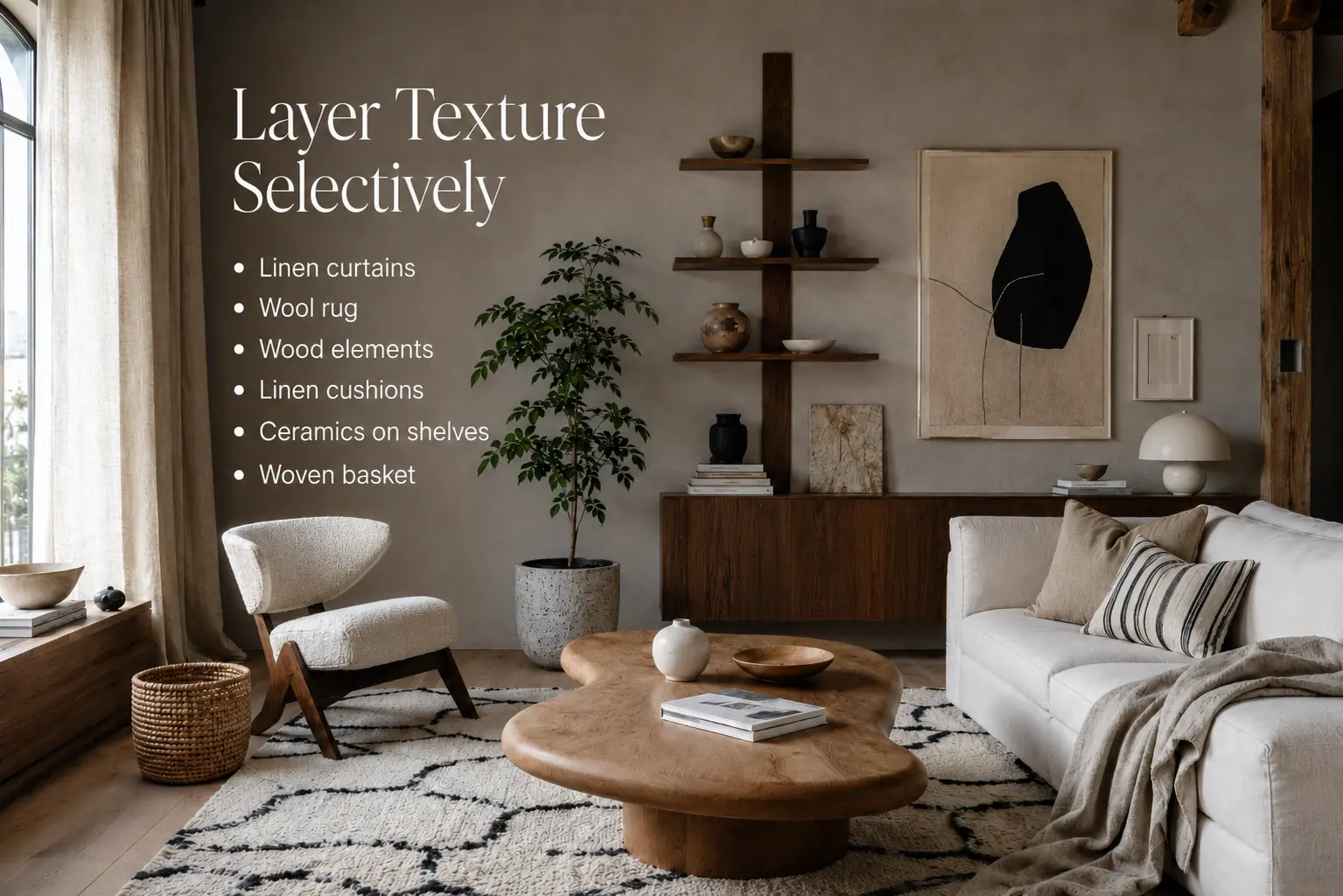
Layer Texture Selectively
Choose several tactile materials and distribute them throughout the room instead of concentrating everything in one place.
For example:
- linen curtains at the windows;
- wool beneath the seating area;
- wood through tables and storage;
- cotton or linen on cushions;
- ceramics on shelving;
- a woven basket beside a chair.
The repetition creates continuity while the differences in surface keep the room visually interesting.
Principle #9. Negative Space Is Part of the Composition
What Scandinavian interiors leave empty can be just as important as what they contain.
Negative space gives furniture and objects enough visual breathing room to be appreciated individually. It also keeps circulation paths open and makes rooms feel calmer.
This does not necessarily require a large home. In smaller rooms, negative space might simply mean resisting the temptation to fill every wall, corner, shelf and tabletop.
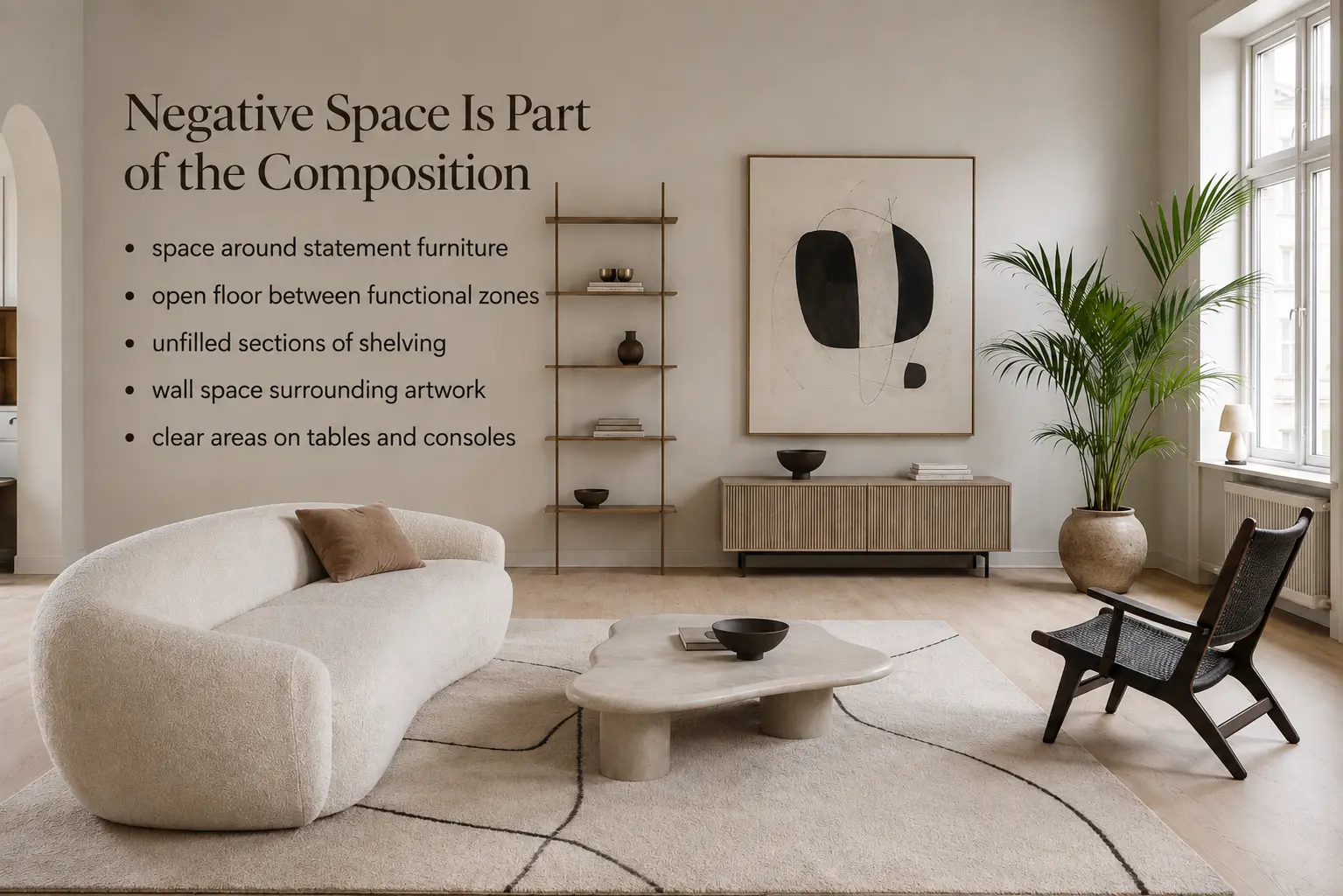
Where Negative Space Matters Most
Look particularly at:
- space around statement furniture;
- open floor between functional zones;
- unfilled sections of shelving;
- wall space surrounding artwork;
- clear areas on tables and consoles.
If every surface competes for attention, even a neutral room can feel cluttered.
Principle #10. Layered Lighting Should Support Different Moments of the Day
Natural light may shape the daytime interior, but artificial lighting becomes equally important later in the day.
A single bright ceiling fixture rarely creates the comfortable atmosphere associated with Scandinavian homes. Instead, light is typically distributed across several sources and heights.
Combine ambient, task and accent lighting so the room can adapt to different activities.
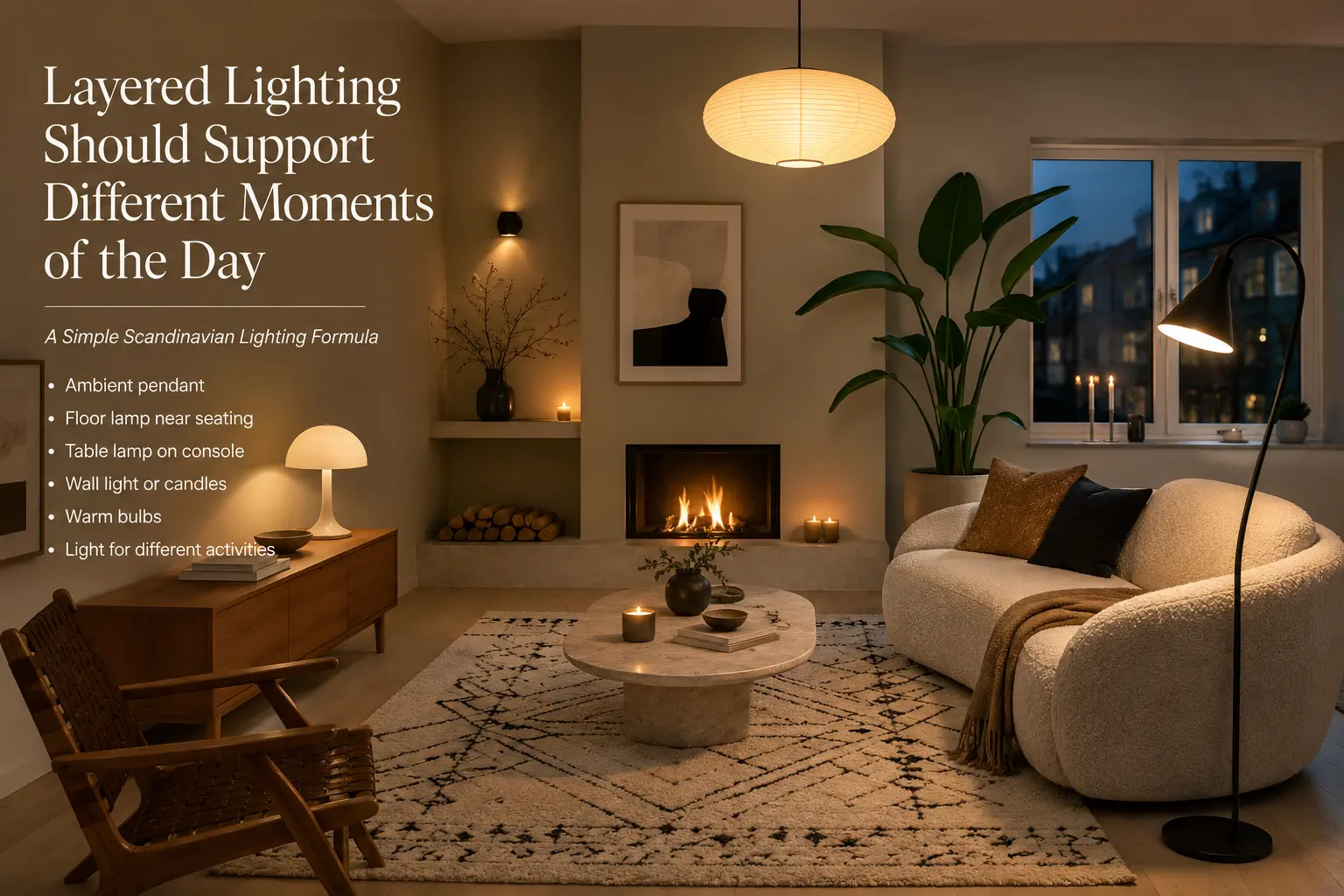
A Simple Scandinavian Lighting Formula
Start with an overhead pendant or other ambient source, then add a floor lamp near seating and a table lamp on a console, shelf or side table. Additional wall lighting or candles can create smaller pools of illumination when appropriate.
Warm bulbs generally work better than cool, blue-white light when the objective is a relaxed and welcoming atmosphere.
This layered approach is especially effective in neutral rooms because light and shadow contribute depth that color might otherwise provide.
Principle #11. Organization Should Reduce Visual Noise
Scandinavian simplicity is difficult to maintain when everyday belongings have nowhere to go.
Practical storage therefore supports the aesthetic rather than existing separately from it.
Closed cabinets, drawers, baskets, hooks and built-in storage can conceal visually distracting necessities while allowing selected books, artwork and objects to remain visible.
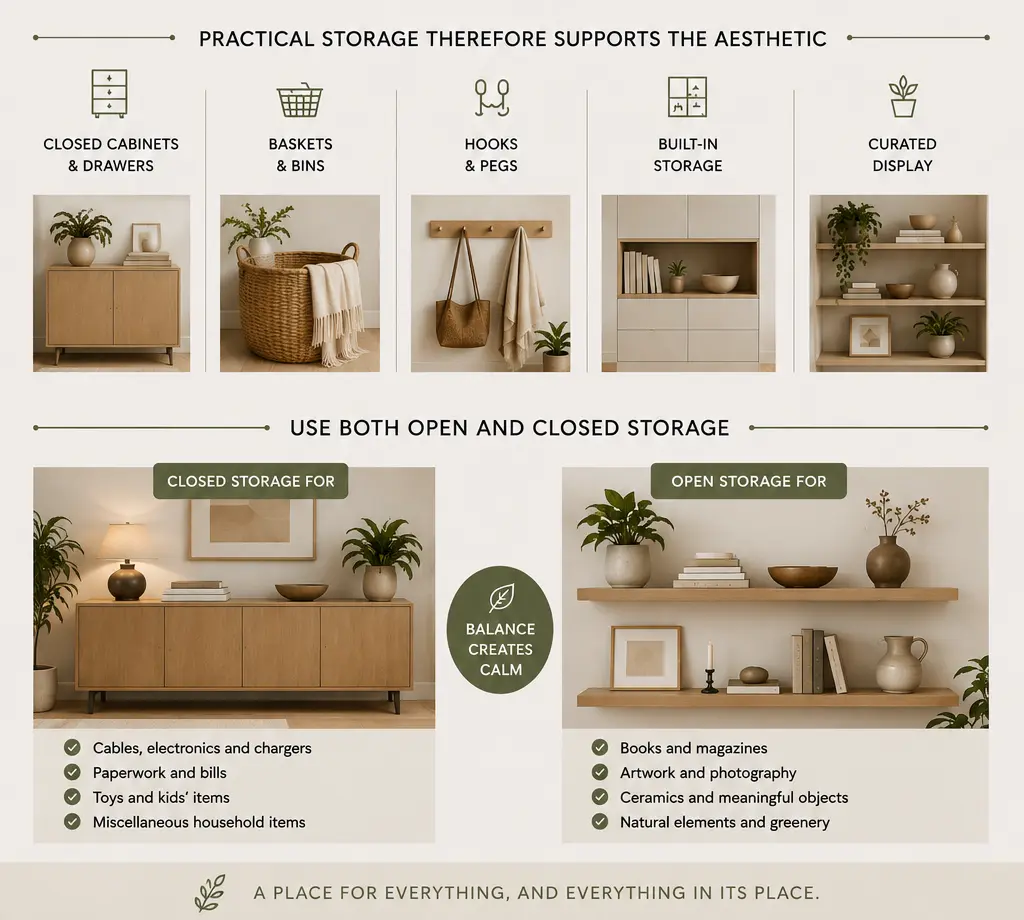
Use Both Open and Closed Storage
Not everything needs to disappear behind cabinet doors.
Use closed storage for cables, paperwork, toys, electronics and miscellaneous household items. Reserve open shelves for pieces that contribute to the visual composition.
This creates a home that can remain organized without looking artificially empty.
Principle #12. Bring Nature Into the Interior
Scandinavian design’s connection with nature extends beyond timber furniture.
Natural materials, daylight, greenery, botanical forms and colors inspired by the landscape can all make the interior feel more grounded.
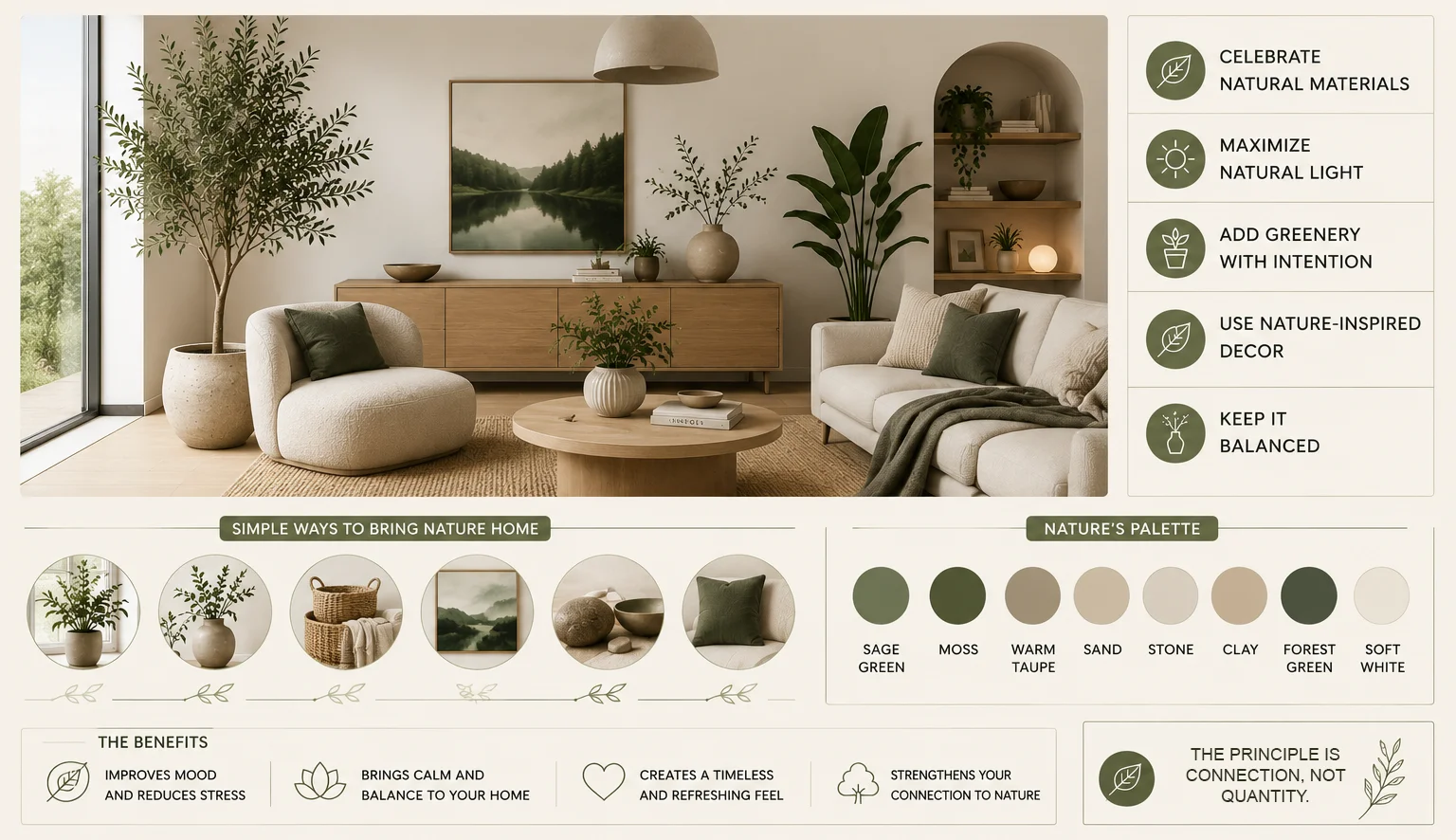
A plant beside a window, branches in a ceramic vase or landscape-inspired artwork may be enough. Greenery should complement the room rather than turning it into an indoor jungle.
The principle is connection, not quantity.
Principle #13. Furniture Should Feel Visually Light and Well Proportioned
Many Scandinavian furniture designs use clean silhouettes, exposed legs and carefully considered proportions. This makes even substantial pieces feel less visually heavy.
Raised furniture can expose more floor, while slender arms and restrained profiles help maintain an open feeling.
But choosing Scandinavian furniture is not simply a matter of buying pieces with tapered wooden legs. Scale still matters.
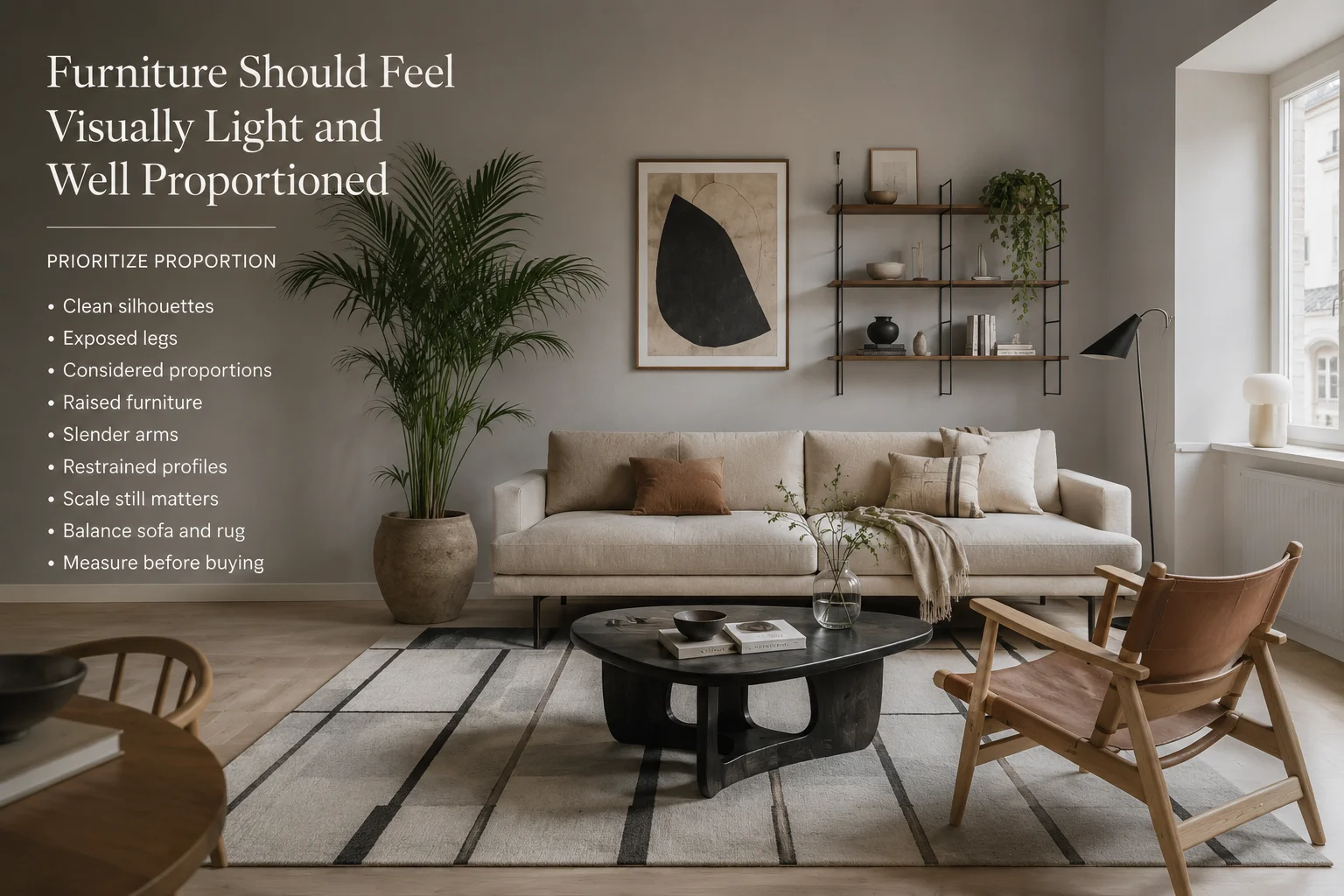
Prioritize Proportion
A sofa that overwhelms the room will not feel Scandinavian simply because it is upholstered in beige linen. Likewise, a tiny rug beneath a large seating arrangement can disrupt the sense of balance.
Measure the room and consider the relationship between furniture pieces before making major purchases.
Principle #14. Personal Objects Keep Scandinavian Interiors From Feeling Generic
A Scandinavian home should not look like an untouched furniture showroom.
Books, artwork, ceramics, photographs and objects collected over time can give the interior character while remaining consistent with the principle of simplicity.
The key is editing.
Rather than displaying every possession simultaneously, select pieces that are useful, meaningful or visually complementary. Rotate decorative items if necessary instead of filling every available surface.
This is where Scandinavian simplicity becomes personal rather than formulaic.
Principle #15. Design for Longevity Instead of Short-Lived Trends
One of the reasons Scandinavian design continues to feel relevant is its emphasis on enduring materials, useful objects and uncomplicated forms.
Rather than rebuilding a room around each new decorating trend, create a versatile foundation that can evolve gradually.
Well-proportioned furniture, natural timber, durable textiles and restrained wall colors can remain in place while cushions, artwork, smaller accessories and seasonal textiles change more easily.
Ask Whether You Will Still Like It Later
Before buying a major piece, consider whether you like the underlying shape and material or whether you are mainly responding to a current trend.
This does not mean avoiding trends completely. It simply means using them more selectively, particularly on elements that are inexpensive or easy to replace.
How the Scandinavian Principles Work Together
The individual principles are most effective when treated as one interconnected system.
Simplicity makes craftsmanship more visible. Natural materials prevent simplicity from feeling sterile. Texture adds warmth without requiring excessive decoration. Storage controls visual clutter. Negative space helps natural light move through the room. Layered lighting restores warmth when daylight disappears.
Function connects all of these decisions.
This is why copying a Scandinavian color palette alone rarely produces a convincing Scandinavian interior. The style comes from the relationship between the elements rather than any single furniture piece or color.
How to Apply Scandinavian Design Principles Room by Room
Living Room
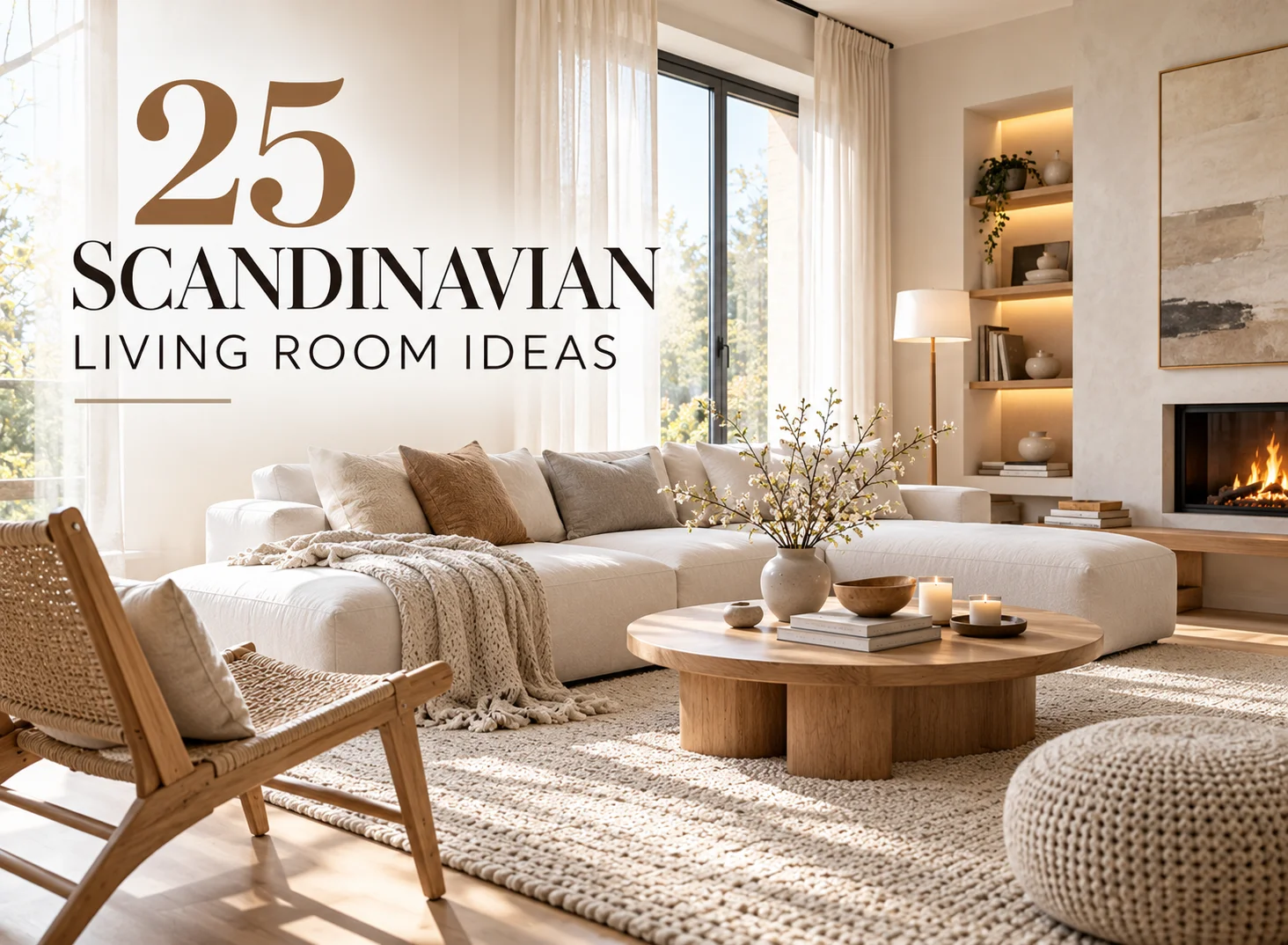
Prioritize comfortable seating, a properly sized rug, useful tables, concealed storage and layered lighting. Keep circulation open and use natural materials and tactile textiles to warm the neutral foundation.
For detailed furniture, color, lighting and styling recommendations, see our complete Scandinavian Living Room Style Guide.
Bedroom
Keep the palette restful and let textiles create most of the softness. A simple timber bed, comfortable natural bedding, uncluttered bedside tables and warm reading lights can establish the Scandinavian feeling without excessive decoration.
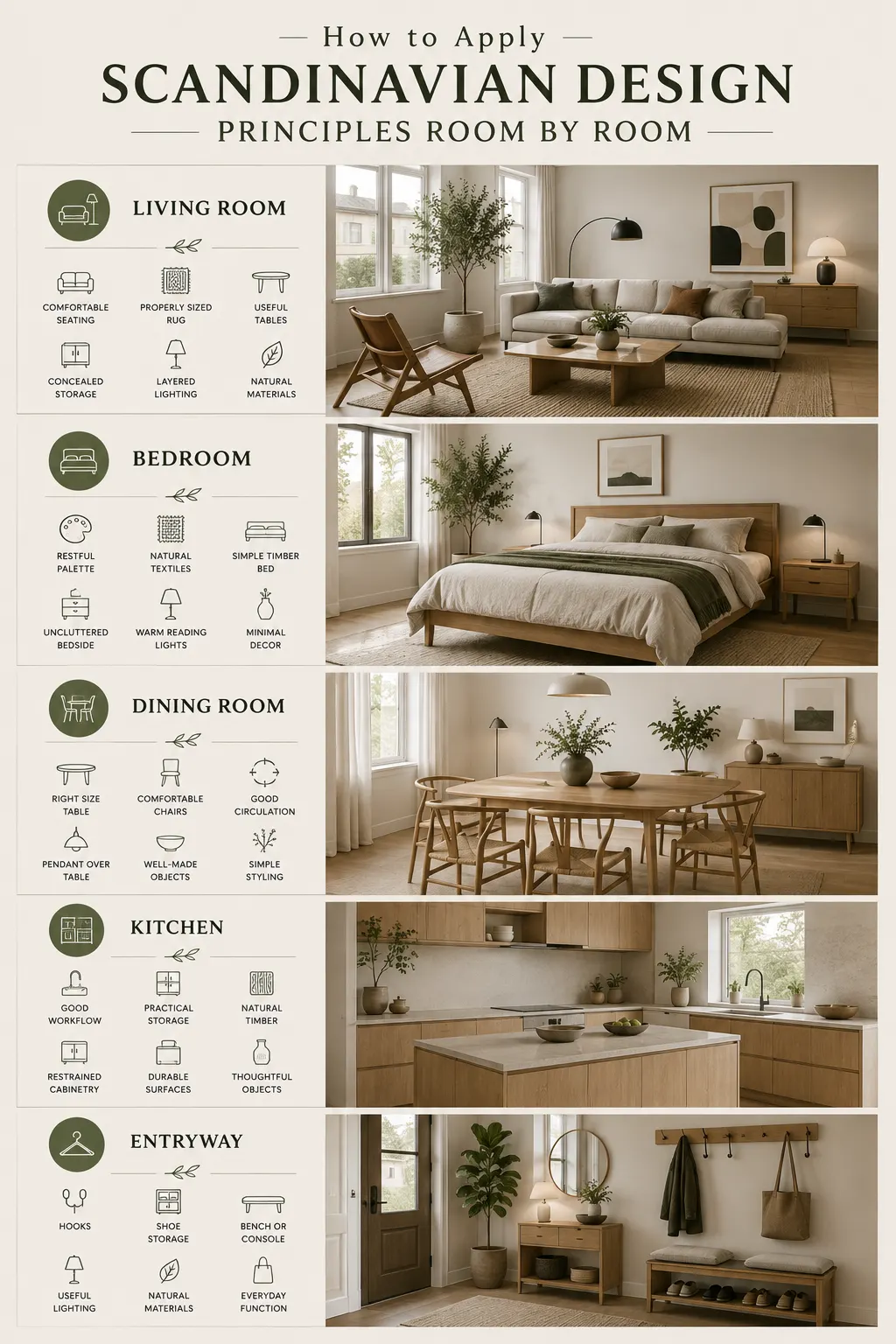
Dining Room
Choose a table based on everyday needs and provide enough circulation around it. Comfortable chairs, a pendant positioned over the table and a few well-made objects are usually more effective than elaborate styling.
Kitchen
Prioritize workflow and practical storage. Natural timber, restrained cabinetry, durable surfaces and thoughtfully selected objects can add warmth while keeping work areas visually calm.
Entryway
Combine hooks, shoe storage, a small bench or console and useful lighting. Because Scandinavian design prioritizes everyday function, even transitional areas deserve thoughtful planning.
How to Make Scandinavian Interiors Feel Cozy
One common misconception is that Scandinavian interiors are naturally cold because they use pale colors and simple furniture. In reality, warmth is usually an essential part of the style.
To create a cozier Scandinavian interior:
- choose warm whites instead of stark blue-white walls;
- introduce visible wood grain;
- use substantial rugs;
- layer cushions and throws selectively;
- place lamps at several heights;
- incorporate warm-toned artwork and ceramics;
- add books and personal objects;
- avoid removing every decorative element.
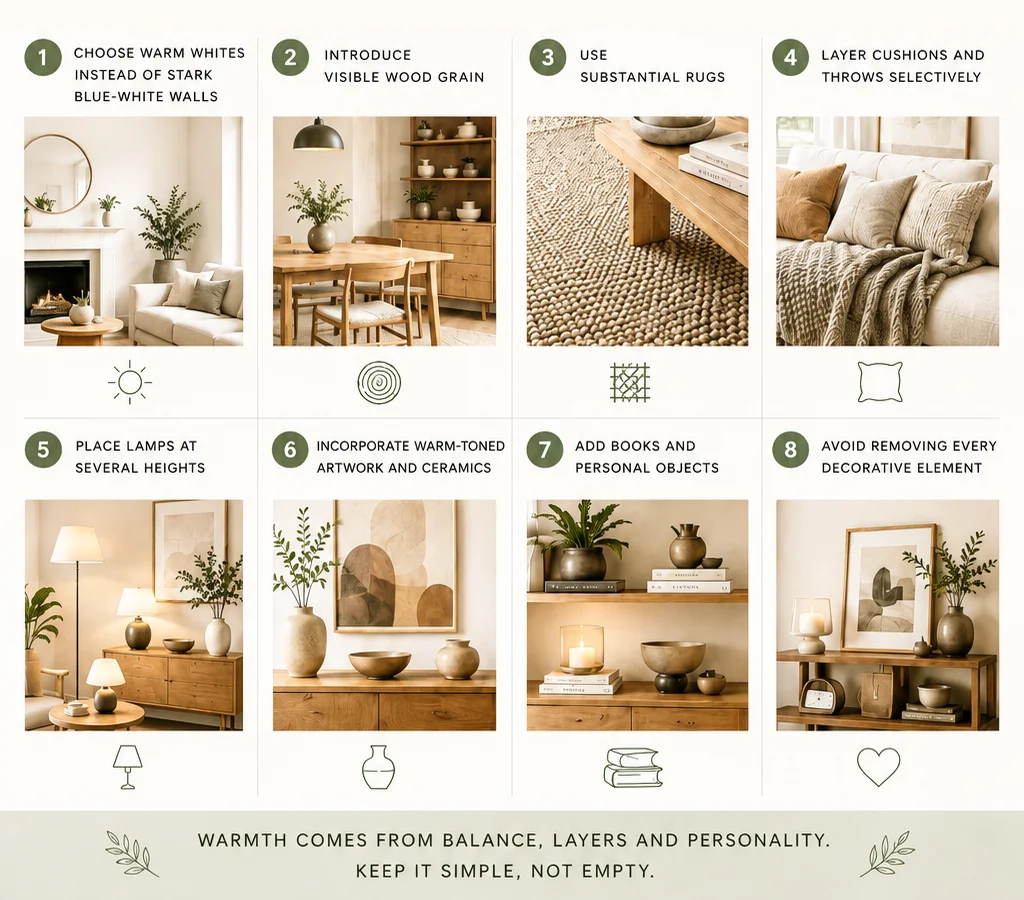
A Scandinavian room should feel visually calm but emotionally welcoming.
Scandinavian Design vs. Minimalism
Scandinavian design and minimalism share an appreciation for simplicity, functional furniture and controlled visual clutter, but they are not identical.
Minimalism often places greater emphasis on reduction. Scandinavian design tends to combine restraint with visible comfort, natural materials, craftsmanship and domestic warmth.
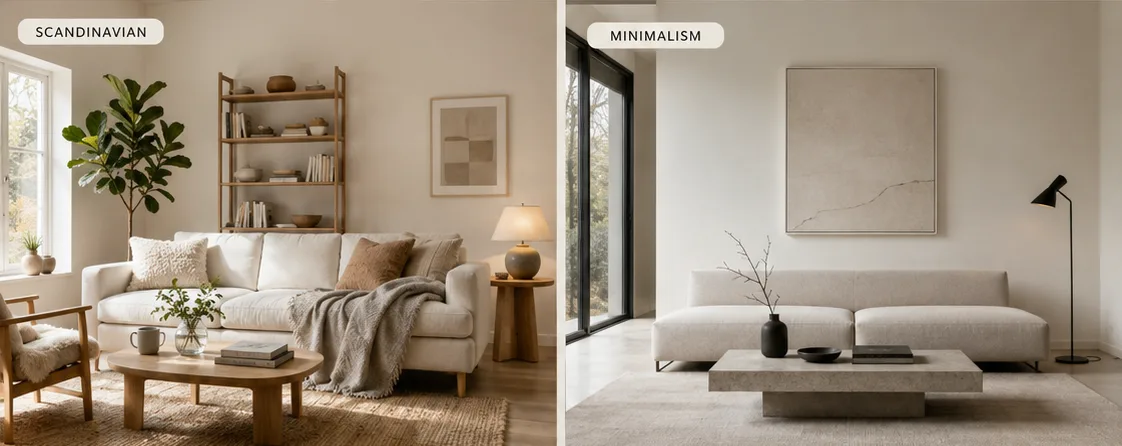
A minimalist room might intentionally leave a sofa almost completely bare. A Scandinavian room may add a wool throw, textured cushion, side lamp and stack of books while still maintaining a simple composition.
The distinction is useful because trying to make a Scandinavian home excessively minimal can remove the very warmth that gives the style its character.
Scandinavian Design vs. Japandi
Scandinavian and Japandi interiors overlap in their preference for craftsmanship, natural materials, uncluttered spaces and functional design.
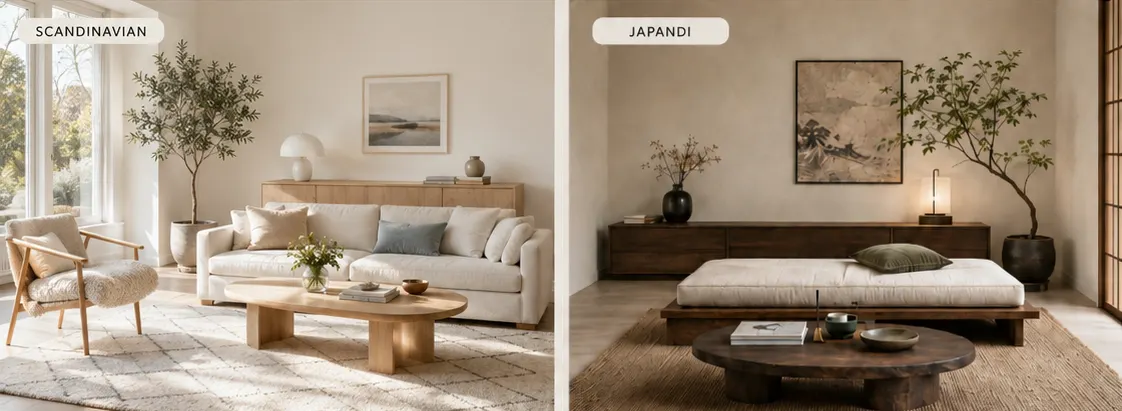
However, Scandinavian interiors generally feel lighter, brighter and somewhat more relaxed, while Japandi often introduces stronger Japanese influences, more deliberate restraint, darker woods and earthier contrasts.
If you enjoy Scandinavian simplicity but prefer an even quieter, more contemplative aesthetic, explore our Japandi design guides for another interpretation of natural, minimal interiors.
Common Mistakes When Applying Scandinavian Design Principles
Using Too Much White
White walls alone do not create Scandinavian design. Without natural materials, texture and warm lighting, an excessively white room can feel clinical.
Confusing Simplicity With Emptiness
Removing everything personal can make the space feel staged rather than calm.
Choosing Appearance Over Comfort
A beautiful chair that nobody enjoys sitting in contradicts the functional philosophy behind Scandinavian design.
Ignoring Storage
Minimal-looking rooms still contain everyday belongings. Without practical storage, maintaining visual calm becomes difficult.
Buying Every Piece in the Same Finish
A perfectly matched furniture set can flatten the room. Related woods and materials usually create a more natural, collected appearance.
Relying on One Ceiling Light
Even a beautifully furnished room can feel harsh when illumination comes from one strong overhead source.
Following the Aesthetic Without the Principles
Pale wood furniture, beige upholstery and white walls can reproduce the visual vocabulary of Scandinavian style, but the room will feel more authentic when functionality, comfort, craftsmanship and proportion influence the decisions behind those elements.
Scandinavian Designer Checklist
Before considering your room complete, ask:
- Does the layout support how the room is actually used?
- Can people move comfortably through the space?
- Is the furniture appropriately scaled?
- Does each major piece have a useful purpose?
- Can natural light move freely through the room?
- Have I included natural materials?
- Is there enough texture to create warmth?
- Do I have several sources of light?
- Is everyday clutter easy to store?
- Have I left some visual breathing room?
- Does the room contain something personal?
- Am I choosing quality where it matters most?
If most of the answers are yes, the room will already reflect many of the principles that make Scandinavian interiors successful.
Shop the Look: Building a Scandinavian Foundation
You do not need dozens of decorative accessories to introduce Scandinavian style. Focus first on foundational pieces that combine comfort, usefulness and natural materials.
Start With
- a comfortable neutral sofa or lounge chair;
- a solid wood coffee or dining table;
- a generously sized wool or textured rug;
- simple storage furniture;
- linen or cotton curtains;
- a floor or table lamp with soft diffused light;
- one or two handcrafted ceramic pieces;
- natural cushions and throws;
- a simple indoor plant;
- meaningful artwork or books.
Purchase accessories gradually. Scandinavian interiors often feel more convincing when they appear to have evolved over time rather than being assembled as one matching collection.
Style Variations Based on Scandinavian Principles
The same underlying Scandinavian principles can produce several different looks. Understanding these variations makes it easier to personalize the style without abandoning its foundations.
Classic Scandinavian
Light wood, pale walls, straightforward furniture and practical textiles create a familiar Nordic appearance centered on simplicity and everyday comfort.
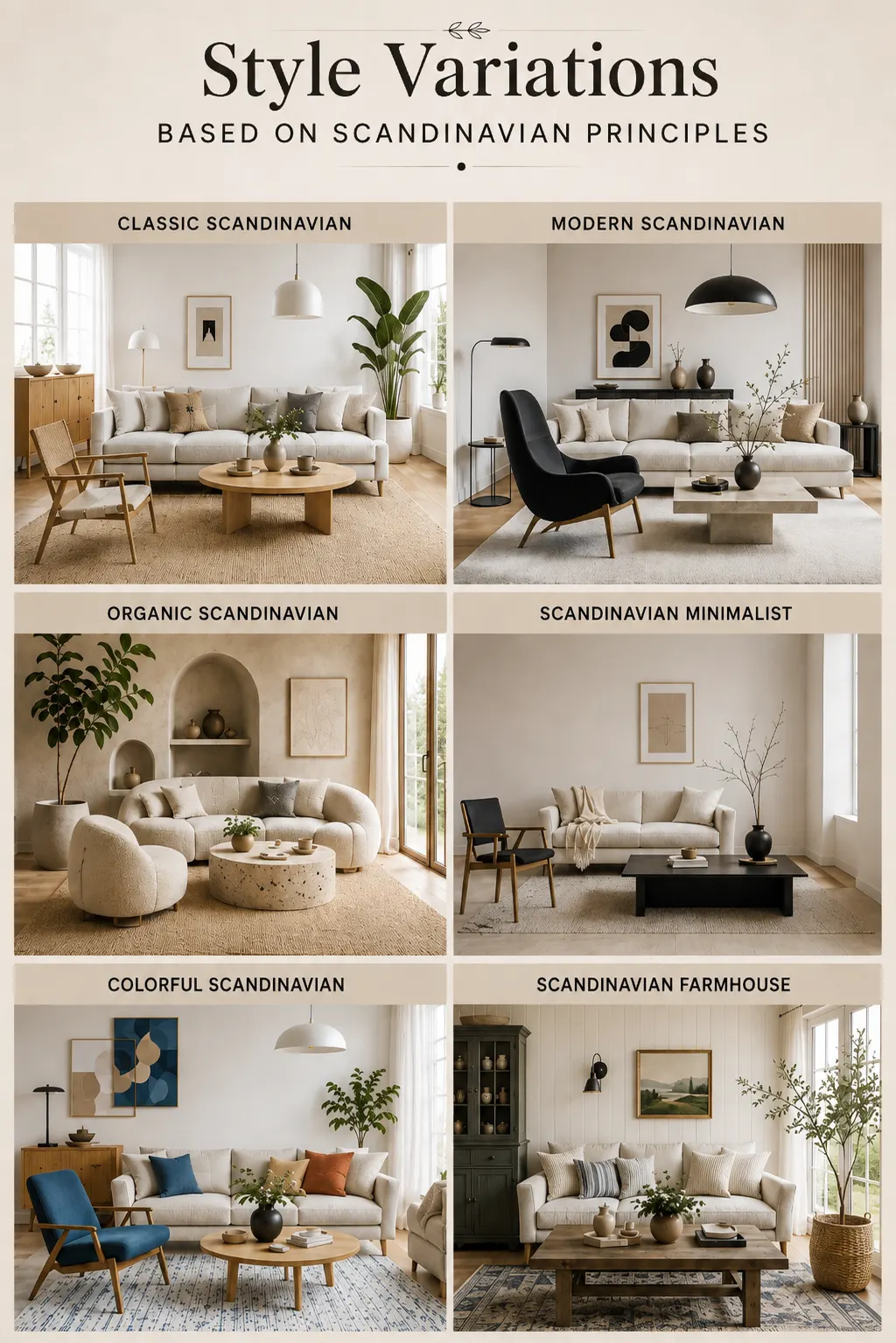
Modern Scandinavian
Cleaner architectural lines, contemporary lighting and more sculptural furniture update the style while preserving functionality and restraint.
Organic Scandinavian
Organic curves, tactile plaster, stone, natural fabrics and additional greenery emphasize the connection between Scandinavian design and nature.
Scandinavian Minimalist
Fewer decorative objects and stronger negative space create a more reduced interpretation while natural materials maintain warmth.
Colorful Scandinavian
Muted blue, green, ochre, rust or dusty pastels introduce personality while the furniture and overall composition remain simple.
Scandinavian Farmhouse
Painted timber, rustic textures, traditional forms and vintage pieces create a softer, more relaxed interpretation of Nordic simplicity.
Whichever variation you prefer, retain the fundamental ideas of usefulness, comfort, light, material honesty and thoughtful simplicity.
Frequently Asked Questions About Scandinavian Design Principles
What is the most important principle of Scandinavian design?
Functionality is one of the most important Scandinavian design principles. Furniture, layouts, lighting and storage should make everyday life easier while remaining visually appealing. Simplicity, comfort, natural materials and craftsmanship work alongside function rather than replacing it.
What are the main characteristics of Scandinavian interior design?
Scandinavian interiors typically feature functional layouts, simple furniture, natural materials, light or restrained color palettes, abundant natural light, layered lighting, tactile textiles, practical storage and carefully edited decoration.
Why does Scandinavian design use so much white?
Light colors can help rooms make more effective use of available daylight and provide a calm foundation for natural wood and textured materials. However, Scandinavian interiors are not required to be completely white. Cream, beige, greige, muted colors and deeper accents can also work beautifully.
Is Scandinavian design the same as minimalism?
No. The styles overlap, particularly in their use of simplicity and functional furniture, but Scandinavian design generally places greater emphasis on warmth, comfort, natural materials and domestic livability.
Can Scandinavian interiors include color?
Yes. Muted blues, greens, dusty pinks, ochres, soft terracottas and deeper charcoal accents can all work within a Scandinavian palette. The important principle is maintaining visual balance rather than eliminating color completely.
How do you make Scandinavian interiors feel warmer?
Combine warm neutral colors with visible wood grain, wool rugs, linen or cotton textiles, ceramics, books, plants and several sources of warm artificial light. Layering tactile materials is particularly effective in preventing pale rooms from feeling cold.
Does all Scandinavian furniture need to be light wood?
No. Light oak, ash, birch and beech are strongly associated with the style, but darker woods, painted furniture and selected metal elements can also work. Proportion, craftsmanship and functionality are more important than following one prescribed wood finish.
Final Thoughts
Scandinavian design is easier to understand when you stop thinking of it as a collection of pale furniture and start viewing it as a way of making design decisions.
Prioritize function before unnecessary decoration. Use simplicity to create calm rather than emptiness. Choose materials that bring warmth and age gracefully. Make the most of natural light, then layer artificial lighting for comfort. Invest in craftsmanship where it matters and allow enough negative space for individual pieces to breathe.
Most importantly, design for the people who actually live in the home.
A successful Scandinavian interior should not merely photograph beautifully. It should make ordinary activities—relaxing, reading, cooking, entertaining, working and spending time together—feel easier and more enjoyable.
That combination of usefulness, simplicity, warmth and enduring design is ultimately what gives Scandinavian interiors their lasting appeal.
Continue Exploring Scandinavian Design
Now that you understand the principles behind the style, explore how they translate into individual rooms, materials and decorating decisions:
- Scandinavian Living Room Style Guide
- Complete Guide to Scandinavian Interior Design
- Scandinavian Color Palette Guide
- Scandinavian Furniture Guide
- How to Create a Scandinavian Living Room
- Scandinavian Bedroom Ideas
- Scandinavian vs. Japandi Interior Design