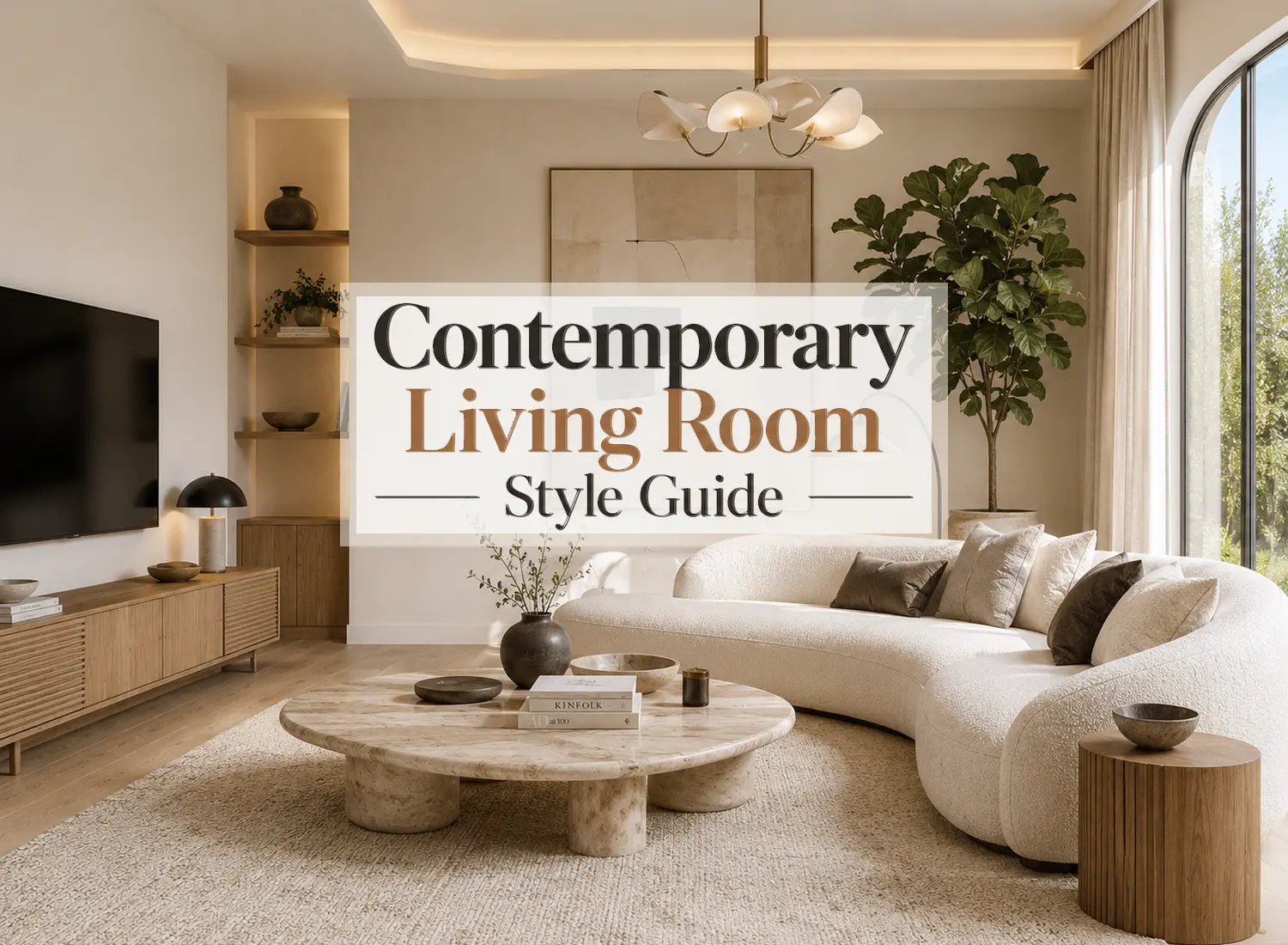
A contemporary living room combines clean design, comfortable furniture and carefully selected materials with ideas that feel relevant to the way we live today. The style is polished but rarely rigid, minimal without feeling empty and sophisticated without depending on excessive decoration.
Unlike interior styles tied closely to a particular historical period, contemporary design continues to evolve. Today’s contemporary living rooms often feature warm neutrals, sculptural furniture, natural stone, rich wood tones, large-scale artwork, layered lighting and a thoughtful balance between straight architectural lines and softer organic forms.
The result should feel current yet livable: a room where strong design decisions are visible, but comfort still takes priority.
In this guide, we’ll explore the colors, furniture, materials, lighting, layouts and styling principles that can help you create a contemporary living room that feels cohesive rather than simply fashionable.
What Is Contemporary Interior Design?
Contemporary interior design describes interiors influenced by the aesthetics, materials and ways of living that feel relevant today. Because those influences continue to change, contemporary design is more fluid than styles associated with a fixed design period.
In the living room, this usually means combining a relatively simple architectural foundation with carefully chosen statement elements. A streamlined sofa might sit beside a sculptural chair, for example, while a restrained neutral palette provides the backdrop for textured stone, timber, metal or expressive artwork.
Contemporary rooms often look uncluttered, but they do not need to be sparse. The objective is not to remove personality. Instead, decoration is edited so that individual objects, materials and architectural features have enough visual space to make an impact.
This flexibility also makes contemporary design particularly adaptable. A contemporary living room can lean warm and organic, polished and luxurious, dark and dramatic or soft and minimalist while still maintaining the central principles of visual clarity, quality materials and intentional styling.
Contemporary vs. Modern Living Room Design
The terms modern and contemporary are frequently used interchangeably, but they describe different design ideas.
Modern interior design is generally associated with established twentieth-century design principles such as functional furniture, simple silhouettes, restrained ornamentation and a strong relationship between form and function.
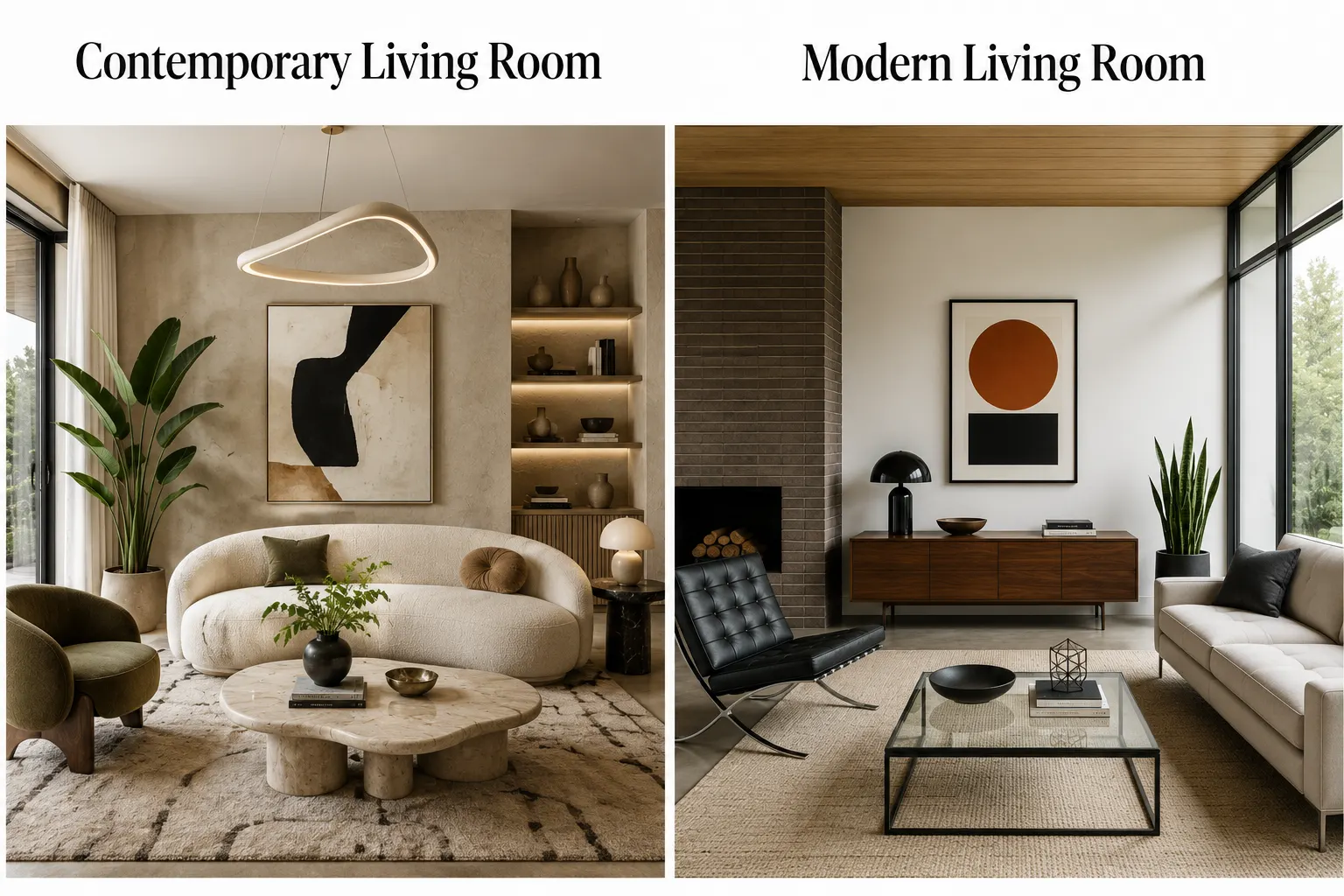
Contemporary design, by contrast, reflects current design preferences and can borrow from multiple styles. A contemporary living room might incorporate modern furniture alongside curved forms, dramatic stone, textured plaster, sculptural lighting or other elements associated with today’s interiors.
This is why contemporary rooms can change considerably over time while modern design retains a more recognizable stylistic foundation.
If you are deciding between these two aesthetics, read our Modern vs. Contemporary Living Room guide for a detailed comparison.
Key Characteristics of a Contemporary Living Room
There is no single formula for contemporary interior design, but successful contemporary living rooms often share several characteristics.
Clean Architectural Lines
Contemporary spaces usually begin with a visually calm foundation. Simple wall treatments, streamlined built-ins, wide openings and uncluttered architectural details help establish a sense of order.
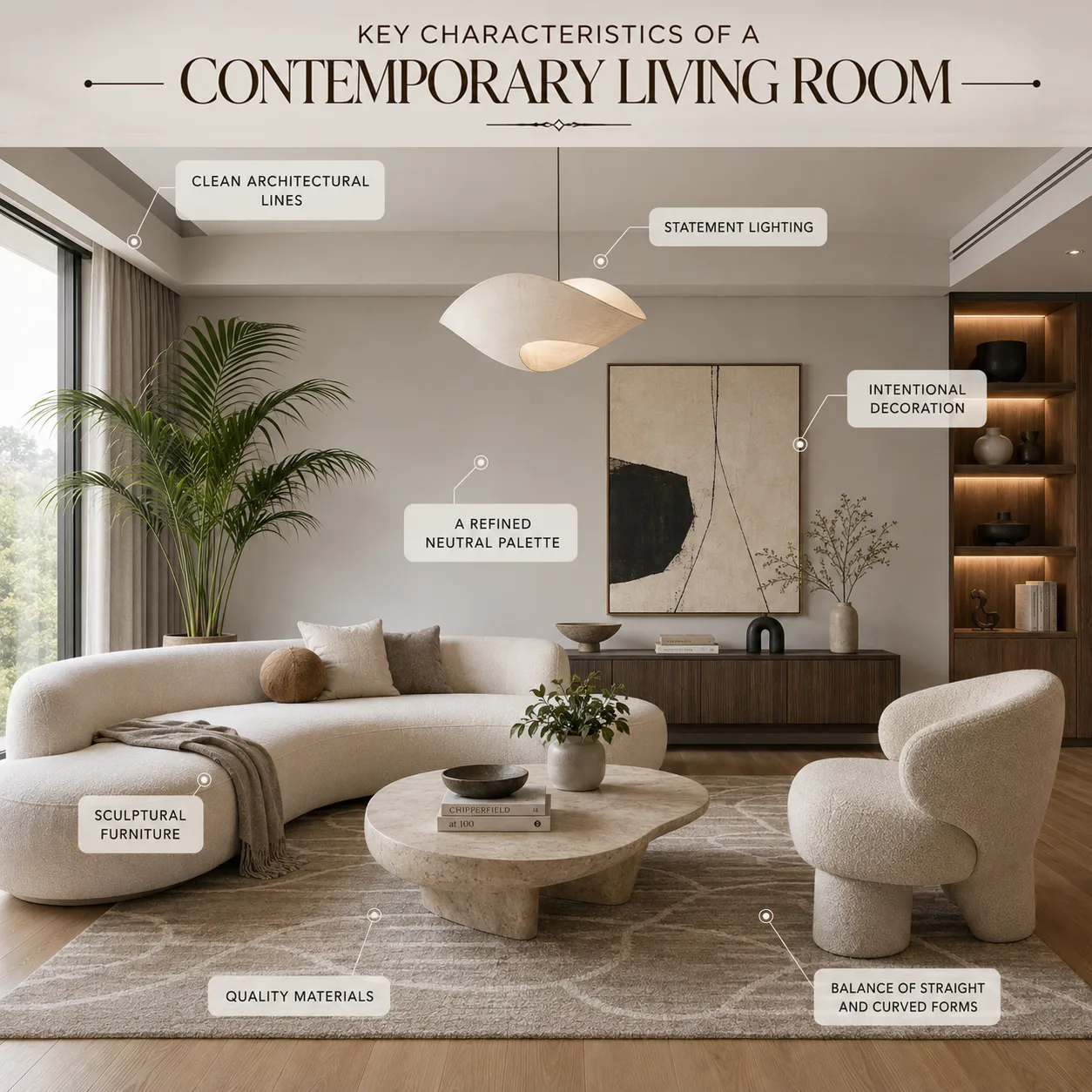
A Refined Neutral Palette
Warm white, cream, beige, taupe, greige, stone and soft gray frequently form the foundation of the room. Deeper brown, charcoal, black, olive, rust or muted earthy shades can provide contrast.
Sculptural Furniture
Furniture is often simple in overall composition but distinctive in silhouette. Curved sofas, generously upholstered lounge chairs, low-profile consoles and architectural coffee tables can become focal points without requiring elaborate detailing.
Quality Materials
Wood, stone, linen, wool, glass and metal create visual depth through natural variation and texture. Contemporary rooms generally benefit from using fewer materials well rather than introducing too many unrelated finishes.
Statement Lighting
Lighting is both practical and decorative. Sculptural pendants, chandeliers, architectural floor lamps and subtle accent lighting often play an important role in the overall composition.
Intentional Decoration
Accessories are edited rather than accumulated. A large artwork, ceramic vessel, sculptural bowl or carefully selected stack of books can provide more impact than many small decorative objects competing for attention.
A Balance of Straight and Curved Forms
One of the easiest ways to keep a contemporary room from feeling severe is to balance linear architecture with softer furniture or accessories. A rectangular room might include a curved sofa, oval table, rounded chair or organically shaped lamp to soften the geometry.
The Contemporary Living Room Color Palette
Contemporary rooms are frequently associated with neutrals, but a successful palette should contain enough variation to prevent the interior from feeling flat.
Start With a Warm Neutral Base
Use warm white, ivory, beige, greige, mushroom, taupe or pale stone across larger surfaces such as walls, sofas, rugs and curtains.
Rather than selecting exactly the same shade for every element, layer several closely related tones. A cream sofa against warm white walls and a slightly deeper oatmeal rug creates subtle visual separation while keeping the room cohesive.
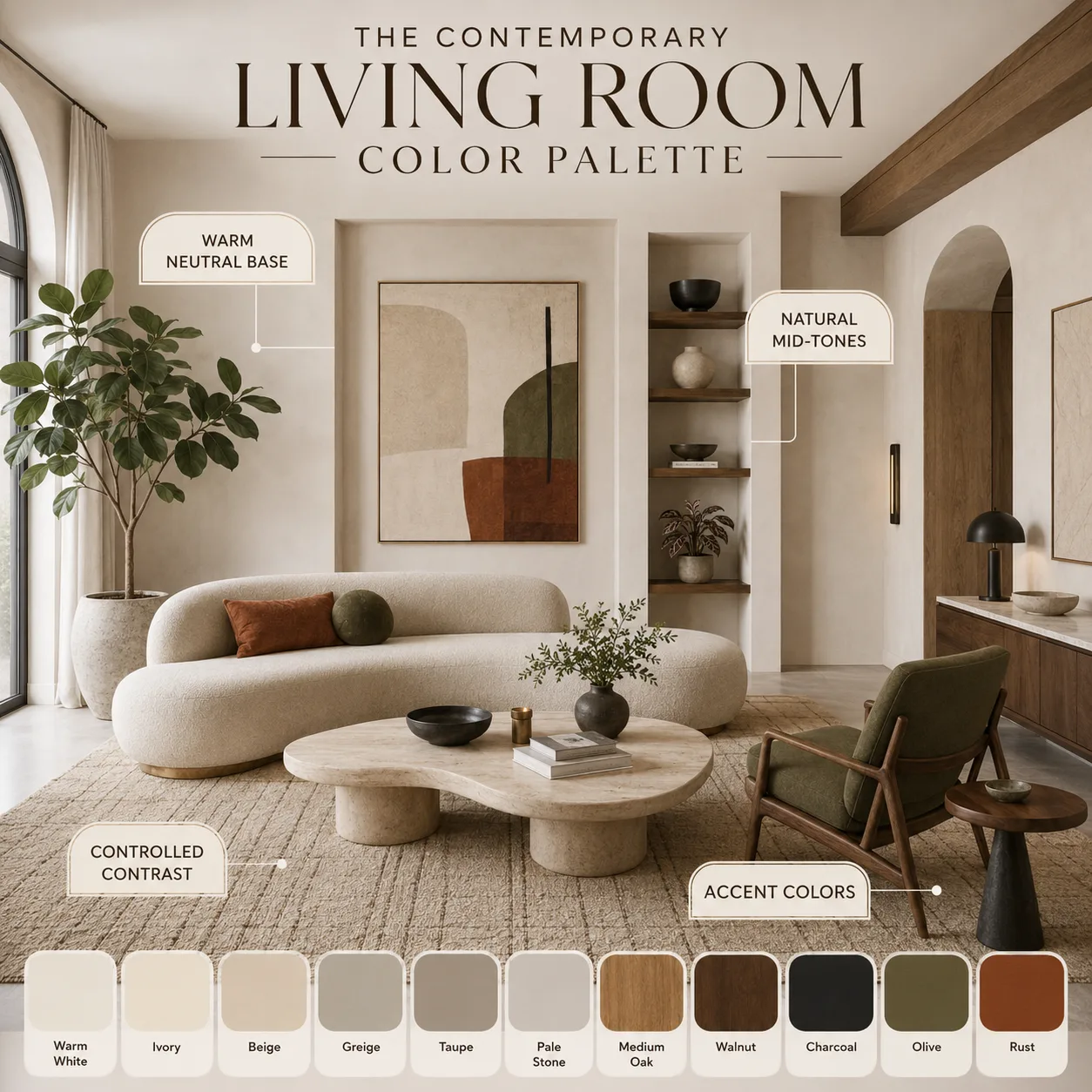
Add Natural Mid-Tones
Wood is particularly effective for introducing warmth. Medium oak, walnut, smoked timber or other natural finishes can prevent a contemporary neutral palette from appearing cold.
Introduce Controlled Contrast
Dark elements give the eye somewhere to rest. Consider black window frames, a bronze lamp, charcoal upholstery, dark timber or a slim metal detail.
The goal is not necessarily to create a black-and-white interior. A small amount of darker contrast can simply provide structure.
Use Accent Colors Selectively
Contemporary interiors can absolutely include color. Muted olive, clay, rust, burgundy, dusty blue, ochre or deep green can work particularly well when introduced through upholstery, artwork, cushions or accessories.
Choose one or two supporting colors rather than scattering unrelated accents throughout the room.
Designer Tip
Build the palette in layers: background neutral, secondary neutral, natural material tone, dark contrast and one optional accent color. This approach creates depth while keeping the overall room visually controlled.
Contemporary Living Room Furniture
Furniture has a strong visual presence in contemporary interiors, so the shape, scale and spacing of each piece matter as much as its color.
Instead of filling the room with matching furniture, create a coordinated composition using pieces that share proportions, materials or visual weight without appearing to belong to a complete showroom set.
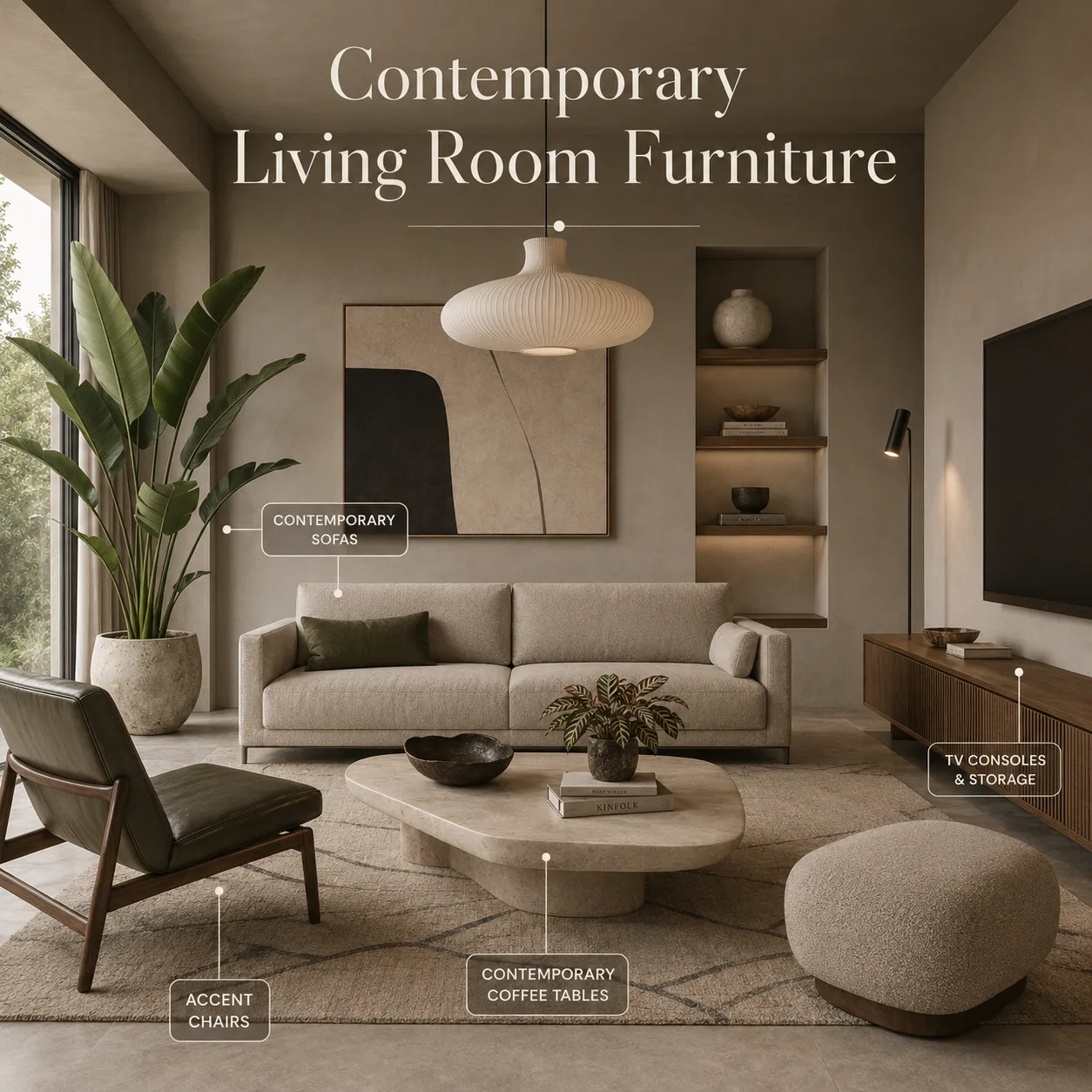
Contemporary Sofas
The sofa will usually establish the direction of the room.
Look for clean upholstery, generous proportions and a silhouette that feels intentional. Contemporary sofas may be straight and architectural, softly rounded or modular depending on the mood you want to create.
Neutral upholstery in cream, oatmeal, taupe, mushroom or soft gray provides versatility, while deeper olive, brown or charcoal can create a stronger focal point.
Prioritize comfort as well as appearance. A beautiful contemporary room should still function as a real living space.
Accent Chairs
Accent chairs are an opportunity to introduce contrast in form and material.
If the sofa has a straight silhouette, try a curved or rounded lounge chair. If the sofa is heavily upholstered, a chair with visible timber or metal framing can add definition.
Avoid automatically purchasing two matching chairs. In larger rooms, complementary but slightly different seating can create a more collected and professionally styled appearance.
Contemporary Coffee Tables
The coffee table can act almost like sculpture at the center of the seating arrangement.
Travertine, marble, limestone, timber, glass and mixed-material designs all work well. Consider round, oval, irregular or architectural forms depending on the surrounding furniture.
Scale is essential. A table that is too small can make substantial seating feel disconnected, while an oversized piece can restrict circulation.
TV Consoles and Storage
Contemporary storage generally works best when it visually simplifies the room.
Consider long, low-profile cabinets, integrated wall units or built-in joinery with concealed storage. Natural timber can soften a minimalist room, while painted or plaster-finish cabinetry can blend almost seamlessly with the architecture.
Keep visible electronics and cables controlled wherever practical so technology does not become the dominant visual feature.
Materials and Textures
A contemporary living room becomes significantly more interesting when a restrained palette is supported by varied textures.
The goal is to create contrast you can see and feel rather than relying entirely on color.
Natural Wood
Oak, walnut and other natural timber finishes introduce warmth and organic variation. Wood can appear in coffee tables, consoles, shelving, wall paneling or furniture frames.
Avoid forcing every timber element to match perfectly. Related wood tones generally create a more natural and layered interior.
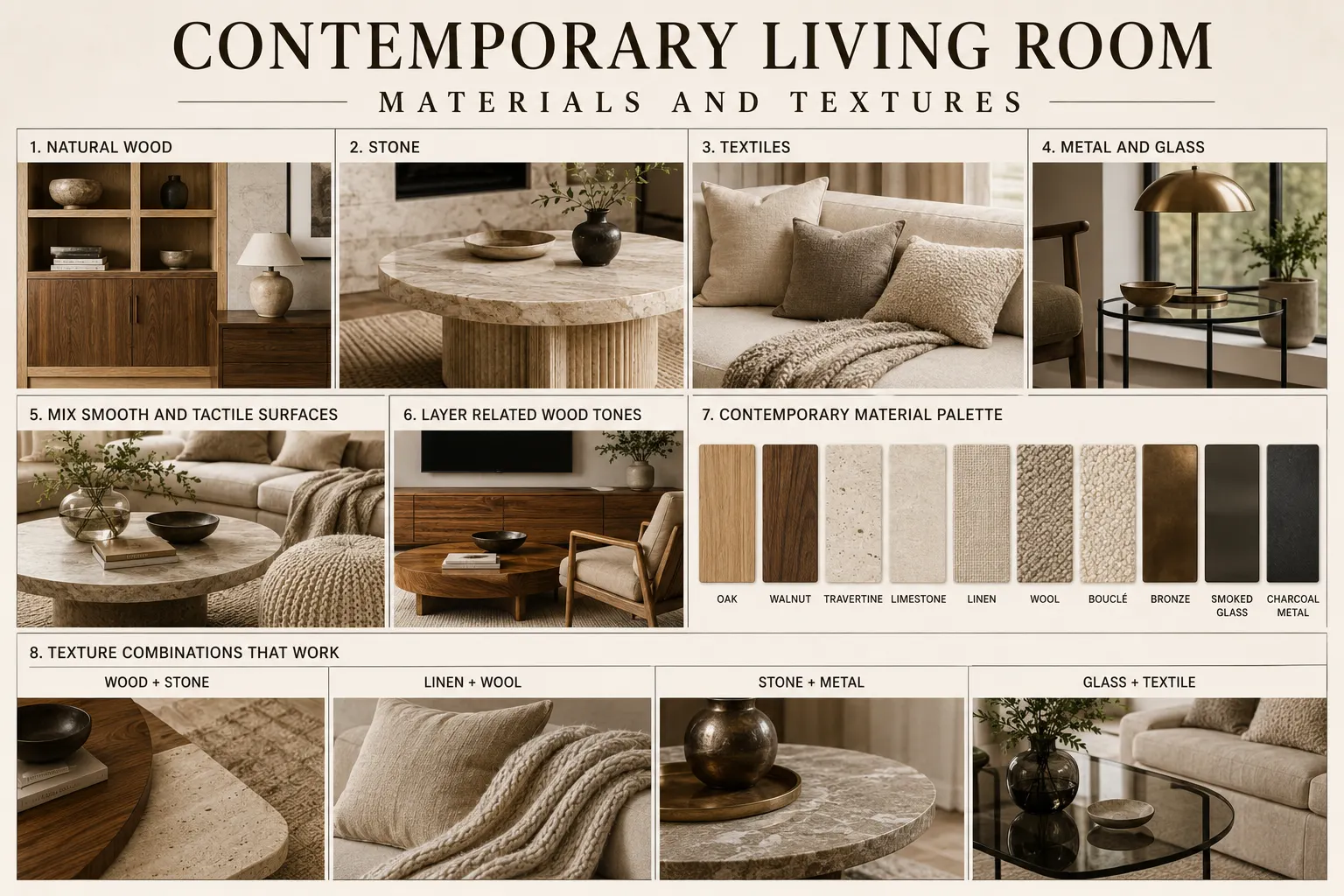
Stone
Travertine, limestone and marble can introduce architectural weight and subtle pattern.
Use stone strategically rather than throughout every surface. A substantial coffee table, fireplace surround or side table may provide enough material contrast for the entire room.
Textiles
Linen, wool, boucle and textured woven fabrics soften stone, glass and timber.
Combine smooth and tactile surfaces: a finely woven sofa with a heavier wool rug, for example, or linen curtains with a textured occasional chair.
Metal and Glass
Metal adds definition while glass reduces visual weight.
Blackened steel, brushed nickel, aged brass or bronze can work through lighting, furniture details and small accessories. Keep the finish palette controlled so the room does not become visually fragmented.
Contemporary Living Room Layout
Contemporary design depends heavily on proportion and negative space. Even excellent furniture can feel unsuccessful when everything is pushed against the walls or arranged without a clear relationship.
Create a Defined Conversation Area
Position the sofa and chairs so they relate to one another rather than only facing a television.
In larger rooms, bringing furniture inward can create a more intimate arrangement while also improving the visual relationship between the seating and coffee table.
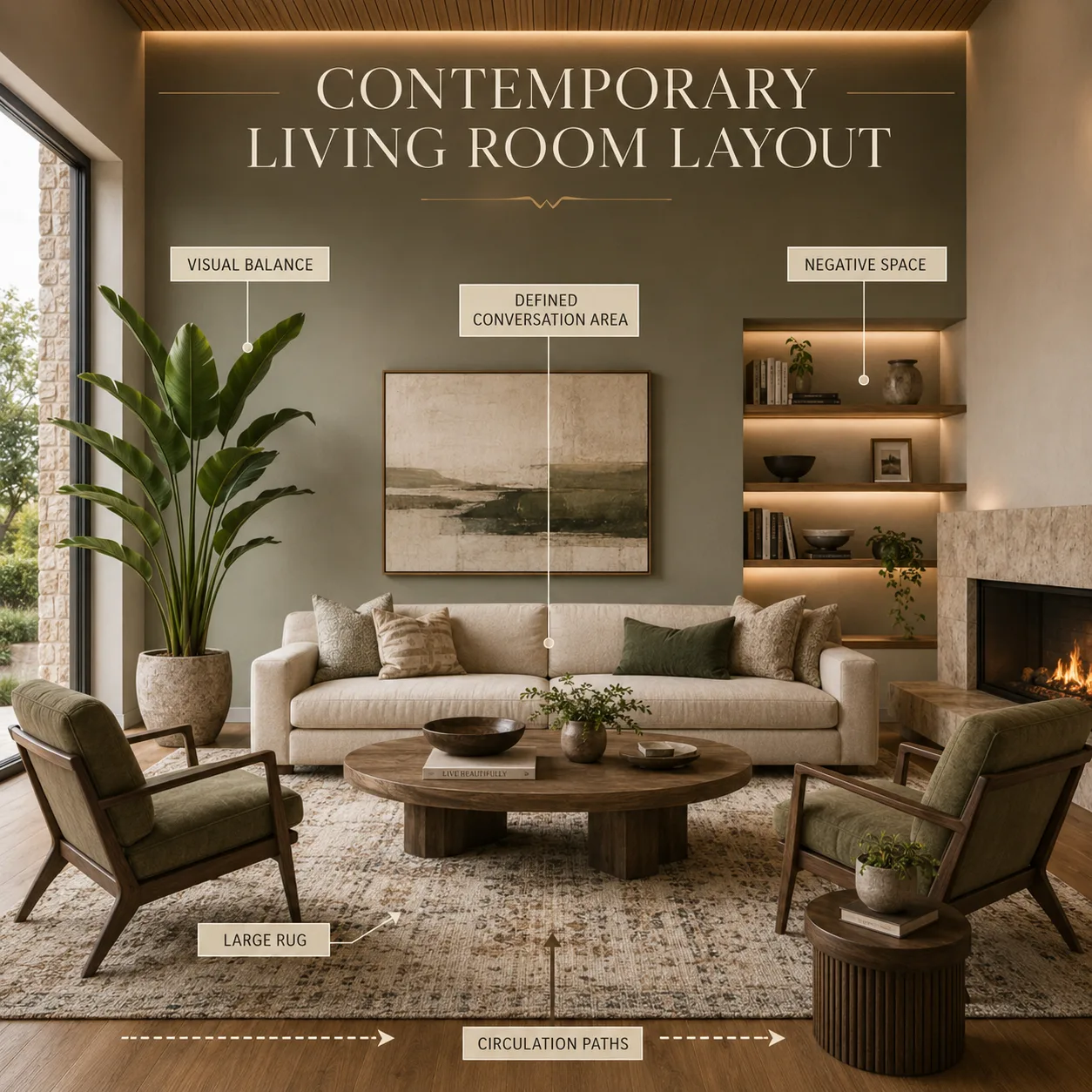
Anchor the Furniture With a Large Rug
The rug should visually connect the primary seating pieces.
When possible, allow at least the front legs of the sofa and chairs to sit on the rug. An undersized rug can make individual pieces appear disconnected even when the furniture itself is well chosen.
Protect Circulation Paths
Leave natural walking routes between doors, windows and adjoining rooms. Contemporary rooms often look spacious because circulation is planned deliberately rather than because the rooms are necessarily large.
Use Negative Space Intentionally
Not every wall or corner requires furniture.
An empty area beside a sculptural chair or a clear stretch of wall surrounding a large artwork can make those individual elements feel more important.
Consider Visual Balance
Balance does not require perfect symmetry.
A large sofa on one side of the room might be visually balanced by two lighter chairs opposite it, while a substantial artwork could be balanced by a floor lamp or tall plant elsewhere in the composition.
How to Design a Small Contemporary Living Room
Contemporary design can work especially well in smaller rooms because its emphasis on edited furniture and visual clarity helps reduce unnecessary clutter.
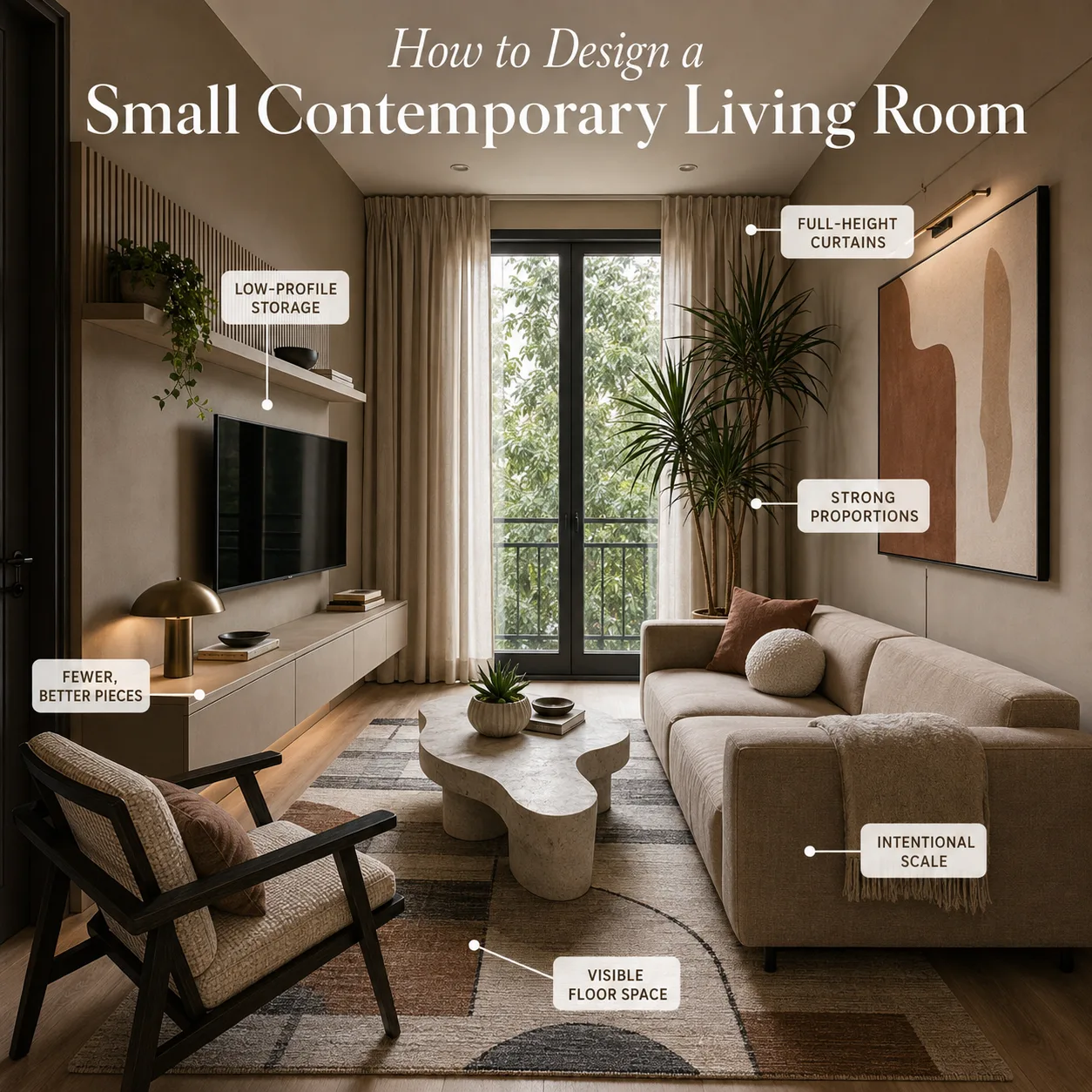
Choose fewer pieces with strong proportions rather than several undersized items. A well-scaled sofa, one comfortable chair and a substantial coffee table can feel more sophisticated than multiple small furniture pieces.
Use furniture with visible floor space where it helps the room feel lighter, but do not assume every piece must have thin legs. Mixing visually solid and lighter elements creates better balance.
Wall-mounted or low-profile storage can reduce visual congestion, while curtains extending close to the ceiling can strengthen the room’s vertical proportions.
Most importantly, avoid shrinking every object simply because the room is small. Scale should still feel intentional.
Designer Tip
Before adding another furniture piece, ask whether it improves comfort, function or composition. If it does none of the three, the room may be stronger without it.
Lighting for a Contemporary Living Room
Lighting is one of the most effective ways to transform a simple room into a sophisticated contemporary interior.
Rather than depending on one ceiling fixture, use several sources of light at different heights. This creates depth and allows the atmosphere to change throughout the day.
Ambient Overhead Lighting
A sculptural chandelier or pendant can act as a visual focal point, particularly in living rooms with higher ceilings.
For quieter interiors, recessed or architectural ceiling lighting can provide general illumination while allowing furniture and artwork to remain the focus.
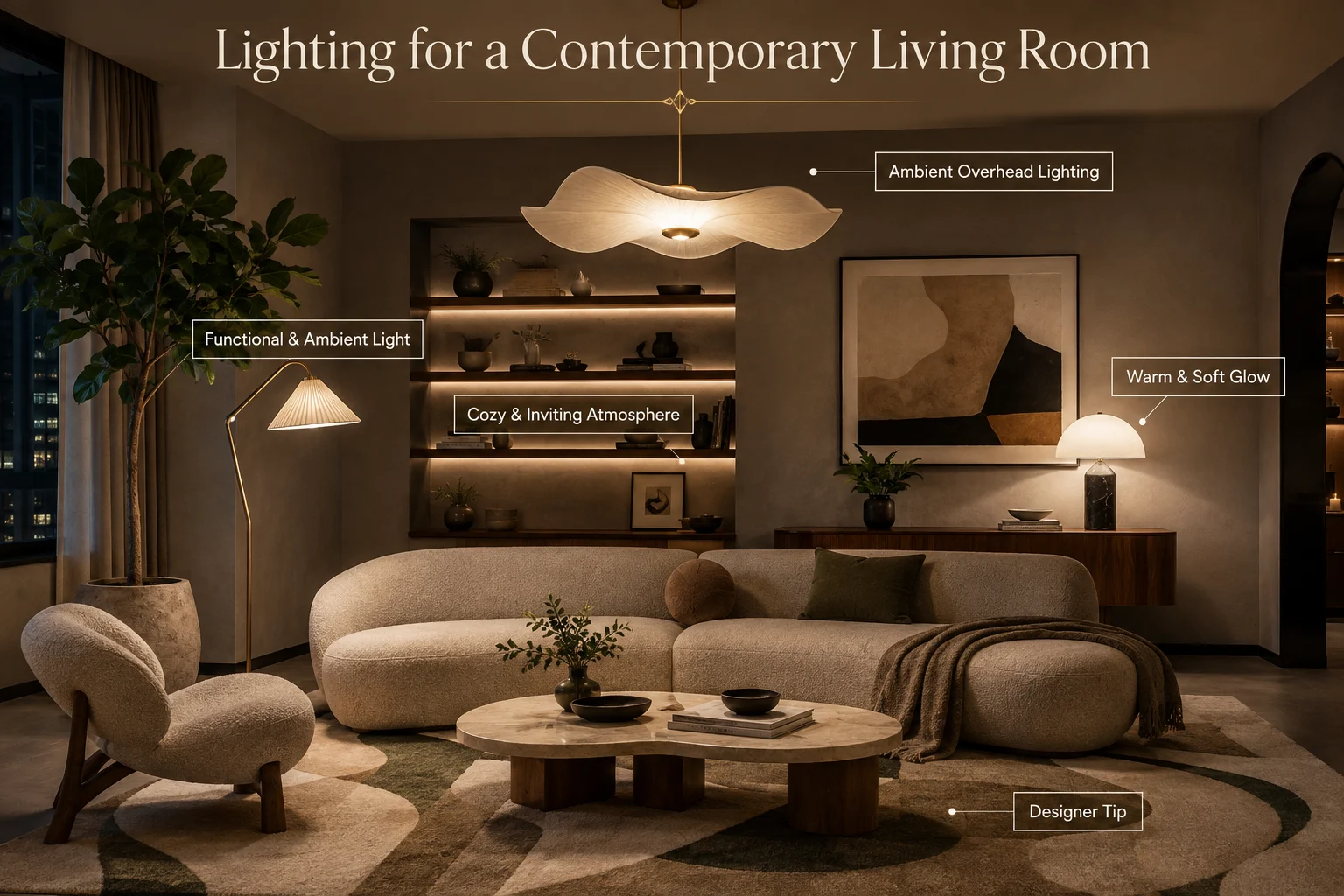
Functional and Ambient Light
Add floor or table lamps where additional light is useful for reading, conversation or evening relaxation.
Choose lamps that contribute to the overall design even when switched off. Contemporary lighting often works as functional sculpture.
Create a Cozy and Inviting Atmosphere
Distribute light around the room rather than concentrating it in one location. A floor lamp beside the sofa, a small table lamp near a console and subtle architectural lighting can create greater visual depth than one bright overhead source.
Choose a Warm, Soft Glow
A contemporary living room should generally feel comfortable in the evening rather than overly bright or clinical.
Dimmers are especially useful because they allow the lighting level to respond to different activities.
Designer Tip
Treat lighting as part of the furniture plan. Decide where lamps belong while planning seating and tables instead of attempting to fit them into leftover spaces at the end.
Contemporary Area Rugs
A rug provides softness, acoustic comfort and visual structure.
For a quiet contemporary room, look for subtle tonal patterns, textured wool, understated geometric designs or solid rugs with visible material variation.
If the rest of the room is extremely restrained, a more expressive rug can introduce movement and personality.
Avoid choosing a pattern simply because it looks contemporary in isolation. The rug should connect the colors and visual weight of the surrounding furniture.
Contemporary Curtains and Window Treatments
Window treatments should support the architecture rather than compete with it.
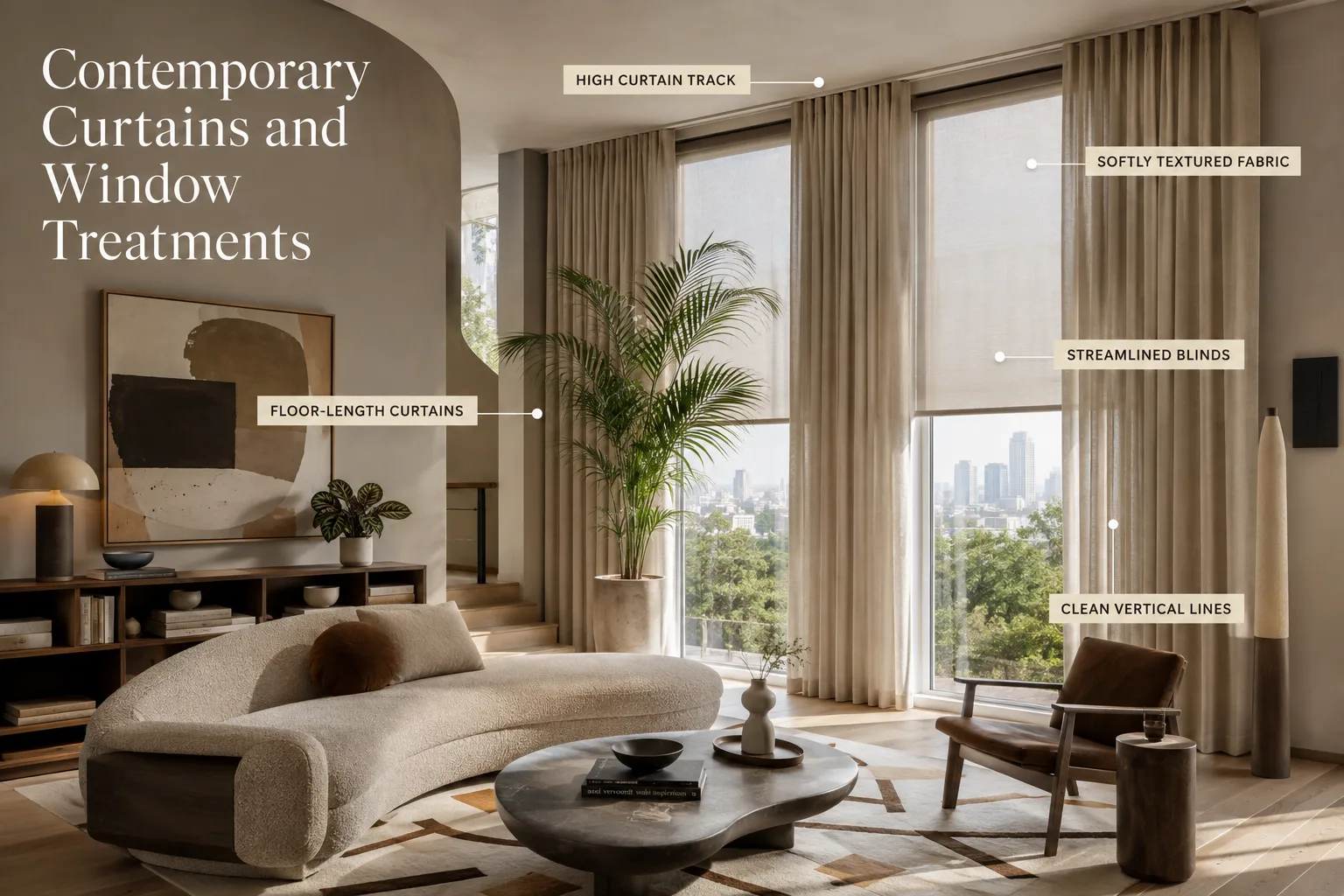
Floor-length linen or softly textured curtains in ivory, oatmeal, taupe or warm gray work particularly well in neutral contemporary spaces.
Positioning the curtain track higher can create a cleaner vertical line and emphasize the height of the room.
In more minimal interiors, discreet roller shades or streamlined blinds can be used where practical privacy or light control is the priority.
Contemporary Wall Decor and Artwork
Contemporary walls often benefit from fewer but more substantial decorative elements.
Choose Larger Artwork
One generously scaled artwork can give a living room greater presence than a collection of pieces that are too small for the wall.
Consider abstract work, photography, textural canvas, graphic compositions or other pieces that relate to the mood and palette without perfectly matching the furniture.
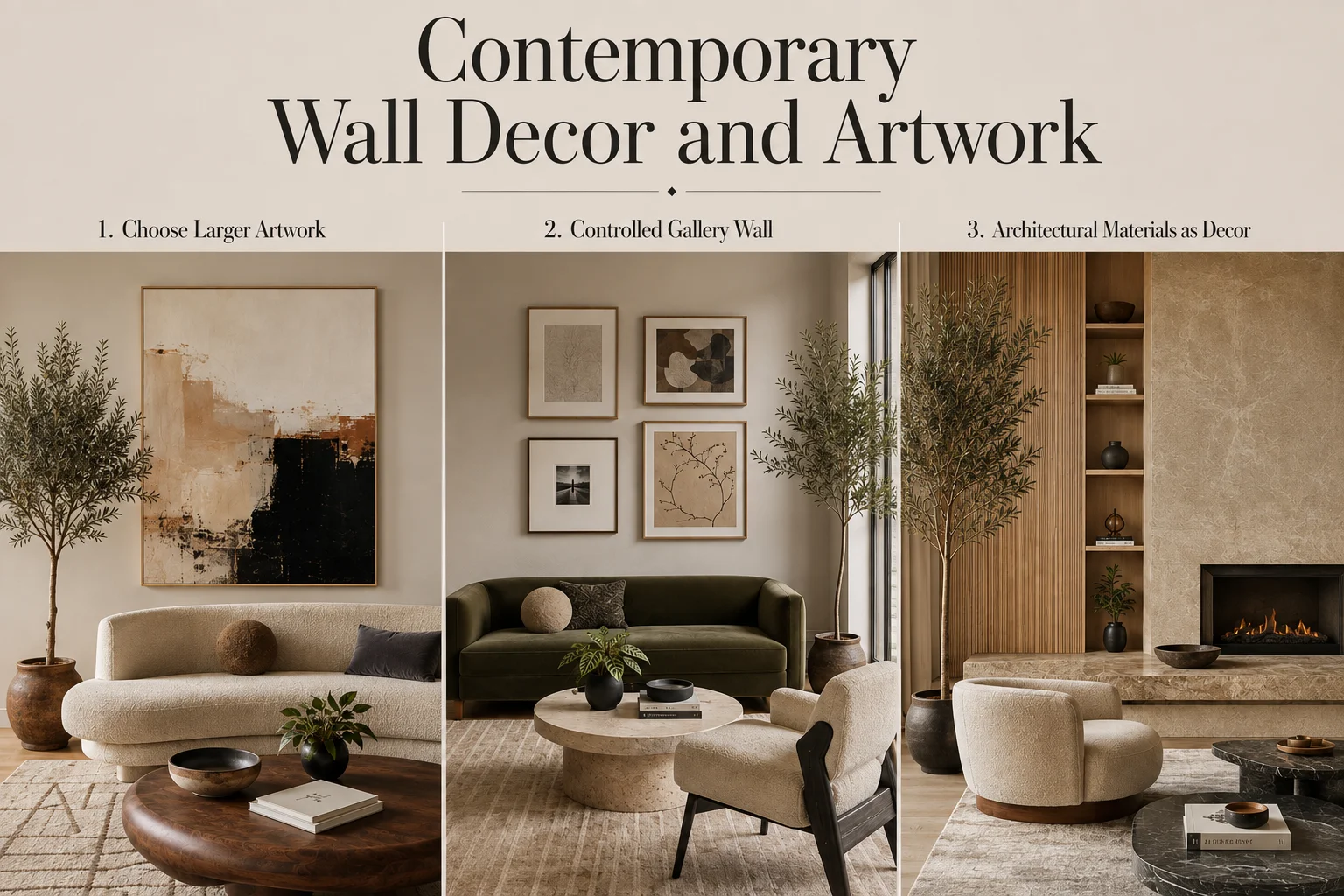
Create a Controlled Gallery Wall
A gallery arrangement can still work in a contemporary interior when there is consistency in spacing, scale or framing.
Keep the composition intentional and allow enough space around it so the wall does not feel crowded.
Let Architectural Materials Become Decoration
Limewash, plaster finishes, timber paneling, stone fireplaces and integrated shelving can create enough texture that additional wall decoration becomes unnecessary.
This approach is particularly effective when you want a room to feel sophisticated but visually quiet.
Accessories and Decorative Objects
Accessories give a contemporary living room personality, but successful styling usually depends on editing.
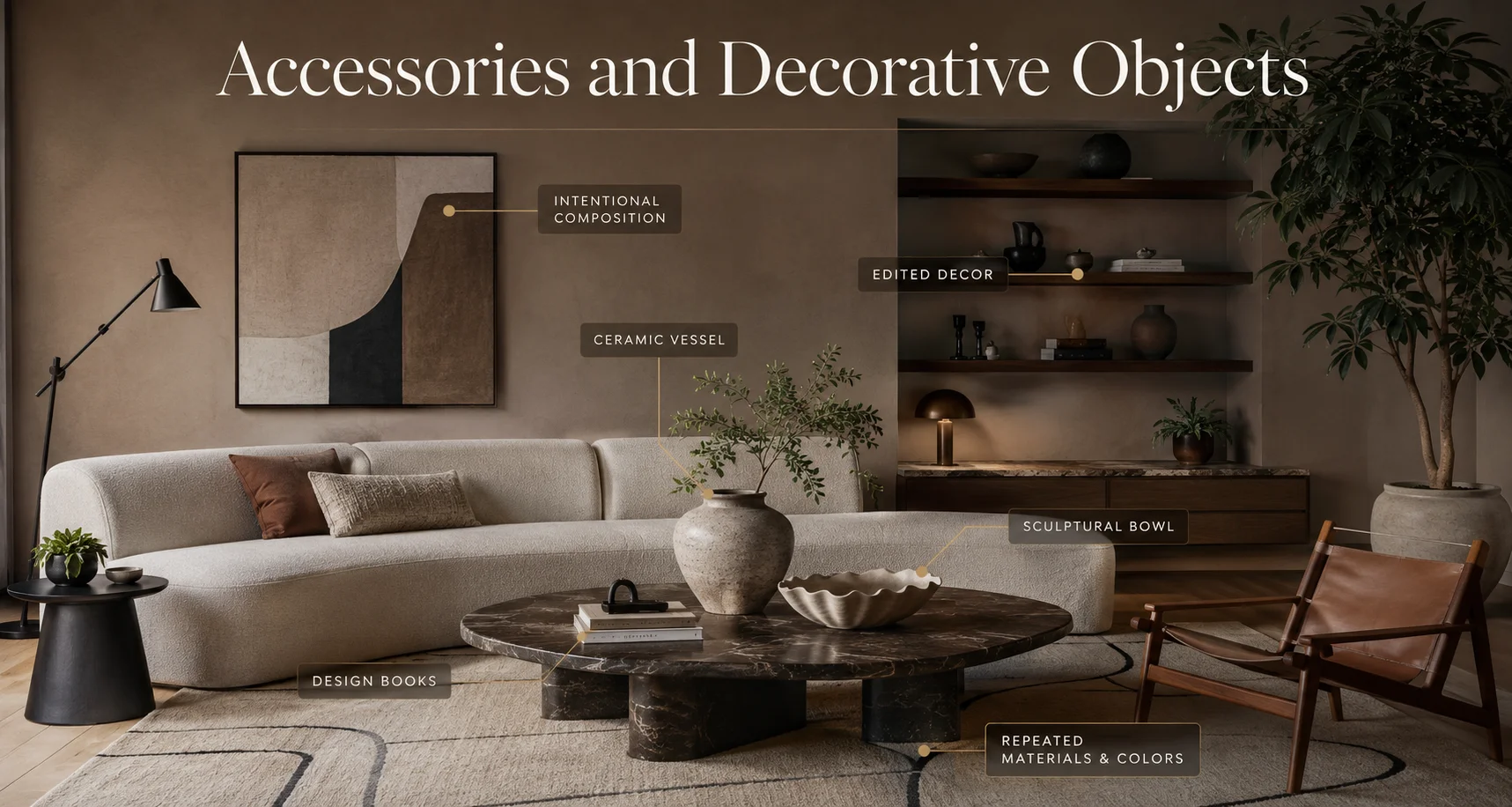
Instead of distributing many small objects evenly across every surface, create a few intentional compositions.
A substantial ceramic vessel, sculptural bowl, stack of design books and small decorative object can form a stronger coffee-table arrangement than numerous unrelated accessories.
Repeat selected materials or colors throughout the room to create continuity. For example, the tone of a ceramic vessel may relate to the artwork while a dark metal detail connects visually with a nearby lamp.
Plants in a Contemporary Living Room
Plants introduce organic shape and can provide a useful contrast to architectural lines.
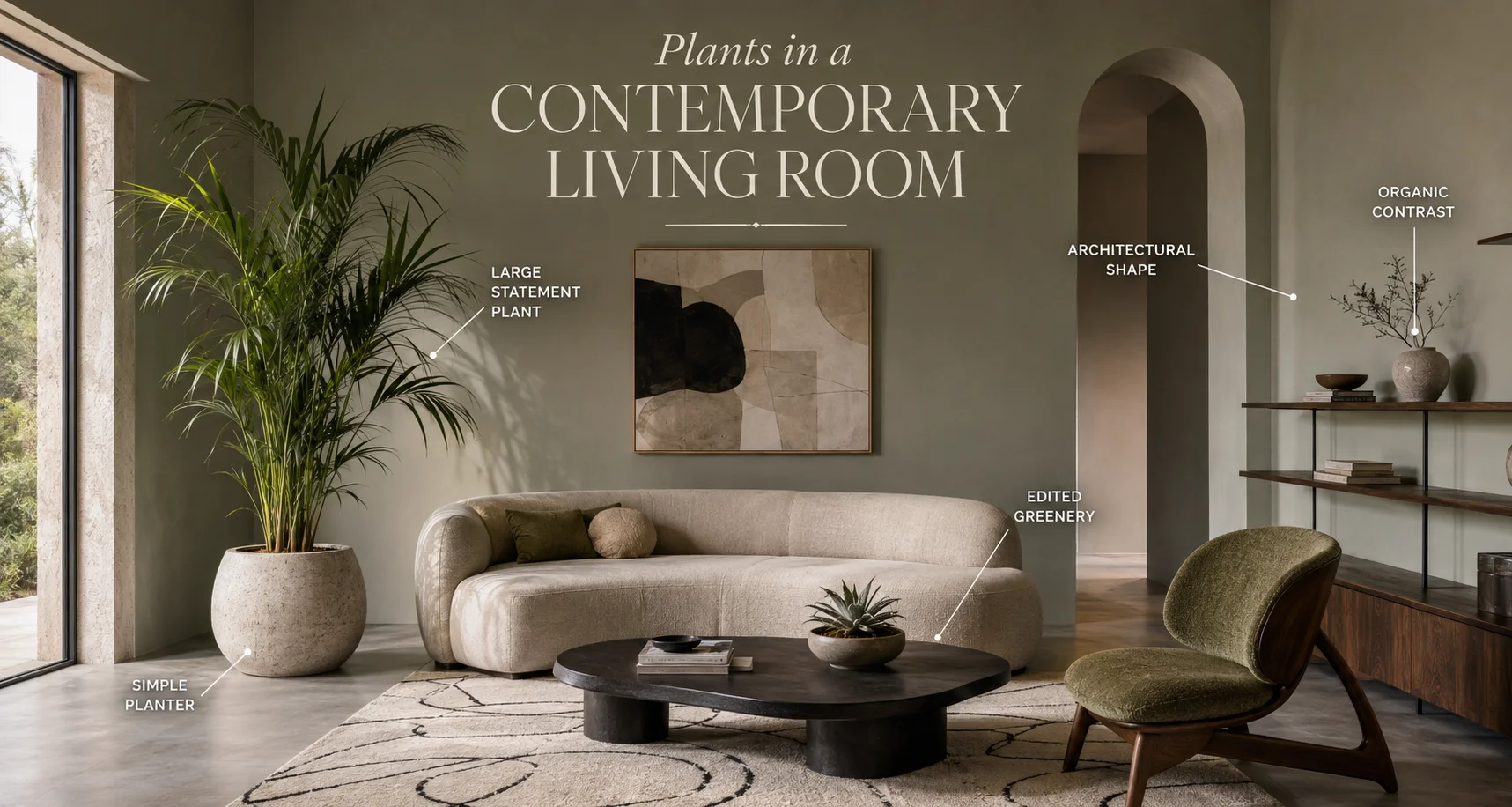
For larger rooms, one substantial plant often creates a cleaner statement than many small pots distributed around the room.
Depending on the light available and the overall design, consider architectural indoor plants, graceful palms or sculptural branching plants.
Planters should be treated as part of the decor. Simple ceramic, stone-look or textured vessels usually integrate more easily than highly decorative containers.
How to Style Contemporary Shelves
Open shelves should feel curated rather than filled.
Begin With Larger Pieces
Position artwork, vessels, substantial books or sculptural objects first. These establish the visual structure.
Vary Height and Form
Combine vertical books, rounded ceramics, framed pieces and lower objects to create movement.
Leave Negative Space
Every section of shelving does not require decoration. Empty areas make displayed pieces easier to appreciate.
Repeat Materials
Echoing timber, stone, ceramic or similar tones across several shelves creates visual continuity without making the arrangement look overly coordinated.
Conceal Everyday Clutter
Use lower cabinets, boxes or baskets for paperwork, cables, controls and other practical objects that do not need to remain on display.
Designer Tip
When shelf styling feels busy, removing one or two objects is often more effective than rearranging everything.
Contemporary Designer Styling Rules
Contemporary interiors provide plenty of creative freedom, but a few styling principles can help the finished room feel intentional rather than simply filled with fashionable pieces.
1. Mix Curves With Straight Lines
Balance architectural geometry with softer furniture. Pair a rectangular fireplace with a rounded sofa, a straight console with an oval mirror or an angular room with a sculptural coffee table.
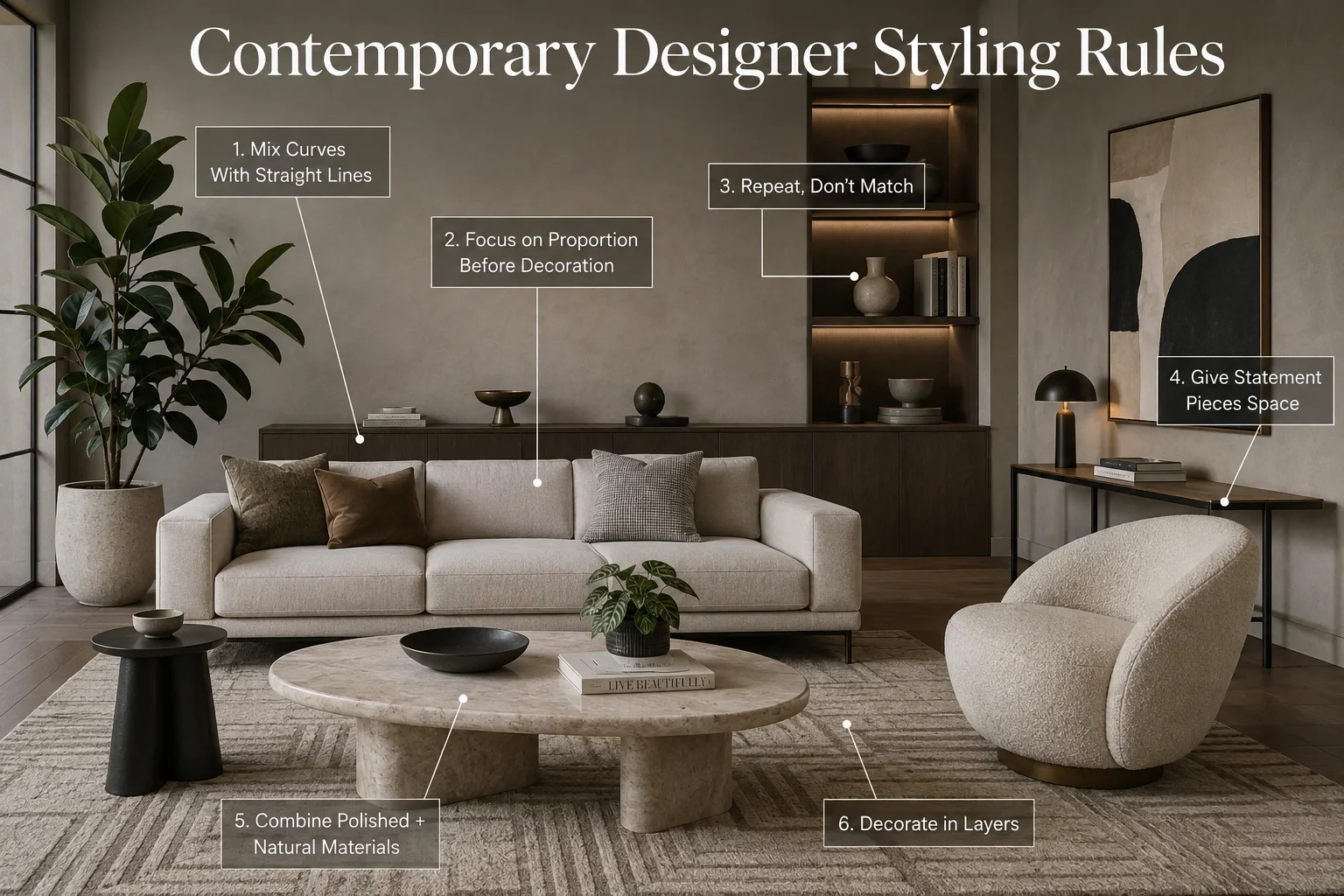
2. Focus on Proportion Before Decoration
Furniture scale has a greater effect on the room than small accessories. Establish the correct sofa, rug, tables and lighting before spending significant time styling decorative objects.
3. Repeat, Don’t Match
Repeat selected colors and materials across the room without making everything identical.
A walnut console might relate to a darker timber accent chair, while bronze lighting might connect with a small metal detail elsewhere.
4. Give Statement Pieces Space
A sculptural chair, dramatic light fixture or large artwork has greater visual impact when it is not surrounded by multiple competing focal points.
5. Combine Polished and Natural Materials
Use contrast to make the room feel layered. Smooth stone can sit beside textured wool, glass beside natural timber and refined metal beside softly woven linen.
6. Decorate in Layers
Build the room in stages: architecture, large furniture, rug, lighting, artwork, window treatments and finally accessories.
This prevents decorative objects from being used to compensate for problems with the larger composition.
Common Contemporary Living Room Decorating Mistakes
Using Too Many Trends at Once
A room filled with every currently popular material, furniture shape and accessory can date quickly.
Better approach: Build the room around timeless proportions and introduce current influences through a smaller number of carefully selected elements.
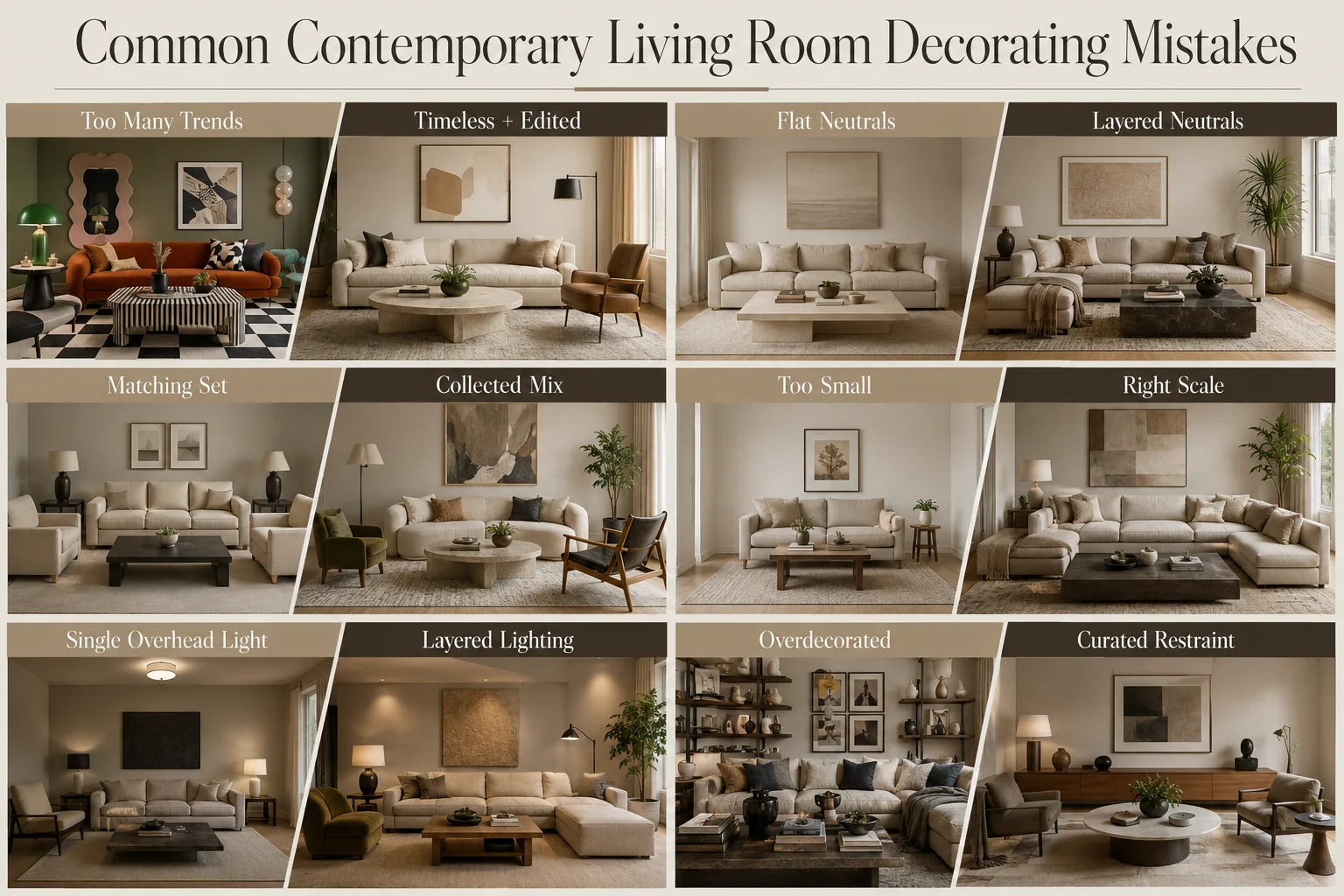
Making Everything Neutral and Flat
Neutral does not automatically mean sophisticated. When the walls, sofa, rug and furniture are nearly identical in tone and texture, the room may lack visual depth.
Better approach: Layer multiple neutrals and vary materials, texture and contrast.
Buying a Matching Furniture Set
Perfectly coordinated sofas, chairs, tables and storage can make the room feel more like a showroom than an individually styled home.
Better approach: Choose complementary pieces with differences in form, material or visual weight.
Choosing Furniture That Is Too Small
Small furniture scattered around a large living room can create more visual clutter rather than making the space feel bigger.
Better approach: Use fewer pieces with proportions that relate appropriately to the architecture.
Ignoring Lighting Until the End
A single bright ceiling light can flatten an otherwise well-designed room.
Better approach: Plan overhead, task and ambient lighting together.
Overdecorating Every Surface
Contemporary styling needs breathing room.
Better approach: Create a few meaningful decorative arrangements and leave selected surfaces intentionally quiet.
Contemporary Living Room Style Variations
Contemporary design can move in several directions depending on the palette, materials and furniture you prefer.
Warm Contemporary
Combine soft beige, cream, warm timber, textured fabrics and rounded furniture. This variation feels relaxed and welcoming while preserving contemporary simplicity.
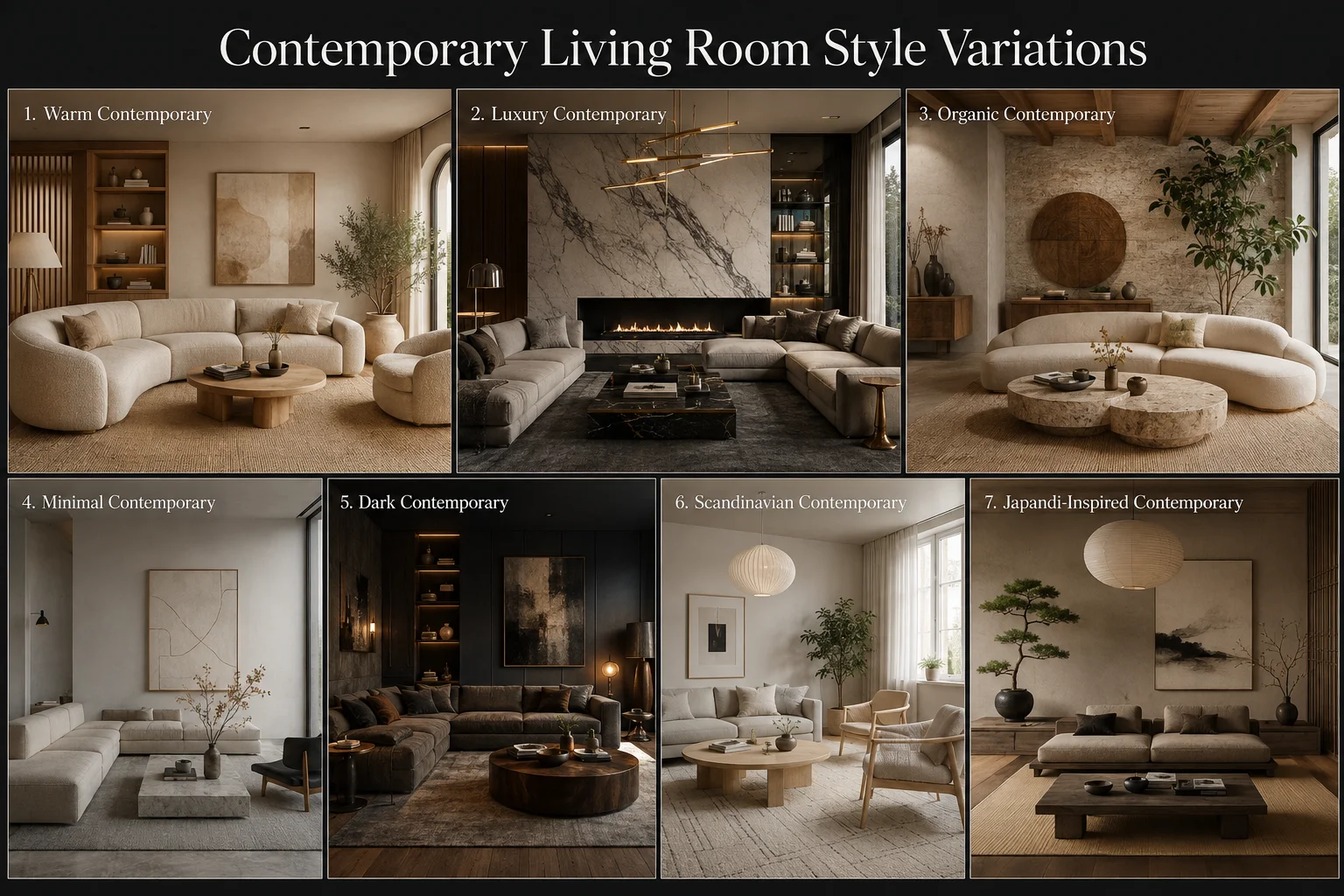
Luxury Contemporary
Introduce substantial stone, refined metal finishes, larger furniture, architectural lighting and highly considered details. Keep the palette controlled so premium materials remain the focus.
Organic Contemporary
Emphasize natural timber, textured stone, curved furniture, earthy tones and organic forms.
If you prefer an even softer nature-inspired direction, explore our Organic Modern Living Room Style Guide.
Minimal Contemporary
Reduce the number of furniture pieces and accessories while increasing the importance of proportion, architecture and material quality.
Dark Contemporary
Use charcoal, chocolate brown, deep taupe or muted green alongside warm timber, stone and controlled lighting for a more dramatic interpretation.
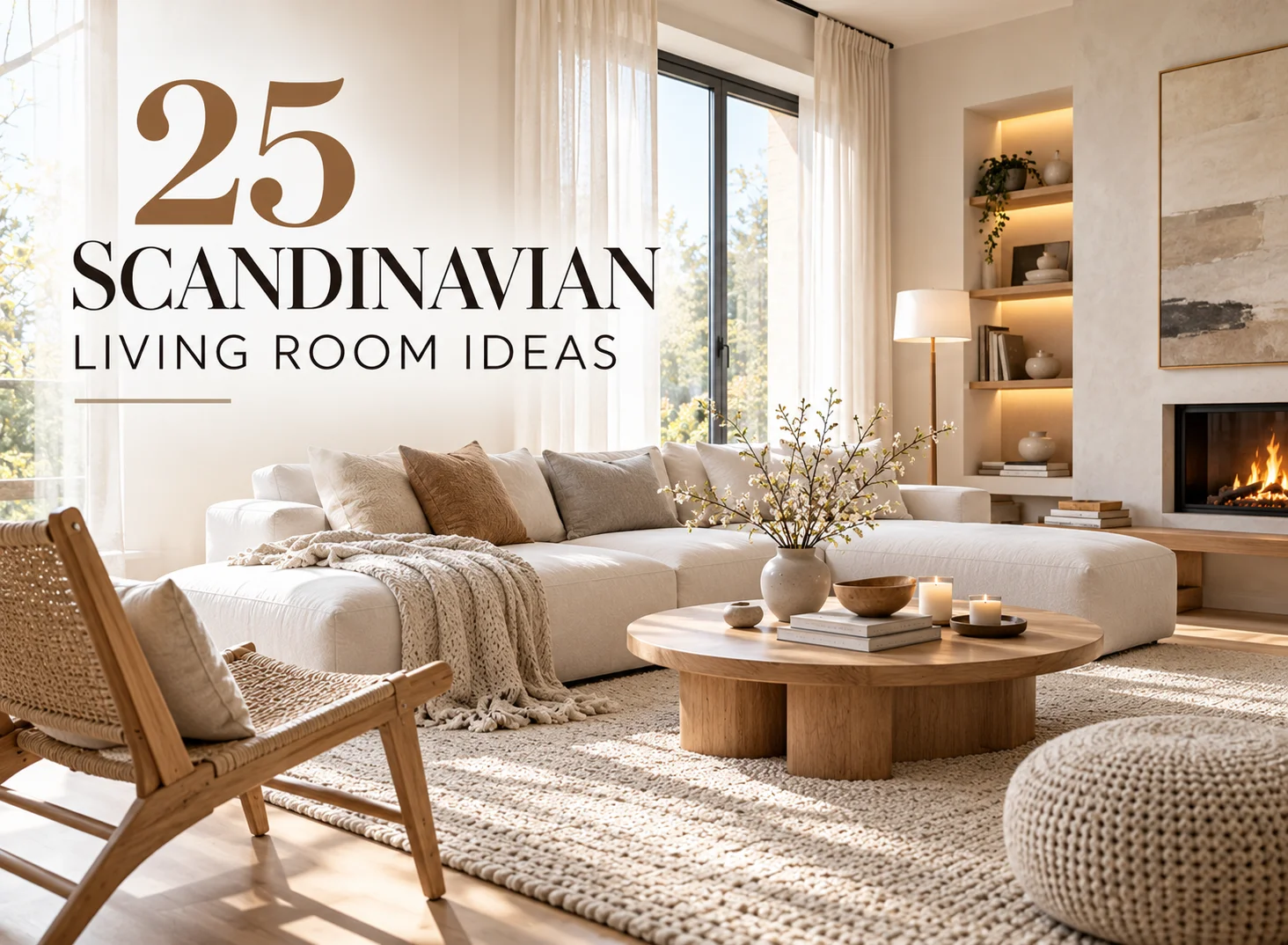
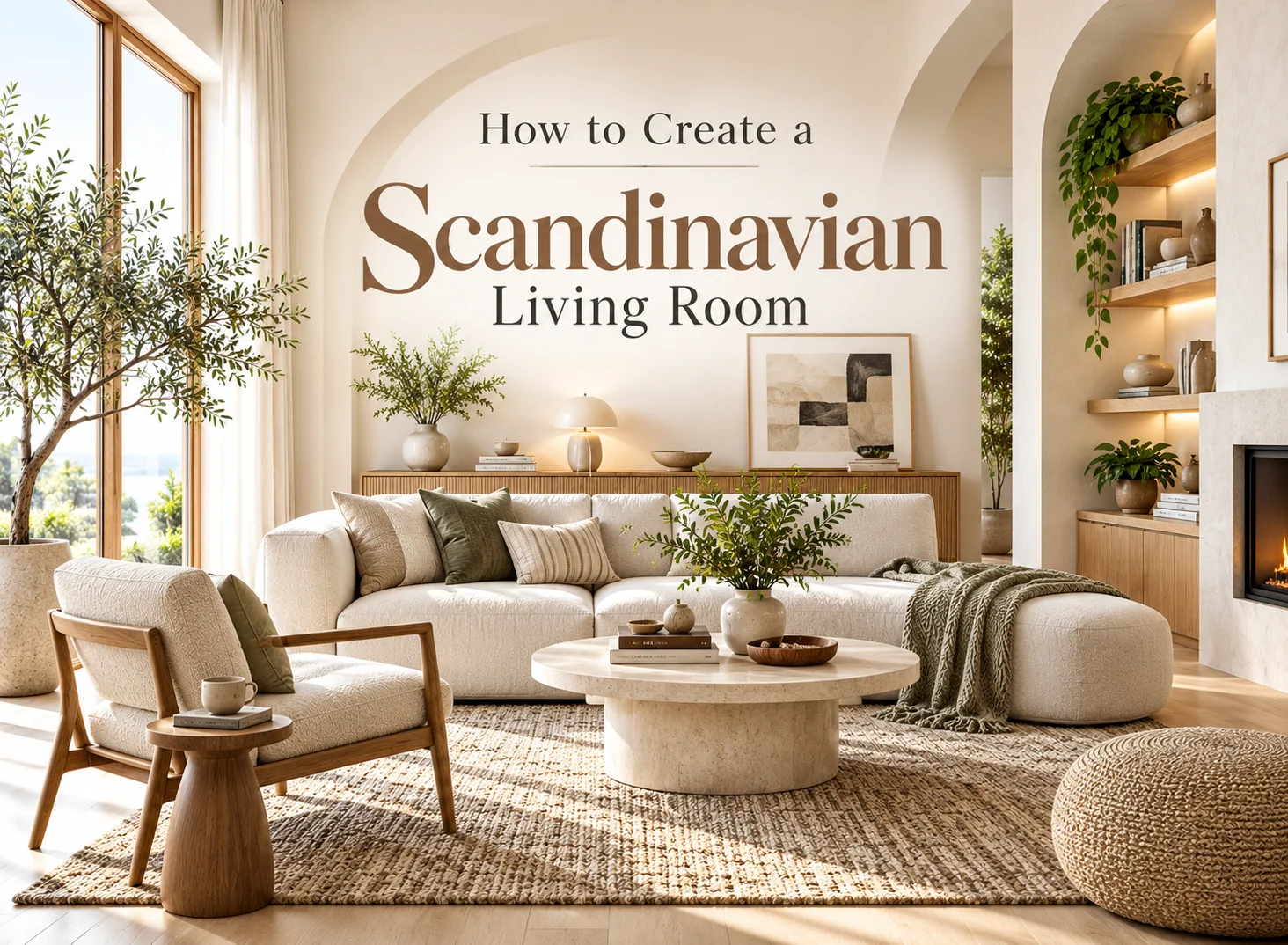
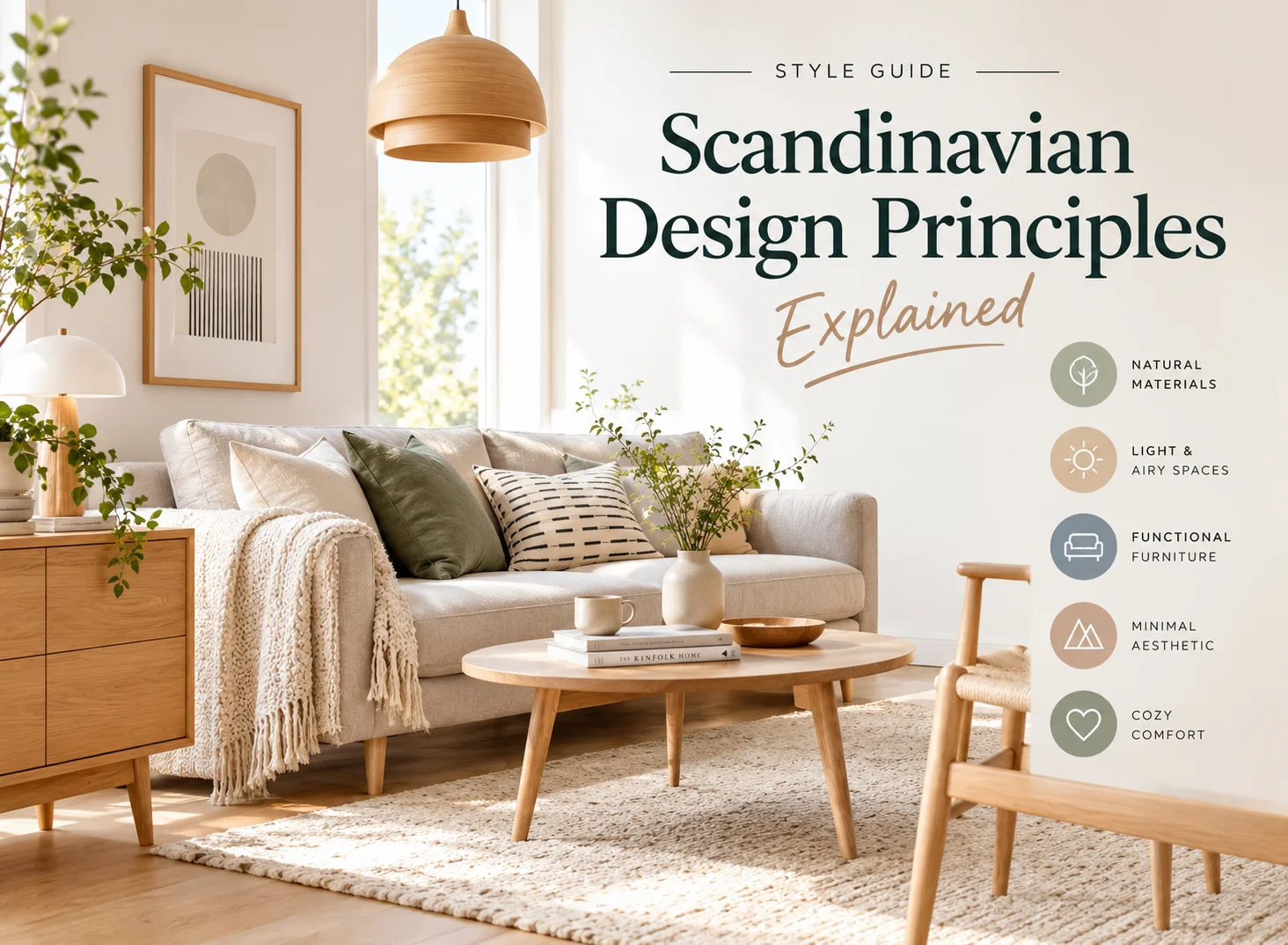
Scandinavian Contemporary
Combine contemporary shapes with pale timber, practical furniture, tactile textiles and a lighter overall palette.
For a stronger Nordic influence, visit our Scandinavian Living Room Style Guide.
Japandi-Inspired Contemporary
Use low-profile furniture, natural materials, restrained decoration and handcrafted details to introduce a quieter, more contemplative quality.
Explore the aesthetic further in our Japandi Living Room Style Guide.
Contemporary Living Room — Shop the Look
If you are designing a contemporary living room from scratch, invest in foundational furniture before smaller accessories. Strong proportions and quality materials will influence the room far more than decorative finishing pieces.
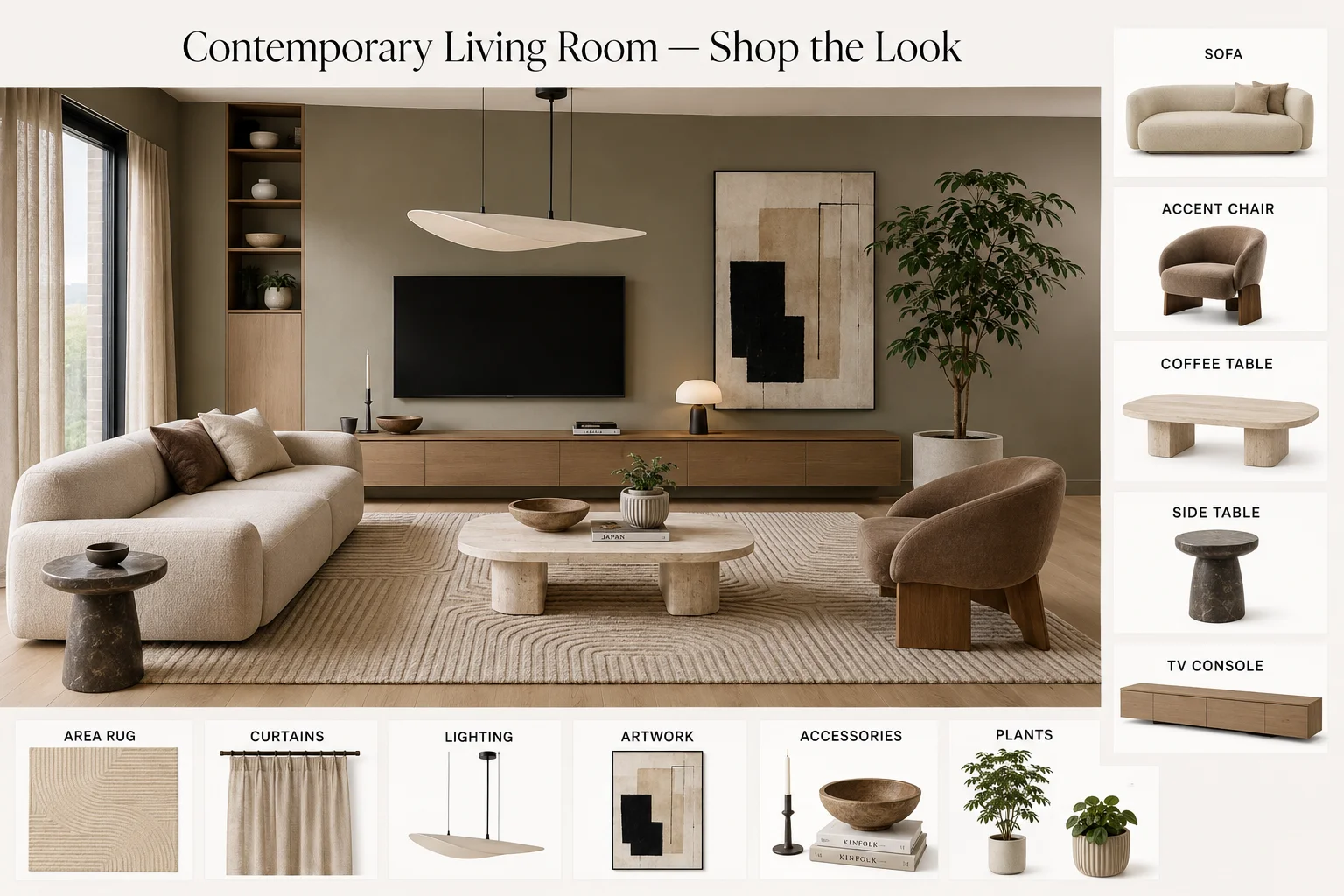
| Category | Recommended Contemporary Style |
|---|---|
| Sofa | Generous low-profile sofa in cream, taupe or warm gray upholstery |
| Accent Chair | Sculptural lounge chair with curved upholstery or a refined timber frame |
| Coffee Table | Travertine, limestone, timber or architectural mixed-material table |
| Side Table | Compact stone, glass, timber or metal sculptural table |
| TV Console | Long low-profile timber cabinet or integrated concealed storage |
| Area Rug | Large textured wool rug in a tonal neutral or understated pattern |
| Curtains | Floor-length linen or softly woven neutral panels |
| Lighting | Sculptural pendant combined with architectural floor and table lamps |
| Artwork | One large abstract, photographic or textural statement artwork |
| Accessories | Handcrafted ceramics, sculptural bowls, design books and restrained decorative objects |
| Plants | One or two architectural plants in simple textured planters |
How to Create a Contemporary Living Room Step by Step
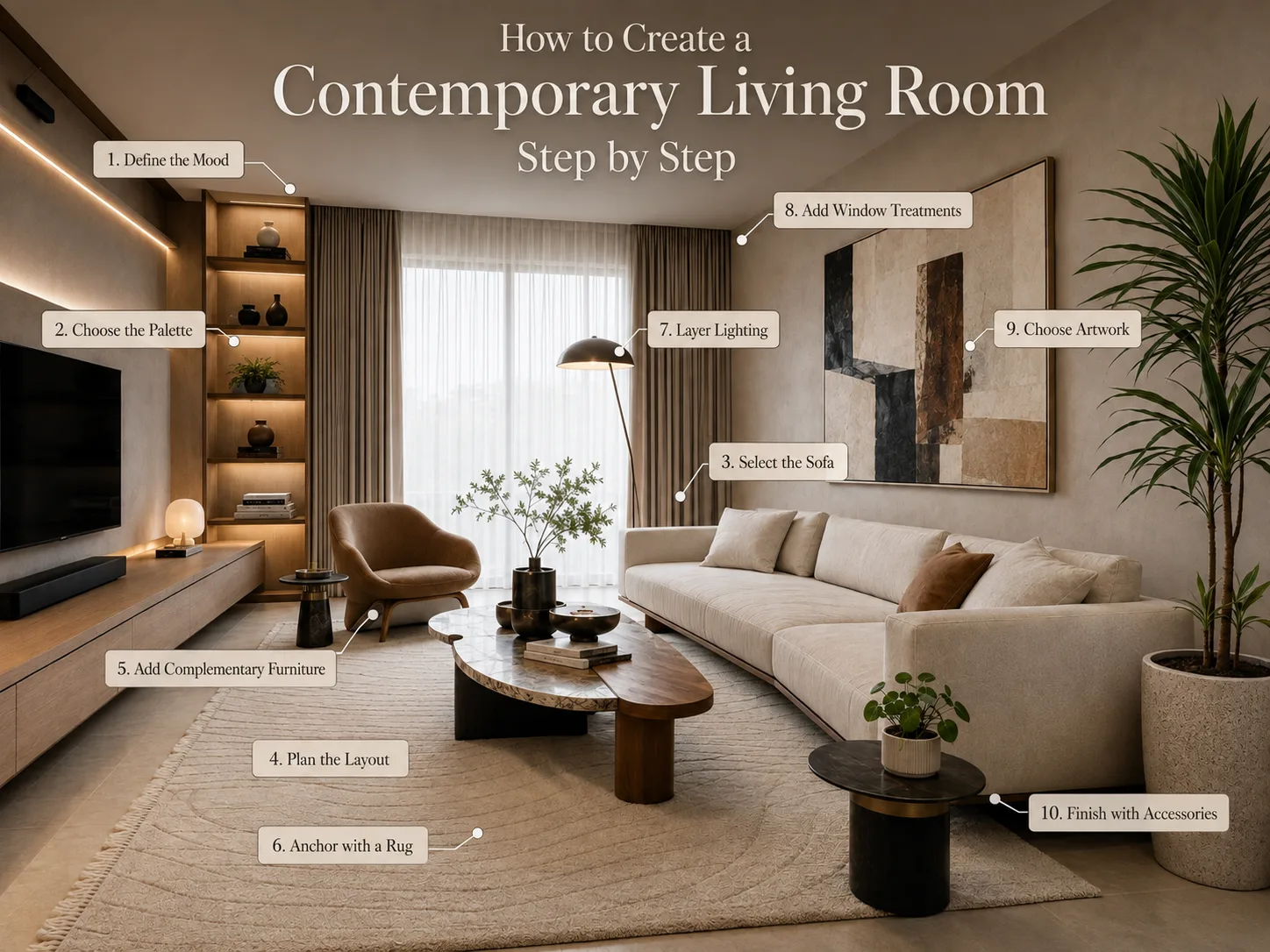
- Define the mood. Decide whether your contemporary room should feel warm, minimal, luxurious, organic or dramatic.
- Choose the palette. Establish a primary neutral, secondary neutral, natural material tone and optional accent color.
- Select the sofa. Use the largest furniture piece to establish the scale and visual direction of the room.
- Plan the layout. Create a conversation area and protect natural circulation paths.
- Add complementary furniture. Introduce chairs and tables with contrasting but compatible forms.
- Anchor the room with a rug. Choose a size large enough to visually connect the seating arrangement.
- Layer lighting. Combine ambient, functional and decorative sources.
- Add window treatments. Use curtains or shades that complement the architecture without visually overwhelming it.
- Choose artwork. Prioritize scale and visual impact instead of automatically filling every wall.
- Finish with accessories. Add ceramics, books, plants and decorative pieces gradually, stopping before the room feels crowded.
Frequently Asked Questions About Contemporary Living Rooms
What makes a living room contemporary?
A contemporary living room reflects current design preferences through clean architecture, carefully proportioned furniture, refined materials, an edited color palette and intentional decoration. It can incorporate influences from several styles rather than following one rigid design formula.
What colors are best for a contemporary living room?
Warm white, cream, beige, taupe, greige and other soft neutrals provide a versatile base. Natural wood, charcoal, brown, black or muted colors such as olive, rust and deep green can add contrast and personality.
Can a contemporary living room be colorful?
Yes. Contemporary design does not require an entirely neutral palette. Color works particularly well when introduced intentionally through one or two dominant accents rather than many unrelated bright shades.
What furniture works best in a contemporary living room?
Look for comfortable furniture with strong proportions, refined upholstery and distinctive but relatively simple silhouettes. Curved sofas, sculptural chairs, architectural coffee tables and streamlined storage can all work well.
How do you make a contemporary living room feel warm?
Layer warm neutrals with natural timber, textured wool, linen, soft upholstery, warm ambient lighting and organic shapes. The contrast between tactile materials and clean architecture helps contemporary interiors feel inviting rather than stark.
What type of artwork works in a contemporary living room?
Large abstract paintings, photography, textural canvases and restrained graphic artwork can all work. Scale and placement are generally more important than choosing one specific artistic style.
What is the difference between contemporary and modern interior design?
Modern design generally refers to established design ideas associated with the modern movement, whereas contemporary design evolves alongside current aesthetics and ways of living. Contemporary interiors can therefore borrow elements from modern and other styles.
Can contemporary design work in a small living room?
Yes. Prioritize fewer well-proportioned furniture pieces, concealed storage, clear circulation and controlled decoration. Avoid automatically selecting tiny furniture; appropriately scaled pieces often create a more cohesive result.
Are contemporary living rooms minimalist?
They can be, but contemporary and minimalist are not the same. Contemporary rooms frequently use visual simplicity and negative space, but they can also incorporate rich materials, statement furniture, artwork and layered decoration.
How can I update my living room to look more contemporary?
Begin with the largest visual elements. Simplify the color palette, improve the furniture arrangement, introduce a properly scaled rug, update lighting and remove unnecessary decorative clutter. Then add one or two stronger contemporary elements such as artwork, a sculptural table or an accent chair.
Final Thoughts
A successful contemporary living room is not defined by purchasing the newest furniture or following every emerging decorating trend. It comes from understanding proportion, material, color, light and visual balance—and then using those elements in a way that feels relevant to your home.
Start with comfortable, well-proportioned furniture and a cohesive palette. Add natural materials for warmth, layer different textures, introduce lighting at several heights and allow important objects enough negative space to stand out.
Most importantly, edit rather than overdecorate. Contemporary interiors feel sophisticated when every major element contributes something to the room, whether that contribution is comfort, function, texture, contrast or personality.
When these principles work together, the result is a living room that feels current without depending entirely on trends—refined enough to make an impression, but comfortable enough for everyday life.